Management Training, 5 Essential Secrets to Management Success
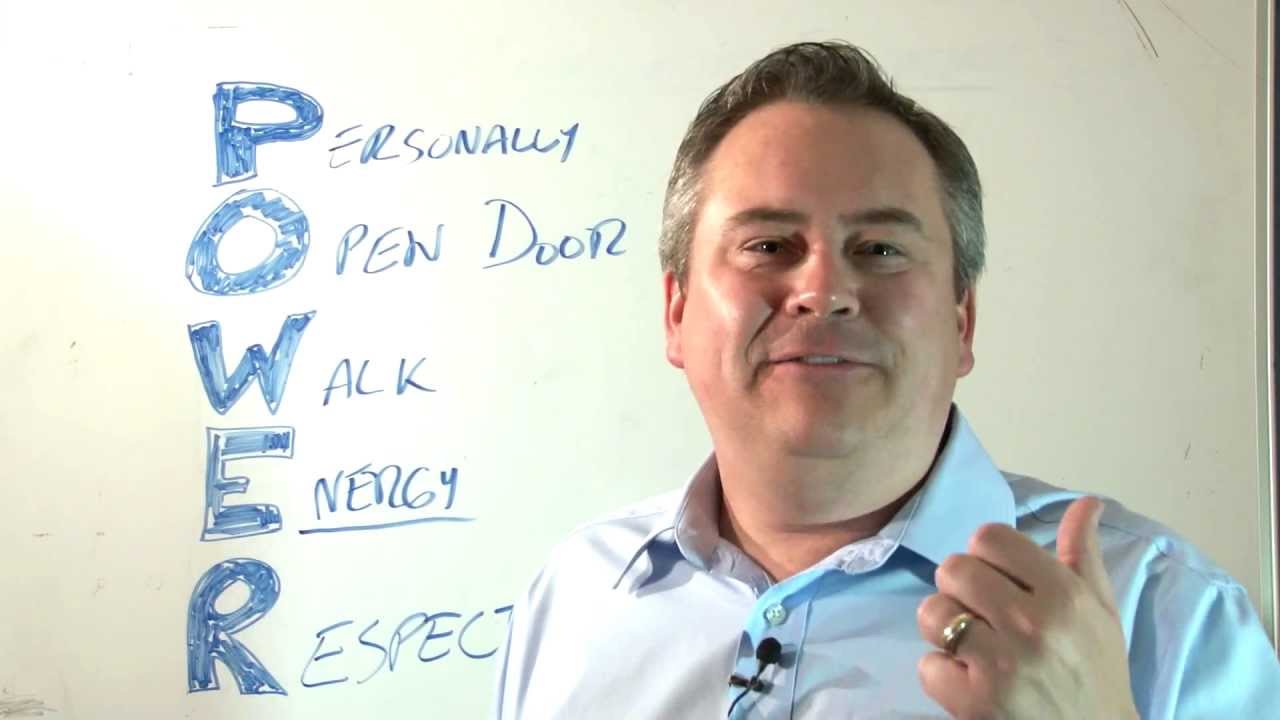
Ryan Dohrn, author of How to Be a Manager Without Being a Jerk, breaks down five management fundamentals using the acronym POWER: know people personally without overstep, maintain an open-door policy, walk the floor, bring energy, and give and earn respect.
Chapters
Hi everybody, I'm Ryan Dohrn, author of the business book How to Be a Manager Without Being a Jerk, and today I'm going to talk you through 5 fundamentals I feel are mission critical to your adventure as a manager. Now if you look at the acronym that I have on the whiteboard behind me, and some people refer to me as Mr. Whiteboard, if you look at that acronym you'll see it's POWER, P-O-W-E-R, and that's the first thing for you to understand as a manager and not even part of our tips today, the first thing for you to understand is it's not the power that you have, it's what you do with that power as a manager to really help you get the highest performance out of your team. Now I'm really focusing in today on those of you that are watching this tip that manage people, that manage a team of people and are responsible for their performance. See, John Maxwell, he's a thought leader when it comes to leadership and training across the country and has trained Fortune 100 and Fortune 500 executives for years. He really draws a distinct difference between leadership and management, and so do I. Managers are those people responsible for day-to-day activities and getting things done, and to that end, you have to have a real keen understanding of how people operate. More importantly, you have to understand this: it's not the size of the problem, it's the size of the solution. And here's the thing, for a lot of us, and that's the reason I titled my book How to Be a Manager Without Being a Jerk, You don't understand that you're actually being a jerk, and I'm gonna point that out to you today in some pretty good detail. Okay? Alright, let's walk through this. P. P stands for getting to know people personally, but not getting personal with them. So let's talk about that. What does that mean? What I want to do is I want to really know people. I want to build a relationship with my team, but I don't want to get so personal with them That I have a hard time managing them or making tough decisions. So, you know, I'd ask yourself, well, Ryan, where do I draw that line? Well, it's pretty easy. If you get to know somebody, you might know their favorite football team, or you might even know, you know, the latest movies they've gone and seen, and maybe you've discussed that at work. But when you get into their personal life, meaning issues they're having with their partner, their spouse, maybe their dating life, things that are happening on the weekends— Now, you might be able to go out for maybe a drink after work, but make sure that you're the person that's the first excused from the table. Make sure that you understand there's a line between knowing someone personally and getting personal with that person. A lot of times when I'm coaching first-time managers, one of the things they often say is, Ryan, you know, I have the ability to, to really build relationships with people. Key on to that. That's awesome, that's great, but you have to understand when you need to make tough decisions Being a friend, a personal friend with someone that you work with makes those decisions, makes the ability to make those decisions very, very difficult. So I want to encourage you to think that through and get to know people personally, but don't get personal with them. Okay? Number 2 in this acronym of power is I want you to understand really what it means to have an open-door policy. One of the number one criticisms that I hear about managers as I travel and speak across the country is that my manager says They have an open-door policy, but their door is always closed. Then when I consult or coach the manager, guess what the manager says to me? Well, Ryan, all they have to do is knock on the door. Let me share a story with you about a Fortune 500 CEO. He was so tired of his managers not communicating. Every time he walked down the proverbial hallway, the doors in their offices were always closed. He had the maintenance come through one night, a maintenance crew come through one night, They removed all of the managers' doors. For 2 weeks, these managers were like, gosh, how is it— I can't do this. It's loud and I've got people coming in and out my door and people are always asking me questions. And then the CEO pointed out, that's your job. Your job is to know what's going on outside of that door. See, I often say that great managers are often defined by how often their door is open As opposed to being closed. So if you do have an open-door policy, take it seriously. When I was managing teams at small radio stations or even at Disney, I made a concerted effort to A, make sure my door was always open, B, make sure that my back wasn't to the door so I could see when people were approaching. And in the book, we talk in some more detail about that. All right, so we've got P, we've got the O, and now we're on to W, and that stands for Walk. Walk the floor. Get up from your desk and walk. Another criticism I very often hear of managers is, Ryan, they always yell from their office, or they send me an instant messenger and want me to come to their office. And what I've observed is great managers walk the floor. You know, the CEO of Delta in one of his most recent commercials is actually on the floor of one of their maintenance facilities walking the floor and talking to people. So rather than yell or call or instant message, you might say to yourself, well, Ryan, I'm too busy to get up. Let me share this with you. Building relationships is all about understanding the environment that people operate in, getting up from your desk and walking over and saying, hey, do you have a second? I've got a real quick question for you. Maybe you bring them back to your office, or maybe you just pull up a chair and sit right there in their workspace. Remember, there's nothing people hate worse than being called to the manager's office. It reminds me of being called to the principal's office when, when I was a kid. I know some of you got called to the principal's office too, okay? All right, next, the E stands for energy. And you know, it's very easy for a lot of people to say you need to have unlimited energy as a manager, but it's very hard often to execute on that directive. Let me share this with you. Every day Is not a good day for me, for you, for your employees, and they feed off of you. You're like a battery that they draw power from. So when you come into work and you're in a bad mood or you're in a funk or you slam the door or whatever it is, they feed off of you. Your team feeds off of you. Very often people would say to me, Ryan, how do you inspire your teams to greatness? And I say, it all starts right here with number one. It all starts right here with me, and I like to have unlimited energy. So how is it that I do that? Well, first of all, I get plenty of sleep. I eat well, you know, in the morning, take vitamins, try to work out to the best of my ability. But some days, quite honestly, I just need to fake it till I feel it because every day is not a good day. But remember, you're the leader of the group. If you want to see high performance, you need to demonstrate High performance. Even when times are bad, try to put a smile on your face, okay? Unlimited energy is tough, but it's so unbelievably important. Alright, let's move on to the R. And the R stands for, quite simply, respect. You know, one of the things overall that I hear on a very, very regular basis is, Ryan, I just can't get any respect from my team. I just don't get any respect from my team. And it's very easy for me to say that respect is earned. But here's the thing to remember: very often you have to give respect to get respect. And a lot of times it's very simple to hear that, but it's hard to execute on. So really, truly, what do I mean by that? Donald Trump said on his TV show, God is in the details. It's the small things, it's the little itty-bitty things that make all the difference in the world. You don't know the number of times someone has said to me after I've taught a seminar or Or you know several months down the road, remember when you said da da da da da? That was so meaningful to me. Where does respect begin? Respect begins with saying good morning to everybody as they come into the office. Respect is telling people thank you for a job well done. Respect is not taking credit for something that an employee or one of your team members did. Respect is filling the coffee pot or making a new pot of coffee if you're the one that takes. The last cup out of that coffee pot. Respect is not eating, you know, employees' food out of the fridge. I mean, there's so many things— yes, that does happen, by the way. There's so many things you can do to show respect towards someone. Paying them a little bit of attention, understanding when they need praise and when they don't, understanding when they need accountability actions and when they don't. See, if you really think about it, as I said in the beginning of this video, Power is all about what you do with it. Some of the greatest leaders in history are the ones that truly understood what power actually means. If you're aspiring to be a great manager every day, I encourage you to pick up a copy of my book, How to Be a Manager Without Being a Jerk, on your iPad at the iTunes Store or Amazon.com or Barnes& Noble, and check it out and really apply it each and every day. Every day is a new day in management land, and I know you can be the best manager that you want to be. I'm Ryan Dohrn, and thanks so much. I wish you the very best of luck, and we'll see you online at greatmanagementbook.com.







