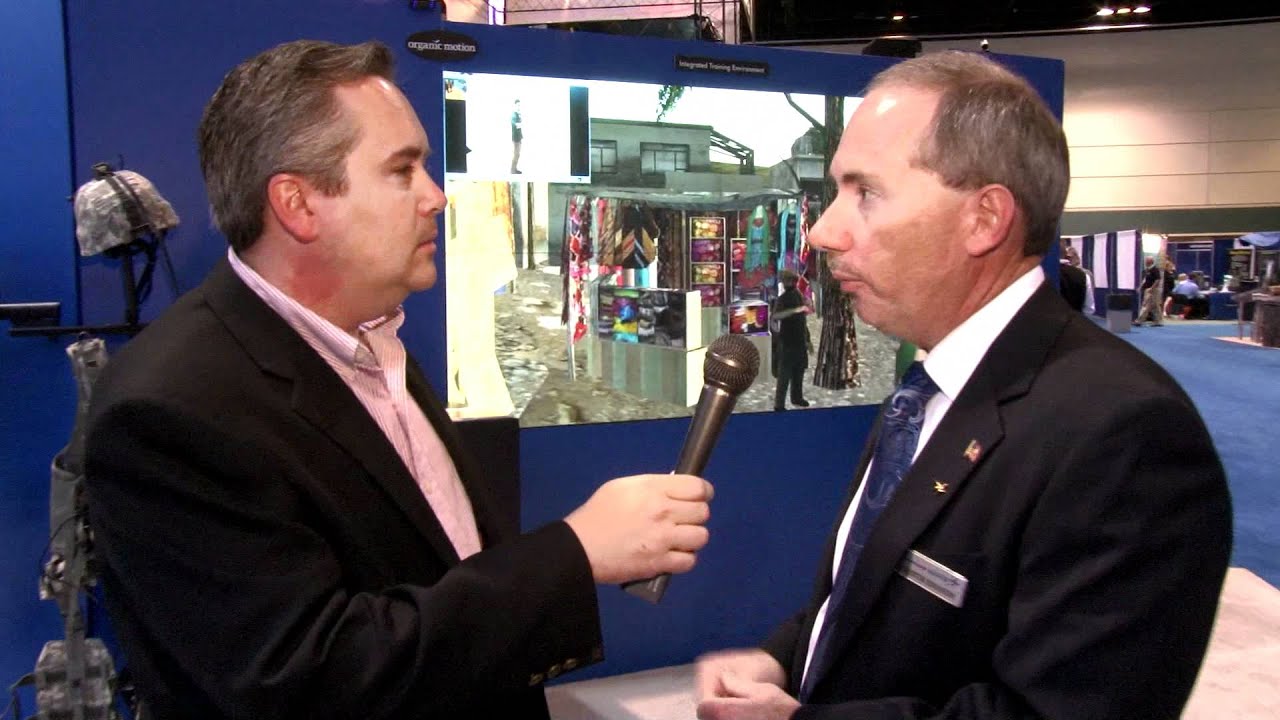
In a live interview at ITSEC 2011 in Orlando, host Ryan Dohrn speaks with Chester Kennedy of Lockheed Martin and Andrew of Organic Motion about a joint demonstration of avatar and computer‑vision technology for military training simulations. The partnership enables a remote human role‑player—captured via Organic Motion’s computer‑vision system—to be inserted as a realistic, interactive character (an “adverse threat”) within a virtual urban‑operations scenario. Because the actor can be located anywhere with an internet connection (e.g., New York, Afghanistan, Iraq), the solution offers warfighters greater agility and cost‑effectiveness, allowing forward‑deployed experts to train stateside personnel without co‑location. The discussion highlights the technology’s fidelity, its broader applicability across many training contexts, and points viewers to online resources for both companies.
Chapters
Hi everyone, continuing our coverage here from ITSEC 2011 in Orlando. Ryan Dohrn here with Chester Kennedy from Lockheed Martin. Good to see you again, sir. Good to see you. And you as well. Tell us a little bit about what Lockheed Martin and some of your partners have cooking this year at ITSEC 2011.
Well, great. It's a great show and a lot of great stuff to show off. One of the things that we're really excited about is what you probably see in the background here a little bit with some avatar technology from one of our partner companies with Organic Motion. And we're really excited about the realism, the level of fidelity that we're able to put into this kind of scenario. What it does is really gives our customers a lot of agility and affordability. Instead of having to have all of the instructors in the same place as the students, now we can leverage the expertise of our forward-deployed military as instructors for folks that are still back here in the States preparing for their next deployment. That's great.
And so the example that we're seeing, I guess we have an actor that's in New York and obviously we're here in Orlando.
Exactly. But the actor could be in Afghanistan or Iraq or anywhere in the world that we got an internet connection. It really is a cool capability, and we're excited to be able to bring that to the warfighters.
Now, what's the primary scenario that they would use this for in terms of training?
So it's got a lot, actually a lot of applications. The one that you see here behind us is talking about an urban operation, and we actually can have a role player in this scenario playing an adverse threat that's embedded in the scene. So that's one example of how you might take advantage of the technology.
This is a partnership between Lockheed Martin and Organic Motion. I'm here with Andrew from Organic Motion. Tell us a little bit about how this partnership came together and how it works. Well, Organic Motion is a computer vision company.
We're sort of the eyes. We infuse eyes into the simulation environment to get individual people into it. Because if you look at the history of simulation and training, aircraft simulators, they work, but it's always the buttons that people touch. Vehicle simulators, you're in the actual vehicle. But what do you do with people? How do you get people into it in a natural way? You actually have to have the computer be able to see what's going on. And in that sense, we're like an infrastructure play. So we like partnering with companies like Lockheed Martin where we can really, you know, they've got the simulation systems, they got the entire environment. We go in there and we enable that system to see people, to expand the capabilities of those systems.
Well, folks that are looking for more information, Chester, where can they find you and also Organic Motion online?
Sure, they can always check out lockheedmartin.com. We're part of the global training and logistics operation that operates headquartered here in Orlando, Florida. And a lot of information online about our products and capabilities. Proud to be a part of this industry.