“5 Secrets to 97% Employee Retention Rate Over 5 Years” with Beefree’s CEO and Head of People
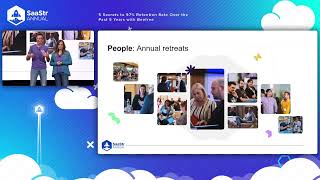
Conference talk by Enrica Lipari (People & Culture Director, Growens) and Massimo Arigoni (CEO, Beefree) describing how Beefree/Growens achieved very high employee retention (~97% average over five years). They identify culture, flexibility, and people (leadership + team retreats) as the top drivers. Concrete practices include defined company values and behaviors, five operating principles (e.g., working in public, remote together), a codified "Way of Working" policy for hybrid/remote work, values-anchored leadership behaviors, and annual team retreats to build relationships.
Chapters
Free and Enrica Lipari People and culture Director at Growins.
Oh, get closer.
Yeah.
All right, let's do it.
Yeah. Hi everybody. We are really, really happy to be here with you sharing our experience. My name is Enrique Lipari and I lead the people and culture mission at Growance. Growens is a group, it's a publicly listed group from Italy and it works on the marketing technology, supporting several businesses.
Among while Be Free. So my name is Massimo Arigoni. As you can tell, also a lot of Italian in there. I grew up in Italy, but I've been here for almost 30 years and I lead the Be Free business unit at growwinds. We develop digital visual builders to design digital products, emails, landing pages and other digital assets. Last month, about 400,000 people used our products either directly at befree IO or in a lot of SaaS applications, applications that have integrated our tools in their user interfaces. Many of them are here today. In fact, I see some of our customers here and that's why we come back every year at Sasser. We love it here. We get to talk to customers over and over, bit of context about where we are in our growth trajectory. We passed $10 million in annual recurring revenue last year and this year we're still growing in double digits.
Well, in terms of headcount B3, we count almost 90 people working directly for its business plus plus 10 or so from the group. So at the group level supporting directly this, this business unit. So we are 100 people working on, on its business. And Saastream is right in saying that they always see the same people here at sas. So they were just asking when we were talking to them, what we can speak about was, look, I see always the same people here, so maybe you can tell us a bit more about how and what you do to retain your people. And so it's true. I mean our retention, average retention in the last five years has been almost 97% and the average tenor is about five years in the company. But going to the core of the matter, now that we have a bit of a contest, let's say why do they are happy to stay at B3? And a few months ago we just asked them why they stay at B3 and it was a survey with multiple choices. So they can pick the three top reasons why they stay in the company. And as you can see, money is at the bottom of the reasons why they stay. This not because, this is not important. It's because for sure, if they are paid fairly and equally to any other job elsewhere does not not the reason why they stay in the company. And the other things that comes to the surface is the fact that actually what people really value in the company is the human side of the business. So the culture of the organization, in this case, the growing way of working, so belonging to this group and the way the work is done, as well as the humans they interact with every day.
So let's dive a little bit deeper into this concept. Part of the same survey was an open ended question where we asked them, okay, tell us in your own words why you're staying at Be free. And they answered in a number of ways. This is a word cloud that we created from those answers. And as you can see, there are three terms that they repeated over and over. Culture, flexibility, and people. So we're going to dive into each of them. Let's start with culture. How do we define company culture? A definition that I like goes something like the average, the rolling average of everybody's behavior in the company over the last three months or so. I believe the first one that I heard defining that way was Jason Freed from Basecamp. There might be other people that define culture in similar ways, but behaviors, behaviors are at the core of that definition. At Growing again, our parent company, a few years ago, we got together and we said, okay, let's define the core pillars, the core values that we want to build a company upon. And we defined those four values that you see here. Trust, caring, open mindedness, and passion. But again, since behaviors are actually what makes the the culture, we said, okay, let's not stop there. And we were intentionally in defining behaviors that are linked to each of those values. For example, with open mindedness, we said, we want people that follow these behaviors. First of all, they're open to other people's point of view, they're excited about learning new things and et cetera, et cetera. So values, behaviors, and then there's the decisions that you make every day. Okay. We believe that operating principles can help you make those decisions that you make every day. And at B Free, we have these five operating principles that you see here. So with values at the growing level, at the parent company level, yard operating principles are defined more at the business unit level, because every business unit operates a little bit different. So to go through them real quick, best in class at the thing that we do, again, we develop visual builders to design digital assets. We gotta be among the best in the world. Otherwise customers that select our product made a mistake, which is kind of depressing. And we don't want to be There and then always us first is about whenever we can, we gotta be very heavy users of our own products. Truly helpful is the concept of asking ourselves whenever there's a new initiative, is this really going to help our customers get value out of our products? Remote together. We are mostly in the United States, Canada, Italy and the rest of Europe. We're a mostly remote company and we love being remote. But we're also very aware of the issues with being remote first of which people don't get together enough. So we invest money and other resources is to getting people together. For example, here at Sas, there we brought way more people than we needed at the booth for the joy of our friends at the Sasser team. And that's one of the ways we do it. And we'll talk about that more in a few minutes. And then working public. So working public is something that is really impactful. We believe in terms of an operating principle on the company culture. We did not come up with, with the. Let's go back to the previous one. There you go. We did not come up with this concept. It was actually Zapier, a company that probably many of you know, one of the first adopters of remote work and one of the largest companies that has a fully remote workforce. They wrote about working in public years ago and we loved the concept and we adapted it to our DNA. Working in public is basically about defaulting to transparency. If trust is one of our core values, then we cannot be afraid about showing the work. Even when the work is not fully baked, even when the work is still in work in progress, even when it's a little bit uncomfortable. As long as it's not confidential, we have to show it and be okay with the feedback that you get. Which sometimes sounds like, wait, wait a second, what are you working on? That's not what I thought that you were doing. Maybe we're a little bit misaligned. Let's get aligned again. Working in public, defaulting to transparency leads to awareness, awareness leads to alignment, and alignment leads to better performing teams. And in practice, what does this mean? We ask our people to do things like use this open Slack channel instead of a private Slack channel. Don't use email or direct messaging if you can, unless it's confidential. Just do things in public. And if you're doing something that's beyond just a simple conversation, create a page about it. We use Atlassian Confluence as our wiki. So we say, okay, create a document that explains what you're working on and then notify publicly on Slack.
Well, the Second word of the word cloud. And even the second reason why our people are happy to stay at Be Free is flexibility. So we started, let's say, working as as a group. So at the growance level we might say that 10 years ago we were pretty much everybody in the office company and to be honest there were not so much flexibility in terms of work schedule and such. But then when in 2015 BFree was established here in the US in California and for a variety of reasons, we decided it needs to to be a remote first company. And so growing really fast starts triggering a lot of conversation about flexible work arrangement for our people. So that in 2018 we land into a pilot, a small pilot project where we were working for different work arrangements even for other BU's across Europe and even here in the US and for the holding as well, supporting our business unit being more flexible. In 2020, for obvious reason, what was a small project suddenly became like a forced reality for everybody. But it happens on some, let's say foundation we already had in terms of on the ground experience. We have been made with B3 that at that time counted almost 80 people, spread around dozens of locations between North America and Europe as well. And so we as a PNC team at the group level, we decided to codify this flexibility into a policy which is called wow because it's kind of a catchy optimistic word that simply stands in the end for way of working. So our growance way of working that allows people to work in several ways with a hybrid way of working and it's support to structure this way of working, making an acceptable standard. What previously was just like an exception to the rule and building up on these, we are kind of still seeing this flywheel between the growance group and the be free keep on spinning. While we as a group are supporting B3 scale up as a remote company, structuring some rules and supporting with this policy. While B3 is continuing like challenging with the experience on the ground. So with the real experience where we can stand in terms of flexibility.
So we talked about culture flexibility. The third word was people. Two things that we want to highlight about people. First, first of all, who our leaders are. One of the reasons why people stay is the managers that they work for. So we call it values anchored leadership. So just like we define behaviors that are associated with our core values, we define behaviors for our leaders. So for example, let's go back to open mindedness in terms of our leaders being open minded. What does it mean As a manager we believe that if it Means that you love experimenting. And so you let your people experiment. You encourage them to try new things. You also coach them on figuring out whether that new thing is working or not, what metrics should you measure? And then you encourage them to share in public the learnings from those new initiatives so that the initiative becomes awareness and knowledge for the entire organization. And then secondly, leaders that connected to the value of open mindedness to us are people that see the bigger picture so they can see beyond the challenge of today. And especially when today's glass looks half empty, they're positive thinkers. They look at it as half full. The second thing that we wanted to talk about in terms of people is getting people together again as a mostly remote company. How do we get people together? Why? One of the things that we do is some fantastic team retreats. At least once a year, we get everybody together because of our Italian DNA. We typically end up in Italy. For example, a couple of years ago we were in Sicily. Who here has seen some episodes of the White Lotus? For example, a lot of you, okay, we weren't at that resort because had we booked that resort, our cfo, who's here, would have had a heart attack. But we were at a pretty nice hotel not far from there. It was a great experience. And these team retreats really help in a couple of ways. We say that we do team retreats not because we're doing well. We actually do well because we're doing team retreats. So it's a driver. It's a driver of. It's a foundational driver of the relationships that help us get to the next level. We don't do team retreats to celebrate the yesterday. We do it because we're creating the foundation to celebrate what we're going to do tomorrow.
All right, so one minute just to wrap up about the five reasons why our people are happy to stay at Be Free and we enjoy this percentage of high talent retention at Be Free. One is about the fact that we are really deliberate about our culture. We have core values that lend drive to our behaviors and then operating principle that support daily choices consistently with those. Secondly, we work in public so simply we default to transparency every time we can in order to enhance and leverage on our trust. Three, we work on flexibility, structuring some policy that helps people to be flexible and hybrid while scaling up as a.
Remote company for managers that are really anchored in those values and embody that, that kind of behavior every day. And finally, fun annual retreats that really set the standard for working together as humans. Not just colleagues and help us get to a new level of relationships that help us grow. So thanks a lot for coming today. Our booth is just down here, and I think we might still have some other ice cream. So come and join us if you have any questions. And thanks for joining us.
Thank you.










