5 Ways to Align Every Team In Your Org for Growth with Remitly COO and Ally.io SVP of Sales
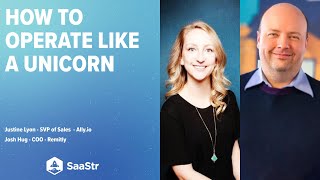
Josh Hug, Remitly's CEO, explains how to keep teams aligned during rapid growth. An Ally.io survey found 71% of employees feel they work harder but see fewer results. Remitly uses annual North Star goals with quarterly OKRs, transparent retrospectives, and avoids mid-quarter goal changes.
Questions this video answers
3,500 employees.
71%.
About nine years.
Chapters
Of sales. Here at Ally IO we offer a solution for global companies that helps organizations streamline goal setting and optimize strategy execution. I am thrilled to introduce Josh Hug. He is the CEO and co founder of Remedly, which is Seattle's newest unicorn. Thank you, Josh so much for joining. I was hoping maybe you could kick us off with telling us a little bit more about yourself and a little bit about what Remitly does and maybe a few points on your journey to becoming a unicorn.
Great, thank you. I'm really excited to be here and share some of the stories from my journey and some things we've learned along the way. I started my career actually in software engineering and then grew from that into actually starting my first company, which was a social site for people that love to read books that I sold to Amazon and I learned a lot at Amazon. I was at Amazon for about three and a half years before I met Matt and co founded Shalfari and Shalfari. I co founded Remitly. Shalfari was what I did before Remitly. I've been doing Remitly for about nine years, so you wouldn't think I would mix those two things up, but it's been an incredible journey along the way and I just think that the team that we put together, which has continued to grow over the time, has been the number one key to the success that we've been able to see at Remitly. It's not been easy, it's been hard. There's been a lot of challenges that we've had to overcome. I think that building and building a money transmission business, which is what we've done, which sends money across borders, primarily focused on developed markets, to emerging markets where there's massive amounts of need and it's traditionally been pretty underserved. It's huge problems that we've had to solve and it's been really hard. Like, I think it's very regulated. There's a lot of barriers to entry and then even once you get through those barriers to entry, it's a challenging environment. To be able to continue to stay focused really requires great execution. I think our team has done a really good job at execution, which has been one of the keys to our success.
Awesome, Great. Thank you so much for going through that. I know it's been a long time and quite the ride, so it's probably hard to pick out just your favorite couple of points. I'm sure we'll touch on a few more as we go in. So Recently Ally surveyed 3,500 employees. And we got some really interesting information out of this survey. We will be sending it out to everybody on the call. But one stat that we wanted to focus on today was that 71% of workers feel that they're working harder than ever this year and seeing fewer results. And obviously this puts a huge strain on the employees themselves. But it's obviously a huge strain as well on the business that have steep goals for the year, maybe already made commitments to the board. And then on top of employees not feeling like they're making a difference. Businesses are also having to navigate Covid and all of the changes in today's environment. So this was really interesting finding for us. I'm curious, Josh, if this is something that you've seen or maybe felt or heard from your employees in the last six months.
We definitely see and feel our employees working harder. Just the change that we've had to go through to moving into a fully remote environment has created a huge amount of overhead. If it wasn't for the over like absent of the macro environment with not having schools, not having a lot of the other services, that creates a huge amounts of strains on families, I think and being isolated and not being able to have the social outlet that you would normally have from going into a work environment that creates a connection for our team. It definitely, definitely resonates that people feel are working harder. I think we've been really fortunate to be able to actually see acceleration of some of our results, I think, which is an anomaly. I think that our team has adjusted really well. I think it is because of their hard work and effort they've put into to make it work. And because we had put such a large significant foundation. The foundation we'd laid enabled us to transition into this new world that we're currently living through and I think hit really lofty performance targets. And I think the team has really huge amounts of credit because they definitely have had to adjust the way that they're working in pretty material ways that has caused some pretty significant sacrifices, right?
Absolutely. I feel that businesses across the globe are probably feeling the exact same way. And it's always a struggle to push for those goals but still make people feel like they're engaged and that they're making a difference towards them. So I completely understand and I'm sure we'll touch on a few of those points as we go along here. But what I'm hoping to do today just for a high level agenda is just talk through five key areas that were critical for you in both having cross Functional alignment, but also maintaining your growth trajectory. And whether that be from the past or just in today's current environment, we'd just love to talk through how you got to where you are. And I'm hoping that you can just share with the audience some of your insights on everything from goal planning, goal setting, managing goals, implementing them, missing them. So love to just learn more about how that works at a unicorn company and share that with the audience. So does that sound okay for today?
Sounds great.
Perfect. Okay, well, let's start at the very beginning. So the first step is planning. So you're obviously a fast moving, high growth company that is hard enough to get some planning in and make sure that you're planning in the right way. And then now we work in having almost exclusively a remote workforce for most businesses. How do you think about holistic company wide planning in an environment that's rapidly changing at a normal company and also in an environment that's rapidly changing due to Covid?
And so we've always put a really lot of focus on our planning around our goals that we're setting. And we from the very beginning of the company, we've set an annual goal, set some form of annual goals. In the earlier days they were pretty existential goals and they're ambitious. They've always been ambitious, they've always been hard sometimes they've been pretty simple and pretty clear. But we've always gone through the exercise of setting those goals down. I think that the thing that I think about most as it relates to how that's evolved, both in the context of the environment we're in and in the context of how our company is scaled, is continuous improvement is really one of the things that we think we always try to do. We try to look at how we did it last year, see how can we do it better this year, do a retrospective right after we do an annual planning, document the things when it's fresh, relating to the things that we would like to improve upon next year. Take a little bit the process that I refined when I was leading software teams. But I think it scales up to the organization where we're trying to learn and be introspective around what can we look at self critically and think about what we did poorly. And so I think that's resulted in our case in a evolution to really focusing on what we would call our strategies that we set for the year. And we try to limit that to three to five, three core business ones and a couple ones that tend to be a little bit more supporting and those are the ones that are the strategies that we're focused on trying to achieve. And then we try to set measurable goals that are within those. We don't actually use an OKR framework for those annual goals. We use just a goal. They're goals that we set. I think over time we might start to evolve those and start to track those more formally, but they tend to be a little bit more KPI and outcome goals that we're setting for the North Star for the company going into the year.
Got it. That makes perfect sense. Thank you. That makes sense. I think we'll touch a little bit more on transparency later and also as the market moves or as your business changes, resetting goals. So we'll touch a little bit on that. But this is perfect for a really holistic, high level overview. So moving on to cadence. So after you planning is complete, the goals are set up and obviously the next step is you have to bake these goals into your workforce's everyday life and their day to day work. So how do you get or how do you manage the cadence of reviewing and updating goals or OKRs or KPIs? When teams are working every day and everything is changing every day, goals are moving every day. How often do you review and manage those?
Well, the very early stage of the company, we set an annual goal and then we did two week company sprints effectively and we would set, we would plan out what we were going to do for the next two weeks and then we would have a planning day at the end of those two weeks and a retrospective at the end of those weeks to look back and see what we did. Quickly started to scale beyond that where we started to separate the actual. Some certain teams would do their own cadence of execution and we started doing monthly goals that we would set. And pretty quickly, probably in the first three years, two and a half years, got to a set of quarterly where we'd say let's actually set goals on a quarterly basis. What we found though was that our team felt like we were changing the goals more rapidly and this is a challenge that we went through is it felt, felt like we didn't have as much stability in our goal setting. And so even though from our perspective, from my perspective, we had some annual goals that we generally didn't change, we rarely changed our annual goals through the life of the company, but we would change our focus. But even when we were changing our focus on a quarterly basis, that started to become a little bit disruptive to the team. And so that's actually when we decided to to land on OPRs because we feel like it created a framework to allow for permission for the team to recognize that I have them on a set of quarterly goal and then I'm going to change that on a quarterly basis. I think we've learned that we want to minimize change as much as possible. And so if you have an objective that you can keep throughout the year, that's better. But it creates a permission structure to have a conversation around. Do we need to change goals? And then the more frequent interactions that happen, we give our teams a lot of freedom. We let our teams manage their changes, check ins and their ways that they're managing at a lower level through various different mechanisms and we let them have a lot of autonomy in how they do that. But at a company level we kind of created a quarterly cadence that we do a pretty rigorous quarterly process and setting our goals. We try to do it fast, but we do a pretty rigorous process to set goals and then measure ourselves to those goals on a quarterly basis.
I love it. I love that kind of underlying concept of we have to be flexible but we can't be constantly moving the mark. Do you, have you had experience where you know, maybe a team is just way off from one of their goals and they, they propose changing it mid quarter and have you tried that? Have you, Are you against that? What are the pros and cons of a mid quarter OKR or any goal change?
So one of the things I love about OKRs is they are only a quarter, it's only three months and then you can change them. And so I don't, I don't push, I don't tell people they can't change their goals in the quarter. But I definitely would guide people to say you can't spend time on it and you shouldn't spend time on it. You set your goals and you should stay focused on execution. And even if you have the wrong goals that it's better to learn from the wrong those goals and in some level even ignore them and focus on the right goals for the quarter than to go through the churn in process of saying I'm going to reset and change my goals. I find that that creates more overhead and creates more communication challenges than saying ok, set my goals. And then at the end of the quarter looking back and saying that wasn't a very good goal. Here was my better goal and there's a progress we made against what I think was the actual better goal and this and moving forward we're going to Learn from that. We're going to set a better goal. I love the continuous improvement aspect and the flexibility of OKRs that give that permission to not get hung up on it. Because ultimately what we're trying to achieve is setting the business and customer objectives that we're focused on. And that's the entire intent is setting and aiming high on the customer business objectives. And we're always learning what are the better things for us to be able to focus on over time and refine, I should say learning how to refine our focus. And so I like to embrace that but not really screw around with the goals in mid quarter because it creates too much continuous planning feeling to the company.
Oh, that makes total sense. Thinking back to our original stat of people feeling like they're working harder and, and making less of a difference, you know, you wonder, you start to wonder if people are just striving to hit these goals that they feel like they're not going to hit and then they start planning on changing them versus planning on what they're going to do better next time. I mean it would make sense why an employee would feel kind of like they're running on a hamster wheel and maybe not getting as far as they were hoping to get. So I love the concept of being flexible, allowing people, you know, to miss goals but then having them plan for what are they going to do differently, what did they learn versus spending so much time justifying why they chose the wrong goal and re choosing a new goal that's maybe a little bit more attainable. I think everybody can relate to that and it's incredible advice. So thank you. I think my next thought is transparency, which is a huge topic for me. I love transparency. It's a hot button for many CEOs that either believe or don't believe in it. So I'm curious about your thoughts. If you know, creating company wide goals and team specific outcomes and objectives, if that's step one, I would say figure out how to communicate those goals to the rest of the team. Would be step two, how do you keep your teams informed on OKRs in general and then also OKR attainment?
So we do, we are huge believers in transparency. We actually have pivoted internally a little bit more to talk about authenticity versus transparency. We think transparency is a means to authenticity and it's a critical thing. And I think people that are unauthentic hide stuff, they are manipulative. We think that authenticity is actually the outcome that we're trying to drive for which transparency is critical. Critical You've got to give people agency over the information that is necessary for them to be able to know what they're going for and working towards. And we think that the idea of making all the goals public throughout the company is a really important step to that. I don't think that a goal that's not actually put out in public to me isn't really a goal. We could talk philosophically for some, depends a lot on personality, but I think overall it's better to say, hey, let's put the goals out in front of people. Let's also have a culture of attaining, of aiming high so that we can actually shoot like stretch ourselves with goals, but also have an empathetic culture that isn't beating people up because just because they're meeting a goal, just because they set a poor goal, they are giving feedback relating to what we could, how we all could have potentially worked better towards creating better outcomes. But I think it's really a huge step that I love and we've always been relatively transparent with our, we've been very transparent with our company goals. But I think the step in OPRs of kind of forcing teams to put them forward has been a really critical step. And what we do is we actually do transparent retrospectives for the main teams in the company at the end of every quarter. And so teams will look back and they'll write a doc. We'll kind of blend a little bit of Amazon and Google here where we write a doc. Looking back for the quarter and we assess like what did we learn, what are the hits and misses, how did we score against our okrs in the last quarter? And then looking forward, here's what, given what we learned, here's the goals we're going to set for the, for the quarter move forward and we have those fully available to the entire company. So anybody can actually see the discussion that we have around those okrs which I think has created a huge amount of buy in to the team on how we're making decisions and where we're going.
Perfect. Yep, that's great. That's perfect. I love that answer. Well, moving on and you've kind of touched on this on a few questions so we could speed through this one if you feel like it's a little redundant. But getting your team to be engaged today in the workforce is obviously a huge challenge and on top of engagement is just getting them to understand how everything they're doing day to day chips away at these bigger goals and what they're doing, how it makes an impact I mean how do you ensure that the daily work your team's doing stay aligned with the company's bigger picture goals?
I mean, I think one of the most important, there's a few things that we're hitting on that I think are some of the evolutions that created the OKR framework. But I think that are based upon a lot of human behavior that I think is really important to recognize and embrace. I think the process that we do is very much a bottoms up and tops down process. And I think that was what really creates that engagement and buy in. What we tend to do as a company for planning is we will set some guidance going into a planning, a quarterly planning as an exec team saying here's the general, here's the directions that we want to do, but we will then assign owners even outside of the senior exec team to say hey, you need to put it create an OKR in this area. It's going to be generally going to be in the area that you're responsible for. Shouldn't be very hard for you to write a goal in that area. But and so we don't, we try to avoid even crafting what the goal is so that they can have buy in for their team and agency even in crafting what the measurement will be for the company level goals that they're doing. And so I think that merging of the tops down and bottoms up process creates a lot of buy in. Great.
I love that. That's perfect. One more last quick question before we wrap up. I think we've all worked at companies where they set these huge org wide goals and within 60 days the rest of the team's already forgotten about them, often including the people who set them. So I'm curious, how do you drive accountability and inspection on OKRs or goals at remedly?
And so we have created this model of quarterly reviews where we ask people to as a part of their scoring document some of the hits and the misses that they had in the quarter and then also document the learnings that they've had so that they can send us those teams and other cross functional dependent teams can have transparent access to that. I think that creates the level of accountability. But how did they score against their goals? Why did they score against their goals? And always looking forward to what are the goals that they're going to be setting forward. I think that's setting and moving forward and that's one of the things I think is really important and key to a goal setting framework is you've got to stay focused on the future and not beat yourself up over the past. And I think that is what we try to foster in the accountability. We want to learn from the past and do better in the future.
Love that. Obviously that must contribute to an amazing culture there as well. I think that that's incredible. Well, Josh, thank you so much for your time, your expertise and your experience. I feel that we I definitely learned a lot. I think everybody on the on the call learned a lot. For everybody on the call, we will be sending out the report I mentioned earlier and it's called do okrs work. So you'll be receiving those. You can also visit Ally I.O. and get access to your free trial. And for all the questions that were that were listed today, we will get back to you right away and get those answered. Sorry, we just are running a little short on time but definitely we'll follow up with everybody on the call and want to thank Josh again one more time and Saster for hosting and everybody else on the call. So thank you all so much for your time today.










