A Deep Dive on Events, Email Marketing, Media, and Much More with Jason and Nathan Latka
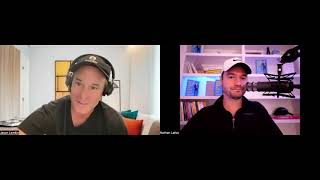
Jason Lemkin built SaaStr Annual from a $200K one-day event with 800 people into a $25M business. The conference now costs $10M to run, with tenting alone at $1-1.5M, and pulls 90% of ticket sales from a single email to 120K people. Sponsorships bring in $20M of the $25M revenue.
Questions this video answers
Just north of $10 million
Well over $1M, approaching $1.5M
About $200,000
About 800 onsite in 2015 (first year); roughly 2,700 onsite in the second year
$3.6 million
Chapters
Hey guys, recording this here on. What is it, Friday the 19th. Maybe you're seeing this on Monday at the latest. But want to let you know, we are almost sold out for Founder 500 in Austin, Texas here in about a week. It's going to be an amazing event. 500 B2B SaaS founders. I'm looking at the attendee list. There's almost 60 founders with more than 6,7 million bucks in ARR. It's an incredible group of.
Group.
There's over. There's over a hundred. Over 150 with. With more than a million. More than a million revenue. It's an incredible group. You don't want to miss it. Grab your hotel, grab your flight, grab a ticket right now. I'll put the link in the bio, in the description here on YouTube. And I think there's only about three tickets left. Okay, about three tickets left. I'd love to see you guys there. Don't be bashful. Grab your ticket now. Hey, folks, my guest today is Jason Lemkin. Many of you already know it. You've been to his events. What we're going to try and dive into today is twofold. One, many of you guys at your SaaS companies are trying to build moats around your technology, right? Your actual SaaS business and community is a big play there. This guy's. I would top of the world at this. And the second is maybe you want a user conference. Like what do the economics on an event actually look like? That's a whole nother animal we're just chatting about before this. But before, without further ado, number one SaaS community on the planet, the OG Jason Lemkin.
Thanks, Nathan, but I'm always inspired by your work in your community and founder path as well. So it's always good to be with you.
I appreciate that. We were just joking before this. You know, we have a very small event coming up and I'm going, man, there's so many fires and you're going? Yeah, well, at least you can do yours in a hotel. I've got to build.
You know, I don't know if you're.
Able to share the number. We've got to build x millions of dollars worth of tents outside. Even make.
I'll share all the numbers. This is. This is the show where you have to share the numbers.
How much are you spending on tents? Saster annual tent budget. What's the Saster annual 10 budget?
The total turn on the lights budget will be just north of 10 million to turn on the lights. Okay, that's how we think about it. What does it cost? Turn. Turn on the lights. That's before salaries, sales commissions. But the fully burdened cost is about 10 million, of which tenting. Just as one fun thing, tenting is well over a million dollars, approaching a million and a half dollars for an outdoor event, which is why no. 1. One of the many reasons you go to these boring convention centers or slightly cooler hotels like you do. But. But they're turnkey, right? They're. They're. It is a. They're a product. You know, you can make fun of convention centers and I can make fun of them, but if you step back for a minute, they're a product. And there's a reason they're booked is because it's a product. Right? And using these turnkey products, it's like building bespoke software, which you've now done. It's hard. Like, why wouldn't you use turnkey software? You would build versus buy. You always want to buy. You never want to build. Right. Unless you're forced to.
Well, and what did you tell me for this? I mean, you said if. I mean, I guess I'll just ask the question. If you knew what goes into putting on an event like Sastra Annual, come out here September 13th, 14th, 15th. Right. Would you do it again? No.
And look, it is a work of passion at this point. We know what we're doing. We're passionate about it. These are the things you want to do in life, once you've been doing things for a while, is find things that you're. Even if they're quirky, that you're passionate about because it keeps you going. But no, no one told me there's no book. I mean, at this scale, the overall enterprise is like 25 million. You start to reach this weird era where there's not a lot of comps and people to talk about. And so after the second year, the first year was 800 people during the day. One day event, 1400 organized in 90 days. You get that because you're doing that now. It was great.
What year was that again?
That was way back in 2015. I just put up a tweet like, come to Saster Annual. There was no other annual, but we had Aaron Levy and Stuart Butterfield and David Sacks really early on. And it was people's jaw dropped, right? And so it was tiring. I was the only moderator. You get that because you do. You do this yourself. I was burnt out. But it was one day we broke even. So the next year, 2,800.
Wait, wait, wait. Jason, what'd you spend first year all in?
We spent about 200 grand to produce a one day low end event in the Regency Ballroom on SF. We spent about 200 grand.
Wow. And what was the breakdown in terms of revenue between ticket sales and sponsors?
You know, the beauty was the first two years I took, I outsourced it. Here was another life learning. I outsourced it to our good friend Max Altshuler, who runs Sales Hacker and just stepped down as VP of marketing to outreach. And he had run a sales event. And I said, max, you can keep all the money. Like I don't want the money. You know how to do this crazy thing. You do it, you keep all the money and just, just help me. I'll do the speakers and the content and the marketing. And so I didn't even know this actually the second year we ended up doing 3.6 million. The second year and I can. And the breakdown was about 5050, but everything broke and we lost, actually lost money that year. Even though we went from, from 400k in revenue on 200k in cost, we lost money in the next year on 3.6 because it just got too big too quickly. Right, and why did I do that though?
I mean, how did you, how did you. Was it just how many people there? So 800 live in 2015 to how many in 2016?
Probably 2700 on site.
Jesus.
So I mean, with no one to run it, right? With no employees. Right. It's called product market fit.
Oh, what's going on there? YouTube. Good to see you guys. Now imagine this. You love watching these interviews with SaaS founders. But imagine if we took all of this, all of the valuation data out from over 2,807 interviews I've done manually. Saves you a lot of time. Well, we've done this, we've built it into the beautiful Interface inside of FounderPath. Check this out. I'll show you how you can access this in a second. But you log in, you connect your stripe account, you see your valuation real time, you can see what it changed over the past 88 days and even set goals for valuation this year. Now, the secret valuation is there's many different ways to value a SaaS business. So the reason you're going to see three or four different valuations inside of your founder path dashboard. This is all free by the way, is because depending on who's doing the buying of your SaaS company, you're going to get a different valuation. A VC is going to pay a different valuation. Private equity firm is different. If you're going to do a minority sale, that's different. And if you sell the whole business, that's a different valuation. You can see all those when I hover over here. Right? So the teal is what a VC would pay, yellow is what private equity and red is if you sold the whole thing outright. Now, what's cool about this is this is not built off random data. Again, you guys hear these interviews on YouTube. All these datas are built from real time valuation data points founders share with us on the show. So traction 1.2 million seed round 3.7 raise they sold 22% of their business. Go in here and filter by the event. Maybe you only want to see companies that have sold the whole business. Well, here are a bunch that have been acquired, the valuation and the multiple. Maybe you're going out right now and you're raising your seed round. Well, go in here and look at all this recent seed deals that went down, what they raised, what valuation they raised at and what percent that they sold. There's never been a larger Data set of SaaS valuations than what you can get now inside of Founder Path and we're thrilled to bring it to you. All right, we're going to go back to the YouTube video here in a second, but if you want to check this tool out, if you want to jump in and sign up, you can check it out for free to get your valuation at this link, this link founderpath.com products forward slash valuations. Or if you go to founderpath.com and hover over products, click on get your valuation here and go ahead and sign up to give it a whirl again. All that valuation data live right inside the platform. I hope to see you there. All right, let's jump back into the interview for. There's people listening right now going, okay, we're going to do user conferences here. We're going to try it. Okay, I'm listening to Jason talk on Nathan's show in 2015 with his first thing. You know, we want to go from 500 to 1500. I mean, was it more ad spend in the second year? Was it just word of mouth? Was it not only second year, we.
Didn'T even, I didn't even have a list like we have today, like you and I have today. It was just word of mouth. It was just blog posts and tweets and it wouldn't work today. We could not. I mean, we'll have over 10,000 this year. If I just waited on word of mouth, it'd probably be smaller than it was in 2016. Because the world has changed, right? But back then there was no content in SaaS and Cloud. You are an innovator too. Like people, there was such a. No one had ever heard a VP of Sales talk or a CEO talk. Now you can fire up YouTube and there's a thousand talk from Aaron Levy, who I love. He's done Sastra six times, right? But people's jaw dropped when Aaron Levy came to the first sester a week after Box ipo. No one had ever seen this. No one had ever. And our close, close speaker was this guy, Stuart Butterfield, who people had started to use this app, Slack, but no one had ever heard a guy like this talk from gaming to SaaS. But now the world has changed. We're much more sophisticated, right? And so the world is. But back then it was the world. It's interesting when, sometimes when the world is smaller, you can actually get more and it relates to community. Your second point. You can get more mind share because the world's smaller, right? And as the world gets bigger, actually community is more challenging when the world gets bigger, right? Because people already have things. They already have places to go, places to hang out. And why would I join your community, right? But if you start something early, like Pulse did with Gainsight and customer success or Saster did just for SaaS founders, there wasn't another one. So the bar actually was shockingly low in many ways, right? Cause there wasn't one. And so that's one way to build, not to jump around, but that's one way to build a community is focus on white space, right? Or do what you did, which is add extreme value in a space that already has some community, right? But you added so much value in the early days getting real metrics and data on these companies, right? That no one was doing that. I think that's, I'm flipping it around a little bit. I think that's the secret. Some of your success, right, Is you found this niche that. Yeah, there were, there was some goofy stuff. There was great stuff at Sasser telling you how to scale and there was some goofy vendor stuff. But I want numbers like, I want to know how, how, how Greenhouse is doing. Or I remember, because that was one of my first investments. I remember Daniel talking about, or how whoever's doing or Pendo's doing. And this data was, it was your jaw would drop. The early stuff you did, right? Some of it was a little edgy. But it's another way. Those are like two ways to build a community, is what I've learned. But. But for events it's like crazy. And we could chat forever. But I'll give you one takeaway tip for events is no one, no events professionals want to work anymore after, after this, this, this last two years.
Okay.
I'm not going to use the C word because YouTube doesn't allow you to do a lot with the video if I do it. But basically what happened was almost no one actually in the events business got fired during this because if you're Twilio, if you're Salesforce, you need to maintain that DNA, don't you when you come back. Right? Dre is finally coming back this year, but no one worked for two years. They spun up a hop in or something on Zoom. But like There were no KPIs, there was no revenue. There was and I'll tell you, and people will flame me for this, but most folks don't want to go back. They don't want to do the work. So it's much harder to do events than it used to be because the infrastructure decayed during COVID and the human infrastructure decayed. You cannot. If you go interview 100 folks to be your VP of Events, you'll be lucky if two can produce a large scale event for you too.
Wow. So what will your team breakdown look like this year? How many full time people will take you to put on Saster annual?
Well, you know what we have done, which is a life learning for me and is we. We have only 10 employees doing 25 million of revenue. But we have an army which Jason.
You'Re a humble guy by the way. You got to call this out. This is one of the reasons I want to invite you on guys. When I look at communities and revenue per employee, we do this at SaaS companies, but look at it at Saster. I mean this is. That's an incredible revenue per employee.
Yeah. Yeah. It took, it took until this year for it to click because the fixed cost is so high. Right. This is what I've learned when of a high fixed cost business, especially a boots. This is my first experience being bootstrapped in a sense too. Those are the bootstrap plus the high burn rate are painful. It took us eight years to get over that hurdle in a way. Right. And then finally by year, seven years to get over that hurdle, then it finally clicks. Right. Because then the margins really kick in. But that's seven years of. I mean I've done fine I've invested well, but that's for me, that's seven years of no salary, bootstrapped business until finally it clicks. But yeah. Sorry, did I answer the question or did I answer?
Yeah, yeah, you did. Well, so break down the 10 full time employees. Are they year round or you only hire them?
Well, okay, so we have 10 full time employees and then I'll break it down. But let me answer the question. What we've done, for better or worse, mostly for better, is we align on core agencies that we embed in, not random agencies that do some tweets for you that come to our daily scrums that are embedded in us. We pay them how they like to get paid, not how we want to get paid. They work the hours they want. And we've honed in on a couple of agencies that are close to embedded in house. Right. And because the agencies over the years, I couldn't find good enough content people. We will have 250 speakers at Saster Annual and 500 smaller brain dates. I couldn't find anyone that would do more than one. Most content people can do like one piece. Piece. How much content do you do a week?
Do you do 20, about 30 interviews a week.
Yeah. Okay. And you'll, you'll realize it's not even doing it if you hire a content person like a professional podcaster. They're used to doing one a week.
Yeah.
If you hire someone to help you, Nathan for 30, 99% of people will implode within two weeks because you're 30x what they're used to. Same problem on my side. Right. And so we ended up, I ended up bringing in an agency that just does this and they're very, very good at same on event production. All these folks that produce large scale events, they all fired us. One them quit two weeks ago again on us. And so we found the best, best individual and that wanted. But she wanted to run it her own way. Right. Not joined us as an employee. So we let her build her own team under it, her own business, her own margins. Right. Control her destiny. And they're embedded in us. And so this is my reaction to the new world, which is let people, a great agency can be more accountable because they can control their margins. But if they're not part of the team, you run the risk that they disappear. Right. So that's figuring that trade off out finally has worked for us, but it took a lot of years. And you know, I think, I don't know if a mediocre agency is worse than A mediocre vp. I'm still struggling with that meta question.
Oh, that's interesting. That's a Tweet. That's a LinkedIn post. Yeah, it really is. Name the agencies real quick. So core agencies embedded. You have the content, you have event production. What are the other ones?
Yeah, well, we. There's a firm called CRED PR, which I would recommend anyway. Mostly they do SaaS. Companies that want to get their CEOs in events or on podcasts. They may have reached out to you over the years. That's all they do is get. They don't want to do the other stuff. They don't want to get you on TechCrunch or anything. They want to get folks speaking. And what would happen was all these folks, I'm sure they do with you too. You get these terrible PR pitches, right? The worst.
Horrible copy and paste bullshit.
Yeah, worst. But the CRED ones, and this is always fun, those were the ones that really got it. Hey, I've been to Saster. Like, I remember the first one. Like, I. I've got this. I. I've got Oren Hoffman, CEO of wherever Oren was before. I already knew Oren. Here's what Oren did. Here's why I'd be a great speaker. And I'm like, yeah, I would take Oren anyway. Like, I've known him since we were CEOs together. But they knew the product, they knew the pitch. They knew that you had to have value for like, the. The shtick with Saster is you have to add value. Right? So they got it. So, you know, I. Then it took me two years to convince them to help me. They were too busy.
Yeah, right. But the.
But the great ones stand out. And that's the beauty to email, like an inbound model is the great ones, I'm sure. Even when folks, I know you get data from Stripe and others, but I think, I bet even at Founder Path, you can tell the really good ones just from the application or the email. They just jump out, right? The founders get it. They get what they want to do with the money. They get why they're doing it. They get their business. And probably 90% of them, like, the applications are terrible too, right? Just like to be on the show.
Yeah, that's really valuable. So. Got it. So Cred PR handles like you getting folks on stage. Do you have an agency built in to do paid ads, paid media?
No, we're terrible. If you have a recommendation, let me know. We.
No, I don't.
That's why I'm asking you.
We have relied. I mean I'm not great at social media, but if you add everything up, you know, we have whatever a million something followers so we rely on that. I'm not sure it works. Interestingly, we could talk about a little bit the social media. I'll tell you the learning which I'd be curious what yours is because you're better at much better at this than we are. 90% of our attendance comes from a single CTA email. Okay, so we promote Sasser everywhere on LinkedIn. On we have newsletters. We're like, we'll embed an image in before like it's 28 days. Like if there's six things in an email, like people will. I'm convinced it helps because they see it like a billboard. But the direct correlation ticket sales is zero. All those like multi CDAs, the URLs embedded in a tweet with the direct conversion is zero and the direct conversion 90% is email. It doesn't mean the other step. It must help, right? Because you see it. But if you're all about like last step conversion and you're not don't have great multi touch like us. It seems like Nothing works but two emails a month to the base with 1 CTA prices going up. That's the only CTA that works too. Nothing else works. Prices, discounts don't work. Great speakers, you know, nothing works but prices. That, that just creates this urgency in your mind to buy. Right. We get panicked.
That's wild. Okay, so. So how many people on your list today?
It's too small and we're terrible. We only have 120,000 people on our list.
Okay, but that's what you say email the base. That's what you mean, you say email the base.
Yeah, we prune it super aggressively. Right. People have different strategies here, whether to let the mediocre names or the expired folks. We don't want names on our list. If they used to work at one company went to the other. We don't we aggressively because it's for a whole bunch of reasons. Right. But it's pretty bad. We should, our list should be about twice as big. But we A lot of learnings. But not having a full time owner of your list. Right. It's very ironic that this, this crown jewel, which I suspect it is for you too, we don't have a full time owner and if someone's listening and wants to make a lot of money to own our list, I mean a lot of money, like find me don't, don't, don't wait for me to find you. Find me. And if you're really good at it, I will double your current comp. Because for a magician it's a great role. Right. Because email's magical.
Yeah. By the way, this is really funny. I know this is very funny to hear from you because I did not expect this to come from you. I thought you were going to say like your LinkedIn post or something. Also, about 95% of our ticket sales are mail merge. Email I send. That is basically a one to one email to our base and it's usually a discount or a price increase. It's exactly what you just described.
It is. And that's why in all this stuff, whether it's the marketing or events or field, like it really helps to hire someone that knows it. Right. I wrote this post this week about there's certain things in marketing that you can do even if you don't know anything. Right. You can have a steak dinner. Like you can get your own customers together. You can write a blog post that's great. Like the world's best blog post on how to do non dilutive equity. If you write one a week, that's truly like no one else has written. People will find it from SEO. But things like email and events, if you don't know what you're doing, like you could have terrible roi. You could write this terrible email to come to the, to the founder path CEO meetup. And if it's truly abysmal, you will have zero yield.
Yeah.
You could have like literally 50 times the performance from someone that knows what they're doing. Right. So don't get.
So is it A1? It's at a mail merge, you send it through HubSpot. Mail Merge 1, 1 looks like it comes from you.
I should, I should send it from me. We. Historically I've tried to be very careful about what comes from my name. I'm a little bit, I tried right or wrong, I mean for chatting. I've tried to be a little less commercial than you are. I think you, your, your community and brand allows you to be more commercial. Very direct. You're very direct. Mine is, you know what comes first, second, third, fourth and fifth community. Okay. Then maybe comes a sponsor and maybe comes a revenue. But it's put the community first for now. 10 years, 8 years of events, 10 years of content and that going long there will pay off. So I, I've allowed the team to send one or two emails a year from me.
I see so when you say all.
My base, what's that?
When you say twice per month though, to sell tickets, let's.
Yeah, but they'll come from emails.
Like this month, how many months in advance of the live event do you start sending those price increase emails twice a month to the base?
Well, half of all the revenue comes the last 60 days, but we market it 12 months a year.
That's crazy.
And everyone I've talked to, that has accelerated in the current world versus the prior world, that's accelerated. People are more. Are less price sensitive and they're more time sensitive and so they don't really care. We're running some final eight. We used to run a lot of AB test. I wish we read more refunding running some final A B test. But I think like a lot of things in life, like you can't buy the Tesla or the BMW, but people want it now and they have money, but they don't want the stuff in the middle. They either want it really cheap or they want it. They want what they want, but they don't. They don't want to buy something for a small discount four months out anymore. It's just so we can. We can dig into the numbers later if you want. But half the tickets the last 60 days.
But that's 5 million. I mean, sorry, that's a. I don't know what Saster does. I know the whole business is 25, but what is that in ticket sales? 5, 3, 4, 5 million last.
It's roughly. It's probably more, actually. It's probably more like 27. So it's roughly 5 million from tickets, which we can chat about, 2 million from sponsorship of podcast and newsletters, and 20 million from event sponsors.
Okay. Wow, wow, wow. That's very heavy sponsorship.
Yeah, a lot of learning. And that's happened when I didn't expect it, but then when I met with the founders of Web Summit and some other stuff at scale, they all saw the same thing and shop talk for E commerce. They all. It all diverges at scale. It takes a while. Like everyone starts off in the beginning if they're trying to make any money. Like half the money from tickets and if they're lucky, half the money from sponsors. And they sort of have to torture the sponsors. And a lot of the sponsors don't want to, or they have their AES or SDRs reach out to them and they get angry. But they try to do this 5050 model, right? And that works for a while. And then if you break out as your community Grows, right. Then it gets much bigger. Right. And so it flips around. And if you're a field marketer, you want to be at the. There's a couple strategies in field marketing. There's be everywhere or be at the biggest. Right? So you either pick the one or two things in your industry and you suck it up and blow your whole budget on one or two things or you actually spend the least possible and you're everywhere. Right. And different CMOs have different strategies. But if you become number one in one of these things, eventually a certain type of sponsor just wants to be there. Right. Because it's their strategy. It's not you, it's their strategy. Right. And that's what the web summit and Chop Top and E commerce is a crazy story or saster someone accidentally have kind of learned. But the problem is there's like not 100 of these folks to learn from. There's no great community for community.
Super rare. Yeah, super rare. Hey, last set of questions here as we wrap. I mean, well, actually first preface. If you weren't doing sastridge today, what would Jason Lemkin be doing?
Well, I don't know. I probably would be investing better. I think about this a lot. I've made some pretty good investments. I'm about 10x lifetime. First investment pipe drive, first venture investment acquired for 1.5 billion. Second algorithm. They're worth almost 3 billion front. Talk to us. 10 billion. I had a pretty good run and I have some, some pretty good ones now. It seemed very easy for a while to do everything when the world was smaller. And if you're curious, I think sometimes in a different world, if I didn't care about this community so much. Right. Should I have just built a billion dollar venture capital firm for SaaS folks? It would have been actually very easy to do knowing what I knew now. Right.
How old are you, Jason?
Not young enough.
Come on. You're like for late 40s. Yeah, mid-40s.
Yeah, yeah.
You have plenty of time.
No, no, no, it's not, it's just if you VCs is about empire building, right? So you build them like things that like, you know, it's just, it's just interesting to watch folks that built empires that, that I respect a lot. Like Gary Tannen initialized. We started the same time David Sachs and craft and it's overly itched but like you, you kind of have to do that. Grow, grow, grow, grow, grow. Or like, or, or, or you don't in venture. And it's not necessarily better. Right. But that you asked the question. I think in apparel universe, I would have built an initialized or craft instead of keeping a very. Doing three to four investments a year. And at the same time as trying to maintain this community, that was costing. Costing $10 million a year to run, right?
Yeah. Yeah.
So I don't know if it's wrong, but you asked the question, right?
No, that makes sense.
You know, the thing is investing alone with nothing else as a founder. I mean, you're a founder. It's not enough for.
For me be bored. Yeah, you're not bored.
It's not bored. And VC is a game. It's a hunt. It's sales, dude. It's a hunt because there's only so many slacks and talk desks out there. It's not bored. It's a. If you're not hunting in dc, you're not performing. Yeah. Okay. The playbook. The playbook that. The very best run in D.C. is so different than the rest of the pack. And that's why the Sequoias and others have insane returns, because they're not even playing the same game. And it is a game, and you got to lean into it. Right? And if you're good, I mean, think about it for a minute. Let's say if you. If. Let's say you have a 10 billion. Just a 10. Just a $10 billion exit, you own 20% of that. That's 2 billion to the fund, right? That's the game you want to play. Not screwing around on little angel checks and getting neat little things on your Twitter handle. No, you want to own. You want to own a lot of a Decacorn. And if you're not, you're not showing up to the game. Man, I love that.
I love that. I love that.
Well, the flip side of this, there are a bunch of unicorns, and they understand the power of community and they sell to SaaS companies. And so you probably know my line of questioning here, but let's go down it anyway, right? What would you value Saster at today?
As a business?
As a business?
I don't know. I mean, if Shop Talk was sold for 150, what would Saster be worth?
What was shop talking in revenue? What was the multiple?
25. Pretty crappy multiple, but no community. But no community around it. What's the community worth? Zero. On top of the revenue, it's got to be more than zero.
Sounds like you could make an argument then using Shoptag as a comp of something north of 100, 120, 130. Million?
Well, the question it would be, it's like, okay, so you have two parallel businesses, similar sizes, similar revenue. One is just a trade show, but one of the best there's ever been for E commerce. The other is a community of 100,000 something folks with dramatic engagement. So not that there's any desire to sell Saster, but does that community have zero value on top of the revenue? If we're talking about community, it must have some value, right? So what's that incremental value on top of the 150? Like, I don't know, you could guess. Is it zero? Is it another 150? Is it $10? I mean, I have no clue.
I have no clue.
You're in this new world about what is community, what's the value of community? Right. Both from in your classic way of what's it worth to buy or what's it worth to a vendor? And I think marketers are learning, like, community is the hottest thing for CMOs, right. But I think unlike you and me, a lot of them don't really know what it means.
Yeah, Right.
So it's going to take another two years for them to figure out how that really fits into the marketing stack versus making little experiments. Right? Cool things like the Hustle and others are great experiments, or indie hacker for Stripe or the ones that you're bought, but they're still experiments, right? And then people will learn from those experiments. And typically what we've seen over time is people make small acquisitions and small deals and then you think they're big, and then four to five years later, the numbers are like 10 to 25.
Yeah. So just to call a space beta, I mean, you look at these companies like, let's just pick one. Let's look at Christian Chargeby, right? Plenty of capital, big valuation, they sell to your audience. If they come and offer you 180 million, all cash up front. But Jason still has to be the king of content and stick around for two or three years and keep doing his thing. Do you take the deal?
Probably not.
And why is that?
Well, first I'll give you a very direct answer. If our team is tiny, if our team for some reason really wanted to do it, I would do it in one second and I would do the whole two. I would throw myself and I would do it if the team wanted to do it. If the team didn't want to do it for me, you know, I mean, I've tried to take this out of Saster content, but one of the things that made Saster Special was being haunted by selling a recurring revenue business at 10 million a year, growing 100% with 120% NRR. That was cash flow positive. There was no founder path, there was no anything else back in the day. And, and, and I keep, I keep relearning the lessons from that journey and I do think about, okay, well, what if, what else would I be doing in life, right? And it's hard to find. This is the, this is the struggle for founders. Some founders are great, going fishing in Cabo and doing whatever, but others, I would say more than half are miserable after selling their company. More than half, right. You sell your company for a million dollars, which is a lot of money. Don't get me wrong. You're not done in life, right? So, so you're gonna, you got the fire, but there's some point where you've sold your part of yourself and it's an existential moment that maybe you haven't had to deal with yet. Right, but that's, that's why the number is crazy, right? I don't know. But, but that's why I think it boils down to the team. And sometimes teams get tired and I think this is a classic Sasser which you have to make sure you energize your team and you refresh the team and you get the more resources or the team gets burnt out. Right. And that's kind of what happened back in the day for me at Adobe Sign, at Echo Sign is I didn't get it because I just, I had such a good team. I mean they've gone on to be the CROs of Brex and Gong and so many other leaders and six Sense. But I need to help get them just a little more help in DNA. And people do get tired. Right? So that's your enemy as a founder is getting tired. Right. Because no one can stop founder path success if you don't get tired. I mean, you have a lot of energy, but no one can stop you. Right?
Yeah, I feel the same way. Just to be clear though, the 10 full time employees on the team today, their staff, full time, year round, Europa, annual, all your events. Okay. And those don't include the embedded sales.
Half in sales and half in marketing ops. To divide up, we have five sales folks. The average salesperson's goal is to do 4 to 5 million in bookings. We have one sales rep that's done 27 million already. A lot of learnings on that. How long?
Lifetime.
Yeah. Two and a half, three years. 27 million.
Who is that.
Not telling you that one. But you're going to figure it out.
They'll get picked off. They'll get picked off because this isn't like a SaaS company. They don't own equity. Right.
They do.
Oh, you do? You give equity to all your employees.
Yeah.
You know what?
Here's the thing, though, Nathan. What I learned is anything's easy when you're small. You can always be generous when you're small. We have so many. So many perks. We have like gym perk, travel perk. I can't even keep track of how many perks we have. I think it's a thousand dollars a month of perks beyond everything else. It doesn't matter with 10 people, does it?
Yeah, yeah, yeah, I know. You're right. Easy, easy.
Yeah. So these things get harder to solve when you scale. When you have a thousand employees and you're giving them a thousand a month in Perks, and your CFOs like this. $12 million a year, Nathan. Yeah.
Cut this, Jim. The Equinox budget out.
Everything. Everything.
Five sales reps, five in marketing.
That's.
Then on top of that, you have the embedded contractors that do specialized things, like credit. I see.
And we have this great. From Montgomery Entertainment that produces events for us that. They're great. And there's a few others like that, but those are the two big ones.
But how long did it take you to find Montgomery? That's a hard thing to find an agency for.
It took four years.
Yeah. And how many did you go through?
One fired, two quit. One fired us. One said they'd work with us, but then did due diligence on how much work it was and backed out. And then another one quit a couple weeks ago. So.
And what is that? When you say event production, what is. What does Montgomery do?
Well, we've got seven stages, 250 speakers, hundreds and hundreds of. They've got to set it up. It takes a week and a half to set it up. They got to manage all. Like, there's different folks that do other things. They've got to manage all the AV recordings, food. They got to feed 10,000 people. We have Duke Dumont doing a party. We've got to deal with their. Their agent at Creative Artists or whoever it is. We have, like, other DJs. We have three art cars coming from Burning man. And then they don't want to come anymore because we're too close to Burning Man. And, like, there's hundreds and hundreds of vendors to deal with. And when we've hired Mediocre people. You know what they all. I'll give you one last lesson on this. If you're doing stuff at scale the me this is my first experience life experience with this. The mediocre people in events, you can't. On a software release, you can slip the date, right? We're supposed to have this feature in Founder Path. It's supposed to come out next week. Nathan really wants it. But if it's not ready, you can slip it a week, can't you? Or even a month, right? Events, you can't slip the date. You can't slip the date. So what happens is the mediocre people, it's not just they don't get it done. It's bad enough they lie. They all lie, Nathan. They lie.
They say they can.
They lied. The worst lie was at when we're going to come back the second time to the sound of a convention center ahead of events that it was booked and she never did it. So we lost the dates. So that was supposed to be February 2020, which we would have pulled off, but because it was March. We lost $10 million because of the issues in March of 2020. That was a $10 million mistake from a lie. There's been. So I can lead you an endless list of lies. The mediocre lie, because they get caught in this trap. That. How do you get out of it? Right? I didn't do the. It's too late. I forgot like we had another person that lied about hiring the entire AV firm to do all the stages. We had no AV firm three weeks before an event in 2019, 2018 at the Hilton. We had no AV firm. They just lied.
You now use the same AV firm no matter where you are in the world just to keep consistency.
Yeah, I believe we would never. We went back and found the best one. The related lesson. Here's the other challenge as a leader.
Wait, wait. Jason. Can you keep the same AV team across Europa and Annual Worth it.
Just buy their tickets. Who cares?
Interesting. So who do you use for av?
I. I forget the exact name of the firm. I can share it with you later. But you Montgomery is the best one. Yeah.
Okay. And what was the leader?
Master contractor. But I'll tell you.
But what was the leader? The leader lesson you were going to give.
The question. The. The mistake I made was can you do. Can you. Can you be. If. If you like to be a macro manager and hands off. I certainly do. I like to hire great people and I've made some big mistakes that SAS or I never did before. And get out of their way. The question is, can you do that if you don't know how the function works? So I didn't know how event production worked. I didn't know how AV worked. I didn't know how any of these things worked. And when you hire someone to do a role but you don't know how it works yourself, it's like hiring a CTO if you've never coded. Like, it's super risky.
Yeah.
And so if I. One of the reasons we made a lot of mistakes is I just didn't want to get bogged down. And it's a quick. I didn't want to get bogged down in the details. I didn't want to learn how to order food and beverage. I didn't want to learn. I just. I didn't want to, like, pick color palettes or look at booth size. I mean, this isn't where I wanted to be at this point in my life, right. So I didn't do it. And we suffered. And then. And then finally I realized I got to do it. Like, I got it. Not everything, but I got to learn how every cell works in the spreadsheet, everything. And once I did that, then I could step back on so many things, right? Because then I knew, then I could issue spot. Then I could say, hey, today, here's the issue. This week, we got to fix, guys. And I'm a little annoying, but I'm almost always right now. Now, right? Because I know, but. But the question is, how deep do you need to know a function as a leader if you have no experience there and it's mission critical and it's kind of a. It's a trade off as founders. But I think you. It's like everyone's got to do support at least once, right? Everyone's got to build a wireframe, even if you can't code. Everyone's got to do sales once, right? If you don't do it, you just don't know enough. Right. And you talk out of your rear and you can't issue spot. So that's my. I've never. It's the first time I've managed something at a high level and not gone deep intentionally and got burned hard for it. Right? Because I just didn't know. Right. I can see a train wreck coming, but I couldn't spot it early enough to intervene properly.
Now you can. You study the hell out of it. I forgot. There was one last thing I wanted to ask you. You're a builder by Nature and you're aggressive about building. You have profits now to work with. If Sasto is ever going to acquire another company doing anything, where would you like? Have you thought about that? And if so, what, what would you do? Another SaaS conference? Something else? What would you do?
I would like. I do think about it a lot. Going back to Ed, maybe on this community thing. Like, my goal is to each year add two material things of value to a community. It's one way to think about communities. Right. You can too. I want to add a major thing and a minor thing each year. Right. And we did that like clockwork through 2020, and then we just had to survive. Now we're getting back to it. If there was some sort of media or other thing that was much better than us that could provide more value to founders, I would, I would buy that at a heartbeat. If there was someone doing right, if there was a different version of what you were doing two years ago and you weren't going to build Founder Path, but you wanted to do 30 interviews with CEOs a week and really get the data and share it and maybe monetize it less, right? Then I would, I would say two or three. Hey, Nathan, this is one thing, like, I'll pay you now that we have this because it would add value to the community. Right? That's the way I think. And the challenge that a lot of us creators have, like, I'm a builder, but we're also both creators, right? Is creators are so powerful today with YouTube and social media and everything. But you can't scale infinitely.
Yep. Right?
You have limits. Only one. And we have so many other voices on Saster. Right. We have 300 speakers a year and we repurpose the content. But you want to do even more, right? You want to always add without. But if you lower the value of the content, it destroys the community, doesn't it? If you lower. So, like, what you do is so good. But how do you add a Nathan 2 or 3 to what you're doing? Right?
Well, you can't hire content people because they're talented. I mean, you had this thing with Harry. You build a superstar, then they leave. Right? You can't.
But that's good.
I know, it's great. But the thing is, it's really hard to build something like at Saster or at like the reason I decided to use the media brand to build founder paths because, like, I know the playbook to build what founder Path is. I didn't know how to build a bigger media business.
Yes, but you'll eventually. Like, if your goal is to get founder, your next goal for Founder Path is a billion in funding, which I think you said, Right. Something like that. Right. I think you can do that just with the platform you have today.
Right.
It's big enough. It will scale. But if you want. But at some point, there's only 365 days of Nathan. There's only 30. You can only do 30 interviews a week. So for these, all these things, you see things like Morning Brew and others that end up with eight newsletters, 10 newsletters. And a lot of media companies become these amalgamations because individual properties struggle to get to 100 million. Right. Like this thing. And it's the same thing with creators. It's like, what do you want to get out of that? And. But it's like, Harry's great. Harry is. I mean, I love Harry and he's a great partner. Disaster. But that, yeah, he became his own platform and thing and even he is reaching limits. There's only so many podcasts he could do now. He's doing more video and more things. But we could only have seven days of Harry too. Right? So Harry needs another Harry.
Yeah, that's why I think you can only have seven days of Jason. Right. So, like, if the M and A strategy for Saster wasn't how do we go find and buy another Jason? Because you're never going to find another Jason, but it's more about how do we go buy something that enables Jason to take 20 minutes of his time, one interview, keynote on stage, and cut it up seven more different ways? Would you go buy that process or a business running that sort of process?
I think it's a smart thing. I think that, yes. And that's what, you know, dating ourselves or dating myself, that's what. It's so long ago. But that's what they tried to do with TechCrunch, right? Is to keep it back in the day. Only some folks listening to this will know. But when they bought TechCrunch, they wanted a bit of Michael Arrington, right? AOL. But AOL is a big company. It didn't really work. But keep doing the Disrupt when Disrupt was a big deal. Keep doing these guest posts. TechCrunch used to be Michael Arrington. Now most people don't even know who Michael Arrington is, but he was a superpower in Silicon Valley when it was small. Right. I mean, I got him to profile Adobe Sign, Echo Sign the day we launched. That still probably got us 20% of our customers Our first year, it was a big deal, right? So. But that's the right thing. Thing to ask. I do think our core business, just because cloud is big, right. You're benefiting from that, right? So I think our core business can do a hundred from 25 because it's just Saster math, right? If we do 40 next year, and that seems really hard, but then you figure out how to do 40, like you could do 70, right. And then 70 to 100 is like execution. Right? So, but, but in theory, what to combine that with and you know, as crazy it sounds, how does that hunt? That 100 has to be a billion, right? And this is another existential challenge. Like if you can once you could see 100, but what, what if you can't see a billion? Do you ignore it?
Yeah.
And I never thought E Signatures could be a billion dollar business, nor did Docusign. In the day when I met with the, the first four CEOs, none of us, all of us believed it would be huge, but none of us thought it'd be a billion. Now it's $5 billion.
Yep, yep, yep. No, it's wild. It's wild, guys. Hey, we went way over here. But that's because I enjoy Jason so much and I learned a ton from him and I was just naturally curious on a bunch of stuff. But Jason, you got a big event coming up, guys. September 13th and 15th, right? Jason, I got the dates, right.
Yes. It's just after the Founder Path event, right? What's your event?
Yes. We're super curated though, right? I mean, like, like I told you, sort of via email. I mean, we are. It's really hard. I don't think we'll ever be able to get the Founder Path event large because like, we reject speakers if they don't share their revenue and profit data.
Like on stage, you have an incentive to create the largest curated event for your audience that you can. That's what a lot of vendors want to do too, right?
Totally.
You're trading off, but which one do you want to do? Right? You want this piece and so you can. The markets will scale and you'll be able to get a thousand people to do that. But there'll be limits to that curation. Right. And sometimes that's a feature, not a bug, depending on the goals, right?
Yeah. And what's like, do we just increase ticket prices? I think a lot about. Okay. What are other ways to make events besides sponsors and tickets? Well, sell debt. Right. Founder Path, Right. There's other things, ways to sort of, you know, monetize. So guys, check it out. Saster annual2022.com Jason before we officially wrap, anything else you want to add?
No, thanks for having me. I hope you know everyone come to the Founder Path event. But yeah, come join us. It's fun. We have 10,000 people, it's all outdoors and we, you know, the core part, not to ramble, that we're really focused now on is mentorship and connections. So we, we plan to have 4,000 mentorship sessions and connections there. That's our goal. The speakers are just chrome. Come and if, if you don't love it, let me know. I'll, I'll figure out how to how to make it up to you. But hope to see everybody in the Bay Area September 13th to the 15th. Thanks Nathan.
That asteranual2022.com Jason Levkin thanks for taking us to the top.
Talk to you in a bit.
One more thing before you go. We have a brand new show every Thursday at 1pm Central. It's called Shark Tank. For SaaS, we call it Deal or Bust. One founder comes on three hungry buyers. They try and do a deal live and the founder shares back end dashboards, their expenses, their revenue, arpu, cac, ltv, you name it. They share a and the buyers try and make a deal live. It is fun to watch. Every Thursday, 1pm Central. Additionally, remember, these recorded founder interviews go live. We release them here on YouTube every day at 2pm Central. To make sure you don't miss any of that, make sure you click the subscribe button below here on YouTube, the Big Red button, and then click the little bell notification to make sure you get notifications. When we do go live, I wouldn't want you to miss breaking news in the south world. Whether it's an acquisition, a big fundraise, a big sale, a big profitability statement or something else, I don't want you to miss it. Additionally, if you want to take this conversation deeper and further, we have by far the largest private slack community for B2B SaaS founders. You want to get in there? We've probably talked about your tool. If you're running a company or your firm, if you're investing, you can go in there and quickly search and see.
What people are saying.
Sign up for that at nathanlaca.com forward/slack. In the meantime, I'm hanging out with you here on YouTube. I'll be in the comments for the next 30 minutes. Feel free to let me know what you thought about this episode and if you enjoyed it. Click the thumbs up. We get a lot of haters that are mad at how aggressive I am on these shows, but I do it so that we can all learn. We have to counter those people. We got to push them away. Click the thumbs up below to counter them and know that I appreciate your guys support. All right, I'll be in the comments.
See ya.










