Aaron Levie (Box): The First $250m in ARR
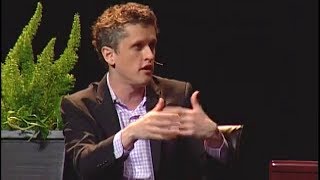
Aaron Levie discusses how Box scaled to $250m ARR by moving from consumer adoption to enterprise deals. He covers educating investors on SaaS economics during the IPO roadshow, shifting from shadow IT wins to CIO-led strategic purchases, and how early API investments in 2006 and the OpenBox platform shaped Box's partner strategy.
Chapters
All right, Good morning everybody. Thanks for coming. Appreciate everyone coming. We've got folks from India, New Zealand, Australia, France, uk. So thanks for everyone who had to travel further than an Uber takes you to be here, which is pretty cool. Yeah. So I just want to talk, spend a few minutes just talking about this sort of informal community that we've all built together, kind of what we've done and where it's going. But just for a quick roadmap for today, it's all a bit of an experiment. As you can probably tell, we're at max capacity and I think we have a pretty sort of amazing hand picked lineup. And what it's really all about today, which you can probably guess from the very descriptive title, is sort of staging this growth right from sort of post initial traction all the way up and sort of more of the tactical learnings from all of that. So I think that should be pretty great. Just for a few minutes thinking through this, what is this kind of community about? It's really about us helping each other and hopefully today hopeful that you'll spend almost as much time meeting each other downstairs where we've got lots of space all around meeting your peers than just hearing from the speakers and others. So we've got plenty of time during the day. Do not feel any pressure to go to all of the sessions. I encourage you to skip some and hang out downstairs or wherever and meet more people. As you've seen, we have cappuccino and coffee and we will open the bar at 3 o' clock sharp so you will have more reasons to hang out downstairs with your colleagues. And I think the WI fi only works downstairs. So anyhow, sort of thinking through this, this is kind of what I think our joint mission is to get to from 0 to 100 million faster with less stress and more success. And you know, I think what we all have realized having done this before and everyone that's speaking today is that, you know, everyone gets to that first million in revenue a little bit differently, but the rest of the journey, for a given acv, for a given deal size, it's pretty similar. So if we all here can make a few less mistakes that our speakers have made that I've made, you'll be able to get there faster with less stress. A quick look back and look forward. So we've just about crossed a million views a month on all this Sastor content, which is pretty cool. So thanks to everyone for that. I think it's a pretty epic sort of pre milestone, so it's cool we've learned a lot. We've done about 1500 Quora answers, which is kind of stunning. 220 posts and it's gone pretty good. So I think we've sort of got this core that I think has helped a lot of people. And so what's kind of, what do we want to do with this now that we've sort of built this together sort of accidentally and organically? Ultimately, the goal is to help put together sort of the whole SAS playbook to the extent that's possible. Every answer, every process, so that no one has to figure out the stuff that I had to figure out, that Aaron had to figure out that speaking next, Bob Tinker, all our other speakers, so that the stuff that has been done before, you will understand it. So that's kind of the goal. So there's sort of a couple stages where I'm thinking about it. Obviously you've seen a little bit, you know, we kind of redid the blog so that you can access more of this content because most of it is not particularly timely. So that was kind of a nice little upgrade that we did. Thanks to Gretchen and the team there, Aaron, Ross and I, you've probably seen it. We've got the sequel to Predictable Revenue we're working on together that should be out any month now. But most of the parts you can read the previews on Predictable Revenue on Aaron's site, it's going to go iterated. There's some more case studies and it should be pretty awesome with the particular focus kind of of that next stage of getting from that one to 20 and beyond in recurring revenue. So that I think will be helpful because the first volume that Aaron did obviously has been a bible for a lot of folks here, and the second one will be a great sort of companion for the next stage. So that's great, especially because Aaron's done like 92% of the work, which is a gift and kind of just a couple things quickly that's kind of next. You know, learning from all of this content that we have is we want to make it easier to find all these answers and easier to implement. So kind of the next phase of this Saster will be one including more voices. So we'll get more folks that have sort of been through the whole 0 to 100 million cycle, ideally been through some sort of exit, so that they're not biased, they're not constantly talking about their apps. So more second and third timers. We'll get a handful more involved and then we'll make more of this content exposed, right? So you can find answers, you can search them, you can upvote them so that every answer on how to create a sales comp plan, how to think about demand, gen spend, all these things that are simply answers, they'll all be even more accessible than they are today because we've got 14, 1500 pieces of content. But we know people tend to stumble on them. And so this is a phase. Hopefully this will be done in the next couple months. Another thing that we're working on, which has turned out to be about 10 times harder than I thought, as everything sort of does in the journey, is we're working on a very targeted, very narrow careers jobs site that will help do just sort of the one thing that we all need once we start figuring things out was help you find, fill out the management team. So you've probably seen a few little things, a few tweets here. We kind of experimented this built 0.1 or 1.0, didn't quite get where we're going to go. But you'll see this later this year. And the only goal, it'll be very narrow, which is to help CEOs find an extra person, an extra few candidates on their management team they haven't had before and to help candidates find one or two interesting things they haven't seen before. So it'll be very, very narrowly targeted. It's not a job board, it's not a spray and pray, but it'll be. The idea is to be a secret extra hiring weapon for CEOs and founders. So I was hoping we could launch it today, but as long as we get it done by next February 5th, I think it'll still be good. A lot of learnings, but the good news is from learning from it now, I think we know how to make this awesome and authentic and accomplish its goals. So look for that over the coming months. The other thing we're working on, which has proven to be more complicated, but we will at some point, I think this year try and come up with some physical space, hopefully at least 30,000 square feet or more. And kind of the idea will be, you know, sort of not co working. We don't need co working. It's once you already have revenue, but sort of collaborating together in a space where maybe everyone can get 500 to 800 square feet. A place where once you've got something going and you've got a sales rep or two, but you don't have an entire team, maybe you can work for 3, 612 months with other folks and learn just like we're doing today. So there's kind of a little bit of a void there that can. And focus on folks that have revenue. So it's a little bit ambitious, but hopefully at some point this year, we'll have space for folks either outside of the area or in the Bay Area that have sort of just hitting initial traction and want to be with some of their more peers before they want to launch out and create their whole worldwide headquarters. So we're sort of working on that, which is a lot, and kind of just step back today, and then we can kick things off. It's all about scaling. So expect to hear a lot of stories. Don't expect to hear a lot of strategy. Don't expect to hear a lot of talk about the deep future. It's all about war stories and doing better. The main point is to have fun.
Right.
We've got the bar. We've got this. Just as a reminder, this space at the end of the day will turn over. We'll all go downstairs for a bigger cocktail party, and they'll flip this around, this space into a big party. We'll come back upstairs. So having fun and just being together is the biggest part. And again, a reminder downstairs, the lobby is as important as anything. We'll chat about today. So thanks for everybody. If Aaron's ready, we'll take a few extra minutes. Otherwise, we'll grab the band and let me just introduce. I should have memorized their name, but we have the amazing Americano Social Club. So thank you for entertaining us here. Right. And let's just try. Let's see if this works. Akita, what did you think of that joke?
Good.
That's perfect. Okay, I think we're warmed up. Okay. Aaron, how do you. Does that work for you? The drums?
Is that all right?
Yeah. All right.
Come on out. Yeah.
Hey. Thanks for coming.
How you doing?
Good. It's good to see you.
Good to see you.
Sorry we kept you backstage for like an hour or something like that.
No. How's the sound doing? So you're like the Jimmy Fallon of sound? Is that the plan?
You guide me at first because on.
The Internet, it was looking more like you were heading the Tony Robbins direction.
Tony Robbins direction.
But that was because I didn't know about this setup, so.
Well, thanks for coming.
Thanks for having me.
So it's been busy the last few weeks.
Yeah. We wanted to make sure we went public before this event. So if you had only done it a year ago, it would have been more convenient.
Actually. Good. Is it tiring?
Which part?
The whole roadshow ipo, or is it just another piece of a pie eating contest?
Or.
How are you feeling today?
So, well, you made me wake up at 8:00am, so apologies. Okay. So this morning I'm a little bit more tired, but, you know, it's interesting. So I think the most interesting dynamic of the the roadshow is, you know, it's not. It's sort of the way I thought about it is it's sort of like doing a growth stage party round. So you go pitch.
There is no great lead. Right. No one's taking the whole chunk.
You go out and you pitch 400 investors.
Yeah.
And you just see who wants to get involved.
Yeah. Well, good. There's a million things that I'm sure.
It'S harder than that for other people, but, like bankers and everything. But it was just like meeting after meeting after meeting explaining how SaaS works.
Yeah. Well, you've spent 11 years fundraising, so.
Yes.
It's not a new thing.
We were fundraising after week three, so this is a pretty common occurrence for us.
So just one question on that, then I want to go back. So you spoke with 400 institutional investors. 40. Whatever it is, they understand SaaS, right?
They're working on it. And what we do, we do sort of extreme SaaS, which is what I think we figured out early on in our business model, in our market was once you understand the dynamic of SaaS, and I appreciate some of the clarification you've been able to put out on the Internet. Once you understand that dynamic, then actually your growth and your scale of your business is actually most functional to how much you invest in scaling it up. So once we figured that part out and once capital was relatively cheap, we just decided, well, why don't we just go and scale as fast as possible, as big as possible. Because the market, there's no real. Like, we're never. I mean, for the next many years, we're not going to bump up against our total addressable market. So our growth is essentially dependent on what level of investment we put into growing the business. And once we determine that, we just decided to kind of push on the gas pedal.
Oh, yeah, yeah. So just one question, just on the.
Road show, Just curious.
So at this point, it's, you know, it's early 2015. What percent of sort of the institutional investors you talk to do understand customer lifetime value investment in sales and marketing. Magic number. Have most of them done their homework by the time they got to you?
Yeah. So there's as with anything in these kind of situations, there's a spectrum of level of education. And it's funny because actually, so you have, so you have. On one end of the spectrum, you had these meetings where literally the person that we were pitching was an investor in IBM and emc. And they're like, well, where's the cash flow? And that was one end of the spectrum.
So you still get those.
Yes, you still get those. On the other end of the spectrum, you would have people that would say, why aren't you spending more? And why aren't you just. If you have this annuity essentially that continues to grow and you have this recurring revenue stream, well, why would you even decide not to spend 500 million on sales and marketing? Just keep scaling it up. And then you have somewhere in between, which is actually kind of the funniest because they'll go into the meeting and they'll start the meeting and they'll say, hmm, the economics of your business are kind of confusing. We don't know why you're not profitable yet. What's going on here? Why aren't you figuring out the kind of near term profitability? And then we'll explore the model and the growth curve and they're like, why don't you spend more on sales and marketing then right now? And literally within a 30 minute meeting they've gone from IBM cash flow investor to Andreessen Horowitz.
But you're learning that on the roadshow. So we're sort of in the fourth inning of the evolution of thinking here.
Sadly, not everyone is reading Quora yet in the east coast public market scene. So we think the model is catching up.
So do you. Just one question. I'm curious about that. So you've talked to all these institutional investors. Is there room for another 10 box like IPOs? Is there enough appetite out there to do another. Is there just other check? Obviously they can write there's huge amount of institutional capital, but for SaaS, right. Is there enough appetite for 10 more IPOs like Box this year?
You think that would be probably dangerous for me to answer. So what I would say is. What I would say is that there's plenty of room for companies that are benefiting from this very clearly secular change toward cloud and mobile. And if you've built a significant business on the back or benefiting from that, then there's room for 100. I mean, it's not, I don't think there's any particular kind of limit to the appetite. The investors that are betting on this thesis are realizing that. So in our space, what we do is, and this is the singular most misunderstood part about our business, is that people think we're in the storage business. And we buy storage, we buy hard drives, or else we can't store your data. But what we sell you is an application and a service and a platform. And so the significant difference there is actually, when you look at our architecture, storage is one layer, but there's also a security layer, there's a content management layer, there's a search layer, there's a data loss prevention layer. And the big disruption in our particular space is that maybe as an end user, you use Box as an easy way to share and collaborate around files, but actually as an enterprise, you're saving on your storage infrastructure, your data loss prevention infrastructure, your search appliance, because all that gets compressed in our data center. And then. And then we sell that to you at a fifth of the price of what you would have had to go buy from all those disparate technologies. And so from that standpoint, it's very disruptive in terms of legacy traditional enterprise software and infrastructure businesses. And so for companies that can either drive those kind of disruptive economics in enterprise or create and go after a new market, there's going to be essentially unlimited appetite for interesting businesses.
Yeah, yeah. No, clearly, like with Alibaba, we see there's lots of institutional appetite. Right. I hope it's unlimited for sas. So it's good to hear that you at least feel that a little bit from the roadshow. So it's a good learning for all of us. Right?
Yep. No promises.
The party isn't going to end at least in the next 30 to 60 days.
Was this a party that I was applying?
Didn't feel like a party.
I don't know. Somebody should have invited me, so.
Well, one thing I want to touch on from a founder perspective, and I know you've probably explained it about a thousand times on the roadshow and otherwise, but I do want to dig a little bit into parts of the business model that are not obvious, just while I have you. Right. So I think of Box.
We did this really awkward roadshow video. You could just play it for 20 minutes if you want.
Yeah. Dan had a nice suit. I saw that.
And we kept being advised, do not move your arms. And so we're just like, okay, so we'll just explain Sass like this then. And they're like, yep, that's good.
Yes.
So gives you a sense of who the audience is.
So I think one of the Many things. I mean, Obviously we've got SaaS business models, but Box also is what I call sort of an SML app. Right. Because you've got small, medium and large. It's not like Viva where you've got to be pretty big. Right. It's not like just small. And so it's confusing to a lot of folks who touch box. Right. I've got my Box node up right now, which has nothing to do with how your average 7 figure customer uses Box. Right. And so a couple things. Let's start at the high end. Go ahead. Sorry, I'll let you tell me how now in a seven figure deal, how the CIO thinks about Box and what they're looking for from it.
Yeah, so that's also, I think we also didn't benefit from that part of our business model, which was really interesting because in all of the growth years we actually benefited tremendously from consumerization. And all of the, I mean all of the, it's fascinating. All the trends that actually drive our business and our revenue were actually confusing the investment story because what happens is we build and we try and build software that is going to be incredibly easy to use, incredibly elegant and it should feel like the best in class consumer technologies. And sometimes it doesn't and we screwed up, but we're like, at least as a mission, that is our job. And so it's interesting because by virtue of doing that, it ends up confusing a lot of the investment communicators because they're like, well, this is like icloud or something like that. And we're like maybe for just the end user knowledge worker when they load it on their iPad. But you have to remember that what the enterprise has had to deal with is all of this infrastructure and software, software and security. And so it was really interesting because I think we were one of the first companies, not just, I mean many companies with SaaS have gone public and that model is largely understood. We sort of have like an extra derivative of sort of consumerization in SaaS which made it a little bit more complicated because you have to be able to separate, okay, there's something that the IT organization buys which is different than what the user has. And maybe what the user has looks like it's somehow like a consumer technology. But actually what they're selling is this enterprise thing and that's where all the revenue comes from. And so that's actually led us to be successful with the ges and Eli Lillys and Toyotas of the world. But to investors, it's not as simple as just saying, hey, it's an HR system. It's boring, you won't understand it, but we make lots of money. Yep. And you have to be able to actually wrap your head around two principles at once. And then what was your question?
So we've got GE or Eila or.
Pick your favorite sml.
Yeah. So just so when you go into one of those big deals, who's buying? And really why are they buying? Right. What are they looking to do? Is it to control content? I mean, you know, blocks. We can talk about workflow and all this, but what's driving that check? Right.
Yeah. So, and this is actually probably the most interesting thing for any startup is that tends to change at each phase that you're in, and not just the customer you're selling to, but your own maturation as a product in an organization. So you go back eight years ago when we decided to focus on the enterprise and the sale was really to, at best a departmental level business person as opposed to even departmental it.
Yep. Someone that wanted to manage their team.
Yeah, right.
Just make sure we're on the same page with content on my team, my guys, my sales team, whatever it is.
It was the sales manager, the marketing manager, the product manager of a 100 person unit. Right.
Of P and G. And if that's all you did, how big would box be today? You think if that was all you.
Saw, probably like a billion dollars or something. Because we would have spent less on sales and marketing. So that was a joke. But so we would be, I don't know, we'd be a $25 million business. I mean, it would be a productivity app and which is completely nothing wrong with the productivity app, believe me. But it would not have been able to be in a strategic conversation with the cio. So you sort of start at the productivity conversation and that is generally a sale to a department or a team. And then what started to happen was you saw, so it was interesting. So if you really go back, how long do you want to make this? When am I off?
Well, we've got time. We gained a few extra minutes. We've got 33 minutes. Take your time.
That 33 is just me.
Well, I gave you a few of my minutes. You don't have to use all of them.
Okay, okay.
But we don't have to go back to like 04.
Okay. Okay.
So 08's far enough back in time.
Okay, got it. So basically, so when we started the company, the idea was just really simple and secure. File sharing, collaboration and it got brought into businesses at the team and individual level. And what we got really lucky on was all of a sudden iPads, Androids, Android phones, iPhones, Amazon Web Services, salesforce.com Getting to Real scale. And out of Nowhere, in a three year period, while between 06 and 07 and maybe 00:10, we, we were a nice to have a sort of like, yeah, that's kind of okay to have in the corner of the enterprise like just the definition of shadow IT with maybe a little bit more kind of broader implications to all of a sudden you had this redefined IT landscape where all of the new devices, all of the new ways of working didn't work with the legacy content management and collaboration software. So somewhere around 2010 and 2012 we basically said, okay, our sale is now going to be at the IT level. Not yet the cio, but some innovative IT manager who wants to, you know, put their, you know, throw their hat in the ring as doing something innovative. And that was really where we were able to start to have more strategic conversations. And so we went from purely departmental to actually being able to be implemented in the enterprise. And that was still still only at like 1,000 employees or 5,000 employees. And then really only in the past year and a half has that then gone to CIO level, which is how do we become a strategic kind of part of the IT architecture? How do we actually build one of the kind of key pillars of their enterprise?
And so what, so now it's 2015, right. And does the CIO is sort of box a part of the CIO stack today, A checklist, something they're looking to bring into the enterprise or where is it on that sort of evolution?
Well, I mean, we certainly would like.
It to be right, or let's call it Cloud Content Manager. Sorry, what's the right acronym I should be saying?
Well, we call it Enterprise Content Collaboration Enterprise.
Well, let me just get that right. Enterprise Content, Content collaboration.
And the reason for that is that makes sense. It's sort of ecm, which is Enterprise Content Management. But it's not just about the management. It's actually how do you use and collaborate.
But ECM is a traditional part of the stack, there's no question.
Right, so, and actually what's funny is ECM was never a strategic buy for the cio. That was actually still like one level below the cio. The CIO was erp, CRM, core infrastructure, those kinds of major applications. But what's changed is you have the CIO of GE, Jamie Miller, who she's responsible for 350,000 people's technology. And if she spends her time in meetings about their accounting system and about their 10 data centers and what's going on with that and what is their capital outlay, she is going to miss the boat. On what does Jeff Immelt need in his hand to access his email? What does the person who's going to be a field service agent repairing a jet engine, what apps are they going to need? And so her purview, her purview is the same, but the things that are within that are completely different. And so you now have innovative CIOs like Jay Miller who then say, I actually am not going to differentiate how I deliver it. If I do the world's best Oracle implementation, IBM's got that for us, we're just not going to worry about it. It is what it is. It's not going to be totally transformational. I'm sure Oracle and IBM would say otherwise, but generally it's not gonna like completely change their business. What might change their business is can they enable their employees to be more productive, can they actually get more performance out of the business with new applications? And so she's actually having a very kind of startup oriented mindset like who in the ecosystem should I be working with that's gonna give me that next generation set of technologies? And largely it's gonna be companies in this room. It's going to be companies like Salesforce and Workday. And that means that we're becoming now a strategic layer in the enterprise because we can represent really driving that mix between end user productivity but also saving you tens of millions of dollars on your infrastructure that now you just don't have to go manage.
But it's interesting. So with the case of her, that's still a hero story, right? And what I mean is we all live through this, we have a champion. And it's like the one innovative thing that they deployed this year in the enterprise, right? At some point box will be big enough that won't be true anymore, right? Because I've got to deploy, right? I've got to manage cloud content. Cloud, cloud. It's not an option anymore. It's not innovative innovation. It's requisite. And my thesis would be it's a learning for me today. I thought you would be about to cross that chasm where some of your customers, it's less about innovation and it's more about, okay, control. Look, there's all this content flying around. It's scary. And Box is the coolest thing I can bring in, but yet control what's happening in the enterprise. Right. And that's less about innovation. Right. Than control.
Correct. So that was the champion. Now let's get to the in practice. So the champion is the cio, Jamie Miller. She is a person under her name, Larry Biagini. He's the CTO and he was the former Chief Risk Officer of ge. And his job is to only implement technology that's going to make GE safer and more secure and not actually introduce new risk.
Yes.
And the conversation with Larry Biagini and every CISO in the world right now, every head of compliance in the world, every head of risk, is if you don't implement these technologies, largely these new end user, more user friendly, mobile, consumerized technologies that also give you control at the enterprise level, what's going to happen is two things. One is people will bring in their own software in the workplace, which is a trend that we benefited from for many years, but at the scale of GE is a very dangerous proposition when it comes to managing data. And on the other end, and what we've seen with Sony, what we're seeing essentially every day, is the legacy infrastructure is actually worse off and actually introducing vulnerabilities into the enterprise environment. And you've had a whole sort of cycle now of enterprises starting to grapple with this reality, which was the legacy IT model assumed that you build out lots of infrastructure, you build out lots of software, you put a perimeter security model around that, and assuming everything was sort of within that perimeter, then you're totally secure. And what we found is that all you have to do is poke one hole in that perimeter and then, boom, you have everything. And that was because the security stack was separate from the storage stack, which was separate from the content management stack. And so all of these things were disparate components that never were integrated because they came from different vendors, and they all sort of assumed it was somebody else's responsibility from a software standpoint to solve that problem. So now you have organizations that are recognizing that actually it's my legacy architect that is keeping me unsafe or preventing me from becoming safe. And I'm going to have to have a modern architecture. Now, modern architecture doesn't always mean cloud, but at least in our space, if you're talking about sharing and collaborating, if you're talking about accessing data remotely, then cloud is largely the right delivery mechanism for that kind of set of capabilities. So our customer conversations today is not pitching cloud, it's actually pitching a modern architecture. And in that modern architecture, you get visibility, control, granularity, you get all of the things that you would have wanted to design in a content management and collaboration system if it came with security and if it came with all those components.
And going to that at the scale box is at today when you go and talk with the CIOs and the folks, how important is product? And what I mean by that is you go and pitch Salesforce today, don't get me wrong, the products important, but it's not really about whether it has the best leads, contacts and opportunities. Right. I mean you have to have the best demo, the best configuration. But if you're talking about security, right. And compliance on the product side, is it pretty mature, is it pretty figured out? Now? Is that a big part of the discussion?
Now when you say product, do you mean on the user side or the just.
Well, I think for the audience here, I'm guessing when you go in to pitch a seven or eight figure deal, right. It's not like you're talking about features.
You'Re not actually some of our budgets.
But perhaps you are.
Right? Well this is still, I think you're calling it the hero sale, right. So in that situation, it's actually still our demo, which is hands down the best way to get somebody excited because they've never seen that demo before with security, with compliance, with the control. Right. You've never been in a hospital and and seen beautiful software that's also HIPAA compliant. You haven't been in a financial services institution where you can share and collaborate in a consumer like way, but also have FINRA compliance. Yes. So it ends up being that connection between these two disparate and two traditionally this paradoxical combination of how do you have simplicity with security and with these controls. And again, the reason for that was traditionally, I mean a whole bunch of reasons. People just sucked at building enterprise software before. But Then also the SharePoint product manager assumed that somebody else was going to solve the security. And so by the time you actually got implemented in the enterprise, the SharePoint product manager can do anything they want all day long to be innovative. But when it actually gets implemented in an enterprise, all bets are off on how your product is actually going to work and perform. And so it is actually still that end user experience that is backed by the enterprise capabilities and that robust platform that make it a sale that works.
At the CIO level and how. I'll tell you a quick anecdote to relate to that. You had me on a panel at Boxworks a couple years ago when it was Smaller. And one of your. I don't know what I said, but one of your customers came up to me afterwards and she said, that's not what Erin told me.
Oh, God.
So what did I tell her or.
What did you say?
I don't even. It doesn't matter. What was interesting was the personal connection. Right. And it was a pretty good brand name customer. So how much, especially now with CIOs and others, how do you spend your time with customers like prospects, existing customers?
What's your job?
How has that changed, if at all, at some level over the last couple years? What's your advice to the folks here?
Oh, this is tough because my evolution was different than probably how I would recommend other people do it. That's why we're here, because of learnings.
Right? Learnings. Right.
That's the whole point of this thing. Okay, got it. So we can talk.
We'll make sure we pitch whatever we want to pitch in our remaining time. But learnings are really the goal. Right.
I thought I was trying to get sign ups. Okay. So basically when we started out, I mean, literally for the first six or seven years, I was very product focused, very internally focused.
I mean, you sat in the middle of the team, as I remember, like really in the pit with all the developers or wherever you are, right?
Yeah. Come out.
You pop out. You still do.
I still do. But I'm in the office now, unfortunately, less frequently. But for the first seven years. And this was, I mean, part of this was just consistent with our sales model. It was an inside sales model. And the people we were talking with really didn't demand an in person meeting, so we could kind of accomplish that. But actually I was rarely even on the phone with customers. Our real customer interaction was driven by our first head of sales, our first kind of set of sales individuals and sales team. And so I was super product focused. And then we had a sales operation and we would meet almost daily on just like, hey, what are you hearing? What's going on in the field? What a customer is asking for? And then we would, through any means necessary, try and build the kind of things that we thought were going to be important for these customers. And that really worked up to a certain stage of customer sort of credibility.
Yeah, small silo deals into departments. Got it.
Exactly. So finally we got to a stage where the decision maker was going to be the cio. And that really required a level of commitment on our end. And then to see that this was something that I personally and the company was signing up to really Support them and work with them. So in the past two to three years, I'm now on the road 35, 40% of my time. And that basically just consists of flying to cities that I hadn't previously ever heard of and doing dinners and lunches. And there's steak dinners, guys.
We talked about steak dinners more today. You didn't know those worked back in 04 and 05.
I didn't think we ever would have to do them.
But they work, don't they?
Well, to me it's more of a practicality. You have so many hours in a day. Some of those hours people eat food and so if you can combine food and meeting a customer, it's just really convenient. So maybe it would sound better if we called them like sandwich dinners or sushi dinners. Like actually I rarely eat steak. Like specifically understood. Yeah, but yeah, I mean it's sort of less mysterious when you're actually there because you're just eating, talking about it.
So you went from. So you got pretty far spending really 0% of your time directly interacting with. So is the learning that you would have done more.
I would have done a lot more. And I think we got away with it because we could be our best customer. So we were sort of, our own company was scaling at the rate that our customers environments sort of adopted. So like when we were 200 employees, you know, our biggest customers were maybe 500 user deployments. So we kind of just knew like, okay, what is the security you need? What is the content management capability need? And then it started to really, the size of our customers started to dramatically outpace our own ability to sort of assume or kind of guess what was right for them. And this is the really hard part about enterprise software versus consumer. So in the consumer model, the expectation is that maybe the customer's not right and you could just build, build whatever product you want. And it's because you can be your best consumer. In the enterprise, the biggest challenge is that you can't necessarily be your best customer. You don't know what it's like to be on an oil rig trying to pull up mission critical documentation. I mean maybe three of you do. We don't know what it's like to be in a hospital and you're spending most of your time in an electronic health record system and you need to pull up a medical image. So. So unless you actually get out and see what people are doing, how they are thinking about it, you can't make the best product decisions for your customers. I think the thing that the big difference though, and this is something I would never change, is a lot of companies confuse getting to know your customer and that customer intimacy with building whatever they ask for. And that's obviously the road to essentially all of the broken enterprise dreams that we've always had, which is you go meet with this massive customer and they're about to give you a $5 million check. But they say we want to do some weird encryption thing or we want to do this certain kind of DRM capability, or the best one is we want to put a little interstitial that requires the user to type in which, you know, department they're in. So there can be a chargeback. Yep.
And you've never done one of those deals.
What's that?
You've never done one of those deals where you build a little one off piece for the big customer. You've always been able to say no.
Out of 44,000 customers, we may have done that half a dozen times. And when we do that, it is this, we have this secret back end system that we can turn on and off things. And it's like a few people have that and. But the thing that we try and do, so we've won thousands of deals where the customer request didn't match what we were building. And the way that we solved that problem was, and this is the customer partnership side, was can you get the customer to understand why the way that you're building it might actually better solve their problem?
Right.
When you hear about that esoteric security thing, can you get the customer to understand that, that it makes complete sense through the lens of their responsibility and what they're trying to solve. But if you implemented it in the way that it's being proposed, then actually users aren't going to adopt the product and then they're going to actually be less secure ultimately. And if you can have that conversation in partnership with the customer, they actually tend to be fairly thoughtful because they ultimately want to solve their business problem. And now we've lost many deals because of that. And actually this is one of our biggest categories of why we lose deals is because there's some weird feature that we are philosophically opposed to because we think it's going to hinder what the user is trying to accomplish or what the business is trying to accomplish. And if we just can't get the customer to agree with that, then we might lose that deal. Now the good news is, assuming you have venture capital and other customers, time's likely on your side. Because if you're right about that that customer's gonna come back to you.
Yeah, with the long view.
And we see that all the time. We see a lot of customers that will implement some wonky thing that they thought was gonna solve their business problem because it felt really great on paper. But actually in practice, they don't need it. It doesn't work.
They don't need it. But what about pulling forward from the roadmap? If a customer wants something that you've got scheduled for the second half of 2016 and it's a $5 million check, that's. That's negotiable with the product team, isn't it?
Well, that's a different issue because that's your own trade offs of do you want to increase your ability to work with larger customers on this one vector or do you want to support some other specific priority?
That's a tough one, right?
It's a tough one, but it doesn't have the same philosophical challenges. Because in theory, at least in the way that I'm reading your question is, is you're not doing that as a one off. You're doing that to get to the next stage. And we've done that many times. We've at many moments built something that was necessary for one tier of customer that didn't break our product for anybody. But maybe we had to prioritize getting to that next tier versus maybe the 95th percentile thing that we wanted to do on the tier below it. And we're making those trade offs all the time. It's always this calculus of, okay, well if we get the GE deal, then that actually will get us more customers in this area. And if we start that now versus pushing that off by two years, then we'll be much farther ahead. And that's something that you just have to decide as an entrepreneur, how do you want to prioritize those decisions? But what we don't do is build the thing that the customer wants that we think is going to break actually why they want to do it in the first place. And that's, I think, the really important kind of decision making and discipline that you have to have in building these kind of products. Yeah.
So one last customer question then. I want to talk a little bit about platform because I think box and platform is pretty interesting for entrepreneurs. But going back to spending more time with customers now on the road should have done more ratio of prospects versus existing for your time. There's only so much time, right?
Yeah. So it's interesting. I mean, the best advice I generally have is Try and build a business model that once you've sold to your customer, you can continue to grow with that customer. So either new capabilities, being able to sell more seats, because while it is absolutely true that in the SaaS model, you want to spend a lot of time selling back into your customer because you want them to recur, that's fundamental to the model. It also helps if you can actually continue to increase their utilization and how they think of the product and the platform. And most of our customers actually go through an evolution. So if you think about somebody at the scale of a GE or an Eli Lilly or a Toyota, hundreds of thousands of employees in many cases, our first couple of years with them is largely secure file sharing and collaboration. We're not transforming every single way that they use their content. So we actually have to go back in and say, hey, you haven't been using us for this next generation workflow that we've been designing. Can we understand your business about bit more? And that dramatically benefits both of us because they get more value, we get a stickier customer in the process. So spend a lot of time with existing customers. At the same time, we're only in about half of the Fortune 500, and so we want to make sure that we're in essentially all of the Fortune 500. So we have to spend a lot of time with new customers as well. And so, you know, any given city that I'll go to, if we do one of these steak dinners, there'll be 50% new customers. 50%, 50% customers, 50% prospects. And then we're. I'm trying to spend time with everybody.
So your gut is 50, 50, something like that. Right.
You know, it would be. I would have to.
Well, the reason I ask is what most of us do, especially when we're scaling fast. I believe we tend to spend as CEOs, too much time with prospects because that's the hunt. And we get that. We get that if we don't go and fly to GE, this deal isn't going to close. But that's like 10% of the revenue that you're ever going to get from ge. So my view is we all naturally, instinctively get the ratio wrong. And the best way I think for Box to get from 250 to a billion is probably to go sit at GE and Toyota and Eli Lilly and make sure all those seats deploy and then they'll get you more customers and more case studies rather than getting pulled into Ford. Or maybe Ford's a customer, but the next Toyota. Right.
Well, now I'm going to say something that I actually, you know, I don't even know your thoughts on. So why don't we talk about professional services for a second?
Yeah, it's a good topic.
What's your official take on it?
I think that I personally, I was an idiot not charging for professional services. It's free money up to about 25% of your revenue. It still counts as recurring revenue and you have to do it anyway. The customers are happy to pay for it. I learned as a corporate vice president at Adobe it's already budgeted in procurement, you don't even actually have to ask for it. When the PO goes in, there's a buffer for 15 to 20% for services and then there's another buffer and we'll talk about platform 15 to 20% for the other crap I have to buy to make that product actually work. Right, Integration. So I wanted easy to use product, but you're an idiot to not take that 20% or whatever the number is. What is it for Box? I don't remember from the SOS right.
Now it is far less than that. But it's actually been a bigger priority for us because it goes towards solving that problem. Which is, okay, we've got this great customer, they are deploying the product, but why don't we have an active conversation and strategic conversation with every one of their IT architects at all times on how can they be using us more and how do we make that not be any kind of trade off decision for us?
Right.
Because normally if they're not paying for it, then you're going to have to say, well, how do we balance all of these customer success managers time with all of these customers? If we can have a partnership with GE where they're actually funding the ability to find all these new use cases, that's actually a great partnership for both of us. So I would say that, that the CEO, if you're having to be responsible for that 250 to a billion, then you might want to just also just look at investing in some other areas. But I still am pretty balanced with my time.
Yeah. Okay, so Box is very interesting on platform to me for a bunch of reasons. So let's first of all go back in time. Early days like open box. Right. So you invest in a platform because before box is in any way big enough to be a platform, right? Maybe. Right. Challenge me on this. And so give me your thoughts on two sides. How do you build the platform and then how do your partners make money off it? How do Attach rates, work scale. Because I think Box tried to push the envelope of time and be a platform as early as you could be in the life cycle of a company.
Company, right, yeah. So what you're referring to was now a retired brand that we had called Open box, which was 2008, I believe, and that was our first way to take data from Box and open it and use it in applications such as EchoSign. So were you guys on the. Were you guys one of the launch partners of that.
One of the first ones? Yeah, a long time ago. I didn't even know what was going on, but. Sounds good. Let's do it.
We were old school, so actually, funny enough, I think I received checks in the mail from you guys for like a long time.
You did? I hand signed them.
Yeah.
Straight to you.
Yeah, we were getting like $200 referral fees. Those were good days.
That's beer money, right?
So we had actually APIs in our first year, so back in 2006. And the original idea was, well, if you're storing your data in Box, but you know, we're only going to build one interface for you to access that information. There are potentially thousands of interfaces that you want to be able to pull up your data from. So we built the APIs very early on and then we said the next step was, okay, how do we actually encourage more utilization of that from customers? So we built OpenBox, which opened up the platform a bit more for users. And then we eventually, kind of two or three years later, early 2010 timeframe, we said, we need to expand this even further. Mobile was emerging obviously as a very hot topic. And so we said, well, one of the unique things about mobile is there's not really a file system concept in the same way that there is in your desktop. So there actually needs to be a cloud file system. And if you're building an enterprise application, what's going to happen is you're going to be creating data and content that the enterprise is going to care a lot about. So if you're an app that has note taking or collaboration or a document workflow, you know, the sort of the value proposition is somewhere in the IP and the user experience and the workflow. It's not necessarily in the data storage. So maybe you would be storing that content in Amazon or something. But it's clearly not like the storage component. So we said, well, what if we could go into enterprise and say Box is the common layer where you manage your content, but it's accessible and usable by any application that you give permission to. And so we said if we could do that, then maybe we could actually potentially be a driver of revenue, driver of growth for the application ecosystem. And I think we're still early in all of the ways that that needs to manifest throughout our business.
Right.
We need our sales team to be, be better equipped to be pushing on the sort of best in class applications. I think our marketplace leaves some room for improvement. So we have to improve that experience. We've tested different economic models, different revenue sharing models in the app ecosystem. So we're still trying to.
It takes a while to figure that one out.
It really does. But in general, what we do know for a fact is that we have a lot of customers that are standardizing on Box. We are going to be the layer where they manage the security and control and then storage of the data. But there's an ecosystem of thousands of amazing applications that create content or can leverage the data already in box and we can actually hopefully accelerate the adoption of those applications. If you can already pass the security tests, if you already have that assurance that your data is going to be in a platform that's been vetted. Like the one thing that is the one thing that we all have to deal with. Because now, because of sort of the information economy and the data economy, data is becoming essentially the most important asset for enterprises. And for ge, probably that was probably a year of auditing and control testing.
And from Signature, but before deployment or pre signature, pre signature, a year.
So we had to spend a year on working with the security team, the compliance team, the risk team. We did audits, all hoping to close the deal. What was that?
All hoping to close the deal?
Yes, exactly.
Even now it spends a year for Box to get through that.
See our financials. So you spend a lot of money because not everybody buys this stuff on day one, for sure. So you have to spend a lot of money to invest in working with these customers. And so for, let's say a year, all of the time around auditing, testing, selling, marketing to GE is unprofitable. And then we're just praying every night that GE comes on board and agrees with our strategy and then converts. And so we've done a lot of that work now for a large number of enterprises. So if we can hopefully save people on that time and energy and instead let you focus on building a world class mobile application or a world class workflow application, then hopefully we can actually drive way more innovation in the enterprise. So that's essentially our platform model and our API model, right now let me.
Ask you sort of a revenue question around that. So there's two reasons that as a vendor I might integrate with Box. One is because I need to or it makes my product better. It has nothing to do with money. I mean, mobileiron in Box. There's a lot of synergies here. Right. The money is irrelevant. Right. Then there'll be folks that. Where the attach rate's important. Right. So if Box is. Let's assume we're doing, I don't know what the Exact number is, 250 million run rate. I'm just using a round number. Right. Can I get two and a half million dollars off of Box as a lead source today?
Are you?
You know, because I think of a. Because here's the.
Attach rate us as a lead source.
Because here's the thing. I think you're lucky to get a 1% attach rate. If you're lucky and you work incredibly hard. Right? Right. What percent of Salesforce customers does Box have? Right. I mean, after all these years, it's not like 10%. Maybe it is accidentally. Right. But not through Salesforce as a lead source, for example. Right. So maybe I think the interesting question is, can people make millions of dollars off of Box now as a lead source? Right.
Yeah. This is a great question. So what we realized was we had to begin to dimensionalize our customer base a little bit differently if we were going to go accomplish that. So the. And I think, I mean, actually maybe just show of hands, who's building an application that has an industry focus or industry orientation to it? Okay. So that was just. And then who's building something that is more function based? Job function based. Okay, interesting. And then who's everybody else? Just products for 100% of the customer base. Okay. Who's doing something that is universal? Every employee in the whole company could use it. Okay, cool. All right. So what we realized was depending on which category you're in, there are different economic values that we could drive. Right. So if you're building a deep industry workflow, you actually could make more money from that customer than we can. If you're building a job function app, then we have to find a way to get that job function app to the right part of our customer base. And if you're building something universal, then we have to figure out how do we kind of go to market together across the entire customer base. So we built this thing called Box for industries last year, which is. We announced this last year and we said, can we take some of the leading applications that are more industry focused. This was just our sort of first foray into big, a lot more concert, having a much more concerted effort. And we said could we take a bunch of solutions by industry? You know, do you know? So if you go to our website and you go to the retail page or you go to the media and entertainment page or. The financial services page or whatever, you're going to see our healthcare page, you're going to see partners listed out. And we basically want to continue to expand that. So if there's a world class application that does something with medical information and can send medical information to our platform, we want to list that right in our whole healthcare solution set. And then where this really kind of where the rubber meets the road is because of our professional services. What we're trying to build out is also industry orientation to professional services. So if our PS team can actually say here are the five or ten best industry apps for the this industry, can we actually help you implement them to go solve additional problems that you're going to be running into? So we'd like to have an end to end view of from the first sales conver, from the first time you touch our website, to the first sales conversation, to the proof of concept, all the way to implementation. How do we actually take a platform and a partner point of view to that process? And so that's what we're working on. So definitely email us if you haven't because this is what we're building out right now.
One question I'm curious because Box did a lot of things super early. What I'm wondering if you did later was true verticalization. Right? So you meet anybody that came out of SAP in the 90s and the first thing you'll meet them at 1 million revenue. We got to have Box for healthcare. Box for. They tell you this is the roadmap at like half a million in revenue, right? It seems to me maybe Box didn't have true specialized teams in verticals until maybe you're at 100 million or something like that. I'm guessing maybe you had it early on, but I don't think it was early.
We didn't and I would say really until. I mean maybe a fraction of our sales force is verticalized in any way even now.
Is that late? I mean obviously Box is doing great but thinking about it in learnings is.
It's hard because you're always, I mean this is like the age old sales segmentation challenge. Do you do territories, do you do size of company, do you do verticals? And you're always kind of the matrix of complexity. So you have to be able to get enough value from your customers to be able to, in any given territory to be able to start to even specialize on verticals within those territories. So we actually were, I don't think we were late or early. We were sort of appropriately timed relative to, to the impact it would have on our business. Got it. And the key distinction is so in crossing the chasm, hopefully everybody's read this. This is sort of the bible for building enterprise software. But there's a couple important sort of updates that I think Jeff Moore would make and agree with, which is when you were in the 90s and you had to sort of top down sell your software to get in in the first place, then you had to make some really, really key early trade offs. Like you had to actually decide where am I going to get a flywheel effect going? And you don't really get a flywheel. There's no such thing as the Fortune 500. So you can't like I can't host an event for the Fortune 500. So you can get a flywheel though at a sub level of that. I can get a flywheel going in life sciences, I can get a flywheel going in energy companies. And so in the 90s, you kind of actually had to verticalize very early on or you had to go after a very specific need because it actually was the only way that you were going to be able to build a sales and marketing engine because it was going to be very people based and people have to have priorities and all of these challenges with humans. So in the Internet world and in an inbound world, when we launched Box and It was called Box.net at first, when we launched Box.net, within the first month, we had people in government, we had universities, we had energy, we had consumer packaged goods. So we didn't actually have to make those kind of decisions. And really until we started to begin to do kind of the deeper, more at least where we had the leading indicators that we could do more transformational kinds of customer projects where we could actually reinvent how a hospital used all their medical documentation and medical images, we didn't really actually have to verticalize. And now this is becoming a new layer to our business.
Got it.
That's cool. Well, good.
We're just about out of time. Anything you want to hit that we didn't hit in our chat?
Any advice for me?
Any advice? Boy, that's a good question. I don't know the answer to, I think my advice is, actually I was chatting with someone about this last night is enjoy the second decade. Right. You're in the second decade.
Second decade.
Right. It's a good time. Right.
Things.
It's a good place to be. Getting through those first five years can be really hard.
Right.
It's for everybody. Right.
So your advice is enjoy the second decade.
I think so. Right. And, you know, versus the world will not end. A box is going to be a success no matter what. Right. So let's enjoy the second decade. Right. That's my advice.
Right. That's some knock on wood commentary. Great. So when are you. Are you going to launch something? What are you doing? Well, are you just trying to make lots of money off all of us?
We're making nothing. We're hopefully to break even. Right. I think our goal is just sort of help the next generation and distribute so that all the stuff we had to learn, like these people don't have to learn it. They can just figure out how to make a better product.
Yeah. But then there's gonna be some other weird twist to the story.
There will be. And then the next guy can do that one. Right. That's fine. That's a natural evolution. All right. And can you stay for a minute with Bob if he's here?
Absolutely.
All right. Thank you, Aaron, very much. Yeah, thank you. Yeah.










