AI GTM STAGE
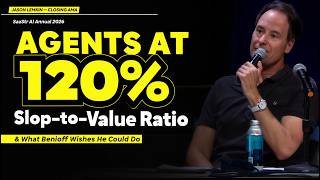
Jason M. Lemkin argues that agentic AI is forcing B2B sales to abandon relationship-building for deep product expertise. AI agents like Replit's Cody and Salesforce's Qualified already outperform human reps at email and meeting-setting, while forward-deployed engineers replace traditional account executives.
Chapters
I'm gonna have a little fun. I mean, I'm a fun— I don't— my vendor Cody's, I mean, his title's different, but when I met him, he was basically the chief forward deployed engineer, field engineer from Replit. I got to know him when I started on Replit because I had a bump. Okay, I talked to him briefly, didn't really help me, but then when I talked to him the second time, he exactly explained to me why I had my issue. Like, Marketo They made Amelia get on the phone for 4 hours and blamed her, and then told me they wouldn't even talk to me unless I agreed to another 4 hours. They didn't help me at all. Cody helped me, which was great, and he's helped me a lot, but he built the human relationship because he explained to me why I was having the issues and how to get around it. That is more— okay, it's a long-winded answer. Honestly, that is so much more valuable in the age of AI when the products are changing every week. Okay. When I'm going, when I use Salesforce at my last company, I'm using Salesforce at my next company and the next company. I don't need the sales rep to add a lot of value. I need to find out what, can you give me a discount? What discount do you have? And do you have Giants tickets? Okay. Because it's the same product at my last company. And then being on text with your rep at somewhere with a high brand for a product I've already bought before, the rep thinks they have a great relationship. And anytime I talk to a rep, that says they have a relationship in an interview or anything, I ask, when did you meet them in person? And today it's never. Do you think— I think it is impossible to build a relationship on Zoom. Okay, so all these relationships are fake on text. And I know I'm rambling, but I'm saying to the Cody example, and this is why I say I've written this blog post so many times in the last year. Your sales team needs to be product experts in the age of AI. They need to know the effing product cold because the products are changing so quickly. And if they can't answer a question like Cody can, I don't want you. I'll just bypass you. I will try, or I will buy the vendor that understands, the salesperson that actually understands the product. And we've lost track of that in this era, right? And it is more important when these products are nothing like they were 3 months ago. You need, and if the sales team are domain experts, if they're product experts, and they're there for the customer, they actually, the customers will love them so much, the sales rep doesn't care. You can't get rid of them. They want to go on to the next deal. You want to know when you have the right sales team in your company? When the customers hound them for months and years after. When they added so much value in the sales process that even when they're handed off to someone else in New York, they don't do it. They still go back to Bobby or Lindsay. That's the sign of a great salesperson is you can't, they cannot get rid of their customers. They just can't because they added so much value. So of course you want to go back to your rep. The rep's a really good person and they know their product cold, but they kind of need to work on the, on the Google deal or the Meta deal. Right. So, so long-winded way of saying matters more than ever. Bring your customers together, do dinners, do events, do all— it pays off. But golfing doesn't work anymore. Schmoozing does not work anymore. Show me the— it's not show me the value day. It's show me. I mean, it's not show me the money. It's show me the value. It's not buy the software and hopefully in 12 months it works. And going back to the FDE point, in the agentic world, the whole opportunity and stress with an FDE is you have to show customers value instantly. And my epiphany on this is, you know, last summer Mark Benioff came on the 20VC podcast with me and Harry and Rory, and I asked him last summer, what have you learned from Palantir, right? And first he said the lines, he said the bug marks. It shows me I'm undercharging because they charge 9 figures. I should charge more for our competitive products. And then I said, and then he went on to it, but then I got him in an unguarded moment and I said to Marc, "What do you think about FDEs?" And he stopped and he said, "I can't do this, but I wish every single customer at Salesforce had an FDE and did not have to pay me until they were deployed." That's what he wanted in the agentic age. Not to charge them for Salesforce and hope in 5 years it went live. Like when I was at Adobe, it took them 5 years to go live on Salesforce. In the agentic era, he wished every single person could go live before they signed the contract. That's a great founder, right? Now, it doesn't work for their motion. It doesn't work for their people. But if you do that— so the way we've added value and the time has changed so much. If your salesperson can't do some of that, they're just not part of the discussion. Right? So long-winded way to answer. So I do believe in the connections. I do believe in it. But if it's performative in the world of AI, I just don't think it's going to work the way it used to. Right? It works best in static worlds where the products don't change for 30 years. So thank you.
Next version of SaaS terrain.
Oh, next version of SaaS terrain. Well, I don't know. You weren't here. Were you here last year? Well, it's nothing like last year, is it? I mean, the venue's the same. So I don't know. Other than that, I do believe that we've contributed some value in the world into where AI building and AI agents are for B2B. It's what I'm passionate about and Amelia is passionate about. So to the extent we can stay close to the bleeding edge on this, this is all we're going to do is agents for B2B. So whatever. Again, last year when I came, we had one pseudo-agent, this Delphi clone of me. Now we have 21. I don't know if it'll be— What's 21 squared, Cody? 442 or so? Maybe, will we have 442 agents next year? Will we have 4? Will we have meta-autonomous agents that we don't even know exists? Will we have compostable software and software won't exist? I don't know. What I do know is, okay, rambly way of thinking what I've learned. CEO of Replit was here on the first day and said we're living in the future, like what Sastra and I are doing. I will say if I had to summarize this whole event to you, if you guys think that's true, it's not. Anything that Amelia and I have done, it's two people without an engineer, you can all do it. You can do everything we do, you can probably do a better job of it, right? And so, That's the mission, to see where that goes and to drive. And what I want is everybody to be better than us. I want everybody at this event, everyone in this room, to be better than me and Amelia. And then we have a victory. And what that means next year, I don't think I'll know for 10 months. So thank you. Yeah. Hey, hey. Hey, hey.
—because you touched on a bunch of it already, and I don't want to waste anybody's time or very expensive product.
Yep. I mean, not expensive. It's just you think a lot about value of your time in the agentic era, right? You just think about— it actually, ultimately, you think about value of time differently when you can build it yourself. Because it's interesting. A lot of folks talk about psychosis you get from vibe coding, from Replit or Cloud Code or others. And it's true. You can go down a rat hole and waste a whole week, right? Or two weeks, and you come out of it, come out, I gotta get back to the agent, right? And so you got, you do have to measure your time, right?
Yeah. You know, you were talking on FTEs, which is really relevant to me. You kind of talked about how sales engineers, solutions architect, these terms are becoming kind of nebulous. You know, I cut my teeth at sales. Towards MuleSoft, you know, there's always, you're an AE, you're a solutions engineer or sales engineer, and there's always like one question that you're like, nope, you answer that one. And I remember sometime last year, you did not call them out by name, which was very kind of you, but you totally roasted a rep on Twitter for not understanding MCP.
Oh yeah, well from a very AI famous startup, right? Yeah. He said it didn't matter. He said he didn't need to know how MCP worked at a company that was at the bleeding edge of agents. Yeah. Oh, now I remember.
I'm not a software engineer until meeting 3. What do you think about the traditional kind of, it's an AE with a sales engineer? I think that's totally going away, but just kind of want your thoughts on it.
I don't know. I think the, what I do think is going away is that when I got into this business, and I didn't know anything, right? I had never done, I'd done sales, I'd never done B2B sales, When I got to know Salesforce in the early days of Salesforce, they had the classic AE/SE team, right? The AE would go into a deal and be a people person and would roughly understand how Salesforce, at least the CRM, worked because they used it, right? There's a cheat code for salespeople selling sales tools. You don't actually have to be an expert because you use the product, right? And they would go in. And then if you guys haven't really seen enterprise Salesforce deployments, it's so extensible and so customizable. That you do need an SE to really understand how to do really customized deployments and workflows. And so they bring in an SE, right? And, and, and in fact, I think for a while at Salesforce, the ratio was like 1 to 8, and you had to like compete for the SE or something like that. And there was a system. Anyhow, that does seem dated in a sense, but I just think it's getting rebooted. And It was interesting. I don't know if— were you here for the CPO summit that kicked off yesterday morning? I wish I'd done more with Harvey because I— it was new to me. Maybe I'll ask Anik to come back and do a session, a workshop with us, because I didn't know how Harvey did it. And it was very interesting that lawyers lead the deployment. Did you hear? And they have SEs and technical resources that make sure for law firms it comes by. But the vanguard isn't a sales rep. It's actually a lawyer. And I guess the lawyer in a sense is in sales, right? But it's very interesting to me that all of their— they have forward-deployed lawyers because they're going to law firms and law firms understand the workflows that lawyers need to do. And then they partner with solution engineering and, and then sometimes FTEs. Maybe I got off track, but they go back with PODs and they have pods with SEs that help deploy Harvey. And she said, only for our biggest accounts do we have on-site FTEs, right? It's a very small amount. So that's a very different way of working, but it's still a pairing of a domain expert and a technical expert, isn't it? 100%. But maybe the change will be we'll see more domain experts rather than generalist salespeople trained with solution architects, and maybe we won't need as many generalist salespeople that golf.
Right? Yeah. I think with FBE's trajectory to Mars, what happens with the sales engineers? Kind of just make the AE better?
Well, look, I don't have all the answers. I'll tell you one story, and then we got to break. It's a good question. I don't have all the answers, but I'll tell you a funny— I'll just tell you, to me it's funny. You won't think it's funny, but so the president of Salesforce SMB was here yesterday and spoke and came out and talked to us. And he said, you know, backstage, he said, it's pretty funny, Jason. You don't have an FDE at AgentForce. I'm like, what do you mean? We have Lindsay, who's— she's great. Like Cody, it's like we talk about Lindsay every week and we say she's great. And he laughed. He's like, no, she's a— she's an SE. We don't— and he's like, "Yeah, she knows how to deploy Agentforce really well, but she's not an engineer by training." I'm like, "We don't care." Like, to— and my point was, to Adam, the way Salesforce is organized, that was a very important distinction. We were not getting an FDE resource, this Palantir-type resource. We were getting an SE, but we got an S-tier SE. What do we care? What's the difference between an S-tier SE or a lawyer that is a hacker that knows how to deploy the workflow in Harvey, but can't code? It's just getting blurry, isn't it? We need the right team of people that can make the cut. Going back to the original Marc Benioff point, and I don't have all the answers, you need a team of people like Harvey that can make sure the agentic deployment works, not just that they buy software and Accenture has to get it to work. Okay, that's your job. And that mix, whether they're SEs, EEs, SAs, whatever, you're going to find your own pot and mix so that they go live in 30 days and the agent already works. That's the difference. The agent has to work when they go live. So that's my rambly answer to, everyone's going to have their motley and don't over-index on titles, right? Thank you. Appreciate the thoughtfulness. Yeah.
Hi, Jason. I've been following you and Rory for a couple of years now. Love your thoughts and thought process. I am Piyanka, CEO of Ask Enola. It's a CFO command center. And I've been in AI for 24 years. I built my first AI model in So that was like GPT 0.1 or something like that?
What was it?
No, it was nothing GPT. It was building, you know, CNNs and RNNs, which is what, you know, you'd call AI. Anyway, been in this space for 24 years. And I wanted to talk about— I listened to a lot of tracks last 3 days. And I'm a little disappointed in something. So I want to bring it to you. And see how you—
Be nice. It's been a long 3 days. I can take it. Just be nice. That's all. Just, just, just put a nice—
I love you. I told you already.
Can you put a thin wrapper on it?
Is that possible? I will. I will. I want to talk about hallucination and slop. So I know you really—
But in brief, because it's Q&A, I get the topic. I have a lot of thoughts. But what's the question on hallucinations and slop?
Well, you know, the SASTR app, the SASTR website, everything is slop to me because not a lot of things work. Yes. And also Databricks guy was there. We didn't— there's a lot of slop. Are we going to get you—
I mean, well, okay, let me, let's end it there. I'm going to answer your question. Okay. Let me give you a mean answer and then let me give you a good answer. Right. The mean answer is then don't come back. Yeah. No, but let me tell you why I say that. You're absolutely right. There's slop. Okay. Yeah. But if it's, if it's, there's— and what slop means is changing on a weekly and monthly basis. If you thought that website was so bad that your experience here was crappy, honestly, tell me. I will refund you before you leave. But my ask is, if it's so bad, don't come back, right? Because we're building together. We're builders, okay? I'm just being a little, I'm having a little, but I will give you a refund right now. Just tell me your email. But the only thing I ask if people want a refund after 3 days is that they not come back because I don't want to get taken advantage of, right? No, that's not the point. So, but no, I know. But I'm challenging you, so that I'm just being a little, but I'm challenging you because you're right, because you are right, right? You need to think about it differently. Everything that we've built wouldn't, on that site, would not exist without the slop. It, what, you know what we would be without slop? We would be on Squarespace and none of it would work. We were on Squarespace the last 4 years. It, we could not run this event on Squarespace. So Is it perfect? If you have a critical eye, can you see slop? Can you see things that break? I think I spent— I started working on that site in November and updating and fixing things and breaking it. And the last time I checked in, it was 16,000 lines of code. And when Amelia brought it up today, it was 48,000. I think in those 32,000, there's some slop. I will stipulate in those 32,000 lines of code that have been added in the last 2 weeks.
My question was different. I didn't mean to make you defensive. My question was— No, no, you're not.
I'm just saying my point of the slop thing, this is my meta-learning, OK? The ratio of value to slop for us is improving. It's improving. And what we can produce, what we can output is improving on a weekly basis. So one way to look is, oh, it's slop, it's whatever. And I respect the engineer's view of that, but I think you have to— I think what's much more interesting is the slope of improvement. And let's see what it's like in 6 months or in a year. and you will still find slop, don't get me wrong, because there's no developers here. But I bet what we have in a year is something no one could ever build. It's like great, right? And there is still slop as part of that, but I think the slop, the visible slop ratio is declining relative to— there's a value to—
okay, let me— Can I ask my question, Jason?
I think this is important though. I think there's a value to slop ratio that if you really want to, if you want to be a critic, You have to think about value versus slop, right? I'll give you a really simple example. I hate automated LinkedIn comments. If you have a lot of LinkedIn comments, it's just exhausting, right? And so, maybe 3 or 4, and of course they're slop, right? 3 or 4 months ago, they were just horrible, right? I mean, LinkedIn comments were like, "Go team!" Right? And now, 'cause I have, I spend a lot of time on LinkedIn, it's important to us, we have 310,000 followers. 400,000 followers, important channel. So I, and I try to engage with the community, so I read every comment on our post that I can. I mean, I've been here for 3 days, and it's a weird thing. The last month or so, the comments are very good. Now they're all this, you can see the clod or whatever, you can see the—
Yeah, it was 4.7.
Yeah, you can see it, but they're pretty good. And I bet, here's what I bet happens in 90 days, and the sloppers think I'm crazy, okay? But I think you're gonna agree with me. I think in 90 days The comments are going to be so good on LinkedIn. Like, you're almost like, should I just have my AI do the LinkedIn post and have the slop talk to the AI? Because it'll be better than a human could do. Like, it's getting so good. And I know they're going to be able to filter it out and Twitter's work, but it's too— the comments are getting so, so— it's my only meta point is I'm tracking value to slop and on LinkedIn comments, the slop is getting really good, but there's no value to those comments. They're hollow, right? But I think for our products, The value is 50 times the slop. I can prove it to you, right? Yeah.
My question was more broader. I know I think I didn't frame it right, so I apologize. Yes.
Well, I've been up, I've been on stage for 3 days, so it's on me too.
Yeah, yeah. What I was trying to understand, because I'm, so as a CEO of something where I'm building very high fidelity system, where our core is heroism.
And you should be sensitive to that, building a high fidelity system, right? Yeah.
My question is more, and I, you know, like, I listened to many of these products and things like they would not break. You would sign up and the second screen is— doesn't work. It just disappears on you. I'm just wondering, do you see the future that people get— because humans, we get used to stuff. Would people get used to this stuff not working in second click or third click? Is this where we are heading?
I don't think so. I don't think so. I think you raise a good point. And then we can break. And then if it's OK, I'll let Cody go first. But I'll give you an extra minute if it's It's okay if I can do one to the side. This is just my view being pretty deep in it. I think everything's getting, for real, is getting better really, really quickly, okay? And I think, I said this in my opener, but if I had more time, I would've spent like 10 minutes on it. The best products that are here that are new, the productivity is amazing, but the software is early and often not even that good. Not even that good. And if you, I don't know, you probably didn't come, We needed like 2 hours to do it right, but we came to this morning session from 9 to 10 where Emilia and I, we wanted to show all the backends of all of our apps. And we— I didn't get enough time with them to show you, but the message I want to kind of tell you is I love these vendors that we use. I love them to death. I promote them. We've gotten them millions and millions of business, but it's a lot of forms and fields with some bugs and hallucinations, micro hallucinations. But the value is so like— the value all the times a year ago to these products did not exist. Especially since Claude 4.5, but even just in general, there's the value is so high that it's okay. And I think in a year we're going to get better at guardrails and we're going to get better at training. And I think you're still going to see it. But the software is, it's hacking and basic and primitive. And I agree with you, but this event couldn't exist without this site. And like, like Monaco right here behind you, like just to pick an example and then we'll break, you know, Sam will— I was talking with the CEO outside because he used to work with me. He's like, I can tell you plenty of things that aren't that great in Monaco today. We've launched 2 months ago. Okay. You know, they'll end up doing $10 million in revenue in a handful of months, not at Replit's pace, but close. And he's like, "I'll tell you what doesn't work." But, and there's, so there's slop in it. The first day we went live on Monaco, it got us a sales appointment with Anthropic. It found the right person at Anthropic. It figured out Anthropic was in our ICP. It reached out to them. It got the right person in. It set a meeting. Whatever slop there is in there, it's okay. Okay, long-winded answer. So I'm watching this value to slop, but I agree with you. And if you're— and you will look at some of these products and you're like, this software sucks, but give— you're right, but give them time. They're new. I get it. But yeah, but the AI is better than the software sometimes, right? So thank you. Thank you. Yeah.
Thanks for all your time at this event. Yeah. So yesterday when we were talking, like, I'd been kind of tracking like the goal for when we're making agents ourselves sales side. Is like make something that's as good as 80% of like your best guy. And that's sort of the frame of mind. And like, you totally elevated me and you were like, hey, there are certain categories in the sales side where agents are good enough now. You can think of it as something where it can be 120% as good. It's like there's certain small slivers where like the AI has gotten to a good point and kind of like near-term where the puck is going. It's like you shouldn't set your eyes at like 80% of your best guy and scale that. You should set it on 120% of your best guy. Like you said, social selling was one of those. Like, could you expand a little on that? And then any of the other ones where you see like right now this is a place where when we put an agent, it can be better than the best human.
Yeah, it was— listen, sometimes a little slow. I figured this out yesterday when I was doing the Replit podcast with Cody when I don't know if you guys saw the emails that 10K in Replit built. These outbound emails I showed the first day, and I'm like, this is the first time I've seen something that's clearly better than any human could do. The copy was really good, but the amount of analytics it took to put together the top 40 people to meet here for somebody, a human just couldn't do it. So that was my aha moment just 2 weeks ago, where I never saw any of our agents produce an email that was better than a human could do. So I had a micro epiphany. I shared it with Amelia. She instantly was like, fuck, we've never seen this before in a year. I shared it with the CEO of Repodont. He's 50 times smarter than me, but he didn't quite— it was too— that was too subtle for him to get. He'll get it later. But then I realized in certain cases we're at the point where an agent can do better than a human. And so your goal should not be to reproduce 80% of your best person, but the goal should be to find areas where the goal is higher than human. And then— but then I'll give you another example, and then I'm going to have to think about it because it's new to me. A silly example I gave was just social selling where a lot of folks thought in 2021 you could get ahead in sales by monitoring 100 prospects manually sitting on LinkedIn and pretending you're working and writing great job when your prospect wrote something that they called the social selling. I called it wasting time on LinkedIn and something people selling courses and sales in 2021 made a lot of money selling courses on social selling. Maybe it worked. Certainly when someone I've never heard of says great job, Jason M. Lemkin, I don't take a meeting. My point to Cody is now that we launched an agent that does social media for us, that agent could actually add value. So here's my example that I gave to Cody, and then I'll give you one more example, then we'll break. Imagine I wrote a post that said, hey, I love Replit, but today I had an issue getting my OAuth working, getting my login working, and I wrote it and I did it kindly, but it was a gripe. If an agent could 110% answer, an agent can go do that. Analyze the issue, maybe even look at my account and give me a solution, an answer. An agent could do that. A human could never do that. A human could do social selling, social support, social help in a way a human never could do by providing help. Going back to this area, you can help your prospects. You— someone could say, you know, I'm trying to find an AI SDR tool that integrates with HubSpot and does it this way. And if your tool can do that, you can— instead of saying great job, you have time for coffee next week, the agent could say, here are 22 customers with your exact workflow. Here are 10 customers I've solved that don't. Payhawk uses this exact workflow. Would you like to talk to the Payhawk team? Can I introduce you to them? That is instant effin' value. That's something that a human can't do with social selling. So that's another example. Then I'm gonna just give you the most basic example that I did this morning. If you've heard it, I don't mean to be redundant, but it's an example. So one of the agents we use is Qualified from Salesforce. I think they're right here, Qualified. Salesforce bought them, and it manages inbound folks. Folks want to meet with us, they want to sponsor us, they want to do something, and it answers their questions, it qualifies them. If they're a good prospect, it sets up a meeting in real time. And that's great, but I didn't know until Amelia presented the data this morning, I think it set up like 682 meetings. That is better than any BDR I've ever worked with could do. BDRs are supposed to set up like X meetings a month. A week, but a lot of them are crappy meetings and they don't get it done and they have a quota to hit. So they, they lower the bar at meetings and you show up to the meeting and the meeting is dumb and whatever. This, it's had up 682 strong meetings. So that is better than any human BDR I've ever worked with. So that should be the goal here. And that's why I said if nothing else, if you do nothing else on your website, if you do nothing else after this, you should truly automate inbound because it's a crying shame if they can't get their answers done and get in a meeting with a human one next week. And it's a crying shame if your API is not agent-friendly. It is a crying shame because you will lose customers when the agent says, I don't want to, I want to use a different vendor. Right. These are the two level ups. So that's another example. I got to think about more. But I think 80% usually is good. But we're going to find more and more things where you're like, Jesus, do I even want a human? Because when you cross 100%, I don't know, why would you want a human BDR? Why would you want— I mean, I don't know. I go on forever. I'm starting to get tired. But one of the worst experiences I've ever had buying is when I go to a website and I say I want to contact sales, which I don't want to do, and I hit contact, and I don't have time, I'm not that person. I want to do it electronically, and then I have to talk to sales, and I get on the phone, and it's Jason, and he's like, "What do you guys do? I am Jason, I just graduated from San Mateo Community College. I'd like to know what you do and decide if you're worth the time of an AE that has time next week to maybe talk to you." That is the most sale-crushing call I've ever had. And so many vendors today do it, especially old-school vendors. It's how they do sales. It's not worth the 80s time, so you've got to talk to a kid. The kid can't answer. I gotta answer a question. Okay, do you integrate with Replit? I'll have to ask Bob about that. And you just took my time, right? So that role, which still exists in the wild today, of course AI can do 110% of that. That role should go extinct as soon as humanly possible. I'm gonna think about more, but thank you. Yeah, thanks for all the help.
Hey Jason, that's why the Wi-Fi password is high and AIBER, right?
Well, it's because Artisan was kind enough to sponsor and support this event, but yeah, that's true, yeah.
Great, thank you very much. So earlier you mentioned a new normal. The last time we had a new normal was 2020, and I do see some analogies here. You know, I think 2026 is the new 2020. 2020, and just as remote readiness was on top of every leader's mind back then, today it's AI readiness. And I think AI adoption is probably the new vaccination. I've talked with industry leaders in this new normal. I've been sensing a lot of uncertainty, some inspiration, some imposter syndrome, with an undertone of optimism.
Yes.
My question to you is, how do you recommend What do you think is the best way for leaders to know where they stand in the industry in terms of—
Well, it would have helped if they came here because they would at least get a real sense of where it's going, right? Yeah. What's the best advice to leaders that are not in the loop on it, you mean?
Yeah, what's your best advice for them in terms of how to measure AI readiness, how to define AI readiness, AI fluency, how to know where they stand in the industry?
Well, first of all, I'll try my— I don't actually know if I can give you the best answer. I have to think about it. I'll give you a few thoughts. First of all, if you have to ask that question, your organization is not AI fluent by definition, right? You think so? Yes, because you know. If you are shipping code the way Andrew Bilecki is, when every single person on his product design team is committing code, you know. When they're arguing with you, when your engineering team says, "These tools don't work." Maybe they're right, man. You ain't AI fluent. It's not. This is not hard to see. I'm not saying for folks that are several degrees away from here, it's— if you have to ask, you're not right. I will tell you my idea, which is a goofy idea. But were you here this morning when Amelia and I talked live in Replit to our agents? When we talked, when I asked— what was the question I asked? Does anyone remember? I'm getting tired, but I think I asked QB or 10K to write the follow-up email, right? To folks coming here and a few other things. What I would do for my leadership is I would bring up the most magical app that you use internally, the most magical thing you do, and show it to them in this room and see what you get. And if folks don't understand that magic moment, you're in trouble. What you want to get in the room is, how do we bring that into our company? Show them the best effin' tool, best use case, best of anything, do a demo, make their jaws drop, and they will, their aha moment, and then they will get it. They will get that you can talk to your app. They will get that it can do analysis or whatever it is. Give them that aha moment and you will drive organizational change, I think. So thank you. The best I can. The only other thing I'll quickly say, and I am getting tired, but I'll try to go 15 minutes or more. I don't want to spend too much time on this. It's just a side note, but this is nothing like 2020, 2021. None of that playbook works because I, I forget what term you used, um, that it was a dislocation or a change in time. It turned out it was just an aberration of a virus. Um, it made every— it just increased demand and it ended almost instantly. And for what it's worth, if you go back and look, the 2021 buying boom didn't end until Q1 or Q2 of 2022, but that's because there were a lag. If you go back and look, for example, at Shopify data, and Shopify was very public. Shopify said in the summer of 2020, this is over because Shopify is SMB and is the pulse of e-commerce. And Shopify saw this huge jump in May, April. By June it was over, and Shopify said it is over. In fact, Shopify had the opposite problem. There was so much momentum that growth dipped and then it came back exactly to where it was before 2020. This was just this weird thing. Software didn't change. There was no AI. We just had this weird aberration where people would buy 20-year-old software like it was going out of fashion. And then even though because of long contract terms and other issues, it looked like it lasted the better part of 2 years, but it lasted like 3 or 4 months is what we're going to find out. And so if you look at the folks and Shopify saw it and, you know, a small example and then we'll break the other just because I know it well. There was a brief boom in digital event software because you couldn't go to events like this and a company called Hopin raised it like $6 billion. and we ran digital events and they were all dead by September of 2020. Now they kept— they renewed the— the people bought 1-year contracts, 2-year contracts, 3-year contracts. So if you just looked at the ARR, you would think it was okay, but the net new was zero within months after 20. So my point is, I just don't think we learned anything from that era. Hopefully, you know, I had a few exits as an investor. That was good, um, because one— a couple of those companies would be dead today. But, but I really think we— I'm just— I'm not— I'm— sounds facetious, but I think we learned nothing in that area because it was up, down, and back to the old. We don't even work from home anymore. Like, I mean, more of us are distributed. Of course we learn these skills, but come to the, you know, in the Bay Area, like, friggin' everyone's grinding in the office. So I don't— it changed, but not, not that much. But thank you.
So, Jason, I appreciate your bluntness in tackling the questions. I had a question that's with skills like engineering, computer science in these days, given the coding assistants and coding AI, I guess how important you see that now or going into the future? And I'm thinking also from the— Sorry, can you rephrase the question? Just thinking about like the importance of like pure engineering skills or computer science skills given, I guess, the prevalence of vibe coding or AI. Bias coding?
Well, look, it's a complicated question, right? I mean, here's what I— here's what's clear today, right? If you look at all the data, engineers were most in the demand in 2021 and 2020 for the reason we talked about. There was no automation. Budgets were infinite and it was okay to not make— to be unprofitable. So that was the peak of engineering hiring. It has bounced back some relative lows, and it is on a relative tear. I think engineering hiring roles are up 20 or 30% now. Okay? So, and let's examine even a simple reason. Let's say to build crappy software, we don't need that many engineers anymore, right? To build a Kanban tool. Like, look at what Amelia and I built. Like, we built some pretty— okay, there's some slop. But we built some pretty badass stuff without it. So if that was the bar, we'd be billionaires, right? But there's an arms race. So, I mean, let's have a fun example. Let's just take— because Rapid and Lovable are in like a death race. They're both at like $500 million in 18 months, okay, which is amazing. But they're like, what if they decided to phone it in for a year? So what's happening is, even though we can do some basic crap with fewer engineers, That means the bar has— I mean, this is obvious. The bar has gone up so high that everyone is still going to hire any TEDx engineers, any 100x engineers, any S-tier people they can because their productivity is insane. It is so high. So I don't see any— and everyone I know running a successful AI-fueled company within reason will hire any engineer they can hire that can do the work. Now, do you need a mediocre person? That needs 3 months to build an admin page. You do not need that. Right? And so, what does it mean for entry-level people? You know, I was gonna, when we had Arsalan from Databricks yesterday, I meant to ask him, we ran out of time. Databricks is hiring, at 10,000 people, is hiring as many entry-level folks as it ever has. Okay? Mainly from top universities, but it has. But there are plenty of folks who are no longer hiring entry-level people. It's not worth it. It's not worth training people on the other things. I have 2 kids in college, but my son is at Penn State, which is like pretty good state school. He's off the charts in math and all these things I don't even understand. Jason M. Lemkin's fine string theory and crap I don't even understand. So he has jobs. Like some of the labs find him because of what he's wrote. None of his classmates in CS have a job. Zero. There's no need for, for the most part, for a B-tier, B-level grade CS engineer. It's been devastated, right? My daughter's at Stanford. No one's going into CS, but it doesn't mean we don't need engineers. We just don't need 2021 engineers the way we did. So it's a rambly answer that I don't know, but simply, if the world was static, we could get by with engineers, but the arms race means we need more great engineers than ever. It's an arms race, right? The world is the least static it's ever been in our lifetime in software. So It's the best I can do today, but thank you. Thank you. Jason, thank you for your time. I'm kind of curious if you embrace Replit and somebody's tool very specifically, and how do you balance it out with other vendors? I don't. The pace of innovation is so great. I don't, I don't, I don't care. I don't have time to care. In all seriousness, it's a great question. And I will tell you, for the most part, I You can see it in what we say and what we do. You can see it. I am deeply loyal and bound to the vendors we worked with, but it could have been different ones. And I'll give you an extreme example. Okay. And just as a wrap session. So like when we came out of SaaStr last year, one year ago, we had one broad agent, Delphi.ai, this clone that we started, and I told version of the story. And then we had two sales reps who made six figures. For very little work that quit on site last year. They quit on site. I paid, I did, I thanked them. They worked from home. They worked 20 hours a week and they both quit after making $200,000 a year. Okay. One of them closed one deal the entire time he was here and Amelia gave it to him. I couldn't take it any longer. So I said, Amelia, walk around here. If any of these AI SDRs work, I'm in. Like, if it works, I can't take it anymore. I can't take paying people $150,000, $200,000 a year and quitting. And they just walked out the door here. They didn't even say goodbye. They just ghosted me. And like, maybe I'm a bad person. It's possible, but I think, I don't think I am. Do you guys, I mean, trying pretty hard. So I couldn't, so Amelia walked around the room and Artisan CEO, who we didn't know, grabbed Amelia and said, we'll effin' do it for you. We will deploy, you don't have to do a demo or schedule something next week. We'll just effin' deploy it for you. And I think within a week or two, we were live on Artisan. And it's been great and we are fans and we have brought them millions and millions of business and we are super fans. But there's another vendor and I've known the CEO, I've known them since I started in SaaS, and the CEO asks me all the time, why aren't you using us? Well, you made us talk to a CRO who said we weren't worth his time and he wouldn't customize the product and it would take several months to go live. Jasper just effin' had his team do it in a fuckin' day. So, so because of that, I've learned a lot about this. And so the switching costs are not always high, but they are real. And there's context switching costs and I don't want to do it. I just don't have time. If the world wasn't changing, maybe I would. But, and so this is a rambling answer. The other thing I've learned is it really matters which vendor you pick. But, and I've said this so many times and we've said it today and it's still true. What matters most is training it and getting really good at it. I would rather pick one of these vendors and get really, really good at it, even if it's 11% worse than its competitor, than start from scratch. And we're so good at this, right? We're Replit superfans, but also we're— Amelia and I are really good at Replit, right? And we use Lovable and we've used v0, and maybe even they're better, okay? But we're so good at it that the cost to switch is just too high. If it were day one, maybe it was different, right? And it's very interesting Because the world changes, because not to ramble too much, but when I started on the Vibe journey, I didn't know anything, right? These products were very primitive. So like last June or something, I put out a call on Twitter, which of these products should I use? Should I use Replit, Lovable, or— what's that? And the products were very primitive back then, and I said, here's what I need. I don't want to figure out how to hook up a database. I don't want to figure out how to do OAuth. I just want an environment that works. Basically, everybody said, listen, these products are pretty similar in June of last year, but if you want a self-contained environment without having to hook up a database or auth, Replit's your only choice. So it's a default choice. So I didn't talk to anybody. I didn't do a bake-off. When 3 CTOs said, of your 3 criteria, there's only a vendor, I just picked it and went, right? And then I got— and then outside of some bumps, I got better and better and better. And now I think I have superpowers, right? And I'm not— I can't tell you for sure it's better, But I don't, and I'm doing a long-winded answer. What is interesting, what we are gonna do after this event is we're gonna use some of these tools side by side, and we are gonna do this, it's gonna be fun, and we're gonna do the same thing in them and see how they're different. See how they're different. And I'll tell you, I'll give you a little preview, 'cause at the end, Amelia took, so we built this, and Rapplidee is great, we built 10K our AI VP of marketing, right? And we did have the head of marketing at Lovable here. She came and we rebuilt the whole thing in Lovable while we were here. Now, not entirely. We rebuilt the whole— enough of it. We hooked it up to the same backends, the same things. And I haven't seen it yet. And we're not going to— we're not going to move over. But we did the same thing. We asked each of them the best 3 ideas of the day. So we asked our 10K marketer built on Replit its best 3 ideas. And Amelia asked the one built on Lovable its best 3 ideas. And they both had 3 good ideas of the day, but they had different perspectives. They had different tastes, as strange as it sounds. The Repl.it one, and maybe it's the DNA of Omjad and the team, the Repl.it team was very focused on performance marketing. Get more emails out, do more of this, do more of these things that are measurable. The Lovable one was do more digital media, do more brand marketing. And maybe that's Anton's personality, who sort of this producty, markety background, right? And so it was very funny that the, Maybe it's a coincidence, but the recommendations of these agents reflected their personalities. So I realized that's kind of fun. So to the extent we have the ability, I want to run some products inside just to see how they're— I hate this term taste, but I want to see how their taste is different because it might be fun actually for us to have two AIVPs or marketers from two vendors and they duke it out. They are just like— it's nice to have— and they'll argue and then we'll see which one's the best, right? Yeah, but anyhow, and then the last point I'll make is on that, maybe we'll do one more and break. I'm not sure that there's a land grab in AI today because there's a countertrend, which is that so many folks I know of who are blowing up here, who are doing $5 million their first month, $10 million their first two months. Customer— there is budget for these AI products. And I hear this again and again. We're only committing for one year. And that really— and we're actually, we're going to look at— we're going to look at the world in 8 to 10 months. Great that you have the best customer support tool. Great that you have the best sales tool. But we're going to look again in 8 to 10 months. So I don't think there's a land grab when everything— the customers recognize they should relook at the vendors. But there's some sort of— but there is a version of it. I'm getting tired. I don't know the term. The odds that I would move all of our agents off Replit approaches zero. For like a lot of reasons. It's not data lock. Yeah, it'd be a little bit of work, I think. I'm not an expert. Maybe I could get Cody's to help. How hard is it to get this embedded Neon database moved over? I don't know, but I assume it's possible, right? The code's on GitHub. Like if we put in the energy, we could lift onto another platform. But the odds that I do, there is, I don't think there's a land grab, but there is an inertia grab, right? And you wanna be, if you're not, I don't think it's too late. I don't think it's too late for a lot of public leaders that have been slow to go agentic. Because they have bases, but to get us to move from one of our products to another, it's gotta be like twice as good now. It's gotta be twice as good or it's not worth it, or they have to stop innovating. If they stop innovating, we'll move. So, land grab is a dated term where you lock in customers and again, the products don't change for 10 years, but this inertia to— and then I'll finish it, I have to think more about it, but— One of the things that has always been true in B2B software, and it's more true today, and I, it took me a while. I think once I figured this out as a first-time B2B founder, it changed my mind, is that if you're, if you're a startup, even if you're a scale-up, even if you're a replet of $500 million, you're still a startup in many ways. You haven't been around, at least in its current form, for 20 years. For the most part, your customers do not just buy your software today. They buy the journey of where it's going to be over the next 2 years. They buy your roadmap. And they know that there's some risk working with the startup, but they also know that unlike staid software, it's not going to stay frozen in time. And that's why it's so important for the CEO to meet customers in the early days, because the customers trust the CEO and they believe in the CEO and the roadmap that's coming. I think in some ways it's even more true in the AI era because we don't know where these things are going to go. So part of this is inertia is I'm not just buying into these platforms, these agentic tools and where they're today, I'm buying into the next 24 months. And when I'm bought into that, it's, it's, it is its own little moat that I've got to learn someone else's journey and build that trust. I'm just not sure. So I'm rambling, but this is an age where you want to be in market because the switching costs have gone down, but the desire to switch, a lot of your customers are going to want to stay with an agentic vendor they trust. So we'll do one last question, then break. And I apologize, that's rambly, but I do think it's a really important reason to be in market today. And not let this moment bypass you. Hi, Jason. You mentioned that you invest in 3 companies a year. It's part of your job. So nowadays, apart from growth, of course, if you are seeing one that is doing $5 million, $10 million, taking growth apart, which— what are you looking at? Yeah, let me— you know, it's funny, if we look at on YouTube of these sessions we've done before, probably half of them were about investing. This is the first one while we're on break. So let me summarize all of venture capital today. All of it, if it's helpful for fundraising. Today, in today's world, nothing matters but growth. Nothing. Do gross margins matter? No. Does whether the revenue recurs? No. Does it matter if you have multi-year contracts? No. Does it matter if you're— if it's acquired via crime? No. Does it matter if all of your— Like, Siribus is going public, I think, today, like a $40 billion market cap. It has some interesting customers, but basically it only has 2 customers today in the Middle East that you've never heard of. No one cares. No, we have become addicted to growth. And in the old days, when triple, triple, double, double was hard, was rare enough, that, that's what we looked for, that and a great CEO and a great team. What I want, I mean, Replit went, and Replit went from 2 million to 500 million in 2 years. I, I, I, I don't think most of the investors in Replit even care what it does. People are writing checks into Anthropic at $950 billion. They don't get to talk to anybody. You don't get to talk to anybody. You have 48 hours to decide if you're going to invest at $950 billion or not. I'm not going to call it an era of greed, although it is an era of greed. It makes— it's logical, right? But because I'm going to finish my point, because the outcomes are so much— we're going to see $3 trillion-plus IPOs over the coming months. It's never happened before. The value of SpaceX plus Anthropic plus OpenAI will be more than all the other tech IPOs combined ever. And because that means that, that, that the— that there is almost no bound on the high end, no one cares about growth. They don't care if it's a thin wrapper, they don't care if it's a thick wrapper, They don't care if it's, it's, there's 20 competitors because for the moment, ideally great founders, right? Great founders and growth is all people care about. And they don't care about, well, I'm growing more slowly, but I'm in a regulated industry. Like I have the, I have 160% NRR and I just show me the growth. I just don't care. And I'm not saying there aren't exceptions. There probably are, but it's maybe 10% of investing. And it's growth, growth, growth, growth, growth, growth. And again, just send me your growth and, um, uh, you know, maybe we'll meet, but you know, I, I know I'm being facetious, but it is the most extreme of our lifetime. And it even means if you listen to the podcast that we do with Rory and Harry, it even means that companies— this is a tough part of venture and then we'll break— customers with very good growth that would have been funded 18 months ago won't be funded today. A really great startup going from $10 to $20 million in one year used to always be good enough to get funding. Maybe Marc Andreessen isn't going to show up to the meeting, okay? But there were enough investors that if you went from $10 to $20 in one year with 120% NRR, right, that we knew that that revenue was durable and can compound. So $10 to $20, would it go to $40 next year or $38? We would debate it. Could it— would it go to $36? Could it go to $42, right? That's the way venture capital worked when I met Rory. Rory was the best in the industry at this. Because if you listen to the podcast with Rory, one of the things you don't know from this podcast, Rory has— sorry, I'm getting tired— he has a photographic memory. Okay. So Rory used to do this party trick when I met him back in the day, and you would go up to Rory to be like, where do you work? Okay. Oh, I founded Echo Sign, which Adobe bought. He would tell you the price of every single round to the share price, the day and hour the round closed, who every VC was. He could do it for every startup that ever got funded. He has an encyclopedic memory. And that allowed him actually to be a pretty good investor because he knew everything about every company photographic, and he could figure out that 20 to 40 versus 38 versus 42 in his head in a way I, even though I'm a B2B guy, I still struggle with. And that was a sure thing. It was just a question of the size of the outcome. Now with the SaaS-pocalypse, these sure things look very unsure. So it's just, To summarize venture, it's growth, growth, growth, and if your growth is still like really, really, really good, you might have to take 100 beatings. That's just the reality. So thanks everybody for the time. Thanks for sticking around. I'm going to get a cocktail and I love you and appreciate everybody. Thank you.










