An Inside Out View Into Hiring Your First CRO with Skilljar CEO Sandi Lin + CRO Kathy Lord
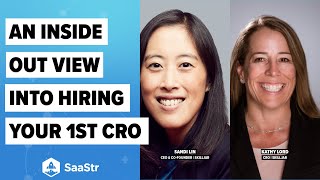
Skilljar CEO Sandi Lin and new CRO Kathy Lord discuss hiring the company's first Chief Revenue Officer during Series B to scale toward $100M ARR. Kathy prioritizes companies at $10-20M ARR with product-market fit and founder chemistry. Both stress alignment on outcomes, data-driven transparency, and regular communication as keys to a successful CEO-CRO partnership.
Chapters
Lord the CRO of Skilljar. They're going to be talking about the inside out view to hiring your first CRO, which was Cathy or it's Cathy. So we're really excited to hear the inside scoop of how this process all went down and how things are going. Just a couple of housekeeping things to go over with you all. Everyone I know is probably attended a lot of sessions today, so probably no surprise, but just some reminders here that you can submit a question to the speakers in the event platform using that question feature on the right side of your screen. You can, you can also click to join us on stage. That link is just below us here on the player. You can pop into this meeting with us and be on camera. We encourage you to, when that time comes for Q and A at the end of the presentation to jump off your mute and join us right here in conversation. So we have 50 minutes with Kathy and Sandy. They are going to have plenty of time for your questions, so please make sure to have those ready. And as a reminder, everything's being recorded and we'll be sharing the slides post event too. So Kathy and Sandy, I will pass it over to you to take it away.
Thank you so much. So first, I know we are both excited to share our experience with a topic that as a founder I know a lot of you have probably thought about and share the behind the scenes view of how and when we decided to hire our first Chief Revenue Officer. And so we'll start with a bit from the company perspective from myself as co Founder and CEO. I'll pass it to Kathy to talk about her experiences on the candidate side and we'll close with some thoughts about how we are partnering together. So the first question to address is what exactly is a Chief Revenue Officer? When should you think about hiring one and what should that person own? So like most things in startups it really depends. But when I was going through this process, you know, happy to share how we made our decision. So first it turns out that CRO is still not a very common title, especially say sub 50 million ARR and starting to appear more in SaaS over the last five years or so. But sometimes you'll see it at seed stage companies really kind of an up leveled VP of Sales title and sometimes you'll see it in public companies where that person might have hundreds of people in multiple functions reporting to them. And the this really shows kind of how ambiguous it can be and the challenges of thinking about it in a startup. Now as far as scope, typically this person does own and direct the strategy over the entire revenue cycle. But a tactical challenge is there's definitely not a standard operational or management scope. So I think pretty much always the CRO owns sales and sales development. Very often they own customer success services support. Sometimes they'll own the demand generation and pipeline functions of marketing, and although rarely the rest of marketing in terms of brand and communication. So there's no magic answer. So the good news is if you're thinking about a very senior revenue leader, you can craft it to what your company needs in particular. Next slide, Kathy. So I'll just start with how we at Skilljar made this decision in October of last year, which I guess is what, five, six months ago. So a little bit of context on the company. So we are SaaS, we're a customer education platform and our software helps companies like Smartsheet and Zora and Procore create online academies for their customers and partners. And so 2020 was very interesting for us because we saw a lot of acceleration and tailwinds from COVID which was creating an increased focus on both customer success as well as online learning. And so customers and revenue for us were both accelerating. And we decided over the summer to raise our Series B. And through that process, it became clear to me and my co founder that we needed more experienced leadership to help us get to 100 million in revenue and beyond. And our early sales leaders were successful in getting repeatable sales in the door with a small team. But we knew that the next phase of growth would require the next scale of organization. So go to market model, segmentation, enablement, operations, processes and as context, we had at the time about six account executives and you know, similar number of sales development and you know, a couple of sales ops and sales engineering types but, you know, not really ready for the next scale up in terms of growth. And a couple other relevant factors for, for us that you might consider as you're making this decision. So my co founder and I have product and engineering backgrounds and we spent our early careers at Amazon. So all that to say is neither of us had, you know, deep career expertise in growth stage. SaaS go to market businesses related to that. We are largely based in the Pacific Northwest, Jason and I are located in Seattle. So we were really excited for the first time to be able to attract and work with talent from anywhere geographically because in the past being able to convince somebody to relocate to Seattle or pull from, you know, still an emerging tech talent market here was fairly limiting. And you know, the final piece for our situation is we really needed to start building an executive team in multiple areas. So certainly sales, but also marketing and product management. So Jason and I knew that we had a lot of work to do on multiple fronts within the company. And so kind of all these factors combined led us to at least seriously consider a chief revenue officer. And I'll walk you through a bit of the pros and cons cons on that decision next.
Hang on.
So you know, on the pro side of going for a very senior hire. So I talked a little bit about our product and from a business model we are 100% sales driven and as far as I can envision, we always will be. And it's a considered purchase, probably similar to like marketing automation or community in terms of a buyer's mindset of how they think about that type of solution. And so for us this makes sales really critical because we don't have a freemium or a self serve motion as part of our business model. The second element was founder fit. And as I touched on earlier for Jason and myself, our core strengths were not in this area. So really the ideal scenario for us was someone who could not just run sales for the next couple years, but also really provide that strategic leadership across revenue as a whole for the next phase of growth. And I've probably spent the last three years just like hyper anxious and worried about revenue to some extent. I will always be. But we really wanted, we preferred having somebody we could really rely on completely to think about that whole cycle. Soup to nuts. And the third piece which is actually really, really important is alignment with your investors and your overall financial position. So we had very long term oriented, have very long term oriented investors and a very strong balance sheet. And this enabled us not to just afford a very senior hire, but the ability to resource that person with the team and the budget they would need to succeed in the long term. Because it actually relates to my first con, because this might all sound very great. What founder CEO wouldn't want this? But there's also some very pragmatic considerations to take into account. So you know, despite being, you know, a growth stage company that raised, you know, 50 plus million dollars, our sales and go to market processes still needed a lot of work. So you know, this we knew at least for the first few quarters would be an in the trenches job. As much, you know, basic sales management as revenue leadership. And so we're not like the last thing I wanted was for somebody to come in and say like, oh, where's my executive assistant? And you know, where's, why don't we just move some things around in spreadsheets which, you know, it's a little bit of a. When you talk to CEOs who have made CRO mistakes, that's usually how it starts. And in fact, you know, I said Kathy was walking in with six AES and a number to hit. And in opening the search I knew that many experienced CROs of the caliber that we might be interested in will be coming from say 100 million in revenue. And it was questionable whether that type of candidate would want or even be able to really roll up their sleeves and get hands on and make their own salesforce reports if needed. Second issue was there is a bit of I think industry title inflation. And I've had a couple sales leaders and I think interviewing through both of those searches kind of realized that every sales leader is going to ask for the title anyway. And so there's a bit with Jason me being like, wow, we're the only C level people in the company right now. We're founders, we kind of get a pass on that. But how do we ensure that the CRO is really of a CRO caliber when these days anybody with sales management experience might call themselves a CRO? And related to that is Jason and I just really wanted somebody who felt like the third leg of the stool that we've been missing and emotionally almost like a founder like relationship. And we did this process completely in the COVID world. I'm in Seattle, Kathy's in the San Jose area. So how would we get to that type of trust and emotional closeness in a virtual interview process, but kind of net net we decided to be open to bringing in a CRO and to see what happens. So from here I'll turn the narrative over to Kathy to tell her side of the experience.
Absolutely. Thank you Sandy. And I tell you, not having one gone through the interview process in a really long time, but having to step back in the post Covid world and go through the job search process and the interview process, it put a radically different spin on things. Let me start with stepping back for a moment and just share a little bit around what my situation was in October 2020. Over the last 14 years I had a really successful run at a company called Intact Cloud Based Financial Management accounting, budgeting, planning, HR people, payroll, and 11 years there scaled it up from 2 million in revenue to super big and an acquis just under a billion dollars by Sage and then spent three years post acquisition there as well. So really saw from that hands on stage of figuring out who Our ideal customer profile is, I won't even say we fully had product market fit really dialed in when I joined all the way up through scaling that and had to be very hands on through each of those sort of different milestones of our organization. But as you can imagine in a highly competitive market, growing, being assimilated by a much larger organization and ultimately taking over another acquisition they had run during that period. It was like, you know, I was that little hamster on the wheel and I said, okay, I'm you know, having this amazing experience. I grew this company super exciting, got the opportunity to run Sage people for Sage, which was HR people payroll company out of the uk and really ran that as a gm. Got a taste for global, got a taste for broader responsibilities and leadership opportunities. And I said, you know what, this is all great, but what I really miss is being that hands on and building that company up through the scale up phase. So I had been fortunate during that same window of also doing some advisory work for some founder CEOs who were sort of pre revenue to just starting to think about selling. And it was sort of getting my creative juices going. And I said, okay, I need to plan a decision to just transition myself out of the organization and take some time off and recharge and go find that next great company to build. And so in fall, late fall, summer of 2019, I had these great plans how I was going to do that was working to transition everything off of my plate. And then In March of 20, this thing that changed all of our lives Covid hit. And so my vacation was not quite what I expected it to be in my backyard, but nonetheless it was still great. But what it gave me was an opportunity I think that probably wouldn't have had if I was vacationing and gallivanting around to great locations around the globe. But it forced me to really sit down and I had more free time to think about what is it that I want to do for my next role and what do those things look like. I knew I didn't want to get to an organization that was pre product market fit, but I wanted to be one that had achieved that. But then was like, okay, we got the repeatability going. How do we get scalable and predictable? My history has been in finding disruptive technologies and so I knew that was going to be really important. And then for me, having spent the last 14 years at an organization with an amazing culture, best places to work, awards like crazy culture to me, almost became the number one factor that I was looking for and I wanted to be able to partner with a founder CEO that I knew could go the distance with me, that we could really create that team and that partnership to create something really special. So let me tell you a little bit about kind of how I went through that and what the factors were. So for me, a lot of it had to do with what is that company size. So thinking about where are they at in the revenue stream. So to get product market fit, you're probably somewhere in the mid, up to 10 million. So mid single digit millions going up to somewhere between that 5 to 10 million to really have that dialed in. Where you say, okay, we know our products there, we know the market's there, how do we scale up? So I said, okay, I'm going to generally try to look for Companies in this 10 to 20 million range ARR to figure that out. And then I said, okay, well what markets am I interested in? And for me, as a sales leader, it's so much easier to be passionate about what you're doing and bring that enthusiasm not only to your sales organization, but to your prospects and customers. It was a product you can get excited about that you're emotionally invested in. And so I really spent a fair amount of time looking through the different markets, industries, applications. Yes, with 14 years in the financial applications world, had lots of opportunities there. And no offense to any finance or CFO people in the audience, that was not the role that I wanted to sell to next. I'm just saying. So I was looking at a lot of different industries to find one that aligned with not only my experience, but something I was excited about. The next one was role. And you get to a certain point in your career where, you know, title is less important to some degree than the roles and responsibilities that you have. It's, you know, from an external perspective, yes, title can be helpful, but I was looking for a role where I could have a bigger impact than just hitting the number or managing the customer journey. I oversaw both sales and customer success at Intact throughout the years, but I wanted to have a strategic seat at the table where I could really help shape the future of the organization. For me, that was really important, more so than the title that I had. The other aspect, and I just touched on this highly at a high level on the last slide is around the founder. And for me, having that chemistry early on where we could have those honest, transparent conversations where I just felt like we were philosophically aligned but we didn't necessarily have to agree on everything. You just feel like you have a good Ability to communicate with that person, you understand them, was really important because we're going to be going through a lot of challenges, a lot of hard decisions as we scale up the organization. And that chemistry to me was really important. The other one was investors. And so for me, having investors that believed in the market and the product as much as I did and as much as the founders did was really important. And that had the arsenal, if you will, to fund the growth in the market we were looking to take advantage of. And understanding how they decided to invest, why they decided to, where the company sits and their portfolio, and is it the also invested in, or is it one of their marquee investments was really important to me. And then as I mentioned, I think the thing that sort of overrides all that and it fixes a lot of issues too, is culture and values. And so for me, understanding the company culture and where it's at, what are their values? Because as you scale up, it only gets harder and harder to maintain your culture and values. So if there's not a strong sense of that early on, it becomes very challenging to maintain and continue the focus on those as you scale up the organization. Now, you may think there's kind of two things that aren't explicitly called out here. And to me, although they were interesting and it's not like, you know, I was, I'm looking to be, you know, a nonprofit salesperson, but, you know, title and money were not really the biggest factors to me. Like, yes, I wanted to be appropriately compensated, but I wasn't looking to this for money and I wasn't looking to this for title. Rather it was those six factors we just went through. So, you know, how did I actually go through and assess these things? So I gave you the factors what's really important to me. And as I mentioned, this was all post Covid and I hadn't interviewed for a job for 14 years. So it was really a weird process for me. A couple of different things that I looked at. One was relative to the CEO, and as I mentioned, some of those factors around values, culture, alignment became really important to me. And what I looked for in that CEO discussion was, can we have a healthy dialogue? Can I challenge them? Can I bring a different point of view without them getting defensive, without them feeling like, well, I should have known that, oh my gosh, why didn't I know that? And the data you get from that CEO interview is really telling as you start to have interviews with the rest of the team and what are those leadership team dynamics? If you will. And I'll tell you, as I went through this process with Sandy, it was great because, I mean, I knew she had a level of transparency that I hadn't seen in a lot of my other interviews. She gave me the good, the bad and the ugly with an effort of like, I want you coming in eyes wide open with what's working really well and what's not. And to me, that was incredibly refreshing of it is what it is. And here's the data we have about it and why, or if we don't have data, here's why I was able to take that information then as I met with each of the other leaders in the organization, actually take that and triangulate it to see is Sandy giving me the real deal here or not? And it was for me, incredibly refreshing to see how aligned the rest of the organization was with what the good and the bad and the ugly was for the organization. And so much of the challenge I've seen as you go to scale up an organization is that some of the other leaders, especially if they don't have a lot of experience scaling up the organization, aren't fully aware of the changes that need to happen to hit that next stage of growth. And so for me, seeing the alignment, the openness and the willing to change and grow as I interviewed across the team, their dynamics of how they talk about each other, how aligned they are or not, was really telling for me. Additionally, when you take that CEO and those team dynamics and level of feedback, and now you take that sort of third leg of the stool, if you will, and you start to have the investor conversations. And so I mentioned in the prior slide a little bit around the investors and the role they need to play in helping us successfully scale. So I wanted to hear from their perspective, what's the good, the bad and the ugly? And does that align with what Sandy told me? Does that align with what the rest of the team is telling me? And for me, it was great. And I'm here, so it clearly did, where we were all in alignment around what needed to happen to accelerate growth for skilljar. And so not only validating that information, but being able to have those conversations around the board of directors and around those investors to understand why did they invest not only in skilljar, but why did they decide to invest in this space? What was their investment thesis around that? What did they see as both the short term, midterm and long term opportunities? And for me, it was incredibly refreshing to have those conversations and it helped me really understand what the Board dynamics were between the board members and Sandy and the leadership team. And nothing better than when you're on the Zoom with your investor interview. And little did I know that my son had borrowed my computer the night before for a Zoom lesson. And I put in those really cool new physical appearance alterations to give me green eyebrows and a purple beard. And I'm logged in, and I didn't have my glasses on, and I couldn't see my little picture. And the investor goes, wow, are you using some special effects in your Zoom today? And I'm like, no, I'm not. She goes, I think you are. And first 10 minutes of the interview, I'm trying to figure out how to turn it off, because it was new beta features from Zoom. And when that created such a moment with the investors, where to me, they were real people, they were human. We all had a great laugh about it, and I think it really shows the level of support, partnership, and we're all at the same level around the table to help accelerate the growth for the organization. So to me, that dynamic with the board was super helpful as I went through the process and assessed the opportunity. Then there were two other things, and I don't know if Sandy knows these yet or not. I don't know if we actually debriefed on this part of it, but it's all good, Sandy. One is there's the concept of backdoor references, and then there's the concept of Sandy's backdoor references. She should work for the FBI because she found more backdoor references than. And I thought I was pretty good at doing backdoor references, but she wins the first place award for that. But the great thing about Sandy checking backdoor references for me is because I had great relationships with all these people, they would immediately ping me and tell me that not only did Sandy reach out to me, but what their opinion of Skill Jar was and what they thought of Sandy and what they thought of Sandy's questions that she asked. And so it was almost like the backdoor references became backdoor references for me. So that was super insightful to me to hear. Okay, one, Sandy really wants to feel comfortable with this decision. And so it helped me understand, like, there's some areas I could probably drill into to help her get the comfort level she needs, because this is a really big decision for her and Jason. Secondly, it gave me insight into the way Sandy makes decisions, the things she likes to get. I know Sandy likes data. She likes to have a lot of data points. I'm similarly minded. And so it was really, I found it as an insightful way to get to know her better as a person, especially since, by and large, all of this was done remotely. We did get the opportunity for a mass Covid safe, socially distanced walk for a couple of hours. So that was great to actually meet in person and get to talk like that. But, you know, by and large, this is all remote. And then the last thing I would say about assessing the opportunity is that the recruiters and so the recruiter on the search who was brand new to me, I had just met her maybe a month before this search came up. And so I didn't sound like I had a history with her, but I asked the recruiter, I said, okay, so help me understand. How is your search going with Sandy relative to other searches? What is Sandy like working with compared to other CEOs? And she does a lot of marketing and sales recruitment searches for C level. And so I was able to kind of get from a recruiter perspective, what's it like to work with Sandy? Like, does she make decisions? Is she communicative? Does she know what she wants? How is she managing through this process? It was yet another data point to triangulate on that. I think oftentimes we're not necessarily thinking about that relationship we have with the recruiter, how we're treating them, how we're engaging with them, and how that can or can't help us get the candidates that we want as we're interviewing through the process. I found that data point super helpful to triangulate against. The other data points had gotten through the other sources. There we go. So clearly it went really well with Sandy. I'm here. But what was reality like day one, when I showed up, it was interesting. So I'd had 14 year run at a company I built from the ground up, scaled it up to multiples, hundreds of million. And then I took really the last five months off and sat in my backyard and drank cocktails with little umbrellas in them and read books a little more than that. I did do some work interviewing and stuff, but I really hadn't been sitting on zoom calls all day, doing work all day. And so reality set in hard. And what I realized was it was a very different set of muscles that were required. And although I intellectually knew this, it's like when you get there, it's still different. So, you know, it required much more of the anaerobic muscles versus the aerobic. Like, I was used to running on that hamster wheel and I was doing great. But then all of a sudden I had to like from a standstill, like push this boulder uphill. And it was a definite mind shift for me, aside from the re entry from my life of cocktails and books in the backyard. And I sort of laid out for myself these 90 day plan, 120 day plan, 180 day plan of how we're going to get all the foundation in place for this accelerated growth we want to hit. And you forget, especially when it's me, myself and I, for now, everything is harder, everything takes a lot longer than you expect it to. And so for me it was sitting down and saying, okay, you know, let me make sure, because I don't want to overset expectations, but I want to get us on the path to accelerate growth as soon as possible. How do I make sure I set realistic timelines with the resources we have to start to get these foundational elements in place. And you know, and as you're doing that, you're going okay. I knew I was going to have less resources, but I really have less resources. And you know, Sandy mentioned about hiring somebody who, you know, didn't need an admin to run their life. Well, I haven't read my own calendar in a lot of years. I mean, so even just like making sure I had time for a bio break and stuff throughout the day was, was a challenge. So the first few weeks were really ugly and painful, but I'm remembering how to manage calendar now, so that's good. But it's also, you know, little things that you take for granted sometimes around rolling out a new program, having, you know, the amount of marketing resources you want, having competitive resources. And so it really forces you to think again in a very scrappy way, how do I, you know, get things done? Because it's not a matter of just rolling up my sleeves because my sleeves are rolled up and I'm digging in. But I have to figure out how to strategically leverage other resources to get where we need to, whether they're contract contingent or what have you to really be effective in getting the growth that we wanted. And then the last thing I would say, and as I mentioned, Sandy and team were so amazing about the good, the bad and the ugly. And so what was great along the way is that the perception I had around culture around the company values was 150% spot on. And so for as much, you know, hard work as it was making that transition of getting on board and the work we have ahead of us, it's incredibly rewarding as well. And when you have A great culture and you have alignment on values. It does a lot to fix any of the nuances or painful day to day things that happen along the way. And so I can't emphasize enough to founders in the audience today how important the culture and value alignment from the very early stages are in terms of attracting the talent and the folks you want to get as you get to this to start to scale the organization. So with that, do you want to take a moment to answer a couple questions, Sandy, before we go into this? Maybe, because I, I see there's a few keyed up there and I thought maybe we hit on those before we talk about working together. What do you think?
It looks like they're around the recruiting process. So yes, we did use a recruiter. I know it costs an arm and.
A leg.
And that can be a lot to take, but I really believe in executive searches because even though we have a fantastic in house recruiting team and we're about 110 people right now, just to give you a sense of scale, what an executive recruiter does is they can bring a lot of candidates in your icp, your ideal candidate profile at a very similar time and that's what you need. You could try to like Onesie Twosie in your spare time, but a recruiter can bring you a dozen candidates that meet your spec like within a several week time frame and people that you might not think of otherwise, but they just know through their network or through following the chain. Our search was actually shockingly fast. And I think part of it was because it was during the holidays and during the holidays it's just a little bit easier to interview and do references and things. And I think between the day we open and the day we closed was, I think she told us it was like 60 days, which I actually feel extraordinarily lucky. I don't think longer.
Sandy.
Well, so Catherine was actually one of the first, maybe even the first candidate I met. But at that point I hadn't seen enough candidates to really understand, you know, the different pros and cons because nobody's perfect. And so I think like, you know, really definitely in the back half, which was getting around like late December was when, you know, things were really getting. And the good thing is, you know, I had a lot of time to focus on that. Interestingly, we had actually we were concurrently doing our marketing search and we had started that first, but it didn't end until I think two months later. So it can just be luck of the draw deciding to go with the CRO role, I think this is, it's very individual to the company. Kind of as mentioned, you know, Jason and I, we were not strong in this area. And our business model also made sales very, very important. And I think the other direction people go is marketing first. But for our business at least, sales closes deals, marketing helps generate smoke, but sales is the one sort of feeding the fire. And so that was, if there's one role that we knew we wanted to go very senior on, it was the person kind of in charge of revenue. And I think it's interesting to hear the chemistry fit. So interestingly, the reference process was very, very helpful for me too, because I just read this book called Top Grading and it's a big proponent of what they call extreme referencing. And this very top of mind. And my coach had also like, recommended it because interviews, people show interview is like the animal at the zoo, not the animal in the wild. And so nobody knows what this person's really like except for the people who have really worked. No matter what they say or how they interview what they say in the future, like, there's nothing more telling than how they've actually behaved in the past. And I actually didn't have to be an FBI agent because when somebody's worked at the Same company for 14 years, it's very easy actually to kind of tell the story of how they evolved. Although I was very proud that I did find, I think when Kathy started at intact, there were four AES and I actually found one of those people to kind of talk about sort of how things evolved over the 14 years. And yes, we did do one socially distanced walk in the Bay Area. And this was really interesting too because, you know, talking, kind of transitioning to the values alignment and yeah, those were the only two hours I've ever spent with Kathy in person, which is actually strange now that I say that if I had to describe myself and Skilljar and Kathy in kind of three concepts, it would be customer focused, learning oriented and data driven. Right. And. And it was, I suspected that she was all of those things based on, you know, my interactions and my team's interactions with her. And. But it really came through, I think, both in the referencing and on our walk. So the walk, the first, like the funny thing is, you know, we decided to meet at a park because that's what you do in December in California when it's Covid time. And, and Kathy's like, oh, you know, I'm going to come from, you know, a workout class or something. So is it okay If I'm just wearing, like, you know, athleisure. And I was like, oh, yeah. It's like, that's all I got, too, right? And so, you know, but we show up and, you know, Kathy's looking nice and her, like, dark jeans and, like, her puffy, and I'm like, in workout gear.
What happened?
But we had a good laugh around that. And I haven't told Kathy this, but I did appreciate that she sort of drove a very practical car. Wasn't like a flashy sales car. It was like a very practical car. I think it was Jeep. And then she really had two questions, which I think really got to the heart of why I thought this was gonna work. And the first one was how I still remember it, because it was so telling. The first one was, how do I and Jason motivate the company to be customer focused? And I thought this was really interesting. I thought I flubbed the answer honestly because I knew that, you know, at Kathy's previous company, I think there was some element of, like, bonusing the whole, like, all the employees on, like, nps. And I kind of, you know, raised my eyebrow at that a little bit internally. And I was like. And my answer I thought was pretty bad, which I like. I was kind of like, you know, if you're not customer focused, you just don't work here. And I had, like, a few examples of how that manifested itself in our day to day and why it was important for me and Jason. But I was like, man, I was, like, such a terrible answer compared to, like, we just paid people to do it. And, you know, like, I talked about our Voice of the Customer program and other. And other things we do. But I remember feeling not very good about that answer. And then her other question was, you know, how do we handle sort of experiments that fail or, like, learning? And I was, like, so excited to answer that question. My whole philosophy's on it. And so, you know, that. That was. That was. That was really great. And I think that's definitely still proven true. And it's challenging because culture and values is, like, the hardest thing to assess in an interview process. And so. And even though I'm a very data driven, like, robotic person, like, to some extent, it is emotional and kind of tuning into what is this person really about? And the references help here, too, because somebody like Kathy's case, the tiger isn't changing its stripes for 14 years. And a lot of her colleagues in various functions, including finance at a company that's selling to finance, had very interesting examples and stories of how Kathy really brought a customer focused culture to the company and, you know, things she did. And you know, on the data driven piece, because I actually hadn't personally gotten to that with Kathy too much. And you know, every sales leader says they're data driven, but I think, I think, you know, one of her references was like, yeah, you know, she's got this dashboard of, you know, X. I think the person said 300 metrics. And I was like, what? But like, but, you know, not only is Kathy, like, it's not just understanding data, it's also not being paralyzed by it, which is like something I also, you know, believe in very strongly. And so, yeah, I think, you know, these other, like, and then when I was starting to write her onboarding plan, which, you know, fortunately Kathy accepted on a Wednesday and started on a Monday because we were like two weeks before the end of our fiscal and you know, I guess the cocktails, just having one too many cocktails and wanted to start off the year right, which was great. And so I didn't have a lot of time to write an onboarding plan. And I decided like, you know, I'm just gonna say, like, here's what I think success looks like, like the outcomes and like, and I think that actually worked really well because part of this role means it's like I don't know what to do or the best way to get from A to B. But I can kind of articulate what my hope that B looks like and you know, someone like Kathy can figure out the rest.
Well, just tagging onto that, Sandy, because I think that's a really important thing is that, you know, I think what both you did and then what we got alignment with the board on was painting a picture not only of these outcomes that we were looking for, but it was also being pragmatic on what those time horizons were. And I think sometimes when you bring in a new leader, especially on the revenue side, the wishes that all of a sudden they're here and magically sales start growing through the roof. But it's thinking about, okay, if we're truly going to hit that accelerator, how do we realistic on what it's going to take to build those found elements. Because there's a trade off on mindshare. And we have this conversation every week around how much of my time and energy is spent to build the foundation versus to post the numbers on the wall in the meantime, because our investors are not giving us a free pass on not hitting the revenue numbers for the year while we Build the organization that we need to really put the foot on the accelerator. And having those healthy dialogues about the outcomes we want and the pragmatic timelines to get there, I think has been super helpful for us, not only to get aligned, but then to align the rest of the leadership team and the board around that as well.
I would say actually this word pragmatic is pretty like it applies to both of us and how we approach business in life too, which is helpful.
And I think the other thing, and this is for me, something I appreciate with Sandy and I've appreciated it with other CEOs, and I think it's important, is that there's that level of trust there, but it's also important that you verify. Right. So, you know, we spent two hours in person. We did spend a couple of months through an interview process. And granted, I got my background behind me, but, you know, it's one thing to just blindly trust me that things are going great. It's another thing to trust me but then verify. And that verification ideally comes from me with supporting data and metrics to show I'm not just feeding you a line of bs, you know, as sales is known to do sometimes, but I'm actually backing it up with data. And you're able to verify that and feel comfortable of the decisions we're making in investments and what we're doing. And I feel like for me, that trust and freedom, but also verification allows me to do my job with a lot less friction.
Yeah. And I think it does accumulate because, like, even when you're discussing offer and you're like, oh, I can start on Monday. And I was like, she's really going to start on Monday. But she did. So that's like sort of like a micro trust building moment. And then she's like, I'm going to do a sales kickoff in two weeks. And I was thinking like, and roll out all this new stuff. And I was like, wow, how is she going to get all that done and organize a sales kickoff? And it was. And she did it.
It was great.
And like, so like, even though, you know, we still have, you know, six reps in C, a couple more hired and we're still growing quickly. So all these things take time. There's so many like micro trust building moments that, you know, have happened over the months that Kathy's been here that help. And then it also, like, we're both really like having just like the data in Salesforce. And so it's very easy to be like, okay, this is Kathy's Forecast. And I can go in at any time and see the different components of that. And that is like, that's really great with my style, at least.
Well, it is, it is. And I'll say just to sort of wrap up on this and I don't see other questions coming in, but then we can go to. Our wrap up slide is communication. And I think especially in the COVID world where, and even if we weren't in Covid, I wasn't planning on moving to Seattle. So we're not in the office every day where we can sync up in real time. But I really appreciate the way every time we have a one on one, Sandy is constantly checking in. How am I doing? Am I giving you what you need? Do you feel like we're working well together and creating an environment where not only is she asking the questions because she feels she needs to, but that I can answer honestly? And if we have a disconnect or we're not aligned, we can have that healthy dialogue to talk through it so that the rest of the organization sees us as incredibly aligned, driven to the same goals. And I think it creates much stronger leadership for the whole rest of the organization because we take the time to communicate, be aligned, make sure each other's getting what we need, especially till we figure out that regular working cadence together. Because we're, you know, 50 business days in, you know, 55 business days and something like that. Right. So it's not like it's long. It feels like a lot longer because we have such a great working relationship.
Yeah. And I knew very early that we were on the right foot because, you know, and I'm pretty like, I usually preface thing like, this might be a terrible idea when it comes to sales, because it might be. And so we recently rolled out our first standardized professional services package, which, you know, really enables customers to work with us to kind of reskin their, their learning portals. But it's, you know, there's a lot of sort of operational complexity when it comes to offering a standard services package for the first time. So there's this meeting, I mean, pretty early in Kathy's tenure where I was like, oh, this might be a terrible idea, but like, what if we just rolled it out to like, you know, one rep or two as like a beta? And like, Kathy was very comfortable sort of being like, oh, Sandy, I don't think that's a really good idea. And here's why. And I was like, okay. And but to me, that was like, definitely a moment where I was like, okay, like Kathy's doing well and she's like willing to voice her opinion, tell me when a stupid idea I have is stupid.
So I didn't say it was stupid, though I was very nice about it.
Oh yeah, yeah, I know. Yeah. So to wrap up and we can take a couple questions, you know, I think the right Chief Revenue officer can really help, especially sort of founders where this is not your sort of core capability or not where you want to spend your time finding somebody that you can really sort of trust and rely on. It's just been, it's been huge for me and Jason and we got a lot of work to do. But those are the challenges that you want to have, the business challenges and not like, you know, other sort of, sort of vortexes of doom is what I call them myself. Like you want to work on building the business and you know, being intentional about your hypotheses and things may work or may not work, but those are the challenges you want, not your sort of. Yeah, side vortexes of doom. And yeah, the culture and the vision of where we want to be both on multiple time horizons. I think my painting the outcomes was a two quarter thing, but also, you know, where do we want to be, you know, in five years or 14 years in Kathy's case, hopefully. And yeah, those values, which is so much deeper I think, than you know, words on, you know, a piece of paper and a website or you know, what people say, but kind of just how you explore those values. I mean, Kathy's mentioned healthy dialogue, which is one of our values too. But like the flavors of all of those have to align. Like, like at Skilljar, a lot of our healthy dialogue is centered around data and information and transparency and like sort of pro con type analysis. And that's our version of healthy dialogue. And every company that may even say that as a value might have a different version. But being aligned on making decisions and also when you disagree and how. And that's something I asked about in references a lot and tried to suss out in interviews because nobody has all the answers, especially you know, at our stage of company. And we'll be wrong a lot of the time just from how things play out. So how do you go through those together? And course correct and iterate is super key.
Fantastic. Thank you for the comment. Matt Cameron around There's an appreciation of realness of our conversations. This super valuable appreciate everyone appreciating our realness for both of us, like being able to share what worked and what didn't in a real way was something that we felt was important. And with our focus and mission around learning as an organization, helping to keep someone else from making the same mistakes we've made or to learn from our successes, I think is super important. So if there's more questions, happy to stay on a few minutes and answer those. If there's not, then thank you to everyone for participating today.
Thank you both so much. I'm not seeing any more come in the chat. I know we have a couple people in the room. Any other questions before we let Sandy and Kathy go?
All right.
Well, thank you both so much. We appreciate you guys. What a great presentation, and it can tell just what a great team you both make. So thanks so much for sharing with Zaster, and we'll see you soon.
Thank you.
Have a great one. Take care.










