Approaching Half a Million Customers: How to Win in SMB | BILL CEO and Founder René Lacerte
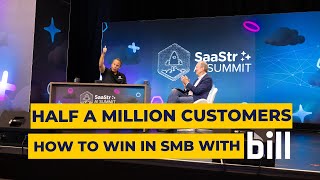
Bill.com founder René Lacerte discusses building financial operations software for small businesses over nearly two decades. The company now serves 475k customers with 1.3 billion in revenue and 86% logo retention, built on a multi-year strategy to automate payments and spending across the SMB market.
Questions this video answers
2004
Circa 2006
Approximately 475,000 (all platforms); ~250,000 on core Bill
About 2,200
$1.3–1.4 billion (approx.)
Chapters
In 2004, I started thinking about this problem and one morning I woke up because I was like, why am I doing this? The same way that my grandfather did 60 years ago. Like, literally, filing cabinets, signing a check and paper that was never in the right place. Like, it was just so frustrating. And I started answering that question as I was going to sleep. Came up with this notion that, wow, the cloud. Nobody called it the cloud back then, right? The cloud would enable two entities to see the same transaction from their perspective. And the reason I did buy the URL from Mark Benieff is because I can say, here's your bill and you can say you're paying the bill. And for me, I'm getting money and you're sending me money. Right. It's two sides of the same coins. The network was always part of what we wanted to do, and I. And it always became part of the database design, the workflow. All of that was from the beginning. Like, we know we're going to go there, but when that's going to be a different time. And so I think the moat part is that it takes time. Businesses just take time to adopt.
Please welcome Jason Lemkin, founder and CEO at Saster, and Renee Lacert, CEO and founder at Bill. Hey, everybody. Thanks for waking up on day three here after the parties and the blurry eyes. I know I had a little trouble getting out of bed, but I am here with one of my favorite entrepreneurs, CEOs Rene Lacert from Bill.com. renee and I both started as founders probably at the same time, but we didn't know each other. But we started when I started Adobe Sign, Echo Sign. That was just about when Bill started. And I thought I did terrible. Like I went. You started in 2006 too? Something like that, yeah. Started the same time I sold in 2011, accidentally. We were at a million a month, growing a hundred percent, 120% NR. I thought I was failing. Renee kept going. And a few years. I don't think you're any bigger. Probably in 2011, I don't think we probably were smaller. A few years later, he's at 1.4 billion revenue and IPO. So that's. That's two orders of magnitude better. But it's a reminder of how it all compounds, isn't it? It's pretty interesting.
Oh, it's amazing. Yeah. And hey, thanks for having me here. And I don't know if folks are really know how much they owe to you. Like you have been bringing together the community to learn about how to build Better companies. And so thank you for doing that. I've always loved everything you're doing, Assasser and everything you did at Echo Science. So super happy to be here.
Thank you. Thank you. Yeah. I'm gonna ask Renee briefly to tell us about Bill, if you don't know it, but I'll preview it here just to thank you. We've actually run Saster since the beginning on Bill, but I'm gonna use it as a case study to talk about some things that are interesting in terms of stakeholders, channel, partners, because it's all in, even for us. And we're. Saster is weird. We're six people pushing 22 million a year through Bill. And I didn't choose it. I knew Renee, but actually our. Our accounting finance team picked it, brought it in. But I love it because it saw if I have to review, manage all this going, I just go in. I'm Mr. Dashboards. I'm the boss. The only time in my life I've ever had a dashboard. And I love it. But we'll talk through it. But literally we could not. I think Bill is my single favorite app because we couldn't run Saster without it. So it's a good thing.
That's awesome. Thank you so much.
So I want to talk through that, but tell me a little bit for the folks that don't know all of Bill. Give us your the 2024 summary of the company.
Yeah. So when I set out in 2006, the focus was to really define a category around financial operations. If you think about everything that happens in your accounting system, it really is a record of a transaction. And what about everything up to that transaction, which is the Dashboards you're talking about? How do you know whether you should pay the bill, whether you should collect on the receivable? The employees that are collaborating, are they happy with it or not? All these things were transactional activities that were not something that had been automated. And so for me, that all drained time from SMBs and from focus. That was going to help them go pursue their passion. And if we could actually figure out that workflow and automate all of that, we'd earn the right to do payments. And we'll talk about that.
Yeah.
But that would actually simplify the SMB's life. And so for everything that I've wanted to do is to just make life better for SMBs and have a great place to work. And having that focus consistently has allowed us to keep going back to. Are we doing that today? And I feel like we're doing that today, but we still got a lot more room to go. So, yeah, we automate ap, we automate ar. We have spending expense, all the card payments that you need on a business, which is growing very fast for us. We have insights and forecasting now that kind of come create more dashboards for the business owner and the finance team. And all of that is creating, I don't know, 50 to 75% time savings for our customers. That's what they tell us. 80% of accountants say they actually can do more work and have the bigger business because of Bill. So, like, all these things matter. Right. And we're just, like I said, just getting started.
And remind me, I know I have it in here, but how many customers do you have today?
Yeah, so we have around 475,000 on the platform.
475,000?
Yeah, yeah, yeah. And that's on the. On all three kind of original platforms, if you will. That's Bill, that's divi. That's invoice to go on the core Bill. It's probably around 250,000.
Okay. So I want to dig into it, but at a high level. You've got your pulse on 475,000 small businesses.
Yes.
Are we in a downturn?
The way we describe this is, I would say a year ago, and we talked about this in on earnings, there was contraction. Not a lot of contraction, but businesses. I would have said a year ago that businesses actually were in a recession because we saw year over year, economy wasn't. But businesses were holding. They were keeping their cash as long as they could keep their cash, which is what everybody here, I'm sure, did and was trying to do and probably still doing. But what we've seen this year is more stabilization in the last maybe three quarters. And so I call this the wait and see economy. This is nobody's investing for growth way they were three years ago, which is crazy. People were just investing, investing. Obviously, the AI category is investing for growth. But all the other SMBs we see, they're pretty much. Yeah, they're flat year over year. They're spent per customer is flat year over year, which means that they're waiting because there's money there and people just.
Haven'T been investing it yet, but at a meta level. So I might be wrong on this. Okay. Maybe it's because I'm the dashboard guy. As a Bill customer, I think Bill's cheap. I think Bill. And maybe it's not true for your smallest customers, because you challenged me. Right. But I Put Bill Canva a couple apps, only a couple apps that are so cheap compared to value. I actually honestly don't care what it costs. Right. And maybe that's because of the amount we're running through versus headcount. But if when you're cheap and you can tell me you're not cheap, you can tell. But, but if you are, shouldn't you almost be immune to some of these effects because it's so cost effective to deploy a bill like it almost shouldn't matter or little macro bubble, shouldn't it?
The effect I was talking about was more the spend per customer.
Yeah. Okay.
So we've grown customers. Right. And so that sense we are immune. Like we keep adding customers roughly four to five thousand a quarter. We've been doing that for a while. That's very consistent growth for us. So I, I think what, what we see we are, we aim to provide a lot of value. So if you say we're cheap, that's I'm happy that you've got a lot of value out of it. Right. We look at pricing on a consistent basis and we are trying to maximize adoption in and typically what we find is that once people are on it 90 days, that's when they start seeing the real value you've been on and out a number of years. And so then that creates even more value. And our goal was to get people in on subscription. We'll talk more about that later and then earn the right to do these transactions which then allow us to make more money. So we make more money on all the spend that you have, not just on the subscription fees. And so we're trying, we're managing our gross margins across all of it and we feel good about the gross margins we have. Obviously from time to time we raise pricing, but the focus is making sure that we're creating the value that customers need. And that's what creates word of mouth.
I get it. And we'll get to that in a second. I. It's an obvious point I missed since so much of your revenue does come from transactions and related. You might not have the same macro sensitivity to the core subscription price, but you're going to have a lot on transactions. If things are going good, stuff's going to be flowing through the system. But people are nervous. The variable piece is going to be highly tied to macro issues, right?
Yeah, yeah, yeah. Just to spend, right? Yeah. When there's high inflation then like this conference costs more this year to put on the last year then we got more spend. But when There's a contraction and people are. Then you end up saying we're not spending as much. So we are dependent on the macro. And that's something that you have to plan for because not everybody understands it.
Okay, one question I want to ask on Bill, just on us as, as a customer. And then we'll dig into some other stuff. The different stakeholders, those of us that have done enterprise, all get that there's multiple stakeholders. There's the person at the top that literally gets emailed. The dashboard doesn't even log into Salesforce just gets. All they care about is the pipeline rapport.
Right.
There's the folks in the middle managing their team and then there are folks at the bottom of Salesforce pulling their hair out because they have to input data. Right. There may be some of that at Bill. Right. Because I'm somehow I'm Marc Benioff in our little company. It's a gift for me. I log in, it says I have to approve these 10 expenses if I want. I can look at the invoice, I can see the history. If I trust them, I'm in and out in four minutes. This is why it's my gift from heaven for me. Yeah, but there's other stakeholders, right. Then there's folks in the, in our management that have to deal with it and there's folks that have to manage the vendors. Is there different NPS for the segments? How do you think about what are your learnings and making them all happy?
Yeah, there definitely are different satisfactions and work streams around the NPS across each of those stakeholders. I think the first thing I would say is that for the smallest businesses where it's owner operated, the mobile phone ends up being the dominant source of how they manage all of their activity. And it's very simple. Like you said, like you get up and do stuff when you get a little bit bigger. Let's say it's 20, 50, 100 transactions a month. Then you probably have an accounting person that's actually in bill every day and then that's the fourth stakeholder.
It might even be probably outsourced.
It could be outsourced. It could be an AP clerk, it could many times it's an office manager that's actually taking the documents in and getting it in a bill. And then you get to people that need to approve because even here at Saster, they're sure there are some things that you don't want to pay for and improve until somebody else on your team has looked at it. So you're owner, you're an improver payer. And then we have just an approver. Right. And for them, the mobile phone's totally fine. And then there's the clerk, if you will, that's getting the data entry. And then the accountant might be overseeing all of it. And then there's the strategic insights that we provide. So definitely different. We're at different points in evolution. I think the mobile phone users, they have the highest nps. Right. It's just super simple and super easy.
Yeah.
I think the opportunity for us to continue to refine the clerk is the one that's actually pulling everything in and managing it. And there's just always more we can do. We use a lot of AI. There's a lot more we can do on it there. And you have to pay attention to each of these stakeholders because it's a different experience.
So when you have multiple stakeholders and you can have different levels of satisfaction with the app, it's hard for the org not to focus on the ones buying.
Yeah.
Because, okay, the classic A at inputting Salesforce data ain't buying. And whether they like Salesforce or don't or want to use HubSpot or Pipe, it doesn't matter. It just doesn't. It's hard to. And you can push your product team. How do you. As a founder, CEO, how do you get folks to focus on the other stakeholders?
Yeah. So it evolves over time. So when. When we were small and running a house in Palo Alto, I see folks. Mark, who worked with me back then, we were in a house. Right. And we all did customer support and we all actually were connected to the customer because. And every stakeholder. Because you're all doing it together. Right. As we've grown and there are times when we haven't been as connected, but as we've grown now we have programs across the company to get employees connected to customers. And that's how you see the stakeholder experience. Right. So we of course let all employees use the product themselves. Hopefully they get all of it. But I think you have to create programs that are size and scale. You just have to. And that's what we're doing to actually create that connection.
That is just for insider to. How do you get how many employees at bill?
We're 2200 now.
22. And you're. How do you get all of them to use Bill experience? Bill, get in the mind. A lot of folks give up. No matter what they say, they give up. It's Right.
I don't think we have all of them using It. I would love all of them using it, but I think we. Anybody in product management is using it. Anybody in engineering is using it.
The question is engineering uses Bill.
Yes, but I'm not sure how much they're using it. They might just be using it for one or two bills a month. Whereas, like, I use it personally for everything. And there's a lot of activity. If you have had kids and you have a mortgage, you got a lot of bills every month. And obviously some of them could be on auto pay, but you could take them off auto pay so that you experience it. And so we have classes, so to speak, on that. We encourage people to do that. And I think it's definitely what I would say to folks is it does start at the top. Like, I will go into any roadmap discussion and I will be talking about the product. I'm in the UX Slack channel. I'm reporting bugs. And that helps people know that, hey, this is valued in the culture that we all need to use the application and understand the customer experience.
Yeah, I'm shocked how many folks, as companies scale, don't use the product or don't know. And sometimes it's hard. You have to find a way. Right. I remember back when we were both getting started, these companies, their Intuit had a founder day and I went and one of the, I guess the founder said, maybe it was apocryphal, but said still everyone at Intuit had to do support once a month or something like. So I brought that in and my engineers almost killed me. But forever, as long as I ran it, every single employee did support. Maybe that doesn't work at 2200, but if you can find some version of it, it's powerful. Right?
So what we do now is we run, we have support hours where anybody can join and watch support get done.
I shadow them.
So it could be chat, it could be a phone video. Right, but. And so you're shadowing and we have multiple of those a week and that helps people get connected. So.
All right, I want to, I want to talk about the present and the future. But first I want to talk about going long. It's a funny one. Today, I, and I think a lot of folks are under. Some folks are doing great.
Right?
Some folks are under some stress, and some folks are under stress ways we've never seen. Right. There are hot B2B companies that were growing a hundred percent at 100 million in 2021 that are growing zero percent. It's.
Right.
I don't know if you've seen some of them. It's crazy. And I going long so hard. I don't know how you count, but I count. You've been doing this. Hold on, is that 26 years? If you include pay cycle, yeah. Parents were in this. Your dad was in the software.
25. 25 years of a company I had started.
Yeah.
Or co founded. And then if you include what I did with my parents and what I did for small business added to it, it's been 32 years that I've been building software solutions for SMBs.
So I've, I, I kind of squint when companies get acquired or as new co comes in. There's a group of folks that can only go about five years because you have to reinvent yourself every five years. And there's ones that get burnt out at 10. Very few make it 20. Even if they start. Maybe Mark Zuckerberg. But how do you feel today? And how do you do it? How do you keep going long?
There's a number of tips and tricks that I share with folks. The first one I would say is really know your why.
Yeah.
Like when you get started, like why are you doing this? And for me it was to make a difference for SMBs and to make a difference for employees. Like I love creating an environment that people like working at. Like it's just great. 2200 people. In general, we have a very strong culture and it's a unique place to spend your time and to advance your career. So you have those two were the whys. And when we were 10 employees it was the same thing. Are we making a difference on businesses today? Are we making a better culture for the company today? And so that never changes. I would say that's the first thing. The second thing is there's multiple ways to set goals. And when I was adding to it, the one that was dominant was something called smart goals. So specific, measurable, achievable, results oriented and time bound. And I never liked that. Cause it was bottoms up. And I read a book. I don't know who gave it to me, but it was called Hard Goals. And hard goals are heartfelt, animated, required, and then difficult. And so the hard goal and knowing your why I'm never done. Like I'm never going to be satisfied. Having achieved my goal, I feel very proud and I'm very happy with what we've done. But no, there's. Do we have the highest NPS score that I would like to have? No, there's always something to go do. And so with I When I focus on that is I, I like the people I'm working with because we built the culture so I would enjoy that. And then we still have the same why to go after. And so that those two things become motivations. Now then I would say the other part of balance I would really bring to you gotta take care of yourself. Like, we've all seen this. When you fly, if you have kids next to you, they tell you put the mask on yourself before you put on your kid. And I think I was 12 years old and I'm like, wow, take care of yourself. Because every parent would want to save their kid before themselves. And yet you can't save your kid unless you take care of yourself. And so for me, just like understanding what are the things that give me energy every day. So exercise every day. That gives me energy. I eat well. That gives me energy. I listen to music. And a lot of times it's by myself, just listen to music, that gives me energy. But having those things that you can recharge.
Yeah.
And so when you're done with the 12 hour day or 14 hour day, just go sit down and listen to music for 20 minutes. It helps a lot. So that's how I make it go like that long. And I think it's being rooted in the why having hard goals and being satisfied, being constructively dissatisfied is a good thing in life. And sometimes people think you're dissatisfied. No, I'm constructively dissatisfied. I don't let it grow on me. But no, I can always do better. And that's great. Yeah.
I think I may have my bill history wrong, but I think roughly there might have been two inflection points. It might have been like five or six years until the whole network came together so that the product was seamless. And then maybe another, maybe that, I'm guessing 2015 or something like that. Took a while, right?
Yeah.
And then maybe another five years for payments and all of that to come together. Want to get the second part in a minute. But that first part. So did it take five or six.
Years for Bill to click?
I know you got millions in revenue, but it took a while for this vision to get there. So how did you see it and sustain it when it didn't? It was a six year journey to build the network side of the business.
Yeah. And now it's 18 going on 20. Right. And sometimes I'm asked which is a similar question, like, when did you know you had something?
Yeah.
This is a question all of us as founders have, like, when do you Know you got something special. And I happened to be back home visiting my dad and he. I was getting ready to go do the demo conference and remember demo in the day. And so I gave it won't. But I. Yeah, yeah. So I was, I did my demo for him. Yeah. And I've been telling him for two years what I was getting ready to go do. Right. And what I was working on. And when he actually saw the demo and he didn't cuss much, he said, holy shit, you're solving all the pain points I've had for the last 40 years running businesses.
At least you made dad proud. Yeah.
And that, but that helped, right? Because he was an entrepreneur, a serial entrepreneur, parallel entrepreneur. He had done many businesses. And so when it's okay now I just have to stick with it. Because he was a visionary type person, he could see product innovation. So now like when we went to our first customers, they're like, I don't need that, Renee. Many our first customers, some of them are friends, which probably is the way most of us get businesses on is you go to your friends, you go to people. And so they're all like, no, I don't need that. I got a solution. Like, could you just try for me? I'm like, okay, I'll do it for you, Renee. And then 90 days later, like I had no idea how fucked up it was. And that was a constant themes. So when you know that you're doing something that doesn't get done before, then that's how you keep going. Right. And I would say there was an inflection point once we probably had maybe 10,000 customers, we could start to see something happening that the network was growing. That's probably about the time that we added the network capabilities. Because to get started we just sent checks out and we just sent ach and then, okay, now we need to make it easy for the ACH to come in. So let's create the network. And so when we started seeing the virality of that and how easy it was, then we knew we had real value. It also would take time. So then fast forward that probably was, let's say 2012, something like that. Fast forward to 2017 when, okay, the business is. Is starting to scale. Probably 2017 was 50 million revenue or something like that. And we had a network that was a million or more. And we that let's start adding payment capabilities. That was always the plan and that created the next. And we got that launched by going public in 2019. Early days. But that created the early Inflection point. And I got one. There are many fun days in running a company, but to be on a public earnings call.
Yeah.
And to be public and to say we grew 300% year over year, that was a fun day. And I knew I'd pay the price later because you can't grow that fast forever.
A lot of AI companies are going to learn that today. But this network, you can define it for 7.1 members using Bill to pay each other. Tell us about it. But more importantly, we talked about how long ago. Is it a moat? Is it a soft moat? Is it a deep moat, a wide moat? Is it not like moats in B2B are interesting because I didn't used to think they exist, but they do exist. Right. They're just not always impenetrable.
Yeah.
So is it a moat and how do you think about it as a moat?
I definitely believe it's mode. It's the thing that got me most excited about the business sometimes, and everybody does. Sometimes I get asked, do you sleep well? Like, I always sleep well, but when I don't sleep well, there's usually a few nights a year when I'm not sleeping well, there's some problem. Usually it's a problem. It could either be the kids or business. Right. There's some problem that needs to get solved. When I don't sleep well, I think about other problems because I do like problem solving. And that other problem will only sleep. So something going on at pay cycle in 2004. I started thinking about this problem. And one morning I woke up because I was like, why am I doing this? The same way that my grandfather did 60 years ago. Like, literally filing cabinets, signing a check and paper that was never in the right place. Like, it was just so frustrating. And I started answering that question as I was going to sleep. Came up with this notion that, wow, the cloud. Nobody called it the cloud back then. Right. The cloud would enable two entities to see the same transaction from their perspective. And the reason I did buy the URL from Mark Benioff is because I can say, here's your bill and you can say, you're paying the bill. And for me, I'm getting money and you're sending me money. Right. It's two sides of the same coins. The network was always part of what we wanted to do. And I. And it always became part of the. The database design, the workflow. All of that was from the beginning. Like, we know we're going to go there, but when that's going to be A different time. And so I think the moat part is that it takes time. Businesses just take time to adopt. Yeah. I don't think businesses are like consumers where you get a hundred million TikTok users in whatever period of time that they got it in. It's just businesses are thoughtful. And the other thing to think about is we move people's money. I sometimes give this example. I can talk to employees about really hard things happening in their life. And we will hug each other and they will cry, but they won't be angry. Yeah, we screw up one payment and customers are angry. And as a business that moves money, you have to be prepared for that. And so the network, this is part of the MO like we have to do that exceptionally well. 1% of GDP goes through bill. 1% every year. A trillion dollars has been moved on the platform the last five years. That's a lot of money going all over the place between people. We don't know that we have to do safely, securely, efficiently, fast, all these things. And that's the mode. It's. It's all together. But the network is a part of that. Cause 7,1 million means that when you sign up today, there's a chance that your vendor is going to be there and that you don't have to worry about figuring out how to pay them. They're just part of bill.
Yeah. And we can go on for this. But. And I should know this, if I try, I don't even know who competes with Bill. I've been a happy customer for a decade, but imagine I wanted to go to another vendor, right? What would happen? And they don't have a network. How much switching costs would there be? Like, what would happen with all these hundreds of vendors that Sasters plugged into? Because small businesses don't have people, they don't have change management people, they don't have IT teams. Well, how much work is it to move on or off a platform like this? It's like the size of the moat, Right.
I think it's a lot. There's a number of things that now you've been on us for 10 years. It's all the vendors you've ever paid, all the documents you've ever had.
I think I blow my brains out to move. But maybe I'm wrong. Maybe I don't know.
All those, the documents. And so our mission statement is to make it simple to connect and do business. Yeah. And when I, you know, blow out the word connect, it's connecting with your documents, with your employees, with your suppliers. With your customers, like all that connecting is just part of a transaction and you've got 10 years of history and that's hard thing to walk away from. You can leave, but then you got to go build all that up again. Like next year you're doing this conference, you're like, who was that vendor that did the posters for us?
Yeah.
What did I pay them last year?
Oh, I do that all the time.
That's unbelievable. I can't go look at that. So that's the sticky part on the network side. It is both the fact that we have the connection like the bank account. For every supplier that's in the network, all their bank information is there. They don't have to worry about trusting anybody else with it. It's very obviously secure. The part that I think becomes a moat competitively is we move money and it's regulated and we do it well. I don't know any of our competitors that are actually regulated that know how to. We have regulators in our shop all the time.
Oh, yeah, yeah.
And it's going to. It's going to be more like that's just the way regulation goes generally. I would say regulation is good. Is something. Is there too much? On some things, probably. But in general, when we have an auditor come in from the state of Texas that says we had another fintech company get burned with this type of fraud, how do you guys protect on that type of fraud? We either we have the answer, we're like, no good, we haven't had that yet. Let's go build that into the platform. That's the moat. Right. Like it just keeps getting bigger and bigger because of the trillions of dollars that we've moved.
Yeah. Every time I get some email from bill, it's like $50,000 showed up in your account. I'm like, that's good. Don't whatever business. Don't change that one. But it's. But I had thought forgotten about all the regulatory and other issues. Let's talk some meta questions here. Software, payments and more. But all the way through your IPO, this chart was like approaching 100%. Classic SaaS revenue. Right?
Yeah.
Double digits per month, probably 85%. But yeah, yeah, 85%. And then all. Now fast forward. Today we're at 19% software crazy. 81% at 1.3, 1.4 billion in revenue. So maybe first a meta question. You probably don't care, but for the. Are you a software company?
Absolutely.
Okay.
Absolutely. We.
Because it's the heart. Because there's no part of Having rest.
Right. We don't get to do your payments unless you love the software that you just talked about. Yeah. Like we are a software guy. We have to make a great experience. We have to make it so that when you're going between buildings, you can actually pay a bill if you need to on your phone. Right. Like you have to be able to do that. And so I think software gives us the right to be able to do payments. And what we've really focused on is that all of our customers and suppliers, they get choice on how they make these payments. And that matters for you. You just want it done and you want as fast as possible for the supplier. Suppliers sometimes want to accelerate that payment. There's all sorts of things that they might want, an international currency, whatever. There's things that they need. And creating these different touch points. We have over 12 different payment revenue streams. And that's just a lot. All of it, like I said, regulated, but all of it has to be managed and tracked and risk is taken on all of it and we manage that. And so I think there's software that you see and then there's software that you don't see. And when we talk about AI, like that's a big part of our AI platform. It's like managing all that money movement. It's a lot. Yeah.
And maybe it's not one you think about, but if you look at like Toast, they're trading at 15 billion. Pretty successful. Right. Do you think their breakdown isn't wildly different, but the margins are, the gross margins are like 30. Do you think they're a software company or are they something else?
I think they are a software company. I think they again, they earn the right to do essentially clear all the restaurants revenues because they have great software.
So. And so you now walk us through this a little bit. We could spend the whole time on it. You, it took you a decade to add payments. So many folks are bolting it on as early as possible. A different topic. But you did it yourself. You did in house. It took forever. But as a result you've got, you have 80% gross margins.
Yeah.
Shopify is like 50, toast is 30.
Yeah.
So I should understand the trade offs and how it works. But can we go because no one else has 80% gross margins that I'm.
Aware of what you're doing.
What's that?
Which sounds like a software company.
Yeah. It almost. I should know the, I'm embarrassed to say I don't know that. But, and, but no one does that. So what does it take to truly own every dollar of this revenue.
I think the first thing, if you step back to 2004 and five when I was ideating and six when I started, the first thing I realized is that in order for this to be simple, yeah, our SMBs that were going to be customers, that I couldn't make them do any work to connect their bank account. I had to be able to feel comfortable that we could take the money from you because you do it once and then we could throw it all out to all the people that you're going to work with. So the way this started day one is we used, I think Quicken was no more and I was too cheap to buy QuickBooks so. So I bought Microsoft money and we printed checks out of Microsoft money for our early customers. The early experience by the way, was we did all these emails by hand. We just had an experience. We hadn't built any software but we were printing checks and mailing them at the post office. So we. And it was on the customer's account. Then the next thing was like, no, okay, now we'll put it into our account and we'll send checks out. And so what that meant is once the money came to us, we knew that we were going to be regulated. And that's actually partly what takes time. I don't think we had all of our license, getting all the licenses, the MTLS money transmitter licenses across all 50 states.
50 of them, right?
Yeah, yeah. It was probably a five year effort at least of just. And we were trying to go, we were going as fast as we could but the states don't move and I think we did a few states first to make sure we understood what it was. But then we did try to move fast and it took a while. And I think when I think about the payment piece and our ability to extend it's. We're unique because we centralize the money and we've learned how to do that. And how do you take, how do you build the trust with your customer and how do you protect the funds so that you don't get screwed? And that's the hard part. When we've moved over time, the ability to say now we're paying international supplier, let's let them choose. Do they want an FX transaction? Did they want a local currency transaction? Either one of those would be fast. They want a card transaction. All these things create opportunities. But it's because we know how to manage money and we know how to manage the risk, we know how to make it happen. And that's the hard part of the platform that I think creates the moat that we were talking about earlier.
How big, if you define it broadly, how big is this sort of compliance risk? How much human capital does it take to make this work in 50 states across a trillion dollars of revenue? How many. What's the human commitment?
The. The ongoing effort? So there's an engineering team and a product team that just works on the payment engine. All they do all day long is that roughly that team probably is around a hundred or so.
So a hundred engineers just do.
With product managers.
Right. I mean, it makes sense given the size, but it's a hundred just to manage to do it internally.
Yeah, yeah. And sometimes it's more, sometimes it's less. But, you know, let's just assume that compliance and regulatory is probably 30 to 50, depending on what time of year and stuff like that we're doing. So it's a couple hundred. It's a company. Right. Just doing those foundational parts of the platform so that everything else gets to do what it's supposed to do.
So to full. If you really want to do all of payments and payment processing and transactions in house, it could take you five years just in the US and 150 folks to maintain the engine. That's got to be ultra core to your vision to. To do that. Because it is a whole. That's a whole company right there.
Yeah, there's a lot. There's lots of tech debt on the software experience. Yeah. Because we were building a payment engine. By the way, there's tech debt on payment, every part of it. Any company that's 18 years old is going to have some tech debt. But it is, it's balancing the investment across all these different things is one of the. The. That's my job and hopefully I've done a good job at it. So.
All right, one last related question on this. I'm seeing the last two years or so SMBs demanding much more. So like you were early with your vision to do all of this, to do network, to do payments. Very visionary and great. I think today SMBs are expecting every product to be that elegant. Every product to. I don't want to forget about integrating my bank. I wanted to do everything like I wanted to do payments, workflow, AI, which we'll talk about everything. It's just the bar, Right. Are you seeing any tangible difference in what SMBs are expecting? I think the bar has gone way up the last two years. Right.
We can go back to when you and I were starting Echo Sign And Bill, we were cloud based companies. Probably right about then the cloud was coming around. And if we went into an investor, how many cloud based companies were there? Dozens. Yeah, that's what we were competing against now. Thousands. So what that tells consumers and all of us is that there's too much choice. Which is why consumers, small businesses I think of as consumers, are asking for consolidation, which is why we've acquired companies, is why we built our platform to continue to be extensible, to continue to add more financial operations into it so we can be at the heart of their business. Right. We want to be that hub. And I think that's just, it's good because all these solutions are doing something. And I think the thing that I would have recommend to any founder to think about is how do you go from being a product to a company? There's lots of products out there in those thousand companies. Not all of them are standalone companies. And so making sure you think about how do you make that leap to that getting acquired is good. Right. But there are opportunities that if you think early enough, there might be some standalone company opportunities.
Yeah, that's a different way to put. I find that there's a lot. There's much more pressure in SMB enterprise for different reasons to be multi product earlier because it's not that the customers are thinking multi product or sweet or point solution. They just want it to do it all.
Too much choice to buy too much choice. They just want grocery store. And if you're trying to find a bottle of wine, there's a thousand bottles of wine.
Yeah.
What do you do if there's five? You have. You can figure that out.
Yeah. It is interesting. We talked about 85% gross. That's pretty good. But if folks haven't thought about this, listen, there's a million products, there's banking as a service, this amazing software.
Right.
Pre stripe. I can't imagine what we did at Echo. I don't even want to tell you what we did with this crazy Intuit gateway. They're magical. But you'll never get this. Yeah, you'll never get. And these are the best products. These are amazing software. But I don't know how many do that. But if you're willing to invest five years and 150, 100 engineers and 50 folks, you can. And this is super powerful. Just a small thing. This just. I only put this up because you brought it up. And sorry if this is a little bit of an analyst call regurgitated, but you're among friends. There's no toughies to the analyst call. But this was interesting. You called out six quarter cac. I think everyone gets CAC wrong. They miscalculated. They don't know what's the right goal. Why is this if it bills efficient.
Right.
So at a meta level we can look at the top and bottom line. Why is 6/4 if what's the right target for SMBs of your price point? How do you think about it at scale?
If I go way back, talk to my dad, had a payroll company, sold us adp. Worked for ADP for a while. The rule of thumb was always one year's worth of revenue. Right. Which is four quarters because the customer lasted four years.
Yeah.
And six quarters for us is customer's gonna last longer than four years. Like we know that. We also know that as they spend more time with us, they're gonna do more. But so from day one, we've always thought about having a very viable business model. Like you don't wait to build the business model. Don't wait to say, oh, I get the customers, they will come and I'll figure it out. No, have your model, maybe you don't charge at first, but have a model that says, okay, at this price point, I'm going to be able to have this. Like I've always had that. And we've always delivered, been able to deliver because we were knew what we were building towards. And so right now, six feels right. A lot of market opportunity in front of us that's very efficient. And the lifetime value of the customer continues to grow. So you might say that maybe six is too light because customers do last a long time. You add all these payment products on it. It's a lot of value that gets added to bill. But six feels like the right balance. And managing a P and L is always about balancing.
Yeah. I think some folks that sell the SMBs, especially maybe up to 10, 20 million, have pretty high churn. Pretty high churn. And I don't. You're public, so I'm not asking you. I don't know what you disclose or don't know. No pressure, but I don't know what your low. But your logo retention has to be pretty strong for SMBs to sustain. You can have up and down with transactions, but if the logos aren't staying three or four years, you can't do six quarters, can you?
Yeah, no. So what we've shared is that we're at 86% logo retention.
86%?
Yeah. And it's really.
That's approaching the 90%, 90% and approach well.
And it's that first 90 days to your point, like you're talking earlier. Like if somebody uses it.
Yeah.
Then we're golden. Then it's longer than. Then it's better than 86. Right. But first 90 days we have high attrition because they haven't adopted.
Yeah.
And then we get them on and then it's become stickier and stickier every day that they use it.
I find most public companies exclude those customers. There's usually an asterisk and dagger that says 86% excluding customers that leave in the first. I think the majority actually do it that way.
The way we measure it is at the end of our fiscal year, how many do we have a year later?
That's the right way to.
That's the 86%. Right.
Yeah. Yeah.
But if we were to actually exclude those customers, we actually would have higher. Because those customers are some of the ones that are trick. Right.
That's the answer. And I should have known that. I. I'm guessing for SMBs. 86%. Top 1%. Top 1%.
Yeah.
Yeah. That's what I get wrong. Okay. One, just small question. I want to make sure we have time for the other ones.
But.
Another little bit of hubris with folks that sell the SMBs is they get too caught up in TAMs. 33 million SMBs in the US 134 across the world. Some whatever the numbers are. But the true tams are often smaller. And now you're sitting north of a billion in revenue. How are you thinking about what are the learnings of the real TAM and how to think about at this scale?
The TAM continues to expand because of the ability for us to add more and more products and services that fall into the financial operations.
Yeah.
So there tam's two things. It's customers and then it's products. Right. And so we've been able to make both grow. I would say though that our core customer Tam is day one is 6 million businesses that have employees.
Yeah.
And that still that hasn't grown. We could grow it internationally to the. I don't know. I think 35 million that have employees internationally. And I do think you need to be a little bit bigger, have employees for it to be. To have that value that you see. But I do think, hey, we can continue to add TAM by adding payment products. Now one of the things that we've changed in the last few years is how we think about our network. So we would say they're network members and internally we're saying actually suppliers are also customers. Right. And the reason being is 30% of our core Bill revenue comes from suppliers that are making a choice about a payment. So we need to build experiences for them. We built an experience which they gave a choice. But if you think about that 30% of bill for revenue, have we allocated 30% of the teams to focus on that? Like, we haven't yet. But that's a way for us to continue to expand the dam. Because if you're any, anybody who's connected in our network, having an opportunity to become a full customer of Bill, that's a great opportunity. Using any of the card products is a great opportunity. Using any of the international payment. All these things are things that invoice acceleration. We have a new product called Invoice financing that's in alpha beta that lets the supplier say, you know what, I don't want to wait for Jason to pay me in 45 days. He always pays in 45 days. I don't want to wait for that. I'm going to actually get paid now by Bill and Bill's going to take a fee for that. Like, there's so many ways to expand the dam and our job is to think about one going after the original dam, which is the customers, but then expanding it so we have more opportunity to serve.
So let me ask you a really question. This is something I'm trying to learn in real time right now. I'm asking the best. Is there as you get to bill scale? Okay, 33 million SMBs in the U.S. nominally, you've got 500,000 customers roughly. Okay, so that's only 1.2% penetration. But are there, do you hit like maybe not headwinds, but higher density. Is it harder past a certain point to just penetrate tam, or is it not harder? This is because I, on the one hand, I'm looking at a lot of SaaS, companies that are hitting nine figures and struggling. A lot of them have 10, 20% market share in their core TAM.
Yeah.
And they're feeling like I can do it, but my tax going up, it's getting harder. Other stories are the opposite. So I don't know the. I'm relearning this lesson today. When there's headwinds just because of penetration. Yeah.
I, I have a. One of our board members, the lead director, Pete Kite, started CheckFree. So the original consumer founder, CEO of CheckFree, and I remember him like three years ago saying to me, you know what? You can't predict tipping points, can't predict tipping Points, you only see them behind you. The reason I say that is like it on the core bill platform, out of employers, it's 3% of. So 3% of 6 million use the core bill. All the value that you Talked about beginning 3% of businesses have that. Why is it not 97%?
That's the question I'm asking.
Yeah, exactly. And so you have to keep building solutions and distribution. We'll talk about that. Right. You have to have different ways for customers to come in. But I believe there will be a tipping point when it's just, oh, that's what everybody does. I think the network's part of creating that tipping point. Like when the. If you signed up for the network on day one, there was nobody that was already there. Now you sign up, it's probably four to seven suppliers that you work with that are already connected. Yeah, that's pretty cool. Now what about. And Maybe that's only 25% of your suppliers. Some of that. What about when that's 95% of your suppliers? Right. Those things are happening. It's growing. And I think that creates the tipping point that will allow for us to continue to accelerate adoption. The ecosystem approach that we have for distribution is super important here because we have 8,000 accountants, 8,000 accounts that are trusted by millions of SMBs. And those accountants are saying we can help provide strategic advisory services for you. Client advisory services, what they call it. We can do that for you if you come and use Bill. Yeah. And so that touch point as accountants get more comfortable with this new category, which is a totally new category for them. So we define financial operations and we also help define client accountant advisory services. That means that's going to accelerate. Right. The opportunities with the embedded capabilities. We've had banks for a dozen years and now we're extending our embed capabilities into zero. We were in beta right now with zero. Right. So lots of opportunities for us to extend the hub of the financial operations we have through lots of vertical software companies. Right. So I guess this is back to the hard goal. I'm not satisfied. There should be millions of businesses that don't spend time managing their back office. They should just be having fun running the business, which running a business is fun. Managing a business sucks. Right. And that there's a difference. And so anyways, I think we have a ways to go. So I super excited about all the things that we have in the hopper. But I also know that I'm not going to be able to tell anybody, you know what, four quarters from now, customer Adoption is going to accelerate. Right. But I think it will at some point.
So at north of a billion in revenue, if someone on the go to market team comes to you and says, renee, it's great. It's just everyone's already using Bill. Like it's just getting harder to find folks to buy us. We already have half a million, would you throw them out of the office or would you have empathy or would you. How would you react to. Because I hear versions of this a lot today. At folks at scale, it's just too hard. Like we, everyone's. We've already reached out to every account.
Yeah, I like your phrase, throw them out of the office. Because I don't think I would actually fire somebody. I think I would just like, why do you think that I would go back to, hey, the problem's this big. What's. Why does. There are more people there like now if somebody else had 5 million customers be like, okay, maybe we are done, but nobody else has it. We are still the leader. We're in front. People are following us. By the way, if you're following, by definition you're not a leader. So like we continue to innovate. We'll always be the leader as long as we innovate. And I think that creates opportunities for us. That would be the conversation. But if they came multiple times saying that then they might not be at the company that long.
All right. Yeah, it was funny. We had Andrew Bielecki from Klaviyo yesterday. They're just crossing a billion. And it seems what they do is niche. If you don't know e commerce, it's SMBs, but it's mostly marketing and SMS. It's more to E commerce. And I'm like. But he's like, why can't. And they have probably 60% market share in the Shopify ecosystem. 60, right.
Yeah.
And I asked them questions. No, it's not good. Why can't we have 90, why can't we have 85? And it was a little bit of an ass kicking for me on the question. I guess you're right. It's like people that say you can't get more than a certain amount of market share. Just don't want to win their market. Yeah, they just don't want to win their market. And you should try to win your market in software.
Right? Try to win it. Yeah, yeah. We've seen this in other companies. Any of the, the seven mega caps, whatever you want to call them, they have all of that market competition is good. I think we all want there to be more competition in some companies just smaller than you.
Yes. Yeah.
There's plenty of time.
Okay, maybe just a couple. Maybe I'll just pick a couple few things. But one small thing. You guys bought Divi a while back, right? We knew them a little bit, founders, old Saster fans. But I didn't know what. The synergy seemed great. Okay, so you've got to manage expense management for real. Elegant, next gen. Good, good ICP match. Right. A lot of customers, bread and butter customers. Not all techies. But I wasn't sure if it would work. Different company, different software, different stack. And this space went from sleepy to mega friggin. And competitive. Oh yeah. It just all of a sudden no one want to do the space. Then we've got Brex and Ramp and Divi and 78 others. I've never heard of it. Just. And I'm like maybe I don't know if this is going to work just because it's so competitive. But not that we can all squint and see your numbers. It has worked.
Yeah.
In fact it's like your second act in some ways.
Yeah. It's a huge part of the growth.
So what's the. How do you make. Why did it work? How do you make like this kind of thing work? This acquired second act? And why. What's the. We could spend half an hour on it. But what are the cop takeaways from this?
I think one of the advantages that we have at Bill is that all the bills are inside of Bill.
Yeah.
And so when we started to see these companies pop up, we're like, do we have customers paying any of those people? And we could see customers paying all of them.
Yeah.
And then we could see that most of them were using Divi at the time.
Oh, you already saw it. Just.
We saw it inside the platform and we talked to those customers and we talk to customers that use all the products you mentioned. And what we consistently heard was from people that use Divi is that's the best solution. And so that became easy for us to say, no, we're going to go, we're going to go do this because it fits with financial operations, but. And I think they lead with software. A lot of it about workflow, budgeting. These are things that matter for our customers. And so we obviously got together and have been super happy. It's been a great Blake and team built a great company and lots of great value added across the customer experiences they have. And now inside of Bill, like it takes time. Like I Think sometimes maybe in hindsight I might have wanted to have everything seamlessly fit together like a glove day one. And it's a big acquisition. It does fit together seamlessly now and it's awesome. And the spend expense platform that what used to be Divi, now Bill, it's growing exceptionally well. So roughly 30% year over year. And it's because it's got the same bones as we got. Like we're going to be managing credit in that business is super hard and we've again AI super hard.
Right.
This is how you do it. Right. We're using the platform. We got data obviously across the entire platform to leverage. So I think that gives us an advantage and I think distribution matters. If you think about it, there is a lot of excitement around the category but the category is still less than, I don't know, 75,000, a hundred thousand businesses that are using the product.
It's pretty small.
It's pretty small. And by the way Amex and JP Morgan and Capital One, they are going to spend time on this and we believe that our embedded partnership strategy will help. But we'll see like at some point it's going to be important to be able to serve SMBs wherever they come from.
Yeah. It's interesting. And when a big acclaim this Divi was two point something billion dollars. Right. Not a small decision as a founder. Right.
No, that was one of the biggest.
It's one of the ones the CEO has to do.
Right.
Steph, you got to tell the board we're just doing it.
Yeah.
But the fact that you could already see it in the data because this was the high affinity your customer base. Right. It was na whether it was going to work or not. It's a natural discussion to have. Right. For that reason.
Right. Yeah.
All right. I know we're almost out of time. Just two more things then we'll break real AI at Bill. What's really happening? It's half the discussions today.
Yeah.
On the way. I know it's not. It's. It's only distantly adjacent to Bill. But the last IPO he had was one stream bootstrapped all the way to 100 million super enterprise for CFOs. But in finance. Right. And they said that the CEO said eh. Our CFOs don't really. They're nervous. They don't want our public company financials screwed up with AI. Like we're into it, but we're taking a very cautious approach. What's your nitty gritty learning for AI?
I think the first thing I would say is that fundamental technologies become fundamental not because of hype. So this is a fundamental technology. It's going to be integrated inside of all of our platforms. It's going to be integrated in all of our customer service touchpoints to be integrated across all the engineering. It's going to be fully integrated. And, and if it's fundamental, it's not, oh, here's my AI Chatbot. Yes, we'll have some of that. But that's not what actually is going to make Bill successful. It's going to be how do we leverage AI across the risk engine. Like literally it. Hundreds of millions of transactions a year go through Bill worth hundreds of billions of dollars. We have some machine learning there, we have some people there. Like how do we continue to enhance that so we can get more comfortable moving money faster and sooner for new customers? That's a good example of AI. We have opportunities to think about when the comp. The transactions come in. There's 5 million predictions a day using AI today on the all the documents that are coming through Bill. Now is it at the level of that we don't have hallucinations, but is it at the level that we want it to be at? No, like that's going to continue to refine, but we're not going to sell customers. Hey, we have AI. We're going to say send us your documents. We enter the bill, we create the workflow and we just teed up for you to approve or to pay like you're done like that. That's the vision. AI is going to be part of that. So I think that the hype AI, I understand why some companies do that, but I think it's really, it's a fundamental technology that's going to be a fundamental part of everyone's platform. And so then it shouldn't be hyped, it should be actually integrated and completely part of how you think about what you do, whether it's customer oriented or product or platform oriented.
Yeah. And then. So last question, then we're over and we'll break. But so fundamental do SMBs, the type of. And yours are really VSMB, a lot of them very small. But are they asking you about AI, like the enterprise, do they use AI or they just. Are they. Or is this, is this something to make our products much better but not demanded by the smallest business?
So nobody has ever asked me for a cloud based software or AI or what they asked for is can you get rid of this pain point? And the pain point is they don't like entering data. They don't like workflow. They want to move money fast. Like they ask for those pain points. We have insights and forecasting now that helps a business really be strategic about where they're spending different than the accounting because it's really just about the what's going through my cash basis. And that gets you more real data quickly. They don't ask for, they ask for the pain point. And that's what we go to solve and what technology we use. They don't care. They just want it done. They want it safe, secure, and all the things that we do. It's our job as the company to make sure that we're building on a platform that can scale and continue to grow and evolve as time moves on.
All right, thank you, Renee. I know we're over. Let's give up your round of applause. This was great.
Thanks, everyone.










