April Underwood, Slack: Building a Product Both CIOs and Devs Love
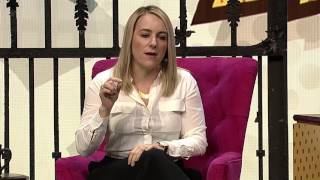
Panel interview (May 2017) with Stacy Bishop (Scale Venture Partners) and April Underwood (VP Product, Slack) about building Slack to serve both developers and CIOs. Key themes: Slack’s Enterprise Grid product to support large organizations with admin/security while preserving team-level workflows; Slack as a developer platform (App Directory, message interactivity, bots) and incentives for startups (Slack Fund). The discussion includes concrete adoption and platform metrics, examples of integrations, limits and promise of conversational bots, and Slack’s investments in search/learning/intelligence to surface relevant work. The conversation frames success as utility for customers (not raw app counts) and notes Slack’s impact on internal email and workplace workflows.
Questions this video answers
December 2015
150 at launch; over 900 at time of talk
5 million daily active users
38,000 paid teams
90% of paid teams currently use apps
Chapters
Please welcome to the stage Stacy Bishop, partner at Scale Venture Partners. Wow, this is quite the style.
I know. I feel like I'm on the Late show or something.
I know. I feel like I'm on a talk show.
Exactly.
I hope you brought your dog or something.
No, I don't have any hammock style. Yeah, so I don't know. Anyway, well. So. Hello, everyone. Welcome. I'm Stacy Bishop with Scale Venture Partners. I'm honored to have April Underwood, VP of Product, here with us. She previously was at Twitter and joined Slack about 18 months ago. So this is great, great to have you here. So our topic of this panel is slack developers and CIOs and how do you balance all of that? How you do all of, you know, work with all those different constituents, and April here is taking that on. So we want to understand how you can make that product work for both Today. Developers want to build a product for an audience. CIOs want to take their company in the next era. How do you do that? How do you balance for that?
Yeah, it's a great question and something that we get the opportunity to think about increasingly as Slack has been adopted by many of the largest companies in the world. So just last week, we were just across town and announced our new product called Enterprise Grid, that's really oriented towards large customers. And so, yeah, let me kind of walk you through what that is and how it sort of addresses your question, which is that I've been at Slack for 18 months, but the product's been in market for about three years. And what we've observed over time is that really, it's no secret that a lot of the adoption of Slack has been pretty grassroots and organic. And so what we do, we think about the end user and we look at those people using Slack every day and notice that multiple teams were cropping up within those large organizations, sometimes dozens, sometimes hundreds, hundreds within a single company. And so what we tried to do with Enterprise Grid and what I think we've accomplished is we've actually built a product that allows teams to work the way that they want to work in those smaller teams, but with connectivity across the organization, which really matters a lot for CIOs, so that they have an administrative experience, the security controls, everything that they need to have comfort and roll Slack out wall to wall.
And do you think because you've got this whole developer constituent, do you think of them as separate audiences in terms of dealing with the CIOs and dealing with the developer community? Do you think of those as different constituents or how do you kind of.
Yeah, absolutely. It's a good question. So we. So Slack is also a platform where work happens. We're the place that teams go to communicate with each other and get work done. But a major reason they can get work done in Slack is because we actually have have had this platform really since the outset that allows all of the other tools that those teams use to get their work done to integrate really seamlessly with Slack. So to the dichotomy or perceived one between CIOs and the developer community, I'd actually say they're very well aligned in that developers, like some of the up and coming developers in SaaS, want to get access to have their products tried out by some of the largest customers. And in building Enterprise Grid, we now are actually offering a solution that's giving them access to a much wider audience. So the two actually work together really seamlessly.
That's good. So following up on the platform and you know, we've got a lot of entrepreneurs here building companies, you know, why should they build to the Slack platform? You know, what's the benefits to them?
Yeah. So, you know, with the Slack platform, the real vision is that we can make it so that as a team adopts more and more tools in the workplace and we talk to a lot of customers, even ourselves. We use hundreds of different applications just within Slack, a company of about 700 people. It's not the case anymore that all of your software comes from one or two companies. Instead, you can find great software from lots of companies of all sizes, many of whom are here today. And so the real the offering for those developers is being able to offer a better experience for their customers. So especially if you're an up and coming developer, we've got 5 million daily active users. We've got 38,000 paid teams. We actually have customers that are using Slack all day, every day. And by building into Slack, they can actually get traction and start to get those first customers. But then also over a longer time period, even companies like Box and Google Drive see a lot of benefit with being integrated seamlessly with Slack because we have mutual customers and it just offers a better experience that reduces that context switching between all of those different apps.
That's great. And so what are some good examples? So you highlighted Google Drive and Box. What are some other, like maybe a startup perhaps or something that you see where they've gotten great benefit by building the Slack platform?
Yeah, one of my favorite experiences in the 18 months I've been at Slack and was in December 2015, we announced the Slack App Directory. So this was really the first time that we had, in a scalable way, made it so that a developer could build an app for Slack, could submit it, we review it, make sure everything's all kosher, and then we actually make it available for customers to find it. And I got to stand on stage and be the one to unveil the App Directory with the whole platform team behind me. And afterwards, some developers ran up to me and showed me, you know, we got 10 new customers since you announced the Gap Directory 45 minutes ago.
Oh, wow.
And if you think about what a team of one or two developers would have to do to get the first 8, 10, 20 customers to try their software, it's like, you know, cold emails and phone calls and working your network and maybe even hiring a head of sales. And we were able to offer that in a really scalable way for them right off the bat. So to that end, we have a fund that we call the Slack Fund. We have that because we think there are a lot of really bright teams that want to tackle problems in the workplace that, like us, want to make people's working lives simpler. And in doing so, we want to, you know, there's some real hurdles to, you know, get up and going. And we're a new platform and we know people are taking a leap of faith on us. So we established the Slack Fund to just reduce that friction, make it easier for those developers to make the decision to bet on Slack. And we've backed 24 companies so far. A couple of examples are Troops, which is a new up and comer in the CRM space. Companies like growbot that are focused on performance management and changing the way that teams give each other feedback and really, you know, work effectively as a team. And then also companies like Statspot that are bringing easy access to the stats. You need to be data driven in whatever your work is right there to, you know, the message, the message input box right there in Slack.
Got it. And on that fund, do you typically just join another round that's kind of coming together or can you kind of get involved anytime with the fund and sort of invest in these companies?
Yeah, we're historically investing alongside other institutional and seed investors. Yeah, I mean, we do it because we want to be able to, like I said, make it easier for more of these up and coming developers to make a bet on the Slack platform. But in doing so, we obviously can help the investment community really understand where we're seeing some of the strongest Teams and strongest products emerge. And so we're typically investing right alongside other investors.
That's great. So going back to building a product that developers love, do developers expect more just than a good API, what do they expect from you from a product standpoint?
Yeah. So our platform developers, they're awesome. We get such great feedback from them. And what they are typically looking to do is move from what I think Slack was really great at early on, which is serve as effectively a notification platform. So unlike email or other communication mechanisms you might use for notifications, the Slack app for teams is typically installed on all of their devices. It's on their desktop, it's on mobile. If you've got an Ops alert, a DevOps alert, or some sort of a security issue, or you've got a customer issue, actually being able to pipe those sorts of notifications into channels where there's accountability, there's transparency, an entire group of people in those channels can see that information from an app and then discuss it and decide what to do about it. But last year we started to take steps and we're going to continue to bring that interactivity into Slack. And so we introduced message buttons. So now you can click approve or reject to an expense report. You can assign something, for example, to another team member. And we're going to continue down that path of bringing interactivity into Slack. But here's the really important thing thing about our platform approach, we're not looking to just be a window into other people's applications. Like, you know, there's lots of people here and lots of SaaS and enterprise developers that build the best experience, whether it's in the web, whether it's in an app, they build the best experience, you know, in their own native application. But there are typically lots of users within an organization that need to do a very minimal amount of work with that software tool. Whether it's HR tools, whether it's developer tools, there's some amount of work that's just very, they're high volume tasks, but they're actually very simplistic. And so those are the things where there's a lot of mutual benefit between us and our developer community to make those really easy to get done within Slack. And the minute you need to do real work like design a website or build your 2017 financial plan, the best place for you to go do that is to go jump on out and, and do it in the experience that's been honed and crafted over many years by that team to be the best.
And just get the notifications.
Then, yeah, notifications and take action upon them. But you add up all of those, you think of the efficiency that comes with being able to get those tasks done in Slack, where you already are. Our teams are using slack actively for 2 hours and 20 minutes a day and they're connected to slack for over 10 hours a day. So ultimately that's where the teams already are. And so we want to make it really easy for developers to be able to bring their software to them and offer those little sort of micro efficiencies that really add up and help people stay focused and do their best work.
Got it. So, on the platform, how do you measure success? What's success for Slack in terms of the platform? Is it the number of apps that get on the platform or the level of messaging that's getting pushed into Slack? How do you measure that?
Yeah, it's a good question. I mean, I think if it's number of apps or growth in apps, then we would sort of feel like we're off to a really great start. And we do. We had 150 apps in the App Directory when we launched in December 2015 and we have over 900 today. But I actually am more interested in the measures that indicate that those apps really provide utility and the platform is really solving problems for customers because that's an interest that we share with all of the developers on our platform, is actually solving important problems for customers. So 90% of paid teams currently use apps. So that's a pretty good sign that people, our customers get that Slack is not a chat tool. It's instead this platform that allows for communication and easy use of all those applications. But I like to keep going deeper, which is really understanding and over time I'd love to see that customers tell us that they're able to do better work because they have easier access to these applications. And I think that'll be a combination of user research and product analytics and customer feedback. And it'll take us really, I'd say years to know whether or not we're really delivering on the big goal here, the big vision.
And have you seen a situation where it hasn't worked for an application or developer? Is there one where you're like, ooh, that, that just wasn't the quite use case or something? Have you seen that happen where there's just not. Maybe they're pushing too much messaging in or not enough? I mean, I suppose not enough would be.
But yeah, I'd say that there are some things that developers are trying to do that are frankly quite Hard. So there's a lot of conversation or there's a lot of talk about conversational interfaces and bots. I'd say we're still in a pretty early stage to be able to see those bot interfaces that really feel very intuitive. I mean, with my Alexa I can get the weather, but sometimes if I try to get a little bit more complex about what I'm looking for, it takes a few tries. Maybe she listens to my husband's voice more than she listens to mine, which irritates me. So, I mean, but when you're trying to interact with software in a way that really feels like it's got human type qualities and where it meets those expectations, the bar is just very high. But I'm encouraged, even though that's hard to do. And it's going to take some time to see apps do that really well because there are developers out there that are building developer toolkits for other developers. And so what's emerging is instead things like Botkit built by Howdy and lots of companies that are investing in artificial intelligence and our natural language processing libraries. So the pieces are all coming together. But I just think some of these things, we'll know it when we see it and we still haven't seen that thing that totally blows us away every time.
Yeah. So you mentioned bots. So platform shifts go through changes, expectations of the user. Tell us more about the slack bots and what are you thinking and what do you think that these slack bots in terms of informing users expectations going forward?
Yeah, I mean, I think it's a totally greenfield space. I'm really excited to see what developers do with it. You know, my hope is that I can at some point very soon ask questions like, you know, what was our revenue on Tuesday, February 5th? Or what was. When did we cross 100 million in ARR? I would like for us to be able to have that within Slack because you think about the many steps you have to take to answer a question like that, that's not an easy question to answer, even with software, which is why oftentimes you turn around and ask somebody else to go do it for you. And so I think that when people have more access, particularly to things like internal dashboards at their fingertips, I think that's really going to be very transformative. I've worked at a lot of companies like Google and Twitter and Travelocity, where you've got an entire internal tools team that builds dashboards and hones those dashboards. How the data gets presented, the quality of the data just to even help the exec team understand how the business is doing. And I think about how much work goes into that and how that's typically, that's oftentimes on a somewhat more outdated technology stack. And I see the way that at Slack we pump our business stats into a channel every four hours and when we hit a new high water Mark Stuart and I emoji react to it or comment on it or whatever and we get those moments to really keep the whole company very focused on how we're progressing. So I think that Slack is really going to create an interesting and important platform for bringing data to the groups of people that need that to make the best decisions they can for their work. And so a lot of that will be custom integrations where customers will actually invest in deeply integrating the way they use Slack with their own in house data and in house workflows and tools. And that's an area that I'm incredibly excited about and I think we're going to see a lot of that investment over the next year now that we've sort of unlocked those larger companies with Grid.
Got it. That's great. So going back to your background, you mentioned all the different companies that you work for, but most recently came from Twitter consumer platform. How did your experience at Twitter sort of inform now working for an enterprise platform? Just any similarities that you saw there? How did you think about that?
Yeah, I'm really into the SaaS business model. It's great. Make a great product and sell it to customers. It's awesome. I loved working at Twitter for five years and working on consumer products. Still a very active user of them. But I'd say the significance to which the business model we have at Slack is just totally different in the ways in which I think it makes a lot of decisions around the platform and around the product choices you make so much simpler. You can talk to your customers, you can just ask them what they're looking for, get feedback directly from them in a way that you just can't with consumer. And I'd also say that advertising based businesses run into just really hard challenges that are still unsolved around how to be a platform and make space for developers and what they have to bring to the platform, while also trying to sort of reconcile their own content and the advertising piece that drives the business. So there's some real friction and tension that comes to play there that just is. It's never, you know, I don't feel like we've had to tackle any of those really hard like problems that kind of break your brain a little bit with the platform. A slight. And I don't expect that we will because we and our developers are totally aligned around the same mission, which is making people's working lives simpler, more pleasant, more productive. And that makes things a lot easier.
So can you share what's in store for the future with Slack?
Yeah, there's so much. Well, I think that we're going to continue to see lots of great innovation coming from the platform, but one of the other areas that we're really investing in is what we call our search, learning and intelligence team. So we know that as people are doing more work within Slack, there's more to keep up with, just like there was on every other communication platform. But we really feel a sense of responsibility to help focus people on what's most important. And so we're going to make investments around being able to surface the experts and the digests of what you've missed since you've last logged in. And I think we're going to be able to make it so that starting your workday is a lot less anxiety inducing than it was before Slack.
Yeah. So this is my last question and this is probably a bigger topic, but just do you see Slack replacing email? Do you see it as the people. Just because I know companies that have switched to it, the volume of the internal email just goes. Goes down so significantly.
Yeah.
Is that the overall vision?
Well, we do see that when teams use Slack, they report to us that they see something like a 49% reduction in email, which is awesome. But email has some really useful properties for being able to communicate with people outside your organization in an ad hoc way. Anybody can get to you, which is a blessing and a curse. And so there are lots of reasons that I don't think email is going away, but I don't really see that as the goal for us. What we're really doing is transforming the way people are getting work done. And that is having a side effect, which is that I do think that teams that use Slack are using email less. I mean, we actually see that, but instead it's actually unlocking totally new ways of working that just weren't there before. And we see it within Slack, our customers see it and that's what we're focused on driving. More so than killing, putting the final death knell to email.
Great. Okay, so on that note, Slack is not going to do it, but it's helping companies work better together, which is great. I completely agree. So that's the end of our panel, so thank you very much, April. Thank you. It's great to chat with you. And I think you guys are off to lunch.










