Building a High Performing Team with Snowflake’s Guan Wang (Workshop Wednesday)
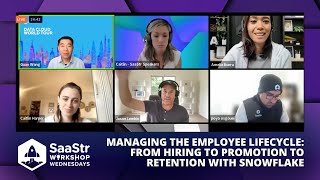
Guan Wang, Global Director of Marketing Intelligence at Snowflake, walks through a 15-minute playbook for building high-performing teams by treating the employee lifecycle like a customer lifecycle. The framework covers hiring, onboarding, development, promotion, and retention, with emphasis on trust, constructive conflict, commitment, accountability, and results. The Q&A addresses onboarding timelines (3-6 months), quarterly check-ins, SDR ramp, and retention practices.
Chapters
Everyone a second to get their zoom and their settings set up. Thanks for joining us. Happy Wednesday. Today we are officially launching Workshop Wednesday, so Every Wednesday at 10am Pacific we will be here rain or shine. We're going to bring along a SaaS expert to walk us through some content that they're an expert in, then kick off an interactive discussion so you'll have the opportunity to interact with the speaker directly, get any questions answered and connect with fellow community members. Gwan is here today to join us and help us kick off. Guan is from Snowflake. He's going to be talking through the Playbook to building high performing team and retaining top talent. I'm not going to waste any more time, I'm going to pass it over to him. So here's the way the format's going to work. He's going to talk through about 15 minutes of his content and then we're going to open it up for a discussion. So we want to make this as interactive as possible. Please, please feel free to turn on your videos and unmute yourself when we get to the question time. So we want to give you direct access to our speakers so you can ask any questions to the speakers themselves and also to other fellow community members that are joining us. So go on, take it away. Thanks so much.
Thank you. Sasser Team.
Hello everyone.
Welcome to the first Sasser Workshop. My name is Guan Huang. I'm the Global Director, Marketing Intelligence, Snowflake. I've been with Snowflake for two years and have grown the team for over 300% with zero percent turnover. In the next 15 minutes I'm going to share my authentic story, my Playbook to build a high performing team and retain top talent. Based on my first experience building teams of the last three companies. After that we will have plenty of time at least 15 minutes for open discussion. Arguably, people are the most valuable asset of an organization. Every leader needs to have a strategic playbook to build a high performing team and retain top talent. Based on my research of the SASA community, the majority of our audience today are probably very familiar with the customer lifecycle which includes customer acquisition, customer onboarding, customer adoption, customer cross sell and upsell as well as customer retention. Every stage of the customer journey is critical to deliver the best class customer experience. I want to use a metaphor to describe the employee life cycle since there's lots of commonalities between customer Life cycle and employee lifecycle. Talent acquisition is similar to customer acquisition. Both are the first stage of the journey. Some companies have the recruiting team lead the recruiting process and even have a separate talent sourcing team to identify candidates for initial phone interviews. Other companies have the hiring managers in charge the end to end talent acquisition process where the recruiting team supports throughout the entire process. Employee onboarding is similar to Customer onboarding Employee onboarding can be as short as a few hours, but can also be as long as a few days or even sometimes a few months if it involves technical boot camps for job functions such as software engineering, data science and machine learning. Employee development is similar to customer adoption in that customer adoption is to make sure your customers adopts your products or services for their business use cases and employee development is to make sure your team members build the skill sets and mindsets to succeed in their roles. Employee promotion is similar to customer cross sell and upsell in that customer cross sell upsell is to make sure your customers adopt additional products or services for their use cases and employee promotion is to recognize your employee or team members achievements in their current roles and move.
On to more challenging roles.
Employee Retention is Similar to Customer Retention Employee retention has been a hot topic over the last couple years since the beginning of Pandemic last year. Many companies struggle with losing talent or keeping talent due to the great resignation. But this year, especially the recent months, a lot of companies started worrying about the micro economy and potential layoffs across industries which could impact the employee. Sentiment and attrition based on both customers and people should be part of your company's core strategy. If you have a playbook to succeed throughout the entire customer life cycle, you should have a playbook to succeed throughout entire employee lifecycle as well. To build a high performing team, first of all you need to understand the top attributes of making up high performing team which I have a slide showing later. It's like a compass that can guide you as you build a high performing team. Every decision you make, every conversation you have with your people and every conflict you run into you as a leader shapes the attributes of your team that ultimately drive your team performance. In addition, you can adopt the specific tactics which I will also share with you later throughout the entire employee lifecycle which help you build a high performing team. At Snowflake we have a leadership book club. We have a group of managers come together to discuss the tactics from building a team to increasing team productivity to building a great culture. One of my favorite books is the five Dysfunctions of a Team by Patrick Lencioni. This is a business book published 20 years ago but has a practical framework that can still useful today for building a high performing Team, I want to highlight the five attributes of high performing. Trust, constructive, conflict, commitment, accountability and results as well as the actions you can take to build your team attributes. Trust is a foundation of a high performing team. So how to build trust? You as a leader need to be human. To be more specific, you need to cultivate a safe environment where everyone in your team can speak up. Team members support each other as well as leverage the strength of each other. A lot of teams broke this layer. It's easier said than done. Every team runs into conflicts, so how to solve those? You as a leader need to demand debate. And to be more specific, you need to get input from stakeholders, identify root causes and develop sound solutions with minimal politics. We all commit to something at work, but is it trick why some teams do it so well and not others? You as a leader need to focus on clarity and delivery. And to be more specific, you need to build an alignment on common objectives with your stakeholders, clarify directions and priorities as well as highly engage your team members throughout the intel process. Next, how do you build a culture of accountability? You as a leader need to confront difficult issues. Sometimes you need to hold your team members accountable and really manage the poor performers. In addition, you need to hold the same standards for everyone in your team. Lastly, here, the top of the team performance pyramid is the results. You, as a leader need to focus on establishing objectives and roadmaps on a regular basis for your team. And ultimately, you as a leader, need to inspire your team members to deliver the results according to objectives and roadmaps. Next, let's switch the gear to focusing on the tactics. Employee lifecycle is made up of five phases. Hiring, onboarding, development, promotion and retention. Let me share the specific tactics you can apply throughout the entire employee lifecycle for hiring. One of the key tactics I've done at Snowflake is to build a clear vision and mission for my team that we can share with all candidates during the interview process. So there's an early alignment between all the candidates and my team. In addition, you can build your company brand, deliver great candidate experience and build a strong talent network which will help you hire the best people for onboarding. One of the key tactics I've done at Snowflake is to build a certain 1619 day plan so new employees are clear about the priorities as they join my team. In addition, you can set clear expectations, help your team members build a network, and provide detailed instruction and documentation as they start working on projects. You should be clear that you will never hide a perfect person who knows everything on their first day of the job. So talent development should be part of your core tactics to help your people succeed. One of the key tactics for me is to prioritize learning and development for my team members. In addition, you need to balance the sustainability and the longevity of your team members and make sure you understand and support your employees needs as you help your team grow into the next phase of their careers. At a certain point, some of your team members are ready for promotion. Promotion could be a really, really sensitive topic as you can high performers in your team at the same time. So my philosophy is to celebrate promotions as team wins rather than individual career milestones. In addition, you can use opportunities to inspire other team members and provide nurture opportunities. But you need to be careful that you need to calibrate your team members carefully and justify why some people get promoted. Retention is a highly sensitive topic for many leaders. It's a hard problem as lots of industry leading companies struggle with retaining top talent. According to a LinkedIn survey, the tech industry has an average turnover rate of 13.2%. According to the U.S. bureau's Labor Statistics, the turnover rate for stops is double the industry average at 26%. My tactic of retaining top talent is to execute extremely well in step one to four to make sure my team members are happy and motivated. In addition, you can instill a psychologically safe environment where your people can openly share their perspectives, challenges and sometimes even mistakes. Also, you need to be aware that every career move has a potential risk and cost associated with it. You need to make sure the potential upward opportunities you provide in your team can be hardly matched anywhere else. This wraps my story. Now open for discussion.
Thank you. Guan questions. So feel free to raise your hand, come off mute or drop them in the chat will kind of help facilitate one and hopefully kick off some interesting discussion. So Jason's going to kick us off. We got a first question in the chat here.
I can go first but everyone can go out. I'm curious what you've learned from the data on promotions. How many folks are promotable like reach a certain bar versus slots like what's the ratio and what have you learned from the data? We don't always know this at startups, but what's. What's that ratio? I know a lot of times in sales teams with SGRS days it's also almost often 3 to 1. But what have you learned about that ratio and how to. How to handle it?
Jason, are you.
Do you mean this my specific team or the.
Yeah. Well you've. You've got Enough all stars at Snowflake, right? Let's say there's, let's say there's a promotion level for a senior manager or director or however you rank things. Like I'm sure it's systematic at Snowflake scale. For each level of promotion, how many good candidates do you have? Like folks that have earned it but they can't all get it. Like what's the ratio of folks that are, that are truly meet the bar but yet. But for each slot, is it 2 to 1? 1 to 1? Are there 10 great folks for each promotion? What have you learned from the number of folks that meet the bar for each promotion?
Yeah, yeah. First of all, Snowflake is a high growth company. I joined the company two years ago. There was about 2,000 people. Nowadays I don't have the latest number. I think our last earnings report, if I remember correctly was over 15,500 employees. Tremendous growth. And also that means a lot of opportunities for new for employees, particularly in my team. When I joined the company, my team has about increased. Myself has three people. Nowadays we have close to 15 people. At some point next year, hopefully we can get to 20. And you know, that means a lot of growth opportunities. So over the last six months I promoted two new managers. They were, you know, they are the first time managers. They were individual contributor contributors when they joined the company. But they have done tremendous work. And I promote one of the managers, you know, once he crossed the fourth year anniversary Snowflake and across other functions, I think SDRs and AES definitely a lot of opportunities. You know our SDR leader, Lars Nielsen, his team has over 200 SDRs at this point. And I think his team, I think promoted a lot of SDRs every quarter. If I remember correct correctly, it's like more than 10 SDRs every quarter. They will promote into other functions, either become corporate AES or become, you know, some joining my team or you know, other marketing teams as well as, you know, sales enablement, etc. So there's definitely a lot of opportunities. And also remember, promotion is not like you move level one to level two or to level three sometimes it could be, you know, you jumping to a different function. That could also be a promotion.
Gwan, you talked a lot about building a roadmap and you know, publicizing it and how important that is as a leader. How do we do this? How often do you bring it up to your team? How do you share it and make sure that it's top of mind for the team? Can you tell us and dig A little bit more into that.
Yeah, sure.
Great question.
So how my team builds roadmap?
You know, we're definitely like a technical team, but we also have, you know, enablement, strategy and star leadership component. Because my team, you know, use Snowflake product to build a lot of stuff. You know, we actually, it's a two way process. One way is for my team. We proactively partner with business stakeholders, including cmo, our cmo, Denise, you know, on big initiatives. You know, we. We come up with our proposal, our recommendations, our ideas, and then the business leaders and stakeholders we have that.
Is this a good stuff or is this a project? Good project for us is not.
And then another way for us is we have a standard BRD process, business requirement document process.
So all stakeholders, when they request a project from my team, they need to fill out a BRD that my team.
Can clearly at least like. At high level, we understand what people want to achieve. And based on those two way process, on a quarterly basis, we release something called what Matters. That's across marketing.
Every single team member.
At Snowflake Marketing, we have our quarterly matters. Usually it consists between three to five big rocks. We will deliver every single quarter. And as a leader, my job is.
To make sure we establish the quarterly.
What matters and we have a roadmap.
Even for the next 1 or 2/4 out. And some project even is 4/4 out.
And my job is to make sure.
Every single team member in my team.
Deliver those quarterly what Matters. Hopefully that answers the question. Awesome.
Thank you. All right, we're getting tons of questions in the chat. Raise your hand if you want to ask live. If not, I'm gonna, I'm gonna keep asking. So one question. How did you learn to be an excellent people leader? Obviously a Snowflake guru. How did you adapt or learn to scale with the company?
Just to re.
That's. Can you repeat? Yeah. Can you repeat the question a bit? A little bit, yeah.
How do you learn to be an excellent leader? I think it's probably something that really takes practice and just comes with experience. But I think coming in, you mentioned that there's been a lot of growth at Snowflake since you started. So how do you grow as a leader and how have you learned to adapt as the company has scaled and as your team has scaled?
Yeah, I think people leadership cannot. I mean, you can learn something from the textbooks or in a podcast or even this workshop. However, I think you have to really put those learnings into practice. Every single leader will have different leadership styles and you have to find a way that's most authentic to you. My leadership style is I'm caring and I'm supportive. I want to help each other and.
I want to help my team member grow.
So that's my leadership style. And over the course of the last, you know, six or seven years, I learned so much from my first leadership role to today. You know, I, I think, you know, my wife remind me, you know, think about yourself six or seven years ago when you first became the first time people manager. It was such, you, you, you were struggling with your job. Because I need to deliver, you know, projects on my own, but I also.
Need to mentor a team. That, that time was very, very difficult.
But I, I came a long way through the journey I took, you know, I took, you know, a couple of leadership training courses and the programs on my, on my own and also, you know, and then trying to talk with some, some of the amazing leaders like you know, Jason here, but also, you know, many leaders at Snowflake. There's just wonderful person I can just learn from and I always want to observe how other amazing leaders, you know, lead their teams. So, you know, and then leadership is a journey. I don't think, you know, I'm a perfect leader right now and I, you know, always remind myself there's always room to improve. Even my team is doing amazing. But personally I see, I think I still a lot of things I can learn, you know, from amazing leaders here in the industry.
Yeah, of course. It's a content iteration. Yeah. Sheila has a question she's going to ask live.
Hey Guan, thanks for spending your time and kind of contributing to the community. Really appreciate it. The question I had was you mentioned in your process like this fair evaluation process. I was wondering if you have any recommendations for startups on balancing the need of like a systematic process. Like large companies have like all of these things that they roll out with giant companies like success factors versus like a right size process for a scaling company. Like how do you build that infrastructure like just in time at the appropriate level for the size of company you have.
Yeah, I can speak from my, you know, both my current, you know, experience Snowflake as well as my previous companies. By the way, I work for you know, Fortune 500 companies as well as stops. You know, I really like the framework called 9Box. Shira, have you heard about something called 9Box?
I have, I do have some Fortune 500 experience before startup as well and so ultra familiar with nine Box.
Yeah, basically we put the people into those. One of Those boxes. But you know that's like a framework basically you put the people there. But I have my own process, you know, thinking, you know, when before I.
Put anyone into a box I will.
Have a framework to rate, you know, their current or the past 12 months employees, performance, what's the strategy plan for that particular individual as well as what are the feedback from the stakeholders, you know, any rooms to improve.
And I will read across my team.
And write every, you know, write you know, three to five bullet points for, even in, for individual people in each of those categories and then I will compare, do like holistically compare across my team and you know, and that will really clear my mind. The reading will be fair because I have, you know, that's three 16 degree feedback group from all the stakeholders for, for all the team members, for the leaders and before I put anyone into a box. So that's a framework and then the process I've taken, I really enjoy doing that because it helped me clear my mind Sometimes some team members could be really talkative. They share amazing things.
But.
On the other end, some of the team members may be shy, they don't share anything. So you have to balance out sometimes. You know, you cannot be emotionally controlled or dominated by certain team members. You know, again the, you know, performance review, promotion, those could be really sensitive topics. We need to be cautious about and thoughtful about anything we do there. So that's my philosophy about performance, reading or any of the, you know, you know, you know, I mean particularly here we call it snowflake, we call it annual marriage review. So that will include some of the compensation adjustment.
Sitting here googling nine box. Jordan doesn't have a mic so we are going to ask the question for him. What does accountability look like for SDRs? In my case I have an SDR that's doing the work in terms of email sent and open rates. But the positive response rate is non existent. Over the last four months other SDRs have done well but are reaching out to a different segment. Do I chalk this, do I chalk this up to a problem with management that is bad batch of leads, bad product or is this poor performance by the sdr? It's a great question, Jordan. What do you think? Juan?
Yeah, great question. You know, I, by the way, I'm not from the SDR function but we do, I've been working with SDR functions over the last three or four companies. I can share a little bit on my point of view. I think at least from Snowflake side we have amazing tooling and Then predictive models and then the systems processes enablement build for the SDR team, help them succeed through their SDR career journey. Sdr, you know for most of people it's for it represents sales, development, representative.
And then no one will stay in.
The SDL career for you know, the entire career. Some people move to a different career path to become AES, some people become, you know, move on to marketing. Some people move on or get promoted into the SDR management team managers, you know, senior managers, directors, senior directors, VPs and definitely a long career trajectory for the SDRs. And I think the tooling data will be really important but on the other end also really understand the customers and understand the products and services your company provides and make sure you deliver the core message to the customers you are trying to talk to. Even the emails you are writing. Make sure you hit the main points. I was reading the other blog something Jason posted a few many years ago about as the first SDR salespeople, how can you send code emails to the CEOs? So make sure it's simple, you hit the key points and then there's actions people can take. So this is my perspective on how to be an amazing SDR and how to be successful.
But keep it short, is that right? I'm not sure how to say that.
But jump in, keep it short.
Hit the mass, deliver the mass message for your product, for your company and even sometimes it's a product position, you know, make sure you deliver that and make sure you have something interesting for the, for the people you are talking to. Don't try to be like sending the same email to the same people. Not relevant people will unsubscribe your email.
Hi there Rike from Berlin. I have a question regarding your investment into the ramp up phase of new hires. And that is how long do you give new hires to be up to speed in say months? And how much of this time is pure onboarding, dedicated activities versus just you know, on the job training?
Yeah, yeah, great question. You know my team, we have a.
Portion of the team that's technical.
So what I've done on my first month is Snowflake, we build actually an onboarding doc which is three page long with every single thing, the tooling, the systems, the cost, the key stakeholders and then all the, you know, the leaders here at Snowflake they should meet with. So and you know that's like the onboarding doc we have been using in my team for the almost last two years and has been very, very successful. So you know, for the new hikes they can start when on their first day they can look those stock and they, they don't, they don't need to ask a lot of questions. How can I access to certain tools or systems or platforms? They can, they can work on their own. And Snowflake, because we're much larger company now, a lot of things are managed, you know, by our IT team or operations team. We can, you know, people, you know, my new team members can create the tickets on, on their own rather than asking managers or team leaders to help them to do those babysitting stuff. And then that's like the initial onboarding. And for some of the technical folks in my team, we also have really like a doc, you know, really rich documentations in conference, in elation in many of the documentation platforms. Our team members can learn things on their own. You know, this, you know, again onboarding is not for my team. It's not like a one day event or two day event. It's like a three to six months period. People have to learn a lot of things. Especially you know, we're in the business function. There's so many things can be, can, can be learned. So hopefully that answers your question.
It does, thank you.
All right, question from Brian. It seems like career progression and promotions have become more and more important to helping retain employees. How does Snowflake think of role changes and what kind of timelines and benchmarks do you have in place to help make sure these opportunities to help make sure these opportunities are offered evenly to all Snowflake employees?
Yeah, great question. You know, internal transfers, I think that's, you know, we make the whole process very transparent.
Parent.
I believe we have posted all the potential opportunities both internally as well as our Snowflake.com Korea website. And the interview process for internal employees is the same as external candidates. And for Snowflake, we always want to hire the best people either internally or externally to you know, for specific roles. And particularly for my team, we actually.
Had.
An internal transfer. She's based in London and she transferred to my team from sales planning team last year and she has been with Snowflake for about six years. And that interview process was full. It's a full cycle. That process made up of six or seven people. You know, here again at Snowflake we, we, you know, our goal is objective is to hire the best people to put the into the right positions and make sure, you know, we give them the opportunities to shine. So that's, that's about the, the internal transfer process at Snowflake what about like.
Career progressions and promotions? So, for example, I feel like employees want to get promoted every month, Right. But that's visibly not possible when you're building a company. And as Jason said, there's just not enough bandwidth and enough open positions. Right. To keep promoting everybody. So do you have, you know, someone has to be in a role for a minimum of a year? I know some people have like level changes that are within a role. So you don't have to do a full promotion every time. Do you kind of have any more structure, bandwidth around that at Snowflake?
Not yet, based on my knowledge. So I think our promotion, we don't have like, you know, every annual merit review cycle. We don't have like a, you know, something called the promotion quarter. Certain companies, you know, some of the larger companies I work before have like a promotion quota. You know, every single promotion cycle, you can have no more than, you know, 5% people promoted in your team, etc. Yeah, Snowflake, we don't have anything like that. We don't have quota from hr, from our executive leadership team. You know, it's all based on performance, your contribution, your potential. We have a full, you know, performance review cycle that we, you know, rate, at least for my team. We rate, you know, all my team members fairly and put the people to the right position and make sure they succeed rather than, you know, rather than, you know, some companies, you know, if they have certain, you know, guidance, you have to be at the company for at least two years and, you know, done such, such, such, and then you can get promoted. Yeah, we don't have anything like that.
All right, this is kind of a follow up question on that from Lima. Is diversity a consideration for you and Snowflake when hiring or in promotions? And what are the reasons if it's not a consideration? So kind of just a follow up on that to expand on your last point.
First of all, promotion is always my top priority. From the whole employee life cycle, from hiring, onboarding, development, promotion and even retention. I always want to keep in mind because I'm personally a minority in the United States. You know, I just put myself in the shoes of my, you know, my team members and anyone I want to hire, I want to have that mindset. You know, I want hire. You know, I, I'm building a diverse team. I don't want every, you know, team.
Member in my team look the same.
With same background, same skill sets, same thinking. That's. No, no, no, that's not the team. I'm going to build and in order to build a high performing team. Diversity is one of the key components I always keep in mind. So every decision I made for my team will have the diverse diversity component and factor. Hopefully that answers the question.
Christopher has a question.
Hey, can you hear me?
Yep.
Iguan, thanks for the presentation. Really useful. So just looking for some advice for a smaller startup. You know, kind of getting close to 1 million ARR. Things are founder led, pretty much ad hoc, not a lot of like systems and processes in place in terms of hiring onboarding, that whole kind of employee onboarding funnel. You had some good practical tips in one of your other slides earlier. What do you think is like the highest ROI thing that we can implement early in the process? Whether that be like solidifying kind of our values or creating those 30, 60, 90 day plans. Like what do you think is the lowest hanging fruit that we can do early on in order to improve our employee funnel.
Since it's early stage. Stop. My suggestion is remember I shared the five phase of the employee cycle. Hiring, onboarding, development, promotion and retention. You pick one or two things you can do in each of those really important things, most important thing for your company throughout the five stage of the employee lifecycle and then focusing on those to develop the foundation as your company grows. Make sure you have one or two things in each of these areas. Even like hiring. Make sure you can build your company brand your network on LinkedIn and then really attracts the candidates your company employer brand. So that's another type of brands different from your product brand but also important to make sure you know you have those foundations to, to hire the best people.
Cool.
Thank you.
Yep.
What's. We're getting a lot of questions here. Questions from Ted. How has the significant drop in stock price impacted retention? What are you doing to mitigate the drop?
So yeah, I think that's a hard question for me. You know, definitely. I mean people. One thing I think maybe I learned throughout my career is don't look the stock price every day. It just make me very anxious sometimes just feel like oh it dropped 20% or someday up 20%. So you know, by the way, I'm inside trading a snowflake. I'm not allowed to sell stock or any do any advice on snowflake stock? So I, yeah, I don't, I don't tend to look at the stock price to be honest, very often. I don't care. You know, I want to stay with the company for long term. So I'm going to build a company, building my team and let's say five years from today where this Snowfreak stock is. So.
Yeah, yeah.
So that's my, my personal perspective. I don't. Yeah. Try not to look the stock price every single day. And the overall market, you know, I mean we all. Yeah. For the overall market we can invest in the, you know, the index fund or S&P 500. So ETC. So you, you know, even there's a 10 up and down. There's nothing you can do. Just go, go with the. Right.
So yeah. Focus on the role too and the day to day and the opportunity.
Exactly.
Yeah.
Sheila was posing a question to the group. So I don't know if folks are comfortable sharing again either in the chat or coming off mute. But have other startups considered a shorter timeline for performance evals like quarterly for example, versus annually or twice a year.
Yeah, I can share a little bit my personal perspective. My previous. Did you know quarterly performance reviews but other companies also do the annual performance reviews. I, I tend to see the annual performance reviews better but you have the, you know. But I think you could have the quarterly check ins. How we do a snowflake. We have the annual performance reviews but we also have the quarterly what matters. So that's you know, for every single quarter we have three to five big things we want to, you know, deliver and those things will help us have the, you know, to basically drive the annual performance, you know, review conversations. If you miss consistently four quarters, we're in trouble. So. But we should have the conversation early on. You know, when you miss a second time then that conversation should happen early on rather than waiting for the full year. Annual performance review. Yeah, yeah, yeah. So that's my philosophy and point of view on the performance review whether it's annual or quarterly.
Yeah. Bigger annual, more formal process, smaller check ins so the employee knows kind of where they stand and they're not.
Yeah.
Surprised at after 12 months time. That makes sense.
Yeah. One thing to add. Oh sorry. One thing to add is performance review can be really time consuming. You know I one of my previous companies did you know, quarterly performance reviews and people just hate those. They said why I spend so much time writing something not even used. So you have to scale like annual performance review. You can do a large scale, you spend you know, you know, three days writing those things but for quarterly you spend two hours. So you have to balance that not. Not trying to make the process, you know, you know, over complicated and people feel frustrated. That was my experience to in one of the companies do quarterly performance reviews and at some point I just gave up. I don't want to do it anymore. I just write something I copy paste from last quarter.
From the last quarter? Yeah. You spend so much time talking about their performance versus actually doing it, so it kind of makes sense.
Yeah.
All right, thank you. Good point. On the consideration of time commitment. Maybe one of our last questions, but feel free to keep dropping them in if you've got them. Juan, where do you see yourself in five years? What skills are needed? What resources will you utilize to achieve your own career goals? So basically, how will you prepare yourself for your own promotion?
That's, that's a hard question. So I, I, you know, for my promotion, I definitely have career goals. So I have, you know, I'm trying to have quarterly, or at least like once every two quarters, have career conversations with my manager to make sure he understands what my career goals are. And, you know, in addition to that, I'm trying to be more involved in, you know, the community service, the volunteering. So I've been volunteering for a couple of nonprofit organizations, you know, and my goal is to make sure, you know, I always have the mindset to be grateful. As Jason shared something on LinkedIn last, last, last weekend. Be, always be grateful.
ABG.
So, yeah, so that's my, my, you know, you know, instead of just getting paychecks from, from Snowflake, I want to do contribute something to the community, help the younger people to grow. And I went through, I made a.
Lot of mistakes in my career.
How can I share those learnings with other people so they can take on those learnings early on? And in addition to that is, you know, and engage, you know, some of the thought leadership activities like, you know, the, this particular event Sasser workshop. That's something, you know, I'm passionate about. I want to discuss with the peers in the industry. We can learn together, we can grow together. And yeah, it's, you know, career promotion is just like a one moment in our careers. It's not going to be like that. You know, career promotions are not my ultimate career goal. You know, there will be like some financial, you know, benefits, but yeah, those things are very, very short term. I, yeah, it's, it's, it's important, but it's not like a mind north. Love it.
Any other questions from the group? Then this officially concludes.
This was an epic start.
First workshop Wednesday. Gwan, thanks so much for joining us. Really appreciate you sharing all your insights and just answering and being really authentic in your responses, giving folks the opportunity to ask questions. So we will be back here next week at 10am on Wednesday. We're going to try and mix these up and get lots of different types of companies, different stages, different roles. So next week we are going to have a VP from Battery Ventures. Brandon's going to be joining us, talking through our traditional SaaS metrics, outdated. So great opportunity from the VC perspective to get some questions answered there. So see everyone, hopefully back next Wednesday at 10am until next time, thank you so much.
Bye.










