Building a Killer Company in a Non-obvious Market: Greenhouse, Classy and Logikcull
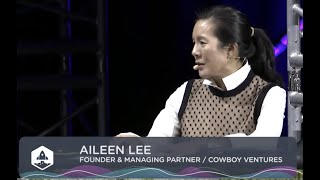
Aileen Lee moderates a discussion with founders of Greenhouse, Classy, and Logikcull about building companies in unglamorous markets. They cover fundraising tactics, hiring for culture fit, and staying focused on product rather than chasing feature requests when investors and customers demand more.
Questions this video answers
Going on 11 years total; transitioned from services to SaaS about four years prior (speaker: Andy Wilson).
ACVs range from about $10k (solo/nonprofit) up to high six figures; closed a $2.3 million contract (Andy Wilson).
Greenhouse started in 2012; company age cited as four years (panel date context) and raised a $35 million Series C led by Thrive (Daniel Chait).
Classy began around 2011; team ~150 people; raised about $23 million in venture capital, last round led by Mithril Capital Partners (Scott).
They had ~30 days of runway after a broken term sheet; a viral campaign (Kony 2012) plus a $500,000 super angel investment extended runway (Scott).
Chapters
All right, you guys get the cool stairs.
Get one now.
Hi everyone. Thanks for having us. I don't know if we got. I guess we'll just introduce ourselves. I'm Aileen Lee from Cowboy Ventures and I am honored to be here talking to these fine gentlemen. The topic of our discussion is building a great company in a non a killer company in a non obvious market, which I took as like kind of sleepy market, not sexy market. So we'll talk about all those things, but I'm going to actually have our guests introduce themselves first with your name, how long ago you started your company, what do you do and why is it awesome? And then give us a sense of where you are in the journey in terms of momentum, traction, sales size, something like that.
Sure. I'll go first.
Go for it.
My name is Andy Wilson. I'm the CEO and co founder of logical.com?
Can you guys hear okay?
Everything okay?
Good.
Sounds okay. Going on 11 years. So we're one of those services companies that transitioned to SAS about four years ago. And we build a SaaS product in the legal market that helps law firms, enterprises, governments and nonprofits drastically reduce the time and cost associated with litigation and investigations by anywhere between 50 to 90%. And the reason why that's awesome is litigation kind of sucks and it's very expensive. The average litigation being around a million to $2 million. And the reason for that is this process called discovery. It's about 70% of that cost and we drop that down to the ground. And so our momentum is. We've been growing. Revenue 3x every year. Our ACVs range anywhere from on the low end to like 10k for a solo practitioner law firm or a non profit, all the way up to the high six figures. We just closed a $2.3 million contract with a law firm.
Nice job.
Thank you.
Daniel.
Hi, my name is Daniel Chait. I'm the co founder and CEO at Greenhouse. We make recruiting software that helps growing companies do a great job at hiring and bringing on the best people. Why that's awesome is because hiring is the top challenge for most companies. It's something that everybody views as the most important way to succeed as a company, but also one of the things that is the hardest to do. So our company helps our customers optimize that process and bring everyone in the company along on the journey from a small company to growing really big through great recruiting and onboarding. Where are we? So the company is four years old. We started in 2012. We've raised our Series C last year, $35 million led by Thrive. Last year was a year of tremendous hypergrowth for us. We. We about quadrupled in every metric. So that brought a lot of challenges along with it. But it feels great.
Awesome.
Everyone, My name is Scott. I co founded and I'm the CEO of a company called Classy. We are building the world's first social impact platform, or operating system rather, for social impact. We started as a fundraising application and now we're sort of building out the suite suite to help nonprofits scale. So what we focus on is revenue generation and revenue retention. So basically keeping donors around and allowing those organizations to become sustainable so they can scale their impact. The company actually started as a pub crawl, of all things, a charitable pub crawl. We were raising money for the American Cancer Society because my mom had been affected by the disease and some of my roommates. And that pub crawl inspired us to do dozens of different events, walks and races and big concerts and all sorts of stuff. And we actually built the alpha version of Classy for one of our own fundraising events to do the registration and have the attendees do the fundraising. And the beneficiaries of that event, the nonprofit said, you know, what you built is actually pretty cool. Can we try it for other stuff? And so that was sort of the beginning of Classy, and that was about 2011. We grew from the pub crawl and now we're about 150 people strong. We've raised about 23 million in venture capital. Mithril Capital Partners raised our last round, and we've seen pretty similar growth metrics to these guys.
That's awesome. All right, well, I know it's the afternoon and sometimes afternoons can get a bit sleepy. You might want to have a little fun. We have cocktails up here, so I decided we might try to play a little party game. We have here your paddles handmade.
Yes.
Can I just volunteer that we didn't know that this was happening.
Don't spell them too close.
And we still don't know what's happening.
That's why they brought us beers. Exactly.
You'll see a green side and a red side. So I'm going to ask you guys some questions. It is not yet a drinking game, but it clearly could be.
It is now burn rate drink.
And so I'm going to ask a question. Red is no. Green is yes. Ok. Question is. Raising money for my company from the beginning was super easy. Okay, you all agreed. Anybody got some more stories to share? Come on, sexy market. HR Easy.
Yeah.
I had people tell me that like, basically I found that the more they knew about recruiting and the HR industry, the less interested they were in our business. HR people don't spend money and people have done a million of these applicant tracking softwares and they're all garbage and you'll never sell one.
I was one of those people, by the way.
Wow.
I wasn't going to say that, but just, I mean, look, first of all, you're a jerk if you say, yeah, fundraising was easy, so I'm not going to say that anyway. But it's a skill that you're not born with and so you have to develop it like any other skill. And it's like a weird situation and VCs have their own secret language that you don't know and nobody tells you. And I'd never been to Sandhill Road before I started this company, so it's hard.
Yeah. Related to that. I mean, we're selling efficiency software to lawyers and people that bill on time. So no one's ever going to buy that. We got told that a lot. So, yeah, it's not easy.
Yeah. We're headquartered in San Diego and we're first time entrepreneurs. So it was really tough for us from.
It was like a triple whammy. Never done it before in San Diego, non profits.
We had people saying to us, we're only going to invest in Bay Area companies. We got emails like that. And so for us, we had to raise $5 million of all angel money basically locally and from our own networks. And that's a lot of angel money. But that helped us. That carried us through about three years and we had to show traction to then basically get in front of some of the VCs. But our early ventures down Sandhill Road was like the Silicon Valley comedy show on hbo, but not the first time around where he does the, you know what it was like the second time around. And we just got a whole bunch of no's. But, you know, we just. Traction was basically our best friend and that helped it get a little bit easier over time.
Did you figure out a trick for fundraising before you had traction? Was there an unlock?
I mean the thing. So when we raised our angel round, we didn't have traction at all. It was two guys in a PowerPoint. And the trick I learned, like I said, is like there's kind of secret language that VCs have and if you just talk like normally about what you think, it doesn't work. And so you have to like understand and learn, like what's the, what's the you know, secret. And at every stage it's different. The angel round, when we have no traction, all we were raising from angels as well. It's like, it's just a geometric increase in like difficulty for every dollar raised. So the first or decrease, like the first dollar is like way, way, way the hardest. And they're all just like waiting and seeing who else is going to invest and who's going to move. And so the more you can say about how close the round is to closing and whatever, the easier. And so like we were trying to raise 500K and we got to like, you know, 100 or like you could squint and sort of see 200. And then we just started telling people the round's going to close. And until you told people the round was going to close, like everybody was waiting. And finally when the round was like, you know, closing, we got like 180 grand in like a week and oversubscribed, which was kind of the plan all along. But you have to sort of generate that.
So for those of you who may raise next, see Daniel afterwards. He'll teach you all the secret words to use.
But the story, I think just to add on to that, the story does change every single phase. And what I usually do is sit down and kind of look at the numbers and look at the business and say, what's the most compelling nugget? And I craft the story, the narrative around that. There's always the basics, like the market opportunity, like your revenue ramp, all that. But what is, what's the one metric that we've been really concentrating on recently and how did we do over the last six months? And really focusing on that as a proof of concept or a proof point has worked?
I think that's right. Okay, I'm gonna move to the next question. Things have gone pretty much the way I planned it. Okay, explain.
Oh, man.
I think everybody in this room realizes it doesn't go as planned. You try and get that the financial plan, of course, always lies to you. Right. It's just a spreadsheet. You need to have some sort of random error in there. But things change month to month in a startup. Time is just compressed. So you can't possibly plan anything. Like our roadmap. Planning now is every 90 days. That's about as far as quarterly planning. Yeah, it's about as far as in the future we can predict. A year long roadmap is, is just a joke. Things move so quickly.
Yeah, I mean, the reason I said yes to that question is it was I think probably the best thing we ever did was we really, really took our time before we started the company. I take zero credit for that. I have a co founder who's extremely patient and thoughtful, and I'm neither of those things. And so, you know, my first instinct was like, we had an idea, like on a Monday, it's like, great, let's incorporate online and like, we could. And start Tuesday, like, what are we waiting for? But he wisely brought me along on a journey of actually figuring out what we wanted to sell and to whom and how it would go and all that. And we worked at it for about six or seven months before we did any, before we raised a nickel, before we did anything. And so we actually had a pretty well tested plan for the first couple years, how to get to our seed and then series A rounds before we had done anything. And I had never done anything like that before. And I've been doing this a while, and it's a really good idea.
I kind of said yes and then no. We started as a charity pub crawl, so clearly we didn't have things planned out completely in the beginning. And that process of doing the fundraising events was about four years, and we hadn't quit our day jobs yet for the most part. And so basically, I usually say it was like a four year market research opportunity with a lot of beer. And so I think from the point where we became a SaaS company fully to now, which has been about four to five years, I think. Did we envision where we'd be today? Absolutely. However, the path to get there was very different than what we probably thought initially.
I mean, I think Greenhouse is a little bit of an exception, but in the sense that for most companies, there are a lot of turns in the road, and it's a very long journey to build a great company. It's usually not as quick.
The chaos will not be minimized. Something I do in my culture. Deck.
All right, here's another question. I have learned a serious lesson or two by making mistakes that I am willing to share publicly.
Like right now or just.
Yeah, like right. Yeah, well, you can.
I didn't hear the question, so it's risky for me.
Well, I've learned some. I've made some mistakes that I'm willing to share what I learned about.
Oh, sorry, yeah, sure.
All right. Any lessons learned, mistakes along the way?
I mean, there's a bunch. I've been doing this for 11 years. I've probably made every mistake you can possibly make from hiring the wrong person. Culturally, I Think that's probably one of the biggest mistakes people make. They feel like you need to hire very quickly. I need to get those two people because of X and they put some sort of timing event in front of culture and that just never works out, ever.
How can you tell?
How can you tell? They don't fit in culturally.
Yeah. Or like how would you interview for culture?
Well, you got to understand what your values are in your company first. And once you have that down, I think the questions have become really easy. Like one of the questions I just came up with for my team is give me three instances where you persevered and why did you not quit? And I think in this time where things are kind of chaotic, perseverance is going to be critical to people's success. And those are the type of people that you want on your ship. The people that don't quit.
Is recruiting in a non obvious market harder or different than in an obvious market?
I think in a lot of ways it's easier. So for us, you know, nobody wants to come work at Greenhouse because it's like super trendy, so you don't have hangers on and people that want to show up for the ping pong tables and stuff. You get people who think what we're doing is actually really interesting and meaningful and it resonates with them. And so you kind of don't have the problem of people showing up and not really giving a crap about what you do, which is a big problem. Especially as the company starts to take off and show some traction. People want to be a part of that, but they're not willing to put up with boring HR software they don't care about to get the fun part. They only will be here if they actually care. So that part's a lot easier. I would say you're fishing in some sense a narrower pond, but you definitely have a much better, I think, ability to differentiate and certainly to retain people. Because even as you mentioned, in uptimes or downtimes, your mission and your values will stay the same and important. Important to people.
Yeah. I think as far as mistakes go, one of the ones that comes to mind that we sort of squeaked by was as mentioned, we raised the 5 million all from angels. Well, we had a term sheet from sort of a, I would say lower tier venture capitalist. And we were so hungry for to just create Runway for ourselves and be able to think long term and not be living $25,000 chunks on a convertible note at a time that we basically signed it. And from the Time we signed the term sheet to the time we ended up breaking up, they started changing some of the terms. They started renegotiating some of the terms. And I'll never forget it, myself and my co founder were on a call with them, and it was during the holidays, and they brought this guy on the call. And it turns out we have this thing called the Classy Awards, which is really like the social mission of the company. It's now the largest philanthropy award show in the country. And they basically what we learned really quickly was that they were trying to sell it off because they thought it was too expensive for where we were at as a company. And so that completely basically went against all of the company's values, our mission and everything. And we basically just said, okay, deals off. Pretty much. We had breakup fees in there and everything. And luckily we didn't have to pay them break up fee. Yeah, it was pretty bad. So, you know, we barely got by that. And it was scary for about 30 days.
When you walked away from the term sheet, like, how many months of Runway did you have?
30 days.
You had 30 days.
Plenty of faster. Yeah. You know what ended up honestly saving the company is one of our customers launched this campaign. It was called Kony 2012. And it was a video, viral video that became the biggest viral video of all time. And we were the donation link at the end of that video. And our business model is part subscription and part transaction fee on the donation. And so literally, the success of that video and the donations they were getting floated us for another 60 days. We found a super angel that put in $500,000 and we kept going.
That's awesome.
And then how much more Runway did that give you? Raising 500 at the time?
Probably quite a bit. Much more than 30 days. I mean, anything was good at that point in time.
Amazing. Any other lessons that you've learned on your journeys that you want to share?
I mean, we kind of touched on this earlier, but I mean, just hiring and how important that is to be thoughtful in who you bring on. The earlier you are in the company's journey and the smaller of a team you are, the more impact that can have or the more senior of a person that you're bringing in. You just need a ton of care that you have a well thought out process with good criteria, like you said, and that you're actually basing it on some sound decision making. Every time I've forgotten to do that in my life, you regret it.
And the purpose of the company too. You mentioned recruiting in A non obvious market going beyond what you're selling, the features you're selling, even some of the traction. Just really digging deep for why are you all doing this together? Like why are we gonna spend the next 10 years of our lives building this company together? Getting real succinct with that and being able to communicate that to a prospect is probably one of the most powerful tools you have.
Yeah, got it.
Your purpose.
Okay, another next question. Some of the SaaS metrics, a lot of the SaaS metrics were talked about today in earlier panels. The question is I believe that you should follow kind of traditional SaaS metrics religiously.
I'd say yeah.
What do we get? Two reds and a green. Okay, so which ones do you believe in religiously and which ones do you not believe in religiously?
Well, the talk that David Scott did and then Byron's, I mean those were fantastic. Like it's very mathematical, the SaaS business model and you know, LTV to CAC. I know David said he came up with it on the fly, but it's a really good metric as a health of the business. CAC payback is obviously really big. So I think there are these metrics that you should have your dashboard and that's how you should run your business. There's other things too, of course, like there's unique metrics to your own business that are. But as a general rule, what are.
Metrics you guys have made up or you disregard?
I mean, I think it not to sound mealy mouth but like it very much depends on the company and the situation, I think. So for ourselves, like we went through a journey where early on we really thought of ourselves at the early stage of the lean startup cycle where we weren't concerned about revenue growth or these other metrics. In fact we thought those would be distracting and harmful. And so we really were focusing on how quickly can we learn and how quickly can we iterate. And that meant doing things that don't scale and all those things that you do when you're really small until we really felt like we hit on the formula. And then when you feel like you hit on the formula, the thing that you see as you build the business is like it doesn't all come online at once. I mean, I had two years of board meetings where I had a slide for CAC that said we don't calculate that we don't know yet. And a slide and LTV because I didn't know my ltv. We sell two and three year contracts and we'd been Selling it for under six months. So I don't know my ltv. And so it changes. And now that we're like a much more mature company, 200 people growing really quickly, we're much more financially oriented. In fact, now we're way more deeper than the things you can read on blogs or the things you can. You can find in these other sources, in terms of how we slice the business up into different cohorts and into different tiers and measure the impact of individual team changes. So the period of time where that spreadsheet that you can download is exactly you is really, really narrow.
Yeah, I think they're fantastic guideposts we were talking earlier about. We all basically went to the David Scott and Jason Lemkin SAS MBA school when we were starting by just reading everything. They're amazing guideposts. But, you know, here's an example. You know, the CAC to LTV ratio, it's really easy for your LTV in the beginning to look really big. And basically the guidance is, you know, step on the accelerator. But if you have X amount of Runway, you probably want to stay a little bit careful and look at how easy is it going to be to raise money. All these different things. And especially in an environment like this, you really have to weigh those other factors and variables when you're looking at sort of these guides.
Yeah, I think guidepost is a better word than Bible. Yeah, definitely.
Okay, got it.
Super easy.
Okay, next question. So our company has figured out some special sauce or hacks that have been the key to our success. All right, share your wisdom, please. We just don't have to go in order this way, too. You could go that way.
I'll go this way. I mean, for us, I think it was differentiating through the company's ideology. So in our space, you have sort of one company that has a large, pretty much monopoly over the top of the industry, and it hasn't changed for decades. And for us, it was really being strong about our viewpoint on the base and really the future of the social sector and aligning with the customers that felt the same way. And by using that message and narrative through all of our marketing and being authentic to it and showing up when doing things like the Classy Awards, which is, you know, frankly, was Classy Awards. Classy Awards is our Oscars for philanthropy. And we also have a whole sort of summit around that now. But in the beginning, that was a really scary decision to make because it was expensive. And now I think it's paid dividends for us in Making sure that we've grown an authentic brand. And that message is succinct, but I think really just differentiating through the company's ideals is a really great way.
Investing in a brand in your space is probably a non traditional choice and risky in the sense that it takes time, it may be hard to prove short term roi. What was the internal conversation like and how do you figure out short term whether it's worth it to invest in a brand?
Yeah, I mean, honestly for us, we kind of look, have always looked at ourselves as a social enterprise ourselves. Almost like, I mean now they call them B corps and things like that. I think we're all about growth for sure. But at the same time, it was really important for us to stay true to our customers and to the space. And it isn't just about building a fundraising app that helps them raise money. It's really about helping the organization scale and getting to that deeper problem. And the brand basically spoke to that. Why is the sector, why is it really hard for a nonprofit to scale from 500,000 to over a million? I mean, it's really just not done that often. And so digging in deep there and saying, well, there's some serious things that need to shift in the overall infrastructure of the sector. Not even necessarily that we're going to control, but we're going to be a champion for that forward progress. And I think that the brand does sort of stand for that in a way, and that's hugely attractive. It's like a magnet. I think that's cool.
I mean, I think ours was similar to that. But rather than thinking about it as a brand, I think our, what we think of as our secret sauce or the key to our success ultimately was focusing ruthlessly and relentlessly on what the customers actually need and delivering them. That, you know, the thing that you see in our industry is, you know, there's been kind of a mediocre applicant tracking software sold for decades. Right. And it's kind of like low rent category that no one really, really cares about. And fundamentally like the underlying reason for that, we think is because those products were never focused on solving the real need of the actual customers that care, which is you want to make great hires and you want to avoid making bad hires. And if you talk to any entrepreneur, like I've never been on a panel where it doesn't come up as the number one topic. And so what you find when you actually set out to execute is you hear all this stuff from the market your salespeople run in every day and say, if we only had this one other feature that the guys down the street have, we could sell a bunch more stuff. And customers are always saying, oh, it's like this button is too hard and the competitor's application uses a newer JavaScript framework and it's prettier looking. And all those things are true and I wish I could wave them all away and solve them. But chasing all those distractions comes at the cost of not solving the main problem your customers have. And we've always just tried to center the entire company, which means the product. But also like our customer success, even our sales and pricing model, Happy to talk about is oriented around helping our companies do a better job at hiring. And I think that's what made us the fastest growing company in our industry since the first moment we launched.
Yeah, it's kind of really.
Let me go back to that for a second though, because it's easy to say we really focus on what our customers want, right? Like, pretty much everyone would say that.
What they need, what they need.
Okay, so like a lot of people would say that it's like, how do you parse? Because, you know, 50 different customers, especially if you're serving large enterprises, have 50 different. Like yesterday we talked about this with HubSpot, right? Which is like, you wind up building like Franken features.
Yeah.
How do you stop that?
So I mean, basically what you have to do is you have to develop a theory of what is it that we're trying to get our customers to do differently. And if you don't have that, then what you're left with is like, what are they saying? And if it's like, oh, they're complaining about this button and they're complaining about that feature, or the guys down the street just shipped this response, really neat sounding thing, then that's your orientation. Instead, if you think like. And this was part of the preparation that I talked about earlier, we really spent quite a bit of time reading what's academic research say? What have the top practitioners actually done that's worked in recruiting? And then those are the things we're trying to embody. And so when a feature request comes in or an idea comes to light, the first question we ask is, is it one of those things we're trying to get customers to do? How should our customer success people, our account managers, relate to their customers? Should it be to delight them? Should it be to make them happy? Should it be to get references or make sure they renew? No, it's helped them do a better job recruiting. Look at their metrics, are they taking too long to hire? Are they not using enough evidence to make decisions? When they get to a decision point, if they exhibit those behaviors, let's help them fix those things. And you know what? Our product isn't as nice looking as the other guys.
Fine.
But ultimately, if you focus on that value and make those hard choices, they're difficult choices that we think in the long term it'll matter. And the surprising and I think pleasant thing for us was it mattered in the short term as well.
Yeah. Because obviously companies have to make trade offs all the time. And you'll often hear companies say we're doing this for marketing purposes or we're doing this because it'll be a lighthouse customer and it's going to be a pain in the ass. But so you, you guys do not do those things.
No, no.
Wow.
You're making trade offs all the time. So I'm not going to say that those don't come with their downsides. You lose a deal. A customer says, hey, we're your big customer. We really need you to build this feature. But ultimately it's like if this isn't something that's going to generally get us to our mission of making it easier for companies to do a better job of hiring people, it's a distraction and it's not something we want to do.
Yeah. Kind of related to that. And we follow a similar framework. The jobs to be done framework, if you've heard of that, is to work backwards from what is the job that they're trying to do. And if that fits into your model of what your product does and the value that it delivers, then you can plot it out and say, okay, does this fit into that top right corner of Oxygen where it means that everybody's going to use this every single time. And if that's the case and it fits into that model, it's probably a really good thing to do. But then the job of your product team is to figure out, well, let's think about the job and not the feature and maybe we can figure out some other new way of doing it that the customer didn't request.
I mean, I think also, you know, it's relevant to the topic of this panel, you know, non obvious or unsexy. But I think the other indicator of like businesses like ours is generally speaking our users have to use our product. Right. So if you're Facebook and your users are using their products so they like it.
Right.
And it's doing its job. If you're a greenhouse the users are in there every day regardless of whether they like it or not, because they have to. It's their recruiting product. Until one day they decide to quit and go to the guy down the street. And so you can't just look at like daily active users or like basic stuff. You have to go deeper into like, are they actually getting what they need to be getting out of the platform? Are we moving the needle? And so we do analysis across our, you know, thousands of customer, hundreds of thousands of jobs and we'll say like, oh, okay, you know, we just had a conversation with a customer yesterday where we literally showed them. Here are your recruiting metrics for, you know, are you collecting a lot of evidence about each candidate when you make a hire? How's your speed? Where are you finding your candidates, plotting that against their competitors and against the cohort of customers. Like, you are not doing the things as well as you should. It's nothing really to do about Greenhouse. It's like you guys aren't succeeding and here's the data to show it and here's how then you can use our platform to do those things better. And to succeed is now a conversation that they're happy to have. But if you're just like harassing them with pop ups to try to click the button or whatever it is, you're.
Not really doing the right thing is thought leadership. Do you think one of the keys to success for, for each of you to break through the kind of sleepiness or the noise of being in potentially a crowded or a done market?
Yeah, for us especially, like we're in an established market, it's all legacy on premise, terrible software and lots of service providers. And so you have to cut through that and you have to come up with a completely new concept and get people thinking like, oh, this is actually a much better way of doing it. And thought leadership called that.
Do you sometimes take a more extreme view than you actually believe just to make it more interesting?
Yeah, this is. We took the Salesforce took a page out of their playbook. You know, the no software. Like, of course, Salesforce is a software company. But they went around saying, you know, no software. And we took a page out of that and said no ediscovery, because that's what that category, you know, know, it's come to represent all these old antiquated things. And in order for us to differentiate, we had to say we're completely against that.
Oh, sorry.
I was going to say I think it comes down to the company ideology again. And what do you stand for. If you figure out what you stand for and what your sort of angle is on things, what your stance is, then you can build a thought leadership content sort of repository around that. And it's still one of our most effective sources of the leads today. And we've really grown that tremendously. And it's really about just figuring out what does the brand stand for and what does sort of the classy network stand for.
I would just say we don't really think of it so much as thought leadership, as much as leading a movement. We realized early on that we're not the only people who think what we think. We're not the only people who think hiring the best people is important and an important mission, and. And we don't have all the answers. And so by coalescing our customer community together and helping give shape and direction to that movement that was already out there anyway, and kind of joining in with that and bringing that to the forefront, that lets us, I think, achieve our ultimate mission much more scalably than us writing a million blog posts to try to get people to see things our way in some kind of new way. It's not so much innovation that we're pushing so much as bringing ideas that are already out there into reality and into practice and so people can do them.
Yeah, got it. Okay, next question. SaaS CEOs should spend most of their time on building the cult of personality of the CEO. All right. SaaS CEO should spend most of their time on recruiting and culture. All right, that's easy. You guys all agree? No disagreement there. What would be the second bucket that you spend most of your time on other than recruiting and culture?
Customers.
Customers.
Customers.
Customers and product. But I guess I'll go. Customers.
Good agreement.
Wrong problem. Yeah, I'm actually really lucky. So I'm kind of cheating here because I have a co founder who runs product and he does it like at a world class level. So I can like skip all those meetings. The more I involve myself in the product, the worse for everyone.
We should do this.
Okay, here's a prediction. In the next three years, there will be a new vertical SaaS unicorn.
A what now?
A new vertical SaaS unicorn. Okay. And the category will be Legal recruiting.
Exactly what was the question? In the next few years? A new SaaS unicorn.
Sorry, can you not hear me that well? We'll speak louder. Okay, here's another question. I have prepared my company for a long winter for SaaS companies.
Working on it.
Yeah, I'd say. Yeah.
Okay, so can you elaborate a Little bit.
Yeah. I mean, you know, I think, okay, so it's not a thing where, oh, you know, LinkedIn dropped 45%. Call an all hands meeting and freak out, like it's too late, right? So we prepared the company for this from the first day, right? We started the company with a long term vision and telling people why they were here and what we're trying to accomplish. And I think I've always been very clear and I think the people that work at our company would agree. Like nobody thinks we're going to affect the change that we're trying to affect overnight. When we say, hey, our mission is to make it easy for companies to be great at hiring is not going to be done by Q3. That's not the expectation. So if you set out on a long term journey, kind of almost by definition, you're going to go through all kinds of economic climates, you're going to go through ups, you're going to go through downs. There's no way that if you don't mean, if you don't get there, it means you haven't lived long enough to see it. So everyone kind of bought into that from the first moment. I think that's all well and good, you don't know when. And so then the second piece of that is having kind of prepared the culture to be resilient through all kinds of different conditions. Like, well, when they happen, what do you do? And I think that's where I kind of like put my hand in the middle is like that's an ongoing conversation and communication with the company. Especially in a growth phase, like we're in where things are growing and changing so quickly.
Like if you had an all hands.
You have an all hands and told.
People what's happening in the market if they haven't been paying attention and what that means for your company.
It's like we have it on the books, right? It's like it's coming. You know, the last all hands we had was like a month ago. It's like in the pace that we're growing, like monthly. All hands is. Is that the word? Like it's, it's, you know, stuff happens in a month. So getting that communication cadence and format right at different phases of the company is like a continual challenge.
I agree that you should be prepared before it happens from day one. And it's about running the company in a smart way. So one of our core values is dream big, operate, execute smart. And the execute smart piece is really important. And you do that when things are Good. And when things aren't so good and LinkedIn drops 40, 50%, whatever it is, you stay the course and you make sure you keep the agility where you can make decisions and it's not going to totally destroy your entire plan. So some of the metrics, those guideposts we're talking about are excellent at helping you sort of navigate the good and the bad times. And I think it's often a little bit of a knee jerk reaction to sway back to being. Being almost too conservative and really making sure that if you've got momentum, keep the momentum. Just be smart about it.
Yeah, I mean, I've lived through it, so it's like we've been here before. We started the SaaS transition during the Great Recession.
Yeah. You took away the free massages.
Those are gone. All the free food, the unicorns at every corner, those are gone. You know, all the same. Right.
I mean, I gave it to like, the New York Times referred to us last year as a Sunicorn. And, like, I wanted to, like, hang myself. I'm like, it's exactly the wrong, you know, idea to have people thinking it's.
Like, oh, yeah, great.
We raised a bunch of money. That must mean we're rich and we have it made and we can, like, you know, all hang up our cleats. Like, no, no, no. That's when the real problems actually start. Like, now you have a way higher bar to clear. Your competition is way better. They're smarter. Your customers are smarter and have more capability to make things hard for you. You're swimming in deeper waters. And so that rah rah feeling that you see in a lot of the tech press about how amazing things always are, it's actually not very healthy.
Yeah, yeah. We've been. The question of what happens to. What do you call a fallen unicorn? I don't know if you have names. We call them Jenny Cragicorns.
A what?
Oh, my God.
Or Betty Forticorns. Like people who are addicted to gross corn.
Non.
Corn. I'm trying to get away from the whole corn, like, thing.
Like we get in the rabbit or something.
Like maybe we're just a horse with a little, like, thing on its head.
Well, there is one staring at us over here on the side.
Oh, my God.
Yeah.
And walk it away. We're actually on thrones.
There you go.
Point that out also. Like, that's.
Yes, you are on thrones.
Like, that's not really.
Okay, this is not. We're going to take.
I don't have one of These at.
My desk paddles for a second. But do you have advice that you would give like your younger self in early in starting your company, looking back on what you now know other than.
Get one of these things work?
Because I mean that's an interesting question because I have a 9 year old son and he just started a cat sitting business and I'm like, yes, I'm going to tell you everything that I know now. So I'm teaching him about mps.
That's awesome.
And he's using it and he's kicking ass.
Nice.
He just closed the CTO of Salesforce, who's our neighbor down the street and he called him up and said scale 1 to 10, how am I doing? He said 10, Jack, like sweet. So and just like super awkward conversation. Do you have any other friends that you could refer me to? And he's like, oh absolutely. He's like, cool, Are you on nextdoor? He's like, yeah, could you write me a review?
Nice.
And these are things that I wish.
I had only in San Francisco.
Yeah. And I'm teaching about ltv. I asked him, you know, how much is this customer worth? He's like, well, he paid me $20.
I was like, wrong.
How many leads? You know, all this stuff. And anyway, so that's. I'm teaching my son what I wish I had known.
I have a four year old named Jack actually, also awesome, good name. I don't have any advice for him about how to run a SaaS company, cat sitting. But for those of us that are maybe like in their 20s or 30s, that are like a little bit more open to this type of advice, I think the thing that I've gotten better at over time is just being more patient and more thoughtful again. Like, you know, I've always been like a, you know, ready, fire, aim type of guy and now that I've, you know, seen some of this stuff play out and you know, have a big organization that I'm looking after. Just being more patient and kind of more careful and thoughtful about things.
That's so. I mean that's kind of like counter to what most CEOs or thought. Like you're supposed to kind of run really fast and.
Yeah, I was a spaz in the beginning.
You were a spas?
Yeah, for about the first 40 years.
And what changed?
I don't know.
I met Jack. I met someone I like that's really organized and helped me figure out this business. Yeah, no, it's like, you know, my whole thing, my whole life was like, I'm young, and I can figure stuff out, and I can work really hard in any situation, and that's great. But now I'm, you know, I've been doing this almost 20 years, and I'm kind of in a position where I feel like I know what I'm doing a little bit, and I'm coming up with. I'm coming into situations I've done before and I've kind of handled before. So you have a perspective to, like, plan things out two, three, four moves ahead. And the power of doing that is, frankly never something I ever had before. And having done it, and you're like, oh, right. If you can see things two, three, four moves ahead, you can kind of play chess instead of playing checkers. It's just a more powerful way to execute. And that just took 40 years for me to figure out.
I think for me, it would be in the first couple years, optimizing, trying to really focus on optimizing for customer success versus optimizing for the next fundraise. So it's really easy to say now. I mean, we were literally living off of $50,000 chunks at a time to keep going, so it was very difficult to sort of look longer. But I also would have probably, looking back, probably cared less about the initial valuations and just gotten the fundraise done, and then just refocus on the company and the customer, and it's looking backwards. And I think maybe we saved a little bit of the company because we basically did it in chunks like that on a huge convertible note before we even knew what that was. But it was a pain in the ass, and it really distracted us. And so I would just do clean, get it done, get a great partner, and move on.
Yeah, I mean, I think it's a great combination, what you all said, which is like stepping back and taking the time to reframe your filter, because obviously it's really easy to think about, like, okay, I have 24 months of cash left. What are the milestones? But step back, Give yourself discipline, time to think. Okay, what if I wasn't thinking about that, but I was optimizing for customer success? What would the metrics be and how should I think about that? But you have to structure your time. Otherwise it's really easy to get caught up in the other way of thinking.
Yeah.
And I can second that perspective as well. It was a lesson I learned while building Greenhouse was I spent the previous 10 years on Wall street where it's all hard dollars and cents. And you would read these things in TechCrunch about guess what? Venture capitalists love saying, oh, don't worry about the terms, don't worry about the money. It's all about the partnership. And I was like, yeah, of course you're saying that because you're trying to screw me. And I would say that one of the lessons I've learned now having raised a bunch of money is actually have come around to that relationship. Like I really believe that. I think we've made sometimes difficult choices of who to work with. We've taken sometimes less favorable terms. But I think we've in our case, you know, felt really good about the choices that we've made of who to work with and started to see the value of doing that over. Hey, we got an extra nickel on this one round or whatever it is.
Exactly. Okay, we have one more question. Before we do, I'm wondering if anyone wants to leverage the paddles to ask a question. Are there any questions out there? Or if you guys have a question you want to ask each other. I can't really see, so you have to let us know. Raising your hand.
Does anybody know what leveraging the panels even means?
I can't hear you.
What?
Leverage the panel.
Leverage the panel.
Sorry. If you have a yes, go ahead. A question.
Is there less friction in terms of.
Sales and marketing, less sales people require.
When you're in a vertical target?
All right, the question is if you are in vertical SaaS, do you need less salespeople?
I think it depends on the vertical and the buyer. And in our case, you know, we started as actually just a transaction only model. Looked a little bit more like an Indiegogo even. And what we found is when we to solve the problem we were tackling which was basically how to how do you help them scale long term? The subscription component was key to the buy in. And so you know, everyone told us you'll never be able to charge X amount to a non profit organization. And that was really scary to evolve the business model in that way. But it ends up working and the ROI for the company and the customer is much better when you actually do, you know, go have that contract and have that subscription element to it. But I think the price and the friction to the question really just depends on the buyer and you know what the version vertical actually is.
I thought you guys were going to say our software sells itself.
Exactly. Everyone wants no, but I think the thing we absolutely found to the question is people love talking about recruiting and they all know each other and recruiters love they have a million Secret Facebook groups that you never heard of and stuff. And so when we first came out with our product and started selling it, we just started seeing people coming into our landing page and saying, request a demo. Request a demo. We never heard of them. We didn't know where they came from. We didn't know why it was happening. And so it took us a while to realize they all know each other and they all talk. And so that was, like, in retrospect, like, a huge part of our early success was the fact that we were selling something super focused to a group of people that all knew each other and all wanted to talk about what we had to say was what got us off the ground.
Yeah, I agree with all that. I mean, it depends. We tried to do the Basecamp Atlassian Total self service. It's just going to sell itself, but the product doesn't make the phone call and say, will you pay me half a million dollars a year? Just doesn't work that way. A salesperson, really, you know, when we brought on the sales team, it really changed things and increased acv. So just got to see what works.
Okay, there's no one more question out there down there. Yes, Nick Hummer. Speak loudly.
Were there any specific tools or solutions that, from a finance and analytics standpoint, helped you raise the amount of money.
You did in the amount of time? Or is it all just supposedly PowerPoint.
Can you guys repeat the question?
Oh, sorry. The question was, are there any specific tools that helped us raise money? PowerPoint and Uber.
Okay, my last paddle question, because we're running out of time, is, will the prices for public SaaS stocks and 2016 lower than where they are today?
I've never bought a stock in my life.
Well, you know what's going on in the market right now. Do you think at the end of 2016 we'll be at the same place? Well, I guess worse will be red. Better is green.
Better is green. Okay, I'm gonna take the optimist route.
All right, that's good. Two to one. That's good. Congratulations to each of you on your awesome companies and your awesome success. Hopefully you'll stick around if there are any more specific, specific questions. But thanks again for having us here, and thank you to each of you.
Thank you.
Thank you.










