Decacorns + Centricons: Just How Big Is This Cloud Thing Gonna Be?
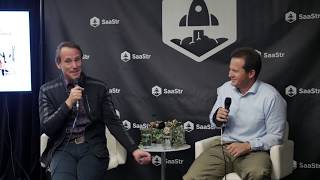
Jason M. Lemkin and Byron discuss how cloud startups now scale faster than the first generation. Eloqua took 12 years to $150M revenue; Twilio hit $1B ARR in 10 years. They cover growth rates, fundraising, churn, and when to sell.
Questions this video answers
About $120 billion (target/size mentioned).
$125,000 at roughly a $12 million pre-money seed round.
~$150 million in revenue after about a dozen years to exit.
Approximately $2 billion.
~29 public pure-play cloud companies > $3B; ~53 private cloud companies > $1B; ~100 cloud unicorns total.
Chapters
Sa.
All right, everybody that wants to learn about unicorns, Decacorns, Centicorns, trillion corns. What's a trillion corn? When the first startup's worth a trillion, what will it be called? Do we know?
The Gigacorn.
That's gonna be a Gigacorn. Yeah. I mean, is Apple still worth a trillion? Did it fall out for. Is Amazon worth a trillion?
No, I think they're back.
They're back. Well, then a startup will soon be worth a trillion. If SoftBank invests at 200 billion pre and it's worth a billion, how does that help the IRR for the fund? Can we do some. How much is SoftBank vision? How big is it?
Well, they have 120. Wasn't that the target number?
120 billion. So if they put in one for.
You and one for you.
So if they put in, let's say they do a big check. They put a. They put 80 billion in at 200 pre. I'm getting tired. And they exited a trillion. That's 5x. Right. So that's 400 million. That's 2x to the fund right there. No, no, hold on. That's three. Three point something X. Right.
You could live on that money that starts to get to real dollars.
That is. That's the goal. Yeah. All right, so I thought I'd have a little bit of fun with two ideas, Mega and deca. For folks that don't know Byron, I'll only give a short history, but it's a good history. Byron himself was an enterprise software founder in his youth. Looking at you now, you're probably 16 when you started his own company, it was Bessemer backed, I think. Right.
That's how I first worked with him at age 26. 26, founding CEO of a cloud company.
And they snookered you into joining as an investor. Right. And not only was Byron a great investor, but he was early to the cloud. Some early deals if you've been around for a while. He was super early in Cornerstone on Demand, which had its and now is worth 2 billion. He was super early in Eloqua, which exited at a billion and was one of the first cloud exits. And these are really first generation, almost first generation.
I visited the Echo Sign offices in Pacwalto early on and begged Jason to take my money, which he said no to.
This is a long time ago. So. And a couple things I want to talk about. Not only were those great investments, but as Byron became one of the preeminent investors, they got better and bigger.
Right.
So Twilio you ended up owning 30% at IPO or something like that. Right?
High 20s.
Yeah, high 20s. So that's a lot.
Multiple rounds along the way.
Yes. Also on the board of SendGrid, Twilio buying SendGrid so we can just see this sort of ecosystem coming together. So I want to chat about a few things because that's a lot of change. Twilio's worth 8 billion today, plus or minus.
I think a little plus, but yes.
And when Eloquo was bought, forget about let's call it 800 million. Even though it was probably a billion with cash and everything. But Twilio is an order of magnitude bigger than Eloqua.
Right.
Same amount of work to build Twilio's Eloqua, maybe even more work in some ways to build Eloqua back in the day. More twists and turns.
There's a tailwind for this crowd now. So yes the world what was the headwind on cloud is now an advantage. And so I think next year Twilio should by analyst reports cross a billion dollars. Even without the SendGrid acquis, they'll be the third fastest in history in the software space to do that. And others are ramping even faster than that. Like these innovation cycles are compressing.
Wait, let's, let's. I want to talk about these, but this is pretty interesting. Let's compare Eloqua and Twilio for a second. So Twilio will hit a billion in revenue next year. And when was it. When was first revenue dollar roughly. You don't have to get it perfectly right, but let's compare the two.
Yeah, let's put that around. 08.
Okay. 08's first check.
First.
First, first. So that'll be 11 years to a billion. 10 years. 10ish years to a billion.
10 and change. Exactly.
And that's 2018. And when was Eloqua was acquired? This was in the dark days of the cloud. 2011 or something like 2010. When was it? 2012.
Yeah.
So too many billion dollar exits. You can't even remember when they were.
So the, the IPO I think was 13 and 2013. Six months after. Oh no, it's 12 is an Olympic year. As in I remember I was in London when right around the IPO. August of 12 I guess it would have been.
Got it.
Yep.
So six years and Eloqua was doing. How long did it take Eloqua to get to whatever rough revenues it had at exit?
So that was a decade to get to call it 150 million in revenue.
Okay, so Eloqua or sorry, a dozen years.
Call it a dozen years to 150 and Twilio will, will break a billion before then.
Got it. So let's, I'm going to call them equal. They were both market leaders in competitive categories. So an exit in 2013 the same if we, let's time, we're going to time shift roughly six to seven years. The companies are growing six times faster and worth 10 times more. This isn't actually that crazy for multiples, is it? The best of the best might grow 6 times faster but be worth 10 times more. Which maybe justifies all these decacorns.
Right? I mean that's the point. Twilio is eight times larger. It is fundamentally a much better business. It's a much larger market and the fundamental financials are that much more compelling. And I think if you look across this room, the innovators now are that much more compelling than the first generation that were fighting the basics of standing up Oracle databases and sun servers and just trying to make this cloud stuff work.
But is Twilio's a better business? Let's just, can I, let's just deconstruct that for fun for a second. Jeff's an amazing CEO. I love him. He's an inspiration to all of us.
Right.
And it's a great company. But if Twilio were founded the same year as Eloquid, would it really be that much of a better business?
Absolutely.
Still, it would still be the same.
I mean I buy the analogy in the sense that things are compressing and so if you look at the next, you look at SendGrid's marketing email marketing product, which in essence was a lightweight version of Exact Target or Marketo or Eloqua, their ramp is 5x faster than what it was for the first generation.
Well that's an important comparable to SendGrid Eloqua.
Right, that's exactly a very low end.
Version but conceptually related adjacent products.
Their application is the equivalent to what the email marketing platformers would have been. And their ramp is 5x faster. It's just the market pull for these products now is a multiple better and more aggressive.
So does that mean that everyone in the room should grow five times faster? Is that what we talk about the cloudflare team meetings? Michelle going five times faster than a generation ago? We do, we do.
Luckily Cloudflare and Alison with Gainsight and others they are. The bar is raised. You wake up every day, you read TechCrunch or flip through the paper magazine, if anyone still does that. And you're gonna see all these unicorns being funded. And the reality is their metrics are that much more impressive than when I was an entrepreneur and when you were an entrepreneur, when doubling over a year was heroic.
Heroic.
And we see companies that are growing.
There was no poll. So doubling was heroic.
Absolutely. And we see companies that are doing four and five X's in a year. It's unbelievable the numbers some of these companies are posting.
So what's the. And then let's tie this to the latest fund because I want to talk about how the market's changed. But today, if you got to grow 5x faster, when do you have to grow 5x faster? Do you have to grow 5x faster, at a million? At 5 million? At half a million? Bessemer isn't. Bessemer is multi stage.
Right.
So you're thinking about these issues. When do I have to be a crazy rocket ship today? Is it the first week I'm on Mars? Is it before I get out of yc? Is it after yc? I mean, that's actually not a facetious question, is it?
Yeah. Well, and the news that people don't want to hear here is that it's easier the smaller the numbers and the earlier you are. I mean, growing 5x at 50 million is really hard. Growing 5x at a million is relatively easier, but still extremely hard. And so the end of the day, I do think that the old triple, triple, double, double approach still holds for a bar of excellence. And then we've got online all these marks for kind of what the top decile and quartile do for scale when you ramp up. But when you're at the million dollar ARR range, trying to post that triple in a healthy way is absolutely a mark of top quartile, but not top decile.
So let's spend a second on that because I think so in the age of Twilio, rather than eliquif, I'm in a millionaire R, I'm gonna triple this year. If you love the CEO and you love the market, do you do it? But if you're lukewarm, you don't do it. Or where's the break line? If you're gonna triple at a million?
I mean, that's the shocking thing is that there's so much activity and we're all time constrained as investors, more than dollar constrained. And so you can only make a couple of bets a year, maybe two investments a year per partner. And so the end of the day it comes down to you have to love the team, you have to love the market, and you've got to have, in this day and age, you've got to have real momentum. And on occasion we'll bet against momentum. We will almost never bet against team or tam. In other words, the numbers won't compel you to invest. The numbers often are a necessary but not sufficient. The team and the market is what compels you to invest. And the counter, I would tell you is when we invested with Twilio, they had down months. They were tiny numbers, so you could argue that the dollars were irrelevant, but they actually were down sequentially month over month. Our investment had nothing to do with the financials. It was all about the market and Jeff and the team. Yep.
So let's have a little fun. So here's the team. Is this the Redwood City office? I should know.
This is our new Redwood City office.
I haven't been invited.
I don't know what.
It looks very pretty here. Right.
This is, it's very cool. Right across the street from Box, which is a portfolio company on the same building with Send Grid, a portfolio company. It's in a neat area. So on Caltrain, come on down. Jason, you're always welcome. Closer to your house than the Saster office. So come on down.
So let's just for founders here, because this is. There's so much more transparency and venture, but some of this is confusing. Let's just have a little fun. 1.85 billion. How big was the last fund and when did you raise it?
165, three and a half years ago.
Okay, so that doesn't actually sound like a much faster pace. You didn't go back to market in a year or something like that. Okay, so what's different? And 1.85 with inflation is the same as 1.6, right?
I think so in the sense of we're not, we're not changing our model, we're not doing the mega fund. It sounds like a big cover number, but we're a global firm with seven offices, 14 partners. Christine and Mary are here. There were three of 50 investment professionals in our firm. We still want to be able to write a 50k check, we still want to be able to do seed stuff, but at the same time we don't want our companies to be muscled by the hundred million dollar checks. And so we can write 150, 200 million dollar check if we wanted to. We haven't yet and we, you know, who knows when we will. But fundamentally we want to be able to fund all the way through private existence. In the case of Twilio, the reason why we own so much is because there were several rounds there where outsiders wouldn't fund them. And so we went out and we gave them a market price and said, look, they don't get it. We'll lead. He went out and did another process, came back like, this is frustrating as hell. It's like, they don't get it. We'll lead. And we did that. We led three rounds at Twilio, all at big step ups, all three.
Internally.
Internally. So we had. Of the five rounds they did, we led three of them. And it was just because from our standpoint, like, we're believers, we've got plenty of capital. We're very supportive of you doing a process if you want other things or if they're going to do other things. But if not, like, don't worry about it. Keep going. And I'll tell you, when the market turns is when that's an advantage. When our portfolio companies can say, we've got billions of dollars, don't worry about it. Let's just build a great business. And we're not going to jam you because we've been in this industry 170 years as a firm and we want to be in it for another 100 years. And like, if we start jamming our founders, our reputation's done. So, like, let's just figure this out.
And to help people understand what 1.85 billion is, what was the pre at Twilio? These are all public. It's close enough, right?
Yeah. I should know that. We invested 125,000 at. I think it was a $12 million seed round.
So that was a. Look, you played a card.
That was a. It was exactly. It was get to know you. It was coming together quickly. He didn't want a full round. He didn't want to lead. So it was like in one meeting. We're in.
Okay, so let's take take a break for a second. You put 125,000 in at 12 pre.
Yes.
So that on loan probably won't return a $1.85 billion fund. So to help folks here, if I get Christina or Byron or someone to write a 1. What does that mean? How much of your time do I get at the Redwood City office for that check?
For the seed check? We try to be very upfront, which is that's. It's. You don't want us as a board member. We're not going to sign up to Be fully active. We are acting like an angel there, which is we'll be an advisor. We'll grab a meal or a drink, we'll review anything you send over in the sense of board packs. But we don't want you to have signal risk and we don't want you to expect that you're Getting our whole 50 person BVP funded team board member stuff. It's not yet that level of mutual commitment.
Okay, so the first check is an Explorer. Get to know your check. What was the next check rough? It doesn't have to be accurate.
Yeah, I think it was 10 at 50.
10 at 50. Okay, so when, when I'm trying to understand VCs out there, is that a sweet spot for a 1.8? And then someone else raises 2 billion, Ajay raises a billion from Bain. How can I figure out if you're too big for me? How do I, or any fund, how do I know how to turn this number into whether you're a good candidate for me or not?
Our specific purpose is for that to never be the issue. Meaning we still absolutely want to do series A deals. And we do. And so it ends up being a bimodal curve, our mathematical averages. We'll do an $8 million set of checks and then we'll do $30 million bundles of checks. And you'll see that it's a lot of series A's and it's a lot of growth rounds. And then with the series A's, we tend to follow it. But our point is, realistically, what it means is a lot of times seeds, if we haven't worked with you before or if you're not in a sector we already know and love, we're not yet ready to make the full commitment both ways. But we want to start the relationship. And then for the A's, absolutely, we'll, we want to be all in if we've been able to like start a relationship, get to know you and be in a position to be aggressive. And so you know, I, my, my deals. Last year Zyla was a Series A in Indianapolis and Guild was a series B. Both of them were, you know, sub were double digit million pre monies.
So those are good ones. So let's just, just for the crowd because that's fun. So last year with your, all of your history, you did two deals. Two deal. And you've averaged that roughly over the last eight to 10 years or something like that?
Yeah, two to three.
Two to three.
And, and sometimes, you know, I'll partner with, with you know, another colleague and they'll take the board seat and I'll be the second or reverse.
But even if they do, it's only two to three for you. Yeah, whoever. Whether you're the part of the board member or Apollo.
Yeah. It's just, it's hard the, the end of the day, that's our scarce commodity. Not to make an obvious statement for any top tier fund. We could have raised four times that amount of money if we chose to. It's not the capital, it is very much just the human bandwidth. And I respect a lot what the benchmark team has done where they say we're going to have a $400 million fund because again, the people are the resource. They have a smaller group of partners than us, but the dollars per partner is very similar. It's just we also have a team in Israel doing this. We also have a team in India doing this. We also have a team in New York doing this. But it's hard for me or Christina to put out more than $100 million responsibly, or in this case, $150 million over the four years, even if 75 million goes into a Twilio, you know, because we keep backing up the truck to lead rounds.
So just three more insider questions. I don't want to hit some of what the heck's going on in the markets today, but. So you put 75 into Twilio.
Yeah, thereabouts.
So obviously it is a winner investment.
Right.
Maybe your best investment at the moment.
Right.
That's liquid. But you put half your, your personal allocation into your winner just to think about how the industry works. You started off $125,000 and by the end of the poker game, you put half the chips in and you probably could have been put more in. Right, if it worked.
Yeah, we absolutely could. We had, we had T Row and Salesforce and Amazon and Strategic coming in.
But half is how this ends up working. This is an extreme example of going from 125k check out of a billion 6 to 75 million just.
And the way I think of it, I mean, obviously founders and entrepreneurs, you're making a bet. You're a highly concentrated single position bet, but for some seed investing or something you're doing on the side or a spouse who's making a parallel bet, but essentially you get one shot for three to 12 years. From my standpoint, I get a few shots, but if you've got conviction, you should be willing to take the risk. And so it's not an Exposure thing. It's generally if we want to be an investor and if it's worth our time to be on board, et cetera, we want to be a bigger partner, not a smaller partner. And so we would love to do the whole round and own 30% and do those things at the same time. We totally buy into working with others. And so where you see us skinny down, it's because there's another firm that made sense to work with or there are strategics or angels that it made sense to work with to bring up.
All right, just two other questions on this that are fun for me. So the two to three deals you get to do a year for real. For real. How many almost do you have? Whether they're deals that were competitive, you were close, you got tired. But how many really almost got to that next level down the pipeline? For real, for whatever reason, anti portfolio, wrong day, you were skiing. SoftBank paid five times the price. Forget why. How many yeses did you get to in your head versus the yeses that.
Happened so well, I'll give two answers. There's probably 20 deals that we get very interested in. There's probably five that we get super serious and actually get in the numbers with. And there may be one that we give a term sheet to that we don't close on in that sense. And if you get to the point where there's mutual commitment, excitement, and you're talking numbers, we pay fair prices. It's not like we're going to lowball someone. And so we don't generally lose when we get to a term sheet stage in this market, I'll say the prices have gotten huge. And so there have been more deals than usual where you'll say, here's how we're thinking about it, price being a component. And they'll say, I get it. I'd love to work with you, but Firm X just came in at 50% above. We try not to be influenced either way by what other firms think. So we're going to give you our number, even if we are the high one. But if someone else is 50% above and we haven't been able to show you that we're worth that much of a discount, then shame on us. And I totally understand it.
But just so.
But.
But just because it's interesting, think if you think about it from a founder perspective, there's about 20 deals a year that hit you guys that are stage whatever, stage five. These are deals that if a few things check out, you'll do them. Like if the Diligence works if the growth, like you're very close. So if you're one of the 20, your job, if you want, if you want Byron, is then to turn that 20 into three.
Right?
That's the that. So if it's feeling really good, you still might have to turn the 20 into the 3. You might not know it on the other side of the table, but. But it's not 200 into 3. No, it's not 6 into 3. It's 20 into 3.
The number of second meetings we take is tiny. It's just like we're not, we're not wasting your time or ours. Like, we try to be up front. And as a former entrepreneur, I hated the slow. No, I hated the firms that would do the follow ups and due diligence and then turn you down for the thing that they knew in the first meeting. And that's just crap. And so from our standpoint, it's like we try not to play those games. We'll give you the reason why and we'll say sincerely if we're interested in staying in touch and why and what we would want to see to then still lead the B or the C. And by the way, we Lew it on LinkedIn. We led, I think it was their Series B instead. Series C actually, at 150 million valuation, by the way, because we didn't get it enough on the A and the B to be aggressive. And we said, look, we've got these questions, here's the thing. And then we, we begged our way back in and led the C saying, we get it now and here's why. And the nice thing of having a big enough fund and a big enough market is that we can pay for our mistakes and give you the valuation markup and the Series B or the Series C still and hopefully still work together. When we finally get to the point where we have conviction and it's like, this is my bet for the year, I want to work with you.
All right, one last crazy one on this. And we got to talk about the markets before we run out of time. But you're on the board of both Twilio and Sendgrid. Sendgrid was bought for 2 billion. Fast rocket ship from the IPO price. How much did you own? How much did the firm own of Sendgrid? It's all public, so we're not hiding anything.
Yeah, low twenties, so let's call it twenty. So.
And how big was the fund that SendGrid's in?
165.
So this is a two billion dollar exit. Not a billion, a double corn. A six hooved unicorn and you own 20% which is hard to get. It's not easy to get 20%. That's a quarter of the fund that it returns. What does that mean to founders? That a 2 billion dollar exit where they give up 20%. Should founders understand what this means? What does it mean? All that incredible. I mean this is an outcome for the. It's not a once a century outcome, but back when we were founders, this was mind boggling. Right? What does this mean that it's only a quarter of the fund?
Well, I mean I'd say the question what it means for founders is the wealth creator creation happening right now is awesome. We used to sit back, I'd go through my investment memos when I started and when you were still an entrepreneur moving over to venture and when I made that move and you would aspire to have this billion dollar IPO and you'd look at it and it's like there's a 10% chance if everything goes right. But I'm, I believe I, this one can do it. And now you look at the list and it's like, you know, we're in our, in our BVP NASDAQ Cloud Index, we go 40 some odd companies deep, you go 30 companies deep. At 3 billion, you go, you know.
That'S what I want to talk about. Hold on.
Next.
Slide, slide.
Little magic. Go back.
Yeah.
Oh yeah, there you go. That's your blog post.
Here's your Bessemer cloud thing. Yeah, I wrote in 2017, I was trying to figure out what was going on. 2017 was a long time ago. Wasn't it? November?
Yeah. We're like seven companies out of date. Five companies out of date. Yeah.
I wrote is 3 billion the new billion on your Bessemer cloud index, which is, everyone should read it's best BVP slash. I don't know, I quoted a thousand times a year, but there are 24 above 3 billion.
I think we're at 29 today even with the pullback. To put that in perspective, 29 public pure play cloud companies, not even including Amazon and AWS or kind of allocations of some of the older. 29. $3 billion plus pure play public cloud companies. And there are 53 private cloud companies worth over a billion right now.
So let's call it 100ish.
Yeah, there's, there's yes, 100 cloud unicorns right now. Slightly more private than public.
Okay. So and then these, these investment Memos you wrote eight, ten years ago that you said you hope one of them could be worth a billion. What does it say at the end of the Bessemer investment memos today we hope it's worth 10 billion.
Well, I mean we're, for the first time ever we are buying into companies above a billion. We announced HashiCorp was one that announced their valuation and so you better believe it's worth more than 2 billion or your money's going sideways for a long time. We do believe that we're still in the early days of this transformation. That these companies will be foundational pillars of next gen tech, not just software and not just cloud. And that you will absolutely see more hundred billion dollar cloud companies in the years ahead. And you know the growth rates of these businesses even at scale is astronomical.
So related to this, when would you, you're, you're very honest. When would, if a founder came to you that you invested in or didn't and they wanted to know whether to sell or not, what's the answer in today's world, assume, let's make up a number, they're at 5 million or 10 million. When would you tell them in today's world, going to what you said, just don't, whatever you do, don't sell no matter what it is.
We have this conversation a lot, including a couple that were public, publicly disclosed last year through industry chatter. Take an extreme. Take Ryan at Qualtrics. Yeah.
Should he insult for 8 billion.
I coincidentally saw the night before the deal was announced and I absolutely would have said hell yes if he had come to me, which he didn't. We were not investors at the time.
But what would they be worth today as a public company?
Yes. So he would have been less than the clearing price that he paid. And my, my fear is that for a business, a world class business, a multi billion dollar business, don't get me wrong. And so this is nothing but praise for what they've built. But to pay a 20x revenue multiple for a business growing in the low 30s is given a lot of forward value. To pay a 20x multiple for a business at scale growing 300% is still betting on the future. But you don't need to look 20 years into the future, you need to look two or three years into the future. And I think that's the difference where you see us as investors leaning in and maybe disagreeing with the market a little bit is that we absolutely believe there will be multiple compression like these multiples enjoy them as we all are the Multiples cannot last, the valuations can. And the difference is how long it takes to earn back into that valuation and beyond. And that's a function of the growth rate and efficient growth.
Michelle, since you're not public yet, would you sell for any price? Don't pause. You have to just answer the question. The last round was reported at 1.6 billion. I know the IPO is going to be an up round. Would you. I mean, has it been easy every day? Is it always daisies and unicorns and smiles and is it always terrific? Right. Would you sell? I did. I spoke with Ryan. I want you to answer. But I spoke with Ryan at the Saster annual last year, and I just did one with Eric from Zoom and Mark from Smartsheet, and I always ask them the same question, has it gotten any easier this year? And the answer is always no. And I met with Ryan Smith from Qualtrics about three months ago. We had breakfast. You know what he said to me? And he's an amazing founder, isn't he?
Absolutely.
He's like, at this scale at Qualtrics, every year I have to add a unicorn. Every year he has to add 100 million.
That's a.
That's not. That's birthing a unicorn each year at Qualtrics. But it's not a little bit of pressure, even if you have a. So would you sell? Is there any price? 8. Would you do it for 8 billion? If SAP. And you had to work at SAP, and it was a 6. It was a 6 year.
No qualifier.
6 year earn out.
Any price.
6 year earn out. As VP of Special Projects, would you work. Would you work for the sunglass guy?
The problem is Bill McDermott. Yes. Wherever you are in the audience, Bill, as a founder, you search your whole life for an opportunity where you think you can really make an impact in the world. And I think we have that at Cloudflare. And so you want to see how far you can take it. And we think we could be along. We see ourselves being independent. But, like, that's the thing. It's like, this is. People search their whole life for something big, and we have it. Why get out early? What would I do instead? Pardon me? 20, 23, price. Oh, you mean like a forward. Oh.
Oh.
The question was, I gotta get myself into a lot of trouble, Jason.
Here I go. You can set up a foundation. You can solve burning global warming. I mean, software is great, but, like, the world's burning out here. I mean, shouldn't we all be doing more than this, than just like, you know, I don't know. It's a funny question, you know, I mean, related to this. Let's go on. But when Jody sold Appdynamics, he was at the SAS triangle. This feels like 10 years ago. It was, like, 18 months ago. He's like, we got around the board and he's like, at 3.7 billion, it would take us two years to get there. And it turned out it took two seconds.
Right.
New relics worth almost 5, 6 billion. And if Appdynamics had gone public today and just hit their numbers, they'd probably be worth crazy. What would they be worth today? What's your guess?
Well, more than Qualtrics, I bet.
Yeah. Maybe more. New Rock. I love. I love Lou, but he might be worth more than New Rock.
Yeah. I think they were viewed as a premium master. So that's five.
So it's a crazy world, right? All right, hold on. Next slide. We don't wanna. You answered this one.
A lot of them.
I wrote this thing in 2016 that I thought was facetious, but I'm trying to figure out what's going. This is what's going on after the 2016 crash. And I said, if we're gonna have this many unicorns, we have to have a pyramid structure. There have to be 20 to 30 decacorns that everyone can make money. And now you just did. Hashi, your first. That has. You want that one to be a Decacorn.
It's okay. If it isn't, we're betting that. Yeah, we're at nine today. Pure play. Decacorns in 2018. Three years. Absolutely. There's 20 in that bucket. From, you know, 10 billion to 3 billion. Yeah. So that group has to, on average double in three years. Absolutely.
So Michelle shouldn't sell for 8 billion?
Never. Not at all.
I don't think. I think it's a bad.
I do think there's a number for everything, though. His first question was, is there a price? And I think we could get a price out of her over drinks afterwards. Yeah.
Because this said Service now is 14 and Workday 16. Those are up at least 50 or 70% today, aren't they? Even with the correction?
I think so, yeah.
All right, hold on. Next slide. Seem crazy. Still seems crazy here. You already hit it, right?
Go back. Yeah, we've got Adobe up there and PayPal. There you go. So they flipped orders a little bit. PayPal and Salesforce are both sitting around 100 billion. They slightly flip position, but yeah.
Let's talk about. There's some moldy oldies on this list. Let's talk for a second. This is the other thing I really got wrong as a founder. This is the whole genesis of 3,100 pieces of content. When do you get unkillable? I mean, look at this. We've got Adobe PayPal. I mean we can make fun of PayPal. This is $100 billion business.
Adobe and PayPal are the two to highlight here for the ones that have successfully made the pivot. And when we professionalize the cloud index, we did a lot of work with nasdaq. They forced us to have a. You know, it did change a little bit. I saw pages of documentation clarifying exactly what cloud was and you needed to be majority business model and delivery model and we had to have validation through it. Adobe made that switch this year. They had crossed over. You know, they were 80% subscription, but they hadn't flipped over to business model or to delivery model. They're over 50% cloud hosted now. It is awesome to see that transition. They have a higher multiple than Salesforce does. And I bet if you ask people in the Valley or in the city, certainly no one would actually think that worth more at a higher multiple. Yeah.
I'll tell you one little story. I want to hear what you have to say. But I was briefly a junior senior vice president at Adobe during the transition 2011 to 2012 and we had a VP retreat. The top 50 VPs. I was number 50, literally number 50, but I was in the top 50. And it was right when Creative Cloud was about to launch. And we got around the table and they said, what do you think is going to happen? And no one, almost no one, thought it was going to work. And I said, look, I'm the new kid, but I got four designers working for me. They are right now paying $2,200 for Master Edition. And they're two of them have a pirated version that they're trying to work on the copyright and three others are using a five year old version of the software. And I just asked them, would you pay 50 bucks a month? And I bet every single designer on planet earth will buy a recurring. And that's actually part of what happened, right? Plus buying into marketing automation.
But yeah, they had to make the bet and work.
But they didn't know. But my point is they didn't know. So. So how omniscient can we be, right?
I think very few, very few are going to make that organic transition and that's why they're so notable. You look at why SAP has to pay 8 billion for assets because their organic internal efforts have been a total disaster in the cloud space. Yeah.
One last related question on this and actually two more, but I know you have some, you've made some SaaS investments that have done well and then petered out. But have you seen anyone going to a saster point? Have you seen anyone north of of 10 or even close to 10 with high revenue retention and high NPS not make it? Have you seen anyone at 10 million growing quickly with 40, 50 NPS, 120%? Have you ever seen any of those crash and burn?
The revenue retention point was the key one because my first answer is going to be yes. And it's public now and the founders that share this clearslide was one that got to 40 million in ARR and plateaued.
But it wasn't beloved, was it?
What's that?
It wasn't beloved, was it?
The NPS numbers were great early on and then the issue is that the product cycles didn't innovate as fast as the market did. And so those scores dropped. And then the churn came up. And when you get to the point at scale where you're working your butts off in sales and marketing to refill the pipeline, that you're losing out the back door. It's why the prior discussion was so important. It's why Allison and Gainsight are so important. Because that CSM function and what Michelle was talking about them is critical. Because as soon as your churn spikes and your sales slows, you're dead. And that business, it was acquired, but not for a happy outcome at 40 million in scale because that churn was just killing it underneath.
And is it recoverable? Are there counter examples of folks where that plummeted and they pulled it out at scale?
So yes, but tech is super hard. Momentum is powerful both ways. When it's working, it's hard to screw up. And that's the beauty of these models. Like when you get these things going, the momentum is so powerful and the reverse when you start to decelerate and when things start going wrong and your team feels it and they go to the next hot thing down the street and your customers feel it and they take that call from the shiny competitor. Those are brutally hard to turn around. And frankly, in this market where These multiples are 10 to 20x just objectively you are probably better off selling than thinking that you can muscle through the four year turnaround, rebuild it and get back to the point where you wanted to be.
Yeah, all right. Slack 10 billion north or south when it IPOs. What's your guess?
Long term north. Long term north Stripe Slack Zoom, Procore. I mean there are fantastic decacorns that people don't fully appreciate at all right now. Yeah.
All right, next one. I think we're almost through. Okay, just for a minute. So what the hell is going on with M and A? Why are all these companies getting botted? I know we're not letting Michelle sell, but why? What's going on here? I know a little bit, but what's really. And what does this mean for founders?
I mean it's awesome. Desperation for the incumbents realizing that they've been absolutely blindsided by this. And the organic. It was the SAP comment but across the board and you look at these numbers and GitHub was a case in point of the founders just not wanting to sell and saying no no, no until Microsoft hit the bid. In the sense it wasn't a rational short term financial multiple. It was a strategic price that made sense and that was the number that they were going to sell.
But didn't they agree within three years they had to hire a CEO. Wasn't that part of the deal too? Or I'm not sure they've brought one in.
No, no, they've got one identified. That was part of why it made strategic sense for them. But you know, again, a fantastic business, but on a, on a future free cash flow basis, which in theory, all businesses, whether it's a SaaS company or a grocery store, should be valued as a sum of your future free cash flows. It would take a long time for GitHub organically on their own to generate $7.5 billion of, you know, dollar weight adjusted free cash flow. And yet it was a awesome strategic asset. And when.
Let's come back a second, just a second. Some, some folks here are going to forget these names. But this happened just like in Battlestar Galactic. It's all happened before. So a few years ago, Teleo got bought. SuccessFactors got bought. Concur got bought. All the moldy oldies that were my, my peers back in the day, they all got bought.
I can't remember when huge multiples 7x happened again. 8x9x10x.
Forget about the multiple because you can't control Wall Street. You can't, you have. I mean there's no way that SAB could buy Qualtrics for, for less than the COVID price. It's not going to happen. Right, but my real question is there was this wave when everyone panicked and they Bought up the moldy oldies and now they're panicking again. Right. But they didn't. Why is there a U shaped panic and is there going to be another trough? Will people panic again in 2021 or what's happening?
So I see we've got at least one baker in the audience, so maybe David or others could weigh in. But I think of it as like the shorts squeeze for M and A buyers where they've tried to wait it out and they thought that these 10x prices were going to go away and they were going to have that February 2016 moment again, hoping for a crash, hoping for the crash and hoping for the normalization. And they keep walking up and every year and every quarter and every day that they wait, they're losing market share and they're getting beaten. And so you go down this list and it's like, are you going to make the transition to cloud and survive or are you going to see to exist? And if you are going to make the transition, you need to pay the clearing price and you need this room, you need the cloud innovators because you sure as hell don't have them in house. And you've proven that over the last decade as you've gotten beaten.
Okay, for founders here, because you've been on the other side of these so many, obviously from the press. You know, Ryan and Bill at Qualtrics didn't talk for the first time the night before the deal priced. It's clear. I mean, we know that, but it was obviously clear in the press when, forget about when you're about to go public, but when, as a founder, do you know this is happening? When do you know that it's real? When someone's panicking, when there's a phase transition, how do you know when you get approached or something or whether it's not real? How do you. What happens on the other side?
Well, let me back up a half step before that, which is to say that I absolutely believe part of a founder's job is to build relationships with critical partners, potential acquirers and ecosystem vendors. Like understanding how they're thinking is super valuable to your company, even if you have no intention of selling anytime soon. It's just, it's good relationship development, it's good ecosystem development. It was, you know, Jeff Lawson with, with Salesforce and with Amazon with these companies and as you would suspect, they've been approached a gazillion times all along the way to be acquired and their answer is always no. But understanding how that ecosystem works and partnering with these companies will make you bigger and better as a company. And so when you know that crazy strategic prices will get paid is when you can credibly say, no interest, no interest. And you start hearing them play back the combined vision, you start hearing them playing back why they need you in a credible way. And them saying, what will it take? And we time and time again get very big companies with very big checkbooks coming to our founders saying, what would it take? And them saying, I really don't want to sell. Should I give them a number? That's just crazy. Or can I just punt and then, you know, deal with this later? And the beauty of being a private company is that you can punt as long as you want. When you're a public company, you do need to be responsible, but there's a wide range of discretion for what responsible is right now. And a lot of our public companies are saying no interest to big strategic premiums because they have the luxury of saying no.
Yeah, it's crazy. All right, let me just see what else we have. I forget. And then we can wrap up because we're probably over. Oh, just quickly, where are we on this M and A cycle? I know you can't use only so much. You can talk about Twilio and send Grid, but where are we. Are there going to be another 10 of these?
I think there might be. We are 70% up from last year and. And there's still a backlog like the.
Is everything. Is everything. Are people trying to buy everything that's good, that's. That's public or unicorn?
I think what you're actually seeing is the. Is the good, but maybe not even the exceptional aren't selling. It's the really good that are going to be selling. Yeah. And to take a company that, again, you can get a 20x revenue multiple, not an earnings multiple, a revenue multiple for really good business to a home that you're. You're comfortable going to. These people, they're not going to sell to the company they really dislike. And in that case, I think Ryan and Bill really did like each other, even though SAP gets a lot of knocks. And so I think there's a crop of really good companies that are only growing 40% that are going to say, we'll take it.
Yeah. All right, just one more slide and then if we have energy, we'll take one or two more questions, two quick last two ones, then we'll break. But these are. These ones are fun. We could talk forever. Service titan. Another one of your. You got some good ones. Congratulations. 165 million Series D. And then this one I just made, UiPath, which no one heard of a year ago. Maybe you did. They just raised it 3 billion. Right. And Automation Anywhere raised at 2.8 billion today. We didn't even know how to spell RPA nine months ago. Service Titan selling to SM, plumbers and janitors. Ten years ago, no one believed. I mean, the underlying metrics are very impressive, but are these rounds going to get even bigger? And everyone in the press writes that the top startups are sucking up all the capital. I'm not sure I believe that because there's a thousand seed funds today. I mean, now there's a Motley Fool Fund today.
Right.
I think there was a Goodyear Tire Fund. I mean, there's so many. What's going on at the low end and the high end. In brief.
Yeah. It is a fantastic time to be an entrepreneur. There is capital everywhere and there are wonderful businesses that you'd survey. The average cloud operator will have never heard of. And these are companies that are, you know, unicorns that people wouldn't name in of lot a list, you know, couldn't name it a list of 100 companies or couldn't identify a list of our companies. And that's, that's what's happening now is that these businesses are breaking out. It is rolling to every part of the economy. Yeah. And. And you know, these vertical SaaS businesses are rolling into markets that are massive but not obvious from the outside. Service titan was absolutely not obvious until we did a deep dive into home services and then specifically went into plumbing and H vac and electrical.
How many plumbers did you talk to?
Actually, a lot. And we. And there are probably five companies that we talk to as part of the diligence process that we're trying to serve them. And you get in this situation and those are markets where the winner can get a majority, like you can actually, you know, in CRM, a home run is 20% market share. In vertical SaaS, you can get 60% market share and run the table essentially of anyone who's buying real solution. And that's why it's such a big, beautifully protected series of markets.
Yeah.
Last.
Let's wrap up on this because that's something that's not in this deck, but it's something that I wish I'd understood as a founder. But going to. That is brand. And I think ways back, we used to almost mock brand at some level in SaaS, because first of all, all of us thought the world was freemium. That's all you needed was to put an app up and everyone would buy it. And then we thought brand was what old school companies did and like weird marketers that don't know how to get leads did. And then I think we learned that like it's, it's exhausting to buy products and brands are, brands are so enduring in SaaS because not everyone can do a bake off with 10 vendors and that's part of the service titan 60%. If brands don't matter to janitors and plumbers, it's hard to get. So any zen learnings to founders on when should I go deep on the brand? What does it mean for me as a founder that I don't, I don't even like corporate marketing or marketing at all. Any learnings on when to go deep here?
Yeah. So I think this is the art of being a great entrepreneur because there are multiple good answers depending on how you're approaching the market. You just need to know what your business is and run that playbook. And so you know, Alison and Gainsight would tell you that they went all in on brand early from like month three, a staggering amount of spend. And we would sit there and say this, this is totally out of whack with all the comps and here's why we're doing it. Yeah. And it made a ton of sense, but it was a very conscious, very strategic bet to create a category, anoint themselves the leader of the category and then suck the oxygen out of the room for their competitors. And it was a big bet, but that was the playbook that they very consciously set out to run from almost day one in the repositioning. The contra is a lot of our API businesses, including Twilio and you know, auth0 and sendgrid and a lot of these where they go in and say we're going to put the best product out there, we're going to do devi evangelism and, and let them come and find us and self discover and work up and that the brand stuff actually came later. Both of them in terms of, they did a great job of, of hackathons and events and that evangelism art was super critical.
Yeah.
But the actual marketing came way later. And again that strategy for their go to market made a lot of sense, but conflicting. You know, getting caught in the middle or trying to do both will be. You can't afford to to do it and it'll be a disaster because you're going to end up getting caught in the middle and you're going to have the wrong personnel trying to, you know, operate the wrong. Go to market.
All right, we're way over. But any. Anything else you want to hit that we didn't hit that you think is interesting to talk about today?
If there's a question or two, happy to take them. Otherwise, there's a bar over there that.
It is a good bar. All right, everybody, let's thank Byron. This was pretty amazing for me.
Thank you. Great to be part of the Saster community, Sam.










