Decacorns & Unicorns: Founders Fund Partner Keith Rabois and SaaStr CEO Jason Lemkin
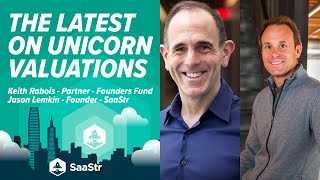
Keith Rabois from Founders Fund discusses how COVID-19 is reshaping venture capital. He explains which business models will bounce back quickly versus those facing multi-year recoveries, and shares what actually gets a VC to read your pitch email and deck.
Chapters
For a bunch of reasons. One, it's an important topic. Two, founders care a lot about venture, maybe more than they should. A fun topic. Maybe I'll hit with Keith if we have time. There's maybe too much interest. But also there's so much Sony baloney on Twitter and so much change, right? Are we open for business? Are we not open for business? And I almost feel like we've gone through three phases since March 5 shutdown, what's happening and then rush to the new new. I don't know what's going on, but I knew I wanted to someone that would tell us exactly how it is, speak with data, be unvarnished and have enough wins both operationally as investor under his or her belt to not hide anything, just to share it how it is. So I reached out to Keith so that we could hear that because I think we're still going through times where it's hard to get this straight scoop. We had Christoph Jantz this morning from Berlin talking about how you needed a much longer list of investors, you had to talk more people, how people will slowly flake out of a process, how it's harder to build relationships over over Zoom. And so it's hard, it's hard to know what's going on, especially from folks Twitter feed and what they say. So that's what I want to dig in today. And again on Zoom, there's a Q and A. So ask questions here to the extent we have time. I'll ask as many of Keith as we can and we'll try to answer as many, as many as possible. So pop into the Q and A. And I wanted to get into founders fund and some tactical stuff. But Keith, let's step back because I know this is something everyone's thinking about, all of the world, everyone on Twitter. But how do you tell me what you're thinking about? How do I get my arms around this? Slide right on the left. We go into February and this is the best of times, isn't it? 10, 11 year. I mean it's better than we ever thought, right? There was kind of this joke on Twitter the other day. Someone was pointing out how on your LinkedIn you said PayPal had exited at a billion and now, now it's worth 40 billion or 50 billion. So we've been on a long run. But even before you update your LinkedIn and then bam, look at this. The BVP cloud index, we plummeted in March. And then as we were talking about before, if you just put all your money just into Square on March 20, you would have doubled your money. Right. Let alone the datadogs and the Shopify's and the Zooms. And yet as you've talked about, look at what's happened in California. I mean, it's devastating, right? It's truly, it's unprecedented. So as an investor and as someone looking forward, how do we weigh the two sides of this? The best and the worst of times?
Yeah, I mean there's a couple of potential theoretical answers that would reconcile these two worlds. One is maybe stock markets are long term investors and all the critiques that the public market investors are short term thinkers are just false. And you can make a strong empirical argument right now that all of the major indices in the world are basically taking a long term perspective on the value of these companies, looking at the effectively the discounted cash flow projections and saying, hey, there's this virus blip that'll be between one and four quarters long. But nothing about a 20 year horizon has gotten worse. And if anything, maybe things are better over 20 years. And so all the people who are whining and jumping up and down about the evils of short termism in public markets, which I never really believed in anyway, maybe are just factually wrong. That's one thesis. Second way to go is typically when you do your discounted cash flow, for those of you who went to business school or something, you're basically applying it. The key variable is actually your discount rate. And with the interest rates being the effective interest rates being so low, your discount rate is basically negligible. The annual discount rate you apply. So in some ways if you just held everything constant and change your discount rate and reduce it by a meaningful amount, you're going to get exactly the chart on your left that actually would work just empirically also. So I don't think it's that hard to reconcile these things. It's a little harder to reconcile is what's going on in venture. We'll talk about that separately, which is, I actually do think that most private market investors are somewhere between spooked and reorienting their approach and valuations. And that's a little bit disconnected from the public markets at the moment. And at some point those things need to be in harmony, at least in partial harmony.
So let's come back to that in a second. But just to understand these two, just to unpack a little bit what you're saying, so SMBs, at least many SMBs are incredibly impacted, right? I mean the levels of small businesses shut down, many of which the Shopify's and the Squares would attempt to power. Right. Some of them are doing better, don't get me wrong. But the level of businesses in the Tenderloin, the level of businesses nap on this, I mean, it's going to be devastating, right? And it'll be years, but many will never reopen. Does it not matter for the chart on the left? Does the unemployment, I mean just getting away from the human impact, does it not impact? Does it not all bubble up to even the best cloud stocks?
Unclear which stocks it bubbles up to. I mean many companies are not really serving the target market of the SMBs that are most affected. Think like traditional retail, traditional coffee shops, comfort food, gyms, fitness, et cetera. There are some companies that are technology companies that do work with them and do target them, but that's not the meat and potatoes of most companies. The Squares absolutely yelp to some extent, absolutely. But that's more the exception and the rule of the go to market for many companies. So you could still reconcile those if you had to. And then typically in a recession or depression, whether we're in a depression or not, open question. But the consumer demand falls apart pretty quickly. And because the driver, the impetus for this economic turmoil wasn't really lack of consumer confidence or lack of consumer resources, it's not clear that consumers don't have the money to spend. So insofar as you're talking about consumer or pseudo consumer stocks, people have a lot of disposable income at the moment, partially because they're not spending it on things they normally would. So typically a normal American goes out to eat a certain number of times a week. That's expensive. They may take a certain number of Ubers. That's expensive. They may go see a movie or two or show or play. They're not doing any of those things. So they're actually effectively saving money so they have the ability to spend it in other places, whether they spend it now or save it and then spend it once the economy opens again. So I think that that will help certainly prop up consumer based stocks. And then on the other hand, the government, or on top of that, the government's obviously subsidizing a lot of people who are suffering and so they don't feel short, the short acute pain. And so they're not changing their consumption patterns as dramatically as if they were. You know, I was watching a movie the other night about like the Great Depression that was a true 25, 30% unemployment or 20, 20, 25% unemployment where there was no consumer Spending. And so obviously the people that need consumers to spend money for their revenue and then their contribution margin, you know, just had no shot of selling things like look at like Model T sales or something right now. If you look on the other side, like look at us, an area I know a fair amount about, look at us real estate. Housing sales are actually. Somehow this defies like logic, but is true. Last month, housing sales in the US are actually ahead of last year. Like literally ahead. That makes no sense. In many ways it's like 60 dips ahead of last year. So there is another tale to cities, is most of the people that were most affected by the March and April shutdowns were not the people that buy and sell houses. There are people who typically are 1099 workers with lower FICA scores or lower total income. And so it didn't affect the US real estate market except for like two to three weeks where like everything was shut down, just couldn't transact. But right now, Redfin has published several studies publicly about how they're ahead of last year. Zillow I saw this morning is trading at probably a 52 week high. People buying, selling houses. That suggests that there is this weird combination of something's thriving and something's failing. I think the music industry for example, at the extreme other end is catastrophically affected. Like the idea that people are going to go see live shows in dense environments with poor sanitation or they're gonna. I just think that that whole industry doesn't know what to do with itself at the moment and it's gonna take years to sort out.
So then just. So since you're maybe spending more time looking at some of the consumer data than many of us are, it sounds like there's, there is some hints of optimism in what you're saying and that maybe you think, and we won't hold you to this, right? If in July you change your mind. We're all learning, right? But it sounds like you feel like there'll be a decent V, like we will bounce. The $10 trillion being deployed to prop up the economy and pent up consumer demand may create a weird V, but it may create a V that's reflective of the chart on the left for consumers.
No, I think it's going to be more inconsistent, I think by segment. So there'll be some Bs and then there'll be some like complete flatlining. I think it's more Overall more like 2000 to 2003 in Silicon Valley, but there'll be some industries and some verticals that either aren't affected as much or snap back very quickly and then there's going to be others that take years. There's a stat I saw after 9 11. Just before 911 occurred, we'd hit a US peak domestic travel record. It took three years until May 2004 to get back to the level. So I think most in many industries will be like that where it takes two or three years to get back to the same level. I think some businesses never get back to the same level. Like I think international travel is almost permanently affected, permanently meaning measured in three to ten year doses. Where the idea that you can just travel almost anywhere in the globe by, you know, on a whim is not going to happen. Countries are going to take their borders very seriously and there's going to be different rules and different processes and different tasks and different paperwork. You need to travel. And every time you add friction of getting paperwork, tasks, et cetera, less people are going to travel. So the idea of like a weekend trip from New York, people live in New York, a weekend trip to London probably doesn't happen for a very long time. And so those industries and the associated industries, hospitality, et cetera, I think are in for a very long non V shaped recovery. Whereas some industries I could see snapping back, maybe retail, long tail retail definitely. I already see this. I'm a multiple time investor in a company called Fair that basically provides data and services to SMBs all across the US and gives them the tools to compete with Amazon. And the company was doing phenomenally well and our customers were doing phenomenally well before March hit. We clearly saw the impact. The first three weeks it's dramatic, like nobody can go shop in Main Street America. But in the last three to four weeks there's been a sustained week to week improvement. So I suspect in store, in store, in store. Well there's some substitution, so that's a fair caveat. Some of these businesses, maybe even many of these businesses have started investing more and more in selling online to their preexisting in store customers. So they've been actually quite clever and scrappy and figured out how to offset a decline in revenue. But the net effect is now in May likely to be more like a 10 to 20% net. Well that's actually, that's even wrong. The company will grow more than 2x year to year in May despite all the lockdowns. So there is definitely a sustained improvement across the country. Inconsistent. They serve the virtue of having 70,000 retailers or something like that. You actually literally have retailers Everywhere. And so yes, in San Francisco they're probably not selling that much and in la probably not selling that much. But somewhere in Nebraska they're probably back to normal.
Yeah. The pieces that recover at which pace is interesting. I looked a little while ago. I wrote an early saster post in 2013 after I sold Ecosign Adobe I went back and got out. I rented a small office in downtown Palo Alto and it was 2013, middle of 2013 when the last boards came down on a retail store, the West Elm store. I don't know if you know where it is, it's like near Wahlberg that was boarded up until 2013. That sounds crazy thinking about it, doesn't it?
Yeah, the log. The log is very real. And then also there's industries where it's just hard to fathom how they deal from an economic standpoint with either consumer government mandated density capsule like think restaurants. Hard. Hard to imagine how the economics of those businesses work with half the tables.
So let me just ask you on this one. I want to hit the next slide. Looking back February, pick your date in February, whatever. It doesn't really matter. Where were we overall in Venture 1 to 10, say on February 15th or February 1st? Where were we on 1 to 10?
I think we were already down to a 6 or 7.
Oh really?
Not all? Yeah. I think some of the corrections in valuation, enthusiasm, tolerance for high burn rates and things of that sort had already been adjusting or were adjusted for the last six to nine months somewhat. I would tie it back if you had to put a kind of a pin in timeline. Right around the WeWork debacle is when I think there's a very clear retrenchment repricing reanalysis of like what's the right criteria for a growth round. I don't think we changed like, for example founders fund. I don't think we changed our criteria at all. But I felt like maybe we were on the 20th percentile in terms of conservatism on some of these metrics. I felt like everybody moved to agreeing with our metrics and goal and like objectives very quickly where maybe there'd be a 10% of people who would still fund stuff that we thought were, you know, it was a miserable business from an empirical standpoint. It really did move from 20th. 80% would fund stuff that we didn't like to like. Only 10% of people would fund stuff we didn't like.
We may look back at we were the WeWork IPO is the moment when things changed. Right. And when that was when everyone, we didn't see it all. But that might have been a moment.
I think that was when it was clear to people. I do believe it started to change before that, truthfully, at least in my view and my from my vantage point. But I think that was when everybody sort of had like the proverbial partner meeting discussions about like, what are we funding, why are we funding? Why what price are we funding? And it was like a crystallizing moment, even if some of that stuff had already had some momentum behind it.
So if we were a 6 and a 7 there, and that's good, I would have, from a very narrow SaaS perspective, I would have rated it 11. But I don't disagree with you. 6 or 7. Where are we today? Where are we today? From your perspective and different from Founders Fund, if that was a six or a seven, not March, not April, but wherever the heck we are today, May.
20Something maybe like a three.
You think it's a three?
Yeah, I think there's deals being announced, including. I announced four investments over the last month, let's say. But almost all of those had significant momentum at least. Maybe a handshake, possibly a term sheet, maybe even signed documents before March 16. And then it takes a while to get through the process of negotiation. Real documents, wiring money, getting on TechCrunch. Yeah, all that stuff lags. So I think that the reality is very few new deals are getting done with very, very few exceptions. I think there are some growth rounds that are getting done because you can kind of look at the spreadsheets and these are pretty impressive businesses. There's a handful of businesses that just look amazing on paper and if they look amazing on Excel or paper or whatever, Excel spreadsheets or something, those deals are possible to do, especially with public market comparables being both high and no longer quite as volatile. I mean there's still some volatility. Like if you just even look at today, there's some volatility in the market, but it's pretty easy to hit the outlier. High growth companies with moderate burn, fast payback on a cap basis. Everybody wants to invest in that or most funds are looking into those and so those deals can still get done. The early stage stuff, I would probably guesstimate is getting done at 10 to 15% normal in terms of velocity. And that's a lot different than you'd.
Think looking at the press, right? 10 to 15%?
Oh yeah, absolutely. I mean 10 to 15% and I'd probably call it 50% the valuation of.
Last year and if you're growing faster than March 15, how does that impact that calculation?
If you're going faster in a way where also the unit economic payback is improving? And that's actually true for some companies, I think Doordash or some telemedicine companies as extreme examples. Those are pretty fundable for two reasons. Or home fitness in some ways, maybe. I'm not sure that the payback on the home fitness thing has changed that dramatically, the CAC payback. But certainly the growth is there. Those companies are very fundable right now because basically it's like a version of the old why now? Question. So every investor deck, every good investor deck, has a wide outslide. The post March 16th is just amplifying that question. Why is your company better post Covid? And if you have a great answer to that, people will definitely be interested in funding you. So it's a species of the old canonical why now? Question. But if you don't have a great why now? Question, then I think you're getting kind of lost in the quicksand, sort of in VCs that are polite but not really investing.
Yeah, let me just dig into that a little bit. I think this was the point you were trying to make with Fair is that it's still doing incredibly well, just not quite as well as it would have done absent COVID 19, right?
Yeah.
So fair instead of 3x, right?
Yeah. Literally our plan for the year was to grow board plan for 2020 would be to grow more than 3x, which is great, I mean for a company at pretty good scale. But we'll still put up 2x even with COVID which by most metrics it's a pretty good year. Maybe not be good enough for what the company's ambitions, but it will get back to 3x. But 2x year to year is actually not that bad in the grand scheme of life.
Not that bad. So let me ask that question then for new deals. And as you said, you've announced a ton of deals personally and have founders fund, but most of them were in flight before all this happened one way or another. For a new deal that is like a fair. Not maybe not literally fair, but let's say in February you are at 2 million ARR tripling and you love the founder. Okay. It was in a good space. It's growing 3x unit. Economics are plenty good, right? Whatever your bar is, your bar's high. But tripling, quadrupling, going 2.5x and instead of 3x now it's 2x or instead of 3x. Now it's 1.8x and it's not Coachella, so it's not restaurants. Do you just do the deal? Do you just connect the dots and say I'm going long, I don't really care if it's eight to 20 months until this recovers or what's the honest answer for you and Founders Fund, or do you. Is it still tough to make that mental leap that it's just a gap?
I think it depends on how much is this a temporary blip? Meaning, can you articulate. Look, everybody's going to have a weird set of metrics in late March, early April. Typically when we're funding a later stage company, they have this super smooth growth curve and everything looks amazing. Very few people are going to be presenting for the next year or two slides that are perfect. Everybody's going to have some volatility at least in March and April. And so if you can show that the volatility segment of time or time is pretty temporal and that you're back on sort of a predictable growth rate, et cetera, even if it's a month to three months of that, I think there'll be some serious interest in investing in companies like that. So I think you get basically a path. Most companies are going to get a pass between March and maybe, maybe in some of their metrics, but the metrics before that past zone better be pretty damn good. And at some point after that pass zone, they better start looking good again. And if you can do that, I think people will just kind of close their eyes to this middle zone where typically in a growth round and even a series C, you can't really get away with that. A missed quarter looks terrible. Typically everybody's going to have a missed quarter or so. Got it.
But for what I call them the COVID beneficiaries. The COVID impacted and the COVID we don't need you anymore. So for the impact that I think you're saying, look, it's hard, it's just, it's. The fact is it's hard. Right. Even if intellectually you know that these industries are coming back, you have to resume growth in Q3, it sounds like to get funded, you have to resume your sort of normal growth.
Yeah. I think you do need to show that if you want more money, that the company has either figured out, well, the macro world has adjusted and so you're back on whatever trajectory you're on, or the company has figured out how to tune what it does, whether in small tuning or large Pivoting to the new world and that there's evidence that whatever adjustments you made are working. If not that, then I think there's not a lot of appetite to fund companies, especially if they've already raised a sizable chunk of capital. It's much easier, let's say in sizable chunk, let's call it 10 million or more. If you're not able to show that the world has been fixed from whatever perspective and vantage point you're in business, or you fixed your company to take advantage of the new world, it's much easier to pass at somebody who's already raised a dose of capital and just say I'd rather take a shot at something new that's built from the ground up in this new world.
Yep. So. And then just one and then I want to make sure we have time for a couple of points. But let me ask you a question. You probably that I've thought a lot about, but you have much may have much better data and thinking, which is my gut and I don't have the data to support this, but I have my anecdotal Data. I've made 25 investments and I talk to a lot of founders. I think 15 to 20% of SaaS companies that we work with are Covid beneficiaries. 15 to 20%. 15 to 20% are in collaboration, sharing, elearning, even just E commerce. Right. That I didn't. I invested in a company called Gorgeous, which is a contact center for SMBs on Shopify. March was rough. April grew 70%, 70%. So that was an unexpected one. Right. I. So if 15 to 20% are Covid beneficiaries, can that absorb all the venture capital? Does venture capital even need to bother? Like venture capital is not, no matter how it looks, it's not a huge asset class, is it? Is there even any point for new investments in doing anything but a Covid beneficiary?
You can certainly argue that because if you believe that there's a fundamental shift in the world in any way, like towards E commerce verticals, towards at home fitness training, et cetera, et cetera. Absolutely. It would make sense to take your money and only investing Covid beneficiaries. There's a big argument. We debate internally all the time debate publicly. How much does human behavior snap back into traditional norms? Or is there sort of a quote unquote, new normal?
What's the answer?
Well, I actually think it varies by vertical. I actually think that there are some things that have had a permanent change and people are not going to go back. So, for example, let's talk about telemedicine. Just because it's easy to, to grok. Telemedicine have been growing nicely for the last five to seven years. And there's a couple public companies, several private companies, but it's had a step function. And when I mean step function, I'll give you some real numbers. Stanford Hospital went from roughly 1700 telemedicine consults a day to 74,000 a day. Cleveland Clinic has roughly the same scale there. So massive step function. And what's happened is people realize actually, you know what, telemedicine is actually better. Like I don't want to go to a doctor's office where everybody else there has germs or something and I have to sit in this waiting room and the doctor's never on time. Whereas most things like call 50 to 70% of things that go wrong with me, the doctor can easily diagnose or triage by a telephone call from my home when I haven't even had a commute anywhere, let alone to get exposed to other people's germs. And by the way, they're probably on time for the telemedicine call. And so that I don't think flips back at all. Also, the companies, at least the private companies, get better at marginal economics. So I think we're on a telemedicine wave. The regulators also stepped in and made things easier, relaxed some cross state border restrictions on practicing medicine. Unfortunately, I suspect they'll go back to normal and sort of insist that California doctors can only treat people that are in California, which makes no sense, but they had suspended that which also allowed for this growth. But maybe, maybe even the regulators will cave now. I'm sure there's no, you know, maybe not, no, but almost trivial, negligible examples of California doctors really handicapped, you know, really screwing up the practice of medicine for Virginia residents. So all of that is just like a permanent change. And then you can even see, well, maybe if that's true, maybe there's application of that concept to other versions or species of medical care where telemedicine or quasi telemedicine takes off as well. There's some things that I don't think are complete substitutes and really are unfortunate, inferior substitutes. You can argue some of the. Even if you go into home fitness, break this down. I think peloton is a pretty good substitute for soul cycle for many people. Maybe superior, cost effective, more convenient, more adaptable to your schedule, et cetera. I'm not sure the at home equivalent of weight training is, you know, for going to a gym, most people are not going to have the same equipment, the space, you know, et cetera. We funded a company that provides like a really good at home experience called Tempo for strength training. But to some extent, you know, there's, there's limits on what you can do in a normal person's house in America or apartment. And so I think that is a function of what's the health care situation in the United States? What's the risk tolerance of people for getting exposed to germs. But are people going to permanently stay away from gyms if the health care crisis alleviates? I doubt it.
Georgia doesn't suggest it.
No, that's true. And truthfully, the facts in Georgia don't suggest that it's as big a problem as people thought. But I personally wouldn't want to be in a gym right now with a lot of other people. It's just hard to keep everything perfectly sanitized all day long, even if you put density caps on. But I would imagine you'll see gyms, even the equinoxes of the world where you have to schedule your workout.
Yeah, it's complicated. Let me spend. Before we run out of time, let me just talk a little bit about founders fund and you and investor. I want us just take advantage of having you to like understand how fund investing actually works for a minute because I think it's interesting and we can talk about whether it's really changed today, but I don't think it's changed that much. Right. So let's start for a minute. You guys just raised $3 billion, right?
Yep.
And perhaps the timing had something to do with when typically maybe not, but you joined, you joined $3 billion and your last deal was like 8 million or something, right. The last check that I saw around the world was 8 million. How does that.
Yeah, sorry. Yeah, go ahead. So, yeah, you're right. So we have, we raised $3 billion. We announced it earlier this year, really raised it mostly last year. Late last year we divided into two funds, which is pretty important. The first fund is about 1.4 billion and that's the traditional venture fund. And then we added like a growth opportunity fund of the other half basically, which is designed for late stage investments, very large rounds, pretty high valuation companies. That's new for us.
And that's the same GPs and same LPs in both.
It's the exact same GPS. Currently there is some difference in the LP base mostly because we were able to fortunately bring in some new LPs. The venture fund we've had the benefit of having done fairly well historically, so there's not a lot of allocation or availability for new LPs. But we were able to bring on some really top tier new LPs into the growth Fund. So it's not the same and we'll see where we deploy. The Growth Fund is a work in progress. It's somewhat opportunistic. We'll see where there's sweet spots and vacuums in the market and have the capital take advantage of that. Whereas the Venture fund, Founders Fund, this is Founders Fund 7. We've been doing this for a while, collectively at least, and we sort of know mostly what we want to be doing. We did just announce of that actually we only invested 4.6 million I believe of that round. So you know, it's even smaller than the eight. So that could still work though for a $1.4 billion fund for a couple reasons. One, if the company is doing well even if we did nothing but our along the way, which is not our style by the way, but if we did, we would wind up with a measure over the next two or three rounds. So for example, I'll give you some data back in my kb When I was at Khosla for six years Coastal Ventures, I led the seed investment in Doordash and never led another round. But overall, because KV continued to do our pro rata in each of the subsequent next four or five rounds, KV has well north of $30 million dollars invested in the company, even though the initial investment was like, I don't know, 750k to a million dollars. But if the company does really well and you continue to have conviction and do at least your pro rata, you can wind up with a pretty reasonable exposure. But at Founders Fund we tend not to do that. We tend to like to double down or triple down. So instead of doing pro rata along the way, we will typically like to quote unquote power money into the company and lead subsequent rounds. So to some extent maybe we only invested 4.6 million now, but if the company continues to progress the next round, maybe we would lead with a 10 $15 million check and then even the round thereafter. And then with a new growth fund we could lead the $1002-002000-00000,000 fund financing.
So that's a good case study because there might be a piece of that that's non traditional. That's worth folks quickly learning about. I would say my ref rule for most funds is look at the fund size. And it's important to understand Founders Fund to split it in half because only half is the venture fund. So don't do the math on 3 billion, do the math on 1.4 billion. But for most partners that spend a lot of the winter skiing in Yellowstone and have a lot of other things going on, a check much less than 1.5% of the fund is going to be tough. It's not going to move the needle in terms of cash deployment. Even if like a doordash it could make you an insane amount of money. Just doesn't move the needle in terms of their quota. Right. So typically I say if you're meeting with a billion dollar fund, they're going to want to write a 15 to 20 million dollars check to build start the relationship. You're suggesting different math that you'll start earlier, do more work. I think though that's a little non traditional. Right. And will founders will all the partners do it? Is that pretty common?
It is non traditional to start. That's clearly right. I mean at Coastal Ventures where I spent six years before the last year or so Founders Fund, we, we would not do that.
You wouldn't do it.
So no, we would coastly did seed.
Checks, but maybe they were experiments or small things or they would, they were.
We did do seed checks but they were typically designed to get a reasonable amount of ownership in the siege and then we would follow in an A or try to lead an A. But after that we were using other people's money and like make do pro rata. But we definitely didn't want to be doubling down, tripling down. Whereas the Founders Fund we easily. We have 17 across several funds now, but we have 17 companies where we've invested $200 million or more across multiple funds. So we like concentrated positions. It's one of the biggest differences at least from an LP perspective of how we invest is if we like a company, we have incredible conviction. And this is even before we had a growth fund. So I suspect we will have many more than 17 in the bar of 200 million will be the low end where we have significant dollars invested in a position. But that is very atypical. So I wouldn't count on. I think your guidance to founders is completely accurate that it wouldn't make sense to take a million or $2 million or even position for a million or $2 million from a traditional billion dollar plus fund. It just doesn't make a lot of sense. I tend to personally like to lead seed investments for three or four reasons. And so my ideal investment, even though I'm sort of helping quarterback a $1.4 billion venture fund, my ideal investment is one to $3 million. And that was true at actually KV2. I had a little bit stricter standard on the ownership for the 1 to 3 million at KV because I knew we would eventually get diluted down. Whereas a founders fund we might actually be buying up. So I have a little bit less of an ownership mentality or handcuffs on me to lead those rounds. But I would prefer to be doing 1 to 3 $1 to $4 million checks all day long. If I could avoid doing other investments, I'd actually be thrilled.
Yeah, some of it might even be personality based as well as economics, right?
Yeah, it is more work. Among the reasons why I prefer to be writing a 1 to 3 or 4 billion dollar million dollar check is first of all, psychological satisfaction to me in terms of impact to the company. Writing a $200 million check into the next Airbnb when everything's already working perfectly. They make you a lot of money as an investor, but certainly doesn't psychologically invigorate me anyway. Secondly, I actually am a founder driven investor. So 90% of my decision or 85% of my decision is based upon the skills and the attributes of the founding team. And so I'd rather be competing on that dimension before there's any metrics because it basically leaves all the other investors without their safety net. And then third is obviously there's a risk reward equation adventure and if you're right, you want to be really right. And so the earlier you get involved, the better that looks. So I'd rather fund things before other people realize they're good because one way or the other we'll get compensated for that. And then fourth is maybe a little more subtle. When you inherit a company later, it's a little bit like concrete. Concrete is very malleable when it's in liquid form and you can shape it once it solidifies. It's extremely expensive, wild and destructive to change concrete. So the earlier we get involved, hopefully we can help avoid unnecessary mistakes versus inheriting this die being cast in a solid form where you're distracted, fixing prior mistakes, prior mistakes on a cap table, prior mistakes and go to market, prior mistakes in hiring. So like to sort of avoid those mistakes and you know, try to be off to the races without any unforced errors.
Let me ask you an inside baseball question on that strategy of going in seed, which is very attractive. I get Keith to help me early and then leaning in. So if it goes well, lead the next round, maybe even lead the next three rounds. Right. Whatever it is, is that a negative? If things don't go perfectly, there's nothing easier than when your existing investor than when your Exceller Sequoia sends you an email saying, we'll lead the next. Don't bother doing all the diligence, young man, young woman, we'll do it for you. And it's so appealing as a founder, but I can think of a few cases where it's turned out to be a negative. Right. The concentration gets so high and you hit a bump and you end up with a disalignment you might not have had if Keith was also on your board as well as someone else.
Right.
Or if you had two or three people in that meeting.
Well, I think there's a couple. There's several components to answer that question because obviously it's a complicated topic. I'd say there's two scenarios where it doesn't matter at all. One is called the A to A plus performance scenario.
Doesn't matter. Nothing matters.
It doesn't matter. Everybody knows you're kicking ass and everybody wants to fund you. And then there's the C minus, you know, sort of performance when it really doesn't matter because nobody's going to fund you regardless of, you know, sort of the situation. So you're really talking about the B zone in the B to B plus, A minus, maybe a minus zone of when it might matter. And to be fair, the bell curve distribution performance suggests there's a lot of companies in that part of the curve. The way I think that matters though, or that matters less than sometimes people realize is there's benefits to having. A talented investor who really understands your business involved in the company because they can help you problem solve. The reasons why it's being perceived as, let's say a B or B plus versus an A minus or A and ideally with enough time to fix it. So one of the most value added things a really good investor can do is with a year or two advanced warning, isolate for you how your company's going to be perceived by other sources of capital. And with a year or two 12 to 24 months warning, you have enough time and leverage at your control to make changes and edit so that you look more appealing versus getting blindsided when you find out. When you go out to pitch people, when you need money in the next year and the critiques start raining down on you, it's too late to fix most things you don't have enough time, bandwidth, capital to fix it. So one of the best things a great investor can do is accurately forecast for you what you need to look like well into the future. And the way I typically will do that is I will give them two targets. One is like this is going to be a no brainer. If you can achieve X, Y and Z, everybody's going to love you. They'd be easiest possible financing. I'd love to invest more. Other people will be calling you and deluging you with emails. And then here's the minimum viable financing targets where with a lot of work and us crafting a deck together and setting this up and targeting the right VCs, we can get a financing done and so that they have complete visibility into where they need to land the company with enough time to land it there. And then what we'll do is let's say they're landing closer to the B level. We will work very carefully in crafting the deck. With founders typically certainly at kv, I would spend six weeks per deck per company editing the deck to make sure the story was as polished as possible given the facts, and also help isolate which investors on the planet are most likely to resonate with this story. If you do those two things as a board member, you really increase the odds of success for the company even if the facts aren't perfect. And so that offsets some of the potential signaling negatives. If you can help place the company in the hands of the right investors who are really going to appreciate what's working and then help frame the story in the way that makes it attractive, knowing who's on the other side of the table and what their criteria is. So I think those two things can be extraordinarily valuable. I kind of watched this as a board member and executive and kind of learned this from the other side. The first 13 years of my career watching really good board members be able to do this for me.
Yeah. And what just for fun and I want to make sure with our last bit of time we talk about your last few deals and how people find you because I think it's interesting. Even if it isn't interesting. It's interesting. But can you think of an investment you've done that was a B, that that that only got funded barely due to great packaging and then became an A plus? I'm sure there's many or maybe there's none. Right.
But.
But what's someone that went through that phase transition that would be a slightly inspiring story during Shelter can You think of one?
It's a good. Great question. Yes. Well, I think the jury's still out on whether there'll be great companies, but I can definitely think of a few that the deck made all the difference in the world and it would have been very easy for me to pass or other people to pass before the company was able to really nail and frame everything. There's one in specific I'm thinking about which I won't name because they'll be out raising money at some point. But I first passed on and then a month later they came back with some evidence and with a really good doc for a very complicated story. And I immediately decided to invest additionally in the seed, then in A and actually wound up leading their C. So didn't do the B. So it's very possible to reframe things in a way and calibrate them. I think here another version of this, maybe that's more actionable because that's a kind of an abstract, a very complicated topic what makes a great deck. But there was a company I'm thinking of right now where it would be incredibly controversial to fund. There's just so many things and criticisms one could level, even though there's a lot of upside and a lot of positives that my feedback to the founder was you need to meet only the four or five most senior GPs in Silicon Valley, because the only people who.
Possibly no one else can do the check. Right.
Nobody else would do this because they're going to go to a partnership meeting and there's going to be so many inbound missiles critiquing this that there's no way this gets approved. You need to go to like Peter Fenton benchmark and get him convinced that he wants to do this. And you need to find the equivalent the other four or five funds that if they love something, it's actually realistic to get funded. And it turned out it was actually exactly what happened, which is most of the more junior partners in the world hated the company. Even the ones who liked it wound up getting sabotaged by their partners. And there's a few fairly senior people who could immediately appreciate what was potentially special. But that level of precision is can A save founders a lot of time, but B, also make it more likely to succeed. There's some funds where if you go to the wrong, you're kind of screwed. Like whether they have an internal policy about like you can't form shop once you pitch somebody or just there's email threads that are particularly unfavorable. That's not true at Founders Fund. What's definitely not true at kb, we're pretty open minded on people finding the right partner for them. But there's definitely funds that are really good funds where if you pitch one partner and they say no, you're basically done. So even getting to the right person increases the odds because the other people are going to say no.
Yeah. Attribution is a topic we'll run out of time for today, but it is an important one, especially outside of a handful of funds. Right, so before we run out of time, let's just talk about this. You've invested a lot of time in your end getting out there and being in front of the founders. You're investing time today. You do a lot of work on this, whether it's marketing or pr, you could tell me. But you invest time, right? Even though you are an iconic part of Silicon Valley, you invest the time. How do you find deals and what percent of deals do you not see? Do you ever look back in a Gmail or in whatever half baked CRM people try to use and say why did I didn't see that one? And how do you find them and how many do you miss?
Great question. Well, for me, the ones. Let's start with the back end of the question first. For me, all the biggest mistakes I've made in my investing career are first meetings that I didn't take.
They were there and you just didn't do it, right?
Yeah, I didn't prioritize them or didn't or turn them down. I'm actually surprisingly, and this may sound ridiculous, but it's actually really true. Almost never made the wrong decision at a meeting that I actually took. I can definitely count those and they're like less than 3 over like COD like 20 years. But definitely filtering some people incorrectly and not taking a meeting. Made a few pretty massive mistakes there and it's hard. I mean you get so many introductions emails, you can't meet them all. You literally can't meet them all. Especially if you're focused on seed. Like what are you going on in that email? There's not a lot. Not a lot, you know, not a lot of raw material there. So as a result of that, at the margin I prefer to take more meetings than last. But you can't, still can't take them all and you still, if you do take too many, I think your brain is also just dead. Like you're not that if you take too many meetings per day, your brain is just not sharp. You're a little Cynical, skeptical, you know, tired. So you may miss things anyway. You certainly don't present that well to founders. That's one of the hardest things about seed and Series A investing. Series B and later. I think the set of interesting companies is pretty well defined and you can actually exhaustively cover or meet them. The way I track this at kv, we were pretty stringent at tracking this. The way I would track it, and we would do it on a quarterly basis basically is I would look at all the announced deals, which obviously lag, unfortunately, but all the announced deals and basically just look for the ones that I found interesting and hadn't met. So we'd look up, you know, basically we track like 10 funds that were our closest competitors, look at all their announced deals and then go back to our CRM and see, you know, when we met with them, et cetera, and look at a ratio, you know, just be a percentage and make sure the percentage wasn't going down. Cause there was actually a quarter or two when it went down and actually led me to think about why is this happening, and made some corrections actually in my process and my staffing as a result of it going down for two quarters. But that's what I'm really doing is just looking at deals that are interesting to me. What fraction did I see? There are lots of deals that may be good deals, like maybe very interesting companies, maybe super successful, but are not my style investing. And so I personally don't track that. I may track it for the fund and see, oh, yeah, this person should have met one of my partners. But I never would have liked to invest, even if it's a great company, because it's just not something I care about. It's not something that makes me passionate. It's just not something I have insight into. Like, I actually really care about a comparative advantage. So very rarely will I invest just because I think it's going to be a successful company. There's usually something specific about the founder of the market, the value proposition that's resonating with me personally to allocate my time.
Founders have to remember that if you don't, you can't take a no personally. Because if it doesn't resonate, it just doesn't resonate. There's too many.
Yeah. And even if it did, I'm not sure you want to work with that person. Like, I mean, you can talk. There are times when founders try to talk me into investing in something that's sort of against my business religion. And you know, once in a while, maybe I'll consider it but it's fundamentally I'm not sure it's best for them either of like you know I don't do a component based investing like I don't like components. I usually like vertically integrated businesses and so yeah, once in a while you can try to pitch me on a component based business but I'm not sure you really want me for like 8 to 10 years in something that I don't fundamentally believe in. You know, if I know the founder already, I'll definitely go along for the ride for people I know and work with, have worked with before because I can justify it from that perspective. So in fact to answer your question, that's basically how I find people. The best way are people that I've previously worked with were one degree removed from. So think of people who funded a lot of former squares. A fair number of actually square interns have turned out to be great sources these days and then network ages you have to go back to the drawing board. So I've funded people that have left doordash have funded people now that have left open open door. So you basically take your best companies with pools of proto entrepreneurs as those people leave to go start their own companies because that's a goal for reasonable fraction of the pool of people at these high profile companies is hopefully they come to you first and that's the great that's the best source. Second best source are other angel and some extent seed fund investors. It it isn't as ideal because I want to be the first money in typically if I'm leading a seed but I can still lead an A but those are highly qualified. That's how we found run the world as as I sort of highlighted in an interview with the Business Insider, two different angels in the company had simultaneously introduced me to the company and because it was two and I knew both pretty well, I like immediately responded because it was like oh well two people like this it must be there must be a signal there that's interesting. Who's a good site? Yeah, it's like who introduces you but also the velocity of who's introducing you. People will reach out cold though certainly through Twitter and email. My email's public. It's Keith at FoundersFund. People are happy to read emails or decks just cold or people tweet at me and occasionally there's real insight in the tweet so I'll be happy to engage with it. And then we do have principals at Founders Fund that are pretty aggressive and looking for stuff we don't have that many of them, but we have like three. They're running around trying to meet interesting things, and three or four, actually, and flag stuff that I might have missed. So, for example, one of the big investments we made over this COVID virus or announced is a company in Germany called Trade Republic. And that was found by one of our principals. He was super passionate and excited about it. I absolutely would have missed it had he not highlighted it for me. But once I met the company, I knew maybe 30 seconds to three minutes into the meeting that I wanted to fund was so obvious that I'd met the best founder I'd ever met from Europe. And I just like, how do we close this now?
So just maybe just to wrap up, because we'll run out of time. There's a couple. A couple good learnings for people to take away from. That one is. It doesn't. It doesn't have to be the gp. It doesn't have to be. You don't have to get to Marc Andreessen. You don't have to get to the very top. The folks that hustle can get you in, Right? So never, never, never be condescending. But here's a perfect example, right? Don't. You don't have to.
It depends on the. It does. It does. Yeah. It does depend on the fund. And per my point about some businesses being so crazy or, you know, having so many perceived flaws, there are types of companies where that would be a bad idea and some funds where that would be a bad idea. So you have to kind of know the fund and what kind of company you're talking about. But this one definitely, like, had they come to me first, I wouldn't have paid that much attention. Is Trade Republic on paper, sounds like Robinhood for Europe, even though that's not what we're doing.
That's probably what I thought.
I typically am not a go invest in X for Y region kind of investor at all. It's incredibly inconsistent with all my philosophies of life. But it's actually not that. And the founder is extraordinary. And I would not have been able to tell that had they just sent me a DAC or something. Yep.
And then very last one, because we're out of time, but the third one on the email. So if I send you an email to keith@foundersfund, that's the email, right? Foundersfund.com and if that email is awesome. Okay. Dear Keith, this is like stripe, but it's better. Here's why we're at 3 million in revenue, we're growing 15% a month. We're cash flow positive. We have no one in sales and marketing yet. And here are the four websites we power. You didn't know about. I'm making any, but that's a pretty good email. What are the odds? You really know? Just statistically, if I send you that.
Good of an email, if it was that good. Very high.
Very high. Right. That you'll actually.
Yeah. Extremely high. You know, ironically, people don't write like emails like that very often. Maybe it's not intuitive, but the number of people who do not write an email even of that level is shockingly high. So if you wrote that email alone, I'd probably read it. Um, you can tell by fonts sometimes, but like length, the precision, the beginning and being very clear. I guess the thing I'm really looking for, it could be in the depth or the email body. But what's special?
Yep.
Like what's the secret? What's special? The secret meaning, like the zero to one kind of thing. You know, Peter talks about a lot. Or what's the anomalous something like what. What's the secret and what's the anomaly that needs to be there? If that's clear, then I'm absolutely going to pay a lot of attention. Probably take a meeting. Worst case, like ask, you know, one of my. Probably like Delian, like one of our principals to like meet the company.
Yes. So let's wrap on that. But I think this is a great takeaway from founders. Like privilege. Privilege matters. And it's a bummer if I'm not a square intern and I can't reach Keith, I'm not part of that inner circle. I wasn't at Open Door, but the most awesome email in the world, if you have the. Even the early metrics to back it up, it's going to get open, it's going to get read. Like it works.
It works.
It works for you. Right. It works all the time and founders don't get it. But it has to be awesome. Right? Don't ask for coffee. Make it awesome.
It has to be cut. It has to cut through the clutter, which is actually a pretty good signal anyway, if you're starting a business from scratch, you know, the inertia against you is pretty strong. So the ability to cut through the clutter from a value proposition to customers from potential employees is the same skill. So can you still that. So it actually predicts pretty well. But it's surprisingly rare how, how inattentive people are. I mean, again it's a hard skill to cut through the clutter. But simple, simple, short decks are better truthfully than emails because at least decks I will tend to want to out of curiosity click through we're scanning an email is less exciting to me. I almost always will click through a DAC at least really quickly and then I see anything that snaps against a benchmark framework of what normal is, then I definitely will be intrigued. And it's got to be ideally the first seven or nine slides or something that snaps.
Yep. All right, Keith, this was incredible. I wish we could dig even more but we've we've gone our full length of time so thanks for anything. Anything else last minute you want to share? I think we've hit some amazing stuff.
That's great. It's a pleasure to be with you.
All right. Stay safe and we'll talk soon. Thanks everybody for joining.
All right.










