Figma's 250% Pop - The Greatest IPO Mispricing Ever? Meta & Microsoft Blowout Quarters: Broken Down
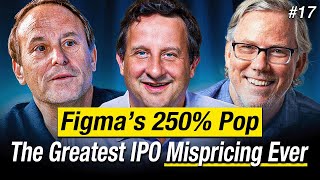
Jason M. Lemkin discusses Figma's IPO pop from the $30s to above $130, examining whether underpricing or market dynamics drove the surge. The panel breaks down IPO allocation strategy, compensation design post-IPO, and how direct listings now let companies raise capital without traditional underwriters.
Questions this video answers
Priced at $25 and opened around $33.
Figma was said to have gone out at about $33 and rose to roughly $137–145 in early trading (described as ~250% pop).
Chapters
The people who said, oh, Figma left $3 billion on the table. The 98 price only happened because the IPO happened at 38. The discussion they were having on the day was, let's call it the Halligan discussion of do I go 2 bucks more and exclude fidelity or 2 bucks less and take fidelity. And it's a good useful discussion. And had someone walked in and said, I know this IPO is going to price at 100 bucks a share to open tomorrow morning. Let's raise it 80. Wouldn't have had a book because no one has bid at that thing. So that money wasn't accessible.
Run Forest, Run. The market's wide open. The valuations are good. There's a lot of demand. It's very seasonal. Timing really matters. If I were Canva, it's amazing company. I'd be lining everything up to go public.
Ready to go.
Guys. I am so excited for this. You know, it's always the highlight of my week. And we have a special guest this week in Brian. I mean, it's going to be better than ever. And we also have unbelievable news. We're just going to start and dive in with the Figma ipo. We saw the most unbelievable mispricing. It went out at 33. It went up to around 145. I would like to throw this out there to some of the greatest minds in this business. How did we. Don't laugh. How did we analyze this unbelievable pop?
What was. I should know. What was it at HubSpot, Brian? There was. There must had to have been a pop, right?
We had a pop spot.
Was you priced at 25 and you opened around 30?
We priced 25. I think we opened at 33.
Yeah.
It might be worth just talking about, like, what happens behind the scenes on this shit.
Yeah. Everyone's talking out of their rears on. On X, aren't they? Like they know everything.
Yes. I don't know everything, but I can share, like, what actually happens and how you make that decision and what the pressures are. So first of all, you're making the decision on the price and who the investors are the night before the ipo. And in this state, you're. You have never been as tired in your entire life as you are when you're making this decision. You've been on the road for the last two weeks. You hit 12 countries, you had six pitches a day, your battery is on red, tired. And then the investment bankers sit you down and say, you got two big decisions to pick. One is who are the investors going to be like, who are we picking? Because we were 27x oversubscribed. Figma was 40x oversubscribed. Who are they going to be? And then what's the price? And for the whole process, the founders are very well aligned. We had Morgan Stanley as well with the investors, like, perfectly well aligned. Until this one, like one hour meeting the night before the pricing. And you all of a sudden like, oh, actually, we're across the table from you. And the first thing you're across the table from is they give you the book of all the people who want to buy your stock. Again, 27 times more demand than you have supply. And in their version of the book, they have a lot of their hedge fund buddies in there with pretty good allocations. And we also have some of the, quote, unquote, long, lonely. We can talk about that too. Fidelity and Wellington and Capital Hero in there. And what HubSpot wants is just the long loanlies. You want to keep the hedge funds out. Morgan Stanley wants that too. They want to keep them happy, but they also want their hedge fund buddies in there because they make a lot of money on there. So that's a negotiation, trying to get all that, squish the hedge funds down and get the long loanlies up, and then it's the price. And in HubSpot's case, it was a very interesting dynamic. We had raised the range throughout the roadshow over the previous two weeks. And Morgan Stanley, we wanted to go out at 25. Morgan Stanley said we should go out at 24. And the reason we should go out of 24 is Fidelity has told us that they're in at 24, they're out at 25. Okay? And you really want Fidelity because Fidelity has trillions of dollars and they could own. You know, they can be a massive anchor. And so then you have like a debate in your head, like, how bad do you want Fidelity? You know, how. You know how much you want to sell for? And we were oversubscribed and we were like, I think Fidelity is going to come in anyway. It's a really good thing. I think they'll come in. We're going to stick with 25. So we pushed back. We said no, and we priced it at 25. And I don't think there was collusion going on, but definitely Morgan Stanley and Fidelity were on the same side of the table trying to get us to sell at a lower price. That's kind of how it happened behind the scenes. And I can talk about the next day and how it all develops, but that.
So there are, there are these micro conflicts, but they rear their head at the last minute in particular, right?
It's really just a very last minute and it's fine, you know. And by the way, there's a lot of talk around, you know, the pricing and it pops so much. Whose fault is the Morgan Stanley's fault? The founders make the decision on what the price is. So Dylan decided at the end of the day. And by the way, if you're Dylan and your figma, you had a very limited amount of shares that were selling. They were mostly secondary. So it's just very few shares to sell and a lot of demand from it. And if you're Dylan, that's going to drive the price up. The second thing is you want, here's who you really want. You want Fidelity, you want T price, you want Wellington, you want capital. There's like six big long only funds you want in there. And they're pissed because they're not getting a big allocation. And so that created the demand environment that was a little tricky for them because they wanted to buy more shares. And that's what pushes the price way up. The supply is low, the demand is very high. But it's an interesting little chicken. You play chicken with your investment bankers and some of the long lonelies, like 7 o' clock the night before the.
IPO, but there's no one dumb at figma. This is the other thing about social media. You think Dylan and his whole finance team and cfo, they've never heard of these issues before? I mean, everyone's trying to weigh everything and come out with the optimal outcome, right? No, no one was. No one massively, mistakenly underpriced this deal, did they? We're not talking about rookies here, are we?
I don't think so. I think there are a lot of smart people around the table giving them advice and they wanted to make their investors happy. So part of it also is you want to pop. You want Fidelity and T row and these long only folks to come in and right out of the gate feel good about their investment. You want them to hold for decades and decades and decades. So there's a little bit of that. It probably just popped more than he thought.
And that's the act of sentence, right? Until that everything Brian said is correct. And the stunning thing is they clearly give the same speech every time. Cause I've been in the room, I think five or six times and they give and it's always fidelity on one of the other two. It's like you want fidelity, it's only another dollar, right? That whole speech is exactly right. And you want a little pop. The interesting thing that Brian said at the end was the odd thing here is instead of getting, let's call it the designed 15, 20% pop that makes everyone feel good, you ended up with this absurd 250% pop. Right? Which is clearly off the charts. I mean, I think it's the largest pop since 1999. So what you're really saying is you're trying to engineer this small explosion and then every once in a while, inadvertently, you create a big explosion. You look like an idiot. Right? So the question is, are we arguing about do we need small explosions which happen all the time? In other words, the classic HubSpot 20% pop. Is that a problem or not? And that's all about a $1 discussion with Fidelity. And then the separate problem of when you get it massively wrong, what causes that? They're two. I think you should talk about them separately because they're almost two separate issues that make sense.
Because you know, there's one small thing I heard nobody talk about on X on this. So my first startup job, they gave me the job and this is the only IPO I'll ever be through as an employee. Okay. They gave me the job of handling the director chairs program. It was my job to, to hand them only the employees, not that, not the external ones. Okay. And I went around and there was a lot of drama because people had to come up with like 50, 60, 70 grand to buy their stock. This is not a lot for folks that had no secondaries. There was no secondary. And everyone in the company basically made 100 grand that day. Okay. And it was a magical thing. Now was it, was it underpriced? Da da da da. But we forget about the employees don't care about. They don't even know what dilution is.
Yeah.
All they care about is what happens with their stock. And it was a, it was, it was, it was a magical moment for the employees. Whether it was mispriced is a different issue, but no one's talked about that transfer. It may a small issue, but employees may not care.
I guess a cool question for me is like, do we think it was fundamentally mispriced extensively. Or is this actually just IPO exuberance on an asset that is good with a great quality founder? Is it not dramatically overpriced at the 137 that it hit?
Agreed. And that's actually the next shooter. You're exactly right. Because the whole, you know, 20% pop discussion is an interesting one. And maybe fidelity to Brian's example would have bought at 24, 25 and they probably bought more. 30. Right. That's kind of in the bounded range. I can tell you right now the people who said oh Figma left $3 billion on the table because they could have got $95 a share are talking out of their ass because I can guarantee you the order book I think it was, what are the prices? 35,38. Whatever it was, there was some, as Brian. It's exactly what Brian said. There was some at 38, there was some at 39, there was some at 40. Right. No one was putting in an order at 98. Right. So what happened? And this is kind of a bit existential, metaphysical maybe go with it. The 98 price only happened because the IPO happened at 38. It's kind of one of. It's exactly what you said, Harry. It's like the discussion they were having on the day was, let's call it the Halligan discussion of do I go 2 bucks more and exclude fidelity or 2 bucks less and take fidelity. And it's a good useful discussion. And had someone walked in and said, I know this IPO is going to price at 100 bucks a share to open tomorrow morning, let's raise it 80, they wouldn't have had a book because no one has bid at that thing. So that money wasn't accessible. All that happened here was, as you say, I think, a little bit of it. Maybe they could have got a couple of extra bucks, right? And maybe that might have slightly dampened demand. But really what you're saying, Harry, is what? Correct. There was some pent up euphoria on the retail side and they all rushed in and I can tell you why it's not successful. Going back to Brian's example, and this is a really sad comment, but it's true. If you have a 20% pop and you get infidelity at 25 bucks, they'll buy more at 32. Let me give you a really sad fact, and I didn't realize this at first, all those big buyers who came in at figma at 38 before they buy, they have an internal process with a price target to exit. None of those price targets are going to be more than 110 bucks a share. So unfortunately, because you want the price, I won't say underpriced it because it's now trading at a price that's probably above the long term price Target of the long term investors you want. Most of them are selling those shares right now. I used to think, oh my God, they'll hold because they know long term. But if you're running money as one of these institutions and you bought at 35 and you built a business case that says, we think this will be worth 50 bucks a share in two years and suddenly it's worth a hundred dollars a share in two days, at least half those mutual funds have to say, should we lose our position? And my guess is they will.
People say long only. They're not long only. They do sell. They come in and out of HubSpot. I see them come in and out. I think they're trying to build a deep. They only floated at a little tiny amount here. And so I think they're like, okay, we're in there, we got a toehold. We're going to hold for the long haul. We think this is a substantial. I doubt they sold. I think it's Harry Stebbings that sold. I think it's hedge funds that sold.
I think you're definitely right on the hedges. No one on the hedge sign is out is in.
Yeah, I doubt the big long only quote unquote. Long only soul. Can I tell you guys another story about this whole thing because. So first of all, on this topic, before HubSpot went public, we did something called a non deal roadshow with Morgan Stanley. We met all the big investors. All of the big investors we met came in big on our ipo. The ones we missed, we couldn't convince to come in the ipo. So for us, we missed T row. It's down in Baltimore. We didn't want to go down to Baltimore and we missed Capital Group in Southern California. It just didn't quite hit it. It was a long trip and we missed both those in the ipo. And it took a good three, four years before we got T Row in and Capital Inc. And convinced them this was a good company that was going to be up for the long haul. So you kind of want those guys in there and you want to make it a strong incentive to get them in right out of the bat or you might not get them for a.
While and meet him in person.
Yeah, the Nandi and road show is key.
It's also proof of the old rule. You always remember the people you didn't get, no matter how long. And all of us have been fundraising. You can vividly remember every. No, you can vividly remember every. I didn't go and see him and I Should have.
Do you think we overestimate the importance of having fidelity in.
I think it's important. Infidelity and T. Rowe own a huge chunk of HubSpot now. Wellington Capital. They own very large chunks of HubSpot and they're pretty stable. They trim on the edges, come in and out people. Most people think consumers own a lot of the stock. The retail investors own a lot of stock. It's very little of. HubSpot is owned by mom and pop. Owned by Harry Stebbings. Buying Harry, Steven's mom. It's like 90%. These big institutional investors.
Brian, you never gave me access to the pop, okay? I would have been.
For the record, Harry, I think you were 12 at the time. But I'm not even sure you could legally own stock, big guy.
Okay, dude, there's no way I could have bought. I was totally underage. The one thing that I do think is that if we're Dylan now at figma, we thinking, you know what? I wish I'd done a direct listing. Does this make direct listings much more attractive? And would this have solved the problems that we've seen?
Again, I'm going to push because I, you know, when you send out the questions. I did a lot. Did more reading on this in a while and one thing I didn't realize is the SEC has amended the rules so you can now raise capital on a direct listing. So it is possible, right? I think amplitude did it. But. And this is the big but. If you did a direct. And this is why I said it gets kind of weird. If you did a direct listing. I don't think he would have direct listed at 100 bucks a share. It might have been 39 or 40. Right. The weird kind of thing is I'm going to. How do you put it? Say that it may well be that these random weird pops every once in a while are just like a natural phenomenon, like earthquakes. Right? They just randomly happen. Right? Because it's not like if you did a direct listing, people would have said, yeah, I think I should pay 80 times run rate revenues for this puppy. It would have been the same analysis. And at 15 times, 20 times run rate, 35 bucks, maybe 38 bucks, you might have captured the two or three extra dollars that you left on the table, you know, in return for getting infidelity. And then you would have the Brian CEO comment of his fidelity worth three extra bucks. But what you would not have done is place the stock at the lofty thing it is now. So it may well be that that outcome it may well be that megapops are a natural intermittent consequence of the IPO process. And that direct listing doesn't solve that part of the problem, does that? I'm sorry. Well, that is clear because it's kind of weird what you're basically saying. It's almost like a psychological phenomenon which is when people. It's like. I'll give you an example in venture of the same thing. We're seeing it now. Hang on.
But it's not though, because you've got circle, you got core weave and you've now actually had three in the space of two to three months.
I think time in the market and you've had similar thing in 99. I think it's a once in a while when conditions are adjusting from, you know, one kind of more pessimistic stage, which we were in April, remember how upper ass we were in April. It's only July, August, right. When people are adjusting, maybe we just don't adjust quick enough. And the euphoria is in the. The euphoria comes in after the stock gets priced and it's trading. There's a small number of highly speckled assets and there's a lot of appetite for those appetites and they all just rush in. It's like in the venture equivalent that we're seeing now, you know, the way we're seeing it now when someone really big brand name does around like six weeks later, many of these companies doing a follow on round, nothing's changed, you know, everyone bid 120, the brand name won and six weeks later there's a bunch of people doing it at 350. Why? Well, the brand name is in. This is kind of the public market equivalent of fomo. That's how FOMO manifests.
I think the direct listing is like you're a little bit scared you're not going to get those long onlys, you're not going to properly market it to them and it's 7% to the bankers in the grand scheme of things is not that much. I think it's risky unless you're Google or your Facebook. And just to pile on what Rory said, timing really matters. Like HubSpot went out three months before HubSpot went out. Kind of a sister company of our Zendesk at the time went out and it was just, it was timing and it was just a shaky week that they went out and they just didn't get. They didn't get the big long onlys and they had a good story and they didn't get Them and they never really got them. They always had a lot of hedge funds in there and they always had a lot of individuals in there. And our timing was pretty good. Not great, but pretty good. And Figma's timing was obviously really good.
But that's super. But that Harry, I think that's super interesting because I mean Zendesk is kind of a tough tale, right. I don't think Nickel wanted to sell. Right. Turned it down at whatever 20 billion had to sell to. I mean 10 billion. These are still good numbers.
But.
But it was a reluctant seller. Right. And maybe, and I hadn't realized this, maybe part of it was never getting that buffer in. Right. Assuming they held right people he had never getting that buffer in at the ipo. Right. And then you're just. It's just. I mean, I'm just watching, you know, everything. It's horrible to deal with these activist investors, right? It is. It's a terrible experience as a. I'm.
Going to come across only because it won't be obvious to listening what happened there because I'd never heard that point before. Brian and I was. I remember both IPO as well. What you're basically saying is you guys and Zendesk, I want to say, priced in 2013, 14ish. I can't remember.
Right, right.
And then what you're saying is because of the way your deal came together, you got the long onlys day one Zendesk, didn't they? Price. I remember three months earlier and the VCs had to put money in the round. It was so tough. And what you're saying is five or six years later, they still didn't have quite as strong an investor base. And when they hit an issue and they had activist pressure, it's not probably the only thing that caused them to have to sell. But at the, at the margin, you had a stronger investor base the whole way through. And that's your argument for given the buck and getting fidelity.
And part of it, I would argue is our most of that stronger cap table was. It was more luck than skill. Like the nickel story, my story, Zenda story, HubSpot really rhymed. But our timing was better. We had a better cap table. How many good cap tables underrated.
That's why you should take money from.
Me, Jason and Rory.
That's what we tell fans, by the.
Way, while we're talking about this. Just like the inside baseball and the whole thing. So that night you're exhausted, like unread. You've never been tireder. And my co Founder is really introverted. He was negative energy because you spend so much time with humans. And then that night you have a big fucking party with all your.
Absolutely.
You're so tired. The last thing you want to do is go to the party. And inevitably, inevitably, by the way, somebody gets wasted at the party. It's not the founders because they're like, bet somebody gets wasted parties. It's like a big thing. And then the next morning the inside baseball is, we did New York. And the next morning you have a big dinner and then you're up on that platform and there's a huge discussion about who's on the. Who made the platform and who didn't make the platform, who's deciding who's on the platform. Which is another thing Dylan was dealing with, which is super irritating. Probably dealt with a couple of weeks before. Did the VCs make it on the platform, for example? So that's going very important to the.
VCs to be up there, right?
Yeah, very.
You don't want to take your picture staring at the. At the big drape of Figma outside Wall Street. That's pretty embarrassing. That one on X.
Okay, this is a pro tip to the listeners who are eventually going to go public. We're on the platform, it opens and everyone on the floor is up there looking at you on the platform. And most companies just kind of sit there like, yep, yeah, yeah, yeah, yeah, clap. And then every down below is like, oh, they're so boring. So you gotta have a plan to do something interesting when you're up there to get the floor excited, to get the press excited, that's one thing. So the market opens. And in my head I thought, well, we're trading, that's it. But what happened in Figma, what happens in HubSpot, all these things. It takes the first price to settle in. And so you and your executive team and maybe your VCs, you're all sitting there extremely awkwardly on the floor of the New York Stock Exchange looking at a million miners. And like you're not trading yet. And it takes a couple hours for the darn price to settle in. It took Figma, like six hours. And it finally settles in. And so it's like, okay, okay, it's 33, great. And I remember that moment because my co founder Dharmesh, who's a prince, he had the stock app and he showed it to me. He's like, brian, look, look, look, we're worth a billion dollars. And I remember, I said, take a screenshot. We'll never See that again. We were so excited. That's the behind the scenes on the floor, by the way. The other pro tip is you can do NASDAQ or New York Stock Exchange, virtually exactly the same, except with the New York Stock Exchange, you get to ring the bell. That's why we picked New York Stock Exchange.
That's really sweet. Yeah, we did one in Covid where you get to ring it, but in an empty TV room. It was kind of very soulless. You're pretending to be excited, but no, you're right. And the whole point of the dinner, remember, the dinner comes right after the pricing committee. So my mental model on the dinner is the bankers have just screwed you over for a buck a share, and in return, they buy you a very expensive dinner and they liquor you up. So you forget. It's totally discordant because you've literally come, as Brian said, from a very angry meeting where these people who've been your friends for two weeks on the road, carried your bags, done you, everything, suddenly start picking your pocket and telling you that they got to give money to their friends. And it's controversial. And you argue and then at the end you walk away and you go back and then you all get plied with liquor by them, right? And remember, this is the information asymmetry. One day later, you drive out of town and they bring in the next group of their best friends and the next lamb is led into the slaughter, baby. Right? And that's the deal. But it works, I mean, because where else in the world are you going to get a couple of billion dollars for two weeks work?
You know, on Silicon Valley, you get it every day. That's happening now.
This is true.
Brian, can I ask you one meta question on this? I think I know the answer, but when you look at the Bill Gurley criticism of all of this, one is all the money left on the table, right? That's the math. But I think underlying that also is dilution, Right? Most early stage investors as investors, not as founders. Because I asked my question. Dilution does creep up on you, right? As a founder that's gone through this journey, right? Did you. Did you ever sweat any of this dilution, The IPO dilution, the post IPO dilution. Did even it come into your calculation? You just knock.
My net worth went From X to 100X. I would just.
And that. And that sentence is why this process is so hard to change. The profound truth is, Bryant said, you're doing this once and it's the most important thing in your life. And these guys are doing it every day and they know so much more than you. It's a really hard process to reform. Is one of those ahas.
I do want to kind of stick on that. You said your net worth went From X to 100X. I think an element that we chatted about Texas about before Brian, that not enough people are talking about is actually kind of the package that's in place also for Dylan, which is obviously kind of this kind of $2 billion moonshot, like Grant, kind of Elon Musk style. And Brian, we were saying that we don't talk enough about CEO comp. I wanted to. Why don't we start with you, Brian, on this. Given you're the best person here to speak about it. How do you think about this and how did you analyze that?
I think CEO comp is pretty broken at the moment. And there's two things that I think are pretty broken about it. The first is just everyone really relies heavily on RSUs. And when I grew up in the industry, I hate to be that guy. Be like back in the old days it was mostly ISOs. It was options until 2006 and regulations changed and the expensing of that changed. So the world kind of moved to RSUs. It just creates sort of a risk averse behavior in the CEO. Like it's basically cash comp goes up and down a little bit, let's say. But in ISO you're swinging for the fences. Like you've got a strong incentive to swing. And so it's really had a dampening effect on the risk seeking behavior of a CEO that I think more companies should want. And it's kind of pervasive across the industry. So I don't like this RSU comp thing. That's the first problem I see with all this stuff. The other problem with comp is almost every company looks to co comp and the way it works behind the scenes is, you know, HubSpot's got a compensation committee, everyone's got a compensation committee. And HubSpot wants to pay the CEO, let's say at the 75th percentile of what her peers make. And so we look at 20 different peers or similar size companies, Atlassian, blah blah, blah, blah, and we peg her at that 75th percentile, which in her case is, you know, it's 20 million bucks, a lot of money. Now if you did that for Dylan, which would be in our comp group, similar market cap to HubSpot, he'd make 20 million bucks a year. But if you Think about it, that's less. That's like 0.3% of Dylan's market cap of his own personal net worth. It doesn't move the needle in iota. It doesn't matter at all to him. And so you have to get kind of creative. And so I actually like what they did with his comp. They use PSUs very heavily, not RSUs. And I like the idea of not pegging your comp to your peers, but you kind of have to peg the comp to the net worth. Same thing with Elon Musk. Like if you paid Elon Musk, like Mary Barra. Mary Barra makes $29 million a year. You think Elon cares about 29 million? So you have to kind of comp it to the CEO's net worth as opposed to just the peers. So that's what I like about this.
But the comment I broadly agree, especially on the process side, and you're right, the psu, so how you were going to come in and I'll just save you the trouble, a psu, basically an rsu, is like an option but with zero strike price. So it's guaranteed money. And Brian's right on all the negatives that. So PSUs performance stock units have evolved to effectively make the RSU more like an option, because what you say is it's guaranteed money, but only if something happens. And the typical thing that people are pegging it off in the public markets, even though I don't agree, and I'll come back to it, is stock price. Right? So you're right. So in other words, instead of saying here's 10,000 shares, no matter what, it hears 10,000 shares, but you only get them if the stock price is 40. So what you've bizarrely done is we created options because they got regulated out of existence in 2006. So now you've effectively recreated them. So the PSU is making an RSU more like a stock option.
I like that.
I know, and in general I do too. But watch this. The problem with the Dylan comp package, I'm going to say it didn't work because if you look at it, the problem with stock price triggers for compensation is it sounds rational, but they put this in place before the ipo, and if you read the triggers, they've already achieved the triggers. So the weird thing, and I'll tell you why they do that in a second, but the weird thing about all these triggers, effectively it said you've got a whole bunch of price tags up to 118 bucks a share, I think. And probably when they were making those triggers like Lily two months ago, they were like, yeah, this is going to be great for the next three years, but totally out of Dylan's control just because of the way things have priced. He's made all the triggers already. So in retrospect, now he still has.
To build the company, he still has.
To vest over seven years. So it's not like he takes all the money and runs, right? But the performance element vanished very quickly, right, because of the pop. And the aha for me is I prefer performance based to not performance based. Whenever you. I would have preferred even for a public company to do them on tangible goals like revenue and OP income and all that over multi years. And I see Brian Shakes the problem and the reason you don't end up doing that is because A, you have to disclose them and B, things change. And when you change comp on a public company, the ISS and all the whiny babies give you a whole load of shit. So what happens? And I've been in the room, you say to yourself, I would love to pay Brian Halligan for 35% revenue growth and 35% EPS growth for the next seven years. And we'd pay him a billion bucks. But if we put that on the table and then circumstance change, we have to disclose it. So then all the analysts will start saying, oh my God, they think they can make 35%. So if they only do 30% growth, Brian missed. So it just becomes problematic. And what they do in the end is they screw it. We'll just do stock price targets which are better than nothing, as Brian says, because it's more swing for the fencey. But sometimes you have this weird. Like if you look at all these packages that were put in place, all the ones that were put in place in 2018 worked, and give the shareholders what they give the employee what the CEO what they wanted because the stock price went up and all the ones that were put in place in 2021 are stranded because all those price targets, like the Airbnb price targets ain't ever going to happen now. So it's an imperfect mechanism, as comp often is. But directionally the right approach.
I mean I am not in violent disagreement with what you're saying. Kiosk. The way HubSpot does it is on net new ARR nice and like a floor earnings number. And that's where we by the way, none of this is none of this. It's like what's the least bad you can do. And I kind of like the way we ended up on it.
That is really nice. Do you guys curious and you have to disclose that? Do you get angsty about disclosing that because you're kind of hinting what you think you can do?
Yes, but people can figure out net new AR and they can figure out what your bottom line is. Yeah.
Okay.
What we used to do was net promoter score and stuff like that. And that gets really tricky, having to disclose all that.
I really like very few ce, very few comm comedians do what Brian does. Because you always. I think it's so much better than just stock price.
Every growth round that I've seen in my little portfolio, all of them have had moonshot packages. So they're going in earlier. And they are becoming a standard part of how growth. Many growth funds win deals. They go in and, and yeah, I'll do the deal at a billion, but I'm going to give Harry another 7% of the company. And they're always at least 10x. Like there's a quid pro quo. It's not 10x, it's 10x from what I'm paying as a growth investor. Fine, I'll do clay at 3 billion. But if you hit 30 billion, guys, you guys both share another 10% of the company. And so I think this is getting institutionalized earlier and earlier as valuations go up. So it may not, may not matter what any of us think because the growth guys are adding this to the standard term sheet.
The slabbiest version is where you literally say to the CEO, I'll reimburse effectively give you options back for the dilution you're taking on the round. This is a little more high class than that because it's saying, at least you got to achieve first. But I will say, well, usually you get more.
What I'm seeing is instead of a growth fund saying, I'll give you another 2% back. Right? I'll give you that. I'll give you 7 or 8, I'll give you a massive package. But I got to make my 10x. Right. It's their version of the Elon package. Right.
And I think that what happens there is my prediction is. And again, I'm. I'm often disagreed with on this on committees because I've done some of these where I've tried to make them on tangible targets. What will happen when you do the stock price ones is if the company is doing really well, but the stock price isn't achieved, the CEO would be sitting down two years from now and he'll be asking to waive some of the criteria. I can just see the movie now, right? And you know, so be it, right?
Maybe. I'll bet you nickels to dollars that doesn't happen because founders are just signing up. I don't know what Brian, you see it Sequoia, but founders are signing up for crazy stuff these days. They're signing up for massive stuff. And I don't think a lot of grouchy VCs are going to waive it. I just don't, I don't think it's going to happen. I hear your point, Rory. I just don't think it's 2024 anymore.
Brian, you are, you are an amazing coach to founders. I speak to Pat, Andrew Reid a lot and they say that founders love your coaching mentorship advice. When they have big growth rounds like these with performance based incentives that we're talking about, how do you advise them? Is it what you thought you'd see? Now on the other side, I like.
All this stuff for the founders. When I, when I came through it was pretty rare that you would. The other thing I like is it's founders taking a little bit of money off the table on the way. I think like for us when we did our round it was Sequoia. Sequoia came to us and said we'd like to buy some of your shares. In retrospect it's a horrible financial decision for me, but it was, it was good at the time and I saw, I forget a couple million dollars worth of HubSpot shares and my co founder, a few people did and what, what I liked about that was, you know, Salesforce came knocking and wanting to acquire HubSpot Life, it stiffens my backbone a little bit. So it's good for the founder, it's good for the vc. I think it gets a little wobbly when it's a $50 million secondary in the Series B. But in general I like, I like what's going on in venture. I think, I think the valuation is very high right now across venture. So we'll see how this thing plays out. I think it's a little bubbly right now but I generally like the trend that's going on in terms of the secondaries happen rounds when it's particularly there's a lot. There's a founder I'm working with right now who's a terrific founder who just took a while, like four years to like get it going and now is ripping and he's been massively diluted and so I'm like, well, let's figure out a way to give you a nice big grant.
And I go back to, yes, I agree with all that. And I do think, though, that valuation is the imperfect metric. And Jason, I think you're wrong. I think investors will and grouchy VCs will recut because CEOs are smarter than us. And comp. What I've learned is this. I have, but they are running their company and they obsess about it day and night. And let me tell you, if you've got a CEO who doubles revenue for the next two years and the only reason he's not making his extra 3% is because we overpaid two years ago. And now revenue multiples are normalized and therefore I'm not getting my 5x, he's going to come into the comp committee and say, I have nailed running this company. We have 3x revenue, we're up income positive, give me my damn shares. And I'll sit there going, I knew we should have done a revenue and op income target like Brian has at HubSpot from day one. Because what we're doing right now is we're taking what Bob Bryant correctly calls high end valuations. And then we're 10x ing them. And we're basing comp on that. Brutal. We're basing comp on a camera. It's never going to happen. It's like all. Look at all those 20, 21 moonshot, publicly disclosed ones. Most of them are like, ooh, what were we thinking? We thought that we'd go from 200 billion to 2 trillion. Hmm, maybe not.
Anyway, if we think about going from 200 billion to 2 trillion, there's going to be a boardroom that's going to be thinking, huh, should we take some action now? If you are Canva, are you looking at this going, Forrest Gump run. Let's head to nasdaq. How do you think about the impact of this on Canva and subsequent companies? Willingness to go out?
Yeah, run for us, run. The market's wide open, the valuations are good, there's a lot of demand. It's very seasonal and oddly seasonal. And timing really matters. If I were Canva, it's an amazing company, I'd be lining up, you know, lining everything up to go public.
But the founders have already given away pledge to give away the majority of their stock. It's not about money for them.
Companies profitable, they're going to give away good causes and they want those causes to get as much as possible, yes.
I just. I'm not saying I know the answer. I just think it's more complicated than someone that needs the money or h. All the. All the early stage investors have had chance to trade at tens of billions. Right. And the founders are. And there's just a lot of liquidity already there, companies massively profitable. I just can't. I'm not smart enough to predict how those factors stand together. Right. This clearly isn't a musk empire that's being built in Canva. Right. It's very different. Right.
I think you have. I've been thinking about that. You have all the idiosyncratic personal things. You have people who say, I don't want to go public for a long time and you have people who need to go public early. Right. And all those are idiosyncratic. But if you zoom out one level, because I had this conversation with an lp, they were asking, when does it open? It's like in the end, price clears all markets. And for the longest time, the private round, the money in the private round was cheaper and less hassle for the last three years than the public's. So no surprise we did more private. Let me see, five times revenues with a bunch of people in New York busting my balls versus 10 times revenue. And I never get to talk to these growth stage guys, except once a year. I'm doing option B right now. You have a situation where, you know, maybe at the IPO price for Figma, it 2010, 15 times, 18 times revenues, you kind of go, I can get that privately. You can't get 80 times revenue privately. So if you're now looking at where things are trading today, I think at the margin those prices are higher than the private things. So as a kind of, as I say, stepping back for the idiosyncratic stuff at the highest level, the cheap money is now in the public markets. And Barnes. Right. You'd be an idiot not to go for it. Like, if you need to raise money in the next two years, now would be a really good fricking time.
Can I just build on that? Like in Silicon Valley, there's. I think it's kind of stripe is really beating the drum on this. Like, why the heck will we ever go public? There's sort of that sentiment out there because so much private capital, you can do secondaries. I don't have a violent disagreement, but I think it's just people are nervous about what's on the other side. And my take on it was like we were a Private company. We had a bunch of quirky, slightly misaligned venture capital investors who were definitely in our shorts. Then we flipped to public and then all. Then we got rid of those VCs. Now we had a bunch of quirky, slightly misaligned public investors who are less in our shorts. It's actually better in a lot of ways than being private and public investors. There's so much written about what happened with Zendesk or Autodesk or these really bad things that happen pretty rare. And I have found the public investors be rational if you paint them a picture of what will happen over a long period of time. If you are pretty conservative with your numbers, they're rational and they'll stick with you. I think they're underrated and I think people think it's scary. Something scary over there. It's not as scary as people think.
I have a lot of founders who say I'm terrified of the activist investors. I'm terrified about what happened to Jeff at Twilio. This is my company, this is my life. I don't want to have that happen to me. What would you say to that founder?
It's pretty rare what happened to Jeff. I mean, everyone talks about Jeff, everyone talks about Autodesk, everyone talks about Zendesk, but it's pretty rare. And you know, that company is having some issues.
I agree. I agree, Brian. And I am a people should go public person. I think that. I think. I think it's a little overwrought. Yeah, some of these issues do happen, but it's overboard. I do think the activist VC, because we were one of them. Yeah. 50. I do think in the last fight.
Yes.
No comment.
That VCs are a much bigger pain in the ass in public.
We are much agreed.
Add that to the B roll.
Yes. I think VCs are a much bigger pain in the ass than the typical public investor and slightly less of a pain in the ass than the public activist investor. I remember saying that to one. Believe me, I'm pretty sure on that one. I'm going to defend us there, Brian. Right. Most times the public guys are benign. Though I will say in the last five years on the venture side, definitely the benign content has ramped up. Right. So just come. It wasn't even 10 years ago. I think the marketing, the last 10 years on the venture growth side has very much been we are benign. We are more benign than the public. So I think that might be misleading. That might not be true. That might be reliance on preference. So I think you're right. That it's a healthy trend to realize that you can go public. You get this liquid stock. It's not as terrifying as you think. And you have liquidity every day, not just once a year by appointment only. I'm a big IPO should happen person. And I think that.
Here's what's underrated about the ipo. It's very stressful. You're exhausted. But the day you go public is going to be one of the top two or three days of your life. It is an amazing day. You'll go back to your company and two days later you'll have a party with your company. You will cry, you will laugh, you will hug. You work so hard. There's something about that that is really, really special that people.
Having said all that, I've only lived through it on the employee side when it was great.
Right.
The next, the day after that was weird. Going back to your desk because the world's changed the next day is really weird. But if I could IPO at 30 billion or sell my company 30 billion cash, I'd much rather run the company, don't get me wrong, rather than sell. Right. But if it were just a financial decision, I'd rather have the 30 billion on one day than wait a decade for it to drip and travel out. Right. So there is a conflict. There is a founder like, yes, you know, selling is tough for 98% of founders. I'm sure it's a coy if you ask. Only 2% of founders say, that was the greatest experience of my life, selling my company. But man, getting it all at once, if it's the same even with a net present value, like it's just a weird trade off. The between the two, the journey and the economics. It's complicated.
I just wanted to butt in there, Jason, because you said that about getting it all at once versus drips and drabs. Yeah, I'm super naive here. Brian, you said about it going from like x to 100x when you do go public. Is it drips and drops over years. How does that. Yeah.
Is it dripping a drab? And if you can look at the way I do it, I sell the same number of shares every month since we went public. And the reason I do that is I don't want people to think I don't want to signal something. If I make a big buy or a big sell, it's going to signal something. It's funny. People will look at it, the investors look at it. So I just have had the same Exact number of shares I sell every month. It's on autopilot, but it's drips and drafts. You're definitely right.
Do you know how much you have left?
Yeah, I've got plenty left because I got more shares. Here's the thing that I didn't understand as a founder. You get more shares as time goes on. I actually didn't know that when I started husband. I was like, well, I just thought the pie would get smaller. Actually, the pie get much smaller. And then it started growing a little bit.
One of the things we didn't warn you about joining the podcast, Brian, is that every once in a while Harry basically asks you to disclose your net worth. And you have to remember, it's like in the prison cell, you don't have to answer. You can plead the fifth on anything, right? No, Harry, I will not disclose my loss rate on term sheets. Not my net worth. Just refuse point blank. You handled that very well, Brian.
Rory, what was your multiple on HubSpot?
I'm not gonna stress that. Extraordinarily good. And I'm extraordinarily grateful to Brian for allowing us to do the C. Especially when I had whiffed the B and my colleague Rob and then Stacey took over and did the C and corrected my dumb decision making. And we were extraordinarily lucky to invest in them at something like a 70 pre on a company doing 10 million. And thank you God, from the bottom of my heart, every time I go to my little house. Thank you. Thank you, Brian.
Yeah.
Okay, back.
The backstory on scale investment is the series C. And it was, it was, it's bad timing. Timing matters more than I ever would have thought or studied in school. And it was the bad timing because.
Like Rory hadn't had lunch and he was grumpy.
No, it was the, it was in the throes of the recession. And we went up and down Sandhill Road. Like Dharmash and I get off the plane from Boston, landed in San Hill Row. We're like, we got this. We're going to go up and down. It's like 20 meetings and we go all 20 meetings and we get back on the plane, we'd be like, we got no up and down Sand Hill Road. Every, every big name firm, everyone, every household name said no, you back, back and forth. We had nothing. And so we were about to do an inside round at a slight uptick to our B. And very last minute, Rory and Rob Theus had us in. We pitched them and gave us a term sheet at 66. So actually, the thanks goes from me to you, Rory, because you marked up our deal. I appreciate you.
We call it synergy.
Absolutely. No, yes, I remember. That was in 09. We did HubSpot, Box, DocuSign, and I think Ringcentral. The time to buy is when everyone else is not buying. Especially when, let's put it out there, you're just little old scale and you're not Sequoia who came in afterwards. You know, when. Bring on those days again. I mean, the world may have to end and that's obviously a little tougher, everyone. But it'll be really great when companies like Hub Spot are grateful to get my term sheet at 66 pre. Just to remind everyone, at which point they were doing somewhere between 7 and 10 million doubling year on year. But other than that, it was a tough decision. So grateful, Brian, thank you very much. It's like, yes, so my multiple was excellent, Harry. So pound sand. And would have been even better if we did not have the mechanism then to hold for long after the ipo. So I profoundly wish we'd had that as well.
The smart money on HubSpot was you couldn't hold Rory.
You weren't allowed to in your lp.
It's a long story. We had single lp. We had to distribute. It's a long story. Move on.
Yeah. The smart money spot was in the public since we went from a billion 25 to 25 in a relatively short period of time. That was the play with subspot. And I think SCO is really smart. I suspect T was one of the reasons why they said, let's hold these companies after they go public. It's back in some cases, but I think it's going to work over the long haul. Yes.
Don't you love the way. Don't you love the way. I asked Rory for the multiple. He's like, no, no, moving on, moving on. And then Brian's like, let me tell you how he missed the. Missed it in the B. And you're like, oh, I prefer the multiple question. Let's go back.
No, give her any credit. It was as great a company as HubSpot was. Right? It wasn't. It clearly wasn't a consensus bet at the time. Like, objectively, like, you know, and Marketo.
Was the consensus bet. Marketo was raising a bigger valuations. They're always raising three.
Well, they were more enterprise, Brian. That's. That's the play. You got to go more enterprise.
Yeah, Marketo. That's Marketo. Correct. Yeah, yeah, yeah, yeah, yeah. No, the Whole. And I mean it is actually worth riffing on that because we have the king of SMB on this call with Brian. I mean you. The interesting thing about HubSpot was the way they built, you know, a $30 billion market cap business in SMB, you know, starting with, you know, sub 50 person employee companies. And you're right, Jason, it was very counter consensus wisdom at the time. And any thoughts on that? But what are the. What was different about did you ever want to go up market?
The reason we've been on SMB was I had spent my entire life doing the soul crushing exercises of selling to CIOs and it's just nice soul crushing work. I didn't want to do it. And I also felt, at least back when we started the Internet kind of disproportionately benefited small relative to large. And your success was much more about the width of your brain than the width of your wallet. And so we had sort of a play on that. We also just looked at the consumer business like actually the P L is a shitty way to look at these businesses. Let's look at CAC and tlv. Kind of convinced ourselves that that worked. And one interesting thing about HubSpot SMB, the other SMB company that's done amazing, Even better than HubSpot is Shopify and they're both outside of consensus land in Silicon Valley. Yes, I think there's a big echo chamber in Silicon Valley and big negative bias towards S and B. But you can make it work in S and P. HubSpot and Shopify have shown it.
Block has shown it Monday.com as well. Massive anti consensus. Totally.
Yes.
Yeah. I think they're moving the enterprise.
Yeah, yeah, I. Yes, they are in a way that you guys didn't. And then, and then the other. I just got to say it.
While I have made the choice today, Brian, in AI and and the reason I ask right is I mean to make a lot of great AI products work, you need training, you need upfront, you need forward deploy engineers, you need daily. Even if it's SMB every day, someone's got to be your AI orchestrator. If you were doing all that today, would you go, go a little bit more M. Because these S's don't have time to train their, their AIs.
Yeah. And here's one of the interesting things about, about my life is all these founders come to me and say how did it happen with HubSpot? Like how did you do marketing? We talk about our website grader and marketing Inbound marketing. How'd you take on Salesforce? I kind of came under him. Freemium. And like, we learned a lot. We innovated a bit, and a lot of what we learned just wouldn't work today. You got to keep innovating. You got to keep turning that over. And so I'm careful to give people, like, what about your culture? Like, people need to find new things. Because I'm nervous. I'm nervous when I give people advice and tell them what we did at HubSpot, because it worked at the time. It was really innovative at the time. But a lot of what we did on go to market. A lot of the freemium stuff, a lot of PLG stuff, a lot of the interesting culture stuff or SMB play.
Like, you know, some of it works, some of it doesn't, I think. Right.
It doesn't. Yeah.
Do we have Jason? I'm going to. I'm just. Literally, this is me exploring, not knowing the answer. What are the great. Is there a great SMB AI product out there today where you go that well, lovable? Stupid question, Rory. I mean, you could argue that. What I mean, you seem to imply that it's harder to do enterprise kind of SMB level apps in AI because of the need for training data. And then I'm trying to think, what are the mass adopted enterprise apps? And obviously, you know, you're the. You're the lovable and replit guys. So there are some. I don't know any others.
Even the exceptions sometimes prove. I mean, I'll tell you, I learned a lot of AI from Brian's AI. Like, I copied it and made it better, right? And when Brian built his. His clone, we and I were talking the very end. He's like, well, I'm like, brian, it's pretty good. I had some fun, cathartic conversations with Brian, Brian's AI and I had some fun ones. And I'm like, it's pretty good. Mine's better because it's only because it's trained on more data. Mine is better, but I didn't get it. I asked Brian, why is you so good? It's like, I spent a lot of time training it. And this is. This was six months ago. There's a lot of time and I didn't get it right. But now when I look at every AI true AI company, it's hard to train it right. And so this is a quandary for SMB investments. Right? And I just, I want what I'm looking for. SMB companies in AI is How do you self train? How do you solve the unsolvable issue? How do you solve the fact that it can take six months to roll out a Palantir grade deployment? How do you do that in 60 seconds? And any founders that crack that code, I want to invest this hour, this second. And I'm pushing every startup I work with that's SMB to be more AI. And sometimes they push back on this. Right? But you got to do it. Right? You got it. Because it's. How do you train? Right. How do you train the training? It's.
It's kind of the stuff I see Jason, is there's a ton of prosumer stuff that's working. Lovables working. Gamma's working. Like so many prosumer things seem to be working and then enterprise is working. You're right. I haven't seen much in between.
But there's no training in the. I mean we use Gamma too. We love Gamma. But you don't train Gamma. I mean you train, you do train Gamma a little bit, don't get me wrong. But you sort of accidentally train Gamma by uploading your templates and your things. Right? Replied and lovable. I mean I'm Mr. Vibe Coder, right? Those are AI under the hood, right? The training is weird though, right? It's AI under the hood. So I just think this AI B2B SMB is something that hasn't been cracked to Rory's point. And I think we should all just rush all our capital into that. Listen, if you can train an AI, it's easy. HubSpot just put out this report on AI with SMBs, right? It said like 80% of folks have an AI team to do this. Even with what they call The SMB and VC, 80% have a team. SMBs don't have a team. Right. Owner doesn't owner restaurants. One restaurant that Brian I invested, they don't have an AI team. At Brian and Jason Sandwich Shop, there's no AI team.
As I say, I opened the door to a non prepared topic so I'm winging it. But my sense is. Two comments. One is it may well be it takes a year or two longer because if you think about even the HubSpot journey is that what tends to happen is the big companies with loads of money fart around kind of mentally defining these apps and figuring out what it should be because they can afford to. Right? And then when the features lock in, the SMB guys go, oh, we'd like that. And then you don't have to do so much in the case of that last generation trying to figure out what it is. In the case of this generation you probably come with a very much pre trained app where you know if it's call answering or something like that, most of it's already done and you just have to configure it at the SMB level. Right. And it may be over the next year or two because I do believe and this is I think one of the reasons we love to anything the big companies have the small and mid sized companies want to, they're not different, they just need it packaged tightly and priced tightly so they're consumable consume of it in bite sized chunks. So over the next couple of years it may well be as I say for things like phone answering, simple order dispatch that there'll be a whole bunch of pre canned, pre baked. This is how it works Mr. SMB. Just turn it on and you too can sound like a big call. So I'm optimistic it won't be trained on a company by company level but I think it will deliver big ass value.
You said there about big companies with lots of cash. I do want to progress this because there is something I'm fascinated to hear you guys thoughts on. I mean matter what a freaking ripping quarter. It was like 38 year over year increase in adjusted EPS, 22% revenue growth but 22% drop in free cash flow. How did you guys read how long does this go on for? Is this the start? Is this near the end? How much patience do people have?
It's, it's funny you led with the how long does it go on for? Because two weeks ago when I said how long does it go on for? You looked at me like I had two heads, right? But I do like your take.
You see the shit I put up with Brian?
Yeah, I just take it.
I'm polite, I don't give it back, I just take it.
And I will say you know on all these things, the takeaway and I like the way you framed it here, not the way you framed it in the note you sent me prior. This isn't a AI enabled success. This is I have an awesome existing business and it kicks off so much money that I'm allowed spend that money on building these great AI vision. And I can probably do that for as long as my existing business kicks off cash. So my big aha from this week's earnings and I would say I got broadly AWS right and I broadly got Microsoft wrong. My big takeaway is not all the AI stuff is working for the hyperscalers. My big takeaway is all their existing businesses are working so well. I'm kicking off so much cash that they can keep doing this for the next year. And they said they're going to keep doing this for the next year. It's like because they want to play in the new game. That's the takeaway. Real men with $70 billion in market, $70 billion of free cash flow get to spend 40 billion of that on servers. It's a great country.
Is there any nervousness at Sequoia, Brian, at all that the good times might end soon? Is there any draft sequoia memo version 3 ready to go out? Just search and replace. And Gamma. Just have Gamma please dust off the the RIP good times and update for the any discussions at the partner meetings you've been in about that.
I mean, David Cohen wrote the piece about the gap chasm between capex spend and revenue.
Yeah, I think that there's. I mean we're in a kind of a. Like one of the questions is like are we in a bubble or not? And the argument against the bubble is sort of just look at anthropic and chatgpt and growth rates are. I mean they're ridiculous. Or you look at even Harvey or so many of these companies that are app level. What I kind of like as an investor looking at this stuff, I get nervous about tech companies selling to tech companies. Silicon Valley companies buying from Silicon Valley. There's a lot of trading going on and there's a lot of growth in there. I sort of like what chat. I love what ChatGPT is because it's like mere mortals are using that thing. I love what Harvey's doing. They're selling to lawyers. I like what Rogo's doing, selling to investment bankers, stuff like that. I get nervous because I think 2001 and definitely in 1999 and 2000 it was just Silicon Valley companies buying and selling from each other.
And creative 2021 too.
A lot of it, for sure. Yeah, for sure. So I kind of like these ones selling to mere mortals.
But it has to be a bubble at some level. The capex bubble, it can't last forever, right? That's Harry's point. Look, AI is bigger than the Internet, most likely, right? Bigger. So the investment makes sense. But when you see the meta's cash flow decreasing, I mean there's some kind of bubble here, right? Hopefully we all get out, but it's some kind of bubble.
Bubble is I think a laden word, Right. It implies you Know, I just think you invest, I mean it's the usual two things. There's a very, there's an enormously enabling technology. It's getting massive traction at the apps level as Brian mentioned, but you still add up all the apps revenue and it probably comes to 25, $30 billion maximum. And the capex to build that is running between 4 and $600 billion. So you're investing 4 to $600 billion a to enable a $25 billion ecosystem to go and keep doubling and maybe next year it's 50. So my takeaway is the long term trend is almost certainly real and if you fast forward 10 years, that 25, 30 billion of apps revenue could easily be 3, $400 billion. So that's why in the long term it's not a bubble. There's probably going to be a period where things get ahead of themselves. Right. And you're going to, you know, the marginal player will get caught just like the marginal player got caught in 2001. Right? The over levered player who's taken on too much debt finances will get caught and get burned and the big guys will retrench for a year or two and then just grow into it. That's the most likely version of the movie, which is some pain at some point in time. And it's boring because it's neither one. It's not like it's amazing AI maximalism and it's not like it's bubble doomerism. It's just like we're doing what we always do with a new technology. We're spending like crazy because it's the only way to discover the frontier. And until you discover the frontier, you're not investing enough. Right. So we do it as an organization, as an organism almost. Yeah. Capitalism is working. We're spending money trying shit that works. Some of it won't work, but unless you try, you just end up like Europe. Sorry Harry, I just rushed that into.
You always shit on me. You're so Irish.
Harry, we've had 800 years.
He talks more European than you do. Harry.
Harry, we've had 800 years of you guys shitting on us. Every chance I get to shit on your back, I'm going to take it. So just get used to it.
Matt, aside from the navel gazing on this because I don't know what the answer is. I would just say I'm incredibly impressed with at massive scale, how fast Microsoft's growing, how fast men is growing. The companies people aren't talking about are the very old School, Microsoft, SAP. And how about Oracle?
How about Oracle?
My, like, date is August 26, 2022. That's when, like, everything kind of hit the bottom. If you go from that date and you look at Mic, you look at Oracle and you look at SAP, they're both growing like 230% stock. The only SaaS company since August 22nd that's growing faster is Shopify. They're growing 300%, so they're outpacing HubSpot, Salesforce, Adobe Box, Lassie and everybody.
Are you talking stock price or revenue growth rate?
Stock price.
You're becoming a stock price baby. Yeah, I mean, the stock. Yeah. The lower you start. I mean, I think part of that is a function of the fact that you started. I mean, they started at a much lower pace. I mean, they start, you know, and I think. But I think you are right, though. The starting thing in Oracle's particular case is how they've, rightly or wrongly, I'll say, taken that free cash flow and invested it in GPUs and have now made themselves relevant in Cloud and provided that market keeps growing, that's clearly worked for them so far.
Rory, I know you love unfair questions. I'm going to give you the chance to grant a CEO of the Year award and you can grant it to Satya or Zuckerberg. Which one do you give CEO of the Year to?
You know, I'm deciding I'm now going to be the new humble me. It's inappropriate for me, a mere voice comment, a little grasshopper, to comment which of those two amazing CEOs are the best. They're go team.
I think the CEO of the Year is Jensen.
Yes, that's. I'll go with that.
Yeah, yeah. And I like them. But the other thing I like about Jensen is sort of rethinking the role of the CEO. He's rethinking the CEO playbook. I think he's a pretty good inspiration for CEOs out there today.
I'm a huge on as long as you can go. Right.
He's the number one on my CEO.
Because I think of the two. I mean, the reason the two people you cited are not like. Well, in one, it's very much existing business carrying and doing something in the new world. Whereas I think he's someone like Jensen. Our OpenAI, you say our Dario. We've created the new world. Right. I think the two people who have the two categories in the stack that didn't meaningfully exist at scale in SaaS and Cloudland, that exist now are the GPUs, which is all Jensen and the models. Neither of those kind of categories even existed. And obviously not only do they exist, but they appear to be dominant relative to the other parts of the category. Either apps in AI land. So I think Brian's right. Those are the contenders for CEO. The other guys are contender for managing the cash machine brilliantly at scale and keeping it up and to the right, which turns out to be a pretty lucrative way to spend your adult life.
I'll tell you why you absolutely have to go for Sachi over Zuck. Like by far. It's a simple. It's. It's more a structural reason. And this is certainly what I learned in my tenure as a VP at Adobe. As a, as a founder. This stuff's easy. It's that you just call the troops together. Zuck can do what he wants. Satya having to get. I just watched Adobe just trying to go to the cloud. Took three years of convincing everybody. Okay, so what Sacha has done, inviting, you know, inviting Sam Altman back in, doing the deal, managing the deal, investing them doing this kooky deal to buy 49% of OpenAI, investing all in on Azure for AI. Like he doesn't have the power to do this on his own. Right? I mean, Brian Yamini and Dharmesh can get together and honestly, you guys can just decide what you want to do it. I mean, I know I'm being simplistic. I would bet you'd agree, right? For Satya, man, this is like the amount of meetings and orchestrations stuff you got to do. As a non founder, I give him credit because it's much harder.
He's like a re. Founder. He's an. He's basically acts like a founder. He gets stuff done like a founder. It's. He's super impressive.
If you accept the constraint that you can't build the core technology internally, which is what Microsoft have to accept. And he accepted, right? Execution since then has been perfect. You found the only other people that had the technology, you gave them a convoluted deal. You suck a lot of value out of them, you have the ability to resell it. Right? All those things are awesome. At some level, you must kind of wish, as the CEO of Micro, there must be a little party that says if my guys were only smart enough to build the shit that OpenAI was building, I wouldn't have to do all this crazy stuff. But maybe that's the nature of being smart enough to accept that this large bureaucratic company can't get it done and live with the maybe that's the answer why it's awesome. He's lived with the reality of I wish my people could do this, but they can't. And I'm not gonna keep banging my head against the wall. I'm gonna do this very hard thing for a non founder to do. I'm just gonna cut this weird deal with these other dudes, give them $10 billion, own 49%, and basically insert myself into the AI business without actually having the core model that you should have had to be able to do it. It's kind of a one, man. It's like literally, he must feel maybe the real sound bite in his head is Thanks a fucking lot, the rest of you guys. I had to figure this out with one BD guy while all you guys were sitting on your ass not shipping AI. Right. Maybe that's what he deserved the medal for.
Not easy.
Not easy.
Not easy. And he has to suffer and he has to take 49 of the losses.
Yeah.
Massive losses flowing through their financial statements. Right. I mean, you could argue asterisks and daggers, but it's not cost free. Right? It's not. There is a cost. Right?
Yes. But 3% of the OI, they'll be fine. I mean, yeah. In return for, you know, probably a trillion dollars.
Criticized for this. As a non founder CEO, you get criticized for every line versus Zuck. They're like, what are we going to do?
Just being ballsy enough. You're right.
What are we going to do with Zach? What are we going to do?
You're exactly. Just being ballsy enough to write a $10 billion check for something weird is in and of itself, you know, heroic.
Brian, do let us know when you have to go. I know you have the time.
I have to go.
That's not how it works. We have to give them.
You're the best, man. Thank you so much.
Thanks for inviting me, guys.
I do just want to go to a couple of private rounds just because they've really stood out to me. We said about companies that we've talked about before, Cognition is now rumored to have done around at $15 billion. The new combination being. Obviously, Cognition and windsurf both had 85 million in revenue. So combined you're at 170, being priced at the new $15 billion. How did we think about this?
They didn't. A ton. In the sense that what you're saying is the rumor was it was being done at 10 and now the rumor is it's been done at 15. I mean, you know, one cynical. It's pretty much the same as the anthropic rumor. It's done at 100 and now it's being done at 170, 100 billion and now it's. I think what it says is demand is high for premium assets. So it's a little like it's the private IPO. You float a price of 100 and you end up at 150. You close the price of 10 billion, you end up at 15. I think there's just a lot of demand for premium, perceived premium AI assets and price is how scarce assets get allocated. So there you go.
What's the question? I just thought this, this, this layoff buyout thing was just crazy separate question.
But yes, well, I'm about that, Jason.
Well, I guess, I guess today cognition laid off 30% of the folks they bought and they offered to buy out all the other 200 employees. They gave them a nine month package. They told them they either had to work 80 hours a week, six days a week in the office or they should take a nine month package. So this was, and listen, no criticism, great people here, right. I, some of my best portfolio companies use Devon, which is pretty interesting when I talk to them. Right. But doing this hero acquisition, then laying off 30 and then telling everybody to either work 80 hours a week in office or take a nine month package, the story keeps getting. And then finding out that, that the founders and the investors put in the 100 million. Google didn't. The story is very much more complicated than it looked at first. Right. There's not quite as many white hats and everyone's a gray hat, it turns out.
Okay, but let's just unpack that. Why make the acquisition then if they're going to get rid of 30 and then say hey, all of these terms posted if you're buying the team.
I don't think they're buying. I think it's clear they weren't buying the team. I think it's clear that listen, my limited Devin is an AI engineer, okay. And I talked to all the folks in my portfolio, the two actually toughest problem CEOs are using it. Okay. Stuff that where they're reluctant to use AI, they like Devin, but it only does a little bit. They pay for it, it's fine. But they're not deployed across their whole team like Claude Code or something. So they have a niche product that's done well and they want access to a top platform to get into everybody, a broader platform. And so they Bought a brand, they bought 80 million of revenue to maintain. Right. And they saved themselves, who knows, three months to nine months and basically did a deal that looks non dilutive at the end of the day at this 15 million. And maybe there's just a lot of spin on a deal that was just for brand and an accelerated market entry. And I don't know, that's, that's the fact that they're offering to let every single employee go certainly means they don't see a lot of value in the folks that are left.
Oh, there's an implicit cultural statement. And again I, you know, they're basically saying we're all work. They're doing the. You, we're all working, you know, nine to nine times six. And you guys aren't. If you want to sign up for this, do. If not leave. I mean, you're right. There's an element of clarity to it. I remember they made this decision until.
August 10th, all employees to decide whether they're staying or going. It's a lot of change from the last pod.
But, but all predictable.
I mean, bye guys. I'm not laughing because the human, the human implications here are so stunning. Right? I mean, Google's such a jerk. We don't want anybody, we want the company to die. Then the investors and the founders having to take the 100 million out of their own pocket and leave it in windsurf. Google didn't do it. They had to do it after the deal was handshaked, apparently. Then it all happens. Then they get, then they get bought at the 11th and a half hour and now everyone gets a buyout package. It's just, it's. I mean, even in a 9, 66 world, it's too much.
Yeah.
What you don't know is because they all made the common part of that. They got their equity cashed out. What you don't know is how that compares to, you know, taking that 100 million, closing the company down and splitting the money. So yeah, you don't, I genuinely don't know how they ended up. But what it says, I mean, look, what it says is this. If you're not one of the key players, the minute you move away from the cap table to making it up as you go along. If you're not one of the key players, you're very vulnerable to. You're basically depending on the kindness of strangers, as Blanche dubois would say, which is always a mistake. You're depending on people arbitrarily deciding what fair is and people's decisions on what Fair is change over time. Right. Versus in a normal M A where you know, you know where you stand, it's a Delaware corp or a Nevada corp and you, you get what you get. I think the lesson here is once you get away from that, it's all, well, everyone's just winging it and it's hard to know from the outside.
Did you quote Streetcar Named Desire?
Yes, I did.
In, in a VC pod. My respect and love for you has gone through the roof.
There you go.
There you go.
That is fantastic.
You know what, just a little bit of the humanities. Yeah, well, now the computer science is out, I'm going to go back to doing my English lit exam.
Yeah, well, there's two more things that I want to discuss. Ramp raised a $500 million Series E at a $22 billion price. Iconic. Let it, this is like the fifth or the sixth round they've raised in, in like 18 month period. So is this aligned to company progression or is this late stage capital really trying to find a home?
It's probably a bit of both. Because remember, ramp, unlike most software companies, part of what they do is lend money. I mean, they basically give people corporate credit cards on which they earn the interchange. And the way you earn the interchange as the issuer is someone has to fund them for that period of the 30 day float period. Now, I don't know in their case, are they funding it themselves or they have some kind of flow through. But in any event, issuing a corporate credit card by definition is way more capital intensive than simply building a software company. And so they're doing both. So it probably consumes more capital than the typical software company. And the faster you grow, the more capital you consume. So at some level there's going to be just a capital need for that. Then on top of that, you obviously have the phenomenon of it's a wily hotel, successful company, perceived dominant in its category and by virtue of that is just going to attract a lot of venture capital interest. And if people keep offering you money at increasingly higher prices, you're probably going to take some. So probably a bit of both.
You know the other thing, these rounds, when I look at ramp, 22.5 billion. Right. Very quickly, but 500 million, it's only 2%, right. Clay, Clay just did around at 3 billion, which is stunning growth too. Right. But they sold 100 million. Right. So these little tiny rounds, the absolute dollars may sound large, but they're not even rounds. Right. When we're talking about 1% dilution, 2% dilution, and the VCs get a markup out of it. There's a weird, also a weird set. Do they really count? Right. I remember back in the day I had a markup at 3 billion in investment, right. And I asked my anchor, but it was a very small number. My anchor said, don't, don't, don't, don't recognize it. It, it's not big enough. It doesn't count. Right? It doesn't count. Don't, don't. Just. And, and he was right. I'm not saying that's the same here, but these are. If I'm ramp and I could sell 1% in a series of rounds, there's no, there's, I mean, there's no cost, is there?
But do you actually think these are good rounds for companies? I think they've been called suicide rounds before where you raise like a hundred million at like a 3.1 billion dollar valuation. It just has a really high price for the company to grow into with actually not that much money going into the company.
Well, that's the downside, right. Maybe it is a suicide round.
You know, I think if you need the money, you have to get the money. And if you need the money at a high price, it's better than a low price. I don't, you know, people always say, I don't think raising money at too high a price is only, quote, suicide. If you have to raise again, right. If you don't have to raise again and all you do is have some investors who've overpaid and they take four or five years to grow into that valuation. Well, that's tough shit for the investors, but from the company's perspective, it's fine and you're glad you got the money. Right? So I think the number one, what you don't want to do is raise. Let's take 100 at 3 billion. You don't want to raise 100 or 3 billion when you needed 400 and then you go back out six months later, you haven't had the growth and in theory you're only worth one and a half billion. But then people get the cognitive dissonance of it's a down round and you're screwed, right?
Yep.
If, if, if you really, that's a suicide round, that, that's a suicide round. But if you raise 500 million at 2 billion and you know, even three or four years later you go public at one and a half billion, well, tough shit on the guys who paid 2. But life goes on.
Yeah, you know, I know ramps raised 1.9 billion. So it's just going to keep consuming this capital for one reason or another. Right.
And as I say you, you can, I mean I used to have the number in my head. You can actually work it out if someone had the time. I've heard they're doing roughly 700, $800 million. Interchange is a good slug of that. You get 2, 2.5% on interchange so you can work out their total transaction volume and you have an average probably of a 15 day rotating balance. So you probably have four to five times revenue in terms of floating cash amount. In other words, to do 700 million in revenue you might have a 3 to 4 billion dollars capital requirement because you're floating all these, I mean you're replacing Amex so you're floating all these guys on their credit cards. So you know you do need the money.
I mean I get like 20 emails a week from Brexit telling me to deposit more in my account. Yes, maybe it's not a coincidence. I'm constant constantly. Jason, your borrowing may go down below 2 million. We need money instantly today. Leave me alone guys. Leave me be. I'm fine.
That's exactly right. No, I mean in the end and fintech companies are fin and fin is at some point you need one of the non negotiables is to have low cost capital and you do it. And at the moment, bizarrely enough venture equity is the lowest is lower cost capital than pretty much anything out there. As Jason said, 2% dilution or get a banking license. I'll do the 2% dilution.
The final one that we just have to discuss. I thought this was really interesting going back to Ventureland. CRV raised 750. They shrunk the team. They're not raising their later stage select fund. So is this a sign of a more rational venture landscape? Is this a sign of LP appetite being less willing to do opportunity funds? How did you guys think about and analyze this move?
I think they do early stage well and they probably decided the best way to make money is to do the thing you do well. Then do it well and keep the message clear. I actually thought it was very smart of them. No, I mean there are some firms that are pulling off these multi platform strategies but it's just a step function increase in complexity. Right. And you know, if you can do it and obviously we all know the names who have great, you have a multi product firm but if you're going to be marginal at it, the non negotiable thing is to at least do one thing well. Right. And CRV clearly decided that rather than, you know, muddying the waters trying to do this multi strategy thing, just execute really well on great early stage investing. So I thought it was probably smart in a world where you just want to have a clean message. And to your comment on is it a sign of wider LP appetite? No, I think what you're seeing is the LP appetite is varied. I mean you can say, hey, I'm really glad crv that you focused your message down. And next day you can say to Founders Fund, you got the most amazing growth rate funding the planet. Let me give you another billion. And the day after that you can say to a lad, Gil, you're just amazing, let me give you one and a half billion on your own. Right. They're trying to figure it out too. And they're just trying to figure out, I mean, maybe the takeaway is the whole industry has changed so much that there's a lot of different ways to play the game. And I think more than anything what they want to see is people know what game they're playing and playing it well. Right. Rather than trying to, you know, what you don't want to be is the person who has envy of someone else's game by CRV saying, hey, this is what we do and we're doing it well, you can say, okay, I know what I'm getting from that. Right. Does that make sense? I wouldn't want to, yeah, keep it clean.
I mean, look, the other thing is, I mean now, I mean we're an age of everyone raising as much capital as they can and deploying infinite capital as startups stay private forever. But deep down, but deep down, you know, if you're in it for carryover fees, if you are, if you are, you want to get into carry mode faster.
Yes.
I'd rather have two 750 million dollar funds split in half like Founders Fund did than one 1.5 billion dollar fund.
Right.
It's just, it's better for GPS, isn't it? I'd rather have, I'd rather get into carry mode faster. And I, you know, I don't know if CRV's results, but they've had some good investments. If they're looking at their, especially some partners who maybe generated more carry than others are like, I'm not in it for a million bucks a year and in $2 million a year in salary, I'm in it for big carry checks and I don't. And I want to get this thing deployed in 24 months. 30 months, right. And so I know this, we've lost this the last 18 to 24. But if we look back on all of Harry's guests, you know, normal times, you want to optimize your fund size to achieve the maximum carry you can any given time, right? And then just go raise another. Right. In an ideal world, you might even raise a fund a year, right? So you could get into carry mode as quickly as possible. You lose a lot of things, you lose time and others. But, but, but you want to get to carry mode fast. You don't, you don't want to leave it all to your grandkids, do.
Jason, come on man. Do you regret doing an Opportunity Fund?
I don't regret it because I'll make money. But the, but if that's why crv. So listen, it's not, wasn't worth it for me to do the Opportunity Funds. It's not enough, like I'll make like 15 more money. It's not enough money, right. If I had a 500 million dollar opportunity fund and could deploy it, that'd be different. So maybe CRV looked at it and maybe they did some of their deals, it didn't make a lot of money, it was a lot of hassle and they're like, hey, I only made 10, 15 more carry. My LPs don't love it because I burned a lot of capital from them. Let me concentrate. Where I make a lot of carry, that's my guess. And for me, Harry, it's the same thing. Like 90% of my carry will come from the main fund. So I'm like, I don't want the drama in my life. So sort of, but you know, I'll still make maybe 3x, but that's it. I'm not a lot of money.
I think that's what the math, interestingly enough, I think a lot of the math runs out there because you look at it and you go, yeah. How many deals do you have in your main fund? How many of them are amazing? How much can you get in? Maybe only 20% of them are amazing. How many of them can you deploy late stage dollars in? Maybe only half of that. Because the late stage rounds get pricey very quickly. It turns out that unless you end up with one of the very few companies that are not just amazing, but are super amazing, where they can be a $20 billion outcome, your ability to deploy lots of capital relative to your early stage fund is actually much smaller than you think. So the size of the Opportunity Fund that you can deploy just within your entities is smaller than you think. And you're right, Jason. Then you end up saying, is it worth it? Now you can decide, as some people have, no, I'll build a whole late stage growth strategy and then knock yourself out. You can do anything and you can put billions to work. But then at that point you're becoming a different thing. Right. So I think it, plus maybe less.
Discussed, maybe CRV is too big for this, but almost every seed manager that we know that's been successful, they can spin up an annex fund. Like it's not so simple. If all of a sudden you, you know, you got into anthropic early and it's turning out pretty good, you could raise a couple hundred million dollars in an annex fund or an additional fund. It's okay. It's not, it's not a permanent decision to. Not to not raise another vehicle.
Do you not think though that benchmarks, capping or discipline on fund size is one of the core reasons why maybe they've lost some this year? When you look at the likes of say a Miles or a Victor leaving.
I don't know if I agree with the characterization. I mean, I thought they've had. I mean, Jason did the list. Actually, either you or Jason did the list last time Harry did it. They've done amazing deals. They've been left behind is that set of deals that they've done. I don't think that's challenging.
Right, but you're both right. But you're both right. Right. The numbers that they've picked extremely well. Right. Incredible investments. On the same time, if you look on social media, Benchmark isn't listed the way Andreessen and Sequoia was like it was a generation ago. It's just not. Does it matter? Harry's built a big brand, he's concerned. It matters. You could argue both sides, but when the industry was smaller and Brian Halligan had to drive up and down Sandhill to get a deal done and it took months, brands were just different. Right. Brands still. It's still an S tier brand, but. But it's not in every conversation on X. Right. It's yc, Sequoia, Andreessen. That's it really.
But if you were maybe scaling fun size and scaling strategy, do you not think that would have increased the likelihood of being able to keep great talent like Miles and like Victor from leaving?
I think it's presumptuous. I'm not going to tell Benchmark how to run their business. They've done It I've been in this business, I remember them starting in 95 and talking to them. They've done a pretty damn good job of running that business. They don't need my help. I think it's what Jason said. I mean, stepping back from the individuals. Right. The meta question you're asking is let's deem, because I think it's true. What we're asking is is the very best specialist fund able to compete in this market with the very big full stack firms? That's really the meta question because I'm willing to stipulate and there's a lot of data that says that benchmark have been among if not the best specialist fund. So I think this takes it away from individual commenting on people, which gets personal very quickly. And more said, the meta question you're asking is is the right strategy specialist fund or do you need to be a full stack player to matter? Right. And there's no doubt that if you're full stack, you have more coverage, you have more news, you have more news flow. And there's also no doubt that I cited the data like from the Rotman guy at DST a while back. Your picking goes down a little but your volume goes up, right? I don't know. I think the biggest risk you face as a, I mean each side has a risk. The risk you face as a specialist is you get crowded out by the noise and people don't know you're amazing enough and therefore you lose some of the at bats to the people who have more brands. The risk you face as a brand is in your wild urge to put all the money out, you end up overextending yourself and you get subpar returns and you fast forward five years and you look back and you go, oh, we had lots of noise, lots of good individual deals, but as Jason said, it didn't add up to compelling returns because we had so many other deals. And I think the truth is both strategies will work if executed well and both strategies have their risks. I think the sloppy big, I mean, and I know that's kind of a stupid answer and you're right, it is. But I think there's lots of ways to make money. The one thing you don't want to do is be inconsistent. You have to have a strategy that plays to your strengths and that can work for you. And you have to understand the risks that your strategy entails and the risk of a specialist strategy. And we see it every day. Look, when you're competing against the guys who have infinite deals and infinite deal flow and infinite money. It's hard. And sometimes you lose right Equally. For those guys, you put. Sometimes you put $100 million to something and it just doesn't work unless you have an outlier to cover all those mistakes. You know that's going to be their problem.
Guys, I want to wrap up with one final question. It's. We had Halligan's day. He was fantastic. Who would you most like to have as our VIP guest on the show next time?
You guys are so much better this than me because you interview for a living. I don't have an opinion. I thought Brian was an excellent guest because he bought a different perspective to bear as a CEO. He was strong on the things he knew. Obviously, we knew him from the deal. So any you guys, both of you have do way more interviewing than me because I do none. So by definition, you do more. So whomever you two think I have, I'm totally willing to try. How about that? I absure.
I think it would be great to have Marc Benioff. I think he would do it. He'll be different than Brian. Right? But my idea that I didn't have until today was we Jeff lost.
I thought the same.
I thought Jeff would be fantastic. Dude.
Didn't occur to me until today.
He's.
He's just. I would love to hear all of his reflections, all of his thinking. Just. I mean, he's a founder's founder. And that's. That's hadn't occurred to me. It's great idea. Right?
And how would we. How would we, in fairness to him, not make it just be everything you learn getting fucked up? You want the activist story, but you don't want it to be a celebration.
He's rethinking everything from his stack in the age of AI. Right, Good.
Let's go for it. I'm gonna do Jeff and I'm gonna do Benioff, and let's get them on in the next couple of weeks.










