Finding and Onboarding Leaders While Fully Remote with Shippo Founder & CEO Laura Behrens Wu
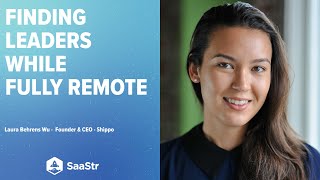
Shippo CEO Laura Behrens Wu and COO Catherine Stewart discuss hiring executives remotely during lockdown. They recommend a 30/60/90 day onboarding plan with daily check-ins, a CEO operating handbook to share decision-making style, and social activities to build trust before diving into the role.
Questions this video answers
Three (VP of Engineering, SVP of Product, and a C-level hire: COO Catherine Stewart).
For the COO search: The Cole Group. For product/dev searches: Riviera Partners.
"email lauraeshippo.com" (as transcribed).
Chapters
About hiring and onboarding leaders while being fully remote during a pandemic. It's a fairly specific talk. I didn't really imagine myself giving that.
It's also one of, I think my.
First times to give a talk fully remote. There is a little bit of lack of feedback which always makes it awkward to not be able to see the audience.
However, we're going to have a Q.
And A. I think part of at least 50% of this is supposed to be a Q and A. And for the Q and A, I've also brought in one of the execs, Kathryn Stewart, that I actually onboarded in the last six months. So feel free to have your questions tailored both at me but also at a leader who we just hired. If you have questions from that perspective as well, it should be a fairly dynamic Q and A. And feel free to drop the questions in as I'm talking and we'll take a look after 10 minutes when my talk is over.
Okay, so I think to get started.
Or even before I talk about my leadership team, let's bit of context here. So my name is Laura. I run a company called Shippo. And what we do at Shippo is that we power shipping for e commerce. And as you can imagine we've had a bunch of really incredible tailwinds in this new environment where everyone's shopping online more because of the shelter in place restrictions. And it's been quite transformative for the E commerce segment. And when we started this year, I think we had a, we had a leadership team in place like the three, the four top faces that you see on this slide. There are people who've been with the company for many years, My co founder who started the business with me and then two of our execs that have been around for three and two years respectively.
And then at the beginning of the.
Year I knew that there were a bunch of leadership hires I needed to make. What I didn't really know was that I had to make them like fully remote and really unable in a different process not being able to meet our new team members in person. So in the last six months I hired three new leadership team members for all like quite important functions of the business. We brought on a VP of engineering and SVP of product. We brought on our first C level hire, Catherine, who's going to be with me in our Q and A.
And we've been working together like with like all this entire group has been.
Working together fully remotely.
And I've been figuring out how to.
Onboard my new leadership team members fully remotely in the last six months. And Vinay, our vpn, I've actually never met him in person just yet. Catherine, I had the luxury to meet her before she but like at the very beginning of the interviewing process because that was pre shelter in place restrictions. But yes, it's been almost a fully remote hiring and onboarding process for all three of them.
So that's kind of where my learnings.
Are coming from that I will be sharing in this talk.
I think one of the things that I hear a lot of my other.
Founder friends talk about is like maybe it's not a good time to hire leaders at this point. Maybe we should wait, wait until this is over. And at the beginning of shelter in place I felt somewhat similar. I felt uncertain whether or not was a good time to hire leaders because of this onboarding challenge, but also because people are not necessarily looking to switch jobs given the amount of uncertainty. And pretty soon I realized that like uncertain time they call for strong leaders and to make it through this uncertain time and for our team to be happy and feeling reassured like it was just like we have to get the right leadership in place independent of all the other challenges going on around us. And I think the other like in the meantime what I've realized is also I think for everyone moving forward like this environment is just going to last. This is the new normal probably for another year, year and a half. So if you are looking to hire any kind of leaders into your leadership team, I think there's just no time to waste and you can't delay that. That's my general verdict at this point.
In terms of how we hired them, I think fairly straightforward.
And the majority of the talk I think is going to be focused on onboarding them. Like a few pointers around finding execs. I think generally it's always really good to go with a, with an exec recruiter to be able to fill the pipelines for all these three roles. We had exec recruiters goal was to have like three, four to travel pipeline and meet three, four new people every week. And that's really what exact recruiters are really strong for.
And then another pointer, I think that.
Is a little bit out of the boxes. You even though you can't meet your or because you can't meet your potential new team members in person, you just have to be a lot more rigorous in your screening process. So if you don't have a very deliberate hiring process figured out yet of like what are the values you want to screen for, what Are the who.
Is going to be a part of.
The interviewing process and so on. I think that's something to figure out in advance. And then last but not least, like, for Brandon, what I did was I actually did fly to Santa Barbara where he lives, in order to meet him in person and in order to have that final closing conversation in person. Even though there are a bunch of restrictions around shelter in place, if you can do it safely, I do think that in a closing conversation, being able to see the other person face to face can help get you over the finish line. So I think getting creative around existing restrictions and is something that can be interesting and can help you with that as well.
But as I said for today, I.
Mostly want to focus on onboarding because I do think onboarding is a real test.
Like, when you bring in a leader.
You'Re extremely excited about them, but how do you make sure you set them up for success? Especially given that every. You have an existing team of people that know each other and there are existing rules that exist, existing ways of interaction, and then you have new team members that don't know the existing team members, that there's a certain amount of trust that needs to be built. They need to figure out how to interact with your existing team members and so on. It's like onboarding is what I've been like. I, as a CEO, I've been spending the last six months mostly on onboarding our three new execs.
And to get started with that, I think there have been.
I was sitting down, I think this time, like, I tried to make onboarding as deliberate as possible also because there are no possibilities for us to, like, see each other face to face. So I tried to figure out, like.
What are, what are the goals for onboarding?
And I think these should be fairly straightforward and applicable to any company out there. So first of all, you want to really, like, build trust between yourself and the new executives, but also between your leadership team. So building trust, again, something that's much more easy to do when you can see each other in person, when you can read the body language. So you have to be very deliberate around figuring out how to do that over zoom.
And then the second one, quite important.
For me is like, I wanted to learn how my existing team, how my new execs think, and I wanted them to, like, know how I think. So I call that a mind meld. So making sure that we. It's not about thinking alike, really not expecting that. But, like, for people to know. Oh, like Laura would say, X, Y, And Z if she was in the room right now. And I wanted to get to a point where we have that sort of connection where they know how to how I think so that they can take that into account into decision making as well.
And then lastly I think there is how we do things at shpo, learning that, but then also like what it is that we do at Shippo or.
Any other company for that matter.
So I do expect execs to become experts in the subject matter or the industry that we're in. And for us it's the shipping industry. It's typically not something that people know a lot about but before they joined the company. So like learning to become experts. These are my three top goals for onboarding. Not just execs, probably everyone and then being quite deliberate around like what it is that we're trying to accomplish. And like good execs should have the ability to come up with 30, 60.
90 day plans by themselves.
And for every business it's probably different. But I think that the three buckets are in the first 30 days. I don't think anyone coming in should.
Be able to make any decisions.
They'd probably be a little too impulsive there. I call this the observational period where people come in and they observe what's going on. They may share their observations back with each other or with me and we have discussions around that in the observational period. It's also about relationship building, getting to know the right team members, the peers, the counterparts, their team. So starting to build trust between 30 and 60 days. I think some low hanging fruits should already start getting tackled. These are probably, yeah, whenever a leader.
Comes in they'll observe a bunch of.
Very low hanging fruits that they can go after. That should be quite straightforward and not very controversial. And then after that, after 60 days I think new leaders can actually start working on projects that will have an impact. So that's kind of my way of thinking and I think to, to just double click on the first 30 days or even first 30, 60, 90 days. I think because we've been remote and we can't really see each other in person. I've been quite deliberate around having meetings with our execs every single like our new execs every single day. It might seem like an overkill but that's really like the number one advice that I was, that I would give anyone like in the onboarding periods make make yourself available for 30, 45 minutes every single day where you're able to talk with your new team member in a Fairly unstructured environment. So when I say unstructured, I mean, like, there's no agenda. I don't expect an agenda. We just come in, we talk about what the new team member has experienced or learned or observed in the last 24 hours. And the main things I'm trying to achieve here is I'm trying to this mind meld part, trying to establish the mind meld, but also try to establish a relationship where people feel comfortable talking with me about anything that's on their minds, to be able to have the foundation of that moving forward so that they know they can come to me with anything, no matter how important or unimportant it is, and hopefully get to a relationship where we can have similar conversations after the onboarding period and where people can just pop by virtually, which I think is much harder to do. Normally, people don't want to schedule a meeting unless there's actually something important going on. I want to break the ice by having those discussions every single day in the first 60, 90 days. So that's been really, really beneficial for me. The other one, even before, given that I was hiring three team members into a leadership team, I took the time to write out an operating handbook. I think that advice came from Claire from Stripe, where you should as a CEO, I think there's something that you can reuse many times in your future, but writing down just how you operate, what triggers you, what builds trust for you, what scares you, how you like working with other team members and having that in a Google Doc that you can then share out with your existing team, with your new team members. And maybe things change. You may want to add to it as you go as you discover more things about yourself. But it's been a nice exercise for me to just be a little intro perspective and think about what's worked and what hasn't worked in the last four or five years of running this company, and how I want people to interact with me. There is one book that I've been reading about onboarding and team building that I can also recommend to most people. It's a fairly tiny book. It's called the Five Dysfunctions of a Team. And I think what's interesting about this is just like that the foundation here is really absence of trust. So unless there's trust between you and your leadership team or the leadership team members among each other, nothing can be accomplished. That's just the basis here. And so in the next few slides, I want to talk about how we've tried to establish trust. Yeah. How we've tried to establish trust as a leadership team and it feels somewhat awkward. Like a few weeks ago I asked around on Twitter, but also within my friend group of like, what are things, games or social activities that people are doing with each other over zoom that are not feeling extremely awkward? And there were a good amount of recommendations. And it starts from having virtual zoom dinners to cooking food together, to making cocktails together. And we started trying out a few of these. And I think one of the activities that has worked the best so far is actually I found a list of 200 questions that people used to get to know each other, added a bunch of my own questions to it, and then started like sitting down for lunch and actually going through a bunch of these questions with our team members, with our new exec team. And it's a group activity, so people get together, chat about the questions that they want to answer. Often involves or gets into a bunch of storytelling. And I think the point I'm trying to make is it's not necessarily a one size fits all activity. The bigger point is something you have to be fairly deliberate around making time for trust, for building trust. And the activities, they might feel a little awkward or forced, like forced fun, but at least the activities that we've played together, they turn out to be a lot more fun than expected. And it's more of a you won't know until you try. And even though it feels awkward to try, there is, there's no way around like spending social time with each other, even if that has to be over zoom these days. Yeah. And then I think there are a bunch of these activities that I've initiated as the CEO. But then I've also really tried making sure that our team members individually get time to be very deliberate around getting to know each other. And that's been my, one of my main prompts to each exec in our team, making sure that they do spend.
The time to get to know their counterparts.
And be it a virtual brunch or an in person brunch, whatever it is that they can do, the company is supportive and wants to help them organize them. Lastly, I think given that you're hiring execs, one of the upside is also that they're fairly senior and they should be able to contribute as well. One of the mistakes that I've made as a, as a founder in the past has been that I thought I need to have all of the answers and that I'm the one who needs to figure this out. Given that there's really no playbook around, like, how to onboard execs during a pandemic, I found just. It is quite sometimes, like, given that you're onboarding senior team members, it is totally fine to like, sit down with them and ask them, like, how do.
You get onboarded the best?
Like, what are you looking for? How do you establish an emotional connection or trust with other team members and ask them to help contribute and brainstorm as well? It does not have to be you, the founder, to have an answer to all of this, given that it's an absolutely unprecedented situation. And for me, I think we're coming.
To the end of this. But to wrap this up for me.
What I've realized, how people can build trust, and this is also my operating handbook, is if people are. It's a fairly straightforward process. But, like, if you tell me what you're going to do and then you do what you told me you'd do, and then you tell me you've done it with an outcome, I think that is like, this kind of feedback loop has worked phenomenally well for me. It might be a personal thing, but.
I thought I'd share it because it's.
I think, one of the most common ways to build trust with team members. Yeah, yeah. Lastly, I mean, before we get into the Q and A with me and Catherine, I think I was nervous about hiring team members during our shelter in place because how do you know if you're going to get along? How do you know if you can.
Work with each other if you've never met them?
I would, in hindsight, I would not like it's making such a difference. So even though it's strange to do, I would not delay hiring. I think if there are two things to take away from this. From this meeting or from this talk, I think do not delay hiring. And when you do hire your new execs, make sure that you carve out an hour every day to talk with them about anything that's going on. It doesn't matter what. But just like you need to spend deliberate time on this and given that you don't see each other in person, make sure that you have it scheduled on your calendar to talk over zoom. Yeah, I think, yeah, these are my key takeaways. But let's. Let's go into Q and A and let's see how much time we have left. I will stop screen sharing to be able to see your questions. Okay, I am in the questions now. By the way, let me quickly introduce Katherine as well. Catherine's video just came on. So Katherine is the COO we just hired just by just hired I mean four months ago. So it's been a little bit she's seen through her onboarding and also see me onboard other execs. So that is the context here. Let's see. I'm looking at the first question. Can you share the names in the companies of executive search recruiters you used? Yes, of course. So for our COO search we used the Cole Group and for our product dev searches we used Riviera Partners and we were very happy with both. Yes. And then that also answers the question after that, what are your thoughts on the advantages and disadvantages of more wait things are moving of more condescend onboarding two to three days versus a more spread out experience over a week or two.
Oh great.
I think this is a question that Katherine and I can answer together because it affects the experience of the person being onboarded. Do you want to start?
Sure, I'd be happy to. I think onboarding is a process and even if you do try to condense will take time. I don't think it's something you can start and finish in just a few days. I think there are advantages to doing certain things up front, to essentially front load some of the most important interactions and conversations and to focus on some of that team building that Laura mentioned in her talk earlier. But I think there's no substitute as well for continuing to touch base on a regular cadence because as things come up in the work environment, it's very helpful to make sure that you're on the same page and that you're fully aligned. Laura, what would you add?
Yeah, no, I would agree that onboarding is. I wish it was done in a day or two, but I think given the observational stuff, I've seen that a lot like as people get to know other team members, just observations come up that they then want to discuss or process. And discussing those observations together has been incredibly helpful. And it's just going to take at least 30 to 60 days for people to get to know everything that's going on. So I think there's unfortunately no shortcut to that. Honestly, if you take an hour a day to talk to your new execs, this is at least for me, it has been a very fun experience as well. And that kind of also tells you.
Whether or not you've hired the right person.
You should enjoy talking to that person.
As much as possible.
Okay, could you speak a little bit more about what your CEO operating handbook contains? Any examples you can point to and yes, There is an example I think in a Lot Guild's high Growth handbook there is one chapter that Claire from Stripe wrote and she wrote it about her own operating handbook. So I think you can go there and check hers out. What mine contains, I think it's things about like just what builds trust with you, like, and how, how do you want to, how do you deal with conflicts or how do you want to deal with conflicts? How, how do you act in, in situations of stress and being just spelling those out of like how, how you operate what, what, how you've seen yourself react and then common mistakes that you make, just some of your weaknesses that other people can be aware of, where they can step in or where they can expect to have to support you.
I would love to add how impressed I was by Laura's self knowledge. So in the category of things that was very helpful to me within the first few days, reading Laura's own assessment of how she worked in her style and her preferences was not only practical and useful, but also quite trust inspiring on my side because it's pretty special to work for somebody who knows themselves that well. And it also inspired me to do something similar for my reports because when you're an, when you're an exec being onboarded, you're also onboarding a number of other people, all of your direct reports at the same time. They may be new, they may not be new to the company, but they're new to you. So there's still that process of getting to know you. And so one of the things I borrowed from Lara Style was also characterizing myself and how others might want to relate to me as we all got used to working together in this new environment.
So I'll take one more question and then we need to wrap up. So there was a question about like can you share a link of the list of 200 questions? And I can for sure share a link. To be completely honest, it's not a very serious exercise. So all I did was googling questions to get to know each other. And one of the links that came up was a Women's Health link that had a bunch of very cheesy questions about getting to know each other, starting from your favorite Halloween outfit or your favorite Halloween costume to what is your. If you had an exotic pet, what would that be?
And it was not meant, it's not an academic exercise.
It was just about getting to know each other. And we had a bunch of very interesting responses to that. And the specific game we played was we all got into the same zoom room over lunch. Everyone had lunch and I had this list of questions copied into a Google Doc. And then we said, let's choose three questions for every team member and ask them that. And ideally they don't. Those questions are not. You can't answer them with yes or no. They're written in a way that you have to tell a little bit of a personal story about that. So that was the specific game. I can share a link to that, but you can just Google those as well. Fairly easy to find then, if you want to. So I'm told I need to wrap up now. If you want to get in touch with more questions, you can email lauraeshippo.com for your questions. And I think that's it. I think all I need to do is now end the meeting. So thank you so much for attending. I'm really sorry that there's no guide to onboarding and hiring execs during a pandemic that's been published just yet. So we're making things up as we go, and I hope this was helpful to you guys in any possible way.
Thank you both, and we will see everyone at the next session.










