Fireside Chat: Steve Lucas CEO of Marketo & Harry Stebbings
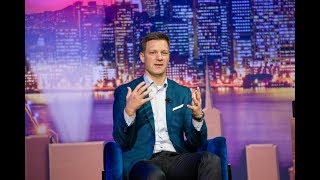
Fireside chat between Steve Lucas (CEO of Marketo) and Harry Stebbings covering Lucas’s career path (notably Salesforce and SAP), leadership style and personal vulnerability (type 1 diabetes), and Marketo’s strategic direction. Major themes: the highly fragmented martech landscape and likely consolidation; product vs platform tradeoffs and the importance of large TAMs; architectural choices (Marketo’s move to Google Cloud, re-architecture on Spanner) to serve enterprise customers; shifting focus from CRM (management) to customer engagement (CEM); pragmatic AI adoption—solve discrete marketing problems today with a larger AI vision; and the rising importance of the CMO as Chief Engagement/Experience Officer.
Questions this video answers
September 24, 2018
About 1,400 employees.
Grew from about $800 million to about $4 billion in license revenue over seven years.
Diagnosed at age 24; said he was 45 at the time of the talk.
Decision to move Marketo to Google Cloud Platform, re-architecting on Spanner; planned to sell about 7,000 servers and estimated roughly $350 million in capex/opex over the next five years if they had not moved.
Chapters
Please welcome harry stebbings, podcaster at the 20 minute vc and saster and steve lucas, CEO of marketo.
Welcome, Steve.
Wow, this is full on talk show, isn't it?
Just I'm under the desk.
It's awesome, man.
Well, thank you so much for joining. Such a terrible British accent for half an hour.
Excellent.
I'd love to kick off today with a little bit about you and how you came to be CEO of Marketo and really that entrance into this very wonderful world.
Okay. Well, I mean I borderline obsessed with Marketo and the whole marketing automation and martech segment. It's massive. But prior to Marketo, I was at SAP for seven years running their platform group which was products like Hana all the way to analytics. And we, we grew that over seven years from about 800 million to 4 billion ish in license revenue. So good job. And for me, I think it felt like a calling to get back a little bit to my roots to a slightly smaller company. That's not saying much because there's a lot of smaller companies than SAP, but also a high desire to be CEO. I kind of felt like you get to that point in your career where you just feel too comfortable and you're like, you know what? I am too comfortable today. I need to put everything at risk in my entire life.
I don't think I've got that yet, Steve. I'm going to be.
Yeah. I prefaced the news to my wife with this is not a midlife crisis, but. And she was completely supportive. So it's great.
I'd love to hear that kind of building SAP to that 4 billion mark and then moving kind of to market. What were the learnings that you took from kind of that move to Marketo and having had that experience at SAP?
Yeah, first of all, let me turn the logo out because apparently that's important brand recognition. So. Well, I think a lot of things. I think number one, and I learned this lesson not just at SAP, I learned it@salesforce.com and I have to take my hat off to Mr. Benioff because I think my life changing experience for me was my time at Salesforce. Mark is a master of relevance. He knows how to be relevant to his customers. And it's something that I spent a lot of time focusing on at SAP. Was not talking about your products and how excited you are about what you're thinking about, but what are your customers thinking about, understanding their pain and ultimately how are they going to be successful because it is not the thing that you have. Because at the end of the day, that's just a tool. It's the thing to get to the thing. Right, that quote from Halt and Catch Fire. But it's, but it's about making your customer wildly successful. And I learned that lesson over and over and over again, certainly at Salesforce, practiced it at SAP, and also learned, I think a little bit differently, that I'm a big believer in accessibility. And it's one of the things that, and this is not an indictment against larger companies, but when you run a company or run a division of a company where there's billions of dollars and you're getting all these emails and twee and things on LinkedIn and just, you know, mass hysteria kind of a thing, I actually love that, you know, some of my employees that work for me now don't love that, but I do. I love the connective tissue that we live in, you know, is surrounding us in this world. I love that I can get connected from somebody half a world away that's got a great idea and he just wants to be able to reach me and talk to me and I'm inspired by her or him. And I love that. I love being accessible and I think that the world of the inaccessible, self elevated CEO, it's gotta go away.
Sorry, it's completely off schedule here. That kind of accessible CEO.
Well, you're in the desk, I'm in the desk.
But in terms of that accessible CEO, one thing that always really intrigues me is kind of vulnerability and transparency within the role of CEO without being too transparent and vulnerable. How do you think about that with hundreds and thousands of employees? How many employees?
Marketo, we have about 1400 employees.
So how do you kind of balance that kind of human, vulnerable CEO with then the ever present strong leader that we're always presented with?
Well, I think that it's a fine line to walk. Right. But there's nothing wrong with being human. So I was diagnosed with type 1 diabetes when I was 24 years old and I'm 45 now. And it was a unique experience for me because it was life altering in that a. I realized I'm not perfect. And even though my wife reminded me constantly that I'm not. But number one and number two, you do a lot of contemplation about other people. You know, how can you better empathize? I'll tell you, if I, you know, I've had it for 21 years, I'm a member of the board of the American Diabetes association, that kind of thing. I consider it my greatest gift if you will, or blessing in life, because it forced me to think about people other than myself. And frankly, I was like, I'm on track. This is what I'm doing. I'll be CEO. You guys get out of my way. I'm focused. Like, we're doing this thing. And that was a big pause moment for me in my life to really think about everything from mortality to whatever. And the reality is I've had so many amazing experiences by not letting a chronic illness like type 1 diabetes, which can be perceived as a weakness, People like to hide those things. They do. And I think it's a strength because I'm inspired by people that have overcome, you know, really hard things, that have beaten obstacles, and those are the people that inspire me. And all of us have those challenges in our lives. We all do. And so for me, I think if anything, I've been. It has forced me to empathize more. And I think I'm, you know, I've become a better person because of the people that have come into my life because of this.
Yeah, absolutely. I mean, making the very seamless transition from kind of mortality to the Martech landscape, by the way.
But I still feel I am, as a very sensitive person.
Absolutely.
Yeah, it's right here.
But making that seamless transition. I want to start, say, kind of with the proliferated landscape, the 5,000 vendors that we now have in Martech. You look at the map. It's quite simply astonishing. So talk to me about that and starting from kind of the meta. How do you think about that when you see such a vast array today?
Well, I mean, you said it. I mean, the Martech landscape. So marketing technology, whether it's B2B or B2C, is ridiculously fractured. It is 5,000 plus vendors, basically. There's, you know, and part of the beauty of cloud is that there's a very low cost to entry. I literally, several months ago, had a CEO of a company that is building ad tech for smartwatches, call me up and try and sell me the company. And so that's when I knew, like, okay, we've lost our stuff here a little bit in Martech. If we're getting down to that level of ridiculous granularity in terms of what people are building, there's undoubtedly going to be consolidation. There has to be. You can't have. I mean, most of these companies aren't even. They're not companies. They're barely products. They're probably features. But there's this massive influx of investment into Martech and We're starting to see some interesting trends in terms of, you know, revenue come out of those companies. But consolidation has to happen.
Can I ask, how do you differentiate between a product company and maybe a kind of core systems of record potential company? Is there that kind of inflection point between the two?
Yeah.
And can one start as a product company and then kind of expand that suite?
Yeah, I think it starts with kind of what's your vision and what are you trying to solve? And the reality is that I think that the reason you have 5,000 plus martech companies is that they're not trying to solve something big enough. The temptation is just too easy to go to B2C and do something in ad tech. There's too much of that. And I think what we need is. We need. The reality is that we need the world's engineers, and even in this country, so not just the world's engineers, but even in this country, we need to be focused on inventing incredibly highly valuable solutions for the world. I think. Look, I'm not knocking. Yay, Snapchat. I love it. The little. Not the prairie dog. It's not a prairie dog. It's the meerkat. No, it's not the meerkat. What's the little cat that's out on the wild? You know, it's like a cat, but it's not a cat. You know what I'm talking about?
The iPad app, the talking.
No, no, in Snapchat, the one filter. It's. Anyway, there's some cat filter. Terrific. But the thing is, like, there's enough Snapchats. The reality is that to build lasting, meaningful value, what the Martech landscape, frankly, is missing is real product. And companies that have a strong vision, where they're obsessed with. With the customer solving a real problem for the marketer. Not another cat filter. And when you do that, when you're obsessed over your customer, the marketer, and you intimately understand their problems, their challenges, things like, I have now 50 different apps in my Martech landscape. How do I even get these things to talk to each other and get a single view of the customer? But when you understand the plight of the marketer and you're solving that, you create real value. And so I think that part of it is just the company orientation around. Do you have a strong vision? Are you trying to drive and create real value? And how many concentric circles out are you in terms of the bigness of your vision and what you're trying to solve?
One thing that always kind of intrigues me with vision is kind of, you've got the piece Thiel in one segment, sometimes talking about kind of hyperlocal in the early days and really focusing on kind of nailing that small niche. And then you also want to have the big vision. And so when pitching investors and for kind of early stage founders, how do you get that balance of attracting that big vision, but also not being too big vision, so to speak?
Yeah, well, I think that you can, I mean first of all, you should never be afraid or fear being tactical, right? But at the end of the day, you have to start with a big story. And I think that it's thinking about where is the world going, where is it headed? And like when I. So I'll translate this into early stage in a minute. When I think about the world of where marketing is headed, what marketers need, I truly believe, and I believe this like it's deep rooted, that we are headed to a time and a place and a world where the marketer will kind of merge with the machine, if you will. And I'm not obsessed over this isn't like I'm trying to be buzzword compliant and say AI too much. But I do believe that the marketer is, we're gonna be in this just kind of almost renaissance, if you will, renewal where the marketer will be able to leverage the machine to intimately connect with individuals aided by a machine. Because the hard part for the marketer today is this is how do I personally connect with every one of my. Not 500 customers or 500,000 or even 5 million. It could be 50 million now. So personalized experiences at scale, massive challenge. Now if you translate that into I'm an early stage company and how do I create a big vision, but not too big. I think the balance is, it starts with understanding the problem, clearly articulating your TAM or total addressable market. Like if you take a look at, and I'm not knocking markets, I'll just be radically transparent. It's one of Marketo's values. If you look at a market like abm account based marketing, super hot right now. Everybody likes saying it like, and anyone that was doing marketing, they just put account in front of it now based. And suddenly it's like they're charging twice what they were yesterday because it's account based now. But really what have you done to make that change? The reality is, is that the total addressable market right now for ABM's $300 million, $200 million, it's not that big. But yet you see all These companies rushing in as ABM and ABM and abm. If you take a step back from that and say, well, what's the total addressable market for just say B2B marketing kind of platform as a case in point, which is a little bit bigger, it's about $14 billion. Right. So I think it's making sure that your vision matches up with a tam. And also we know TAM expands over time, but making sure that you have the connectedness with your customer intimately to understand how things are gonna break. Because, yeah, ABM's hot today, but will it be relevant two years from now, or will that just be a feature that is part of lots of platforms?
You speak about kind of connectedness with customers. It kind of makes me interested in terms of whether founders should start SMB and scale up to enterprise. Well, enterprise and scale down, obviously both are challenging, but especially kind of at scale, managing SMB relationships with generally a lot more is traditionally challenging. How do you think about that? And for founders debating whether to start enterprise with higher ACVs compared to a much wider SMB market, how would you think about that today?
Well, it's always easier to start small. It is small in terms of number of clients, small in terms of SMB. Because the reality is it's architectures for, you know, kind of either B2C or SM. Let's take SMB. Forget B2B. B2C. Architectures for products that serve small to medium businesses have to be able to scale out massively. They don't have to scale up massively. That's generally the way it works. And it's the exact opposite for an enterprise type. Technology needs to be able to scale up massively and eventually scale out massively. It's just easier to start for the SMB. But I see, I think that there's this just temptation to kind of start an SMB and then just go, we'll figure out this scalability thing. And I can assure you, you know, like Marketo, we just went through a massive RE platform. I've been at the company about a year and a half and came in and made a decision to move the entirety of Marketo to Google Cloud platform. Now, first and foremost, that's actually gonna save Marketo, which is kind of a good thing, hundreds of millions of dollars over the next several years. So that's great in and of itself, but we had to make that move and get off of the architecture that Marketa was on if we were going to really meet the needs of our largest enterprise customers like Google. As a customer, Facebook, that kind of thing. And so for us that it's just, it's so, so easy to make that choice. My only counsel to people out there that are building solutions is don't just think about, we'll get it in market and we'll solve the architecture for the enterprise tomorrow. If that's where you see your product going, you need to have conversations with people that have been there, that have walked that path, that have gone through the pain. And it is painful. Moving from an SMB oriented architecture to an enterprise architecture. Build that into your plan.
Can I ask, with such a kind of transformational decision, what does that decision making process look like for you internally with the dilemma presented?
I mean it was not, that's not something that you make a decision around lightly. And the short version of the story is when I came into Marketo, I asked a simple question. It was my third day on the job, I was like, hey all you guys, how's it going? What are we looking at in terms of our infrastructure investment over the next five years? We're what does that look like? Did some homework, came back and we own all of our server infrastructure today. That's why we're making the move. So we're gonna be selling about 7,000 servers on eBay coming up here pretty quick. But when we looked at that, what came back to me was, well, I'm probably gonna spend around $350 million over the next five years. Capex and opex. So after I got up off the floor, I said, okay, it's time for us to move the company to this new 2017, 2017 thing going on with Google, Amazon, Microsoft, and we looked at all the different technologies, gcp, aws, Azure, and they all are great platforms, all have their clear benefits. It was fairly clear seeing this convergence between ad tech and martech, that's definitely a trend. That's where the puck is going. That Google was undoubtedly the right partner for Marketo. So, so beyond that, I mean the financials are kind of stark, but it really wasn't the financials because Azure could have been compelling for a lot of reasons, but our technology really aligned well to Google. We're re architecting on Spanner and a bunch of other interesting things. And so for us, that as well as it's a much shorter drive down the 101 just added up.
Yeah, no, absolutely. We kind of started on the martech landscape, kind of drilling down one layer deeper. We were chatting before and you said that CRMs, maybe you don't feel that they're complete, so to speak. I'd love to hear kind of your thoughts on that and why you feel there's still progression within the CRM landscape.
Yeah, I just think the acronym's wrong.
Okay. Why?
Well, customer relationship management. Like, so you're managing your. You're telling your customer, I'm going to manage you. Like, if somebody called you up and said, hi, how are you? I'm about to manage you, I would.
Say, hello, Jason Lemkin.
There you go. Or in a relationship, I don't want to be managed, I want to be engaged. There's a huge difference between the two. And I think that there has been this massive shift in, in the needs and wants of buyers. This is all of us, we're all buyers. We buy things we don't want to be sold to. When's the last time you got up in the morning, you're like, I gotta check Gmail. I gotta check Gmail so I can delete 47 emails that I don't want. It's so irrelevant these days. And, you know, so spam is just kind of like this passe, you know, blah, blah. We just kind of gloss over it. But it's astounding how many companies still don't get it. They're just like, you know what, just going to keep emailing you until you buy something. I'm going to sell to you, I'm going to market to you. But we want to be engaged with. We want to feel like the companies that we do business with, they understand who we are, they value us. They understand my personal preferences. They understand that just because I bought a baby carrier doesn't mean that we're expecting a baby. Or just because I bought a tent doesn't mean I like camping. I hate camping.
So do I. Yeah.
Camping for me is like the whole reason we don't camp anymore is because beds were invented. So the reality is, but yet I've been marketed to from this one company, I won't say who it is that all like camping gear. And they will not stop. And I've unsubscribed. It's like, stop. So we've got to transition to what I would consider to be customer engagement, not customer relationship management. It doesn't mean CRM is wrong. CRM, amazing system of record. It's just incomplete. And so I think you're going to see this transition from CRM to cem. If we need to come up with an acronym. I don't know if we need to, but I'd like some credit for it if it's used. But the reality is that the companies that will win will be the ones that can, of course, engage human to human. That's not going away. But as we scale, I mean, as companies, we just reached unprecedented scale today. And you know, you start to have, you have to ask yourself not how am I going to engage with maybe the 500 customers I have today, but how am I going to keep that level of personal engagement when I have 500,000 or 5 million or beyond? And you need systems, platforms, technologies, yes, like what marketo's building. But our vision is not automate email. Our vision is not you tweet something, we auto respond, that's nothing. Our vision is to build a system which is what we're delivering, that understands who you are, what you value, why you do the things that you do. And instead of sending you 200,000 emails this year, is send you one. But that one is so valuable, you want that email. It's a pull model. I want, want to be engaged. And there are companies out there that are doing some really brilliant things with that. Last month I got two emails from Netflix. Two. That was it. And those two were very relevant. They were like, hey man, you should watch Narcos and you should watch Halt and Catch Fire. So it was like, okay, you know, because seems that whatever the algorithm is, is clearly, you know, figured out my brain. They're terrific, loved them. And I was like, wow. So I actually pay attention to those communities communications because they mean something to me.
So you mentioned AI earlier as the buzzword. Is that then the kind of true integration of AI where it can create that highly engaged relationship with the customer at mass scale?
Well, yeah, and, yeah. And the thing though, to be careful of is I think today there's, you know, there's this temptation where so everybody builds. Here's what I have viewed as the standardized play for artificial intelligence which was launched by IBM, right? They built something, they named it Watson. And so then now everybody builds something and then they name it something. Right? So you've got. And so I have refused to name our AI technology anything. It's just AI and it's gonna, I'm sorry, I just, I can't do it. But I think that the, the play of building something that is sort of like ambiguous and then you name it doesn't create value. I still, and I'm not knocking IBM, but I haven't showed up in the doctor's office yet. Like, I've seen the commercial, right, where Watson's talking to the doctor. I haven't seen that yet in my doctor's office, so that'll be cool when it happens. What I think we need to do is focus on very discreet problems, like build a big vision for AI, but focus on discrete problems or opportunities. So a great case in point is for marketers that run very complex processes or workflows to retain their top customers. That's a thing. It's a very common thing. We have customers that have human defined processes that run in marketo with literally like 2000 steps to them. If this happens, do that. It's all rules based. It's all human defined. And we've introduced some AI technology that reduces the effort to change and modify that campaign to be more relevant to you over time. And that solves a very specific problem or addresses an acute need, raises the relevance, and that's just the beginning. So I think the challenge is that we've got this big grand thinking and we're gonna have this one AI thing and then it's gonna tell us that the solution is like in Hitchhiker's Guide to the Galaxy is gonna be like 42 and then it's gonna be anticlimactic. And we need to get to the point where we're solving very specific, acute needs today with a larger vision for how we piece all these things together. But look, AI is the game changer. It is coming. Sorry. It's here. And especially in marketing, whether it's predictive lead scoring or it's content creation, where it's personalizing content on demand, it's here, it's happening. Two or three years from now, AI will be the dominant tool, not just in marketing, but certainly the dominant tool in the front office. It will be people. I don't think anybody sees it coming. And it's going to be massive.
Last question before we do a quick fire. And you said about kind of the dominant tool in the front office. With the ever increasing importance on everything that we've discussed today and reaching that customer and being highly engaged, how do you view the role of the CMO in the coming years as potentially the most important in the C suite? Would you agree with that?
Oh, well, I agree with it for sure. I partly have to because I'm the CMO or CEO of a marketing company. But beyond the obligation, look, there's two kinds of CEOs. There's CEOs that view their CMO as go generate leads. And I'm gonna hit you with a standard. Until you generate more leads. That is The CEO failing, not just the cmo, but the entirety of the marketing organization and frankly the world. Then there's the CMOs that partner directly with the CMO. They're almost the second CEO. They're the chief Engagement Officer. And that's the CMO that is curating and architecting the experience of the customer. Because that's what it's about. It's about curating, architecting, meeting the customer on their terms, not yours. And the onus is on businesses today to meet the customer wherever they are in their journey. A couple facts. So number of studies have been done that show that the, you know, not even 10 years ago, five years ago, the number of touch points that a customer would go out and research on you as a company before they ever talked to your salesperson was four. That's up to six now. And it's going to continue going. So we have this trend going up that means the marketer has to engage, curate experience way before salespeople ever talk to them because they made up their mind beforehand. That's the reality of the whether it's B2C or B2B selling environment that we live in. But here's what's at odds with that. If you look at the research from Korn Ferry, the tenure of the CMO is the shortest in the C suite. So it makes no sense whatsoever to say to the cmo, I need you to drive experience and transformation and be my business partner, but I'm probably going to fire you in 18 months. It doesn't make any sense at all. So we need CEOs to step up to the plate, elevate the CMO to the Chief Engagement Officer or Chief Experience Officer and really commit to that long term.
Okay, so we have three minutes. I want to do a quick firearm with you now. So I say a short statement. You give me your immediate thoughts. Okay, let's see how we can do in three minutes. So management upgrades the most important role of CEO. Agree or disagree?
Agree.
Why?
It is not about the CEO. The character of the company is defined by the leadership team. We've seen too many companies out there that are, you know, with, we'll just say unfortunate behavior, especially in the tech world. And the reality is, is that if that was just the CEO, that's an easy fix. We have to, leaders have to lead. And it starts with the CEO.
What keeps you up at night, Steve? What are the big thoughts in your head?
Well, if I take Ambien, nothing keeps me up. I can tell you like I am out. But And I just. Wherever I am in 8 hours is where I'm going to wake up. But what keeps me up at night is, are we relevant? That question plagues me all the time. I'm obsessed with, are we relevant to our customer?
What signifies that is. That is revenue kind of.
I don't think revenue has anything to do with it, actually. I mean, it's a great. That's a good thing. And I've thought through that. I think it's a question of, you know, if it's a question of share of mind, share of heart, it's part of that, but it's also something that can be. So first of all, you need to constantly measure, measure, measure, measure, ask questions around your relevance of your, you know, to your customer. Are we relevant? Like, my question to you is, how many of you have, you know, called up 10 of your customers, customers every month and said, are we relevant to you? Such a powerful question. And we don't ask it enough. But there's layers to that. It's like a parfait. You just keep. I haven't found the bottom of the parfait yet. Or cake.
And then, final one that I have to ask. What do you know now that you wish you'd known when you started?
Started?
Well, you can choose a couple. It could be started on the first day of Marchetta. It could have been. Been started at SAP. It could have been started in your first day in sas. But what do you know now that you wish you'd known at one of those points?
You know, I say this a lot. It's a little, you know, phrase of mine. Be brave, be fast, be bold. Right. You know, ultimately, you know, fortune rewards the brave and the bold. It does. It's been around for a while, but anytime I've worked at any company where someone that I'm working with is about people. Because great companies are about great people. They're not technically about great software. It's about great people. That's what makes companies sing. It doesn't matter who you are or where you are. When I came to Marketo, it was very clear to me, I'm the new CEO. Not everybody was all in. And the reality is, is that I would encourage, you know, for anybody out there is just ask people, be direct with them, be straight. Are you in? Are you in on this journey with me? Are we in it together? Right. Find the people that are passionate about, that are saying yes, that are leaning in, and give them big problems to solve, give them big opportunities to chase and do it. Fast. Don't wait for the people that are like, I don't know, I'm sitting on it. Don't wait for those people to come around and say, yes, don't. And if I could go back in time, even just a year and a half ago, I'd tell myself, go faster.
Well, I think on the theme of go faster and fortune favors the bold. Thank you so much for today. It was such a pleasure.
That's a great chat. Thank you.
Thank you so much.










