Fireside Chat: To Be Funded or Not to Be Funded
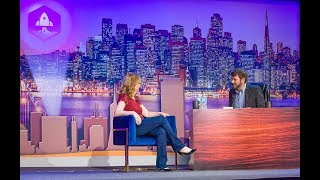
Amy Pressman, co-founder of Medallia, ran the company without VC for a decade after 2001, building discipline and hiring engineers in Buenos Aires. When mobile and social media exploded customer demand, she took Sequoia funding in 2011. Pressman weighs the trade-offs: bootstrapping enforces creativity, but VC lets you scale fast.
Questions this video answers
They pitched Hilton on September 10 (the next day was 9/11).
2011.
July 2015.
About $1.25 billion post-money.
$155 million.
Chapters
Please welcome Teddy Schleifer, senior reporter at Recode, and Amy Pressman, co founder and president of Medallia. Hi everyone. Can everyone hear me? Okay, so we're here today to talk about funding in venture capital and what it's like to be funded or not funded. Amy has a really interesting story because her company didn't accept any venture capital for about a decade. And then later on it's taken on, I think four or five rounds since. So we'll get into what it was like to be on both sides of that. We'll kind of start from, you know, we'll start what it's like to not be funded. Okay, so what was it like? I mean, obviously there was a 10 year period where, you know, your cash position was not from an adventure capital firm, it was not from an investment, was not from SoftBank.
Right.
Just from you and just from what you're able to do with your own two hands. What was that experience like? And what was, was it ever challenging?
It's always challenging. So just to give a little context, and I'm the president and co founder of Medallia. We're in the customer experience management space. And the original idea for the company came from wanting to, from my experience as a consultant traveling to hotels. So we were targeting hotels and we had planned to raise funding and the day we were simultaneously starting to reach out to investors and we were pitching a proof of concept pilot with a number of hotel chains. And so on September 10th we went to Hilton hotels and we pitched a free pilot and we came back and it was 9 11. So the decision of whether we were going to get funding or not, sort of, we didn't bother to pursue it at that point. And especially since we were targeting the hospitality industry, 911 was obviously pretty, pretty tough economically and it was particularly tough for the hospitality industry.
Gotcha. And so was there ever a moment in the opening, I guess, decade where you felt that because you hadn't raised venture capital that you were at some sort of disadvantage or was it just watch, especially from a competitive perspective. Obviously you're an industry where, and you're here in California where a lot of businesses do receive VCC funding, which gives them.
Yeah, I would say there were advantages and disadvantages. So the advantage was we had a lot of control over how we spent our time and our resources. At the time that we started sort of with the dot com implosion. It turned out that a lot of things that had previously been very expensive like office space and furniture and hiring people became much more Plentiful. So even though it looked like a bad time to be bootstrapped, it turned out to be reasonably good. I think the disadvantage is name recognition. I think when you get a top tier VC backing you, that gives you an instant credibility. You've been vetted and now we didn't have that vetting. We didn't find that so much in sales cycles in part because we were targeting this industry that was really hard hit by 911 and they were open to us not so much because we were technology and better, but because we represented a real cost savings and they were in a real, they were facing a real sort of top economic environment. But so I think there were pros and cons of being in that non funded stage.
Yeah, on name recognition, I mean a lot of founders say that they have an entree to certain people because they have Andreessen, Horowitz or Sequoia behind them. Did you ever feel there were people you couldn't get access to and you had no one to really turn to in order to make a certain connection happen? Did you have to develop a network of, you know, vc, like people around you to get to know the Valley in a way that you didn't because you couldn't call up?
You know, I think we had to be more creative in two areas I think, and I don't know how much the VCs would have helped us, but we had to get creative of how we got entree to our customers. We didn't have a sales team for a very long time. We had to get really creative about how we got engineering talent because at the time it was sort of pretty ipo Google, they were vacuuming up engineering talent. And so we did some really creative things. We basically opened offices in other parts of the world where we had local knowledge that other companies weren't going to. We currently have a very large engineering office in Buenos Aires and that's been really great for us. But we had to get really creative. And I think if we had had that VC funding we might have been in the more typical swim lanes. But, but I think it's a real advantage to be pushed to find other solutions and not just be in the swim lanes.
Is there an example of a time when you felt like you had to dig deep and do something personally more difficult, that if you had a venture capital fund behind you would have been easy? Was there a moment that you sort of felt, wow, I really am all on my own.
I didn't. And the reason that I didn't is I Didn't have anything to compare it to. So. So by the time we took VC funding, we were at a different stage. But when we were in that startup stage, I don't even know what our investors have been phenomenal. Sequoia is our backer, but I don't know what kind of help they would have given us when we were in that early stage versus the help they've given us in the later stage. I just don't have a. Yeah, sure.
So lots of venture capitalists would say the reason why their portfolio companies need their money and their advice is because of the ambition that they're trying to build. They're trying to build companies that are not just going to make incremental changes and make small impacts in the world, but the reason they need a lot of money when they're risky ideas is because they have big dreams. So if I were to play counterpoint here, a venture capitalist would say by not accepting VC money, you're building a less ambitious company. Did you feel that your ambitions changed? Do you feel that in that 10 year period when you weren't taking venture capital that you had different kind of imaginations of what your company would become?
No. I mean, just keep in mind that 10 year period included both the dot com bubble burst and then the Great Recession. And I think that our ambitions were always what they were. But one of the things that we observed during the dot com bubble burst is a whole bunch of ideas that were really good ideas died and then they came back like seven, eight years later. So the timing for putting all that investment in it wasn't quite right. And so one of the things that we did is we started having inbound interest in investing in this not that long after we really started getting traction with customers. And we would evaluate it and we would look at it and say, okay, is there something that if we don't take 10, 20, $50 million, is there some opportunity that in this market right now we're going to miss? And we would ask ourselves that question repeatedly. And that was why in 2011 we finally decided to take money. Because at that point it was sort of pre ipo, Facebook, everything was social media. Everything was very frothy around all things social media. And our customers were feeling there was a sea change in how our customers, which are typically Fortune 500 companies, they were seeing that their customer relationships and what customers were saying about them out on social media was their brand. And so the dollar started flowing more into like how do we make sure we're showing up in social Media. And we have a phenomenal solution to help companies deliver against their brand promise and to deliver the customer experience. And so we saw the demand for our software take off and that was the time we started to take money from investors. And then we were like kids who had had their nose pressed to the candy store. There you go. We went back.
We'll get to that.
3.
But was. You know, you also speak with some founders today, and I think there's a newfound realization of the fact that obviously when you take money from a venture capitalist, you're giving up some ownership in the company that you started with. Was that something you thought about at the time? Were you thinking, I understand, you know, you were starting out and there was, it seems like there was a bit of happenstance that you didn't take venture capital funding early on. But is that something you think about? Is that something you think, you know, budding entrepreneurs should think about? The fact that if you're building a company, you're not just getting, you know, 10 million bucks in the bank for nothing, you're giving up, you know, some equity in your own company, Was that important to you? And do you think that for people out there building companies today, not that everyone's in it to make a billion dollars, but that should be a consideration?
I think you really want to think about. How do I think you want to think about what you want to do with your company? There are people that just want to run a company and they want it to, to. They don't want to grow it that big or whatever. We saw a huge market opportunity. We wanted to grow it large. And I wasn't so worried about giving up ownership. At the end of the day, if you're going to grow something large, you're going to have a lot of stakeholders, you're going to have your investors, you're going to have your employees, and you want. And they will have some share in the company. So I think what was a little scary is that during the time that we were bootstrapped, I was a member of a co founder group and I was the only one or one of two who was bootstrapped. And everybody else had investors and we would get together once a month and talk about issues and I would talk about things in the business and moving into new verticals and new product and whatever we were facing. And everybody else was talking about board dynamics and problems with their investors. And so I was weaned on these sort of horror stories. And so you get really, really fearful of it. But at the end of the day. In our experience, this hasn't just been about getting capital from an investor. We, we are a materially better company because of our partnership with our investors.
Right. So I think is truly also remarkable about this story is when you hear about a lot of companies that are bootstrapped today, lots of them are not based in Silicon Valley. You know, you hear about companies, you know, we get pitches about, you know, cover My company that. That's based in Chicago. We've had no. We don't even know what a venture capitalist is. You know, aren't we fascinating? I'm just curious if the geography was, you know, a player here. I mean, obviously you, you probably knew, you know, VCs. It's not like you didn't know where to find them. And you know, your company is in Palo Alto. Right. So it's not like you didn't know where to find them.
Right.
To what extent do you think that it was harder to not raise venture capital just being in this community?
Well, it's really expensive and. But one of the things that it forced us to do is get really creative about, you know, real estate. We have our first direct lease with a landlord today in our entire history. It forces you to get really creative about furnishing your spaces, how to find people, how to identify untapped pools of talent. Because it is expensive here. But the other thing is, early on, we were really. It really makes you focus when it's an expensive area, it makes you focus on products that your customers love. And that is a great way to get really successful because, I mean, it is so clearly your lifeline. I think when you have more resources, it's easier to get somewhat disconnected from that because you have a Runway. Right. But it's like whether you're going to make payroll depends on whether you're delivering great products and services. So it made us so clear in our focus.
Right.
Yeah.
So tell me about. So then, you know, your 2001, 2011, you have a decade of being bootstrapped. What changed in 2011 was the. By that point, you'd been, you know, you'd existed for 10 years. Was the process easier because, you know, you weren't, you weren't, you know, just out of Y Combinator and look.
Yeah, we got something like five term sheets from some of the top investors in different categories of investors. I mean, it is if you're out there and you're constantly pitching and it's really hard. I mean, it was not difficult. I mean, we put up our slide of customers we put up our retention rate, we put our expansion rate, and you know, and we like, we really had a lot of choices. So that's another reason that it's a really great thing.
And what caused you to change your mind? I mean, it had been 10 years you had.
We felt at that moment that if we didn't grow faster, if we grew organically, the market was going to grow much faster and we wouldn't be able to seize that market because social media was driving up the demand for our product.
Right. And that wasn't true in 2006, 2008.
I mean, you have the iPhone coming in what, 2008. I mean, all this stuff really started to come into being in 2010, 2011. So that was perfect timing for us.
And so did you feel like you felt like there was an opportunity cost to not taking cash?
Absolutely.
That there would be some other company that would do that would take those chances.
And nature hates a vacuum. If we didn't go for it, then somebody else would.
Right. Did the money change your business at all? I mean, did it obviously you now have. You were wired some money one day that you didn't have the previous day. Did it? I understand and I hear a lot of founders talk about the discipline that is instilled by not taking venture early on. I guess I'm asking, is it accurate that money does affect your discipline in our case, or do you think because you had 10 years of really not being lazy about financial decisions that it made it easier to take the money?
I think it was both. I think if it's ingrained in you, I mean, we just moved into a brand new office space and I'm still scouring like consignment stores for furniture for parts, that is driving the designers crazy. So that's part of like that sort of bootstrap background. But one of the things I look back on that I might have done differently, I think we would have built out maybe our finance team a little bit faster and put in place controls for that. I think map better with our really quick growth. Because when you have the money in the bank and you're growing like that, I think there was some erosion of some of that early discipline.
There was some.
There was some. Not entirely, but there was some. Yeah.
And that's just. Is there anything you regret, you wish you had done differently, or is that.
Just kind of spent less money on travel?
Is that just the nature of having money? I mean, the fact that when there's something in the bank, you know, it's just It's a human kind of impulse to want to.
I think it's a combination of that and this and the pace of our growth. And what we took the money to do was to build out, to accelerate our product roadmap and to build out our, you know, a real sort of enterprise grade sales team. And then you've just got a lot of people out there traveling, whatever. I mean, there's just a lot of. So we just needed, at the same time that we were doing that, it would have behooved us to put more finance in place at the same time to make sure our financial controls, excuse me, were keeping pace with the growth.
Got it. So one other thing that's unusual about Amy is so when they started taking money in 2011, I believe so it's four straight rounds that have been funded or led by Sequoia and it sounds like it was all Sequoia. All Sequoia, All Sequoia. Was that an intentional decision that you made four times in a row or was this Sequoia realized? I know you don't speak for them, but was this them realizing they had a great thing on their hands and they don't want anyone else let in?
Yeah, well, I'll let Sequoia speak for themselves. But I mean, you know, as we took in the money and we, you know, because we believed that there was a huge growth opportunity and that proved to be the case then, you know, then we continued to go back to the trough. Our last funding round was in July 2015.
Yeah.
Two and a half years.
So during those four rounds, were you conducting a, what's called a process where you were, you know, opening it up to not just Sequoia, but other people.
Or was it, you know, we were. We've. I'm like such a fan of Sequoia that. No, we didn't.
You didn't?
Yeah, we had a lot of, you know, because we had gone out once and all those invest. We'd gotten term sheets and all those.
For your first.
For the first.
Of the first round.
For the first round. And, you know, they kept tabs on us and we certainly had continued to have inbound interest, but we had such a good partnership and that we just. And it takes time. Right. Like you can spend your time focusing on maybe moving your valuation up a little bit more and getting a little bit more money or whatever. We wanted to focus on the business.
You're talking about the time. Focus on actually raising money.
Yeah. If you went out to multiple investors. So why do that when we had a really great investor and.
Yeah, right. I mean, do you think there's any disadvantages? I mean, so there are no venture capitalists under Guy's board beyond Sequoia.
That's right.
I assume beyond people, you know, socially, the investors you're dealing with are from Sequoia. Do you ever worry about like a lack of diversity of feedback, a lack of diversity of opinion? Just knowing that if Sequoia has great advice, you're in great shape. But if there's someone who could give you a second opinion on something, they're not really at the table, at least among venture capitalists.
No, I haven't worried about that. I mean we do, we certainly have. Both me and my co founder went to the business school here at Stanford. We have a network of VC friends, we have really good board members beyond that and I have a network of other advisors, mentors. So. No, I haven't, I haven't.
Yeah, talk about that.
And maybe I'm having flashbacks to that co founder group that I was a part of when people talked about the board dynamics, the investor dynamics.
You only have one and we just.
Haven'T had those problems. So.
Yeah, right. Talk a little about your board has probably more independence than a lot of other companies have. Was that at all related to the funding decisions? At the time you said you had three or four independents, right?
Yeah, it's just me, my co founder and one member from Sequoia on the board.
Got it. And was any of that, did you want to have more? I guess my question is, was the large number of independent directors on your board at all related to the fact that there was no other venture capital? Did you want to have more counter amounts?
I think if you take a lot of rounds from a number of VCs, then you're going to end up with, with more investors on your board. And when we're thinking about how to add board members, we're really thinking about who can give us really great advice, who's gonna add real value. And I've been very happy with the members that we've had on the board.
Yeah, yeah. So your last round was in 2015 and you guys crossed a billion dollars. So I just wanna ask about valuation.
Our last valuation was at that 2015, it was like one 1.25 post and we've grown a lot since then.
Sure. So I have two questions here. One just for people here, there's sort of an allergy to talking about valuations and obviously as companies get bigger and people like reporters are good at their jobs, at figuring it out. Was that important to you when you. I know some venture capitalists.
No, we have super clean terms. I mean a lot of people in order to get a valuation will, will take some really nasty terms. And to me what's really important is creating a company that is aligned as possible as it can be. And so when you have cleaner terms, you have a much more alignment between the management team and the investors and the company. So I think what's really important is getting what you feel is a fair valuation with investors that you think are going to great and then focusing your time on building the business and focusing your time on getting a higher on paper valuation I think is a waste of time and not particularly helpful To.
A certain extent though. I mean there are employees out there who I'm sure you think about hiring who Google the company and say this company is valued at this last time if I have shares not I could be rich. But it doesn't hurt. Right in the pitch.
Yeah, first of all, we were already a unicorn and we're like number seven in the top private SaaS companies in the last year. So we were already large. But ultimately I want to hire people who are really excited about the market opportunity, about what we're doing for customers and about where this can go in the next year, in the next five years, in the next 10 years. I think we have an opportunity to have an enormous company in a really huge market. And if the person is laser focused on whether the valuation is slightly higher or lower, I don't know if that's the right fit. Anyway, I want people on the boat who are really focused on growing that company.
Right. Going back to the. We're kind of bridging these two topics now, but on Sequoia and valuations, I mean, I guess one counter argument to the fact about not running a big process is you can't shop it. Right. There's no idea. Like maybe Sequoia would have said, actually we're thinking about where you value it at X. And you would have said, well I think we're valued at 1.25 billion. I mean is that. How do you come up with your opinion of what your company is worth when there's not really the proverbial walk down Sand Hill Road and see what numbers people throw at you?
Yeah, I think when you get to a certain size there are actually public companies that are smaller than we are. So there's some available data. You know, I feel pretty comfortable that we had a good and fair valuation when we did that and we didn't have to go through a lengthy process where you suddenly are divulging all kinds of information to a whole bunch of people up and down Sand Hill Road. I think ultimately it was a great decision.
Yeah. So you guys have not raised since 2015. Why is that? Is that. I mean, 2.5 years is not unusual, but it's.
We took a large round.
All your large round.
It was a large round. 155 million in 2015.
Got it. And there's been no additional fundraising since then. Is that. That's intentional. That's because you guys feel like you don't need the money. I'm just thinking back to, you know, obviously at the beginning of your career, Medallia, I mean, you didn't. You felt like you didn't need the money, so you were able to not raise. I mean, is that sort of the same position you're in now where you had a ton of money for the.
We are not making comments about our future plans.
Right.
But the.
But the fact that you haven't, over the last two and a half years, you felt you have not needed to raise cash, and that's been easy, or has that been a difficult decision at all?
That's been fine. Yeah.
Got it. Do you anticipate. Now we get to the newsmaking part of this interview. Do you anticipate. Obviously, we're not going to talk about future plans, which is the appropriate pat answer here. Do you anticipate ever raising private financing again? Is that something that we're not commenting on?
Future plans.
Okay.
But I appreciate your persistence.
Sure. I got a whole notebook here of the exact same question.
You wouldn't be doing your job if you didn't.
Let's talk about, though, about public markets in general. Do you. We'll back into it. No, I'm serious, though. I mean, do you feel. Do you feel that, you know, obviously a lot of SaaS, companies that, you know, are, you know, bankers at least, will always say this is a good IPO year, but they say it every year. How do you feel about, you know, you know, if the topic is, you know, private financing here, how do you look at public markets? Does that worry you at all? Are you excited about when you look at it in the big picture?
I think we will continue to do what we've always done, which is to look at where we want to go and what the available options are, and then pick the one that makes the most sense in any given market.
Right. You think more entrepreneurs should be excited about Going public. I mean, there's obviously some LPs who want to see their portfolio, their VCs portfolio companies do that. But there's been. Obviously it's been written about to death. Some people are scared and I think. I just wonder to what extent you had an unusual funding history here, Silicon Valley. I wonder to what extent you think that fear is merited or is that something that people should be.
And you're talking about fear of entrepreneurs now, particularly in this time, or just.
Over the course of being entrepreneurs, companies staying private longer. Just the.
Yeah, there are different opinions about it.
I mean, OK, just in general here, I want to ask about SoftBank, because obviously they played a huge role in private financing and we talk about being funded. There are companies out there that have taken cash from them lots of times at lot higher round size than anticipated. I just wonder if someone who's been. Has an interesting view of how money moves here in Silicon Valley. Do you think they're forced for good here? Do you think that they're making an impact?
I don't want to make any comment on SoftBank.
No comment on SoftBank. All right, last thing. I know this is important to you, that the idea that your story you feel like is instructive for other entrepreneurs. To what extent do you think that's true? To what extent do you think that the fact about not taking venture capital for a decade in your career, for a decade in the company's growth, and then taking a lot of cash only 10 years in, to what extent do you think that's a story about your company versus someone else's company, you know, today? Like, is that. Is that a message you want to send to folks?
I guess you feel it's possible? I do think. I think it's always possible. And I really, you know, the uncle of somebody I knew was a very, very successful entrepreneur, once said this thing that's become my mantra and said the definition of an entrepreneur is someone who gets motivated by the word no. And essentially what you're doing is you're solving hard problems that haven't been solved before, and starting a company in Silicon Valley with the cost of real estate and the war on talent and all this kind of stuff that's going on. It's hard, but it's solvable. And there's a lot of really creative things that you can do. For example, we never did this, but I know companies that have taken money from their various government agencies. You can get money for free. You have to do. You have to do their reporting requirements. And things like this, but you essentially can get a grant that has no strings attached, so you're not losing. So there's stuff you can do. And so I would really encourage everybody who's thinking about it. If you think you can only start it with money, do the thought exercise of what might it take to do it without money? What are the things I would give up on? What were the things I would focus on? What I think you'll find is you'll get really focused on what's important, and you will be surprised at how much you like, how much you thought you couldn't do without money that you actually can do. We got very creative. One of the, you know, the biggest costs in my recollection was the legal costs when we were getting started. You know, they. They don't really scale with the size of the company, so they're not a big issue today. But in the beginning, it's just like the cost of lawyers and some of these things that we had to do to put, you know, put in place a stock option plan and all this kind of stuff, get incorporated and found super creative ways to really drive down the cost of legal costs. So there's just a ton of stuff you can do. And I think if you think that starting a company is about getting funding, then you gotta reorient and think the purpose of starting a company is to create products and services that customers want to buy. And funding is a way to do that. But there are other ways that you can, you know, get. You can get some financing. So I don't know. I just. I really encourage people to get creative in how they think about it because it opens up a lot of possibilities.
Do a lot of people come to you with this question? A lot of people know your story and say, like, hey, you know, I just got, you know, bajillion dollars thrown at me by this sovereign wealth fund. You know, is this something that you. Do you want to be more, you know, is this something you want to kind of tell people that? Do you want to be a resource and you want to be a role model for the idea that this isn't the only option?
For sure. And, you know, and look, I've had a phenomenal experience with investors. I think they've been great, but part of the reason it's been great is we have the ability to choose the investor that we thought was the best fit for us.
So you have a little bit more leverage, maybe.
Yeah, for sure. So if anybody wants to start a company and think about some ideas, about how to do it without taking funding. Chock full of them.
Cool.
Yeah.
All right, guys. Thanks so much. Thanks, Amy.










