Founder Confidential, Featuring SaaStr Venture Partner Laura Bilazarian | SaaStr Software Community
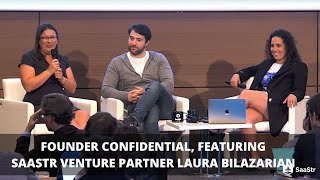
Edith Harbaugh from LaunchDarkly and Abukar Said from Bimari walk through early fundraising: how they scraped together seed money, ran roadshows for later rounds, and negotiated term sheets. They discuss managing dilution against runway and working with strategic investors.
Chapters
Hey, guys. Where I have two of my favorite founder friends who have raised a lot of money and both creating categories. So there's some challenges in that that they can share. I'm going to pass the mic to them to introduce themselves, their companies, how much they've raised and then we're going to get into the gory off the record, although it looks like we're on record details of how they actually did that. Not the VC version, but the founder founder version. So.
Thanks, Laura. We started Bimari about five years ago, so we do everything from talent attraction, content management, lead generation, all the way through to engagement and retention. So we help very large enterprises, kind of the Fortune 100, Fortune 500, solve talent challenges. We have raised $40 million to date in three funding rounds, including Index Ventures, EQT and Microsoft.
I'm Edith Harba. I'm CEO and co founder of LaunchDarkly. We are a feature management platform that helps software teams all over the world seamlessly deliver and control their code. It's great to be here at Saster Europe because one of our very early customers was Typeforming and we also have customers like Slido who's doing the screen questions. Now we target also bigger enterprises like BMW. So we've raised about $77 million USD over the past five years of the company. It was a struggle at the beginning and I remember celebrating with my co founder when we would get a $5,000 or $10,000 check from Angels. So it was definitely not always easy.
Let's go into that a little bit. So your first round, you really had to almost in some way hack it. Talk to me about the process of talking to people, what your targets were, and how you eventually hacked that round together.
Yeah. So I have a theory for fundraising that it's about three things. It's about team, dream and traction. So the team is your early team, the dream is the category, and your traction is how much you've accomplished. And it was hard for us in the beginning because the team was myself and my co founder, who are both pretty shy engineers. Our dream was this completely new category that nobody really understood and we had zero traction.
And so how many meetings did you have? How did you get meetings? How did you eventually pierce through sort of the endless process?
Yeah. So I'm an engineer, so I took it like a project. Like I made a list of everybody I know that had money. It was kind of a reverse Santa Claus and it was just everybody I knew that had money. Like old bosses, Old bosses, bosses, people I met and I very systematically worked my way through the list and I would set up a half an hour meeting with them and if the meeting went well, I would ask for money.
And so you heard a lot of no's. How did that affect you then and how do you think about it now?
The nos were really hard. I had my spreadsheet and what I did was when somebody said no, I would take their name and I would put it at the bottom and I change it to gray. So that way it was still there in tracking, but it wouldn't look me in the face every day when I opened up the sheet. Now, with hindsight, I take the nose a lot less personally. Many people who turned us down now say they regret it.
Abukar, why don't you? I think you done a really good job raising from both Europe and the US or at least using that dynamic to your benefit. Why don't you walk us through maybe your Series A or how you approach that? Or B.
Well, actually I was going to firstly echo our early stage fundraising story as well. So we started, actually we got into this accelerator program in New York called AngelPad and had this like, yay, we're going to New York to start a company. Then four months later did a demo day in San Francisco. And you know, you have this whole like, my entire life has culminated in doing this demo day. It's going to be amazing. And then nothing happens. Like, no one approached this stuff at demo day. No one wanted to talk to us. And so we then kind of did kind of a similar approach where we tried to message kind of any founder that we knew through like third degree connections. And we managed to get like 85 meetings in the space of six weeks. And again, nothing happened. No one gave us any money. And so I remember distinctly, so my co founder is my brother and we would go to Sandhill Road, get a car. The car would cost like a hundred dollars a day. It was like we couldn't even afford to get the car. And so we would drive there, drive back. And I remember listening, for some reason, we were always listening to Tupac and Biggie Smalls on the drive back. I just associate those songs now with failing to fundraise. And so, yeah, it was super depressing, actually. It was really difficult. So we were going back to London, basically tails between our legs, about $50 in our bank account. And then I did exactly what you did, where I just called up my old bosses, friends and family and we were scrapping 25k at a time. And so after like 9 months of fundraising. I scrapped together $300,000, and we managed to last it out. And so we actually had kind of. And Laura keeps making fun of me for this. We had our seed round essentially happen where at a conference at Web Summit in Dublin, I was approached by this Polish investor. I'm like, I have no idea who this person is. Could be a complete joker. Turns out to be a really good investor. And so we ended up going to Warsaw as, like, a Hail Mary again with, like, about to run out of money. So me and my brother get into this room in Warsaw. No Windows 12. Dude, no one speaks English. And we basically have, like, a Smoke and Mirrors demo. And then after an hour of no one asking a single question, we walk out and we're like, well, that's it. We've run out of money. And the guy runs out being like, yes, we're giving you a million dollars. And I was like, I don't believe you. Like, are you really giving me a million dollars? And so that was, like, the first time we actually had a proper term sheet for something. And it felt kind of the most surreal thing ever. And so I can keep saying, and.
I make fun of you, but that's the reason I make fun of him is I was in recruiting tech at the same time at a similar stage, and I also got approached by this person, and I didn't believe it either. And our lawyers connected us for a reference, but they actually just stole our idea. So I did way worse than you did. So, Edith, just closing on that round, you got a certain amount of commitments, but it was less than what you had been telling people you needed. So how did you close that round?
Oh, man, this is giving me a little bit of ptsd.
It's good to get. All founders have ptsd whether you succeed or not.
So I think there's this myth that you get a lead and then all this magic happens. You get term sheets. I didn't get any term sheets. Like, I just went around to people and I had a spreadsheet full of soft commits. Like, people who said, I'll give you this much, I'll give you this much. I'll give you this much.
And then you actually ask people to be leads, and they, oh, yeah.
I went to one of our investors offices and I begged him. I was like, please be a lead. And he's like, nope, I'll give you 200k. But we don't lead, just as a matter of policy. So I'm looking at my spreadsheet. We have about Half of what we wanted to do. My co founder's like, this is killing you, you need to stop doing this. So I just sent out our convertible note to everybody and I declared a closing date. Like I said, hey, our closing date, I think I said, It's May 15th. Wire the money. And people started wiring the money. And then in the middle of this, I met somebody. And a similar story to you. You always get money when you don't need it. They're like, oh my gosh, your company is amazing. Can we lead you around? And I'm like, lead the round. The round is close, dude.
And so money begets money and you sort of have to do whatever you can to get that initial money. Look, globally, I guess is a theme into friends and founders. Things got better once you had traction? I assume. So how did you think about your, your next round or a later round?
As many of you who are probably especially doing the enterprise software side, traction seems impossible in the beginning. Like it took us three years to get any revenue whatsoever because the product, we couldn't sell it to a large enterprise at all. Whereas with. You make fun of me for everything I say. I've just remembered that Laura makes fun of me for every strategy I talk about. So I basically have this tactic now which I use in later rounds where I do kind of sequences of roadshows, essentially where I call it the pre, pre meetings, the pre meetings and then the actual meetings. And so for example, about six months before fundraising, I start going to investors just to kind of tell them what we're doing and where we are. And then you're not fundraising. They say, send me a deck. I'm like, there's no deck. We're not fundraising. I'm just having a meeting with you. Then three months before fundraising, you have another meeting again with no deck. And they're like, send me a deck. Do you want to fundraise? And I give them kind of high level metrics of where we're going to be, et cetera. And essentially what you're trying to do is get one of them to kind of say, well, we really want to lead you around. Send me your deck whenever you're ready, or something like that. And so you're trying to narrow it down from like 20 to maybe 10 to 15 that are hyper interested. And the moment you send them a deck, we'll actually start doing diligence. Obviously diligence means you have to have data points and a data room and everything else. And so if you do it correctly, we managed to Kind of try to be fairly aggressive here. You can then set a very specific timeline as to how quickly you want to raise because they know you for long enough. So what we did with our Series B round is we essentially, because of those sequences of meetings, the round itself took about five weeks in total, because then you kind of send your deck and you're like, so, are you ready? Do you want to take meetings? What do you want to do? And so. And we did that both in, in Europe and in the U.S. so I kind of did two weeks in. In Europe and two weeks in the.
U.S. and how did. Go ahead, Edith. You echo that experience or how did you. How did you choose your. Now that things are better, how did you choose your partner?
That's a good question. So I'm a big believer that people that believe in you deserve to have that credit. So in every round we've done, we went actually with the people that give the first to give us a term sheet because they actually have the kind of gusto and thoughtfulness to say, we believe in you. Here it is. And so they weren't necessarily always the most competitive. And when there were terms that we could have gotten better, we said, look, I still want to work with you, but we want slightly better terms. But every single time, the first ones to give us the term sheet.
So just to formulate that strategy, you got a term sheet, but you still got. You went through the process of getting the other term sheets because that enabled you to get the best deal with the first person who believed in you. Is that correct?
Yeah, absolutely. I mean, you don't know out of everyone who's going to give you the term sheet. But at the end, usually the strategy that you're talking about is true. Once someone does, everyone suddenly kind of gets off their asses and actually gives you one. But you're like, yeah, but you weren't the first. Right. So what took you so long.
Edith? I saw you nodding there a lot. Does this echo your experience or how has it been different?
Yeah, I mean, so to go back to team dream and traction, because fundraising had been so hard for us, we focused very much on actually making money, which is kind of old fashioned. We went out and got customers to buy our software and use it. And actually, I think the experience of getting so many nos was good for us to become salespeople because you're trying to convince people to buy something. You got to get used to hearing a ton of no's and also to take them as just a lot of times it was just a not now. So our fundraising strategy has always been make software that's used by a lot of people. That's a great product. We have 150% net retention, which is, I've heard, very good. And from that it gets easier to fundraise. So when we raised our A, we were basically cash flow positive. It was just that we wanted to grow faster and we could find a great investor who's actually giving a talk here later. Josh Stein from dfj.
Nice. I said something interesting there. You said you heard not nows and they were actually not nows. Like they turned to yeses later. It wasn't just someone blowing you off. How did that, how did that work?
So I have this strategy which is very similar to his, which is you're always raising, even if you're not raising. So I would get coffee with investors about once a quarter. No deck. Never take a deck. That just puts you like, it's like taking your resume to a job interview and just reading it aloud. It's not a good thing.
So you both abakar. Did you raise no deck too?
So for the actual raise itself, we use a deck, but it was like eight pages because at the end of the day they ask for specific data and you provide that in a data room. But the deck itself was about eight slides.
Cool. Yeah, we didn't put together a deck and so we were going to partner meetings.
Yeah, I raised my series A on our salesforce dashboard as well. That's a good tip. Makes you look organized. So you talked. You have a highly technical product. How did you think about which partner to approach? Or what did you, you know, what did you learn through trial and error?
I think at the beginning I approached it as everybody should get. What we were doing. The mind shift I got, which was very helpful, was you were trying to find the right person for you. Like everybody has money. It's who's whose money also comes with advice and a good working relationship. So that's why I would do the coffees every quarter or so before I really started raising. It was a two way street. Like you cannot really fire an investor, so you better like them and like it's fine and like, you know, if you disagree, but you should disagree in a healthy, productive way.
And you learned now that people have come to you and said, I'm sorry, I regret this. Some of the things were partnership dynamics or things like that. Can you talk about how you started to manage that partnership dynamics? The 80% rule?
Yeah. So what I discovered is that so just to walk through the dynamics of VCs, they're basically money managers. So there's a partnership of two to 10 partners and they are managing money for their LPs, the limited partnerships, which are pension funds, universities. Anytime a partner wants to make an investment, they have to convince everybody else in the partnership that this is a good idea. And what I really discovered was whether an investment can get done depends a lot on the position of this partner in the firm. So if you have a junior partner, they have to basically come up with the best company ever because they, they don't really get much benefit of the doubt if it's somebody more senior in the partnership, they basically can come up with something and it's just like, okay, this is your fine. What I've discovered is that the people who didn't fund in our early days, they still are huge fans of the company and what we're doing. I hung out with one of them yesterday and he's still somebody I consider kind of a shadow board member. It was just didn't have the, didn't have the, I call it the juice in the firm at the time because he was new to get it done.
Abhikar, any comments on partnerships partner selection?
Sure. I mean, so one of the other elements I would add is depending on the firm, they only do a very limited number of deals a year. So for example, majority of VC funds will do something like 20, 25 deals a year. So if you get a no, it's not necessarily because they don't like you or something else. It's they may have already deployed the capital they can deploy that year and there's just not enough good companies or time for them to do that. And so the other is what I find really interesting is spending a lot of time with people that get your business. Because, for example, in those kind of pre meetings, I figure out who actually understands very quickly what we're doing and who can get the market size and everything else. Because in later rounds, what becomes really important is that belief that you can be a really big company. And that belief doesn't happen from a deck. That belief doesn't happen from a single partner meeting. It happens from them having spent, you know, six to nine months looking at your market and really getting what you do. So if those people don't really get what you do, like we had companies, people asking us, like, how are you different from LinkedIn? I'm like, you really, really don't get what we're doing. And so those conversations kind of lead you to understand can they actually because they're essentially selling you like that partner in the firm has to then pitch you to their firm before you get to that partner meeting. And so if you don't believe that they're the right person to pitch you to their firm, then you shouldn't be spending time with them.
Also Avocart, sorry to stick with you. One thing you've done is you've taken a lot of money from Strategics actually that polish investors, if you think about it was a Strategic and then Workday and Microsoft. How have you thought about that and how have you I guess protected yourself in any ways from that?
So when strategics historically have had a really bad reputation they've had they give you really bad terms. They invest just to kind of give visibility what you're doing, copy your ideas. And so when we first talked to Strategics, our other investors were like, no, no, no, no, don't do it until much, much later. It's a really bad idea. And we've actually had quite the opposite experience. So our two main strategic investors today are Microsoft Ventures and Workday Ventures, which are very relevant for our industry because Microsoft owns LinkedIn and Workday is a strategic partner for us. And the important thing is to make sure that the way that they are investing is identical to the way that others would be. You don't get any special terms. There's no visibility, preemptive rights rofers, which is right or first refusal. So they haven't taken board seats. And the other thing is, especially on the west coast, investors want to be helpful to show you that they are useful. And so we actually, for example Workday became a customer and put us in their partner program way before they invested. And so for us that was kind of showing that them putting money where their mouth is.
Yeah, that's a good piece of advice. Is sometimes even talking strategics, they'll introduce you to the right people at the company. And so you can we use that at Saster with Salesforce and SAP so you can sort of get a sense of their roadmap and who the right person is at that company and get that meeting a lot earlier than you may have by trying to go in through another angle. All right, I'm going to go to these questions from the audience because I think that that's great. I think going, you know, you're a little bit further beyond a lot of people in the audience. Can we go back to angel investing advice.
As in how to raise from angels? Yeah, so I think angels, I think To Edith's point, it's all about team and dream. Right. And it's not even about dream as much. It is. They just believe in you because what you're, who you are and what you'll be doing changes. Like, we kind of slightly pivoted about six months in same industry, but a slightly different alteration of a product. And so it's people who you have a fundamental relationship with that would kind of back you no matter what you're doing. And it's. It's super hard because there is, obviously. So we didn't raise any money on, like, angel list. We tried. We really tried, but everyone that gave us money was people that knew us for a long time. For example, my old boss gave us our first check. So I think it was super hard because I was embarrassed to take that money. I'm sure you felt.
And probably to ask too.
I was embarrassed to ask, but it's like desperation led to that. And for example, one of our investors was my dad. And my dad basically kind of like sold his shirt to give us money. And I felt I couldn't let him down. So I think part of the story was what motivated me a lot is not letting down my angels because I felt like if I lose their money, then I couldn't look them in the face.
Got it. What about. Did you find it? Other than people who had known you previously, did you find any good angel channels?
I totally agree with him. I think people think of Angels as this generic entity when really it's people who know you well. It was again, my bosses, I led million dollar divisions at Concur, at Tripit, at Vignette, and so they gave me money. I would disagree, however, in that I was pretty firm in that I didn't take money from anybody who I didn't think could lose it.
Yeah. And would you have that conversation with them when they.
I just. I just didn't ask my parents because they don't. They don't have any money. But the one thing I do regret is there's people I didn't ask, and now they're a little mad sometimes.
Oh, really? That's funny.
Well, that company is worth a lot of money now.
I mean, they could have come to you, but. Yeah.
Yeah. And they're like, why didn't you ask?
Ask?
And they're a little offended.
I see. So that's a good thing to just. Just always ask. I raised a lot of money from Angels. I was an outsider to Silicon Valley, and I only had one rich boss, and I did Ask him. And he said he lost all 50 of his angel investments. So I don't know if he was being nice or didn't believe in me, but I learned from that process. But I found that, like, affinity networks were helpful. So we were an Armenian team. I found, like, the five arming in angel investors, and they invested. I found, like, people who had written blog posts about the manually about, like, what we were doing. I think I did what Abacar did, which is like, reach out to other founders and ask them who their angels are. Just saying this because not everyone has, like, a rich boss that's used to angel investing. And so I think you have to find some other areas, too.
One more thing to add. What actually really helped us was I got one angel who'd been my old boss at tripit, and then he got four other people who he knew.
Yes, that's right.
And because he could personally vouch and say, hey, Edith is great. Just put some money in.
Yeah, that's right. Because they don't want to do too much. They don't have time to do too much due diligence for a 50k check. So, yeah, that's good. And whenever anyone invests in you, ask them who the other rich people they know are that might be interested in this and then get the intro. And yes, you can kind of get four for one that way. I'm going to skip this diversity war going on up here on slido. But have you ever. Here's the thing. How have you squared the idea of always raising early, raising more than you need with minimizing dilution?
So advice I was given Is raise probably 30 to 50% more than what you think you need because you're always wrong in terms of what the amount you want to raise is. And so my general ethos on the company is I'm not very greedy in terms of ownership. I'm much more greedy in terms of how much value we can create for our people and our investors. And so my focus has been raised enough so that you think you can get to the next phase and then probably add another 30% on top.
How do you calculate enough?
So, I mean, in the early days, it's kind of like, what do you think it will take to get to, say, that MVP or that original product? And so we kind of thought, it'll take us a million dollars. And so we ended up raising two. Then it obviously ended up taking more than a million dollars, and we kind of scraped by the skin of our teeth. So I think enough is whatever you Think you're going to, for example, when you're making revenue and you have a sales team and everything else, you can kind of calculate the will be. Where does a dollar of funding take me in terms of how much growth I can create?
Yeah, you can answer that question.
So I mentor a fair amount of startups through my accelerator, Alchemist accelerator, and it seems the really early stage ones often get very fixated on dilution. And I think it's because it's just such a huge jump from going from I and my co founder own 100% to me and my co founder own some small fraction and they get really jittery. My saying back to them is 100% of zero is zero. People get really hung up on am I worth 7 million or 10 million in the early days. It doesn't really matter in the long term.
I want to combine these two questions for Abakar because I think you have great stories in both of them and I hope you'll tell this audience. But do US investors pay higher multiples than European VCs? And for you, your story has been amazing to watch. How do you handle the slow traction in enterprise, in valuation, in your AB round? And you have to tell this story, man.
So I'll start with the second one actually. So we had this kind of amazing catch 22 where we'd go to seed funds and Series A funds in London and with no revenue, we had kind of early beta customers and the seed funds would say, oh, you need like 30k mrr for us to invest. And we're like, how do we get 30k MRR? Our product is an enterprise product. And so no one actually, it made no sense. And then when we actually raised our Series A and we had like 50k mrr, seed funds would say, oh, it's too late for us. And it's like, it's a ridiculous paradox. And so I actually think Europe still to this day, even in SAS, only understands SMP SaaS. I think there are very, very few enterprise SaaS investors that because you have to invest without traction, you have to understand the product and the customers and everything else. And so that's why there are so few enterprise software companies being built in Europe, I think because of that. And so in terms of US versus European paying higher multiples. Absolutely. Actually that's. I've seen that's true and it's kind of an order of magnitude higher. So for example, when we got Series B timesheets in the us, European investors basically said we can't do that. This is ridiculous. And so we're like, well, great, we're not raising from you. So. And I think the question becomes more Europe, I think is still. Obviously there's a lot more capital than there was three or four years ago, but I think the dynamic in the US is different and there's a few funds that are starting to do that. So I think, especially in the later rounds, it matters a lot less where you are because you're getting global coverage. One thing that we've seen is, for example, in your Series A round, where you are located becomes really important. So the funds will tell us, look, we'll fund you, but you have to move to San Francisco. That's absurd. Why would I do that? Because the cost of capital and deploying and building a company like our series A was $5 million. That takes you nowhere in the US whereas we managed to actually build a 30 person team with that.
So you actually push back on that just like that.
Yeah, I refused to make some.
That was great. It's good pushback and that works. Edith, it was passed to you. What's the one thing you would do differently in the first round with the benefit of hindsight?
You know, I wish I'd asked a couple more people who were angels who are now a little, like I said, a little salty that I didn't ask them.
Was it just omission or were you, Was it insecurity? Like how.
Oh, a couple people, I just didn't realize. They're like, well, we would have given you some money. I had some money from Yahoo, or I had some money from this. And I just, I didn't think of them as people who would invest. So I never asked them.
Abhikar, how about you?
So I distinctly remember this meeting I had with a VC that shall remain nameless, where after pitching them for 45 minutes, they leaned back in their chair, looked at me and my brother and said, so before starting this, we worked in finance. And he's like, what are two Wall street guys doing starting a software company? Like, you're not people, self execs. You're not from Google. You didn't study computer science at Stanford. Go home. I was like, so taken aback. I kind of just wanted to walk out and slam the door. I think what would I do differently is we made a ton of mistakes in hindsight, built the wrong thing. And so I think deeply, deeply researching your customer base and what they're willing to pay. So we discovered there was this. There's a huge difference between minimum viable product versus minimum sellable product, and a minimal sellable product can be totally different. We got so many yeses. We built all these things that people said they wanted and then turns out they don't have budget for them because enterprises buy very differently. And so I think probably lost about a year building the wrong thing.
Awesome. Edith Abacar. Thank you. It sounds like traction solves all woes and you just got to get through that beginning period. Is that fair to say? Yeah.
Yeah, definitely.
Thanks.










