Founder Confidential: The Top Things No One Really Tells You About Scaling
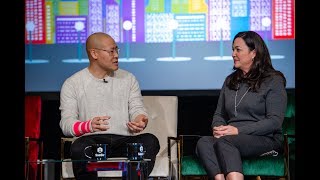
Doug Song of Duo Security and Jennifer Tejada of PagerDuty discuss what actually works when scaling. They share operational rituals like founder onboarding sessions and six-week board reports, emphasize hiring builders and growers alongside operators, and agree that the people closest to problems should make the calls.
Chapters
All right, at this time, we now have Doug song, duo security chief executive officer, and Jennifer Tejada, pager duty chief executive officer. Please welcome them to the stage.
Hi, guys. Oh, am I at the desk or you at the desk?
You want the green chair?
Let me sit there.
You should get the green chair. Alrighty.
Always wanted to be Jimmy Fallon.
Oh, like that. Oh, okay.
You wanna do this? This is uncomfortable.
That's weird.
Okay. Oh, I got the green chair.
Yes.
Hi.
Hello.
How are ya? We in the food coma zone Right after lunch maybe.
You guys awake?
Okay.
All right.
Well, there you go.
All right. Man, I thought Saster was just a blog. Amazing.
I'm not going to tell Jason you said that.
Well, I'm in Michigan. I don't get out a lot.
There you go. Go blue. So we learned before we got here that university of Michigan grads have taken over Saster. We were killing it. You just saw Jeff Lawson, also a Michigan grad. Doug and I both went to Michigan. Not at the same time, but, you know, have connected over. Our background from the midwest in school, but more recently we compare a lot of notes. We were introduced by a mutual friend and it started this relationship where we would just immediately get into all the challenges and problems we were solving for and some of the small victories. And we've learned a lot from each other over the last couple years. Is that fair?
Yeah, absolutely.
So I thought we would kick off by talking about philosophy. I think both Doug and I have found some common ground on the intentionality with which we've designed organizations in terms of the way we think about people, leadership scale from the board to the culture of the types of employees that we're recruiting and how we make the experience of being part of duo or part of pagerduty sort of career making, life changing experience. So why don't you share a little bit about your philosophy at duo?
All right, sure. Well, before we get into that, I just want to say I've known Jennifer since before either of us were unicorns. And frankly, I think we've always kind of had some mixed emotions about that destination and what it represents. But I do want to bring you a little bit of gift from.
Thank you. Oh, look, see, now it's true. Now it's real. No, thank you very much. I want to be in any club you're in.
So in terms of our philosophy, we decided to build a company from the start that would really go after the largest opportunity in our space. Right. And truth be told, I ran for security as an industry when I probably two companies ago because it just gotten so crazy, so crowded, 1200 vendors, a lot of customers who didn't know what was effective and they're buying stuff that they shouldn't. But we came back to it when we realized that with cloud, mobile, all this kind of stuff, there was a huge opportunity for us to rationalize all that. And so the thesis we always had as a company was how do we come back and decimate basically the market, right? Could we go and take a lot of these companies that were building kind of one feature products and kind of roll them up, roll up that value as part of a cloud delivered platform at scale and kind of become that same salesforce of security. And so for us it was always sort of a mindset that we wanted to go and take on the industry at large. Not specific competitors, not specific markets. But that colored everything from the very beginning. In order to do that we knew that we would have to found the company on different kind of principles and we really would take effectively a design kind of thesis to how we'd rearrange all that stuff. And so I think the guiding principles of what we start from, we're always there. And it kind of led from our strategy and product to the culture and the operations really behind how we would operate. How would disrupt product category after product category and entire industry to think about the consumerization of security in ways that I think in it had come just ahead of us. And so that was kind of the idea behind all this. And for me having Duo will have been the fourth company that was part of Insecurity the second I started. But the intention was for it to be our last and really think about building for the long term. I think one thing that maybe also a little bit different coming from Michigan was that most companies in Michigan, you know, the ones you've ever heard of, right. They tend to be very long lived, generational as I like to say. In the valley we generate lots of tech companies, but in Michigan we've generated lots of industries. Automotive, furniture, kitty litter, pizza delivery, I mean football. Football, yeah, we're getting back to that finally, Finally. But it's a longer term sort of thinking and I do think that when it comes to scale and kind of thinking about how we set up for where we're headed, having a North Star like that is so important. So I don't know what was your philosophy? What did you see in pay duty when you came? You could have done a lot of things. But what was interesting by that?
Well, I was really fortunate when I joined PagerDuty. Alex Solomon was the founder at the time, and he had made a decision to put the company ahead of his own personal ego and interests and bring in a leader who could scale the business. And, you know, oftentimes when a new leader comes into a business, they feel like they need to fix a lot of things, they feel like they need to change a lot of things to prove that it was the right thing to do. And I just found at Patriot, so many things about the business were going in the right direction. Like, there was such a very strong foundation, a deep interest in making the lives of our users better. And in many ways, PagerDuty is like a consumer company in that regard. You never heard people talk about our company customers. You heard people talk about our practitioners, our users. So our philosophy has always been to start with the user experience and solving problems for the user and trust that that is going to benefit the business and the company. And it means that it changes the way you think about design, it changes the way you think about culture, it changes who you invite to your summits, to speak, et cetera. You want people that are going to resonate with the folks that are doing the work and the work that's really important. And so it wasn't so much my philosophy. It was recognizing this strength that we needed to build on, that I wanted to make sure we didn't accidentally hurt.
Yeah. Having a purposeful culture, I think right, totally is so important, because the things that you do when you're small, I think I've heard said, you get amplified as you scale, but they also provide the guardrails for it in so many ways. And I feel like as we thought about why we existed, why we brought the company together to prevent others from harm and all this kind of thing, through all the gyrations and all the things we try, it was always going to be important to have, again, a very explicit culture of how we work with customers, of how we look at the business from the outside in. And I think, as you reference, do the right things by customers leading to the right things for the organization.
Totally.
I think the former coach of the 49ers, before we stole your last one with the Welch, I think he had had a book called the Score Will Take Care of Itself. And I've always believed that to be true if you did the right things for customers and so forth, that all good would come from that. And so those kind of things, I think, writ large, have continued to carry our business in ways that, again, customers can Connect with deeply, that we partner authentically with them, but also written in a way where as we onboard and bring other folks into the company at scale can follow those trails and adopt that as their mission, as their purpose in ways that are actually operational.
And I think how many of you are founders? Founders here. Ooh, see, that's so, so cool. Where the Cloud meets, apparently Saster Annual. One of the things that I think is really interesting about that is as you scale your business, you're going to bring on investors, you're going to bring on board members and advisors and influencers, and there's this very strong gravitational pull to try and please those people, to really understand their agendas and try and do right on their behalf. And I think one of the things that has set Duo apart for a long time is that just laser focus on getting it right for the customer and trusting that then everything will fall in place. We say this at work frequently. Get it right for the customer, get it right for employees, and everything else will come together the way it should. But you're going to feel that. You're going to feel that gravitational pull of investors comparing you to their other portfolio companies, of giving you help and advice in thinking about what you do next, and just keep that customer at the center of everything you're building and everything you're designing for.
So, so many ways. A lot of the operational practices of how we preserve the alignment of our organization toward those kind of goals, I think are things that it's interesting date back to the second year of our company, when we first started writing our culture decks and kind of understanding, which was when.
How long ago was the second year of your company?
2012.
2012. Okay.
Yeah. So some time ago. Hard to think back that far, but for us, it was a lot of that kind of stuff. What do we stand for? What are the pillars going to be of our business as we grow? Just like Amazon has these pillars of its business of wider selection, lowest prices, convenient delivery. What is the basis on which you really choose to compete in sometimes very crowded markets, but also some practices that would carry a lot of that forward. How many founders here still are involved in the onboarding of their employees? Right. So that's something that I still do. Right. Over 700 employees, we do onboarding orientation, and there's always a founder session where we catalog kind of all the decisions we've made and talk about that shared history and journey we've been through. And again, it's just important, I think, to impart that kind of orientation and Knowledge, other things that we had done also to get bored. Our board and other folks in line with our journey was to write a board report. And so all of you probably who have boards, probably write investor updates and so forth. But for us, every six weeks, and this is something I learned from Luke and he's over at Puppet, we would write a board report, three to five paragraphs for every department leader of all the plans, progress and problems in their business. And they would complain to me all the time like, oh, do we have to do this again? You know, it's been a month ago. I said, well, if you can't write to me, sort of an update, and not just for me, but for our team, because we shared the board report with the entire company in basically the span of an email, then you don't actually know what you're doing. You don't actually know what you've done or don't know what you need to do. And so we basically share that as a Google Doc with comments enabled for a board to have conversations with us and focus then our board meetings on the two or three topics of most strategic concerns. But those kind of things, practices, over time we built an entire sort of body of knowledge and practice that when we onboarded new employees, when I'd interview new executives, I'd give them the last eight every six weeks on an octave basis. I could just give them basically the last year's worth of history of the company, all the major successes, failures, learnings and see how they'd react or internalize and have a really meaningful discussion about this. But it was so useful in so many ways to capture a lot of that. But again, a lot of the things. I'm sure you have other practices that are similar, right? To sort of inculcate a team.
Definitely. I'm on the Puppet board and have been for several years, so I've been a consumer of that board report. And the thoughtfulness that goes into that ahead of time means that your board members come into the room already with a perspective of where the business is at and you can dig in and have a meaningful conversation about special topics that really require strategic thought that are going to have a big long term impact, et cetera, as opposed to spending all of your time on the operations tactics, the read through or the readout as a lot of people call it. So I think it's a great practice. I think every company has its own ceremonies and things that they do and they do very well. We both share green as our brand color and green tends to Stand out amongst a lot of the blue and the red that's out there. And our. Our Newtonians, as we call them, are very proud of their green. And I think engendering this idea of being proud of where you're from and what you do actually creates heavy responsibility on the leader because you've got to make sure that you continue to build a culture where the behaviors, not just the words on posters, not just the names of your cultural values, where the behaviors are going to. To demonstrate day after day, a place and a culture and an organization that your teams are proud of.
Right. Every company's gonna have those demotivational posters, like teamwork, all this kind of stuff. It's all the same stuff, but it is about the lived practices of how we put our values right into action. And I think you do have to create the space and the framework for that to happen. So other ways we would do border ports for us as leaders to be able to tell the company at large what we thought was important, but just as much, we needed ways to surface what was important across the org in the opposite direction. And so one of the ways we did that was maybe a little bit different, but we took it from a Jewish deli called Zingerman's down the street from San Ann Arbor. Those of you.
Oh, yeah, awesome.
Yeah, it's a force of nature. But anyway, Zingerman's has a cultural practice that we just stole called appreciation. So we open or close every large team meeting with three to five minutes of specific thanks. Right. Thanking each other for the things that we've seen each other do that have made the team successful. And we train on how to give feedback more generally. Right. Hearts, diamonds, spades, clubs. Hearts are positive, unspecific feedback. Diamonds are positive, specific feedback. Clubs are unspecific, critical feedback in similar ways. Spades are critical feedback. And spades, you always give them private. But diamonds, Diamonds, we want to be surfaced in public and all the time because that's how we actually model the behavior that we want to see. And in a company that's growing at Hypergrowth, where, as we say, we push decision making down with a similar kind of decision framework. Like I said, I don't care about the quality of any individual decision, but I care a lot about the quality of our decision process. We would make sure that every decision was guided by the same thing is the right thing for the customer, is the right, right thing for the company, is the right thing for our community. But at the end of the day, we would never. There was no way to stay on top of all the right decisions that were made and all the things that we would need to elevate and standardize in order to scale. And so by cusp by our employees actually thanking each other in a very public setting, we would actually surface that in ways that we would be able to crowdsource and understand. And so half of the challenge of scale, just staying on top of what's actually happening in your own organization. And certainly things like Slack have helped even before Slack every time.
How many Slack channels are you stalking on a given day?
I have no idea. But we have more Slack channels than people, right? And maybe organizations are the same. So it is hard to stay on top of everything. But at the end of the day, figuring out ways to surface all those nuggets of goodness, right? And again, level it up and make it repeatable is half the challenge of scale.
There are a lot of challenges to scale. I think that's why this has become such a popular event in and of itself. One of the things I think our companies had in common from an operational standpoint or have in common is the high velocity land motion, the flywheel effect in the expansion motion. And one of the things that I found when I came to pagerduty was in an industry where we're constantly looking for best practices that we can appreciate and copy and reapply, there weren't best practices that we could go just steal. If we tried to bring in kind of the oracle splunk elephant hunting motion, it didn't work for the way our users, who tended to be developers, wanted to engage with our product. And so we really had to build our own model. And it was a lot of experiments. We burned a lot of pancakes. But before we got it to sort of golden brown and we've got some of our go to market team here today. What were some of the biggest challenges you found in scaling that model? Particularly given you're not sitting in the center of the Valley? There's not 10 companies around you doing the exact same thing.
Well, to be frank, I saw sort of it as benefit because, you know, I joke about Sasser being just a blog, but for us that's what it was. I'd never been a SaaS. None of us have been.
Is this your first time to Sasser?
My first time to Sasser, yeah.
Let's give it up for Doug. Speaking of the first time Saster, Very.
Happy to be here. But I certainly read everything that Jason ever wrote. Like that was kind of the bible, right? We Called him Brother Lemkin. We kind of referred to a lot of what we ever read there, but just as much, we read like David Cummings, we read David Kellogg, we read Tom tangoose, we read Alex Clayton, we read. So just like venture capital, all this stuff has been demystified. It's no longer the realm of the black arts. And so that's where we sort of got a lot of our kind of grounding, talking to a lot of other founders. Right. Was where we got the rest of it, frankly, and particularly at this stage of the journey when we were achieving big scale, preparing for maybe potential entry to the public markets, all that kind of stuff. Guys like you just saw. Jeff Lawson, amazing, so generous with his time with me. Not just because of our mission connection. Sameer Delakia from Sendgrid, I know you spent some time talking to as well. And Toby at Shopify, Matt at Viva, like all these folks. Scott Dorsey out of Indianapolis and Exact Target. You know, one thing you shouldn't be shy about, and this is something that we've talked about too, is about asking for help or reaching out to other founders to get some perspective and likewise.
Returning that call when someone reaches out to you. Because you think about, I mean, I remember calling Greg Shot from Mulesoft once, had a question. He called me straight back. That's turned into monthly coffees. We compare notes all the time. You know, Lucerne, same thing you and I. Doug emailed me, says I'm going to be in San Francisco on Monday. Monday is Memorial Day. I'm like, okay, well, drop off the 13 year old at David's Tea. And we sit down and, you know, we start talking about our businesses. But it is. No one can know or understand the pressure that a CEO is under because it's not just about work. Right. It's also your family, it's your board, it's your customers, it's your investors, et cetera. And so that bond that I think sort of naturally develops is a really important one and not one that everybody knows is out there and available.
Yeah, it's a lonely job. And, you know, mental health is health. Right. It is very important to keep yourself in the good spirits of other folks who've got your back.
Speaking of health, what happened here?
You can guess.
Skateboarding. There you go.
Exactly. Doing something really dumb. But at least I got the picture. Check my Twitter if you want. So when I think it came to us thinking about scale and building out in Michigan, the other half of it was the fact, the opportunity to actually do it differently like you say, all these things are inputs, but they're not directly tactics and strategies you can often apply. And so you have to be adaptable. And for instance, tomorrow you'll see hopefully my VP of Inside Sales, Jennifer Lawrence, who joined Duo From a enterprise SaaS company selling just healthcare, big massive health care deals. And she had never done Inside before, but she joined Duo working in the tutelage of my head of worldwide sales, Jim Sib, who'd just come out of the Zendesk IPO and had had plenty right to kind of shape for her, but also said, do it your way. And what's so important about that is that for companies like us, for any small startup, you're not better resourced, you're probably not smarter, and you shouldn't necessarily work any harder than any of your competitors. But the most important thing is to learn faster and outrun anybody in terms of finding new routes of success that your competitors won't. And so what we were optimizing for, because we're the same thing, high velocity, high volume, high margin. But what's most important is that we need to do that not just in terms of our commercial design, but in terms of our organizational operation and learning faster. Right. And so that's why I say like we would push the stitchmaking down. You know, we, we needed to have sort of a commander's intent or what have you, borrowing from military analogy, which I hate doing, but, but we need everyone to sort of have that North Star, know what we're running toward, but be able to go and try lots of things until we found ways again that we could again do things better or at least differently than our competitors would. And at the end of the day, all that kind of summed together made for a very different customer experience and journey right for our market than they'd ever seen before. And that's what actually has led to kind of the larger ongoing scale for us that it, you know, the feedback loops within our business that all tie together were born sort of out of a lot of efforts from our teams cross pollinating each other, working together to find all those points of intersection, but again, with a grand design that we could all align to. So anyway, I just encourage that for those of you who might be more sort of command and control or top down or whatever sort of leaders that you let go a little bit and you have to have ways in which it comes back and you sort of preside over it.
I'm not sure if you feel like that, like 100%. I mean, it's funny you say that. So pager duty started journey in the DevOps community and one of the core tenants of DevOps is to empower individuals with information so that they can make the big decisions closest to the action, which is the direct opposite of command and control. If you've got a customer or company that's burning because of a technology issue or an issue with a customer experience in an app, one of the challenges that happens is you've got to float that decision through a linear ticketing platform up to a senior leader and wait for it to come down. That customer is gone, so are a couple hundred thousand others. And so I had to change my leadership style. I had to learn to listen to the individuals in our organization who were closest to our user community. And even when something's going down at work and you have an incident and something's not working learn, the incident commander during that incident is my boss. When I come into the war room during an incident, they call it the executive swoop and poop the seagull by flying. Yeah, exactly that one. And so, you know, just learning like I've learned a lot from our community and our employees and you know, part of that is checking your ego at the door and being open, like being open to the fact that everybody around you probably knows more than you do about something and being open minded to that.
I'm usually the dumbest person in the room, 100% in most of my meetings. And it's the same thing coming from where I came from because before I did any companies, I was something of a software communist doing open source. And in that community, it's all just volunteer. You can't tell anyone what to do. But even at this stage, this scale of our company, everyone has choices. There's so many great SaaS companies to go and join, so we have to offer something different. And so when we thought about the platform we're building, not of the technology and the product, but of the company, could we build a platform opportunity where understanding deeply every person's story arc of their career in life and how to align their opportunity, our needs as opportunities, what they wanted to do, we could all grow together was the most important thing we were looking for in terms of our management style and leadership style. We spent a lot of time really looking for employees that were deeply self aware with a lot of behavior learning questions like tell us the biggest misconception about you or have you? We look for leaders who had a history of traveling distances with teams that grew with them because there are Many ways to be successful. We just chose in a very intentional way how we wanted to be. And I'd say it looked a little bit more like to choose two extremes in the SaaS kind of leadership model Matt Wallach from VIVA had, and the VIVA team had sort of one Peter as well. And then I say, like, Godfrey from Splunk had another, right? And like Splunk was, Godfrey was like, we want folks who've been there, done that. We don't got time for this, right. VIVA was like, we're going to grow all of our leaders from the inside. And, you know, on balance, we were a little bit more of VIVA than we were Splunk. But by the same token, we knew that there were things that we would have to have to really be able to accelerate and introduce the right perspectives in our company. And so while we weren't in Silicon Valley, we needed a little bit of Silicon Valley in us. And so we did seek out, very specifically in certain roles, some of that leadership that came with that experience and perspective to share. But again, one of the benefits I think we had in Michigan versus maybe in the Valley is that there wasn't so much an echo chamber of everyone sort of seeing, reading, and kind of following the exactly same things. We had a much greater cognitive diversity of all the folks we were able to bring in and arguably greater diversity overall. That's something you've done extremely well.
Well, we're trying. I mean, it's a journey, right? And I, you know, we sort of try and focus on the I in D and I, the inclusion. Like, how do you make discovering pagerduty becoming part of pagerduty, you know, having impact at pagerduty, but also pagerduty having a positive impact on you all feel equitable and everybody having the same opportunity to kill it, as opposed to certain groups having privilege over others. And it's meant that you have to operationalize a lot of behaviors. It starts with leadership. So, you know, our leadership team is gender balance. That was not easy to do. 65% of our leadership teams born outside the U.S. also not easy to do because there's lots of brilliant people just hanging around Somalia. It would be easier, quicker to just bring south of market in San Francisco. For those of you from out of town, it'd be easier to just bring those people in. And frankly, the whole system sort of works against you because the recruiters, your investors, come to you with athletes, and those athletes tend to be white males and mercenary and mercenary.
Something that, again, there are many Ways to be successful. I just never could do that. I would never work with a team. Team of folks who were continuously rotating that were kind of out mostly for themselves versus kind of the team and so forth. And so for those of you who aren't in the Valley, I encourage you. I'm great that you're here, but I encourage you not to be discouraged about anything that you might be lacking from being in this region. There's something strategic about every place you could set up. And the real work in actually building a scalable world is to figure out what that is, what is strategic that you can apply. In our case, one of those things was the fact that Michigan and Ann Arbor is.
You're like the king of Ann Arbor now.
Well, Ann Arbor is pretty small place. We can fit everyone in Ann Arbor in the stadium, so it's pretty small. But one of the nice things about what the culture of Ann Arbor is learning. That's learning the team. The team, the team. Right. And those, you know, as we talked about before, are the elements of what drove our success and how we chose to go about building something that will be highly disruptive. You'll figure out, again what those things are for you, but I encourage you to draw upon what that looks like and institutionalize it, because, again, the small things you do when you're small, if you do them well, and they really are strategic values to you, they will help you scale. So in terms of those learned behaviors, we did a lot of stuff at a micro level where we would talk about assuming positive intent. One of our core values at Duo has been to be kinder than necessary, which is not a statement about being just nice. It's not like, say nice things about Detroit or whatever. It's going out of your way to help each other be successful. And so those kind of behaviors have led to so many of the deep innovations we've had in the business at every level. Right. Including how we do. It's the most effective team selling I've ever seen. Right. Our legal team gets kudos all the time from their champions and how they kind of move deals alongside and everyone can celebrate. Own that together. What are things that you did that might have been behavioral? Define sort of a. Yeah.
I mean, one of the things I did when I first came to PagerDuty, I'm a little bit of an extrovert, and I like to have fun. And I actually have been intentional about making sure that work stays fun for me, that work is fun for our teams. We like to. We have a Party or a celebration. There's a cupcake almost every day for something at PagerDuty. Making sure that we never lose sight of. If you're gonna spend 80% of your waking time somewhere, you know, why are you doing that? Like when you get out in the morning, out of bed in the morning, what are you excited about? So sort of trying to build fun and laughter and joy into everything that we do and seeing some of the big ugly challenges as the big ugly problems as fun challenges that you want to tackle. So not taking ourselves too seriously because we're founded by Canadians, we're already nicer than necessary.
We're almost Canadian in Michigan.
Yeah. And I'm from Minnesota. So it's like nobody's mean at pager duty. It doesn't happen. So I think that was a big part of it was like bringing joy into the work that we do with our customers, with our users, et cetera. And then also being really explicit about what winning looks like. So we've got company kickoff next week and we'll stand up there and we'll not just talk about what the long term goals and what the numbers are. We're going to envision like at the end of this year, what will it feel like to be pager duty in the end of three years, what will that feel like? What will it feel like for our users and how do we continue to disrupt ourselves?
Yeah. Leading your teams through change is the hardest part of this job anyway.
Particularly in hypergrowth. Right. How many times have you had to sort of change and tweak your leadership team as a part of this.
Yeah.
Growth curve.
Yeah. Leadership errors of any company. And we've talked about every year we're basically a different company now. We're not all different leadership. Typically we have at least two years span in which we have a fully committed and locked leadership team. But you do have to think about that stuff and paint the forward picture for teams in ways that they can understand and internalize the change that's to come. Because. And again, maybe other folks do this differently, but for me, I don't know how to tell people to kind of take something if we haven't socialized and brought them in. Because I think for decisions to stick, they have to have two things. Right. Clarity, but also buy in. And folks have to have an understanding of how they can own a lot of those decisions, create their own commitments and help align their efforts to them as much as leadership. And so I feel like the best teams that I see really achieve that scale have A way that that basic kernel of how that works within a team really cascades and cascades really well. And so you guys wear it on your sleeve. Like one thing I see companies like yourselves or our team have to do well is employer branding is creating a real, truly an employee value proposition which again my former head of people in Roja Vertesi did amazing job of. She has a whole HR open source kind of movement. She's kind of built with all these chros talking about this stuff. But more and more that same challenge of how do I manage sort of a inbound funnel of sales and marketing applies actually to talent. And you want to have talent self select this way to you. You want to manage basically again that flow and have ways in which you have this kind of feedback loops of what's kind of worked well and what hasn't. We used to ask these very interesting questions of all of our hires. What makes you unique? Because what we were looking for was a cultural contribution contribution they would bring to our company. Not a cultural fit. They need to share our values, but more than that, they need to bring something new hopefully that we didn't have already. Because if they didn't have that.
What's.
Going to drive the scale? We need those alternate mental models, frameworks, skill sets and experiences. And so we built hiring practices, practices we had a lot of. I remember Matt Kohler from Benchmark talking about how in hiring maybe you take a product or product marketer and have them take the challenge of actually operationalizing that whole program because product marketers think this way. How do I talk about the key value proposition? How do I kind of all this stuff? And so we worked really hard to operationalize those things in ways that made it completely repeatable, made it inbound, because that's going to be some of the hardest parts of scale, like finding the right people.
There's a lot of hard stuff in scale. We got like two and a half minutes left. You want to do a little speed round, right? Let's do it. Okay. What's the most important decision you made in the 0 to 50 million in.
ARR run decision of the first level of our leadership where at about 10 million I brought on board effectively the nucleus of Zendesk's go to market engine, Jim Sib, Jeff Wiss and Zach Erlocker. And we basically went from 1 to 3 to 10, from 10 to 30 to 73. And then I'm not supposed to be talking about the rest of those numbers and hundreds, but at any rate that's okay.
So 100 plus.
100 plus. Interesting. I think it was about finding the different overlapping S curves of growth because in the early product market fit. In series A, product market fit, series B, it's about making things repeatable and sometimes with a foolish consistency. But in series C, where you're looking at kind of the larger strategic risk, you're big enough that people care about you and you've got to worry about that. But you need to figure out how you sustain the growth when your initial strategies and might have reached the point of diminishing returns. You have to manage a portfolio of growth. And so we've always thought about different parts of our business in startup growth and scale mode. And of course the latter, you're finding different people because they will. You have builders, you have growers, and then you have operators. And for different parts of our business, we would be, and we still are in all those stages of across different segments of our business at a given time and being thoughtful about how we would size our investment. Look at kind of managing basically the life cycle of learning. What's the next increment of learning or success? As you say, we would win or we'd learn.
So on that Note, we have 47 seconds left. What are you most proud of? You've built an incredible business. You've delivered an incredible return back to many investors, employees and friends of Duo. What are you most proud of? Knowing that this is not the end of the journey. This is just the start of another one.
The legacy of creating a different model for what a successful business can be in our industry and one that is really people centered, both from a product perspective and customers, but also from employees and also leaving a legacy of, again, a bunch of our folks all having had the best experience in their careers with us and beyond. And so that's, you know, we'll see what happens with kind of Duo over the long haul. And we're certainly very excited to contribute to all of Cisco's transformation, but I think as we look back, you know, that's what we're most proud of.
Awesome. Well, thank you for hanging out with me today. Thank you, Jennifer. Cheer for Doug.
Thank you, Jennifer.










