From Idea to Billion Dollar Business: the RingCentral Journey
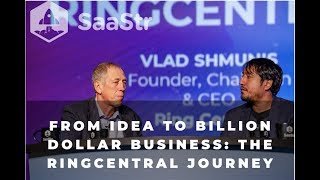
Vlad Schmunis built RingCentral from a two-person startup into a billion-dollar public company by replacing Cisco's on-premise phone systems with cloud software. He talks through multiple VC rounds led by Sequoia, the hard scaling decisions like replacing early team members, and why he started running the company like it was already public.
Chapters
Please welcome Ringcentral founder, chairman and CEO Vlad Schmunis and Jonathan Vanion, fortune writer.
Hi everyone. All right.
Well, I finally get to live my dream of having an own show with a little table here. So Vlad.
Oh, wow.
So this is great. I've been looking forward to this. We've had some really cool talks, interesting talks about the gestation process, I would sort of say when you're the embryonic state of a product idea to, you know, multibillion dollar company. So I want, I want to start right now by just giving a little background about rig central. What is it, what do you do? And let's just take it from there.
Right. Okay. So firstly, a disclaimer. This is not my real voice. This is just my show voice. But I also have a cold.
So this is my real voice and I have a cold.
Yeah, sorry. So what is RingCentral? RingCentral is in the unified communications as a server, as a service space, ucas. So what does this mean is we replace traditional communications infrastructure that includes voice, video, contact centers, collaboration tools. We replace on prem software and hardware with a pure cloud solution. It's a very large market. It's been historically dominated by people like Cisco, Avaya, the big guys. And we are hoping to become the next big guy there by displacing and dislodging those people.
So that's what you describe yourself now how did you describe yourself when you first started? I've always think that's sort of interesting because the trajectory of a startup from. From where it goes from beginnings to even.
Yeah, no, we were very clear from very early on about the kill Cisco idea.
Seems to be a very popular idea.
Was prevalent and not kill Cisco. The whole company weren't that ambitious. But I personally never understood why you need to have a hardware box or on prem software anyway when you can do all of this through the cloud much more efficiently, make people more productive, much more open environment, saves the money and improve their productivity.
And you describe yourself as a technologist first or a business person?
Definitely technologists.
Technologists. Okay. Does that set the trajectory of a company a little bit differently when the founder is a technologist versus a business leader?
Yeah. I have not been accused of being a business person.
You've not been accused of that. Okay, well that's a pejorative term for that. Well, walk me through the relationship of that because I've covered a lot of startups and it's fascinating talking with technologists who are designing the product. And I think the problems start arising when they're trying to create the business around it. I mean, you know, this has got to be a little bit more complicated nowadays. I would imagine that maybe unless shed some light and maybe there's some similarities.
Of when you started, Right? Well, I don't know if it's more complicated or less. And look, I can just talk about our journey, right? So we were a true startup, true bootstrap. There were basically two guys, me being one of them. It was 20 years ago. We had a fairly clear idea of what we wanted to do, which was again, to kill Cisco. And that's kind of all we had. We never made no. We never made T shirts. No, we never did that. What we did do from very early on is we were working with a product. I mean with us. And I know there are different schools of thought and different people get here different ways. In our case, it was always about the product. And the product started with understanding the business case, the use case, understanding the customer in our particular line of work, in our particular industry. It was easy for me, for example, to relate firsthand to customer needs because the product was kind of being designed for me to use and the other few people we had. But it started with that and then it was just a matter of, hey, make sure that it works, make sure that it scales. Very, very important not to forget. Make sure that people buy it, that they know how to find you.
I mean it's interesting when you. There's a lot of especially networking companies that I've noticed where you have the sort of the big company out there, Cisco, so that you sort of identify yourself in relationship to that company. How important is it then for startups to have that identifier to be like, well, this is the one company that, you know, we are setting our sights on. Where is. You get that a lot or you get companies like, oh, we don't have any competitors, but that seems a little wishy washy.
No, that's great. I mean, so my quick retort to we don't have any competitors is you probably also don't have a market or customers because if there are. Yeah, usually, you know, if there's an opportunity, multiple people will see it and will go for it. I do think it's important to understand who you are competing against and ultimately trying to displace. Okay. And granted there are some amazing successes out there that it's maybe a little bit hard to see. Okay. Like who did LinkedIn displays or even Facebook, you know, but in the end, you know, they, even for them, you know, they Were replacing, you know, offline media. Right. Offline list. But even, you know, I mean, it's clear that, for example, you know, Airbnb, you know, they're travel in the. Well, Airbnb more in the hotel business. Hoteling business. Right. Or, you know, Uber. Right. In the, you know, car rental business. Right.
You always going to be in a category.
You have to be. I believe you have to be in the category. And it's a lot more fun if the category is meaningful.
Right.
You have to be solving a real problem.
What's funny is, like, when I talk a lot of companies, I feel sometimes they get really pigeonholed when they say we're part of a category. And then they, you know, I get a lot of the conversations that are like, well, this doesn't adequately describe what we do, but there's a reason for the category to exist. You know, I mean, so how do you define what it is that distinguishes you when you do have to sort of be placed into a box?
Yeah.
I mean, not saying a gardener.
I personally tend to err on the side of being more specific rather than less specific. Again, me personally, and there are all kinds of different schools of thought and again, different strokes for different folks. But to say that we're so unique and you can't even begin to describe us. Okay, fine, great. But I don't think that's something that many investors would go for or many customers, because when you come in, you have to say, look, I'm solving this problem. By the way, this was for me personally, it was really hard thing to go through initially. Is what was hard. What was hard is defining, answering your very question. What is it exactly that you guys are doing and why? Okay, kill Cisco. Good, great. Got it. Now, how are you going to do that as a giant company? So to answer your question, and it took some iterations, you know, we're saying, look, we're going to start with the phone system. Maybe it's not the sexiest thing in the world to do, but, you know, it's an okay target because most people hate their phone systems and you have to get that emotional.
Sort of kill Cisco's phone systems.
Yeah, exactly. So you go, okay, now how are we going to do it? You know, well, again, in our case, but I think it resonates, maybe in other industries too. Is okay, so speak to the emotion of it. Right. Is we're going to make it more user friendly. I always would ask a question, whomever it is, investor, whatever. Do you guys use phones? Yeah. Well, what do you think of them. We hate them. Good. We're speaking the same language now. So what if you had a phone solution that you did not hate?
Right.
Okay. That's the beginning of the pitch.
And when you were articulating this message, like, tell me, at what point did you feel comfortable presenting this to investors?
Look, I. Me personally, I was really conservative and I don't necessarily recommend this for other people. And this was. We were, you know, multiple millions of dollars in revenue until I took the first call, you know.
Oh, wow.
So, yeah, from investors. And we actually.
Why did you want to do that?
As opposed to.
As opposed to you have X number of customers, you have bookings that indicate future growth?
You know, several reasons. One is, I mean, to me, it was sort of a personal thing, but maybe some people here it will resonate with and, you know, others it will not. But when you get investors in, it's, you know, you are giving up control to a certain degree.
Yeah.
And it's a marriage, and it's actually a marriage that you can never dissolve. Not until, like, you could get a divorce. You can never get divorced from your investors. Whomever is thinking of doing funding, understand that they will never leave your life. Okay. Until. Until you know, either you're out of business or get acquired, or at the very least your ipo, in which case it's still their choice whether they're holding onto the stock or not. But most of them will eventually distribute and sell. So you want to be really, really deliberate in who do you enter into this insoluble contract with?
And so the people you were looking for, you wanted them to resonate with the idea that you already have this amount of money in revenue as opposed to looking for other metrics that they might be interested in for a startup.
No, I wanted to. Well, first, look, it's not like I wanted, like, you know, lots of people, you know, who eventually we talked to, you know, told us. No, you know, to be blunt. Right. And no, look, what I was looking for was people who were well established. You know, yes, we took our time, but we did end up with, you know, Sequoia as a lead investor and managing director of Sequoia on our board. That moved the needle for us. Another investor was Series A was Vinod Khosla, who is legendary VC in his own right. So again, in our case, it kind of worked out to not rush into things, but go for the top most quality of investors.
So once you get that idea, once you decide to make that pack with them, what is the next Sort of step. Is that the point when you start saying scaling? And what does that even mean?
Yeah, excellent question. So look again, we were, you know, the product was out there. We were, you know, at revenue. Right. In our case. So, yeah, when people give you money, the last thing they want to do is for you to not spend that money. Okay. Because sometimes I also hear people kind of making that mistake. They're really giving you money to scale the business. Now, scaling the business means different things depending kind of where you are, what you have. But certainly in our case, and I think in majority of cases, it means scaling the team. And that means lots and lots of hiring. And I don't want to say firing. And we didn't fire anyone, but people get reshuffled because a person that gets you from zero to a million dollars is not necessarily the one who is going to get you, you know, from 10 million to 100 million.
I get that idea. But that's gotta be rough to do in person, too.
Extremely painful, right? Extremely painful. Because these are friendships and these are people, you know, who stood by you and, you know, and you don't feel good about yourself.
I mean, is it. How much is that coming from pressure from the board to sort of do those sort of changes for the company or is that for, in your case, personal decisions that you have to do it for what you feel necessary for the company to go?
Yeah, look, I mean, certainly the board, they're trying to value, right? I mean, they're basically saying they have a playbook and they will go, yeah. Hey, do you have this position filled? Do you have this? In many cases, the positions were not filled. So that was. No, let's go do this and think it was a playbook. Because I didn't know I needed that position based on basically, in some other cases, no, we did have, I wouldn't say run ins to where you would go. Like, this person you have here is great, and he got you to where you are. Well, actually, it would go like good person. But is he going to scale or is she going to scale? And my retort was, for the first year, basically. Well, that's the team that got me here, so I'm going to stick with it. Which he did for a year. And, you know, then I kind of started turning around a little bit and saying, look, yeah, but, you know, are we growing as fast as we could be, you know, given the new reality on the ground? So what's the new reality? So before we were optimizing for dollars, you know, we had very Fixed amount of, you know, dollars available to us. And how do you make the dollar stretch as it changes with funding, you know, and we raised, I don't know, ten plus million dollars first round. Used to be real money in those days. And it was like, okay, rather than stretching your dollars, how do you compress your time? So do spend the money. And it turned out the people that we had, in our case were all very much used and conditioned to stretch into $. So we needed to kind of get a new mindset going. Stop stretching the dollar, start compressing the time.
Do you think this is a different, because this is a different point of time and then this idea of stretching the dollar, or do you think that now? Or do you find if you're even talking or mentoring to companies that they're sort of going through these sort of ideas?
No, I think time is, yeah, like I said, I'm not a huge believer that things change that much in 20 years, whatever, you know, and no, I think it's just a different stage in company's life.
Right.
You know, it's resources you have and the goals you set and so forth.
So what is the most challenging thing that comes across when you scale? I mean, I think it's common. I think people would have an idea. Oh, you just replicate what's successful. But that doesn't necessarily work.
Right.
It's not an exponential sort of curve. I mean, what are things you had.
To overcome as you scale? Well, it depends on what stage. Yeah. So if you're talking about specifically when first money comes in, that's that stage in scaling again. You know, it's managing the team. I mean, to me it's always, it starts and ends with the people. In the end, it's how do you transition the team? How do you not lose each and every friendship that you've ever had? In my particular case, it was a close knit group and the company employed both my wife and my mother.
Oh, wow.
And actually I had to fire them both.
You fired your wife and your mother?
Well, the wife left by herself, but my mom I had to fire. Yeah, it was very. Actually it was bad. She's still.
Can you explain that? That's impossible to explain.
No, look, she wasn't scared, you know, what can I say?
What did your mom do?
She was the bookkeeper for the company.
She was the bookkeeper. So you needed like a.
And I needed a cfo.
You needed a cfo. Okay, gotcha. Wow. Did she ever meet like your board members too? God, Vlad's mom has to go I mean, that's.
No, believe me, that was discussed, right? Yeah, that got a lot of airplay.
Okay.
Wow.
Okay, so. Wow. So you literally went from like a family ran business in some ways to something a little bit different. Okay, so what were the stages of investment rounds that you took? You know, what do you think was the most challenging round for you as a company? You know, what's crucial to get to the next level, to get to ipo.
Well, look, we had, you know, A, B, C, D and E. So five rounds, Right. Certainly the first one was sort of, in a way, you know, I was new to this, number one.
Yeah.
And, you know, you don't have, you know, because all VCs all talk to each other, right? So. And once we had our SQL and costly in, you know, we had this sort of reference, references where people could call them. So that was fine, you know, but the first one was, yeah, I mean, that's, you know, like, who are you and why should we invest in you and symbolic.
Putting you on the map.
And so, yeah, that's a really good way to put it. Right. Really good way. So. But look, I tell you, everyone, you know, but then it gets into valuation, you know, and look, we went through, I mean, there was this infamous meeting that Sequoia had in 2008 where they got all of their portfolio CEOs in one room. So myself included, and said, okay, guys, like, whatever money you have, you have and you will never get another dollar because the world is done, you know, and the economy is over and you better like, make that money last.
And that was true for a year. Right?
And that was true for a number of years, you know, I mean, now it seems like ancient history, but that is what happened again in that particular case. I know many people just downsized a lot. We did not. We just stayed the course. But we do have a, did and do have a recurrent revenue model. We had predictable revenues. We weren't maybe hiring as fast as we would have otherwise, but we never had the layoff.
Did you ever get advice during the downturn to, hey, raise money now so you have stuff in the bank? Okay.
Yeah, I mean, sure, sure. During the downturn and especially during as you were coming out, you know, is, I was always of the opinion, you know, you don't want to, you know, run out of gas, but, you know, you don't want to, like, fuel the plane up, you know, too heavy too, you know, because remember, the more money you take, the less, the less of a company you're going to end up with. And also the expectations are the higher.
You know, is there like a safe number of investors you should take or a good rule of thumb that maybe people can learn from or like we did, just for how much you're willing to give and take?
You know, we did five rounds, $12 million each.
Five rounds, $12 million each.
So I don't know, you know, how much to give up. That's really case specific. I don't know, you know, I surely would now, sitting here now, would have liked to give out, give up less than we did. But I know many people do a lot more and that's fine too. I think in the end it's about the result, you know, like did you get again my example, enough gas in the tank to get you from point A to point B? Do remember about point B, in the end it's, you know, you need to get to point B.
So when you're leading up to doing an ipo, I mean, when do you start projecting for that? When is the time that you start crunching the numbers to say, okay, we got to start really taking serious thought.
At this now look, we were always about crunching the numbers. You know, the company is analytical in nature. And again, it's recurrent revenue. So there is a small set of fairly well understood metrics, you know, you know, your bookings, recurrent revenue retention, you know, gross retention, net retention, things like that. That's kind of people have been looking at for, for a long time. But you know, it's a completely different standard and level of scrutiny as a public company. Yeah, and this is one of the advices we got from investors, which was spot on, was why don't you guys run like a public company before you're public? And like I was.
And what did they mean by running like a company?
Exactly, that's what I said. That sounds really good. Like what do you mean? You know, so run like a public company means have full predictability, you know, certainly through the year, but have a multi year plan and see how you're tracking against that. Because what's happening, I don't know how many people here are public or close to public being public, whatever. What I can tell you is that public markets, unlike your investors, like I made this corny analogies like marriage, whatever, but they're kind of like family in that they are in your court. And in the end, founders are hard to come by and they'll support you. Public markets are very, very different. It was public markets. It's. They're completely unforgiving you cannot miss a quarter. Knock on wood or this is not wood. Whatever.
Yeah, thanks.
But you know, we've been public for 21 quarters now, five plus years, we haven't missed one. So hopefully, you know. And did you have to do any.
Sort of big steps hiring wise? I mean, usually like I've noticed when a startup hires as a cfo, you can sort of like guess. Okay. And within a year, that's what they're thinking about doing. It's like you bring in this person, start streaming, streamlining the business. Did you do any concrete steps like that?
Well, we did have to hire a new CFO to replace your mother. Right. Well, that was years, that was years later. Look, it's a very close community, right? All of the investors talk to each other, all of the banks talk to each other.
Right.
We've never, like there's no way you can keep a secret, right. So people know that the company is, you know, talking to the banks and you know, and they expect something will happen. And I personally know a couple of cases like that. If for whatever reason it doesn't happen, company is broken, you know. So if you engage in that path towards the apo, you better be damn sure that you're ready to roll, that you get there. Yeah.
So one of the things we were talking about a little bit prior to this too was also the idea of like who you're taking on your board seat. You didn't have anyone from like a public company or something on your board seat.
Right?
It was all VCs.
Yeah, well, we did have one person who was, but that was later certain in life. It was. Yeah. And he wasn't an investor. He was just. We specifically wanted to bring in somebody with public company experience. And this particular person was a very high level manager at AT&T for a while.
At AT and T. Which makes sense. You're the sort of expertise you would want. How important is that then of bringing someone with that sort of that public company experience into navigating the company, into navigating the startup.
Look, I'm of the school that, you know, you can never have enough friends, you can never have enough advice, you know, good advice. So yeah, I say it's important, you know, I mean, like, how do I know, you know, like I wasn't born running a public company, you know, none of my friends ever did. You know, traditional VCs don't necessarily have that experience. So you very much do want to have somebody who is, you know, who's been there before. That's Been our thing to do from almost from day one is always get people who've seen the road, you know, at least a few steps ahead of you.
Right. Do you still have like connect like that? I mean now that you are a public company, who would be examples of people that would steer your company now? Because I would assume you're not done scaling. I would assume scaling doesn't really end well.
We have president of Google on our board, so. So yes, there are larger companies out there and there are people we still can learn from. Lots of people like that. So yeah, look again this is exactly what you say is we are certainly at the board and all we're trying to get people with differentiated experiences number one and also people ideally who come from larger companies. So our board, we're a public company. So public information. We have X CF of Intuit. It's a $50 billion maybe 60 as of now billion dollar market cap company ex CFO of Yahoo in their heyday. So we are trying to go for the very, very top talent from major brands.
What's one thing you learned running a public company that you wish you would have known when you were a startup?
One of the things running a public company that I wish I would have known. It's a pleasure. I don't even know where to begin. Look, it's a journey I think. Be prepared and embrace change. I would say understand that whatever it is, don't think that as a startup that just because you have this neat idea and you know, maybe your friends think that it's the coolest dating app ever that you're doing which is nothing wrong with this market segment. But understand that there are, that there are many steps along this way and that getting again from point A, which is you've started to point B, maybe it's ipo, maybe the company gets you sell the company. There will be many steps along the way and be prepared to change the company and change yourself as you go.
And which way did the company change for you? As an example of one change, big change.
Like I used to know everybody by name and I don't remember every location that we have. No, it's just the scale of it. Right look, sure. But maybe a more serious answer is everybody has to be a generalist in a small company and in a larger company most people are specialists and it's a different thing and generalists don't necessarily make best specialist and vice versa.
That's interesting. So that's sort of that changes even that dictates like who you're hiring too.
Absolutely, absolutely. Yeah. Now we're looking for people with very deep expertise in a fairly narrow area. Okay. As before, we were looking for people with, you know, jacks of all trades.
How is you start off with Kill Cisco with the idea that is that still the same or is it now multiple, Kill Cisco, et cetera?
No, it's a gift that keeps on giving. Kill Cisco is still out there.
It's still strong.
It's still, it's good. Yeah, it's a good target, you know, but, you know, we've made a dent. They're certainly more aware of us now, obviously, you know, jokes aside, it's nothing against Cisco. Right. It's just that there is a very large market going through a seismic transformation and we're riding that wave.
So what's the challenge of informing your product as the technology landscape consistently changes? Keeping relevant. Keeping relevant.
Yeah, that's a challenge is how do you keep relevant? Yeah. So we always had this playbook. Seems to be working to this day, as the playbook was. Yeah, we are supposedly industry experts. Sure. I mean, you have a bunch of people kind of doing the same thing for a number of years. You know, eventually you kind of get better than average at it, probably. But no way, no how. Certainly I'm not smart enough is to predict how the market will really evolve without talking to customers. Okay. So our, you know, our playbook always started and ended with listening to the customer. All right. And doesn't mean that you do everything they tell you to do. And by the way, we went through that stage and many startups do, like literally our cto, he'd get, he'd read, you know, all of the feedback from every customer. And in our business, we had like tens of thousands of customers. Like almost immediately, you know, he would actually read all of the stuff that they write, you know, and then he would go and implement it. And the product got to be pretty powerful but pretty complicated to the point that, for example, I couldn't use it anymore. And I said, ok, well that's not maybe that great. So you do have to filter. But having said that, always in our case, anyway, keep your ear to the ground, listen to customers, try to sort the search and prioritize things. But, you know, that's, you know, they know, they know what needs to be done.
Well, here's one. How do you let you know an early stage startup? When they're developing products, they typically have a few standout customers that are generally doing POCs, you know, with them, proofs of concepts and how do you make sure that they don't define the future of the company too?
Yeah, no, it's not right. It's not a one legged stool. You can't just do what customers tell you or else you just become, you know, a contractor basically. And nothing wrong with that, but it's not what we wanted to do. You do have to add value, but again, that comes from taking inputs from customers because they know what they want and need and then combining with our ideas as far as where we see the future going, given our alleged industry expertise. Bring it all together.
Was there ever an example where you had to start informing features of the product that were going a little contrary to what, one customer?
All the time. All the time.
What are some examples? Early? Because, I mean, that's gotta be. I can only imagine what the conversations are like when you're talking to customer like, we really want to do this. And you're like, it's gonna benefit us in the long term if we do something else.
Yeah, no, I mean we have a number of product features where the customer reaction initially was like, why are you doing this? And it's not something that we want, you know, and in our particular case, for example, when we started expanding from voice into digital channels, you know, into texting and messaging and stuff like that, video, you know, and why are you guys doing that? We already have solutions for it, you know, so our retort was, well, that's great, you know, but how many apps do you want to have in your iPhone? Because our differentiated approach is that yes, we'll integrate with Best in Class as we do, but pieces that we can roll in, we will roll in and you know what, feel free to use or not use. But we think that there is value added in having a closely integrated solution which does more than one thing. And in the end, people like Gartner kind of got around to that idea too. And now again, I don't know how many people follow Gartner or what have you, but in our business they're kind of the oracle, right? Yeah, I know it's really important, responsible for formulating the vision of the future. And now they're saying, yeah, it's all about unification. We think we have something to do with that.
Gotcha. If you could start over again, what would you do a little bit differently now? Let's say Ringcentral was starting now.
Yeah, gosh, I take money earlier.
You would take money earlier.
I would take money earlier.
You prided yourself a little bit in that bootstrap. So what would Cause you to take money earlier.
Well, you're asking me sitting here now, you know. Yeah, no, you know, we'd be probably out faster. I mean, who knows? You don't know. I mean, again, sort of worked out, you know, but I can see us being in public markets a few years earlier potentially. Again, how do you define success? I mean, look at fun all along the way. So from that perspective, it's all fine, but certainly people do get will be a billion dollars in revenue next year and it's a nice position to be in. But there are people who got there a lot faster than we got to our billionaires.
You know, that's interesting, but I mean, so what is success to you then? How do you even define that?
Keeping your sanity and at least some of the family relations keeping it right? Yeah, no, success is, look, success is not losing other people's money. Success is solving customer issues. Success is making people money. Again, like public markets, investors, you know, anybody own responsibilities, whoever. Touchstone Central pretty much made money on it. So I personally feel very good about it. Displacing Cisco continues to be a good.
Driver even personally, what are the benefits of going public? Because some companies just like staying private a bit because then they don't have to deal with a lot of the pesky dealing with analysts every quarter and such. But why is that still the ultimate goal?
Again, different strokes for different folks. Yeah, you don't have to deal with public investors, but by and large, vast majority you have to deal with your private investors. People you know, who invest in you eventually want to see their money out. I mean, that is their business model. That is their business model. Now they don't want to see it out next year necessarily, you know, but eventually you have to show them a pass. Look, for us being public worked out, you know, I personally, I think the team we have, myself included, you know, we're comfortable in that space, you know, because it's, you know, I like level playing fields, you know.
Yeah.
So everybody gets the same information. You know, everything is sort of regulated enough to where, you know, if you, if somebody asks you a question that is maybe a little bit you know, too involved or what have you, you know, you have a perfectly valid issue saying, look, I can't just tell you, not tell everyone else, and this is just not how we're on the company. But on the other hand, you provide a lot of information that everybody has, you know, and talking to analysts is fine. And by the way, to your prior point, yes, so talk to customers, but talking to analysts now, you know, that's a whole new constituency and they're like really, really smart people, you know. You know, they all make a lot of money too, but maybe there is a reason for that, you know, so we learn from that a lot.
Their objectives are a little bit different, but, you know, or in some ways, you know, I get that feeling from a lot sometimes talk with people in Silicon Valley. It's just like, oh, Wall street doesn't understand a lot of, you know, what it takes to innovate.
I beg to differ. I think that Wall street understands many, many things. Now, obviously they don't know your business as, as well as you do, you know, but they do an amazing amount of backdoor checking. Just understand that they know things about our business that I have no idea how they find out. You know, they do talk to customers. No, in a good way. In a good way, yeah.
No, but they're scrutinizing it.
They're scrutinizing people. Do research. And to say that I know that there are people there and prominent people, very smart people, saying, well, yeah, I wish. I really don't want this level of scrutiny, et cetera. I think a lot of it maybe comes from potentially missed expectations. So in our case, it was, guys, this is what. And gals, sorry, but we're here now. Point A, ok, this is what we're going to do. So here's point B, here's point C, and we're just going to get there and you have to have a little bit of thick skin because people will look at you and everybody's very polite, whatever. And they would totally and fully discount everything you tell them. So nobody would believe a single word you say until you prove them wrong and wrong and wrong again. And eventually they'll come around and go, OK, well, if RingCentral says they'll do this, maybe they will do this.
Leading up to the IPO too, did you notice a change in the way that you're interacting with your board? I'm just curious of. Can you read the signals that they're saying without necessarily telling you up front that you guys, let's start pushing you through this. I think that'd be sort of beneficial for anyone here.
Well, first time we brought up the IPO thing, I don't know about reading signals, but one of the board members said, hell no, over my dead body. So why that was a signal? No, because we weren't ready. In his opinion. We weren't ready. And he was right, we weren't ready. Now, again, we took it In a positive way. We said, okay, well we can discuss dead budgets. I mean that can be arranged too. But tell me more. Well, you guys don't have this, you don't have that, you don't have that. Okay, fine. So let's go. So what does it mean? Okay, let's be getting more talented, let's be getting controllers, getting CFOs. You know, let's be, you know, in our case we were pivoting or expanding from an SMB oriented business towards the enterprise. Let's show some traction in that direction, you know, before we get, you know, before we, you know, really commit to it. Because again, a lot of it is just setting expectations and not, you know, not letting people down. So having said all of this, the board has turned, with one exception, everyone on our board joined when we were already a public company. Early investors, again with one exception. Rolled off.
And they rolled off. Right, gotcha. And how has the relationship changed with.
Them over the years now with which all.
Yeah, with the people who remain in contact with or who are part, who are still somewhat conjoined.
Well, we made people a lot of money. So as generals are capable of.
So it's generally. Everyone's going to be happy when that happens.
Those are generally happy conversations. They do complain about selling out too early, which is what I told them. Don't.
What advice do you have to people here as far as, let's say, let's say at a stage of you're getting the company off the ground, what do you got to do right now to. I mean, I'm just looking at the people that you've sort of known. It seems like you've networked a lot. What advice do you have for people getting out here at getting themselves known in a very tight knit community.
So how to get them known?
Yeah, just how to get in front of us. Because it does seem like from what we talked earlier, series A is a very symbolic gesture. How do you get in front of people?
Well, look, so understand that whatever you do and say will be recorded and amplified. And if you say something like there are no secrets in this valley. Everybody knows everybody. And the one thing, and I don't want to sound like a Sunday school teacher here, but the one thing that you have one off and if it's broken, it's not repairable, is your reputation in the end. So if you come across as, yeah, if you come across as somebody that people can trust over time, then good things will happen. And at least in my case before I could even suggest to People or ask for the trust. I wanted to see many proof points, which again, kind of led to maybe our first round being a little bit later than it could have been. But, yeah, that's advice. And the other thing is there is something to be said about people coming to you as opposed to you going out with the hand outstretched. Get enough of a following with your customers or whatever the constituency is to where you're a little bit well known, to where people will be calling you, saying, hey, have you considered an investment?
So that's like the stage, that's a good metric for any company is when you start seeing people are coming to you.
Yeah, towards that, I think so.
That's fascinating, man. Is there any. What's been some of the most important advice, you know, you've learned from your board members, you know, during your journey as a company? What have they given to you?
Well, you know, we touched on some of this already. So, you know, don't be fully married to your team. I mean, that's a really hard one. That's a really, really hard one. And the same thing that's rough.
How do you keep and build like a culture like that, you know, I mean, knowing that people might be like, ephemeral.
Well, it's hard. Yeah. I don't think. Look, I mean, I think that what you need to do is be honest with yourself, be honest with the people, be clear about why you're doing something, and still very hard. But I think that that is one. And the other one is, you know, understand that the reason that people get involved with you, at least this day and age, Silicon Valley, you know, expectations are sky high. You know, companies, you know, they're talking about unicorns. But unicorn, you know, is a billion dollar market cap, which is not that big anymore. You know, there are many people, you know, with 10 plus billion dollar market caps as a private company. It's not just Uber, you know, Airbnb.
No, the list goes.
Okay, so understand that people at this point have very, very high expectations and hopefully, you know, you're there to deliver on those.
Okay, well, very good. We are out of time. Thank you, everyone. Thank you for the.
Thank you. Yeah.










