Fueling Product Innovation on the Path to $10B with Workday
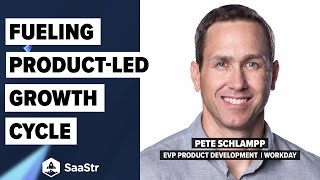
Workday's EVP of Product Pete Schlamp breaks down how the company is managing innovation as it scales toward $10B ARR. He uses a four-phase growth model and data-driven metrics like win rates and composite UX scores to guide product strategy, while a hybrid org structure keeps central teams focused on cross-cutting capabilities like ML and UX.
Chapters
I'm Pete Schlamp. I'm the EVP of Product here at Workday. It's great to be with you here at Sastra Enterprise. Hopefully the last time that we'll have to do something like this fully remote. Fortunately, we've moved beyond this constant crisis mode the last year and looking ahead to thinking about growth. And to me, that's what this event is all about. It's about helping the SaaS community to get to the next level. And I'm hoping to share my perspective with you about how you can be thinking about your product strategy and your organization to help you get to the next level. So I've got a few slides to share today and then we'll open it up for questions. But also just be on the lookout for some polls. In fact, I'd love it if you grab your cell phone and scan the QR code that you see there in front of you, or if you want to just go to the URL pollev.com product growth. We'll have the polls as part of the session and then at the end we're going to do some Q and A as well. So we'll be able to keep it live that way as well. So let me start off with a little bit about my background. So I'm the head of product here at Workday. I joined the company through the Platfora acquisition five years ago, and in that time I've led the analytics business here at Workday. And then I was asked to lead the entire portfolio of products about 18 months ago. And yes, that was right before COVID happened. Before that I was responsible for product development at various startups including Celera Networks and Ironport Systems, which was acquired by Cisco. I was at Cisco for a long time as well. So I've had the pleasure of leading product strategy, development and marketing at really every stage of a technology company. And my point of view here is that building product is hard, leading product is hard, and leading product through the various stages of your company is even harder. So just when you think that you have it mastered, the company enters this next phase and the game changes. But if you learn lessons from the past and you anticipate transitions, and by the way, that concept of anticipating transitions is something I learned from John Chambers at Cisco. You can get beyond great. So to set some context, I've personally observed four different phases of growth at companies. And I know there's a lot of different opinions out there in the literature on this topic, but this is how I see it and I think it's pretty simple. From a startup, you found that breakthrough idea and you have a product, you're laser focused on survival, you've got a small team grinding it out and everyone's focused on improving the product to get early customer feedback. In the growth phase, you've achieved product market fit. The business is generating some consistent income, gaining more customers, and you're building up your workforce. In the expansion phase, you're profitable. You're squeezing out every bit of growth out of your initial products and entering into new geographies and expanding offerings into new segments. So now you're really, you're optimizing your existing products for every little bit that you possibly can, squeezing out all of the revenue. And then in the maturity phase, this is the phase that you need to make some bigger moves to keep on that path to growth. And I think that there's a real danger of falling into a complacency trap and maintaining the status quo. So first moment to keep this interactive, again, I'll remind you to go to pollev.com product growth. I'm curious about the audience and given those descriptions that I just had, what phase are you all in of your companies? So I'll give it just a second for us to get the results here. Okay, cool. Thanks for responding. A lot of people in the growth phase, some people starting up. Oh, I love how these things are live and you get to see them change right in front of your eyes. So good distribution across all four of those stages. But most of you in the growth phase and I think that's pretty interesting. Well, there'll be good stuff hopefully in this conversation for all of us. So my latest transition here at Workday has been moving our product team and the company from the expansion phase into the maturity phase on our road to $10 billion of annually recurring SaaS revenue. Now, I found that most of the times the lines between these phases aren't super clear. So you, you might not know that you need to transition to get to the next phase. And what often happens is the things that used to work stop working and you're not sure why. For us in this transition, it felt like our org model was just a little bit off. It felt like the way that we were making decisions wasn't working very well and it felt like we were optimizing for the wrong things. So to simplify, I think about how these changes impact three different aspects of your product teams, your product strategy, your org structure and your innovation models. So hopefully that makes sense and we'll get into those, we'll drill into those as we go forward here. And I think in the product world, there's really two key facets of our jobs. You do the right projects and do the projects right. So in the first area, let's focus on strategy. And that's all about doing the right projects. So when it comes to strategy, you got to think about the outcome. What's the outcome that you want to get? And I think it's good to kind of think about how those outcomes change as you go through the different phases. In the startup phase, it's all about survival. It's about keeping afloat, getting your first few customers in the growth phase. And a lot of you out there are in this phase. You've got to get to profitability, you've got to find more customers and you need to make revenue to invest back in the business. In the expansion phase, it's about maximizing every bit of growth in the existing product or set of products that you have. And then finally as you move into the maturity phase, that's what I would say, based upon my most recent experience, is this $10 billion gap. How do you go beyond expansion and really get to ROI on your investments? And so that requires bringing discipline to your innovation and your product strategy. You need to expand your portfolio in a meaning way and it has to bring roi. So as we moved into this atmosphere at workday, we had close to 20 products spanning our office of the CFO and office of Chro buying centers. That means we had two different buyers, 20 products spanned against across them. And our strategy became about balance and alignment. And so let me give you a couple of examples. So on one hand, we had to invest in projects that would bring short term growth and we also needed projects that we're going to pay out in the long term. We need to satisfy our current customers and we need to grow the customer base. And finally there is a pressure to have each product contribute profit. But also super important. We had to make sure not to forget pure innovation. Right? That was incredibly important for us. So you couldn't get too focused on profitability. So question for you all here again, let's go back to polav. So just with a couple words, I'm curious and we'll get a word cloud here. What are some of the stumbling blocks that you've all had with your own product strategy as your company has grown, as maybe you've gone through some of the different transitions. So I'll wait until you guys have a chance to put some of those in well, here's what I saw firsthand at workday. As we were in the expansion phase, our leaders were identifying every possible way to maximize growth out of our existing products across multiple dimensions. And they had these dispersed projects across the various businesses, as you'd expect. But everyone was out to win in their own area. And as always, resources were tight. Resources were tight. That's capacity, right? That's exactly what you all heard there in that word cloud. So as we move to the next phase, we need to bring discipline around. What would capture the best ROI for each dollar spent? And so we implemented this systematized process of innovation and investment. A portfolio management model that ensure that we had a coherent strategy across the portfolio. So with it, our goals were to ensure a stronger link between our strategy, our investments and our R and D output to make value based resource allocation not decibel driven. And by that I mean making quantitative decisions based upon data instead of a gut feel or solving for the squeaky wheel or the leader that fights the hardest for his or her dollars. But at the same time it was really to make sure that we preserved pure innovation. This additional rigor was good, but we had to be careful not to squeeze the juice out of innovation. We wanted to set aside resources in our strategy for those investment areas that we wanted to build. Kind of the unknown, the unknown things, but, but I believe if you don't put in place quantitative tools, how could you be sure that you're optimizing against all of this? So portfolio management is really complicated and it's not one size fits all. I think you all have to think about this in yourself and what you want to track. But for us, we kind of successfully boiled this down to a model that we could use for evaluating different strategies. So this is the model. The objective of the model was to optimize three different measures. And here are the measures that you see here on the screen. These were the ones that were really important for us. First, we wanted to improve our competitiveness in different areas of the market. So we used an indicator of product market fit and we distilled that from our win rates. So we set a target, for example, to improve our win rates in Germany and in the manufacturing vertical. That's just an example. And we look at our current win rate and we'd set a goal to increase it by, and that was our target of product market fit. Second, we measured the effectiveness of our R and D investments through their impact on revenue. And so we used a known metric called rdi. It's also the Long version of that is the Research and Development Index. You all can look that up. And it's calculated as a ratio of organic revenue change to the R and D investment. So we like this metric because we could look across the industry at how we compared to our peers and how we trended year over year. And so we, we also benchmarked our investments based upon where the various products were in, in their maturity phase. And we evaluated how fast we should be growing and how much profit or revenue they should be delivering at each one of these phases. And then finally, for our business, what we really cared about was focusing on user experience. It didn't fit perfectly into other metrics. And so we looked, we actually created this composite metric around UX by taking NPS scores, surveys of our buying centers, and specific UX measurements like the number of clicks it took to achieve certain tasks. And we came up with this composite metric for user experience. So overall, this portfolio management model ensured that we had more confidence in our overall strategy, connecting it to our own market strategy, our corporate growth targets, and to our peer benchmarks. And honestly, I've already gone too long on this one. We can have a full session, but I think that this was one of the most important things that we did as we transitioned from expansion into maturity. So, as Alfred Chandler at HBS famously said, structure follows strategy. So once you've dialed in your strategy to achieve the next level of aspiration, you need to make sure that your organization design supports it. And this one will probably get a couple groans, because I know Org design is the most glamorous topic, especially when we're really ultimately focused on innovating and a lot of companies deprioritize it. But I think that that can be a huge mistake. And my take here is that the right Org structure at the right time is essential to innovation, especially when you're on the cusp of moving from expansion into maturity. So a great example is Microsoft. When Satya took the helm, he painted this cloud first vision for applications and for Azure, and then he did a significant realignment to support that strategy. And we've all seen how well the company has done since then, right? It seems like the alignment of strategy to the Org worked really well. But as much as Org structure is important, it's also about timing. And given what you all said in terms of where you are in these different phases, you're going to have a different Org structure. And it might not matter as much in the early startup and growth phases. So in the startup phase, you're typically Going to oversee a very simplified structure where you just got a single supervisors, a single supervisor in a local location overseeing everybody around them. In the growth phase, you'll probably transition into functional leadership. I'm curious if you all saw that as well. What I mean by functional leadership is you've got a product management team, you've got a QA team, you've got maybe a design team, you've got an engineering team, and they're all in their own centralized functions. In the expansion phase, your business is going to have a couple different products and you probably need to move into a GM or divisional model with a strong leader overseeing these integrated teams. The benefit of that is that it drives focused investment and you can accelerate success within an individual product pillar. Right. The downside of course is, is collaboration. How do you drive cross functional priorities with the pillar model? It can be a challenge when every business is focused on development of their own individual priorities. Now I'm just going to prompt you all to pull out your phones again and go back to Polavi. I'm going to, I'm going to ask you a question about this in just a second and before I get there and ask a question, I'll tell you about maturity. So I believe that as you go in to the maturity phase, you're making this big shift in strategy and you're moving to the need to have a hybrid GM divisional model. That means if you compare it to the US Government. Go ahead and answer these questions. As I'm talking. If you're compared to the US Government, you'd have the federal government driving these broad cross country priorities and state level governments driving progress at a more local level. So I think that if you want to, you'll know when you need to move to this type of model. If you have these cross functional deliverables that have urgency and you're not able to get it done in that GM or divisional model. So the question here is of course, as you're already answering, what was the biggest factor that drove your last organizational change? And let's take a look at what you all say. Boosting collaboration is a huge one. Supporting new business or strategy. Hire a change leader. Clarity and accountability. It's kind of interesting because my, my point, which was that structure follow strategy is not what a lot of people have followed so far. Collaboration seems to be a problem. Clarity and accountability seem to be the things that have driven a lot of change for you all. Cool. So I'm kind of fascinated by how companies are structured. I think it can say a lot about them. Let's move on to the next slide. I think. Here's a fun way to look at it. This cartoon's been around for a long time, but I love it. And not to target Microsoft here. I love Microsoft, they're a great partner. But I can relate to this too. This cartoon reminds me a bit of that GM structure that I was talking about before. And this is what we went through ourselves, holding each other hostage for the individual business priorities. So here at workday, we shifted to this hybrid GM divisional model where we have some federal teams per se, that report to product and then teams. And those are teams like product Strategy. That's the team that drives the portfolio management I was telling you about. Also, as I mentioned, UX is a really large focus for us. So we have that as a separate team at the product federal level. And we have a Chief Design officer and his integrated team looking across the pillars. But another example is we have a priority to infuse machine learning into our entire product portfolio. And our initial attempts here were taking a really long time and some were failing to deliver. If we would have stayed purely in the GM model, every product pillar would have developed its own ML infrastructure, their own agreements with customers for data use and sharing and so on. And instead, by bringing ML into the central team, it allowed us to move much more quickly to develop a powerful infrastructure, a single agreement with our customers to use their data when they opted in for that. And it enabled us to leverage data across the products. So for example, we created something called the Skills Cloud for human capital management, allowed us to derive what skills certain workers have within workday and we use these. We basically are now able to use that skills cloud across multiple of the product pillars and the general managers. So we can also apply this across our financials products as well. We have this right foundation investment where all teams can benefit. Okay, last and then let's get over to some live Q and A. Let's talk about innovation now. Here's my thinking on this one. As I mentioned before, innovation is really, really important to keep out front. Innovation is constant through all of the stages. You have to make sure that adding process and evolving strategy doesn't snuff out innovation, but how you apply innovation where you apply it and the resources that you have at your disposal are going to change and the reasons to innovate are going to change as well. So as you move through those growth stages, you're going to have more resources and leverage in your innovation. Not every idea is make or break like it is in the startup where it is innovate or die. One shot. All of your money, all of your time goes into innovating in survival mode. As we move over to expansion phase, you're wringing every bit of growth out. But you don't have to innovate across the entire product line, only in those few areas where it's going to help you take advantage of your key products. But I think what's kind of interesting and what was interesting for us in the maturity phase is now we have resources. The real question is where do I put them to get the best return? And you got to figure out ideas beyond your current product set. So moving into adjacencies, for instance, what new markets can we get into? How can we leverage the resources and the expertise of the teams that we have already to get there? So making smart decisions about where to innovate and where to buy and where to partner is key. So a quick anecdote here is when workday made the decision to get into the employee experience market, which is really, really hot right now, we made a decision about what to buy and what to build. Now we have already innovated in several areas of employee experience with HR service delivery, with talent optimization products, using machine learning, like the skills cloud I was just telling you about before. But we knew that there were some really interesting companies out there that had made these leapfrog innovations that would have taken us a really long time to build ourselves, like for instance, in the voice of the employee area. So we leverage our resources to acquire PCON earlier this year, which is an employee surveying tool, to basically get the voice of the employee. So this model of innovation was organic and inorganic and together delivered something very unique to the market. So let's wrap this up and get to the discussion. But before we get there, just a couple takeaways for you to base yourself. First of all, keep an eye on ROI when it comes to portfolio management. I do believe as you move through those different phases, it becomes more and more important to make data driven decisions to not let the loudest voice in the room win and make sure that you're actually getting a return on the dollars that you're investing in Product two org structure is always a balance. Strong arguments for centralization and also decentralization. We've had a ton of arguments about that at workday and I'm really happy that we are where we're at. And it was through a bunch of trial and error and experimentation to get there. And then finally, and I couldn't emphasize this enough. Don't stuff out innovation. As much as you might feel like you want to add process over the top, consider how to apply innovation at each stage, how it's unique to that stage, and leverage your resources appropriately. Well, I think that's it. I really appreciate you all being here and asking questions and participating. I enjoyed the talk today and always open to having a deeper conversation. Feel free to link to me on LinkedIn and we'll have a chat. Thank you so much for being here and I appreciate the opportunity. Saster.










