Good Intentions, Bad Advice: How to Keep Your Board Aligned with Your Vision
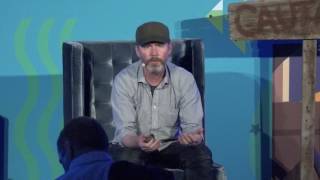
David Barrett, CEO of Expensify, gives a candid talk for early-stage entrepreneurs about board dynamics and surviving the 'valley of death' to reach $1M+ ARR. He outlines different board constituencies (founder, employees, angels, independents, VCs), explains why board meetings rarely resolve core issues (decisions happen off-line), contrasts soft vs. hard power in board relationships, and urges founders to pursue bold, contrarian decisions. In the Q&A he answers questions about choosing an independent board seat, meeting frequency (quarterly recommended), adviser equity (advocates not giving equity to non-investor advisers), and hiring/culture (hire slowly for talent, passion, humility; be willing to fire; avoid importing high-level execs who block internal growth).
Chapters
Good morning. Please welcome CEO of Expensify, David Barrett. Wow, this is a really cool chair. I've never actually sat. It's like a real Fireside Chat sort of thing, but minus the fire. Feels good. It's pretty comfortable actually. What's that? Okay. Yeah. If it doesn't get a lighter, we can definitely hook this up. Oh, there we go. Screen. Good. So this session I'm talking about today, most of the sessions here at this conference are about getting to that hundred billion dollar mark and, and all of that, and that's great. But I imagine most of the people in this room are early stage entrepreneurs. And that means that basically just to take a guess of kind of who you are and kind of what you're going through, it's probably that you're small, you have very little revenue, you have a couple of employees, maybe you're probably struggling, maybe your bank accounts are stretched. You're probably incredibly stressed. And I think it's stressed probably because every day you are saying this image to everyone else about how successful you are and how great things are and everyone around you is doing the same of how great things are for them as well. Even though you know on the inside that you feel like a complete failure. And I think it's because until you are an unqualified success, you just have to assume that you are just destined for a crash and burn failure. And so that anxiety is like, is it in the pit of your stomach? Because you know that someday you're going to get found out. And I think that. And when you do, it's not just like of course, the financial ruin, because I imagine most of you have also, you probably realize you wouldn't tell others and certainly not even, you know, your wives, significant others and things like this, you're really overextended in this thing and like, maybe your savings aren't as good as you had hoped for and so forth and you don't really have much of a backup plan financially. But even worse, you is your entire emotional self rests upon this right now. And so you know that failure, which you feel and suspect is probably inevitable is just lurking over the horizon. And when it happens, it's going to be a devastating, soul crushing loss. Is that about the sky? Yeah, here we go. It just gets worse. No, I mean, because I know that's how I was when I started. And it's, it's brutal. It is just a brutal, awful slog in the start. And so as much of this conference is about getting to that hundred million, really, I Mean, the hard part is getting to that 1 million. Like, that is the valley of death. That basically will wipe out probably most of the people in this room. And that's rough. I mean, that's what we're here for. And so I think that the session that I'm talking about is basically about the board dynamic and about how to sort of survive this valley of death and bring not just yourself and your team, but your extended team, including your board, across that. And so you have. You cross the 1 million mark and then the 10 million mark and keep going beyond. And I would say it's always good to sort of call out just how awful it is to be a founder, to be an entrepreneur, because that is a unique perspective that you bring to the boardroom that no one else shares, no one else can even comprehend. And so I think it's good to acknowledge sort of this difference, because the key to running an effective board is actually acknowledging that everyone is different. Everyone in that room has a different motive, they have a different background. They're bringing sort of a different agenda to it. And that's fine. It's like, we don't need to pretend that everyone is the same. I think that actually a lot of the problems happen when we overlook those differences. And so I think that my advice to start with running an effective board is to acknowledge your unique perspective and in doing so, become more familiar with and open to the different perspectives of the people there. So to kind of just quickly ramble through some of the people who are on the board. So there's you, of course, the founder. You might have some employees on the board, too. And employees, they're in a similar boat as you because they are betting everything on the outcome of the business. They want to have a big exit for the company, and they're compensated primarily by that exit because they've hitched their wagon to your train, and they're basically counting on supporting you to the exit point and then basically sailing off into the sunset. And so employees are naturally sort of aligned to your vision, but also they don't really have the same downside as yours. Their emotions aren't as tied in the company as yours are. If you lose, if you fail, to you, it's just a real devastating emotional turmoil. To them, it's just a big bummer. It's like, well, that was a couple of years, and I got a good skills and I can go on to the next thing. But to you, it's really hard to go on to the next thing because you got to Pick yourself up from the ashes. And so there's you and there's your employees, maybe on your board. And you're very naturally aligned towards this sort of big outcome. I'd say sort of the next group would be your angels. And so angel investors are great. The angel investors are people who invest their own money. And so I'd say largely in my mind, view them in two camps. There's the angel investors. These are people who have a bit of money, but. But the money they invest in you is actually a substantial share to them. Like they really care. So it's actually a big deal to them, the outcome. And there's the super angels. The super angels have so much money they're crazy rich and they're going to give you some just play money and they don't really care what happens to it. And both are interesting because both are actually, because it's their own money at stake. Again, they are naturally aligned to the outcome, but unlike your employees, they don't work there. And so therefore they actually don't really care about the path taken to the employee. They'll say this, and they actually do in a way believe that, but not sort of in a visceral level because they don't see the effects of these changes on a daily basis. And so as we kind of go through this list, we start to see that the alignments differ a bit. Whereas you and the employees are very aligned on not just the outcome, but the path you take to get there. The angels are only really aligned on the outcome and really financially and sort of viscerally motivated as well. And so he said, take the next group. Here are the independents. And so independents are kind of like wild cards. And I guess they're supposed to be unpredictable, that's why they're independent. And so actually I have no independents on my board because I don't like wild cards. I like to have things that I understand. And I'd say a challenge, I would say with independent seats in the board is that in reality no one's actually independent. Mostly independents especially. It's like think of the business model behind being an independent board member. You spend time with these companies you have very limited control over, and in exchange you're probably getting like a surprisingly substantial cut of equity. So you have equity, so you care about the outcome, but you still don't really work there. And oftentimes the independent. I would say I've talked with a lot of different companies first, actually, I should introduce myself. I didn't think about that. So I'M the founder and CEO of Expensify. We're a company here in San Francisco. We've got about 100 employees and we've got offices, San Francisco, a new one in just Portland, Oregon, Michigan, Melbourne, London, and employees all over the world. And we've got about 25 or so thousand customers. Everything from thousands of very small companies, everything up to like Uber, Yahoo, Snapchat, and a bunch of these, the names that you know. And so like a lot of the unicorns, a lot of the former unicorns, anything that sort of, A lot of sort of Silicon Valley sort of native businesses use Expensify. And what we do is we're a service for business travelers. You take a picture of the receipts, we scan all the information off the receipt. We do everything for you. We'll submit it to your accounting package, you get your reimbursement, all that. Okay, so that's expensifying. And so my background is I've been a programmer my whole life. I started when I was 6. 3D graphics engines. Throughout middle school and high school, I went to the University of Michigan. I go blue, and I went to Texas for a while doing 3D graphics engines. And then I took a hiatus. I went to tactical writing for a bit and then I got into distributed computing, peer to peer technology. My last company is a company called Red Swoosh. We do a peer to peer content distribution. And so it's only natural, of course, that I would get into expense reports, right? I mean, it's a pretty natural transition, I would think. And so I'd say, but for me, the way I got into it was because I wanted to build a company that I wanted to work for and wanted to keep working for in the long term. And I think the challenge with a lot of the companies out there, even the successful ones, is along the way they just sort of lose something. They lose part of their soul, everyone's. And there's sort of this entropy that starts out all companies like, oh man, remember the good old days when you had a few good people, but then we had to hire, then we had to hire more, then we had to bring in that guy and. And then that guy hurt his people. And back in the good old days, things were good, but now we got to grow up sort of thing. I wanted a company that was like Neverland, that just never grows up, that just gets better and better over time. And I think that. So when I set out to build this company, I sort of fell into this niche that became our market. And so forth, but in the process of doing so, realized that starting a business is so much easier than it's made out to be. It's so much easier than all the complexity is invented. Complexity. It's complexity, I would say, being sold to you primarily by people who profit from that complexity, who benefit from you thinking it's harder than it actually is. And so I think that a lot of my work going through as an entrepreneur has been sort of disregarding that complexity over time and sort of learning to challenge a lot of these assumptions and figure out into these deeper motivations. And I think that's why, as we're sort of. We're very lucky that we had a successful company, we could actually be very selective in the investors we brought into the board to make sure that we're finding people that sort of support our vision as we go. But that's a very hard thing to do. And so regardless of if you had the luxury of being selective to the board or if you just ended up with the board, you have whatever that is, you just have to deal with that. And I'd say the way you deal with that is by understanding who these people are and understanding what makes them tick and where they want to go. All right, so back to where we were. So. And when I talk about independence and so I would say, typically, the story is like, oh, yeah, things are great. Things are really good. Now we should bring in the real experts, the experts who's done it before. It's like, that's cool. It's cute what you've been able to do so far. But let's do this for real. Let's bring in the real expert here. And I'd say. And that's where a lot of the independent advisors come from. They're the expertise brought in, but they're primarily brought in by the board. And I think they're brought in by the board. And if they're brought in by the board, that means that they're not really independent. They actually just kind of work for the board. Now, not really. It's not quite the same, but it's similar. And so then that doubt will always be in the back of your mind, because again, you put yourself in the mindset of someone who's independent, who's brought in to sort of clean up. Brought in by investors, typically to kind of clean up a company. And so their mandate really is to kind of. They're brought in to fix things. And by fixing things, that means they probably want to fix you, fix your team. And so Forth, or maybe you don't really know. And so I'd say a challenge, if you have an independent on your board is that are they really independent or not? Or if you don't really know what they want, that's even scarier because typically the independent is the tiebreaker between any sort of challenge between you and the rest of the board. And so if your tiebreaker is the most the biggest question mark, that's kind of a scary thing to have. And so I'd say definitely talk with the independents to make sure you understand what they really want to accomplish. Like, why did you join my company? Like, my company was doing okay, but you were good because you have this amazing resume in the background. So why did you choose to join my company? And like, there's probably a variety of different angles, some of which are true, some of which might not be true, but like a possible one is because that's their business model now. Like, they sell their time and they sell their time by basically joining ever more successful companies and getting a big chunk in return. And so I think one challenge, possibly within entertainment, is that there is a situation where they might be more concerned with the perception of success than actual success, because it's. The perception of success is what gets them their next gig. And so I'd say just be aware of what's driving them forward. And I think have candid, hard conversations with the people early to make sure that you're on the same page. And if there is a disagreement, there's no time like the present to deal with it. It's going to be super hard to deal with it, but it doesn't get easier. And so make sure that you're sort of aware what the independent role is. And again, I don't know that you really want independent. You want someone who's going to back you, challenge you, certainly push you. Awesome. That's great. But ultimately is going to back you when push comes to shove. So we talked about yourself, your employees, your independents, and I would say this is where the really challenging one comes, the VCs. Now, VCs are incredibly important. Obviously everyone in this room either is probably is finded, wants to get funded, whatever that is. I think that somewhere in here there's Blake Bartlett from Openview vc. Shout out, oh, there you go. And so if you see Blake over there, go talk to him. You won't find a better vc. And so I think that they're a very important part of the team. But at the same time they're also like, everyone brings A very different perspective. It took me years to figure this out and now sometimes it seems really obvious. But maybe you don't know this. I don't know if people in this room know how VCs make money. I thought ludicrously. So I thought they made money by actually by investing their money in my company and then waiting until the end and then getting paid out with me. But that's actually not their business model at all. Every venture capitalist has basically what's called an lp, the limited partner. Those are the people whose real money they're investing. And that's how they get like a billion dollar fund or whatever it is. It's not because they just like scrape together a billion dollars from their friends or something like this. That's not how it works. They go and they get a billion dollars from like a mutual fund or something like this, and they have huge sums of money, but it's not actually their money, it's money from someone else. And so it's money that they want to invest into you, but in order to do so they need to sort of a strong enough incentive, a justification to do so. But the VC business model is they get paid when they invest and so it actually they don't really make money on the exit. Like there's the carry, they would say at the very end. But imagine the life of a vc, which is a hard life, by the way. I mean, being venture capitalist sounds brutal in a similar way to being an entrepreneur in that sense that you're mostly a lone wolf. Yes, you've got a team of people, but you're pretty much competing for the resources of your lp. And so you don't really partner a whole lot with the rest of your company a bit. But really there's a limited amount of LP capital that needs to be deployed. And so you're sort of partnering, but mostly competing with the rest of your firm to justify why they should make an investment in one or the other. And as a result, your firm's only going to give you so many bites. You want to make sure that you're spending sort of your capital, your time effectively. That's why they need to make sure that they only invest in large deals because they have to. They're only going to get a few chances. And so that means they have these strong equity targets and they really dig in. There's like a lot of complexity that comes out of the economics this. And then the bigger the deal, of course is also the bigger their paycheck because the bigger, the more Money they can deploy in the lp, that's more money they get paid right now. And so if you think about sort of the career of vc, they start off, they're doing very small deals, and so they'll do a small deal. Now I get a small check now, and then I get the prospect of maybe getting a check in seven years, like if the company succeeds, which most don't. And so then like next year comes around, you do slightly bigger checks and then slightly bigger checks being paid as you go. And then maybe seven years later, when you're actually like doing some bigger deals now you get like a small check from when your deals, like forever ago, you're like, oh, that company. Oh, that's cool. They really exited. Way to go, guys. That's really good. But it's no longer sort of top of your mind anymore. At any point in time, I would think that you're pretty much driven by the next big deal. And which is fine. I mean, that's their business model and someone's got to do it, and it's a very important part of the ecosystem. But at the same time, it also means that the motivations in the boardroom can't help but be different. And if there is, if it seems like the VCs, all they want to talk about is when the next round is, there's a reason for that because that's when they get paid again. And say, like, the major metrics for a VC are like, you can't go in to talk to a venture capitalist and say without answering questions like, what's your cost of to our customer? What's your lifetime value? And based upon those two numbers, they're like, okay, how much money can this company raise and spend quickly? Because the more it can raise and the more it can spend, the more money they can actually make. And so I'd say a challenge with the venture capitalists, I would think, is that at times there's a tension between, hey, there's this really great, organic, profitable business model that will make me no money whatsoever. And so I think that's a challenge that they would have to rectify internally. And that I think that people should be aware of as you're running the company, that not everyone benefits in the same way or everyone defines success for the company the same way. And so we talked about you, Your employees, independents, VCs, and this all comes together in the board meeting. And so I'd say, the first thing I would say about the board is that nothing of interest or value happens in the Board meeting itself. This took me four forever to figure out. I don't know, I was like, I don't know what I was thinking. Like, I basically been these board meetings and these like long rambling discussions and like detailed blah, blah, blah. There's details, metrics and things and no one cared. It took me forever to figure out why. And it's because it doesn't matter. Like, realistically, there's no topic of such importance that actually needs to be and can be resolved in two hours. It's just like anything of interest has to happen outside the board meeting. At best, you go into the board meeting such that you can vote on things. It's really kind of this antiquated formality where, like, it was really hard to get ahold of people. But now, in my opinion, I would say the board meeting is primarily there to formalize decisions that have already happened outside of the boardroom. And it took me forever to figure that. So I'd say first, when it comes to the board meeting, don't pay attention to the board meeting. Boarding itself is actually the least important part of running the board. It's the most on stage part. It's the part that you prepare for, stressed out about and all that sort of stuff. It takes a bunch of time, but is the least important part of the board dynamic. And it took me forever to learn that. I would say a more important part of the board dynamic is understanding the difference between soft versus hard power. And I'd say soft power is what you should always aim to use. It's basically talking with people, compromising people, cajoling people, convincing. And all this sort of stuff takes a long time and it's best but trying to achieve compromise through a series of different means. And I think that the majority of your time with the board will be soft power, both you towards them and them towards you. Because really everyone wants to be friends. Like, everyone wants to be happy. And everyone seems super happy all the time. Like, yeah, we disagree, but I'm on board and all this and that's a sign that you know soft power at work. But under the surface of all of that, there is hard power. And hard power is the thing that the investors especially, they're experts at this stuff way better than you. Like, they know the terms of your articles, incorporation probably much better than you do. And I think that's a danger for you because hard power exists. And when soft power doesn't get the results that it wants, that's when the knives come out and you need to be aware Those knives exist and that you have knives, too. And so I'd say the point of having hard power is not to prepare for conflict, but to know when you were asking and. And when you're telling. And that changes the relationship with the board as well, because there are some things that are truly your authority, because again, it's your freaking job. Like, they don't want to run your company. They're not an entrepreneur. They wanted to run a company, they would start their own. The part of the board. Like, the purpose is not to actually collectively run the company, but it is to serve a check on your power. And so as a result, you should be aware of what are the limits of your power. You should make plans that actually stay within the limits of those power. When you need to do something outside of that, you should engage appropriately outside of that. But you also shouldn't go beyond and mistake one for the other. If there's something in your power that you think needs to be done, you should freaking do it. And I think that's because you were hired as an entrepreneur or you've hired yourself as an entrepreneur because you think you're smarter than the next guy. And at some point, you need to bet on that instinct. And I'd say the greatest companies don't happen because suddenly, miraculously, everyone in the boardroom always agreed on every single decision. That's never happened the way it happens. Great decisions are always controversial. They're hard. They're very unclear and ambiguous. And so you gotta take a stand for what you believe in, even if that means actually pulling out the knives to push forward and say, I'm going to do this and there is nothing you can do to stop me. And when you have that conviction, that will come through and ensure that you never have to do that. So we talked about the unimportance of the board meeting itself. Soft versus hard power. And I would say the last one here is truly attempt greatness. And that sounds obvious. It's like, of course I want to do something great with my life. Everyone says that. Everyone says they want to do something great. The challenge is very few people try, because doing something great is scary. It's super scary. Like, it's kind of like the challenge of, like, all good ideas, they have to look like bad ideas. Because if they. If it was truly. If it was a good idea that everyone that looked good, everyone would be like, well, yeah, that's not a good idea. It's just the thing everyone does for it to be a good idea, it has to look Bad on the surface, because I'd say you have to sort of be finding something that no one else has done. It's your edge, your angle. That's what we're all here in this room to do, is to find the angle that everyone else overlooked. But there's got to be a reason someone else overlooked it. It's probably because it looks terrible. There's something about it that everyone has discounted. Now, the challenge of bad ideas is that most actually are bad ideas. And so just because it's bad doesn't mean it's good. But I would say if it is good, it has to look bad. In fact, the better the idea is, the worse it looks on the surface. And I think that's where it manifests itself in the board dynamic, is when you believe in something, when you truly believe in the best of possible ideas, you should expect the biggest pushback, and rightly so. That's what they're there to do. They're there to do like, no, David, that sounds like an awful idea. And then you have to work for it. You have to cajole them. You have to use the best of your ability to get them on board. And if you can't, then you need to go for it anyway, because it would suck to fail pursuing someone else's idea that you thought was bad. Like, what did you learn? It's like, oh, I thought it was a bad idea. It was a bad idea. I was like, that sucks. If you're going to fail, make sure you fail on your own terms. You go down to glaze of glory because you tried. You tried to do something amazing. And maybe it didn't work, but in the process of doing so, you've learned why it didn't work. And so you walk away from the experience with something, something to show for it. And maybe, maybe miraculously, it will work, and everyone will look back at it and say, like, wow, that was such a good idea. Why didn't I think of that first? And it's because probably a thousand people did think of it first and were too scared to try. And so the point of the board is to be a check on your bad instincts, to challenge you, to push back on you, to question you. And that's all good and healthy. And those questions are going to come from a variety of different perspectives and different motivations and so forth. And that's great. That is the whole point of this system. But it is not there to stop you. It is there to encourage and harness you towards achieving greatness, such that Everyone else can enjoy in the spoils and that's all I've got. So thank you. So I think we actually have a couple of microphones and so if there are any questions at all, I would be happy to answer them over here.
Hi. So I got to 20 million ARR and took on my first investment.
Damn nice job.
Thank you. Except now I get to pick the third board member because I still have a majority of the company and I do expect to raise additional rounds and so forth. So thank you for helping me understand why that will be something the VC wanted. I didn't know that before. When I pick that third board member, which I can remove if I, I guess if the votes go against me at some point, what kind of person should I be picking? I have a short list, but I'm really trying to think about what really complements or would add value in a, in a, you know, to a board team.
So let me get this straight. So it's a three person board, it's you, the investor and then this third seat, which is vacant, which is the independent seat. Right.
It's not independent in that I, as majority owner get to select that seat and can remove it, but it should be someone who has industry expertise.
So wait, so you can actually remove this person at will?
I can.
Oh, that's interesting. Then why do they need to be on the board?
Well, that's exactly what. So now I want to pick someone that will help and add value to me because, I mean, I took investment because I want to help build a better sales and marketing engine. And I know I wasn't doing that to the point that we were at, by the way.
You can like, can you just not call people? I mean, why do they have to like sit in this two hour meeting.
Every couple of months from a board member? I think the idea, I mean, I guess I wanted your advice on what you think. If I'm going to have board meetings every 60 days, what kind of person would you pick? If you had complete authority to pick someone who you think will really add value, what kind of are you looking for? Someone who is, is different from you and that will challenge your thoughts and points of view and help you come up with a better idea, better concept. Are you looking for someone who has more contacts and connections? Are you looking for. I mean, what are the characteristics that would be ideal if you could pick any board you want to pick?
Sure. Well, first, I'm skeptical of that arrangement. I mean, maybe I'm sure, you know, but that strikes me as weird. To have basically a third seat that you can just pick. Because I'd say, like, that just seems kind of more symbolic than anything, because it's like, if I wouldn't pick one person, I'd pick 50 people, and I'd call them all the time, and I wouldn't. And I would consolidate their knowledge, and then I would present that consolidated answer to my actual board people that have, like, some influence over me. And so, I don't know, I just leave it vacant. Like, what happens if you don't fill it? If it's yours to fill, or, like, fill it with, like, you know, I don't know, just one of your people or whatever it is, if you have to fill it, that just seems like a formality than anything. But I would definitely make sure that actually you have the ability to remove that person at will. And if you do, then it kind of makes the board sort of pointless. Any other questions here in the front? One second.
So taking into account what you said about the uselessness of the actual meetings, given that they're generally required, what kind.
Of frequency do you feel that's kind of necessary to fulfill that requirement? So I do quarterly, and I think it works well. I mean, obviously, I talk with my investors all the time. Whenever anything comes up, you know, we exchange it because, like, why would you wait until then? And so I think that quarterly seems to fit the bill. It's like, come together, you know, kind of review a bunch of stuff, and everyone's like, yeah, everything cool? Cool. Yeah, cool. Great. Let's talk again in a quarter. And so I think quarterly, probably less frequent, would be fine, too. But I would say that seems to work out well.
Would that change depending on how far along the company was?
Would you expect more frequent, earlier stages, less frequent, later stages, or no change? I don't know. Probably depending upon the balance of power between your investor, they might insist on more frequent. But I would say you should. But again, you shouldn't be viewing the board meeting as. As a pivotal moment. You should be having a continuous conversation. And so I would say the more successful you are in having a strong dialogue with your investor, the less necessary it is to have frequent board meetings. If, on the other hand, you haven't really established that rapport, then maybe actually more frequent could be helpful. Hi. You talk about your third thing, about attempting greatness and, like, making decisions that look like bad decisions, that are good decisions. What are like, a couple examples, either that you did or that you know of, that, like, people really went off the grid to do that. I'm just trying to think of some stories. I think that. I mean, I would say every good thing we've done was lauded by the experts at the time as being idiotic. I mean, so, like, for example, okay, when I started Expensify, I had no interest in exponential reports. Like, actually, I was doing something completely different. I was doing a prepaid debit card company that I get prepaid debit card with no money on it. So you give this card out to someone else, and every time a purchase is made, it'd be routed back to your personal credit card. So it's like this proxy card system. So I went to the banks with this idea in 2007. They're like, Whoa, this is way too weird. Like, it could work maybe, but, you know, 2007, not a good year for the banking sector. Too weird, too risky. I'm out. I'm like, okay, I need to sound low risk. I need to sound boring. I'm like, what is the most boring application of these cards I can possibly imagine? I'm like, aha. Expense reports. So literally, that's why I picked expense reports is because it was the dullest thing I could think of. And I went back to these banks and I'm like, now I'm just going to do expense report reimbursement. And they're like, oh, sounds safe and boring. And I hate my expense reports too. And like, great. And I can do this prepaid debit card thing on the side with dope taint. So it was just a Trojan horse, actually. So that I really had no intention of building. And so I went up on stage in TechCrunch 50 in 2008, and I was like, yeah, I'm gonna build Expensify the corporate card for the masses. It's gonna have this mobile app where you're scanning receipts and it's gonna do all this stuff. It's gonna reimburse all this stuff like next day and blah, blah, blah. And none of that existed. Like, I had no intention of building any of it because it didn't even work. Like, at the time 2008, iPhones and every phone out there had just shittiest cameras you could imagine. Like. Like the app store had just launched and the cameras are so bad you couldn't read any receipts with it. And it's like, the Internet was shitty. Everything was terrible about this idea. And everyone's like, rightly so. They're like, david, the App Store at the time, the, like, enterprise mobile apps, that's stupid. They're for games, everyone knows that. And like the phones, the cameras are awful. You're selling to employees straight. Your expense reports to employees. That'll never work. Like, let me tell you a thousand reasons why you're going to fail. And I was just dumb enough to go along with it anyway. And I think that the very next day, actually MasterCard canceled all of our cards. And I'm like, fuck, now what are we going to do next? It's like, well, people seem to really like this expansion porting concept. And so I'm like, well, I could just do that. I guess I could just build it. But like, oh, it's a problem. These cameras are terrible. And then right after that, the next iPhone got an auto focus camera. So for the first time ever, high quality, crystal clear receipts from their pocket. And then like every phone matched that. And then the. We sort of stumbled into this model like where every problem. And they were real problems. They're like, enterprise software has never been sold in this fashion through the employee, doesn't happen, all this sort of stuff. But then we sort of stumbled into this model where we have a zero marginal cost user acquisition vehicle of individual employees in companies who download and use their app for free. And then every time they submit an expense report, it becomes a viral lead generator directly to the decision maker. And it's not just actually a salesperson calling the cfo, it's your employees rallying around the finance team with pitchforks and torches demanding expensify by name. And no one has done anything. Like, even now, no one does anything like this. And it works amazing. We're 100% inbound. We don't do any advertising, we do no outbound calling whatsoever. And it's all just organic from the bottom up. And it works amazing. And everything about the model, from the technology, the business model, like, we expensify expense reports that don't suck. Everyone's like, well, that's just the stupidest thing ever. Like, no one's going to buy a company that has suck in the title. Like a year later, GE did a campaign. It was like, I don't know, like furnaces that don't suck or something like this. It was weird. I'm like, if freaking GE can do it, I think we can get away with it. And it's just like again and again, like every good thing we've done has been, we were instructed that it was just couldn't possibly work. Like, even earlier today I was talking about, we take our whole company overseas for a month Every year. We just got back from Uruguay and so we brought like 130 people to Uruguay and we're just like, that just couldn't work. And I'm like, well, it just did. I'm telling you guys, you can take 130 people to Uruguay and it works great. It's amazing. You should take your companies overseas. It's the most awesome thing ever. And no one here will do it because everyone thinks it's impossible. I'm telling you, all the best things, all the most amazing parts of being an entrepreneur are about having an idea and saying like, you know what? I think that can work. And everyone else is gonna be like, bullshit, that's not gonna work. And you're like, well, fuck you, I'm doing it anyway. And then it's like the doing it and seeing it work and then doing it a few times, I think is so. It's such an epiphany when you realize actually it is possible for everyone around me to be wrong about everything. And so now it's gonna challenge every single decision. Like, I don't care what anyone says if I think we can do it or if my guys think we can do it, or if going to freaking do it. And so I think that developing that habit of betting on your own instincts and doing things not because people disagree, but despite their disagreement, I think is a very healthy habit to try. Any questions? I think there's one over here. Oh, so real quick, it's funny you mentioned prepaid debit cards. I started Skylight, which was the first prepaid debit card in 97. I still have the space. Yeah. So anyways, talking about board members and giving them equity even though they may or may not be an investor, and do you kind of tranche out a certain portion of that for if they're not an investor and say, you know what they should be 2%, 5%, 30% or what's your thoughts on that? I just don't think the best advice gets bought. I think that if you're not an investor, you don't get shares. I mean, I've been old school this way. Like as I said, we don't have any independent board members. We haven't given out equity just to advisers. Oh, actually there is. No, no, he invested. Nevermind. And so because I think that the best advice I've received has always been for free. It's been someone's like, look, I just want you. I just believe in you. I want you to succeed. And I think that just comes so unbiased and it's so helpful. And people are like, I've got some great ideas for you. It's gonna cost you. I'm like, I don't know, man. That sounds like snake oil. And so, I don't know. I would say set aside zero. I really love the vision of keeping the heart and soul of the company alive. As you scale, I'm wondering if you can share some specifics of ways that you kind of battled against the encroachment.
Of growing up and HR coming in.
And saying, hey, we need to be more professional or have trash cans that.
Look all the same, or whatever it is.
Our trash cans do not look all the same, I would say. I mean, this is cliche, but it's still true. It just comes down to hiring, because really. So we hire for three things. We hire for raw, natural talent, strong sort of internal passion. And third, and the hardest of all is a deep, deep humility. And getting all three of those is incredibly hard. Like, you know, here's the people who have talent. Here are the people with talent and ambition. The people with talent and ambition and humility is like, virtually zero. And so we hire very slow. And I would say maintaining and increasing the hiring standard over time. It's the sort of thing everyone says they want to do, but almost no one does because everyone feels like, oh, I just. I can't afford it. You know, we just. We got these problems, we need more people. And we have successfully resisted that temptation. Even though we could have hired so many more people and put them to work and they've produced value, we said, no, we are maintaining and increasing this bar over time. And so I'd say, first, it starts with just incredibly high and increasing hiring bar. Second is a strong willingness to fire people who aren't working out. And not working out doesn't mean that they're not good people, they don't enjoy them, and so forth. But really, if you have a high hiring bar in the first place, everyone you hire can get a job anywhere else. Like, any of my people can walk across the street in the same building. They could probably get a dozen other jobs. And so I would say getting real with people, if it's not working out, like, look, everyone's going this direction. You keep wanting to go this direction. And it's like, it's cool, man. It's not you, it's me, or maybe it is you. I don't really know. But it doesn't matter because it's just not working out. And so actually dealing with that because if you have a strong willingness to fire the people who aren't working out, that's what enables you to continuously hire the people who do work out. And that's a, the third thing is putting no ceiling over top of them. And I'd say this is one of the biggest challenges, especially when you start working with investors, because everyone's in speed, especially things going fast enough, we need to hire faster, we need to raise faster, we need to spend faster, and all this sort of stuff. And the way that you can really justify spending a lot of money quick is by hiring a really seasoned executive team, especially a seasoned executive team who knows how to raise and spend quick. And so I would say, but when you do that, the second that you hire in, you know, sort of that pro who comes in above everyone else, you just told everyone else in your company, fuck you, there's no way you can ever grow in this company because we have just hired someone above you whose qualifications you will never be able to match because all of your experience came from this company. And so once that happens, you sort of broadcast to your best people, it's like you need to leave because there's no room for you here. And then furthermore, when that person comes in from the outside, then they bring in all their other people and then other people. And then basically now you've got this company that's no longer really some bottom up sort of growth that you developed. It's like suddenly been taken over by this sort of, you know, this parasite that's like taken over this company. And I would say the challenge of that is it's like it's impossible to unwind. People say A people hire other A people, whereas B people hire C people. And it's like once you start letting the B people in, then the Cs will follow and you can never hire an A person again. And so I'd say the way that you maintain and grow that culture is you want amazing people, but the best people really just can't be bought. Like, why would the best people be in the market if they're so awesome? Why would they join your shitty startup? Like likely. There's got to be some other part of the story. There's. And the reality is they're probably, if you look through their Resume, it's like 20 different sort of like VP of this, director of this, VP of this, blah, blah, blah, each time for like one or two years. It's like, I bet they're actually expert at joining right at the end, either sticking around for the success or leaving right before the failure. It's like, dig into each of those, into the timelines, and I'd say there's a whole class of people out there preying upon startups that will just come in with amazing credentials and a willingness to obliterate whatever is in their way, because it's not their company in the first place. And so just avoid that trap. Build a company from the inside, full of people that you care about, and they care about you. Keep investing them. Things like take your company overseas for a month. It's expensive. It's super expensive. But it's amazing the sort of relationships you get out of it. And those relationships are the best thing you can invest in. And so just keep investing in your team, and then it will pay off tremendously. And I think that is our last question. So thank you all. It's been fun.










