Hiring Your First Marketer: A Practical Guide for Founders w/ F500's Strategic Advisor Maya Grossman
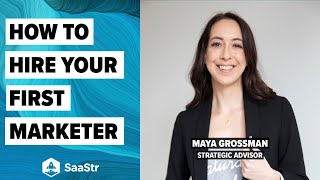
Maya Grossman, a 15-year marketer from Microsoft and Google, breaks down how to hire your first marketer. She maps three core roles to company stages: product marketing for seed, demand generation for Series A, and revenue leadership for Series B. Use whiteboard sessions and take-home assignments to evaluate candidates, and prioritize cultural fit.
Chapters
Awesome. Welcome everyone to how to hire your first marketer with Maya Grossman. As we're getting started, just going to run through a couple housekeeping items. So this will be an interactive 30 minute session. So about 15 to 20 minutes of presentation followed by Q and A. We encourage everyone to keep their cameras on but audio muted. During the Q and A. You are welcome to raise your hand and we can unmute you and you can verbally ask or at the end or during. Feel free to drop your questions in the chat and we'll get to them at the end. These sessions will be recorded and the slides will be available afterwards via SlideShare. And then remember to register for one on one meetings on Brella. I will drop that link in the chat right now and we'll let Maya take it away from here.
Thank you. Hi everyone, my name is Maya Grossman. I've been a marketer for the past 15 years. I worked for companies like Microsoft and Google as well as fast growing startups. And to be honest, throughout my career, having worked with dozens of startups, there's one thing that was pretty apparent. The biggest problems that CEOs see when it comes to hiring is finding the right marketer. Whether you're trying to hire your first marketer or the VP of marketing, somehow this is the hardest thing in terms of hiring. And it kind of made me wonder, why is that? And I think very often it's because a lot of CEOs and founders don't have a marketing background, so they don't necessarily understand the ins and outs, which makes it a lot harder to actually evaluate a candidate. And another thing is that they don't necessarily know what type of marketer they need to hire. And there's so much confusion right now. If you look for marketing roles, you will probably come up with 20 to 30 different titles for types of marketers that you can hire. And it can be really confusing. So what I want to do today is try and make your life easier. I want to give you a couple of tips and a few ideas on how to actually approach this process, how to interview and evaluate those candidates and hopefully find a great marketer that will be the best fit for your company. So let's get started by first talking about marketing. And there's a lot of misconceptions when it comes to marketing. And I think some people tend to think that marketing is like magic. You turn on a switch and suddenly everything works and your company has great marketing. And you know, it's just. But the thing is marketing, there's no playbook, there's no actual recipe. Something that worked for one company wouldn't necessarily work for a different company in a different industry or with a different type of customer. So when you're looking for a marketer, you actually want someone who understand the basics, someone who knows the different ingredients within marketing so they can put it together and create a recipe that's gonna work for your company. And I think one more thing that gets people very confused these days is everything to do with technology. While I love martech and when I do have the opportunity to use software, it can definitely amplify the marketing work, it doesn't actually solve problems. You usually don't need marketing technology before you hit your first couple of millions in ARR because the only thing it's going to do is to amplify what you already have. So if you don't have product market fit, it's definitely not going to solve that problem. So assuming that we kind of agree on what marketing is and isn't, it's time to start thinking about the different types of marketer out there. And as I mentioned, there are dozens of dozens of different titles, but I actually tried to bucket them into three different categories to make it a little bit easier. So if you look for someone with a product marketing background, what you can expect from them is to be the expert when it comes to your clients. These are the people who are going to help you figure out what is the right type of customer you should attract, what does the competition looks like, and if they're good at what they do, they'll be able to understand the customer really well and create messaging and positioning that will actually get people excited and want to buy your product. Marketers who do demand generation take all of that information and all of these insights and the messaging and they figure out how to put it in front of the right people at the right time. And they can do it through paid advertising, they can do it through organic channels, but their goal is to create touch points throughout the entire funnel to get your customers one, to get to know you and two, to get excited about you and actually have some call for action where they sign up for a demo or end up buying your product. And the last bucket is communications. And this is a marketer who knows how to work with different bloggers and advertisers. They know how to work on relationships, your corporate communications and, and more often than not, I see marketers with communications background come in later in the life cycle of a company where you need that overarching story and you need to deal with the media and with the press. So if those are the top three buckets, how do you know which type of marketer is going to be right for you? So I like to try and make your life easier. So there are obviously some exceptions, but you can use this as a rule of thumb. If you are super early into your company, you're basically still bootstrapping. You haven't even validated your idea, you probably don't need a marketer, so don't worry about it. If you raise your seed round, you have a working product and you're trying to really hone in on who's the right ideal customer for you and what is the problem that you're solving. This is when you want a product marketer, you want someone who can really understand the customer and create great stories to get people engaged. If you are pre opposed your a round series, you already have a couple of customers. You know that what you're doing is working. This is when you want to actually scale and expand and this is when you want to bring in someone with a demand background who can actually take that information and get it in front of the right people at scale. And lastly, if you're pre or post B round, you have product market fit. Everything is working, but you actually need to accelerate what you're doing. This is when you want to consider bringing in a leader. This is where you want someone who's more of a revenue marketer, someone who can own bottom line numbers and think in terms of the business, not just marketing. And they can probably have either product marketing or demand background. But whatever they're great at, they're going to need to hire. Their first hire is going to be the exact opposite. To make sure that you have the complete package. Now let's say that you know what type of marketer you actually need to hire. How do you actually evaluate them? Because it's not easy to do when you don't necessarily understand marketing. I would say step number one is to define what success in this role would look like. And not in terms of responsibilities, but in terms of outcomes. What do you actually want them to achieve? And I think by setting these goals, it's going to be a lot easier for you to actually evaluate whether or not these people are the right fit for you. And you can just ask yourself, you know, a year from now, you know, what results does this person need to deliver so that we actually hit our overall company goals? Or what problem are they going to solve for me in the market Step number two is to go a little bit beyond the interview. It is very easy to get excited by seeing someone's resume, but interviews are usually conversations about the past. And you want to see what this person is going to be able to do for you in the future. You want to see how they take all the skills that they have and apply it to your problem. And this is why you want to have a whiteboard session. So you want to have an open conversation where you basically brainstorm, right? You tell them about your challenges, what you're trying to solve, and they can come up with ideas. It will also allow you to see what it's like to work with this person. And it's really important to see how they think, how they interact and make sure that you are able to communicate really well. Another thing you can do, and this one is a little bit controversial, I know, but you can ask your candidate to work on an assignment for you. You basically give them a task. The reason it's a little bit controversial is because people don't necessarily like asking a candidate to do work for free. And while I understand usually those tasks don't take more than three to five hours. And if I'm being honest, in my 15 year career, I've never hired anyone without seeing an assignment from them because this is the ultimate testimonial to what they can actually deliver, how they actually work, and you want to see that. And again, this is my personal opinion, but if someone is not willing to put in the three to five hours to get the job of their dreams, I'm not sure they're going to go the extra mile in the day to day as well. So that may be a red flag for you Anyway, step number four, or just an additional step that you can go through, is to bring in someone who's actually an expert and have them help you figure out if you have the right person. I've actually done that for my clients many times. I interviewed their marketers to really help them understand whether or not they have the right person. And the thing is, when it comes to marketing, there is so much jargon and there are so many buzzwords that sometimes you can get a little bit lost just because someone keeps talking about ABM and CREAT leads and what's not. So if you bring in someone who is familiar with the language and can kind of see beyond the fluff, it's usually a really great way to make sure or to validate that you chose the right person. And it's actually usually pretty easy. You probably have someone, whether it's a colleague you worked with, maybe an advisor that you worked with before, or even through your investors, you can find a great marketer that will behave, able to take 30 minutes of their time and actually evaluate that candidate. And lastly, and this is actually a big one, you want to make sure that you like this person. If you're hiring a marketer, especially if you're hiring an executive, they're going to report to you. Right. And you're going to have a daily conversation. And you want to make sure that it's with someone that you trust and with someone you can actually communicate with and work with. And if that's not the case, it doesn't matter what their resume says. It doesn't matter that everyone else thinks they're great. If you're not going to get along, it's never going to work, at least from my experience. So definitely make sure that this is someone that you actually enjoy working with. Yeah. So just to kind of sum up everything that we talked about, marketing is not magic. You need someone who understands the basics if you actually want to create the recipe that's going to be right for you and your company. You want to figure out what kind of marketer you need. And I tried to bucket it just to three different buckets to make it easier for you. You want to define what success looks like and then you want to go beyond the interview. You want to try and have a whiteboard session, you want to ask them for a task or bring an expert to actually interview them. And lastly, you want to make sure this is someone you enjoy talking with and working with, because you're going to be working with them every single day. Now, I know this has been very quick overview of something that is a lot more complicated, but I just wanted to give you a couple of tips and open this up to conversation and answer your questions.
Hi, Maya, thanks so much. Good stuff. In terms of a product marketer, first phase product marketer, are they, should we be looking for them to have clicks and pixels background or are they. What I've found is I've run into more strategic, you know, boardroom, philosophical type of marketers in that product marketer and they don't want to be in the clicks and pixels. But when I heard you say demand gen, that's more clicks and pixels, so I'm a little confused there. Could you elaborate on that?
Of course. So product marketing is actually a very complex discipline. Some of the work does require data and pixels, but the majority of it is more around Finding the right messaging and the value proposition. So you definitely want someone who's a doer. Just philosophy is not going to get the work done, but they do need to spend more time on work that is softer. They need to actually interview customers. They really need to understand how they see your product and how it solves their problem. They need to understand where these customers spend time. They need to understand how they like to consume content. So whatever it is that they create in terms of messaging will actually resonate. So it's a combination of both because more experienced product marketers will also be responsible for your go to market. So they will actually need to choose the right channels and funnels and work with demand gen for them to actually execute the pixel part of it. And they are also going to support your sales team by creating sales enablement. They're going to create tools for your salespeople to actually sell quicker. And that means they need to be experts on your product, on the market and on your type of customers. And those are things that you can look for. And if you want to learn a little bit more on how to find those right people, I would just say go to the Product Marketing Alliance. It's a great resource for product marketers but it's also going to give you a ton of information on what they actually do and what you can expect from them.
Awesome. Thanks so much Maya. Appreciate it.
Sure.
Hey Maya, I had a question kind of from startup land. If you bring in the product marketers or the demand gen folks in the beginning and let's say they're a little bit more junior, right? Because they're probably not managing their whole team. How have you managed when you bring in the more senior person who's quote unquote going to layer, which some people really don't like. Have you set those expectations? Have you just expected attrition? Like how do you optimize for that evolution?
Yeah, I think it really, it's just like everything else, it's all about building relationships. Right. I've been a manager for more than a decade and I never come into the room and say, hey, I'm the manager, you're going to do what I have to say. So if you have the right leader, they're going to make those people feel like they just won the jackpot because they finally have someone who understands marketing, who's going to give them the resources they need, who's going to put them front and center for the company to demonstrate business results. So I think it's just about really coming in with the right attitude. And I've done that a couple of times where I joined a team that already had a couple of employees. And it was really about making them feel comfortable, making them feel heard and empowering them to continue doing what they're doing, just better.
And so, Maya, so would you say that that first person that you bring in for the product side has to work with the product development team, the outside sales team, and know how to do a launch plan from all the different Personas and email campaign and you know, the mission, the value and everything so they can help build all that? Is that what you're saying?
Yeah. Apart from the email campaign, which can be either a product marketing or demand, depending on how you build your team, that's pretty much what you're looking for. You're looking for someone who can help you build the infrastructure and really understand what you're doing. Because if you don't have the right story, the right messaging, or you're trying to sell the wrong value, you can spend a ton of money on demand and it's going to go nowhere. And trust me, I've done that. It just doesn't work. You have to start with really nailing the messaging.
Maya, looks like we had another question come in. Any advice for making that first early stage PMM hire? Being now a fully remote company seems like a high context role. What will the most important, what will be most important to make that person successful?
Yeah, PMMs are in a way integrators. Right. So they sit usually within marketing, but they have to work with sales, they have to work with the product and they have to work with you as the CEO. So you need someone who's a great communicator even before we went remote. So now it's super crucial. You need someone who's a people person, can really get stakeholder buy in. They're just really great at bringing people together. And I think a great way to see that would be having those whiteboarding sessions and maybe bringing in someone else from the team, maybe from the product team and seeing how they kind of interact together.
There's a question. Diederik from Other side Software in the Netherlands. Great information.
One question.
We've got a product market here too. One of the discussions internally is how much he has to know about the product and about our customers and what the needs of the customers are. What's your opinion on that?
I think your product marketer needs to be the expert on everything you just said. They need to know the product inside out. They need to know your Customer as if they were part of your target audience. And it takes time to get there. You can't expect someone to step into the company in a week after know everything. But they need to do at least the first steps to get there, which is use the product, go through the training or the demo that your sales team would usually do. They essentially need to become power users of your own product. And on the customer side, I would say the minimum is to actually interview a couple of customers. I mean, they can listen to sales calls if you're recording them, but it's not the same as having a real conversation. And if they can actually speak to people who are in your funnel but never made it to become customers, that's even better because they'll learn what's not working. But in my book, they need to be the experts in my book too.
Thank you.
Good. Do we have any more questions?
I have one quick follow up. How do you think that in the age of product led growth, any of these roles change or do they not change at all?
I think product led growth is more about the company as a whole. And if the company is product led, then product marketing is definitely going to help. So there's going to be a lot more collaboration. But I don't think it changes the role necessarily because even when you use your own product to generate demand, I don't think you can afford not to do demand externally. It may be a different type of collaboration. Maybe there'll be a different type of balance between what's happening internally and how your product is generating more customers. And you're going to have to decide that internally, obviously, but I still think you're going to need both.
Thank you.
Sure.
Any other questions?
So, Maya, this is Jim Schimpiggin. I'm gonna jump in because this difference between this product marketer and the lead and the demand gen is just fascinating to me in some perspectives because as a early stage startup, we feel like we've got some customers, we've got some knowledge around value propositions and messaging, and we've tested some ad copy. Are we fully there to. It's almost like I'm in between product marketer and demand gen life cycle.
Okay.
And based off of that and listening to what you're saying, I'm actually interviewing marketers as we speak. So this is why this was fascinating to me today. So tomorrow when I wake up, like, what's my next move based on where I'm at, in your opinion? And I don't mean to be, but provide insights for the group for the.
Good of the group.
Yeah, of course. I would say the best way to know that you're ready to kind of shift from focus on product marketing to the mangen when your sales process becomes easier, when you get people to the top of the funnel or you even do outbound outreach and they convert very quickly, at least in relationship to how long your sales cycle take. Right. So if your sales cycle is eight months and you move it to six months, then that's great. But if it's two weeks and you move it to a week just because you have better messaging and when people get into your funnel, they immediately get it and you have high conversion rate, that's when you know that you're a little bit closer to the product market fit side. And that's where I would start experimenting with demand gen. And this is what you should probably do. You should experiment. You should try a couple of things. Dimension is not just paid advertising. If you have a podcast, that's dimension. If you have a blog, that can serve as dimension, because the goal is to get people to be aware of what you're doing and actually raise their hand and come to you. That's the part of creating the demand. So you can start experimenting. You can start putting people into a funnel. Whether it's advertising or, I don't know, sometimes people use ebooks, downloads, and things like that to try and understand whether or not what they're saying actually resonates with their target audience. And when you start seeing positive results, that's when you want to pour more time, more money, more effort into that and actually scale it.
Okay, thank you.
Sure.
Quick question here. Clearly, everyone on the call is satisfied, so everyone's startup. So therefore, if we think about marketing and Geoffrey Moore and crossing the chasm, most of the people on the call, I'm assuming, are to the left of the chasm. We're innovative. We're trying to sell to corporates. So that's very different from the marketing that happens right to the chasm where it's already an established market. So can you contrast how you think marketing happens to the left of the chasm, where we're trying to find evangelists trying to make a market versus to the right of the chasm where we're in competition against other companies?
Yeah, I think when you start on the left side, you have a lot more validation to do and a lot more experimentation. You don't know 100% what's going to work. You can have assumptions, but at least until you try it out, you don't know. When I worked as the VP of marketing for a fintech startup, I really thought that we're going to scale once we start sending out a newsletter and it just didn't resonate with our specific customers. When we moved to using WhatsApp and sending them chat messages, they loved it. It exploded. So I think on the left side of the chasm, you really need to experiment. You have hypothesis, you need to actually validate them. Once you cross that chasm, once you have not just the early adopters, but the majority and people get what you do, it's less about creating awareness and more about getting the right people at the right time. And I think that work is a little bit more of the dimension and it's a little bit more about finding new and creative ways to improve what you've done so far as opposed to experimenting and trying out new things. You should always have room for innovation. I'm not saying it's stops, but it doesn't play as big of a role as it does before. And I also think that in certain aspects you have less time to play with product marketing because for the product that you already have, you already figured it out, right? So if you're creating a new product, if you're adding features, yes, you're going to need a product marketer to help you update those. But if you're at a point where you're already selling really well, then you don't really need to discover your customers all over again. Unless something changes.
Thank you.
Looks like we had another couple questions come in. Do you think there's a minimum budget required to spend on marketing channels before you hire your first demand gen person?
I'm not necessarily sure you need to spend money before you bring in a demand person. You can do a lot of demand for free. Just to give you an example, in one of my consulting projects, our main demand funnel was a blog. We created a very unique blog with information about AI and machine learning that came from experts in the field, but no one knew that that blog existed. But instead of spending advertising money, what we did, we went to an expert in the field, someone who was already involved with the company and with the blog just because they really enjoyed contributing content. And we asked them to be kind of the face of the blog and to share the stories that we create. And we got this influencer who by the way is a little over 70 years old. We got him to post really ugly one minute videos he shot through his laptop about the blog post that we were creating. And the first one we shared, which was also the first thing he ever shared on LinkedIn, got about 50,000 views and drove 25,000 people to the blog. So demand is not just about spending money. It's about understanding where your audience is and how to use the resources that you actually have to drive that traffic. And after doing that for a couple of times and seeing that it works, then you can bring in, you know, some of the budget to actually amplify it, but you don't necessarily need money to get started.
Awesome. Any other questions?
Great.
Well, thank you so much for your time, Maya. If any other questions do come up, feel free to reach out to her directly. Otherwise, thanks so much for attending everyone.
Thanks everyone.
Nice job.
Thank you.










