"How AI is Changing the Way We Work" with OpenAI's Head of Sales
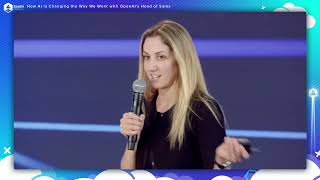
OpenAI's Head of Sales discusses enterprise adoption since ChatGPT launched. The company moved from services to token-based pricing, scaled with consumer and API products, and released ChatGPT Enterprise with Advanced Data Analysis to help companies build AI assistants.
Chapters
What's it? REI Chatbot went viral. So we thought, okay, this is, this is just gonna last for a couple weeks, we'll hit the holidays, it'll calm down, we'll come back from the Christmas break and everything will be back to normal. But that's not really what happened. We came back from holidays and instead the interest just kept coming and coming and coming. So we went from about 30 leads a week, you know, before ChatGPT, to something like 10,000 with three sales reps. So this is only 10 months ago. We're talking just the last 10 months since ChatGPT launch. We have just seen a huge increase in the interest in AI, AI applications, an explosion of AI globally. And this has all really been since November 30th of last year. We've come a really long way now. How did we get here? So OpenAI started as a research lab in 2015. The goal was to build safe AGI, AGI being autonomous systems that can perform work as well or better than humans. This goal seemed outlandish and lofty and frankly the founders were laughed at at the time. They started the lab in 2015, but they persevered. In June 2020 we released GPT3. That was our first state of the art large language model. I wouldn't say it caused a tidal wave in the world, but it did cause a spark of interest on a small group of researchers and some startups who started building on it. We had four flavors of it, the simplest being ADA that could do simple classification all the way up to our most robust model, DaVinci, which you could actually generate some creative content. So we started seeing some copywriting companies, companies like Jasper, starting to build real platforms on top of our models. From there the pace picked up pretty rapidly. So in 2021 we trained GPT3 on GitHub repositories and produced a model that could code called Codex. You guys might have tried out or heard of Copilot, that was the original version that could perform code and essentially be a pair programmer. After that we released embeddings which essentially vectorizes language and allows you to search across it to perform recommendations. After that we released our instruction following models which were really our first enterprise ready models. They followed instructions. So if you said chatgpt or GPT@ the time, if you don't know the answer, say I don't know. The model could say I don't know. We also then introduced our big image model, Dall E2. This really took the world by storm last summer. It was really Exciting. It feels old hat now. It feels like these image models are everywhere. But this was a really extraordinary leap forward in innovation when we released it. Put in a word, get out an image. From there, the pace of innovation really picked up rapidly. So obviously ChatGPT, after that whisper, our automatic speech recognition model, GPT4, our state of the art seminal model we released in March. We actually finished training GPT4 in August last year, but we waited a little while before releasing it. When we first tried it out, we were all quite flabbergasted by how powerful it was and we decided to sit on it almost six months to make sure that it was safe and ready for prime time. So we released that in the spring of this year. Then we released some additional features with ChatGPT, like browsing with Bing code interpreter, third party plugins. We recently introduced some new features like custom data handling, function calling, which outputs in JSON so you can call APIs, and our Android and iOS apps. So as you can see, we've really been on a blistering pace lately, releasing a lot of new innovation and features. Now, how the heck did I end up here? I get this question a lot. So it was end of 2022, sorry, end of 2021, I had been at WalkMe for about three and a half years. We'd gone public, I got to ring the bell on the nasdaq, it was a really great ride and I was starting to look for something new to do and someone I used to work with had joined Jasper as the president and he reached out and said, hey, come run our sales team at Jasper. And I started playing around with Jasper and I said, this is really freaking cool. What is this? And I had worked in AI about 12 years prior, so had some appreciation for what I was looking at. Started digging through the documentation and saw GPT3 and I said, what is GPT3? Dug some more and found OpenAI and looked it up on LinkedIn and turned out I knew a couple people there. So I pinged one of them and said, hey, what do you think of Jasper? And he said, hey, are you on the market? So I said, sure, why not? I'm happy to talk to you guys. And he introduced me to Sam. So I met with Sam and it's hard not to be inspired by Sam Altman. And I was really blown away by the audacity of, of his ambition. And he said to me candidly, you know, I have no idea what sales is going to look like here. We don't really know what this thing is going to feel like how we're going to go to market with it. But if you want to take a shot on it, I think you're a great fit. Let's give it a try. So I joined a sales org that I went from managing a giant sales org to a sales org of two people with really no infrastructure in face. I was told we had salesforce, but it was not quite implemented. So. So it was a really interesting environment I stepped into. And in fact, on my first week I walked in the door and the first meeting I came into, they said, we have oversold our license model and we need you to help us undo it. When I dug further into this, I understood we were actually selling services. So we were saying, hey, buy a license with OpenAI and we will meet with you for one hour. We can help you solve your AI problems and ideate and come up with ways to implement our models. And. And unsurprisingly, this was not a very scalable model. So we quickly ran out of man hours and services to sell. And I walked into a room where I had literally nothing to sell and had to undo the sales that we had done. So that was not a great start. And the reality really was just our product market fit wasn't quite there yet. And that's why we were selling services. We were stuck in experimental groups. Innovation labs, people hadn't quite fit, figured out what to do with GPT3 other than create basic copywriting generative copy apps. We couldn't get past that. We couldn't figure out chatbots, we couldn't figure out support. We couldn't really get to the next level. So I started playing around with our token model. And funny story here, so at OpenAI, we have these long picnic benches in our dining hall in our cafeteria. And, and the etiquette is you get your lunch and then you just take the next seat at the table. You don't try to look for your friends. It's this nice environment that really forces everyone to get to know one another. You'll sit down and ask the person next to you, what do they do? And they say, I work in MathGen. And you say, what's MathGen? They say, I teach the model how to do math. And you're like, great, cool. How do you do that? So it's a really interesting way to have your lunch every day. But when I would sit down, they'd say, what do you do here? And I say, work in sales. And they say, hi. Huh, we have a sales team. What exactly are you selling? And I got this question from everybody internally and externally. Still get it externally quite often, which you know, I get it, it's confusing. But at heart we've got this concept of a token. A token is almost a word. It turns out there's about 1.3 tokens per word in the English language and you consume tokens when you put in a prompt and then you get an output or a completion. So using this token model I came up with the idea of committed consumption. Now this isn't a brand new innovation, all the hyperscalers use it, lots of API companies use it. But what it did is it allowed us to talk to our customers about their forecast. How are you implementing our models? How many tokens will you consume? What is your forecasted spend? And then we could qualify, which we had been doing none of. We could actually figure out who's a good fit for us to work with. And this model worked pretty well. We were actually able to start scaling our customer base and thank goodness we did because we had that in place just on time for ChatGPT, which interestingly even though ChatGPT was a consumer product, it really fired off a huge demand among enterprises and businesses. So at this point we had two products. We had ChatGPT, the consumer app, which hopefully you guys have all used and then we had our API which is how software companies primarily and enterprises could build tools on top of our models via API. So something cool started happening. Companies started building real products on our API. We got out of the beta labs, we got out of the innovation labs and we got into production into users hands. It started with Chatbots, fun, interesting, functional. We had Discord launch Clyde HubSpot launched Chat Spot which is a really cool way to interact conversationally with data. Snapchat launched my AI, which I don't quite get, but the gen zers are really interested in and is a way to have an AI friend who gives you feedback on your snaps. They built better recommendation engines as Spotify launched an AI DJ and Instacart. I love this implementation. Instead of coming to Instacart and saying I want butter, sugar, flour, you say hey, I've got a three year old and a five year old and here's what's in my fridge and can you meal plan for me for the week? So conversational grocery shopping. They also built tools to catalyze their users. So Ironclad built an AI redlining option so you could save your legal time on reviewing contracts by marking what's acceptable and what's unacceptable. Notion launched Notion AI where you could translate, edit, improve your notes, which AstraZeneca used to save time and cost on drug discovery. Eventually, so many companies were launching products with us that it became impossible to keep up. There were so many use cases, so many apps, so many launches. We created a Slack channel, just launches, so we could track they seemed to be happening day after day after day. And it was, it was just amazing to watch the explosion and creativity of our customers. Last week we launched ChatGPT Enterprise. Woohoo. I'm very excited about this. Been lobbying for this for a very long time. We now have a way to bring the magic of ChatGPT, the enterprise, safely, securely, with fast unlimited GPT4. This is our tool for internal productivity. So every person in your company, your product designers, sales team, Data scientists, InfoSec, HR, everyone gets a chief of staff. So what am I telling you so far? This is not exactly what I signed up for a year and a half ago. A year and a half ago it was, hey, we got two people, this will be pretty chill. A year and a half later, it's the opposite of chill. And we've got now two different products, two whole different sales teams, we're hiring like crazy and we're on a rocket ship. And really for me, over the last year and a half, the main takeaway and the moral of the story has been adapt, adapt, experiment, deal with the change and handle what's thrown at you. So here we are today and what does this mean for you? What does this mean for salespeople, for startup founders, for anyone dealing with customers? So we had this product that we called Code Interpreter. I really hated the name because I felt like it was really unapproachable. I'm like, what sales rep is going to use something called Code Interpreter? So lobbied really hard, we have officially rebranded this to Advanced Data Analysis, which I think is a better name for it. Essentially what this tool does is it lets you upload files, analyze data, produce charts. Now, every salesperson in your organization can become a data scientist, or at least not have to go bother sales ops and do things themselves. So I use this to cut territories, to analyze my leads. You could potentially use this to analyze your sales funnel, figure out weak spots where customers dropping off. You could use it to perform competitive analysis. You could also supercharge your sales coaching so you could upload data sets around win rates and understand how to coach your reps who's performing well, where, where are you seeing what long sales cycles or low deal sizes you can up level your one on ones so you could actually upload transcripts of your one on ones to get feedback. ChatGPT could be your coach, your mentor, your manager. It could help you make yourself better at your job by analyzing your performance and your advice to your sales reps. So in this example we are uploading transcripts of a one on one with Emily and ChatGPT is saying, hey, here's some feedback for you. You might want to ask for some feedback yourself. You might want to prioritize items with Emily for follow up. You might want to make sure you follow up on that item she brought up last week. So actually it can make you a better manager and you have a coach. This is my favorite new feature. You can share templates across your team. So if there is a email template that you love, that you find yourself using as a prompt over and over again, you, you can save that prompt for yourself. So every time you open up ChatGPT, you can just click on that template and generate that email and then you can also save it to the rest of your organization can use it. So as an example, you could create a prompt where you could just throw in your chicken scratch sales call notes. After your call, it will automatically put them in your salesforce field output that you need for your CRM. And then it could also just generate a follow up email for you and you could share that template with your whole company. So you can look across the team and say, hey, who writes the best email follow ups here? Let's take that, make that a template so everyone on the team has the best email follow ups. Everyone here is a top performer. So it's one of my favorite new features. You could also scale sales enablement. This is near and dear to my heart right now. As we are hiring so rapidly, I need to figure out a way to get people comfortable with all of our new products. Learn all the language of AI so you could do things like create interactive quizzes on your content. So you could open up a template and then the user would be prompted to go through what I think we called here an immersive training adventure. So we're going to teach you about some items and then we're going to quiz you on them. So you could get really creative here and use templates. Anytime you release a new feature, anytime you have new information for your sales reps that you want them to understand, you could make that a template that they interact with, which is a much more fun way than just sending out a slack or sending out an email when you want someone to update and learn something. Finally you can get everyone the help they need to close deals. Now maybe this is not the most glamorous part of the the onboarding journey. How do I connect to vpn? Is tomorrow a holiday? What is our expense policy? But information that's still really handy to know. So you could have this stored as well. So Anybody can query ChatGPT and find out the information they need to know to get their job done. So that's where we are today. Some pretty big leaps already from a year ago now. What does the future hold? Imagine a world where you could focus on doing what you're best at, which is interacting with customers, maybe explaining the value of your product and everything else. All the admin work, the mundane tasks you could outsource to an assistant. Lets say you wake up, you're getting ready for work and your assistant is telling you about your meeting at 9am who you're going to meet with, what you need to remember, some pointers, what not to bring up some things that happened last time that you should remember last time you met with them. Then during the meeting your assistant is giving you nudges and help and guidance. When you don't know the answer, they're pointing you in the right direction. After the meeting, your assistant sends all the follow up emails, records everything in your CRM, maybe fills out an RFP or a security questionnaire, maybe goes through the legal process for you. In other words, imagine a world where you do what you love doing and everything else your assistant can do for you. This is the world where AGI is your assistant. Thank you.










