How BigCos Work With Startups (And Vice Versa): Jason Lemkin SaaStr CXOTalk
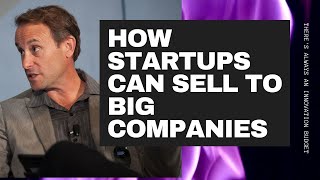
Jason Lemkin explains how startups and enterprises can work together effectively. Startups need to offer paid pilots and handle security certifications like SOC2. Enterprises must be upfront about budget and timing, and both sides benefit most from direct CEO access and regular roadmap reviews.
Chapters
Companies do not buy software. Human beings buy software. Human beings buy startups.
How do you innovate with startups? How do you invite startups in, engage with startups and achieve a successful outcome? Jason Lemkin, he is the trusted advisor, the founder and the CEO of Saster. It's the largest community of software as a service founders in the world.
Saster, as you noted, is the world's largest community for SaaS foundation founders and executives. I sold my last startup as a founder myself to Adobe. It was called Echo Sign. It's now Adobe Sign, which is a distant, but the number two in the e signature market. Still doing 300 million in revenue today, mostly to enterprise. And after I sold my company, I just started sharing all my mistakes and other founders and CEOs came out of it and it grew. And folks like we were talking about before we started the Eric Wands of Zoom and and many others all in many ways learned about how to scale SAS from Saster and it's exploded. And we've done events. We had the first big real world event since COVID in the Bay Area a month ago. In the Bay Area, we had over 6,000 people come in a fully vaccinated, fully tested enclosed environment. And so we do big events, podcasts, media. But our mission and our goal is to help founders scale faster because it's all a playbook. And in many ways on the other side for the CXOs and CIOs here, it's also a playbook for them, but it's murkier. Right. And so I think there's a. Saster's goal is to help you learn the playbook, to sell to bigger companies and smaller companies as well. And so it's a great time to talk about, I can share here what founders are seeing, what the thousands and thousands of CEOs in our community are seeing learning and feeling, especially as the whole world has changed since March 2020.
From what you've seen. Can you kind of summarize some of the challenges that companies that you've seen companies face when they try to work with startups? And at the same time, what do startups need in order to work effectively with a large organization?
Well, let's step back for a minute. I think there's one special thing that a cio, a cxo, a large company should get out of a startup. The first one, of course, is innovation. Right? In which we're going to chat about. You seek out. There's so much risk in a new vendor. Right. Of course, there's so much risk that you have to get innovation. But as part of that you get something special, which is you should get the CEO. If you are a cio, a CXO and you're writing up what, what to them is a large, a large contract. So find out, will I be, it's a fair question, will I be one of your largest customers? Like find this out and the great, and sometimes startups will squirm a little bit. They want you to think they're bigger than they are. But it's a good question, that's a good thing for both sides. And if you're one of their 10 largest customers or 20, you should be able to get the CEO on Zoom, on email whenever you want. Not just to have your questions answered, not just to complain about feature gaps, right? But actually to be part of that roadmap, that journey. And that's the special part is getting it, the access to the CEO. It's so special and it's special for the founders and that's how you can get things built, done, achieved for your own organization. You could never get from a large vendor, right? And I think that's part of the sort of social contract that's missed is getting to that CEO. You can never get the CEO of SAP or anyone on the phone unless you're a huge customer, but you should get that with the startup.
So that's an important aspect, is direct access to the CEO. Why is that so important? If you're a CIO inside a large company, why does it matter that you have direct access to the CEO of the startup?
Well put aside, first of all, it can be rewarding, right? As a cio, how many new vendors? And then I'll more directly answer, how many new vendors can you bring in? And this is what startups get wrong, right? Startups think CIOs and CXOs are buying 80 pieces of software a year, right? The truth is an individual business line, they're lucky if they can do two pieces of business process change a year, right? Even one is a lot, right? So it's a rare thing to actually get to part, actually get the CEO of that business of a journey you're going to be on for five years, that you're going to be judged by the deployment of the software over the better part of a decade to have that hotline to, to be able to get and more importantly, to be able to get built what you want to get built, right? The beauty is even a late stage startup, even a startup doing 100 million in revenue can reorient its roadmap in a way a larger company can't. Right? So as a buyer, there are probably you're buying a new piece of call center software, a new piece of collaboration software. There's some meta reasons you're doing that, right, to improve that functionality in your company, but there are specific needs. You need a specific feature, a specific set of functionality that probably does not exist with the legacy vendors or you would just continue using them. Right? And if you have the relationship with the CEO, you are going to get a better outcome for the one or two things that really matter to you, to you in that job and organization, and that is, that is special to be able to pick up the phone and you may not get that feature next week or next quarter and cos screw this up. On the other side, they're stressed that they can't release that critical feature next month, but it's okay if you're a CIO or CXO. The fact that in a year, in 12 months, you're going to get something you've been waiting seven years for and will be a hero to your organization, that's the magic of the CEO relationship.
What about the motivations on both sides? On one level, it seems kind of obvious that if you're a big company, well, you want to buy innovation of some type and if you're a startup, you want their budget. But is that really the primary thing? Are there other aspects to the motivations? Because understanding motivation can help us work together for sure.
Right? I mean, I think some of this is fairly obvious. Nothing new. I think on the startup side, on the new vendor, it's very important to understand what the particular goals are of your stakeholders. It's very important to map out your lead stakeholder and the three or four others in the organization and find out what really is important to their job and their role. Right? We are human beings buying software for M and A. We are human beings buying other companies. Right? Companies do not buy software, Human beings buy software, human beings buy startups. And a mistake made on both sides is not understanding what the goals of the human beings making these decisions are. Right? So how do you. It's nothing new. It's been true for decades. But on the startup side, you have to understand what makes every stakeholder a hero. Right? What makes Michael a hero, what makes Linda hero, what will make Bob a hero. And as a founder, as a CEO, the first time one of your customers will send you the newsletter, right? The SAP newsletter, the Qualcomm newsletter and you'll see Michael highlighted as the hero for deploying the software. And this aha moment will go off. You're like, I truly made my buyer a hero. Right. So you have to understand what will make them a hero. And then I think the social contract on the other side. If you want that CEO relationship, right. If you want that fast track to innovation, that's what you get from the CEO. To summarize, you get the fast track to innovation if that's important to you. Right. You have to be a reference customer. Right. And you have to buy, you have to be direct about budget and you have to complete the deployment in a reasonable amount of time. Right. It does not have to be done in a week as founder. Founders think they can close million dollar deals in a week. They learn, they learn how the cycles work. But this transparency back, what is budget? How am I doing? What are the odds this is going to happen? How is our pilot really going? Right. This level of trust and transparency de stresses the investment that the startup has to make. Right. Because sometimes the CIOs and the CXOs underestimate the investment that the startups are making. I'm also an investor, which I should have hit. I've invested in 5 unicorns. My investments are 15x in SaaS over lifetime. It's pretty good. I have my own $100 million fund and I was literally, I mean you've heard the story a thousand times. But I invested in an early stage startup. This quarter they finally hit 2 million in revenue. Okay. And they, but 2 million. They closed their first million dollar customer. That's a lot. And they know, they know they're their first customer. One, they're reorienting the whole roadmap around them. They're not, they're not building custom software, but they're changing the whole wraparound. This million dollar customer is getting what they want, but it is the only new thing they can do for two quarters. It is the only new thing. So they cannot take another million dollar customer for about two quarters. Right. And I think that's emblematic of the relationship. This vendor is taking risk and they're getting exactly what they want that they can't get for another vendor. But realize you're derailing the company. It's a great deal for the startup, but they can't do another one of these. So you have to understand the social contract on both sides to get what you want. Right. And there can't be too much greed or too much myopia on how this Relationship, synergistic relationship works.
It's very interesting that you use this term social contract, because it implies a relationship that goes beyond being transactional. I pay you a certain amount and you drop software off at my doorstep.
Yes, that's the other, the CEO relationship. Here's a funny thing. It took me a while to figure out CEOs and founders at startup have the longest tenure of anybody. When you're a startup founder, you're like, my gosh, I met a senior vice president at SAP. That's so amazing. And the next year they're gone. If you sell into big companies, you will find that the turnover, it's high. In fact, it makes it very high to sell to the enterprise because that turnover when you lose your. One of the worst things for startups is champion change, right? You spend all your time building up a champion and then they're gone. But the founders are usually there for infinity, right? And so that social contract, you can trust any successful CEO or founder, you can trust them. Okay, Michael, you've interviewed hundreds over the course of this program. You're a trustworthy person. You know you can trust. You talk to these people, the Eric Wans, the others that the team from Zora you've interviewed, you trust these people, right? And so that is part of the social contract is you have this special trusting relationship. But the customer does need to deliver back, right? They do need to deliver back.
Well, it absolutely has to be a two way street or the whole relationship will not be durable. We have an interesting comment from Arsalan Khan on Twitter and Arsalan's a regular listener and he asked such great questions. So thank you for that, Arsalan. And he points out, he says that large enterprises are looking for innovation, but startups may also benefit from the discipline that large enterprises are good at. And to me this raises a cultural question because with large companies do have those processes and that discipline and frankly in a lot of large companies, it drives out the innovation that startups thrive on. And you bring the two together and it's like bang, bang, bang.
Yes.
How do you make that work?
Well, first of all, some of it is a maturation process for the startups, right? Getting used to longer sales cycles, getting used to multiple stakeholders, getting used to this process. Ultimately, even the startup I just described that closed a million dollar deals, they all of them like that. They almost can't pull it off. It's so much work, it's so distracting. And then typically what happens is you hire a real VP of sales, a real VP of customer success, like sales and post sales. And they're used to it, right. They embrace these issues instead of are vexed by them. So that's always been true, right. What has changed in the last 18 to 24 months is. And it's in flight, it's just starting. And this is wonderful for the startups and the enterprise is we are finally productizing enterprise ification. Okay. And what I mean is maybe the most visceral example is SoC2, okay. There are now 10 SoC2 startups doing tens of millions in revenue. Okay. SoC versions of SoC2 and its predecessors have always been a critical. Check the box in the enterprise, right? Maybe I'll try a five seat pilot without it. But if you really want me to deploy it, I need it to be secure, right. Et cetera, et cetera. Now that you can begin to productize security compliance, all these other pieces, right? And it can be done as a subscription, this will dramatically make things easier for both sides to meet in the middle, right. Instead of this murkiness, everyone has their own security checklist that's 78 pages, their own RFPs, their own versus version of SoC2. We're only in the second inning of this, but it's magical. As you can see it start to happen is that startups will know it'll be all down to a set of four or five vendors. They will buy on each side and a one page document and you will be enterprise if the hide. And that's something we've never had in our lifetimes, right. In enterprise software it's always been one off, right. And that just creates so many frictions on both sides.
It seems like real challenge to get to the point where the startup can work seamlessly with the enterprise, which ultimately has to happen for the relationship to work.
Yeah, but we're getting there. I would say enterprise as a product, right? Enterprise as a SaaS product is a super exciting theme that's just getting kicked off, right. And I think for the audience and others, if you're not attuned to it, it's something to keep track of, right. How all of this, this, this, this one off work, right? To, to ensure that new vendors are enterprise, it's all becoming productized. And as long as the vendors are trustworthy, as long as they hit, hit, hit their, their stated goals and stated outputs, this will enable enterprises to bring in two to three times more vendors than they could have before, right? Little hints like single sign on and Okta and others gave you little tiny bits of it before. But that was only one piece, right. Identity or others. But having all of the security be as a service all of can be epic. It can enable much more innovation to come to enterprise with less real and perceived risk. Right.
Well certainly that's one of the things that many enterprises are starting to, to try to work on is shifting to the cloud and making the decisions of which components of their stack they move on to the cloud, which they keep locally on premises. What do you need as a startup to make me attractive to you for.
Folks that are pre brand. Right. And let's talk, we should talk a little bit about how brands have changed in startups especially since March 2020. Okay. Because I think it's important discussion. But if you're pre brand, right. If you're not already known right to the startups, I think what you, what you, what startups should do is have prepackaged pilots. Pilots have worked since the 19th century in enterprise software. Whenever we started, people have always wanted to do pilots and folks, and I would say even, even now, even in 2021, 2022, there is no standard for a pilot. How long is a pilot? Is it paid? How much is it paid? How does it work? When an enterprise buyer comes in, they don't know what's supported in a pilot. They don't know. Culturally I don't see enough enterprise startups saying we are thrilled to do a pilot. We will do a 90 day pilot for you. It's $5,000 a month, it's just a flat rate. And here's our pilot and importantly we have a pilot team. Bob, Barbara and Billy, this is your team and they will ensure this pilot is a success. And we have 90% pilot to deployment ratio. Okay. And I just don't see enough startups embracing the pilot. And especially as we're raising larger rounds, if you raise 10 million or more as a startup, you should have a pilot team in the enterprise and you should not because otherwise they're overwhelming and they're hidden. Sales is waiting. Do they need it? Can I trick them into buying a four year contract like no enterprises want to pilot? They want to de risk these things and you should set it up for them so that in that, in that inbound, even on your website you outline your pilot program. It's right there. If the buyers are doing discovery on your website, how it works, it's no risk to you, we will de risk the entire process. Right. And you don't need to do free pilots. Free pilots are a horrific idea in the enterprise. They're terrible for both sides. If you can't budget five or ten grand a month for three months for a pilot, it is not important to you. It is simply not important. So that's the mistake startups make. They give away these free pilots and it's stressful. No. Create a program that is fair to both sides and has limited risk and I think your conversions will double in the startup and the enterprises will immediately know. This is the type of startup I want to work with. They understand risk in the enterprise and most founders do not understand risk in the enterprise. They do not get it. They do not understand it. The perfect pilot, I think can double the odds the startup gets the deal and can double the odds the cio, the CXO is comfortable trying out a new vendor, Right? I've thought through everything for you on the pilot. Right. I've thought through deployment, onboarding, segmentation, security, everything it's done for you. It's $25,000, it's $50,000. Just write me that one off check, we're off to the races next week.
Yeah, that's a.
No one does that. No one does that. And they should. It's magical. Right? On both sides.
Yeah, it's a really, really good point. Which gets to the issue of, in general, do you think that startups understand how to simplify their offerings and their user interface as a company so that they're easy to buy from?
Startups come from one of two backgrounds. You can make everything binary or two groups, right. They either come from the bottom up, right. And they're products like Slack that start off very feature poor but are very easy to use, right. Or they start off enterprise and they immediately solve large problems, right. And get large checks. The ones that start off enterprise never have that wonderful a user interface. Certainly they don't have wonderful onboarding. Okay. This piloting, because freemium products have to make the onboarding elegant or you'll just won't use the free product. Right? It has to be as easy to use as Zoom that we're on or easier or freemium will never work, right. In enterprise. You don't need, you don't even need to be able to have automated onboarding because you just have Michael do it. Right. You can afford to pay Michael for that million dollar contract. So I actually think, ironically enterprises think startups are have the better user interface in their legacy system. It's not always true, but they tend to do the next generation of something much better. Right? You have to have a 10x feature to be a startup. You have to do one important thing, one important thing 10 times better, right? Zoom. Syncing audio and video in real time in a session like we're on. That seems obvious today in a distributed world. It was not obvious when Zoom came out. It was not obvious compared to WebEx or Skype or Citrix that syncing this audio and video in an effortless way was so important. And people missed that innovation in Zoom, right? That was their 10x feature.
You know, I think one of the challenges also that startups face is not understanding the sales cycle, the enterprise sales cycle that can be very long and winding and torturous. And in the middle, your executive, you alluded to this, the person you're working with now leaves and you have to start over again.
Yes, it is tough. And startups that again, if you, if you start at the, the high end of the market, you just learn it right. If your first customer is SAP or ge, you learn it right. Or if you came out of that environment for software, you learn it. If you come up from the bottom, if you come up from an SMB, SMB or self service environment. Startups go through a phase, transition. They, they, they eventually. The beauty of these SMB products is they're always easier to use and more elegant than the enterprise product. Right. The downside is they're generally feature poor, right? Easy to use in future poor. And then the pattern for time eternal, including Zoom and Slack and everyone else is the enterprise sees this, they see that it's useful for a certain group or functional area even though it's feature poor. They bring it in and you start to get leads, you start to get inbound. Right? Hi, this is Linda from SAP. I'd love to talk about your product. Oh, you're so excited. And yeah, we're thinking about rolling it out in 2024. You're like, oh my God, next. And so, but, but you take a few of those calls and then eventually someone's willing to roll it out in 2021 and you just have to decide culturally if you want to embrace that, that brutal phase change or not. And some startups do it aggressively, right? They aggressively go up market. Some do it in a more measured fashion and some, some like Dropbox and others classically resisted it for the better part of a decade. Like Dropbox was like, we do not. We're so, we're doing so well in the low end of file storage. It was a decade before Dropbox went enterprise. So it's a very much, I've learned, it's very much a cultural Thing, do the founders want to go up market? Right. Do they? And I think at the end of the day, what it really comes down to, it's funny for founders. It's like when the inbound comes in, okay, when the inbound email comes in and it says Google or Facebook or SAP, does the company get excited or do they groan? So you. You laugh. But there's a culture where people are like, when you close that Google logo, right? And Google's a big company, right? The company gets excited, you have it, you have a retreat. And oh, my God, we, we love Google. We, we love when you close Zoom. And there's other cultures are like, they're going to ask us to do a lot of crap. They're gonna ask us to do a pilot and another. Another audit. And we just did the security audit. They're so stupid. The questions are so dumb. Right? Of course, literally, the startups that grown just, they should not go up market. That's what you have to do as founders.
Yeah. It's such an interesting point that you're making. It's almost hard to imagine if you're a startup having that level of combined arrogance and lack of understanding of how large organizations function. Because if you want to be successful that you must, you have to understand how your partner works and what they need.
Maybe, maybe. There are certainly companies like Asana and Slack that waited to go up market, right? And we're talking about Stuart Butterfield and Dustin Moskovitz here, okay? We're talking about some of the greatest builders of software since the Stone Age. It's not necessarily hubris. It's more, if you have enough customers in your denominator, you have to be careful. Careful where you're going to place your bets, right? And what happens is software that has wide use cases, you always get a small, medium, large distribution, Right? Even in the early days of Zoom, when security was limited, you're going to get enterprises that take that bet, right? You're going to get pockets. Maybe it's a sales team, maybe it's someone. So as you get to usually even your first hundred customers, and especially several hundred, you will have an organic distribution of small, small, medium, and large. And when I meet founders, I always put it on a pie chart. I'm like, okay, how many customers do you have? They'll say 100. Okay. And I'll say, okay, small, medium, large, how many in each category? And they'll be like, what is. What do the categories mean? I'm like, I don't care. You just tell Me, I'm peering into your brain, small, medium and large. And when the large category is like 40%, early on they're going enterprise, aren't they? And when it's 10% or less, it's immaterial. And it's that gray area in between. 10, 15, 20% of your revenue is enterprise, but the rest is small. That's when you have to be careful as a founder that you don't. Of your 11 engineers, you don't put them all on that 15% wedge or you'll lose the 85%. That's the rest of your customer base.
Well, you also raise another really good point, which is there is a lot of overhead dealing with big companies.
I mean, just lots of overhead. Yeah, yeah.
Everything from procurement, all of it.
And basically I would say no startup below 20 to 30 million in revenue actually secretly can handle it. I don't think anyone below 20 or 30 million has enough extra resources, has. Can put teams on these things. Can actually. That's why I'm telling you, do the pilot team. Even though you don't have enough resources, find a way to go enterprise because you'll beat the competition because you do it, because no one has. It's not just money, it's bandwidth, isn't it? It's having. Until you have 50 engineers, you can't put five on something. Right? Until you, until you have 10 people on your customer success team, you can't really put three or four on your enterprise group. You could put one right, but you can't. So, so it is every enterprise customer until third, even 30 million in revenue is going to stress the organization right to their limits. So they either embrace it or ultimately the enterprise buyers will often choose the vendor that is more enterprise. Right. It's natural. And that's what we saw after March 2020. We actually saw the flight to trusted startups to trusted brands. We saw the Zooms, Talk Desks and others that were number one in their category, the slacks. They got all the benefit. If you look at the market share in Zoom, Zoom got almost all the benefit. If you look at Enterprise Contact Center 59 did great, 8 by 8 did okay. And then Talk Desk came out of nowhere to triple at two hundred and something million in revenue. Right. And so we saw this generally across venture and CxOs, the definition of startup has gone later and later stage right. And, and 10 million ARR is seen as a risky startup to work with. Whereas, you know, 10 years ago a 1 million ARR startup was seen as risky. So the bar the bar is up everywhere, right. And, and you should trust brands. Brands are a proxy for quality and we only have so much time to do diligence. Right. And so in some ways it's harder and harder to break out if you don't have one of those brands. As a startup.
We have a couple of questions stacking up on Twitter, so let's hit a few of those. So Wayne Anderson, who works for Microsoft, so he is very, very experienced enterprise guy, he says, what are the signs that you see in a startup that say to you you're ready, I'm paraphrasing that you're ready to you, the startup are ready to work with an enterprise and make the kind of strategic collaboration with customers that will work for an enterprise. Or if I can rephrase that from the point of view of a cio, what are the characteristics of a startup that will, that are good signs?
Basically, I'll tell you, it'd be great if they had this pilot program. It'd be great if they had all that stuff in place, right? But I'll tell you the number one thing that is the cheat for this CIO. CxO, right? And it's the number one hack for the founder. Ask to go over the roadmap with them. The product roadmap. People don't do this often enough. You like, you find the vendor interesting, but you're not sure. You've only sort of heard of them, right? They're in that up and comer area of garter. The Google looks good, but there's only so many logos on the website. But you're talking with the CEO, right? Or the founders and you like it and the product's cool and it's slick. Ask them to do a roadmap presentation. The ones that have figured out they want to go enterprise will be able to give you at least a two year roadmap because they've already done this work, right? Because they're already sequencing out these chunky big features over the next two years. And when you see a roadmap that's even partly aligned with your vision, that's a vendor you want to bet on because you're making a multi year bet, right? And by the same token, the number one best thing a CEO can do for both a prospect and importantly existing customer is do roadmap reviews. People have finally figured out how to do QBRs, right? Which are so great. Quarterly business reviews, customer success. Now, if you're not getting QBRs from any of your enterprise vendors, they're failing you QBRS used to be one offs. Now they've become productized across the vendors. Quarterly business reviews. But CEOs should do at least annual roadmap reviews with their top customers. When you can do them in person, which you can't again. Now they're, they're, they're epic. If a CEO shows up for roadmap review at whoever at Dell, there's going to be 50 people in the room. Okay. And it's a great way for the vendor to get buy in. Right. And collaboration. And it's a great way for the CIO for the buyer to see is this the right journey for me? Right. The product today doesn't barely matters in the enterprise, it's the product next year, the year after, and the year you may not even fully deploy for 12 months. Right. So most important is the product 12 months from now, 24 months now is probably second most important. And the product today is probably third most important. Again, to summarize it, ask the vendor for roadmap review. If they can't do it, if they don't have a roadmap. I would pass. In the enterprise, I would pass. Just pass.
That's really smart. Yeah. And you're absolutely right that it's not just the features and the functionality of our product today, but it's actually what is the trajectory of our startup and if you're a cio, to ensure that that trajectory is aligned with where, where your organization, where your vision for enterprise technology is going into the, into the future. So that's really smart.
We have another and the related one. So that's the simple one. I would say just one. If you're a sophisticated buyer, then I would also squint if you can even get the roadmap and you trust the roadmap, that's enough, right? That's the vendor I would pick. But in today's world, then I would also try to figure out how agile are they, how often do they do releases, how much can they get out? Because we're seeing the most agile startups just pull away from the rest. There's a compounding effect in revenue with high recurring revenue, but there's a compounding effect in features. If one vendor can build four features a quarter and another can build two, not that big a deal in one quarter, but think about eight quarters now it starts to grow and it starts to compound. So these agile vendors, like again, it's just fun to talk about zoom, because we're on zoom. But like when March 2020 came, you could argue Zoom was not that enterprise. Right. There were a lot of questions about security authorization. Now look where Zoom has gone since then. This has got to be one of the most secure applications because collaboration is very hard to make secure. It's got to be one of the most secure collaborations on the planet. Those are the vendors you want, not the ones that, that two years later can barely get out these features. So look for agility. If you can even get the roadmap, that's enough. But then squint, how agile is this company, because that's what you should get from the best startups, this agility. So that in two, three years it's almost unrecognizable. Like the number of workflows that you get. The UI may look the same like Zoom, but the workflows become powerful. Right?
Yeah, these are absolutely great points. We have another couple of questions that are stacking up here on LinkedIn and on Twitter and if you're watching, keep asking questions. We're going to get to everybody. Arsalan Khan comes back and he says a really interesting one. He says sometimes large enterprises hold back when dealing with startups because these startups might be considered as competition, almost. I'm thinking internal competition, threatening. And so Arsalan asks, if you're a startup, what should you do? How do you handle that?
First of all, to some extent that's fading away, right? There's always build versus buy, there's always competition with existing tools and systems. But the amount of acceleration we're seeing to cloudify the enterprise, I mean our jaws drop, right? I mean Gartner just raised the amount of cloud SaaS spend they predicted for next year, another 20% the other day. I mean the hundreds of billions. So some of that is fading away, right? People don't people want to put everything in the cloud? Not literally everything, but having said all of that, it's still going to happen, right? It's still going to happen. There's going to be internal competition. As a startup, you just. What that is a job for is remarketing. You're going to, when there is internal competition, you're going to get that customer. It's just going to take two years. That internal product, that 12 year old product, if they've already reached out to you, that's because they know it's not working and it's dated, right? And it's not closed, lost, it's just closed. Not for now, it's closed for later. And you should have a customer marketing program or a lost marketing program. This May or may not come under customer marketing, might become under demand gen. But you should be constantly remarketing to these leads because it just means that they have a longer sales cycle. They're not lost. Right? There's nothing better than we built it ourselves or. But they inbounded. Why did they inbound? Well, it's not working so great, right? So you will eventually get that deal or at least you might. It's not lost, it's a good sign. Competition is always good. Competition is always good, right? It's only bad if if your your innovate, your rate of innovation is declining. Otherwise it's always good. It grows the market and it generates leads for you. Anything that generates leads for you is a plus as a vendor.
Again, great advice born out of lots of experience working with startups and the enterprise. We have another question. You can see I prioritize the questions that come in in front of my own for sure. So this is from LinkedIn and Carter Hosteli who is one of the most experienced influencer marketing people people that I know. He says changes from the pandemic in terms of sales. So how beyond zoom call. Beyond zoom. Let me start again. Beyond the zoom sales call. Are there any other fundamental changes in how to approach the startup to enterprise sales and marketing relationship? So how should sales teams strategize that enterprise relationship now? Beyond zoom. And do you think things will go back to quote UNQUOTE Normal in 2022?
There may be a lot of questions underlying that question. Maybe I'll pick a couple pieces. Right. One is how is relationship building with enterprise customers maybe change since March 2020. Right. I think a couple of things. First of all, I think at first it seemed great. At first it seemed like wow, we don't have to put on a tie or a jacket and go anywhere anymore. Right. It was great. We had a, we had a Sasser event called Bridging the Gap right after Covid hit. Right. Bridge the gap on tough times. So we had one of the top sales executives from Salesforce come right from mid market sales. He's like we can do 10 times sales calls. We could like. It's great. And the good news is what has changed across all sales process including venture capital? It's very interesting is it may have changed permanently when you do the face to faces. Okay. And we may no longer go back where discovery calls and meetings are done face to face. That may be too efficient for vendors and venture capital will never go back to that first calls. Will all venture capitalists always made you Schlep to Sandhill or south park for that first meeting. The first meetings will never happen in person ever again. Right. And that similarly happened in sales. But every vendor I work with that has gotten back out on the road has seen it be magical with their customers. That hasn't gone away. It's just I think it will be further down the sales cycle when we do the in persons and we will be more thoughtful in customer success, how we do them. So the pendulum will go back into the middle. We learned better how to work as distributed as a distributed world and therefore we've learned to maximize our in person time. So I think big events, this is what I learned from Sasser. Annual core events are more important than ever because we don't see people as often right. Meeting that customer before the deal closes, critical meeting or the prospect meeting the prospect the first time they inbound, maybe just give them the demo and then have the CEO get on the plane and go back. So I think it's just evolving to the time for the face to face meetings will change and they will be used more effectively. So that's part of them. The second part is I do think though that the fact that these face to faces are later in the cycles are different. Again, it behooves you to get a brand to get over a hump because the folks that are going to benefit most from that first discovery call are the folks that you've heard of, right? They don't have to be the most established vendors, but those are the ones that are that are benefiting. And again in my portfolio and again the zoom slack. Another example is you see the leaders pulling away during these times and I don't think that's going to change. Right. The power of we used to kind of mock brand when the Internet came up, right. But now we've realized, my God, brand is the most powerful thing in the world at scale, right? We need brands more. As the number of SaaS vendors has exploded 100x in the last five years, 100x in the last five years,. Brands become more important than ever. There's too many vendors out there. There's just too many vendors and you don't have time to qualify more than 2 to 3. No matter what anybody says, you can Only truly qualify 2 to 3 vendors max. Right? And that's something founders miss. Like if you got to find out do you have a shot at this deal? And then realize like that means you really have a shot because unless you're the number one vendor, like you're Lucky to be in that deal because no one has time to pilot vendor 9, 10, and 11, do they? No one on a planet, no CIO has ever piloted 11 vendors at the same time.
Well, let's turn this around a little bit. If you are a Startup founder and CIOs are courting you, they're coming to you, what are the characteristics of large companies that will make those companies make me as a CIO attractive so that you choose me?
The number two question out of most sales executives mouths makes you squirm a little bit as a founder, but over time you learn it's great. Which is, is this budgeted? It's what you want to know. And as founders, like most of us, like, we feel like that's like a ripoff question. Like, like we just want to help. As founders, we're creators, we're bringing products to market, and we're great at talking about our children and sharing the features. We can. Founders can do the. We're the best middlers in the sales process. We're not always great at marketing, and we're sometimes mediocre at asking for the money, but we're great in the middle, right? Bonding, sharing, doing the demo. And so we think this is a sleazy question or a salesperson question, but it's not. Is it budgeted okay? It's not. Okay. So what's your timing? Like, when can we get it? And you just want to know where this stands in the initiatives, because there's only so many. And I think that's what I'd want to know as CEO. Is it budgeted? If it's not budgeted, that's okay. Where does it sit? When do we want. When would you like to get going? Right. And we kind of forget that because as founders, most of us haven't done it. Like, budgets are very important in the enterprise. They're fixed, right? They're very hard to. It's very hard to change your annual budget, but it's also not your own money. So if I've got a $50 million IT budget this year, and I've got 500k budgeted for this category of software, maybe I'll tell you it's 300 so that I don't get the ripoff deal, that's okay. But it's okay for both sides to know if it's budgeted or not, right? That's what you want to know. So you know where you sit in the stack. And it's just a great conversation to have. And it's not A cheesy question for either side, right? It's a great enterprise salesperson. Does the enterprise buyers bidding? The great CIOs and CXOs always have a sales repertoire over the years they love. Right. Because they do all the work for them. You set up the pilot, you go get the price and you go negotiate. You go do this, you go figure that, you go do it all for me. My budget's 500k and your job is to get me everything I want for 500k. And founders miss that, that's a gift for the buyer. They miss that, that's a gift for the buyer. You do everything for me and my budget's 500k.
I think from the startup perspective, really what you're saying is that the more the enterprise person can make the nature of the expectation straightforward, simple and clear, that's going to make life easier for the enterprise and make it much easier for the enterprise to want to do business with that company and to be successful at it at time.
The same.
Same time.
Absolutely. Ask the questions. It's okay to ask them in a customer centric fashion, right? What are the expectations? What is your timing? What are your. These are not, these are not cheesy questions. They're important questions for both sides, right? And you make it. If you're, especially if you're founding, you make a no, we're here for you in 2025. We're here for you in 2030 and 2035. Just in terms of prioritization, where does this, where does this rank? Right? Rank on your, on your priority list, right? Just tell me and is it budgeted? And that's, it's a great conversation to have. You'll learn so much.
Jason, final thoughts. We're just about out of time. Final thoughts and advice both for startups and for enterprise folks who want to attract and work with those startups.
I think if I had to distill it all our whole conversation down, it's both sides relentlessly remove friction from the process, right? Startups have a pilot program, have the answers, have these discussions, make it effortless for the enterprise because it's not effortless to buy products in the enterprise as we know, Michael. So make it effortless. Take friction out of every step. Take friction out of your marketing site, take it out of your pre sales, your sales, your post sales. Take friction out of it and you get your team together every quarter. You can take some friction out of this process. As a team. You know how to do it. I'm not sure enterprise buyers think about it this way enough how to remove friction on their side. But if you're struggling to process it, do the same thing like have clear sets of expectations. Share what vendors you've already looked at, share your timing, share your expectations for all these things up front. Remove friction on both sides so that their team, their sales team, the founders, whoever can get back to you and meet your needs. Right. Everyone should be. This is the age of transparency. We've all bought hundreds of SaaS apps. We cannot run the playbook from 2011, right? When like you could kind of hide stuff a little bit and maybe you'd only bought a few. We're all. This is what I'll. I'll end on. We're all SaaS buying veterans today. Now we've all bought hundreds and if you've bought hundreds, that means you've looked at a thousand. You've. So everyone should treat each other as a veteran, as a SaaS buying veteran and get together like old veterans and old pals do and skip all, skip all the games and go straight to the heart of it as veterans who we know we've done this before and don't stop treating this on either side like some sort of brand new adventure, brand new journey, because it's not.
And I'll just add a comment of advice for CIOs which is this. If you are approaching startups to support your innovation efforts, which you should be doing, because let's face it, innovations happening in startups a lot more rapidly and with greater proliferation than inside large organizations, find a way to make it easy for them. Because they're not just mini enterprises, they're a different type of organism. And if you don't make it easy for them, they will not serve your needs. And don't try to turn them into an image of yourself with processes and bureaucracy because you'll drive the innovation out.
Yes.
Jason, do you agree with that comment?
Yeah, I think there's so much more that could be done that way. Like why do some of the larger venture capital firms like Andreessen and Safire and Craft, why do they have these innovation centers? And why are CIOs even bother to go to them? Why do they participate in these programs? It's because it's not organized. How, how can I, how do I get a structured set of next generation startups and find out who are the good ones? Right? I think the best CIOs do it themselves. Have your own bake offs, have someone on your team that is constantly bringing in 20 startups a month. Like have your own pitch. Don't just do venture pitches. Have pitches to you have someone on your team's job. You know, the third Wednesday of each month, we're going to spend an afternoon, we're going to spend two and a half hours and Linda's going to bring in 20 startups for us to meet. The startups will take that meeting. Like they'll take that meeting. And it's Linda's job to source 20. And that's, you know, that's 20amonth, that's 200 and something a year. And you don't have to buy from them, but at least both folks know how to do this pitch. The startup gets 10 or 15 minutes or 10 minutes. You get questions and you just move on to the next one. Like productize this stuff. We need to productize buying and we need to productize selling. And we're still early on that journey.
There is no doubt that the best CIOs that I know do what you're describing. They have these innovation days themselves. They invite startups in, they go out to meet startups. But there's a constant seeking of relationship, just as you're describing.
Yes, but it's still one off. It's still handcrafted, at least that I see. Right. And that's okay. But if you can productize it, that's how you can seek out the true innovation. Right? I would want, if it were me, I would like as a basic, invite someone on my team, I believe, just read the press, read TechCrunch, anyone that's in our area of interest that has raised north of 10 million. I want to find out if they're interesting to my company. If they've raised north, it's just a signal. It's a signal. And then if they've raised more than 10 million and you do a quick discovery and it's potentially of interest, I'd bring them into my pitch.
Great advice. Well, unfortunately, we're out of time. Jason Lemkin, thank you so much for sharing your insight and your experience and your wisdom startups with us. I really, really appreciate it.
Thanks for having me back, Michael. And thanks for everyone for listening or watching.
Everybody, thank you for listening, as Jason just said, and especially those folks who participated and asked such great questions. Now, before you go, please subscribe to our YouTube channel. Hit the subscribe button at the top of our website. We'll send you our new newsletter and tell your friends and check out CxOTalk.com and we'll see you next time. Take care, everybody. Bye. Bye.










