How I Built Our First Functional Customer Success Organization
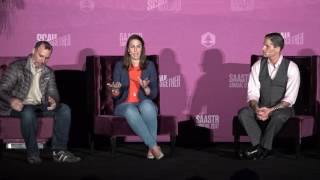
Katie Rogers, Antoine, and Annie discuss when to hire your first customer success person, how to structure the team, and what metrics matter. They cover compensation, upsell ownership, and tools like Gainsight and Salesforce.
Chapters
Welcome to the tactical stage, Saster Annual. How's everyone doing?
Good. All right.
All right. My name is Anthony Kenneda. I'm the VP of marketing at Gainsight and I'm going to be your guide through the next few sessions in this room around our favorite topic at Gainsight, customer success. So quick show of hands, even though I can't really see most of the room here, how many of you have a customer success organization or a team or function kind of established? Okay, good. Good amount of hands. Great. You know, one of the things we're really focused on, Gainsight is obviously creating a product to operationalize a lot of customer success. But more than that, it's really trying to facilitate the discussion around customer success. Get the thought leaders, the folks really building the best practices for this, you know, really brand new industry together in one room. And so we're excited to do that today here in this session as well as part of Saster Annual. So our first one is how I built our first functional customer success organization. And there's so much discussion in terms of different org models. How should customer success report? Should it report up to the sales organization, up directly to the CEO? Certainly in the early days there's a lot of different kind of debates there. What do you look for in your first hire and when is too early to hire your first CS rep? So those are the things we're going to talk about. I'm excited to bring up our moderator, Santiago Subotovsky. He's the general partner at Emergence Capital, invested in companies like CrunchBase, Zappo, Chorus, AI, hi, Alpha, Couple of those. All right, cool. So I'll get over to Santiago.
And now we're going to welcome our great panelists. I mean, people who have done amazing things in customer success. So we're going to start with Katie from Salesloft, then Antoine from Showpad, and Annie from Double Dutch and other great companies. So help me welcome them with an applause. So thanks very much guys. So we're going to start with quick intro. So I'm going to let you talk a little bit about your background and what your company does and I'd also like you to answer what drove you to customer success. I know that a few of you have like some non linear paths to customer success so it'll be great to understand how you got there.
Okay, perfect. I'll begin. Hey everyone, my name is Katie Rogers and I'm our VP of customer success at Salesloft. Salesloft is a sales enablement platform. We really saving time for the Full cycle of sales, taking away those admin tasks and really just expediting them to get that deal closed. A little bit about my background. I was employee number seven at SalesLoft. Our first CSM on the ground and now we've scaled the CS department to roughly about 25 and growing. We're actively hiring and we're founded in Atlanta, Georgia. So it was an interesting hike across the US to get here background wise and why I got into customer success. I was a former seller and marketer and really thought at my previous company the experience was just disjointed and always found a passion for customers and maintaining those relationships. And then all of a sudden customer success came to be and I said I need to know a little bit more about that. And so curiosity struck and here we are today.
Antoine?
Yeah, I'm Antoine. I'm with Showpad. I've been there for about two and a half years. I inherited the three people when I started about 5 million in ARR. Now two and a half years later there's about 40 members of the team globally, almost 20 million in ARR. I personally have been in customer success related roles for my entire professional career. I started as a renewal manager and I think what drove me to owning and wanting to be more part of customer success was having control or more control over what really drove customer happiness and their likelihood to renew. You know, when I started in renewals I was susceptible to things that had happened before I was involved and that was an uncomfortable place to be. So moving backwards and involving being involved with tech support and professional services even in the pre sales process gave me more comfort in knowing that I could actually drive the results that I was looking for.
Hi everyone. Annie, I apologize, I'm getting over a cold but I am most recently chief customer officer at Double Dutch. Currently working on a side project prior to that was the CCO and CMO at Demandforce, which was acquired by Intuit in 2012 and really got into the world of customer success through marketing. So a little bit different and so most of my background is actually on the go to market side through sales engineering and marketing, marketing strategy. And I was really interested in this question of customer experience and its effect on revenue over time and really just fell in love with customer success from there.
So Annie, you've been doing customer success for large organizations and hyper growth organizations. When is the right time to start thinking about customer success?
Yeah, it's a really interesting question because I think a lot of startups confuse support with success and they kind of Squish it all together and hire someone that can do a bunch of things. And that's okay. But the open question for me was, at what time are your customers starting to need sort of more than the what, like, what do I do right? What is this? How do you fix this? And they're starting to ask questions around why? Why should I use this? How do I apply this to my business? Those types of questions. And there will be an inflection point for every customer that is growing. And at that point, that's really when you need to start getting people in who understand how to have that conversation.
And Antoine, you probably hire a lot of people customer success early on, what are you looking for in your first customer success managers or even individual contributors?
Yeah, it's a great question. In the beginning, anyway, you looked for people that had diverse skill set. They could wear many hats, do a lot. But then as we scaled, we looked to put people in areas of their own expertise. And that's actually how I scaled the team at Showpad, where I inherited three people doing a little bit of everything. But after a certain amount of time, I shared with them my vision of the way a customer success organization is structured. Three pillars, professional services, tech support, and customer success coaches. And I asked them, which one would you feel most comfortable in doing? And I got lucky that each one wanted one, a different one. And then I just went ahead and scaled from there. But outside of that, believe it or not, the one skill set that I look for in anybody that I hire is actually, believe it or not, people with psych backgrounds, if they studied psychology in college. And the reason why I do that is because I think, as Annie said, explaining to people, why should they use, not just how they should use, and understanding the way people make decisions in their lives and what drives them to do something or not to do something. Having that fundamental understanding of people's decision making processes makes it easier, I think, for someone in a customer success organization to have a conversation in a way where it might motivates people to listen and then to take action. So psych majors and Katie, you're going.
To get the easy questions. We're investors in Salesloft, so she's going to get all the easy questions.
You can give me some time.
So you gave a great talk where you explain how you started this customer success. Org and how you expanded it over time and how you started thinking about like a matrix where people were like flowing through different boxes. So can you walk us through your thought process in doing that?
Absolutely. As Salesloft grew within my first year. We're roughly about 100k when I came on board and by the end of that first year we're at a million so scaling and today we're at 10 million just three years later. And so the growth was really, really quick to keep it simple. And so in that time period, it started out, like you said, with support. That was the initial jack of all trades, Jane of all trades. And so figuring out the roles that were really key. But also what happened if someone was out? We were an agile team of three or four or five. But if someone was out from support, would we just fall apart? What would that look like? And so I cross trained our team and we cross trained together. What were the basic fundamentals of that role? Maybe you didn't need to have the full experience, but could you perform the basic day to day tasks? So our customers were always supported and that was really, really big for our first year and a half. The teams were really excited because they were learning a variety of different skills. But with that foundation of for us it was support, onboarding and then customer success. They got to really figure out what their passion was. And just like you said, it clearly defined their role within the company years later.
This is a question for the panel. I mean, what we hear from a lot of our companies is that customer success is not just a small group within the org that it needs to be kind of a state of mind. So how do you make sure that everyone is on board with customer success, not just the customer success org wants to take it?
Yeah, I think it takes quite a bit of ongoing dialogue amongst the leadership team and there needs to be alignment at the top. The easiest way to do it, my joke is to align comp plans so they match up, but not always possible. Right. So the way that I've had to do it and been successful doing that is really through stories. Bringing in sort of the subjectivity of stories and creating space for employees in other parts of the company to sort of establish a level of empathy for our customers. Problems that they can help solve has been really powerful. So I think that's really the role of the customer executive in the end.
Yeah, I absolutely agree with you definitely on the point of the comp plans. Comp plans drive behavior. So what you hope to see is someone other than the success leader having some skin in the game and churn being part of how they're measured and and subsequently comped. But what I would add to that is, and you did touch upon this ani is building the relationships with those other leaders that do have an impact on Churn. So I've always said there's two different types of customers. There's external customers that pay you for your product or service, but you have internal customers. And to me, that's the VP of sales, VP of engineering, VP of product. And even though they're not within the customer success organization, their actions have a significant impact on, again, customers success. So I want to build relationships with them. So last year when I spoke with Jason on a panel, he mentioned taking your customers, external customers, to steak dinners. I said, hey, well, don't forget to take your internal customers to steak dinners as well. You want to really make sure you've got relationships with them. You avoid the silos, and that they care about how their actions have an impact on customer success.
And to take that quickly to the next level, I mean, just the internal relationships is so important and being aligned internally. And so something we've done at salesoft is oh, so cheesy lunches. I literally order pizza for two different departments and we get together once a quarter, whether that be support, product, sales, whatever that may be. But it's to get everyone who is a part of the customer experience, and that's everyone in the company. So you have to make your way through the company, but you have to have those relationships. And so it's been really exciting and the team looks forward to it. And it's cheesy, of course, but it builds those relationships. So that way there's trust. And that's something we really focus on.
And when you bring in those teams, those customer success teams, how do you measure the team's success or performance? And how do you measure each individual? Because it's hard to say, okay, my customers are happy, happier. It's a soft measure. So how do you make sure that they're driving value for the business?
Yeah, I always tell my team, and they know that we don't make customers happy, we make them successful. And I think Lincoln Murphy said that at some point. But happiness is a byproduct of success. And so we've been really focused on what does success look like for you with Salesloft and asking those questions. And you're talking to a VP of Sale on the other line. And that can be intimidating for someone who's junior in their career. So really coaching them up, but asking those tough questions up front to ensure that we're in alignment with the customer and then continuing to prove that value throughout the entire customer experience.
But how do you Measure that they're successful.
Oh, so. Well, we use gainsight, but we have health scores that measure different factors, whether it's adoption, product use, different things like that. And so each of the team members that I have have different segments of customers. And so we measure the health of their segment, base the accounts, and a variety of different factors that roll into that. And they no one CSM has the exact same metric because their books are slightly different.
On compensation. How do you like to compensate customer success executives? Is it mostly bonus? Is it based on renewals? Is it just a base?
Yeah, I'll take that one first. So it's a mix. There's a base salary, of course, but then there is a variable component that is driven by their individual performance. So I found in my experience anyway, that that drives sort of the right behavior. Although I will say that there still is the team aspect of it as well. So initially we were compensating our success coaches based on individual patch sort of health and performance. And irrespective of how their neighbor did, they were eligible to make as much as they could based on their own individual performance. But at the same time, we were always talking about winning as a team at show Pat. And it's something I really do believe in. And it dawned upon me that there's this contradiction where on the one hand we're talking about winning as a team, but yet we're measuring and comping people on individual performance. So what we did recently is we went to more of the team success model, meaning that everybody would be their variable would be driven by the team success. So have done that in the past as well. You know, there's pros and cons to either way. But ultimately, again, it's intended to drive the right behavior and then get the results that we want. So to be determined how it works out. But so far, so good.
Yeah, that's a pretty controversial topic. I know there are some companies out there that are sort of their entire OTE is structured within base. Historically, I have done base plus variable. And the components of variable have been anywhere between a single number, like an NPS type of number, all the way up to five different variables, which is too many. Right. And so have tried to narrow it down to anywhere between one and three where one of them is team based. And then there are two sort of individual components.
And something just to keep in mind, I mean, when sales all started, we had three CSMs in our first year and they're googling online what should a CSM get paid? And of course Everything comes from the west coast and like X, Y and Z. Hey, Katie, I'm not making this much. And there are levels to CSM comp and how you get started. And so if you're starting out in your grassroots, you know, base is okay. You want to get someone in the door and then talk with them about what that looks like. And it's just very interesting. So make sure you're comparing yourself to other companies at your level, not just googling a CSM comp.
And the other thing I wanted to add, by the way, you know, compensation, again, obviously is important, right? I mean, people need to earn a certain amount. I get that. But you know, going back to your initial question about the type of people that I hire, especially in the customer success world, I'm trying to find people that actually have a genuine interest and gain satisfaction from helping others. So of course, again, everybody wants to get paid. I get that. It shouldn't be the primary driver. It shouldn't be why they're taking the job. It should be because it's just in their DNA. They do enjoy helping customers be successful and that's a big part of it. So I don't want to, I want to just point that out that there are other factors outside the compensation that should drive the behavior where they want to win because it just makes them feel good to know that their customers are seeing a tremendous return on their investment. Investment using your product or service.
Just to add one more thing to that, it's actually more important, I think, to have a definition for what customer success is going to be at your company. And the compensation plan should really be reflected up in that. So a lot of companies. And this is where the controversy lies, right? Should customer success be responsible for renewals? Should customer success be just an advocate? Should customer success own growth over time? Right. Expansion. And so depending on how you're structuring your customer success. Org, then that will, I think, play a lot into how you compensate.
That's a great segue to my next question. A lot of us see customer success as one of the most efficient growth engines within organizations. So it's not just making sure existing customers are successful with existing products, but also how to make them successful with additional product, more features. And that gets us into upsells and cross sells. So what are your thoughts? Should customer success own those metrics?
Where I sit today is that I think the less around like a commission type of structure, I think the type of people who do well in a customer success. Org, at least the type of people that I've hired and interacted with because I have mostly looked for an advocate type of person similar to like sort of the person who just wants to naturally help others. Right. So if they're not naturally oriented towards the commercial side of driving revenue, then it's going to be very hard for them. It'll paralyze them to have a quota. Right. So I imagine that that has probably biased how I think about it.
Different opinions here, Torn.
I work for a sales company on that regard, but I do believe, and we're toying with the CSM and a type of revenue role, whether that's renewals and expansion rep, I don't have it coined out yet. But I do believe that the CSM should be the advocate driving adoption, driving health. And we're going through the midst of figuring out who owns those heavier numbers in the expansion. And. And when you think about them, they're two different skill sets at the end of the day. I mean, I've been in sales, I know what it takes to get a larger deal closed. And we're not talking about order taking, right. Hey, I need to add two users. We're growing or something like that. We're talking about competitive sales. And I really fundamentally believe that they're two different roles, personally.
Yeah, If I can add to that, I think clearly sales owners owns the quota, but definitely the customer success organization has to be a willing partner with sales to help make those growth opportunities happen. So it's a very delicate balance you try to strike within your customer success organization where you want to act as trusted advisors, consultants. You're creating awareness around all the wonderful additional value that customers can extract from the solution. But it should feel organic to the customer where they don't feel like they're being sold, as opposed to where customer success is just driving the blue light special in order to hit a quota. And that would be a portrayal of trust, I think, from a customer's perspective. And then they would maybe be less willing to talk to a customer success person because they feel like they're sales reps in disguise. So I would say customer success definitely be willing to partner with sales. But it should be very clear to the customer that when it comes to the dollars and cents negotiating, et cetera, that's a conversation to be had with the sales rep. And how do you.
Manage those hands off? I mean, you have like a sales rep closes a deal, then customer success gets involved, they identify opportunities and they need to bring in the sales rep again.
So I'll take it at salesoft it's definitely been a journey we're exploring and so initially we've kept it in house and usually I'm the one negotiating with our customers and our CSMs are advocating heavily for them and the customer really truly feels that now we're starting to.
Negotiating with a customer close a deal.
Not a new deal, an upsell of some kind.
Do you have a quote quota?
I do not. As of today there are goals that we'd like to hit and I think what naturally comes about with it in sales off within our team, our customers are organically growing on their own because the teams are advocating in the right way saying, you know, based on what we talked about last week, you know, sounds like you might need X, Y and Z. This is on our enterprise plan. Here's the cost. Not force feeding at all, but I wanted to make you aware that we have this and, and I'm actively listening to better support your business. So the upsell, if you will, naturally happens because they're advocating and not force feeding something. And so we found that our customers are just open to the growth because of the way we're presenting it. And so there's not really a hard sell, if that makes sense.
Yeah, so agree with you there. Again, it should feel very organic. So it's more like oh, that sounds wonderful, of course I want that, you know, send me an order form and I'll sign it. So in that case the account executive doesn't necessarily need to be involved. But and there's other cases where there's a larger expansion, more complex sales cycle, et cetera, et cetera. In that case it might be a partnership between the sales rep and the customer success coach or the AE just might take the lead and run with it. But if done correctly, it's just very organic and it just happens, which is nice.
It's also I think going to depend a lot on how the revenue comes in. So as a scenario, for instance, right. You could be selling flat subscriptions on flat renewals and then be introducing new products. Right. That may require someone with more of a commercial side in order to come in and be pitching as a specialist to a product. If you are selling the same licenses within a centralized buyer and that buyer is is a champion internally within the organization that you're selling into, it's possible that customer success can retain sort of the advocacy side and drive expansion at the same time. However, if you're selling in a fragmented manner, for instance, you sell into HR and then you sell into marketing and then you sell into Sales and you have to be pitching every single time in order to get that deal done. That's a different type of expansion and you probably require someone with more of a commercial side.
And when you're working with your customers and you're trying to make them successful, how do you think about throttling the level of customer success so that it doesn't become kind of like professional services that you're not charging for?
I think it's making sure that as they come on board that you're setting the expectations of what your team will do, how involved we will be and what their expectations. I mean, you have to lay out a mutual agreement when you're starting the beginning of a relationship. And so for us it's just been really clear and certain times customers will need more and they'll say, hey, we need more and we don't have professional services at this time. Could I see that happening? Yes. But we've really worked with our product team as well to say, hey, customers need more time in these two or three areas. They've actually been able to innovate quite quickly on the product because of that. And so again, that goes back to really deep bonds internally, having that trust and that communication.
That's great. Good for you.
Thanks.
Awesome. Everybody do that. I think on the customer side, what is really hard for us is to deliver kind of the startup type of customer success, which is do whatever it takes to get the deal done and deliver the commitments right, but to do it in a margin positive way. And so you really need to think about segmenting your customer base in a way that affords the company the ability to focus people resources on the highest value opportunities and customers. So, you know, I've seen a lot of companies, double, Dutch included as one of them, demand, force, product as one of them as well, that have invested in a layer of customer marketing, invested in a layer of customer success programs so they can offset the burden of the lower margin deals or negative margin deals. Because you have to.
Most of the times when we're looking at enterprise companies, we look at the customer success function and we include it in variable costs. Should it be a cost or should it be a revenue driver?
I'm going to give that to these two.
To me, ultimately it's a revenue driver. Sure there's costs associated to it, but there's cost associated to everything. I think there has to be a fundamental understanding and willingness for customer success to sort of play ball again with sales, to grow these accounts if possible, extract the most value. But again, doing so very delicately, whereas not to betray the customer's trust where they feel that customer success is just part of the sales function. So ultimately to me, it is ultimately about bringing in more dollars.
Yeah, we put a percentage in cogs and a percentage out of cogs too.
So if it's a revenue driver, does it need to carry a quota?
Well, certainly there's a retention quota. That would be the most obvious and then sprinkle on top of that. So the way we look at it is from two main KPIs. Number one is just gross churn. And we know that we set a target, we don't want to lose X amount per year. And then we set a net target for the customer success coaches and again, they are compensated on this as well. So let's make up for what we lost and then let's still grow the install base. So ultimately, yes, there is growth associated to their company targets.
Let's switch a little bit to tools and platforms that you love and tools and platforms that you think are overrated.
Well, Gainsight's obviously probably the fan favorite and I personally enjoy using it. It's at a tremendous value. I mean, you're using Gainsight as well, right?
Recently. So a startup, you know, back in our first year, I mean, you had to be pretty scrappy and so tools that were just effective from a CSM standpoint. So if you're scaling your business, Mouselight you can find on a the Apple Mac store, it's 99 cents. And so as you're giving presentations to your customers, I mean you can talk about the elevation of costs as you grow as a business. Gainsight obviously is here. Not here. But I mean I can talk small little hacks all day with tools and apps.
Talk about those hacks.
It's mouse light. A text is 99 cents. Best 99 cents I've ever spent in my life. It's a text expander. So instead of writing Salesloft every single time I write SL1, boom, think about those are my top two. I'll end there.
Yeah, I'm a fan of Gainsight too, but in the early days was really into the idea of building out a 360 view inside Salesforce because that was the sales tool of choice. It was really important for me to make sure that the customer success managers were connected and the data that they were inputting was connected to what the salespeople were seeing. So ended up building out probably a percentage of the stuff that Gainsight can do in Salesforce itself. But once we were able to make an investment in like a real tool that was really focused on customer success. We went there.
And for me, outside of Gainside, there's Salesforce obviously, and then Zendesk. And I intentionally try to limit it to not much more than those tools. Not to add complexity. Too many tools just leads to things getting lost in translation. So for me, I'm pretty happy with that stack.
And on the overrated tools, I mean, you don't need to talk about specific companies, but have you tried anything that you feel it's just a buzzword?
I mean, my personal pet peeve is some of this. I get these emails and they're like, hey, I know you're looking at my email, why don't you respond? And I want to respond and say I'm only looking at it long enough to figure out that it's not something I'm interested in. And then I delete it. So it's kind of like a false positive. It's like, yes, I'm looking at your email, but it doesn't mean that I'm actually interested in your product or service.
That's the wrong way to do that, by the way, because Salesloft will help you notify. Hey, you've read my email. But that is the wrong way to go about that. Just from a company standpoint, you don't say, hey, you've read my email, let's chat. It's super creepy, right?
I never heard that from. Absolutely not.
Thank you.
So one company and one CS leader that you follow.
You mean aside from Nick Inside? Katherine Blackmore.
Sorry to interrupt you.
In the early days.
They're on the other stage at the moment.
I'd say Dave Blake with client success, super genuine and very knowledgeable about his time with Adobe.
Other companies that are doing a great job with customer success.
Well, it's interesting. I mean, customer success, it's kind of new, right? And it's kind of evolved. It used to be customer service, et cetera, and it continues to evolve. And some organizations, maybe they haven't tried it yet or maybe they've been doing it for a while. But I think it's an evolution. I think just based on the educated buyer, there's a different experience that customers want when interacting with the service provider. My personal opinion, looking out into the future, my thought is that whether it's a new prospect, considering buying for the first time, or repeat business, the customer's success, mindset and mentality and philosophy as far as approaching conversations, value added conversations is really, I think what the consumers are looking for and it will be sort of how it will continue to evolve and get even bigger.
It's interesting about customer success because you always look online for blogs and posts where too busy. Sometimes we're just too busy. I'd love to be able to see more, you know, just more writing and all of that. When you think about it, more often than not we're heads down. When do you come up to breathe? You're with your team, I think, you know, across the customer success realm, I'd love to see different levels communicating more about their strategies, what they're doing, where they're failing and how they're improving.
I think a lot of good work has come out of larger companies or more I think established SaaS. Companies like LinkedIn I think has a pretty good SaaS program, but they also have a lot of the right components to drive a good success program. Like for instance, they have sort of this parallel programming of account management and customer success. They also have multiple products that they can sell and so into different buyers, but also expanding with existing buyers. And so those are nice formulas for customers success to be, to sort of thrive.
Now let's switch a little bit and let's go into the future, I mean future of customer success. Now everything is going to be artificial intelligence, machine learning, chatbots. So how do you think this function is going to evolve over time? Paint a picture the next five years?
Well, I'll add to my previous answer. I think one of the fundamental differences is getting to the point where you feel comfortable as a customer success person challenging the customer. So I think there's a false perception that customer success is the same thing as customer service where you just blindly do whatever the customer wants because they asked and the customer is always right, when in reality we know no, the customer is not always right. And I think you would be doing them a disservice if you just blindly followed orders. So I think as we continue to evolve, customer success will become more of challenges where being experts feel comfortable in a diplomatic way saying the customer, look, I understand why you're saying you want to do this, but based on my experience, let me tell you why there's a better way, and I can tell you from having done that with customers that they really appreciate when you talk them off the ledge and prevent them from doing something that ultimately would have hurt them. So again, to me, customer services, you just do what they say because you don't want to piss them off. Customer success is. I hear you, I understand why you're asking that. But Let me show you a better way. And if you do it right, then you're really driving value and you take the relationship beyond the typical customer vendor and it becomes more of like a partnership. Yeah.
Customer success today in an organization that I think is functioning well is really kind of the intersection of like revenue and marketing and product and service. Right. And it's taking bits of each of those parts and I think really advocating for the customer within the scope of that. So over time I think it kind of pulls up, which is really doing only the things that people can do. There's a lot of stuff that customers accept managers do that is really making up for product efficiencies. Right. Which is fine. Right. In early startups that's what you need to do because you're iterating fast. But as the company matures, you really need to pull up those human resources. And then I really believe in this layer of programmatic customer marketing that will sort of support and drive the conversation and sort of prepare the customer to engage with people when the time comes, when it's right, time to do that.
So how would that work? Can you elaborate a little bit more on that?
Yeah, I mean you can use a mix of gainsight, you can use Marketo, you can use any sort of, sort of like marketing automation type of tool.
Right.
But it's really about taking all of the stuff as well as the data that you have on your customer. Right. And preempting like you guys probably have the data on when someone is calling in for a particular problem. Right. So you can trigger communications to go out through your email channels, through your product, through, you know, if you're chatting with them through chat, how to address that before they typically ask that type of question. Right. And that also is customer success because it gives you the ability to connect with the customer, a person to connect with that customer and spend time having a value added conversation as opposed to. This is how you feel this problem.
Yeah, I think less admin will be, you know, admin work for our teams. They'll actually be able to have more facetime with customers, more knowledgeable conversations, adding more value. We're going to be smarter. I mean all of the technology that's coming out today is just, it's going to just enhance the overall customer experience. And internally from a company level, we're going to be able to be connected and I think that's what customer success we're starting to see today, companies really thriving when they embody it. Everyone's connected, everyone's in line with the vision to serve the customer, and they know where they play a key part in that role. And so I think we're going to get faster. We're going to have even better customer experiences, and it's going to be a connected internal experience.
Nobody talked about machine learning. Do you think that's going to have a role in customer success?
I mean, I can't imagine it wouldn't. I mean, it's hitting all other aspects of the business. It would seem silly if we didn't use it to our advantage and to learn from it.
Okay. In the interest of time, one final thought for the audience. Something that changed your life as you were doing customer success. Thinking about teams, thinking about your organizations.
If you're all early stage, customer success is absolutely something to invest in. Early, as early as you can, because you need someone at the table who is thinking about the customer all the time. And by making that investment, you're going to have that resource. So it's worth it.
For me, it's V2 moms, something I learned at Salesforce instilled at Showpad very early on. From the beginning, create a vision and values and communicate those to your people in a way where they're willing to make it their own.
For me, it's really. It's all about the customer. And so having those relevant conversations often with your team, and making it about the customer, not about their role, why they're here, and having those conversations more often than not, it just really changes how you serve as a company.
Okay, thank you very much. Help me. Thank great panelists here.










