How NetSuite Scaled: A CXO Talk with Zach Nelson
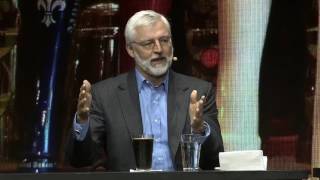
NetSuite CEO Zach Nelson traces the company's growth from a 1998 conversation with Evan Goldberg and Larry Ellison to a $1B business with 5,000 employees. He explains how shifting to one-year contracts, building an in-house services team, and moving upmarket through dedicated enterprise sales helped scale the cloud ERP company. Channel partnerships now account for roughly 40% of bookings.
Chapters
What do you want me here?
Yeah, sure. And I'll sit right here. All right. Cxotalk Live. I'm Michael Krigsman and I am the founder of CxOTalk.com CxOTalk brings together the most innovative people on the planet for in depth conversation. And today we are honored to speak with Zach Nelson, who is the CEO of NetSuite. Zach, how are you?
Great to be here. This sort of reminds me of the founding of NetSuite. We were founded above a liquor store, so we haven't gone very far.
Yep, you're returning to your roots.
I don't know if I'm supposed to.
Drink this, you know, and I should say this is episode number 155 of CxOTalk. So, Zach, tell us about NetSuite. What is NetSuite? What do you sell? Who's your market?
Well, I'm sure many of you know netsuite. Many of you use netsuite. Just the founding story is interesting in that I think arguably we were the first cloud business application company founded back in 1998. So it was a long time ago now. But our founder, Evan Goldberg, still our chairman, still our cto, had founded a company that competed with the technology that became Flash. Macromedia bought Flash, his company went out of business. And so he and Larry Ellison sat down to talk about what Evan wanted to do next. Evan was an incredible developer from Oracle, and Larry had funded the first company. And Evan said, you know, it's really hard to run a small business. I have all these systems. In particular, I have a problem with managing my sales force. So I think I want to go build a version of Siebel, but make it for small and mid sized businesses. And Larry said, well, that's a great idea. But the problem with Siebel is there's no customer data in Siebel. All the customer data is in the back office. What they bought, how they paid, was it shipped to them, et cetera. So build the back office first and then build the suite of applications around it. Second thing he said was, oh, and by the way, deliver it over the Internet, because that's how all software is going to be delivered. And the last thing he said, this is a five minute conversation, was and make sure it has a web store on it because people are going to want to buy things on this Internet. And really that's the, that's the architecture of NetSuite today. As an aside, there was one other guy involved in that conversation named Mark Benioff, and he went off and two weeks later called back and said, I'm gonna go do that Siebel Online thing. And that became salesforce.com so both of the leaders today were founded literally in the same conversation with Larry Ellison.
And so this was 1998. 1997. 1998, yeah, 1998.
And it was amazing. You know, 1998, nobody believed complex applications would be delivered over the Internet. And now, as a testament to this.
Audience, well, that Internet thing, you know, and SaaS applications were toys.
That's right. Well, they were. You know, if you think about it, if you think about the ebays and the Amazons of the world, that were the first generation software as a service applications, if you will, they weren't toys. They're the world's largest businesses today. So it was pretty obvious that every, at least in my mind, that everything was going to move to the Internet.
Okay, so today netsuite is hitting up on a billion dollars in revenue. But you joined the company in 2002 when the company had less than a million in revenue, and you went public in 2007. So take us through the stages of the development of NetSuite.
Yeah, so no, I think it's, you know, I joined Netsuite. My last jobs were at McAfee, and actually my last jobs at McAfee in 99, 2000, were taking our security products and putting them on the Internet. So we actually had a startup called MacFee.com, which ultimately went public, which was a B2C version of the antivirus delivered over the Internet. And I ran a division called mycio.com, which was a B2B version of mcafee.com, and from that experience, I realized really quickly that all software was going to be delivered this way. So I left McAfee and began looking for companies doing business software on the Internet. There were two at the time. One was called Salesforce, one was called the Then. At the time, Netledger. One had a CEO, one didn't have a CEO. So hence, here I am today. But I'd say if you looked at sort of the stages that we've gone through in sort of big categories from 2002 to the IPO time frame, it was really about defining the metrics that defined our business and within those metrics, figuring out where the levers were that we could pull to accelerate the business. So on the sales side, how many deals could a rep do in a month or a quarter and at what average sales price? That was sort of the pretty simple math on the top line for us, it turned out they could do one or two deals a month. So how did you grow your business? You added sales reps in our case. So that was a huge driver of our business. Second element on the go to market side, on the services front, unlike simple SaaS applications, these were mission critical applications even though we were selling to small businesses at the time. So services became very important and the big challenge there was how do you do an SAP like implementation with many, many zeros missing off the purchase order. And so there were product things you did as well as repeatability things that you did on the product side. You know, that's evolved over time. But those of you that are in startup SaaS companies know you do tons of, I mean we used to, Evan and the team used to push software live one Christmas Eve. Evan likes to talk about somebody's web store had a problem and he went on five minutes, fixed it and pushed it during the middle of transactions. We of course don't do that anymore. But you know, lots of releases to sort of very structured release processes as customers get more and more affected. So that's really so defining your metrics, driving them and then as you change the business, measuring the old metrics compared to the new metrics is very important. So having a good view on not losing your historical metrics are super important. The second sort of stage was really post ipo and when you go public, you want to make sure you actually have enough control over the business that you're not going to miss your numbers coming out of the gate. In fact, grow the numbers. So I think it's really mostly about executing in a big way at that time. And probably one of the most important parts of execution is retaining your people. You know, you build these great organizations, you go public and then you don't want those people to walk out the door and be picked off by somebody else.
So your initial set of metrics were all about deal size and how many deals are we closing and how many salespeople do we have. And eventually you started looking at internal metrics in addition to the external facing metric.
Yeah, absolutely. As a company and one of the core. And I think we did this very well. I'm really proud of what we've done here is we looked at our top 50 employees because those are who your competitors are going to come and poach. And they'd all, you know, we'd all been there for 10 years already. Everyone had already vested quite a bit of stock. It was, how do we retain these people. And of course there's non financial things you do to retain people, but then there are financial things that you do to retain people. And so I think we put in a great system of really using an application called spiralinx. And the CEO of spiralinx is here, Julie Southern. And my view of the world was there's cash comp and then there's stock comp. Silicon Valley is driven by stock comp. And one of the beautiful things this application did for us was it gave us the ability to view the vesting of every employee over time. So we knew when people were falling off cliffs, we knew that developer was going to go from a million dollars of vesting to zero. And you knew they were looking for a new job when it was zero. So this has been an incredible tool and we continue to use now as a 5,000 person group. The other thing that we did was when you go public, the first thing Wall street asks you is what's your next engine of growth? So we had teed up several next engines of growth. We knew they were going to work before we went public. We hadn't told the world about them. But it was very important as we went public to have next generation ideas. In our case it was multi company consolidation and E commerce. But we knew they were going to work and we could really accelerate them in the face of public markets so that we could deliver on the expectations of our investors. And then third, and this is sort of the stage we're in now is I call it scaling at scale. We're a 5,000 person company on track to something like a billion this year in revenue. Last year we added 1,400 employees. It's an incredibly different challenge obviously to grow basically a net suite a year in many metrics at this scale. And I would say one of the best things we've done, and one of the things I'm proudest about that this audience might look at is we built a distributed company very early on when we were small, we knew we had to get out of the Bay Area for a whole host of reasons. And so probably in Silicon Valley we have maybe 400 employees, but we have 5,000 employees in the company. So we built a distributed organization not just in the US but globally very early on. And that makes the challenge of hiring people much easier. When you're not hiring 1,000 people in one office, you're hiring 1,000 people in 20 offices.
So you're thinking about a multi layered set of problems today, challenges today and objectives today. Whereas in the beginning again, it was all about the sales. So tell.
I don't think you stopped. I mean the good news about all those things we did in the past are still the basis for what we're doing today. So we still look at our metrics and say how do we need to change these metrics? Do we need new metrics to drive the business? So that's really the foundation of the company is what we did in those early years to grow.
Okay, so tell us about the metrics back then and how have especially focusing on sales. How has that changed and how is your customer base changed over this time?
The biggest thing that's changed over time was netsuite was originally designed for small and mid sized businesses. That DNA cracking the code on how you sell complex applications to mid sized companies is something almost no other company on the planet has done. Most companies start by running up to the enterprise because it's an easier sales model. There's 500 companies in the Fortune 500 the last time I looked. So how do you sell to them? You hire 500 reps and you go after it. When you're selling to the Fortune 5 million, it's a very different proposition. You can't hire 5 million reps to get at them. So that model is firm. I think we have by far the best sort of sales and services model for mid market complex business applications. What happened as we grew was we felt we were bringing the power of large enterprise systems to midsize businesses. And for those of you that run midsize businesses, you know it's harder to run a midsize business than it is to run a large company. In fact, I worked at Oracle. I made million dollar mistakes and I got promoted. At a mid sized company, you make a $10,000 mistake, you might be out of business. It's a very different world. So bringing the power of those large enterprise systems down was important. What's happened is those large enterprises now want the agility of a small business in their business. And just as an example, Amex Global Travel is probably one of our largest customers. They rolled out in nine months. 30 countries, 120 currencies, all live in nine months. You can't do this on old ERP systems. That's the sort of agility that the larger companies are looking for.
So as you went upmarket from smaller companies to now you sell to very large companies, what did that do to NetSuite? What did you have to do inside NetSuite to accommodate that change?
Well, we had to extend the Models I talked about in the very founding of the company, the sales model, the service model and the product model. My best example of the problem with a mid market sales model applied to the enterprise is the following one. We've gotten our first deal, it was an SAP replacement with a large multi billion dollar company. And the rep, they wanted to buy NetSuite. And so the CIO of the company said, well, SAP has just come back in with another $80 million bid. Stuff doesn't work. They want to charge us another 80 million to make it work. And I'm like great, well what did you tell them we cost? Did you tell them we were 40 million over five years or what was it? He goes, no, $400,000. That's what I told him. And that's when you knew that a mid market rep would take an enterprise deal and turn it into a mid market deal. And I'm not talking about gouging people, it's what's the value we're delivering that company, we're delivering more than $80 million of value. Arguably SAP didn't work in that world. We should have been paid 80 million. And so we had to add a new story to the house. An enterprise sales organization, an enterprise service organization. It was very important. And the hard thing about doing that is again this mid market DNA we have, it's so hard to figure out how to sell and service the Fortune 5 million. I did not want to lose that. So you really have to create a new company that's targeted at the enterprise, needs the enterprise go to market. And some of the things we changed on the go to market front on that side was for the enterprise salespeople. We don't pay them on services at all. We want them to go to market with the GSI's and the Apirios of the world and the Deloitte. So a lot of things that you change as you begin to look at that segment of the market, but the important thing for us was to make sure they were distinct companies because it's a completely different sales and delivery model.
So you talk about services, but for many SaaS founders the goal is, and the ideal is put the product out on the website. People sign up with their credit cards, you never hear from them again and the money is flowing in, flowing in, flowing in. But with NetSuite, your product is complex, you're a suite, it's ERP. And it doesn't work in that simple pure way.
Yeah, I mean it would be great if every application were a Google search box. And you just type and the money, that's just not the way it works. And I think that's. As you talk about our company and your companies, there are going to be differences, there are going to be similarities. At the end of the day, running a business is still a complex thing. People want to sell over the Internet, they want to use the Internet to reach customers, but that doesn't mean going from order to cash gets any simpler. And that was sort of one of the first fallacies. It was the first fallacy of client server applications. If you recall, there were back office guys like SAP and Oracle, there were front office, there were a million CRM vendors and the customer would say, well, does your application work with that app? Oh, yeah, it's an API. Just you can tie Siebel to SAP no problem.
Yeah, it just works.
It just works. All this stuff just works. It doesn't just work because the data's complex. The data's like, that was sort of the first big lie of the SaaS world too. Oh, you can just tie this application to that application, tie 20 applications together. And certainly web services makes it easier to connect applications. The challenge is it doesn't make it any easier to synchronize the data. And that's what business is all about, is synchronized, accurate data. And the problem is once you have data in two places, it's wrong in one of them. You just don't know which one.
You're a business process company, it's not a consumer app.
Ultimately, yeah, ultimately, yeah.
So this whole. So the whole services thing, so what did that do to the company? The recognition that you need to build up this large services business inside the software company, what did that do to netsuite?
Well, I would say if you looked at our model, while our customers are doing complex things with the software, we would have rather not built a services organization. However, we had to because we had to get the customers live. The whole idea speaking to the choir here, is to make sure the revenue recurs. And so if the customer doesn't get live, the revenue doesn't recur. And at the time we started the company, not only did the world not believe this was going to be the future, but especially in the mid market, this thing called the VAR channel definitely did think this was the future. Their whole revenue stream was tied to the Stone age applications. They were shocking into life every week for customers. So we had to build our own services team because there was no other alternative. And so we did it differently than a services business would. We felt services was an investment in the recurring. And so we told our customers, our investors today, we don't plan to make any money on services. It's an investment in the recurring. And we make a little money on our services today. But it's really a necessary evil not to say that services are evil. We're a software company, we had to have services. And now I'm really happy to say that 40% of our business now comes through channel partners. So that channel that was reticent 10 years ago is now driving our business today. That transition has happened, but that was not there when we started the company.
So services then is the lever that, that drives the recurring software sales in our case.
Yeah. And that was another interesting thing about our model. Just to talk about history here, you have a lot of startups here, they want to reduce cash burn. And the problem with running a cloud company is you have deferred gratification. Instead of getting paid up front, you have it over 10 years so you actually burn through more cash. So in the old days we used to do three year deals. So you can imagine how hard the sales model was. We're $99 per month, but we need 36 months up front. Right. And that was really to reduce the cash burn. That's not really the way you want to build a sustainable business. And today we changed our sales model many years ago to say the way to align our interests with our customers interest is to only do one year deals because now we're incented to make sure that customer gets live and they're incented obviously to get live as well. So that's really a much better alignment. But in the early days when you're trying to conserve equity and cash burn, you do funny things.
What are some of the metrics that you use to correlate things like service and renewal rates and customer satisfaction and your ultimate recurring revenue?
Yes. So on the renewal rates, it's interesting when you have really companies that span very small businesses to very large businesses, obviously this end of the market churns much more quickly than this end of the market. So we've always focused on revenue churn. Right. In fact, our revenue churn is every year we say it can't get lower and then it gets lower again. And obviously our revenue churn when you take in, you know, the bad side of revenue churn is churn and down sell. Those are the negative inputs and the positive inputs are upsell and year over year our upsell always is more than our churn and down sell. So again, as you all build company models. Upsell is a very good thing. So you need things to upsell to replace. Inevitable. Even in a sticky application like ours, Churn and downsell. So that's a very important piece of the model.
Tell us about the essence of success in upsell. How do you do it successfully?
Well, the customer has to be happy, first of all to want to add more things. You also have to target the right group of customers. Right. Some upsell just comes naturally. I think we're probably the platform for 70 to 80% of next generation businesses such as here in the audience. So when they go from 50 employees to 500 employees, it's a beautiful thing. So choosing your markets wisely is another important piece and I would say the third piece, and it goes back to my story of taking an $80 million deal and turning it into a $400,000 deal is really determine what are the components of your application that bring value to customer. The customers, the things that they're willing to do.
I was going to ask about the link back to the product in this.
Yeah, and it's the way we used to look at it was we're unusual from a SaaS model standpoint because if you talk to most SaaS companies, they talk about per user per month revenue and we certainly get per user per month revenue. But we get far more revenue from the functionality of our application. So for example, when we introduce revenue recognition, we're not going to add any more users in the finance department. In fact, they will probably fire the four guys or redeploy the four people running the spreadsheet. But we're bringing them enormous value. So we look at does the functionality add users or does it in some ways subtract users and add automation value? We price that separately.
Let's talk about competition.
Is there any.
I've heard that there are other companies selling erp.
Definitely. There are other people. There are definitely people selling erp. There are very few cloud. I mean, the amazing thing about our position in the world, it takes a long time to build this stuff.
Well, I was going to say it seems like every ERP company in the past that's now presently alive is saying we're cloud, everybody. Right? That's the common refrain.
I love it too, you know, because at the end, I mean, this is what.
Why do you love it? I mean, these are.
This was another Larry Ellison story way back when. He said the thing that made Oracle take off was when IBM declared they had a relational database. Of course they didn't have a relational Database, it was nothing close to Oracles, but people began to look for relational databases and there was basically only one. And so the same thing's happening here. You see, you know, if you look at NetSuite today, we're top 10 market share and financial management, we're number 10, but by far the fastest growing. If you look to the left of us, all these people claiming cloud, it's the graveyard of software. You know, Microsoft, Great Plains, Epicor, Infor. I mean these are just ugly, ugly products. And they are, you know, use this stuff. I mean you can't use it, it's completely unusable.
He doesn't mince words, does he?
But so you can call. I mean they're in the first generation of cloud washing. You know, look, you can host our application, none of it works. You have to rewrite these applications from the ground up. And oh, by the way, you have to do it correctly. You know, you look at what SAP did with Business by Design, they spent $3 billion on this thing and instead of copying NetSuite, they thought they knew better. And the thing was a massive $3 billion flop. It doesn't really exist anymore. So you don't. It's not just desire, but you actually have to execute it. It's very difficult for the guys on the old applications to execute.
But in fairness, some of these competitors like SAP do have a lot of revenue.
Well, they have a lot of revenue, but even today when SAP talks about their cloud applications, it's all products they've acquired. They have not built a single cloud data. It's success factors and concurrent, you know, where is their cloud based ERP offering? It does not exist.
When you think about differentiation, when I look at ERP websites, it seems most of the ERP vendors are giving very similar marketing messages. So how do you differentiate netsuite? And obviously you're growing very rapidly, so you're doing it really well. How do you differentiate netsuite against both these established companies as well as there are quite a number of smaller cloud based ERP companies that have sprung up in the last number of years as well?
Well, in truth, we never really built an ERP system. We built a system to run a business and the system that everybody runs their business on, first and foremost is the back office. And so we have enormous differentiation in terms of how people use that application. If you look today we have a thriving business in omnichannel retail. There's no, you don't buy SAP to do omnichannel retail. Our system does it sort of as an accident of the architecture. We discovered very early on, our customers have their inventory data, their warehouse data, their order management data, their customer data. It's all sitting in netsuite that was built on the Internet. So instead of making it look like a business application, we said, well, couldn't our customers just put their website on top of that same data? And lo and behold, they could. So it all comes back to really the founding vision of our company and the founding visions of your company that the thing that you start to build 20 years ago really defines where you can go in the future. And this idea that Larry and Evan had of building a system to run a business, which nobody had ever done and which today still no one has done, you look at how you run your businesses, how many applications do you have tied together? That's still the big idea and that's what gives us leverage over other ERP vendors. It's not about taking PeopleSoft and putting it on the cloud. That's a failed 1980s architecture. It's about enabling companies to do something very different with their business. And I think that's the platform we've built.
So the ultimate success point then is the reference back to the original vision of the company and you've executed and you've expanded it in many ways.
Yeah, you know, I've gotten philosophical as I've been in this job for almost 20 years now, but done some research. There was a researcher from Shell that said what really makes for the longest lived companies, guy named Ari Degoux did the study and he found there were three things to the longest lived companies. The number one thing was the vision of the company. And the example he used was the Dutch West Indies Trading Company, which is arguably the oldest company on the planet. And he said if they called themselves or if they were the Dutch West Indies Spice Company, they would have died when the spice trade died. But they were a trading company, so they built their core DNA around trading and they grew and grew and grew. So your initial choices and how you build your businesses really, really is super important. The second important piece that he found was financial management. And people always look at a cloud company and say, well, doesn't that mean you should be profitable? No, it means you should invest wisely. And I think that's something we've done as a company particularly well. I mean, we raised $100 million before we went public and that's almost bootstrapping it today. You know, a lot of companies are raising $500 million, a billion dollars to run these companies. And we invested heavily in sales and service and marketing because we felt that was the important place to invest. And it's paid off. So wise investments. And then finally, and I talked about this sort of in my middle section, the third important piece was the people and who you hire, the jobs you put them in, how they grow with the company. So that's what we really try to focus on. And are those three things vision, financial management, and the people that we bring on board.
Fantastic. It's been quite a journey.
It has been. It's great.
Thank you so much, everybody. Zach Nelson. Appreciate it.










