How Networking is Evolving at Enterprise Events with Grip and Money 2020
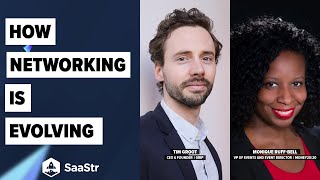
Tim from Grip and Monique from Money20/20 discuss how enterprise events are redesigning networking. Money20/20's ecosystem brings together startups, banks, regulators, and VCs. One sponsor had 127 meetings in four days, and app bookings grew from 700 to 4,000 year-over-year.
Questions this video answers
10 year anniversary
About 80%
127 meetings in four days
150 tables
From about 700 to about 4,000
Chapters
We encourage you to keep your cameras on but audio muted and you can submit comment, response or question to the speaker and do so using the Zoom chat box in the bottom toolbar of your screen. If you'd like to speak directly with the speaker, please make sure your camera is on and when appropriate, you can unmute yourself or use the raise hand function. These sessions will be recorded and available post event. But now join me in welcoming Tim and Monique. Tim, Monique, take it away.
Amazing. Thank you so much. It's great to be here. I'm Tim, Founder CEO of grip. Thank you so much for. Yeah, for being part of this great session about how networking is evolving at enterprise events. We've got a short and so thank you so much for joining me here. It's so excited to have you with us.
Thank you for having me. Really appreciate being here.
Amazing, amazing. So people, what we're going to do today is really go through kind of three key parts. First, we're going to learn a little bit more about Money 2020 and what makes it an ecosystem event, which is.
Kind of like how we look at.
The future of events, to be honest. And then we're going to go a.
Little bit more detail on why that.
Is so important and how you can become an ecosystem event as an enterprise and then the role of networking in this whole process. So to start things off with Monique, I listened to a recent podcast in which you said that Money 2020 is an ecosystem event. I'd love to understand a little bit more. What is Money 2020 and what makes it an ecosystem event?
Yeah, so Money 2020 is. This is our 10 year anniversary. So it's a 10 year event that literally brings the global money ecosystem together. So if you borrow, save, manage, innovate money, you are coming to Money20 20. We like to call ourselves one of the leading platforms for content, for sales and for networking. We're all about connecting people at our show, finding the right partners and finding the right clients. So when we call ourselves the Ecosystems show, that means we bring together everyone. So that includes startups, other entrepreneurs, government regulators, financial institutions, tech within finance. So fintech, the financial customer. We're bringing everyone together that touches money. So that's why we call ourselves the global ecosystem. And just those few have other tentacles with that. So you definitely have digital coin, you have cybersecurity, you have so many other elements that support what happens with money. They come to our shows as well.
It's such a dynamic field, right, like the fintech space itself and it's constantly evolving so I'm really curious, how do you kind of keep up with all those new trends that have been coming up? Like blockchain didn't exist when this event first started. So how do you keep up with.
All those new things coming up?
Yeah, it's a lot like, I think right now we touch about 27 different industries that have something to do with money. And how do you keep up with it is you have to have your pulse on, on the industry. You have to have really good people that you call your friendlies. So you're having constant conversations with those people in the industry. We have people in house who are from the industry as well, who are very well connected. So they're always traveling around, participating in programs, participating in projects where they get to learn kind of what is coming down the pike. From an innovation standpoint, definitely having connections to venture capitalists. They always know what's about to happen, what's about to be big within the space. And also just really kind of making sure that you treat the delegates as your community. We always look at them as in how do we feed our community? What does our community need? What do we need to learn from our community? So who are those influencers? Who do we need to be chatting with? We're constantly doing research, not only just when we have our planning for the event, but we're constantly talking and having those conversations and engaging and having surveys and having telemarketers call, having our research department call and really kind of get under the hood about what are the needs of the global money ecosystem. And we are a global show, right? We're just not based in the usa. We're based in Asia, we're based in Europe. And then we have the biggest one, which I like to call the Daddy, which is what we run in Las Vegas every October.
That's so cool. You mentioned those 27 topics. And I read somewhere that, you know, I'm sure that many, many of the people are on the call, they run their own enterprise events, user conferences and so forth. And it can be quite daunting to distill all those different topics that you want to discuss into something that is really bite sized and can be well understood by everyone. I heard something about like, I read somewhere like about five pillars of how you've kind of distilled that down to. So I'd love to learn a little bit more about that.
So we think of ourselves in these five ways. How do we connect you, how do we inform you, how do we amplify you, how do we bring the fun back for you so that you have these experiences and what are the key innovations to make sure that those right thought leaders are at our show. So when we're thinking about anything that we're doing at the show, we're looking at it from that particular standpoint. And, and you have to think about when you're building a large event, what is the unmissable moments that you're going to create within your program? What is the one thing that you know that you're going to be known for that no matter what other event is out there, whatever other competition is doing, what is the one thing that they know that they're going to get out of you consistently, constantly, and that you're always thinking about them in this way. And that's being a connector. We definitely are all about figuring out how to make a big show feel small. How do we make sure that we connect the honey pot, as we like to call it, to the right people, the tentacles for the rest of the industries within the money ecosystem. And so we're always thinking about the experience. We don't call ourselves a conference, we call ourselves a show. And so when you think about yourself as a show, you're thinking about how do you create an unmissable moment with every experience? How can every experience be a this is great or wow, they thought about that or look how they're treating me and things like that. So we're always, always, constantly making sure that we understand what our community needs and that we provide that for them.
This is a perfect segue into kind of the second part, which is more about like we've got so many great C level people are on the call and I'm sure listening in. There's really about how do I become like the dream force of my industry? How do I become the inbound by HubSpot?
Like how do you become those different.
Really kind of ecosystem events that actually started out by enterprises and you refer to the honey pot. And that's such a kind of concept that you always touch upon.
What do you mean with that?
And I'd love to learn a little bit more about it.
So when we're thinking about the honeypot, you know, there's going to be people that service key people or who want to connect, do business with, partner with key people at our event. So we're always thinking about how do we make our number one, our core, the core attendees that will attract everyone else to the event. What do we need to do to make sure that the majority of them or the Ones that stand out the most within their industry are at our show. So of course when you, of course, when you're talking about money, you're talking about legacy financial institutions, you're talking about legacy credit card companies, you're talking about technology, big tech companies. So the Googles and the Facebooks and the Amazons of the world, and one that has anything to do with E commerce, you're talking about the startups. Like we're always nurturing and figuring out there have been a few unicorns that came out and found their partners or got the information that they needed starting at our event and, and then five years later they're a billion dollar company and they contribute finding the right partner at our event. So like I said, what we like to say is our foundation is that we're a connector. So we're one of the places where people are going to attend to be efficient when it comes to doing business. Because when you have all of those five key industries, one really, and you got the best of the best. We got all of the major banking institutions, all of the wealth management management institutions, the startup community, we got the VCs, you got everyone that's coming there, it attracts everyone else. And I think that's what you have to think about. How do you attract, how do you service that core so that it's attracting everyone else? And so when we're thinking about the core, we're thinking about how do we make the show have a unique experience for each of those five things because that'll attract everyone else to the show. And so we're really thinking about how do you make the big show feel small, what do we need to do from a thought leader standpoint and how do you make them have fun so that they have that FOMO effect and they don't want to miss it for the next year.
It's definitely like it's so noticeable for anybody that's been there, it's like, you know, you really notice them when you're at 2020. That's like really what is happening. Currently, of course, during the pandemic, the world has kind of been set upside down for in person events and we've seen a lot of enterprise are really being focused on like a lot of webinars and virtual events. And so how would you recommend that an in person event, should you kind.
Of like play a role in kind.
Of creating this ecosystem? Can you be an ecosystem event, completely virtual or do you need to have an in person component to that?
In my personal opinion, you definitely need Live. It is nothing like having that face to face, meeting, that focus, people confined in that one area to really engage with your program and your product. And so there's too many distractions. Look, I definitely. We've done virtual events, we've done webinars. There's just a lot of that going on. And believe me, zoom fatigue is real. I mean, yes, there's some convenience to kind of being part of a virtual experience, but nothing to me or to from the sentiment that we're getting from our attendees, because we've been asking them for months, are you gonna come back to live? Are you interested in coming back to live? And out of everyone we have, about 80% out of everyone that we surveyed were like, yes, if you have it and I could get approval, I'm coming. So the live experience has to be a big part of creating an ecosystem. How we look at virtual and, and webinars is how are we going to feed, how are we going to use them? Use that tool as a funnel into our live event. So if you never engage with us, how we make sure that virtually you have this wonderful experience that you create in your mind? Like, I have to see what happens live. Also, we're talking about, we're talking to people who maybe haven't engaged with us in a while. We're making sure that we get them back into the funnel to get to know our brand again, to see our growth, to see that we're still that number one place for them to visit. And how do we get them to live? Live is the destination for us in everything that we do. We want to bring them there because the live experience is going to be like something they've never seen before, especially within a financial conference. And we're going to make sure that they have a good time. You know, we always think about our first timers. And as we need to create first timer experiences, we need to create opportunities and tools for them to understand what's about to happen to them on site. So we actually have a first timers program that we put people through weeks before they show up. Then we make sure we connect with them on site, and then we have something called a First Timers Extend program. So we are really all about bringing our community together, servicing our community. And I don't feel like you can do that without having a live component. Yep.
No, I completely agree with you. I think that virtual is a great way to provide content and to kind of get the brand out there. And it's a great way for people to get to know a brand, but really to really become part of that community and to engage further, you need in person and you need more than a conference. And that's really the second part that I want to talk about is how networking plays a role in creating industry defining events. So I wrote on a couple of points here already and one of the first one here actually is really from you. You are saying like money 2020 is four months of meetings in four days. So how do you create four months.
Of meetings in four days?
Well, because we are such an ecosystem event and basically everyone is there. So I've had partners and sponsors who 100% just sit in the meeting room that they have with us and, and just bang out meetings all day long. I had one sponsor said I had 127 meetings in four days because his clients were there, his targets were there. The people that he just wanted to connect to build relationships were there, everyone was there. And so it's because we are that ecosystem event that people find our event in a very, very efficient, even though we're a premium price event, they feel like they get a lot out of it. I've had people who still are talking to us about the leads that they had from 2019, from the 2019 show that they are still in contact, nurturing and have either gotten over the line or are close to for big deals. That's amazing. And they talk to us about that. They let us know kind of how our show helped to impact them within their business dealings. And they're back again. Look, a lot of people cut their budgets because of COVID for 2021. When it came to live events, they didn't know what was going to happen. But when we're talking to our partners, they're saying we cut out a lot of the other events that we go to, but we kept yours. And so that means that we are very impactful for them to know that they're willing to take that chance. They know that they're going to get something out of coming to our show. So we have to continue to put connecting at the forefront of everything that we do and how do we help them engage with each other. And your platform has been very helpful in us doing that with them.
That's very kind of you. Thanks. So I think that like as part of something that you said and like a previous time that we spoke is, you know, events are such a moment in time experience. So you know, you build up to it and then you know it happens. And this kind of four day period can often Be as like, okay, we capture all the feedback after it. And something that you do very proactively is kind of capturing feedback during the event. Be interesting to talk a little bit more about that.
Yeah. So we actually do daily surveys during our event. Every night we send out a survey to say, how was your experience for the day? What did we get wrong? What can we improve? And so we've actually used those daily surveys and that daily feedback to improve something the next day or to change something or to make sure that something else stands out a little bit more if someone couldn't find something. And it has been extremely helpful for us to do our surveys that way. And then at the end we do our NPS survey. So they're kind of used to us contacting them, checking in. That's what we call it. We're just checking in with you. How was everything? Here were some of the highlights of the day. How did it work for you? Like I said, was there anything that we could have done better? What did you like? What didn't you like? What can we do better for the next day? And then at the end they appreciate that because then they see the changes instantly on site, whenever we can change. And they talk about that in the NPS survey that we have at the end that I filled out your survey on Sunday about something, I saw it changed on Monday or Tuesday. I really appreciate it that you were very thoughtful about doing something about that so quickly. So when we're thinking about the customer experience, we are literally thinking about every touch point of the customer. And I don't think a lot of shows do think about surveys. They just want to think at the end when what is it that you liked and didn't like. But you can make instant changes if you're in constant communication with your community while you're at the event.
Definitely, I completely agree with you. And one of the great examples of that is the kind of live Networking at Money20 20. And I think that a lot of people here on the call that do their own user conferences will have maybe like a lounge or something, or there'll be like something along the main stage in the session stages.
But.
But at Money20 20, we've got this incredible networking space with 150 tables. Like in 2019, I think we had like literally tens of thousands of meetings happening there. Would be interesting to just hear your perspective on why such a central networking area like the PayPal Lounge is so important.
Well, if you think about it, like I've said several times here, what's our foundation, we're a connector. So we're always thinking about how do we make it easy for people to connect. And so one of the simple transformations that we did was give them the space to connect. Where there's tables there, they can go on the app. They can pick out a time where they want to meet with the person that they want to meet. They can reserve a table and the table sitting there waiting for them. That was a simple change for us, but it made such a huge impact because that place stayed packed throughout the entire three days that we had that connections lounge live. We even had to have overflow area and with 150 tables in one place and then to still have to have overflow area was just insane because we made it so easy for people to connect with each other. I mean one year we had maybe when we first introduced the whole networking app, find the person that you want to meet, get the time, get the table. We had about 700 and then the next year we went to about 4,000. It was like insane how you just jump from those numbers because we just made it simple. And I think when you're always thinking about, you understand what your foundation is connecting and you're always thinking about that from everything that you do and how do you make life easier for your community. These small things, these small changes can make such a huge impact on your event and really give people a great experience because they didn't have to figure out and find a place to sit and network.
Yeah, definitely. Definitely. I'm conscious of time actually. So I'm going to skip two slides around kind of that short three minute virtual networking that we've been doing. Actually, quickly, let's touch on Global Connect. I think it's happening next week. Give us this short 30 second pitch of global Connect. What is it? Why it's cool. Why is it different?
Global Connect is all about us connecting our community virtually. And so they absolutely have an opportunity where we do some matchmaking. And as well as we give them the opportunity to find people within our community, we have 100,000 plus people who have engaged with money 2020. We have a huge robust signup for people who are like, yay, you're helping our business again connect again, who are joining this platform. And it's basically just another way for them to schedule and have really impactful meetings. And it's going so well for us.
That's amazing.
Cool. While the top takeaways are here on the slide, I think that we're perfectly on time. I think so we'll open it up to questions. I've got many more questions for Monique if others don't have any, but I'm really curious if anybody on the call has any other questions that have come up.
Actually, Tim, if I may, we are at time and I would ask if we might be able to take those questions right over into your lounge, which would be a great little takeaway to come over and allow individuals to go and engage with you, if that's okay. So, everyone, thank you. Thank you for joining this session. And Tim and Monique, thank you for your time and putting it together. We have a lot more great content ahead for Saster Enterprise.










