How to build a $18B+ success story far far away from Silicon Valley with Adyen
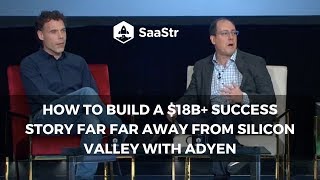
Aydin Senkut and Roland Prince discuss how Adyen built an $18B+ payments company from Amsterdam, far from Silicon Valley. The company prioritized product over hype and maintained a pragmatic culture while capturing major market share in global payments.
Chapters
Please welcome aydin senkut, felicis ventures founder and roland prince adyen chief commercial officer. Thank you. What a great video. I hope everyone's doing great this morning. So we'll get you started off on an exciting story. I think this is an amazing opportunity to have the chance to talk with Roland and also just to set the record straight, if my calculation's right, I think market cap today is a little bit north of 22 billion. So it's a good number, especially unique for cloud companies. I also feel that especially given there are probably a lot of founders in the audience, anybody that aspires to build a great, fast growing company, payments is really critical to it. And even like myself, like I was the first product manager at Google and even a company like Google, they might have done things really well in the U.S. but the moment they started with international expansion, they realized that to be able to handle all this complexity, especially in payments all around the world, is not trivial. Even 10 years after I left, they were still having issues. And between that and kind of thinking about all the great Silicon Valleys and how they're going to grow, it was one of the major impetus in US discovering Adyan. Roland, let's start off. I think it would be really great to tell this story. Obviously that was a really cool video. Tell us about your journey of how things started with Adyen. And I think a lot of people often think of payments as kind of a boring area, but it is the heart of trade and commerce. It is the largest area of gdp. And I think it would be great to give people an insight of this amazing company.
Okay, thanks. Hi everyone. Yes. So the main background to the problem we've been solving as a company we started about 12 years ago is really the fact that payment methods all over the world are really, really different. I mean, payment cultures, payment habits are different in every country all over the world. Here in the U.S. of course, we all pay with credit cards. Same thing in the UK or in France. But in many other payments in many other countries, people really dislike credit. I grew up in the Netherlands, people in Germany, people are being taught when they're young to stay away from credit. It's a bad thing, you want to avoid it. So in these markets, people pay with debit methods or with online banking based payment methods. And in these countries they represent maybe like 80% of all online transactions in store transactions. And then if you go to Asia or Latin America, there's lots of cash still out there. People pay with cash. And how do you get that Cash into your systems. That's really what's been driving us to try and figure out how do we make all those different payment methods all over the world available to our merchants through a single integration, through a single platform. And that's really where it started, and that's where we've been building from.
Yeah, a lot of people kind of think about this area, but there is a lot of complexity hidden. And I think one of the things that I want to get to is also kind of to touch on the audience, like, in terms of, like, how to build a great, successful company. I guess one of the first insights is start with a very large market and a very critical need. Every business in the world needs to process payments. However, then it is really important to build a product that really does solve a critical need. So one of the things that surprised me when I was looking for adyen in a payments company, a lot of people approach on the technical side of being able to integrate into a business. But then I found out that even companies like Google and Facebook were having challenges 10, 15 years after their founding in certain countries in the world, dealing with complexity. Can you maybe very briefly touch on that? Because I think there's a lot more that you guys do in terms of a critical product.
Yeah, I mean, we started out with, I think our entry into the market has been 10 years ago, the ability to give access to all these different payment methods through our platform. So that's how we started. But then I think, of course, credit cards are also really, really key in payments all over the world, but they work quite differently everywhere. And if you look under the hood of credit card processing, you find that there is actually the main components of the value chain of credit card processing were built 40 years ago. They were built in a period before Internet, before E commerce, before mobile, and still in many cases, that infrastructure is being used for processing payments, and it's just not built for what it's being used for. So what we've done, what we learned as we started to work for these larger companies handling credit card transactions in many different countries, we got a lot of questions because we were processing those cards with many of the banks and processors all over the world. So we integrated with many of those, and we got a lot of challenges from these big companies around, hey, why do I see that in certain markets? I see many more payments being declined than in other markets. Can you give me more insight in why that's happening? My customers are complaining about it, and we couldn't help them because these underlying systems that we were processing with gave us nothing. They gave us zero data. They had zero flexibility. They just couldn't do anything for us. And then you start to dig into that and we figured, like, hey, these are such old systems, very, very static. There must be a better way of doing that. So the thing that Adyen has done, which not a lot of people know, but it's been really, really impactful for the growth of the company, was we took the step to integrate directly with Visa MasterCard, really replacing the banks, the processing systems, and really trying to eliminate the role banks play in payment handling by going directly to these Visa MasterCard networks. The moment we did that, which took us a lot of work and effort to get there, people said, that's crazy. The moment we took that live, we had a flood of extra data. And with that data, we could instantly start to make changes in the way we would submit transactions into the Visa MasterCard networks. You think, wow, big deal. Sounds really boring and strange. If you submit a payment to Visa MasterCard, it's not just a card number and a name. Now we submit over 100 data points. You know, what type of industry are we talking about, what country, etc. Making small tweaks to that suddenly changed the responses. So we were seeing 2, 3% more approval rates. And that's a big deal, especially for companies that do 100 million. Seeing 2, 3 million extra revenue, that drove a lot of interest in what we were doing.
Or Companies that have 50 billion of global revenues could be a really big. I'm going to shift gears a little bit because I'm going to start a little bit more on the fun journey side because there are a lot of founders and I'm sure, like, not everybody here is a Silicon Valley founder. And one of the things I love about this story is this is a Dutch company. I don't know if anybody wakes up saying, you can build a great enterprise company outside of Silicon Valley. Let's outside of us. It's very inspiring for me. I also want to break a lot of the stigma. So there was a lot of kind of, I don't know, dogma in venture capital. People are like, of course I invested in Adyen. Is the misspelling of his name. Is he investing in himself? I think my favorite anecdote, just to share with everyone in the audience, it's a very interesting company because I think traditional Silicon Valley enterprise method is, hey, you need to do a lot of hyping about your company, but this is a product first company. And I think if Anything people haven't heard. And so my favorite anecdote, the first time the company was actually trying to raise its profile in the US I call up Wall Street Journal, whom I know really well from Google, and I'm like, well, I want to tell you about this company called Adian. So the editor takes a couple minutes trying to search for it. It's like, wow, I can't find the company in our database. This is really weird. We have every company in our database. So I think it was the first time in like 10 years or something the editor couldn't find a company in the Wall Street Journal database. So I'm trying to get to an interesting point here, and that is a little bit of the company culture and doing things in a different, unconventional way. And I think it's a very Dutch way, being pragmatic and product first, action first. And it's a little bit counterintuitive versus founders feeling, hey, like, I'm not getting the word out of my company. Like, I need to hype it. I need to get attention from investors and from my customers. Can you talk a little bit about the product first culture at Adyen?
Yeah. So I think if you go back, there's a few elements to this. I guess by origin. We're a Dutch company, and the Dutch culture is very pragmatic. It's very much focused on getting things built, getting things live. And we're quite focused on working with our customers, much less about telling the story. So I think we first build, take live, and we talk about it later on. So I think that's some of the background to why people didn't know about what we were doing. We're just focused on getting our customers, getting customers on board, getting them happy and live and build the product out. That's been major focus. We started a company with engineers and a few salespeople, and for a long time, that's the only two major roles we have in the company company. And then at some point, of course, you start to try and get more and more attention and awareness about what you're doing. But that's challenging, especially here in the U.S. if you're not a U.S. company, to get your name out here to get people to talk about it. If you are a European company, there's just 10% interest compared to a US company. It's just much less interesting in general. So it's really hard work to get on that radar. I think for us, we've always had success with finding the right companies to work with, to roll out. With, so we didn't worry too much about it. But it is tough to get on the radar if you're not from here. And it's not a hyped story, but we were fine with it. We were doing well.
That's one of the reasons why I'm really excited to have you here. I mean, I was just at another event in Southern California and the keynote there was Ryan from Qualtrics. The biggest IPO of 2018. Yes. Maybe an enterprise in the US for 8 billion. I'm like, well, a Dutch company actually had 14 billion at start and now 22 billion plus. I think look at backstage, we were talking a little bit about product. Another thing that I want to touch on a lot of times, things have evolved a lot. And the founders also feel a lot of pressure to focus on marketing of the product, on the design of the product. But one of the interesting things you told me that the first time that the product came about, it was all about making the customers really happy. It might not have been like the best design product and most people might have not heard about it, but it sold a very critical need. And it was on the back of those core customers being very happy. That kind of fueled the company's growth. Can you touch on that a little bit? And maybe I think for some of the especially founders and investors that might benefit from in the audience, what were some of the tough decisions or two trade offs you guys had to make in that journey?
Yeah, there's a lot of things to say about it. I think number one is everything we've always built from day one was built with a customer in mind. And that's still something we do today. We never build anything if we don't know which customer will use it and when. So that's always been driving how we work. From day one, we've had, you know, we've worked in a way where we had a priority meeting every two weeks. And in that priority meeting, we look at, these are the customer requests, this is the number of developers. We can do five things. Which are they? Okay, this is what we're going to work on. And we basically still work that way now with many more people, but always linked to customers. So we know it's going to be used, we know it's going to be impactful. It means we have no big roadmap. A lot of our customers always ask, can you share with us the roadmap? What's going to be delivered when we don't have a roadmap? Because we just know what we're working on and we have big themes that we're working on, but we really want to keep the flexibility that we can make changes all the time if an opportunity comes by that we think is interesting. So we know in the next two, three months what we'll be working on. But what we're going to be working on in November this year, nobody can tell you. And we like it like that.
And on that note, I want to go back to the comment you made about, hey, you guys already had some great customers in Europe, but in the US most people have not heard about you. And I know for years, like I used to tell people, hey, like you're going to hear about this company, Adyen, and Cricket's in the room. And then all of a sudden, I remember last year the ebay announcement came out. PayPal took a 10 billion haircut in market value. And all of a sudden, like my LinkedIn, email, phone. Adyen, what is this? Can you guys introduce us to this company where I want to go with that. I think that was a fascinating announcement. I know it was like at least years, if not months in the making. And the reason why I'm bringing it up is for a lot of the people out there, I'm also sure that there is kind of a company making moment where you have to do something really important with the product. You have to close a very important customer. I experienced it with Google. I mean, I think the first deal that we've done with AOL and then with Yahoo later on were like kind of company making or changing moments. Anything that you can illustrate a little bit on the ebay story, because people, I think, read the news, but I'm sure they would love to hear a little bit more of the backstory, especially in terms of how they can go after a significant customer themselves.
Yeah. And I'll talk through if you say, like, what are important moments throughout the company life cycle, I'll take it. I'll end up with the ebay thing, but I'll take it back a bit. It starts with when we started Adyen 12 years ago. The funny thing about it was we started Adyen, you talk to people like, hey, we were in this business before, we had a payments business before, like a very first generation payment service provider was quite successful, acquired by a bank and they more or less, yeah, killed it. And we felt like there's an opportunity to do it again with all the learnings we have and come out with a new platform. The moment we started to talk to people about it, in the industry or friends and family around you, the common reaction was, wow, really, are you going to do isn't this too late? Isn't this already done? Which is really, really funny. If you look back 12 years from now, things were just starting, but people felt like, yeah, you're really late in the game with this. Then you start. And if you think about what's the product, we tried a lot of different things. Looking back, it's like, oh, perfect vision, great product, great approach. A lot of the things we've done is trial and error. So we built lots of prototypes. When we launched, we had installment payments that we were pitching to a lot of companies. People liked the idea, but it was way too early, that didn't fly. We had a marketplace solution. We were talking to a music platform that wanted to enable artists to sell directly to their fans. And we built a platform that could cater for that split payments settlement directly to the artist. Beautiful. But this was in 2007, like the year Spotify just started. Way too early, it all failed. And then we had success just by trying and trying and trying. Then we ended up talking to gaming companies, like video gaming companies. They had a lot of new people starting that at that time and they really liked what we were able to do because we could make the payment experience much more nicely integrated within the game. So people didn't have to leave the game, close their browser to do a payment, stick in the game, do an overlay, do a top up and keep playing. They love that. So that was our inroad and then you can start building. So it's a bit of luck. You got to try a lot of things and there wasn't a great vision, but lots of trial and error. Next big moment for Adyen was we started to work with Groupon again by luck, because we signed up Citi Deal, which was a European clone of Groupon. They were growing really, really fast, growing into lots of international markets. We were helping them. So that really pushed us and gave us a lot of fuel to add a lot of payment methods in many different markets, build solutions for markets that everybody else could benefit from. And then Groupon acquired that company. And then we worked for Groupon and did all their international payments. So that gave us an inroad into the us we started to work for this great US company that at that time, everybody looking up to, and then you can start to talk to you as merchants. So you have to have a few of those lucky moments, I feel to get there. Many others failed, so some of them work out well in your favor. And then I think ebay was a big deal for us in the sense that it put us really on the radar, I guess in the US market because it's all about US domestic processing. And it's also a misconception. A lot of people always thought it's only international. No, we have a big presence in the US we do everything domestic in the US we have everything it takes. But there's always been a lot of focus on the international capability. But that's. And this really put us on the US domestic radar, I think what's the fact that we're able to work with ebay is very much linked to a certain focus we've always had as a company and a specific choice we've made that we never want to be at the forefront. We never decided to run our own wallet or run our own payment method. We always made a very clear distinction, a very clear focus. Our role is to help merchants grow. We want to make payments really a strategic element, help them grow their business, really help them go into new markets, have more successful transactions, make the purchase process for their customers easier. That's our focus. We're behind the scenes, we're running all that behind the scenes and we give a lot of flexibility to optimize it the way you want as a company. And that flexibility, that's what really helped us with the ebay deal. Because they can control, they can build however they like it. We'll make it work, but at the background, no conflict, nothing. And I think that's why that's been successful. Successful.
I'm going to switch gears again, so I want to highlight a different perspective here. So a lot of people in the audience might also be wondering, hey, if you're fundraising or if you're thinking about excellence for your company. I think I learned a lot of incredible things about Adyen. Number one, it's very rare, but if you're lucky. So we already touched on things like, hey, one of the early predictors of success is working on a very large market, payments that affects every commerce, solving a critical problem, something that requires a lot of technology. But then there are a lot of non obvious things. For instance, one of the things that I appreciated about Adyen when I first met number one, it was interesting because you guys didn't need any capital. I don't think when index first invested you needed any capital either. But you already had a full team. You had an amazing cfo, ingo, who's also a good friend. And what I'm trying To get to is like excellence for founders out there in terms of hey, what are the things that matter. I know that Adyen was top in our portfolio in terms of revenue per employee. I think Adyen was also top in terms of 300 investments we made or so in terms of efficiency of those revenues, meaning that to generate that one extra dollar of revenue, how much capital do you actually use? In fact, there's been like public reports about how efficient the company is with capital and even years before it went public. And that was one of the privileges of being in Amsterdam. It was being run almost as a public company. And I know Most of the CEOs out there don't think of finance, don't think of operational excellence as necessarily a core part of success. It's all about hey, let's get the engineers, let's get the product out, all of that. But I kind of want to touch on that non obvious angle and I don't know if you want to talk about how the team got together together, some of the less talked about members of the team or KPIs and how you guys were so relentless on efficiency of capital.
Yeah, I think if you look back the rounds we did, we never they they came together at the right time. We weren't really raising and seeing many different VCs, but we met the right people at the right time. I think the good VCs have a nose for when to show up and build relationships, which for us has always been key. We wanted to make sure that any funding we do, it needs to be with someone that we feel can really help us and we don't need help as a company to tell us how to run the business or anything like that. We were always much more interested in how can a VC bring us in contact with other companies, how do they bring a really good network. Hence we've raised with you with Index in Europe, with Iconic and GA in the us, Temasek in Singapore. So we have this really nice international coverage which has been really helpful for us. So that worked out well I think in terms of capital efficiency maybe also because we're a Dutch company, we always work worked on the model that we like to be profitable at the right time. So that was an objective for us, not like hugely profitable, but at least we wanted to make sure that we have a profitable business here. So we're a bit more old school around it, but that worked out well. And the funding rounds were much more to give us balance sheet in terms of being able to do large deals with the card schemes or with large customers, you need to have body. We wanted to. We figured out quite early on we want to build this for the long run and that's where it really helped. And then in terms of. Yeah, I think one of the things that were really powerful in all the funding rounds we did was the simplicity of how it was structured. We've always been very predictable about what a deal should look like. Common shares for everyone. We kept it very, very simple and this really played out really well in the end.
That's really great. I'm just kind of thinking, I know that one of the big lessons for me in addition to investing in companies that are misspellings of my name not is that to really kind of. When you see all the signal to maybe even be bolder. But I'm sure one of the things that the audience might also want to hear about. You guys have done a lot of things amazingly right and if you could magically go back in time and look at everything that has happened, is there anything that you would do differently or change? Do it faster, do it slower. Again, as I mentioned, do it differently.
Yeah, of course you do many things differently. I think there's a big thing and a small thing I would call out a bit bigger thing is we've as a sales and product organization, engineering organization, we were always super focused on building the platform and getting customers to use it and improve it. Improve it, improve it. We had not that much focus around usability. The marketing side. People would look at our website at some point while we were already working for quite high end companies and they thought we were like a three people company. So too late, far too bad. I mean we have lots of fun around that. If you go back and look what our website looked like, it's a joke. We had goldfish representing really bad. So that's something we would have done quite differently. Looking back, I think there have been people that looked at the website and thought this must be a joke, let's go to the next provider and smaller things. I think one of the key things for the success of Adyen is that we've always had super, super focus around the people that we hire. We've always focused around bringing people on board that really fit our culture. And in the beginning this is a smaller example but we've had people hang around a bit too long, whereas we knew this isn't going to work out. So quite early on we learned from that, that the moment someone doesn't fit how smart someone is, but if they don't fit our culture, our way of working. We gotta be very clear, don't hesitate to split ways. And that's something that we really learned. You really don't want to waste time because it's very influential on the rest of the organization. If you keep those people on board, people will look at it like, hey, why are we keeping these people as part of this organization? They don't think they're taken seriously themselves. It's a wrong example. They're going to be hiring other people. So you got to set a really clear example around that. And we learned that and nowadays we're pretty good at it.
That's great. And maybe a good thing to kind of touch on towards the end of our conversation is kind of things to look forward to. And from your vantage seat, you're working with some of the largest companies, companies in the world. You've seen this kind of develop to very, very interesting levels for people in the audience, founders and investors alike. If you were to wear your future looking hat, what are some of the interesting trends? Maybe you can touch on things that you're excited about, Adyen is excited about or overall outside of payments, from the activity that you're seeing, what can you share with the audience? Things that are worth highlighting or to be excited about?
Yeah, I think in general from an Adyen point of view as a company and the people that work there, I think we've grown through this journey over the past 10, 12 years with a lot of people and we've gone public and everybody's like, oh wow, what are you going to do next? And I think the real fun thing about what we are doing and everybody's on the same page within the company, we all feel like, what are we going to do next? Build it out, keep building. It's super fun. We control the company, we control the company culture ourselves. Everybody really enjoys what we're doing. It's a super international organization. There's lots of autonomy. So everybody really enjoys how we do that. So we're all very excited to continue to build the company for the long run. I think if you look at payments in general, probably 85% of all electronic payments out there are currently still processed by banks, old systems. That's all out there to be to be replaced with something better. So from that point of view, we feel like there's such a long path ahead of us. And I think things that we're really excited about is we work for many of the large tech companies and I think what we'll be doing there is to do more and more new countries. We continue to expand, but also we do, and not everybody knows this, but we also do a lot of transactions in the point of sale and retail space. So more and more of the payments we do are happening in stores. And I think if you look at what's going on, there's this whole retail transformation happening where ways to how you go shopping on the high street is changing super, super quickly. And it all needs new ways to check out that are much more convenient, faster, easier, and that's happening right now not only in retail, but also in food, in coffee. And we're really in the heart of that and that change, I mean, it's going to be really fundamentally different how you're going to purchase items, how you're going to experience shopping in the years to come. And that's something we're going to play a big part of.
Well, that's fantastic. Yeah, I mean, I think as we kind of reach the end of it again, what I want to conclude with is look, I think from our own story, it took me, I think, two and a half years of relentless conversations, first with your colleague, former colleague, Tyne, to just get a hold of the company and then to build a great relationship. But I know that everybody in the audience, from an investor side or the founder side, maybe the best note to leave people with is just impossible. Is impossible until somebody makes it possible. I feel like it's my own journey of starting a venture firm from scratch when nobody believed in me. I think it's similar with the Adyen where nobody believed that payment was a done industry and you can't build a great company in it. You can't build a great company unless it's in Silicon Valley. So hopefully the inspiration and the positive note we want to leave everyone with is if you actually do find the right thing, stick with it and make impossible possible. So thank you, Roulam. Thanks, appreciate it. Thank you.










