How to Build Happier Employees - Founder & CTO and Chief People Officer at HubSpot
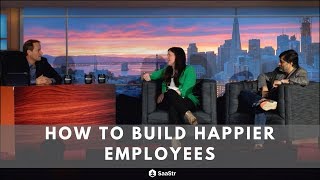
Panel from an October 2018 YouTube session where Dharmesh Shah (HubSpot CTO/cofounder) and Katie Burke (HubSpot Chief People Officer) discuss building and measuring company culture, diversity & inclusion (D&I), and employee retention. Key points: treat culture as a product (culture code deck, iterate publicly), run anonymous quarterly employee surveys and publish results + action plans, hire people who further your culture (not just fit), hire a people leader earlier rather than later to avoid 'people debt', tackle D&I proactively with tactical interventions (e.g., workshops, campus recruiting fixes), and address toxic behavior via data-informed coaching or removal. The talk includes practical advice for early-stage startups on creating authentic values and measuring cultural health.
Chapters
I'm going to shut up in the beginning and let Dharmesh and Katie talk about culture and diversity and other things. But just for fun, who Here is a HubSpot customer user, raise your hand just for a little bit of fun. All right. Pretty good, pretty good. And so I want to thank them for coming here and two years ago, if you were here, Dharmesh was one of the most popular speakers and shared a lot about their journey. And I know HubSpot's a very iconic company and we'll see what we'll learn about the presentation. It changed in flight several times, but I want to hear from Dharmesh and Katie how they focus on culture for real. And then we'll spend a few minutes digging on the learnings about so how we can all do better. So, so. But thanks for joining us. This is great. Yeah, let's give it up one more time.
Hello everyone. So the slides did change. They were fresh baked at 3:30 this morning and then once again at 11:00am and once again at noon. So by the way, in terms of voice of God, this is Sastor. You are the voice of God, Jason.
As far as we're concerned.
So a quick confession before I go, before I start, which is like, I love SaaS. I love it like ever since I was a little boy on the dusty streets of India, I'm like, someday there will be an industry where we can ship software without actually shipping software and all customers will be on a single version. It'll be awesome. So this is great. You folks are my peeps. I've been in the software industry for a long, long time. This is the best time I've ever experienced. So when I was asked to speak this year, I've been emotionally here for every Saster, glad to be back here physically. I was wondering what should we talk about? And we could talk about CAC and LTV and economics and fundraising, entrepreneurship and SaaS and engineering and product management. But instead I chose to talk about culture and people, which is a little bit of an odd topic for a CTO to pick up. And so I asked myself like, okay, well, who can best dig into this? Like, who actually knows stuff and does things? And so this is Katie and she's a people person. Actually, she's the people person. She's chief people officer at HubSpot. And here's evidence that Katie is a people person. This is her in her near ideal state, around about 25 people and genuinely looking happy. It's not about 20, it's exactly 25 people. I counted. I'm obsessed that way. And so she's a people person. Of course, this is me. I am whatever the opposite of that is. I am not a people person. And this is my near ideal state, which is like I cut out the can, greet people that I don't know, and I'm in the hotel room cranking on Python code. And so it's a little bit odd just about all of you don't know this history, but so I'm chief technology officer and years ago I was volunteered by my co founder to work on culture. I'm not going to tell you the long story of how that came to be, but there were multiple bottles of wine involved. And as part of that exercise I did some data collection and we created this deck called the HubSpot Culture Code, which has exactly 128 slides. It's always had 128 slides for a long, long time actually, which people said. I was like, no one will ever read a deck that has 128 slides. And I said, well, yeah, Netflix, right? It's like 125 slides for those that are curious. By the way, if you have only if you have time to read exactly 120 plus slide deck, read the Netflix Culture Code deck if you haven't already. If you have time to read two slide decks with 125 plus slides on people and culture, read Netflix twice. It's that good. And if you're still bored and obsessed, you can check out ours as well. The way I think about it, in the kind of the term culture code, people think of it as like a code of conduct kind of thing. And that's the automatic assumption. But in my mind at the time the deck was being crafted, I thought of it as actual code. So it was an engineering perspective. It's like, okay, if I were to write an algorithm or an operating system to kind of pick people or to figure out how to make decisions, what would that look like essentially? So that was the original kind of genesis of it. And so this is the only slide I'm going to show you from the deck itself. And this was one of the kind of revelations I'm going to try and talk you folks in. You don't have to create 120 slide deck, but actually putting your culture out there has been immensely valuable for us. And the reason is a, you have a great culture, but by the act of publicizing it, we got a bunch of positive self selection. People read the deck and either they said, oh, there's no way I could work at that kind of company. Awesome. Or they say, oh, that's the kind of company I want to work for. And there's lots of value, not only having well defined culture and articulated culture, but actually publicizing it. This was kind of a big lesson learned. And from an engineering perspective, as I think about culture, this is probably the most important insight I've had personally is that. And I'm biased because I'm a product guy, but I think we should think about culture as a product and the team, the people, the employees as the customers of that product. And so all the things that apply in building a product. You would never build a product without talking to customers. Unheard of. You would never try to craft a culture without getting the team's input. Product is never done. Culture is never done. So we don't say, oh, we shipped the product, we're done here. We're not going to iterate on it ever again. One of the biggest mistakes people make is like, oh, we want to preserve our culture as if it's a static thing and we want it to not look any different two years from now, five years from now, ten years from now. And I think that's wrong. It should iterate in the same way. And so things have gone reasonably well. And it feels a little bit like everything is awesome. Things are going well. We're up to about 2,000 people, plus or minus. What are the percentage is that keeps me out of trouble with our investor relations people, but somewhere in that neighborhood. But so the question then is like, okay, well, fine, you guys have put a kind of deck out there. You've kind of put some philosophies out there, but how do you know if it's actually working? And as it turns out, that's a really good question, like, how do you measure it? And I don't have a really good answer. So I'm going to hand it off to Katie.
Not quite sure where to stand. This is a bit like a trippy night talk show sort of things. But as Dharmesh mentioned, I am our people person. And while I am indeed extroverted, I am not a career HR professional. So let me just share with you what a rogue former marketer has done with a culture and people ops team and how we approach culture and how we measure it at HubSpot. So first I'm going to ask for audience participation. You all thought you were here to watch. It's not true. How many of you have ever taken an employee survey? And if you wouldn't mind, just Keep your hands up. I know it's a lot of work to work out for people who are in tech. I'm kidding, I'm kidding. Come on, come on. Keep your hands up. If you ever saw the results of that survey and then keep it up. If it ever had real talk in there. So it actually said, here's what's actually going on in the company. So at most companies, right, It's a much smaller group. At most companies, employee feedback surveys are where feedback goes to die. It's where data goes to die. It's a complete black hole. And so even if you take careful time to submit a ton of feedback on what's working at your company and what isn't, you'll never see it again. And so what we do at HubSpot is the exact opposite. We do an anonymous, quote, quarterly survey of all of our employees. We never assume that our culture is working. We always assume that we can do better. So we field that every single quarter, anonymously, globally, and we get huge participation, we get a whole lot of feedback. And then the hard work begins, which is we share every single data point, every open ended response, every piece of feedback that people say, dharmesh did a terrible job. I hated Katie at that company meeting. It was awful. Our benefits are terrible. That all goes to our entire company on the wiki. So you can download that file, you can read it yourself, you can look through it, you can actually raise on our company wiki a disagreement about it, you can raise concerns or questions, you can ask us. And so everyone thinks, okay, the employee survey is the secret. The real secret is in sharing all of it with our employees, even when it's not good news. So everyone thinks. And everyone says to me, who works in core hr, that's a ton of work to, to do all that data analysis. And what I always say to them is, the real work has nothing to do with fielding the survey and doing the data collection analysis. The real work starts when we ship that data to the company and say, here's what we're going to do to fix the problems that exist. And if your commitment to fixing those problems is not as strong as your commitment to just asking for positive affirmation, you should not bother doing employee surveys. In my opinion, if you are not going to put the effort to fixing the problems that people set forth and you should not bother to ask. So this is the one slide, I'm not going to lie, that's like a little bit of a humble brag in the slide. We do not have the same budget as Facebook or Google. We admire their cultures greatly, but we cannot outspend Facebook or Google. We are a Boston B2B marketing software company. We are super excited and passionate about this, but we cannot outspend Facebook or Google. So what we do instead is we out care and we out execute. We add human touches to as many things as possible and then we innovate and listen to our employees at scale. And the results, I think, speak for themselves. Some people think of Glassdoor as a vanity metric. Glassdoor has actually done a great amount of work showing that the economic returns of folks with high Glassdoor ratings are actually higher than those with lower. So for those of you thinking, hey, I'm going to wait on the ROI of our culture, or I'm going to wait to invest in our employee experience, wait no longer. Companies that have great, happy, productive employees do better by every single return. So the inevitable question, maybe one of the reasons you're all here is you're sort of thinking, well, I'm exploring product market fit. I'm still thinking about raising my next round, so I'm going to think about this later. Did this occur to anyone at some point coming in here today? Sure. Thank you for your bravery. We're like, yeah, I was definitely thinking about emailing someone and saying, let's put it on the roadmap for next year. I would humbly posit to all of you that you consider doing something now, and by now I mean literally when you leave this room to make the culture at your company better, more inclusive, more productive, and more employee or candidate centric. So we'll talk a little bit more about how that can happen. If you're not convinced, which I understand why we just met, after all. Allow me to show to tell you what could happen if you don't. So, at HubSpot, we are allergic to micromanagement. I don't know about you, but I did not get into tech to have someone leaning over my shoulder telling me what to do, what to click, when to do something, and exactly how to do it. So one of our core values at HubSpot is autonomy. We hire remarkable people and we give them a lot of freedom for how they're going to get their work done. And so we've always known that it's a company, but until we codified it with our culture code deck, we didn't give managers the opportunity to say, hey, actually, and call each other out and really make decisions based on our vision and values. So if you always think, hey, we'll Never become the company with TPS reports. We'll never become the company with someone hanging over your shoulder. Invest the time to tell people why your vision is the opposite, and invest the time to create values that actually inform people's decisions. If your values are just posters on the wall, they're not real values. They need to inform behavior at your company, and they need to inform who you hire, fire, promote, grow, and celebrate your organization daily. Now, Dharmesh and I are here on a bit of a victory lap. We already shared our humble brag with you. Part of being humble is sharing what we haven't done well. So I'll be the first to say as it relates to diversity and inclusion. Like so many companies in tech, we should have started sooner. And the reality is it started with very innocent beginnings. Brian Dharmesh started the company out of MIT Sloan. So who did they hire? A bunch of people from MIT Sloan who happen to be mostly male, who happen to have similar degrees, and who happen to have similar perspectives. Now, what happens when you hire a bunch of entirely white men to build a product that's targeted mostly towards women? Doritos chips that don't make a sound. Right. So in order to sell effectively to marketers, and our target market is marketing. Mary, we needed to diversify our team, and we've only in earnest started in the last two years to really make an impact there. We have some wins under our belt. We still have a long way to go. So I would encourage all of you to start now thinking about the fact that homogeneity will be as viral at your company as any blog post you ever write. It will absolutely go viral. It will be easy for people to refer people who are just like them. So if you're thinking about D and I in the same way as culture, as something you can wait on, I highly encourage you to challenge your own thinking. And again, I would encourage you to do one thing that will make your culture more diverse or inclusive when you leave here. So how do you actually do that? And how do you prioritize D and I even in a small organization? So everyone knows the airplane test. You ask someone, hey, what kind of music do you listen to? Would you like to actually sit next to someone on a plane for a while? Truth be told, I really like Dharmesh. I would not like to sit next to him on an airplane. He likes to have his headphones on. He's still working on his slides, and he doesn't want to talk to anyone. I'd like to be talking. I'D like to be learning, I'd like to be asking questions, all that kind of stuff. So it actually doesn't matter that we wouldn't be great airplane seatmates because we challenge each other, we encourage each other, and honestly, we speak up even when it's hard. So one of my favorite interview questions at HubSpot isn't what's your favorite slide out of our culture code? It's given what you've seen about our culture code, what would you change about it? What slide would you take out? Tell me why? What do you think we should change? What should we challenge? What do you think is not working based on what you've seen on Glassdoor? What could we do better? Ask questions of people that encourage them to challenge the status quo right up front long before they show up at your doorstep. Doing so gives them permission to make your company better, not just fit your culture. So when we think about hires for HubSpot, we want people who don't just fit our culture, they actually further it. So they make our organization better just by being there. Our newest class of leaders who started in January are already asking questions about why we do things the way we do and how we can do them better. That's success to me, not just saying, oh my gosh, you guys are perfect. This is amazing. So how many people have thought about or asked the question, what perks should we offer next? What perks should we add to our arsenal? What perks are the best perks? It is the most common question I get from CEOs, always, what perk should I add? I have no idea what perk you should add because I know nothing about your company and I know nothing about your employee value proposition. But what I will say is the best perk, regardless of where you work is is meaningful work. And the second best perk, regardless of where you work is having really quality, smart peers. So if you're doing really great mission driven work, but you don't respect the people you work around, it's not going to be that fun. And vice versa. If you work with a lot of fun people but aren't doing meaningful work that challenges you, it's not going to work out. So you need to have that powerful combination. Everything else is icing on the cake. And then finally, all executives think they have great ideas as it relates to culture and hr. Yeah. The reality is we don't. And so one of the most important things you can do is when your employees tell you what you think you can do better and have ideas to how to make your culture better to actually listen and take their feedback. I'll give you an example. A few of our employees at HubSpot came forward and they said they wanted to do a moth storytelling event where people would get up and share really personal details of their lives with the entire company. Now, you can imagine when I was in marketing, I was like, yes, this is awesome. When I was in hr, I was like, I could get sued for this and this is going to be terrible. And instead, I said, you know what? This sounds totally reasonable. Let's celebrate empathy. Let's celebrate vulnerability and give people the microphone. And we had employees step up to a microphone and share brave stories unlike I've ever heard before. If the ideas for how we make our culture great at HubSpot came entirely from our C suite, we would fail. So I actively encourage you to hand things over to your employees for their ideas. So in what I'm not sure how will work out, I'll hand things over to a C suite executive for more ideas on how things could get better.
Yeah, I was a little bit offended when I saw this slide. I was like, you know, I've had some. And so I'm going to, as evidence, provide what I think is the key to future kind of cultural success at pretty much most companies, especially the ones in this room. And that's, of course, an ico. Yeah. And I mean, of course, an inclusive culture offering. I bet you money if I had waited, like, just 30 seconds, more like 20% of you would be, like, tweeting your peers and emailing people. And it was like, see, Dharmesh said we need to do an ICO. I knew it all along. And the other 50% were like, Dharmesh is an idiot. Anyway, I'm just trolling you. That has nothing to do with anything. So the other question is around who should work on culture? I have a bias here, since I got volunteered for it to some degree. But the answer is essentially everyone, Right? It's not just one person's job in terms of kind of articulating the culture. And our reaction sometimes, like, I'm a programmer. I'm not a people person. Why culture? Or that's my favorite. It's like, I'm new. This is my first time. If this is your first time working on culture. And by the way, if you're in this room, you are working on culture. It's official. Just. I'm sorry to break it to you. If it's your first time, you fight. Welcome to Culture Club. The first rule Of Culture Club. You do talk about culture. Second rule of Culture Club. You talk about culture incessantly. You can't stop talking about culture. It's going to be painful. It's going to be painful. If your team yells, it's like, stop. We get it already. We get it, Dharmesh. We get it. The fight is not over. The fight is never over. You have to keep going. So keep calm. Culture on. Yeah. All right.
Pretty good. I got a lot of questions I want to ask. Let me ask, because, Katie, a couple things you said. Let me ask a kind of a tactical question on this. You talked about maybe two different things we'll get into, but you talked about leaning in late to diversity inclusion. Looking back on it, if capital wasn't an issue, how early should you hire a chief people officer? And then a second question, which you brought up, which I think is a tough one, which is, if you hire someone that doesn't have an HR background or comes out of a recruiting or other background and they don't have a background in diversity inclusion, how should you approach that as a CEO and think about that? Because not everyone has a background in these issues. Right?
Yeah, absolutely. Great questions. So to. To. I'll address your second question first. Truthfully, both folks who have a lot of practice in this space and a huge background HR and diversity and inclusion, very few people are doing it well. And so I would say rather than thinking of all the reasons why not to get started, be intentional about doing something as far as what to actually do. Rather than make assumptions, ask people who have done it before and ask your employees who care about the issue and start there. I personally think that's better than going to scholarly, academic journals, that sort of thing. So I think that's helpful to your question of when to hire a chief people officer. So we actually have a storied wiki post at HubSpot that actually made a declaration that we would never, ever, ever in the history of the company have a chief people officer.
When Was this written?
2009. 2009.
And how many employees? Rough and duff back then, you think 100?
Yeah, I think 110. Ish. So there was actually, like, not just a bias towards not hiring one. There was also like a declaration internally.
That we would have that we shouldn't.
Need a chief people officer. Right.
If we did something wrong, if we were somewhere, we went wrong. Got it.
That's what the Fortune 50 has to do because they have no functional culture. Right.
It felt like the start of the TPS reports to A lot of people and I sort of understand that. The reality is our employee experience is one of the most valuable products we offer, along with our marketing software, along with our sales software. It is the way in which we will win. It is the single biggest ingredient in our success as a company and how we will either succeed or fail. And I believe strongly that our people are our greatest asset. And so I personally think that companies should do it sooner. I think that more companies should not make that declaration, instead should go the other way. But I also think that people need to be open. And I'm not just saying this because I'm biased to non career HR professionals, because the reality is most HR professionals have been conditioned to solve for compliance versus growth. And if you're in this room, chances are you care massively about growth. So you need someone creative, innovative and thoughtful enough to help you get there.
It's a tough hire, isn't it?
Oh, it's. I mean, it's a hard. And the reality is it needs to be someone that your leadership team respects, listens to and responds to. And if it's just gonna. If the nagging is the voice of your HR team, they will fundamentally fail. And so, so it's an absolutely critical Paramount hire that I think people should be thoughtful about. I also don't think you should hire someone just to check a box. I think you should find the right person who's going to make your company better and actually help your leadership team be better too.
So was 100 late with hindsight, when you look back at that blog post or.
Yeah, I think it was late because.
I think 50 is the new number for me. If you don't have this help at 50, you're digging yourself so deep that it's tough to dig out after 50. Right?
Yeah. As an industry we talk about technology debt a lot. Right. That came up in an earlier conversation and we understand that and that was kind of an analog to financial debt, which we understood even better. But there is such a thing as people debt, right? It's like, okay, well I'm taking the shortcut right now and I'm going to hire all engineers or all designers or all product people and no one in kind of people or the other kind of related disciplines. And I think the people debt has a higher interest rate than technology debt or financial debt and it's unknown. Right. So if you make those mistakes or those missteps, it's hard to kind of like change. And sometimes if you make a big mistake and do something toxic to your Culture, kind of rooting that toxicity out is near impossible sometimes. Right. So it's. Yeah, I think so.
I want to go back to some of the stuff you said in diversity and inclusion, but first, I just want to talk about employee retention for a minute. And I don't know if you share any metrics. What is in HubSpot, particularly? Most of us are not from the Bay Area. Here we've flown in, but employee churn. The Bay Area is epic. Even at the hottest of SaaS of companies, the typical tenure might be 18 months. So as a KPI from this, do you try to drive down employee churn and how do you measure it? And do you try to increase it each year, maintain it? And what have you learned from that? Because turnover is death, isn't it? If it's not death, it's painful.
So it's certainly painful, but it's not death because, sorry, wrong term.
Death. Under 20, it can be near death at 2000. It's a fact of life.
I like that you're pushing us on. I think it's the right push because candidly, I think the generation before us, you know, you built your career at IBM, you stayed for a lifetime, you built your career at one company. Those days are over. And so I think as a result, the way companies think about retention needs to change, too. So, for example, at HubSpot, very early on, we've celebrated our alumni. We have actively promoted alumni that come out of HubSpot. I can see our AppCues team. We have folks who are alumni. No, we celebrate their success. So. So one of our value propositions at HubSpot is that you will become a better entrepreneur by joining our team. You cannot say we're going to do that. And then when people go to leave, go like, no, no, no, we'll just throw money at you. You can't possibly leave. We are exceptionally proud of the fact that we are helping people grow, and I hope that that's with us for as long as possible. But if they leave, I want them to make us incredibly proud and to make us proud in the entrepreneurial community, not just in Boston, but globally. And so what we try and do is find a good balance between, we don't want to be silly with the cost to acquire an employee. Right. It's the same thing with any SaaS metric. We don't want to be wasting money on hiring and onboarding people who will only stay six months. With that said, you have to create a delicate balance on retention. You don't want toxic people Staying, you don't want people who are no longer a good fit for the company. And the challenging part with scale is you will get people who really liked being at your company at 10, people who no longer like it at 200. One of the biggest mistakes company can make is holding onto those people and going, we just have to find a place for this person. We have to. It is not good for those people to stick around if they don't love the company and your mission any longer. And it's not good for the company to keep people around who are no longer happy or productive.
Yeah, let's chat about that for a minute. That toxic employees is the mistake we all keep making again and again, don't we? Our entire careers, especially a critical employee, critical engineer or, or someone we have a lot of loyalty to because they did so much. How do you. We know in our guts, but from a process perspective, how do we put that in practice with our teams? How do we know? Can we measure this toxicity? Can we. Is it? And how do we optimize the action that we take on it?
So part of what you have to define is what toxicity means to your organization, right? So for us, it's really focused on culture. So we define what our culture is and then we can actually talk to somebody and one about the degree to which they're falling short or exceeding those values. Part of the benefit of the anonymous employee survey is you hear very quickly from people's peers who those toxic folks are. And so I already mentioned, we share all the data that's received, including things about our management team. So if there are things about me or Dharmesh in there, they're shared with the whole company. Anyone on the management team signs up for that. But if we receive anonymous feedback about one employee who is a frontline employee or a frontline manager, we go directly to that employee and we say, we just want you to know. There were five comments in this round of the enps just about your behavior. And we go to their manager and we have a conversation. We're like, okay, sometimes that's people reacting to change. Sometimes people don't like being challenged. So some of those people can be our best employees. And it's my job to have the conversation and go, okay, is this person just pushing the status quo? If so, let's help them do that in a way that feels more relevant and kind and contextual to the people they're working with. If that person is truly toxic, we need to help provide the coaching to their manager to help them leave or to help them better succeed here. But the data helps us do that.
More effectively and that just because this is such an important thing for us as managers. Can you find a pre toxic employee and mend them? Can you fix that or you were talking. If you get the five complaints on the nps, five is statistically significant in my mind. Right. Can you fix that and educate them? Or especially of a HubSpot resources or is it too late or where is that repairable mendable line?
It completely depends. So like crimes of passion, for example, and exuberance are very common in tech. If someone's just too focused on the next release, too focused on their goal, too focused on their next release, too singularly focused and not helping their peers, that's often fixable. Right. You help people with a little bit of perspective. If it's blatant disregard, if it's hurt harassment, if it's a pattern of behavior against a particular group or individual, that behavior is incredibly hard to fix. And I'm sick and tired of companies making excuses for not fixing and addressing it. It's unacceptable. Those people have to go.
Yeah. Can I ask a related question? I know it's a tough one, but to help in 2018, when you hear this feedback and I've gotten more focused, my view, and I don't think you knew this as a public company, my view is one sexist, one inappropriate, one insensitive comment, it's it. I've never. When someone makes one comment, even if it's innocent, there's another 20 behind it. I don't know if at a 2000 person public company you can take that position, but what have you learned when you hear these types, especially in 2018, when you hear these comments, what do we do as managers and CEOs?
So I do worry a little bit about that extremism.
I know, I know I tried to make, but I know that's why I want you to educate me because I've gotten more extreme on it. I've gotten less tolerant on being intolerant because I see it tough to walk these things back.
Right?
Absolutely. So I think we need to draw a hard line between making a comment or an action that harasses someone categorically unhelpful.
Yes.
Each one of us at some point, no one's going to cop to it now in this environment, but each one of us at some point has said something that they regret or that we could have said better.
Of course.
And so we need to find a middle ground between saying so by Way of example, I've walked by people within the walls of HubSpot. I won't say whether they were employees or not, saying something along the lines of like, I just wonder, can girls sell as well as guys can?
Yes. What do you do when you hear a comment like that?
I sit down and I'm like, gentlemen, great to see you. Mind if I hop in? What were you thinking? Like, walk me through this. And so of course they're like, yeah, you know, I'm just trying to think it just proportionally. We have 75% of the guys on our specific sub team and we're doing really well and are hitting our numbers. And I'm like, okay, do you really think that's causation versus core? Like, let's walk this through and let's talk about this rep on her team. How do you think she would feel walking by? All kinds of stuff. And usually the response is, you're right, I spoke out of turn. I didn't handle that well on call of day. And what I'll say to them is, do not let me hear you again make a comment like this because it makes women on our sales team feel excluded. That's a learning opportunity. We all need to get better at learning moments and helping each other through them. Because I will be the first to say, I have said things that I inadvertently had no idea caused someone hurt or harm. I hope someone would come to me and say, hey Kitty. I think you could have said that better. I don't think that there is room for excuses and tolerance around patterns of behavior that are harassing or discriminatory. I think those two things are different.
Yeah. So for a coaching moment on the first case, the guys, the sort of inappropriate but mistaken comments, what I've learned, my view, I don't have your expertise is. But my rule is immediately have a one on one with them. But 100% of the time, and I think for a lot of CEOs here, you're in a 30, 50 person company, 100, like the memo, you're not always sure if at that moment in time, 100% of the time you should bring them aside. Is that the rule? Should you do it 100% of the time in all situations, is that the best course of action?
I think in general, if you're going to give people hard coaching feedback about something they said, one on one is best. But. But I also think too many of these conversations are having behind closed doors. So I'll give you an example. We had someone in one of our Employee surveys when I got promoted to be the CPO write a comment that said, Katie obviously got this job because she's a woman.
Yes.
And so I published the report, didn't think about it, all that kind of stuff. And I got a few notes from employees on the side saying like, you know, the fact that you published this and didn't say anything about it, you didn't comment on it or address it and that sort of thing, it kind of makes me just think like, we should take this and call it a day. And I was like, like, you know what, you're right, it's not acceptable. And so I wrote a medium post saying like, hey, here's how I think about this, here's why it's not okay, and here's the message it sends to young women everywhere if I don't say anything. And so I think there's a balance between one on one corrective coaching. But I also think we all need to get more comfortable talking in public about how we get better there. And frankly, not just doing that within the company, but outside the company as well.
Got it. And so let me ask, you said you were like many of us late to, to going to dni. Tell me. Usually my limited, I'm not an expert, but my limited learning is sometimes the simplest thing is to expand your box one level, to recruit one extra layer, one different group. Like instead you want to do it all. But sometimes the lowest hanging fruit is to expand your horizon 100 yards or a quarter mile out. And sometimes any learnings you had for things that had relatively quick, if incremental improvements, I've been talking about it.
No, it's on our minds, right? Because there's part of us that wants to focus on one thing. It's like, okay, well here's one thing we sort of know we have higher odds of making impact on gender diversity is much more straightforward than other things that you can try. And so we started there. It's like, okay, well we want to build some momentum. We're new to this thing or whatever, we want to get some wins behind us and it's still goodness, so let's try and get that better. But then what you don't want, I think the mistake would be to say, okay, well we did that, all right, we're so much better now. Like, we know it's like success, right? And do a victory lap. So now we're like, ok, well we sort of know the dynamics of things that work. How can we translate that into other kind of vectors of diversity? And inclusion. And that's. And it's harder. It's by definition harder. Some of those things are tougher problems to tackle, but we're digging into it. It's. Yeah, it's, it's. The good news is you can see the needle move. You can't expect a lot in a quarter or a year, but you can have an impact. And they're like tactical things. It's not like a broad based, like, oh, we believe in holding hands and singing Kumbaya. It's like, no, seriously, what are we actually going to do? How are we going to change? What's the actual process? What are the actions we're going to take to have the impact?
Are there things with new grads and interns and things that you can do to get benefits over the medium long term that you weren't doing before?
Any learnings from there on the diversity, inclusion specifically. So the first thing I would say is you have the tactical feedback is you have to share the data. So you have to publish your data internally and externally. It's super painful. But sharing where you are is a good indication of where you need to go. The second thing is you need your entire leadership team clear with if someone asks you what you're doing in terms of commitment for diversity and inclusion, they need to be able to answer that question. They need to be answered that question clearly and concisely. One of the coolest trends we're seeing is male engineers coming in asking how, how we're thinking about gender equality on our engineering team. I think that's going to continue to be a trend. Same thing. We have a lot of young grads asking how we support parents and working parents not because they have any intentionality of having children soon, but because they view it as a leading indicator of how people think about the company. The other things that we've done as it relates to campus recruiting specifically is you need to fix the areas where you see noticeable drop ups. So for example, as it relates to gender equality in engineering, we often saw that women were not building web apps on the side. And so when they came to talk about their real life experience in a technical interview, they were disadvantaged compared to their male peers. And so we organized a build a web app workshop just for women. Our male and female engineers both staff it and they basically help women build their first web app. So when they come in to interview at HubSpot, they can say like, oh yeah, I built this thing and let me talk to you about it and that sort of thing. We want to Fix the problems that exist versus the problems that we imagine. It really helps you fix your funnel if you find out where the leaks are and meaningfully target at those moments.
One related question. We're already over, but it's such a great topic on unconscious bias. One interesting question. When you go back and look at those 128 slides, I'm guessing there might be one line in 128 that had a hint of unconscious bias. Right. How do you take these culture statement and socialize it in the right way to get rid of some of these issues? Any learnings from that? Maybe they were perfect when you crafted them back in the day.
Far from perfect.
But maybe the six guys from Sloan, even with a somewhat diverse background, the 128 are different than they are today at some levels.
Yeah, I'll give the medium version of this answer. One of the things we learned in the process of publishing the HubSpot culture code was and we had internal revolt is too strong a word. But resistance, it's like, oh Dharmesh, you said this in slides. It's just not true or not true enough. You may think you want to do that. It's aspirational. So the first step was instead of taking that slide out, we said, okay, will start flagging, tell me all the things that are aspirational that are not quite true yet. And we will just put it in the deck and say, yep, this is where we want to be. We're not quite there yet and here we're working on it. And the deck goes through a dozen iterations. So that's part of it is admitting the things that you want to be true but are not quite true yet. That's number one. And number two is that is to get the investment. And this was hard. Like there were some things that we had to get commitment from the entire management team, the entire company say, okay, well I am not satisfied for this not being true or whatever. I'm not going to take it out. We have to do something or we're going to yank it out. It'll be public. And that's like anyway. The most animated debates we have at HubSpot are around things we aspire to that require significant investment and faith and trust in kind of long term outcome. It's easy to say, it's like, oh yeah, well, and it's like the motherhood and apple pie arguments or whatever. And we're like, it's easy to say those things, but here's what it's going to take. Even as a Public company now. So what, like, yeah, our financials are out there. There are companies out there that do things that are very long term.
It's true. All right, now we're over just one and a half quick follow up questions. The 128 pages or whatever you do. How often should you refresh this? Every year and how often, how much should you engage the. The whole company in it?
So two part answer. So if you think about it as product, you should update as often as you think a product should be upgraded and the number of times should be upgraded.
Like a CD of culture, we release all during the day, all at night.
So the way we think about it, right, is that. So we have the survey that we do. Every issue that comes in essentially is a product bug in our culture. It's like there's something wrong right now. You wouldn't fix every issue that came through, like if a customer reported, but if you see a pattern, it's like seven people said this was a problem either in our culture or the manifestation of the culture in the culture deck. It's like you have to treat it as a bug. So as product people, we're like, ok, well I would never let a crit sit be out there for a week or two weeks or whatever. It's like culture is exactly the same thing essentially. And one could argue that it's harder in terms of employee retention. You have to earn the employee base every month, every quarter, every year and they are much more valuable than any individual customer that you have. And, and we obsess over churn as a SaaS industry, which we should churn in. The team is actually much more expensive.
They are expensive. All right, one last question. I know we're over, but I've thought about. I just love these. These are great learnings for all of us. You talked about culture. Talking about it early, but some advice. I founded two and a half companies. The first time I met was never found or never intended to be. And I copied who I knew and we got together, my team of 10 and we wrote our 10 values out. I copied them from other companies. I only knew some of them. It was a HotchPotch crew from eight countries and all different. But I copied someone else. It didn't quite feel right and we put it up on our wall and we never looked at it again. So then when I did my second company, we never did it and we just started shipping code. And so what do you do in the beginning? How do you get this team together? It doesn't have to be day one, but up to 15 employees. What is a thoughtful exercise that is authentic at that scale? How do you drive your team to do something when you're not ready for the chief people officer and you're not ready for perks aren't really part of the discussion? What do you do? What's actionable?
So what typically happens when founders get together to design these values is you regress to the mean because you don't want to offend anyone. Right? So you end up with values like teamwork. I love teamwork. Doing great things.
We value teamwork.
Right? Teamwork and doing great things and good people. Does anyone know a company that doesn't want people to work together and do pretty good things? It doesn't actually inform whether a candidate would join you, and it doesn't inform who you would grow. And so the exercise I always say to people is get in a room and decide on the values, then cover up your company name and show it to someone and say, would you get excited about our company? And would you understand the type of person who would excite?
That's a great exercise, right?
And if you do that, or if you think it could be for the yoga studio down the street street or a restaurant or one of your competitors, which often it can. That's a problem. You cannot cover that up and say, okay, you could go down the street and our competitors and get the same thing. Your value should uniquely position you. In the same way that your value proposition for your customers distinguishes you from your competitors. Your culture has to do the same thing. And so if your entire culture is motherhood and apple pie, you're doing it wrong. It should actually draw people in. And then, as Dharmesh said, it should actually draw some people out. So we give people a ton of autonomy. Some people are like, you know what I want to do every day? Be told exactly what to do. And when they read our culture code, they are well aware that HubSpot's not the place for them. That's actually how you know it's working.
That's a great one.
Tactical note. So V1 of the culture code deck, which was 16 slides, is we didn't try to say, OK, here's what our values are. The thing we tried to figure out, and I would provide this as advice, is that imagine there's a bunch of engineers. Imagine if you were writing a function to try and measure the probability of the success of any given future or current employee in the company. What data would you need in order to kind of establish that function. Figure out the coefficients of the kind of various like, oh, this is really important. This is not that important. Here are the patterns that we're looking for and then go collect that data, essentially. So the V1 is not like, oh, here are lofty kind of vision goals or whatever. It's like, here are the kinds of people that tend to work out well, that we tend to enjoy working with or whatever. And figure that out first. And that's much easier than coming up with the aspirational, lofty value. Value stuff is just figure out your hiring profile. Like, who do we want to work with? Who tends to work out.
So I know we're over, but I love many learnings from this is put together what your company's about. The yoga studio is definitely a risk. Like when you say, that's a great turn, but then take it to the next level and see if it's true of your competitor. Right. And if it's true, you haven't finished the exercise, have you? I love it. Let's thank Katie and Dharmesh for this. This is really amazing.
Thanks for doing it.










