How to execute a winning self-service strategy | Wix Answers VP of Revenue Naomi Rozenfeld
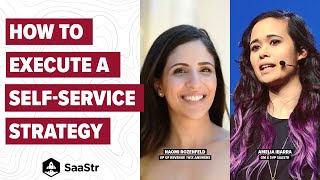
Naomi Rozenfeld, VP of Revenue at Wix Answers, explains how SaaS companies should build self-service that goes beyond help centers to cover the full customer journey. Start with business KPIs, then define knowledge goals before picking tools. Measure what matters: article escalations, search failures, and routing quality.
Chapters
All right. Hello everyone. Welcome to this very special edition of Saster University. I'm beyond excited. We're actually doing this as a live recording of the official Saster podcast as well. Very excited to have with us today Naomi Rosenfeld. She's the VP of revenue at Wix Answers. We're going to be chatting today on how to execute a winning self service strategy. And since Naomi is new to the Saster community, she's a new voice, she's been a fan for a while. So I'm excited we could finally get her to one of our events. Naomi, introduce yourself a bit to our audience, if you don't mind.
Yeah, thank you Amelia. It's really great to be here. Obviously as an ex entrepreneur myself or still really that entrepreneur at heart, obviously no Sasser and very well known for the Saster community that you guys provide. So it's great to be here. I think it's also great to come and talk today about something that's very much debated and just topic among companies of how to do self service, especially during these times. So I'm really happy to be here. Just a couple of words I think as well because there's often this confusion of WIX and Wix Answers, especially for in the SaaS space. Wix is very well known as a successful B2C company that has to do with, you know, online web presence and what does that have to do with self service? So just a couple of words on that so everybody who's listening in can just understand a little bit more about what, what we do. So you know, interesting story. Wix Answers is actually like an in house platform that we develop first and foremost for ourselves to support our users at Wix. Wix itself is a very SaaS centric company, very product driven, was growing at a very fast rate and we just needed a way to communicate with all of our users. But more than that, just to kind of capture that user voice and take it back to our product teams and marketing and to really determine what our roadmap would look like. This was something that was a key strategy for us from day one. This was also a very long time ago. We looked in the market, there were no solutions and we said we're a product company, we'll just start building it. Interestingly enough, we'll talk about this shortly. It actually really all started around knowledge and self service and how do we scale that? Fast forward today I can actually say that the same challenges that we faced about 10 years earlier at WIX that we were trying to solve that really kind of gave Wix Answers. Life within our company are pretty much the same challenges that are facing a lot of SaaS core businesses today, whether they're startups and they're fast growing or they're more established businesses. So that's a little bit about Wix Answers and what we do within the context of the larger wix.
Yeah, thanks for defining that. I know a lot of folks are obviously familiar with self service websites. Many of you might be on a WIX platform or something similar. And I know Naomi, you're an entrepreneur too, right? Like before you went to Wix, like explain to us a bit about like your rise of like being an entrepreneur and then going you know, sort of in house to wix because you started as like a product marketer, right. And then you sort of worked your way up from there.
Yeah, so prior to joining Wix I was an entrepreneur, was very passionate about that and I still kind of call myself an entrepreneur at heart even though obviously I look at Wix Answers pretty much as like a startup within the larger WIX organization. So still pretty much I can count this one as you know, potentially my third, my third, my third startup. And I would actually say I was thinking about it as well, talking about self service and a little bit about what Wix Answers does. You know, prior to coming to the conversation today, I was thinking back to the early days when I myself started, you know, two different startups, both within the travel space. Something I was always very deeply passionate about. And there tends to be a lot of pressure on I think founders and just entrepreneurs in general. When you found a company and you already like passed the hurdle of finding a co founder, then you take your go to market plan, you know, you get your seed funding, you know, you want to obviously like impress your investors. A lot of like focus is on obviously and importantly product and then marketing, branding, go to market, sales, all of those things. And I can tell you that just even speaking for myself, probably the last thing that was on my mind was thinking about customer support. Right. It was one of those things I said, okay, we're going to start to get users, we'll get you know, obviously paying customers and then we'll potentially deal with it. And I think like that's a very common just misconception or maybe it's just the way that customer support is largely received as something that is really kind of just reactive. We're going to get to that bridge and then we'll deal with it. And I can say that post that time only after those two startups, I had moved past those two startups and I came to wix. I started to actually realize that making that a big part of your core strategy from day one is really a big part of what defines and really can differentiate a great company from a good one. Understanding that customer care, or at least understanding the voice of your customer from the earliest days that you have is a huge impact for your revenue, your growth, you know, obviously maintaining a subscription economy and all of those things that obviously every entrepreneur is striving for.
So yeah, yeah, I think, I mean, man, we could do a whole conversation about like operating a startup within a startup style, like within a larger company and like, you know, prioritizing CS at the start, obviously, you know, it's tough for folks and I know we're going to chat about it in a bit, so I think to kick us off, right, like, there's a lot of different ways people define self service and we do want to, you know, get your expertise on how to do a winning strategy. So give us your definition of it. Right, because especially for SaaS companies, there's the CS portion of it, there's like the knowledge base, there's the chatbots, there's inner like employee knowledge sharing. Like, give us your definition of it.
Yeah, so I think you're definitely right. There's. When you think of self service, sometimes from a very tactical point of view, you think about it, the first thing that kind of comes to mind is like, oh, we need a help center. We need a place for our users to go and ask questions. Or maybe we're talking about, I don't know, something on our homepage popping up and starting to chat with our users and trying to help them to solve their issues. I think today, like the industry as a whole has started to shift much more to understanding that really self service is where the users are at in it's not that expectation that they need to find the support, that they need to find the help and dig too much in order to find it. We do know that today for Almost, for the 1 out of 10 users that actually does escalate and start talking to one of your customer care reps, opens a ticket, takes the time to write about it, that 10% of your users that do it, the other 90% don't. And self service has really been like that point of how do you bring it to the users and how do you enable them to find, you know, their own answers and to resolve their own issues as quickly and easily as possible? I mean, the Best way to think about that is just think of yourself. In any kind of user or consumer situation, the last thing you want to do is start emailing a company or waiting on the call or like fighting with chatbots to get a human involved. You really want to just be able to solve it. Especially when it comes to like SaaS centric products where I think like the user base as well has that expectation that, you know, you want to be able to find answers and solve things as quickly as possible. So self service I think encapsulates everything from obviously like the knowledge, but how does that layer sit as well on top of your funnel and reaches all the way down to like the agent who's actually doing the reply to the user. So it really is kind of like that top down view rather than just like let's fix a specific part of our funnel and call that self service.
Yeah, so let's, let's dig into that more, right? So like when, let's just start at the beginning. If folks are starting out and they do, let's say a knowledge base first, right? Like what I think is what are your important, I guess, advice, pieces of advice to like keep in mind, like when they're starting out and when do you think people should start out, right? Like do you think it's ever too early or you think people should just start day one?
Well, I guess I'm biased right now, but I think people should definitely start from day one. Although of course on the other it's always a fine balance, right? You need to understand what's the point where obviously customer needs and wants to speak with somebody. It also depends largely on the business model. You know, to really understand how to do knowledge management strategy, you have to start looking at a few things, right? You need to define like what are really your business goals, how and where are you trying to be customer centric, right? Like what are your KPIs and what do you need to obviously like deliver on? If you're super small, you're probably not even looking at optimizing operational efficiency because probably like the CEO and the CTO and the product guy are all taking, you know, they're all answering the question, they're all answering the question. That's how, like that's the truth of startups and that's the way that it should be. So to come and say to startup, hey, you guys need to have a knowledge base when maybe you have, I don't know, 50 or 100 or 1000 customers maybe should be spending more time talking to them rather than necessarily deflecting them. And obviously, the larger the company gets more. The support obviously gets more complex. And that's where you obviously need to, as a business goal, start to look at operational efficiency. Right. Call centers in general and contact centers today are known to be huge cost centers for companies. So self service is a huge part of that. And I think once you define your business goals, then obviously you can break it down into like, what are your knowledge management goals as well? Like, what are we trying to solve? Are we trying to increase customer satisfaction?
Are to. We trying.
Are we trying to help users obviously find their answers quickly, more quickly? Are we trying to reduce like just the manual labor of repeating and doing repetitive tasks that our agents could be better putting?
Yeah, automation. Yeah.
Yeah. So I think, like, that's definitely a big part of like, how do you just start really tackling this?
Yeah, I think, you know, when. I think that's a good point for folks and when they're starting out, right. Should. Where do you think they should start? Do you think it should be a knowledge base first and then a chat bot? Because I know chat bots can be pretty tough to set up sometimes, right? And like that, that balance between person and AI is also really interesting. It's like, obviously you want to make it easier for folks to find an answer, but you don't want to frustrate them. To your point, right? Of like, how can I get to an agent? Right. I think it's less of an occurrence these days to really call your bank and be like, how can I just speak to a live representative? Like, that's such a bad. That's such a bad example of self service. Like, how can people get it right at the start?
It's a good question, right? Like, where do you start? Right? Because tackling self service is massive. It goes back to what I said. It's really not just one part of your funnel, it's looking at that entire funnel and then understanding how do you obviously answer the users that need that answering? How do you find the users that you want, obviously want to escalate? Today we hear a lot of hype words in the industry. We hear a lot about chatbots. And I talk to companies like, oh, we hear so much about AI and you know, these are all a lot of buzzwords, but like, let's break it down for a second, right? You know, chatbots are great in and of themselves, but that's something that has to work, obviously with the technology that balances that user's journey, right? Or that way that they can move across your product or, you know, have that user experience. A product like the chatbot in and of itself. I think probably most people like tuning in today have experienced that to a certain extent. I know I have recently talking to a bot.
They're everywhere.
They're everywhere. And you're like, I just need to speak to human because the solutions that you're giving me are not helpful. And you're like, no, no, no. And the chat bot's like, okay, yes, yes, yes. So I was happy to resolve your issue. Thank you and goodbye. And that's, I think an example of a lot of what companies struggle with is, right, how do you take a lot of the technology that's out there, but then put it in a way that, that can really balance. So, so you're asking as well about AI? AI can start with anything from. Let's look at the top part, right? So AI on search, how do I understand better the intent of my users and what they're looking for and optimize it, right. AI can also sit across automation. Like, how do I make sure that the right agents with the right expertise are also getting the right tickets that they need to deal with and then all the way from like the ground up the actual customer care agent that is getting that ticket and needs to answer the user. How do you make sure that they have the right context in front of them? Right? How do you make sure that they have the right answer? So it's so multilayered and I think like that just needs to shift from more like let's, you know, talking about these buzzwords and more really just understanding how and where you want to move the needle within your organization. What are you trying to solve? Try and answer that first and then work, work backwards to that and then see how that technology fits into it. Rather than like, you know, I need chatbots, I need AI and like trying to get everything to work or that usually just hurts your, your users and it really just kind of hurts your funnel.
Yeah, no, I think, you know, obviously a lot of the folks are on today who have either experimented or like have their own chatbots, right. I think it's important for them to keep in mind like something you and I chat about on like the prep for the session and I want to make sure we head on for folks is like you said, this thing that was so, so insightful, right? It's like the chat box, the knowledge base. Anything you do that self service is only as good as the inputs you feed it, right? So like how, how can folks get their inputs right? Because to your point, you just mentioned, right, like the, the bot's only going to hurt you if there's not the right information and if it can't escalate to a person or your rep isn't armed with the right response for what the customer is asking, then it sort of, it lowers your, it hurts you, it hurts your, it hits your NPS score like poorly. Right, like, so how do folks like really set themselves up for that structure of getting their inputs right?
Yeah, you know, I was doing a webinar with Deloitte a little while back and we were talking a lot about self service. It's a really big topic and I think that companies, big or small, struggle in terms of understanding how do you really kind of like win at it. And something that was, you know, something as small as for example, saying we have our own internal knowledge. Right. Anytime you have support agents or a customer care facing team, you already have knowledge in place for them. Right. You're training them on how to talk to your users, you're telling them what to say, how to help your users or your customers resolve their issues. And then sometimes it seems like such a big gap to take that internal knowledge and then just take that externally to your customers. So something so small is just like how to help companies to get that knowledge. Play get going is just take look at what that knowledge that you've created internally, whether it's cross organizationally or just even for your agents themselves and then just customize it just a little bit and make that more customer facing. Right. So it's kind of like how do you overcome this really big challenge of taking a lot of that forward? I think sometimes it can just be like something as simple as that. A little bit about the challenges. I know we talked a lot about this.
I know. Yeah, yeah. Let's dive into the challenges, right. Because I think one of them I wanted to ask to get your feedback on how to avoid this challenge. Right. We've mentioned a few so far. I think starting out can be, can be tough. Is there a challenge on ever? Like, do you think there's information we should hold back? Right. As businesses, do you ever feel like it can be a challenge? There's too much information for customers and sometimes they can get overwhelmed by self service because there's almost too much at their fingertips that they can find.
I don't think it's so much as too much information versus the wrong information, which could be really, really frustrating. Frustrating. And as general Also as like just an ex entrepreneur and you know, like somebody also who, you know, marketing was always something that was definitely in my background as well. I definitely believe that, you know, the more transparent companies are with their customers, the better it is. Right. Like there's always like this fine line of like how much do we hold back and how much do we not. I think also presenting the fact that we're human and sometimes we get things wrong or sometimes we don't always have all the answers but we want to help goes a much longer way rather than obviously sending the user to the wrong place without being able to provide them with that kind of answer from just a company. Human centric, like I cannot really understand my user's point of view in general. I think the most frustrating thing is that the user spends time looking for something only to find that they reached a dead end and now they need to escalate that. So trying to make sure that you get the right information to the right users. And like I said, it's a big topic, right. I sit with a lot of companies and we talk about and they're like, okay, we have knowledge but we don't really know how to optimize it. Or I speak with smaller companies, they'll be like, we don't really know how to get started for the smaller ones. A lot of times it'll just be like start by creating just really high level categories. Just try to tackle that, map out the things you want to communicate and then build it from that. Right. From the larger scale companies that you sit with, it's just more like just look at your knowledge. Like just look at some of the KPIs. Like what? For example, which one of your articles is creating the most amount of escalations? Right? What is content that people are searching for that they're not finding? What are search terms that you're not really understanding what your users want and they're causing a great deal of frustration. So um, yeah, like I think it's really kind of looking at those, those things as well. Um, yeah, yeah.
Some of the challenges you and I were chatting about, right, like, so the first one is like this governance idea which I think is really interesting of like who owns what within the business, right? Because at the end of the day customer success and self service as a tool to like succeed at it is it's everyone's, it's everyone's responsibility in the org, right? So like how do you, how do you think about the governments of who owns who owns what as like A challenge to knowledge. Right.
So there, yeah, it's great that you remind me of that. There's, there's definitely like three things that I think are common recurring theme when it comes to like the challenges regarding knowledge management regardless of company size.
Right.
There's really like that governance like you just mentioned. I think there's also technology restraints or just technology challenges in terms of we don't have the right set of tooling. And then also it's more of like a lack of motivation. Right, let's start really quickly with obviously like the governance. Right. Knowledge is something that's shared across many different departments, organizations, teams within, within the company and oftentimes it's really hard to find like who is that really single owner that can actually take this and initiate that. On top of that also add the challenge that in many times knowledge is not perceived as a priority within the company. There are many other ways that companies try to provide customer support. There's a high, you know, operational inefficiency. But the answer sometimes is really clear in terms of knowledge. But there's usually no executive buy in. I can say I've talked to a lot of like C levels and companies and sometimes the last thing that they're thinking is like hey, we really need to just get more knowledge centric in the way that we're doing things to help our agents, to help our users, to help like obviously our customer care to improve.
Yeah.
The second thing would be just tooling. We hear it about it all the time. Companies just saying it's like difficult, it's clunky, it's complex. I need developers to get it up and running. Which by the way, like just you know, side note at Wix Answers, that's something that we're really, really changing. Right. It's something that is empowering and enables any department within an organization to go up and create a knowledge base within minutes. Right. Either internally or externally and to be able to provide, you know, an easy, intuitive and very by the way, AI knowledge centric approach for their users in a way that makes sure that you're really hearing them and what they need. And I think the last thing is also just the motivation of it like we talked about a little bit earlier. It just feels like a big mountain to climb and there's usually no, there's usually just an overwhelming feeling of like how do we really start tackling this? Which is why I gave some examples that were just more like how to just overcome some of those initial challenges that you might be feeling.
Yeah. So Who's a good leader in the C suite for this? Right. Because obviously we chatted about how it sits in a few different places. In your mind who should really take this at the helm? Because obviously especially at the early stage there's a lot of overarching goals at the companies. We gotta get leads, we gotta get more customers, we gotta reduce churn. This is one way to do that. So who should really be in charge of prioritizing it in your mind?
I think more than prioritizing it, it's more about just getting that executive buy in. That's why I oftentimes say like, you know, go talk to your CEO, go talk to coo. Most of the times it's going to fall there. Right. Because any company that doesn't care about obviously its customers, you know, there's a bigger question of like obviously what their growth and obviously how they're going to just succeed in general when you're not really looking at your customers. So I say go and get them obviously is kind of that champion, is that executive buy in. If you can actually show that there's a better way for you to reduce costs for your contact center, provide your users with a much better, faster way to find their answers, increase retention. And obviously we all know that revenue is directly related to the way you talk to your customers, the way you listen to them, the way you collect that and obviously build a better product at the end of the day, especially for SaaS companies. I almost find it hard to believe that any CEO or CEO that is looking at this from like the top down wouldn't care about something like that.
Yeah, wouldn't want to do it. Yeah, yeah, yeah, no, that makes, that makes total sense. And so like how, how big is your, your team at wix that's like handling the self service and knowledge.
Oh, we're a really big team right now. Wix is a very unique case. We are very, very customer centric. And I would say that probably today a very significant part of wix's headcount are can be attributed to like the WIX community customer care. It's not something new. This is something that's been always around in terms of how we approached our customers and obviously when you have millions and millions of those over 170 million users, if you don't find ways to be efficient and if you don't find ways to empower users to find their own answers, there's no way that you're going to be able to match for any headcount in the world. To make sure that you support every user. So for us, going back to what I said earlier, everything really started around knowledge. Right. It was knowledge in terms of making sure that users had what they needed. But still, even today we have a very, very large customer care team. But for the most part we really focus on making sure that our users, anywhere that they are in the funnel, that we meet them, that they can really feel empowered to solve their own, their own issues or their own problems that they're experiencing at that moment in time.
Yeah. What's your guys? Just wanted to ask you this as someone who's implemented some, you know, knowledge basis chat bots before. What's your escalation process? Right when. And there's a related question from the audience. So like what's your escalation process? When a user asks a question that's not already in. Right. Let's say the knowledge base and the agent doesn't have an answer, like what does that look like? And do you ever feel like there's like, what do you have your reps do when they don't know the answer?
That's a really good question. I can probably imagine that somebody from like the contact center would probably be able to answer this much more accurately than me. Because I don't want to come off pretending that I've ever managed like a support team. I obviously talk more to like the leaders and the companies that really want to evoke this change. Like I said, transparency a lot of times just saying like, hey, we really don't know but we're looking into it and this matters and being really timely. I think, you know, we talked about it a little bit, you and I as well, prior to this conversation about, you know, we're all kind of tired of saying the new normal. But you know, let's, let's be honest, like obviously 2020 brought a huge focus in terms of customer centricity. You know, self service, which was always like a hot topic, became even hotter. Everybody was just trying to do that and tackle that. So I would say just being transparent and honest, going back a little bit to the AI piece, this is exactly where that can help. Right? You want to make sure that the right tickets are getting to the right agents and that the agents are empowered to, to answer those questions. And basically AI can do a really good job at that once you obviously have that real time data and all that knowledge in place. So that's exactly what we do like as a platform when we're working with companies. So that's exactly those kinds of challenges that we're trying to avoid from day one for them.
Yep. Yeah. I think, you know, being transparent, it doesn't hurt. Right. And just making sure there's a system to follow up with that folks. Those folks. Because it's. I feel like it's always good to be transparent, but you also don't want to leave that person hanging. Right. Then they never get an answer. I know you chatted about something I wanted to touch on too. Like you guys have a ton of customers, right? So you're doing this yourselves as well. Like what are some of the. We've chatted about the new normal. Like, and people making knowledge, whether it's via knowledge base, whether it's via live chat, whether it's escalating you to a person.
Right.
Like, what are you seeing as like the next evolution of that? Because I do feel like many folks had to like adopt really fast in 2020. Right. And launch a lot of what you're saying. It's like, where do you see this sort of evolving in 2021, where the world is kind of going back, Kind of not going back. Depends on what part you're in. Right. And you guys service people globally. Like what are, what are you seeing out there?
I don't see people going back. Interesting that you should ask that. We just actually I was chatting earlier with. With a few people as well about this and it comes up a lot that question. I don't see people going back because I think looking at how companies are operating, if you once thought that you couldn't be remote, now that you're scrambling to do it at a scale of 100 employees or whether you're doing it on 5,000 employees or I just talked to a company that had to move somewhere about upward of 5,000 customer care reps. You know, obviously to be remote in 2020, you started to understand that you can have operational efficiency, that you can make it work and that you can overcome challenges. I also think that there's a way of just saying, hey, now we can also be a lot more open minded to hiring people from different areas. That or regions that never really thought of before. So I don't really see that going back. I hear too much. Companies just really kind of embracing this remote. And it's kind of like we figured out the challenges. We're ready here and now we know how to do it. Let's is. Let's just continue. I would also say just from more the SaaS side because this is something that I'm very close to and I see it, you know, up close in front with a lot of companies that there's also right now like a big general reception within the industry to embrace customer care, obviously within your organization. Most companies obviously that were online were booming when they didn't expect it or really anticipate it. And obviously they want to continue that growth. And that's also putting a lot of focus on the technology aspect of it. Right. Because like, let's look at, there's obviously customer care, which is part of your organization and it's important and you obviously need to do that. But then there's also like the technology aspect and how is the industry evolving? And it's evolving really quickly. And I think more and more companies are revisiting their tech stacks and the choices that they've made years before and trying to adopt obviously a lot of these market trends and the direction of where things going is really opening up a lot of conversations for us when it comes to like the technology aspect of it.
Yeah, I think that's a good, I think that's a good point. You know, I want to, I want to make sure we get to some of those really good audience Q and A. So I think as a last, maybe the last question for me and then we'll go to questions from the audience, right. Like I guess to wrap it up in a bow, right. Like you've identified a lot of things to do to win at self service, right? But what is your biggest takeaway for how do you really win at self service in today's day and age, keeping in mind all the key considerations you just mentioned?
Well, it depends on how you look at winning, right? It depends also from what angle you're looking at it. I think from the customer point of view you're winning obviously because you're able to. You're empowering your users to find the answers that they need. Also, any company that's dealing right now with high growth or high scale, you can never really match that with agents. So being able to get really quickly a good self service play into there is only going to help sustain that growth even further. And I would say just simple at that self service is probably one of the quickest ways that you can start to sustain that growth. A really quick example, we were talking to a company the other day. They had to shut down their contact center. They don't have an inbound line anymore because they could not match the number of agents that they needed in order to talk and keep up with all the traffic that were coming in. And it was simple. They're like, we need, we know we need self service, we just don't even know how to get it into place. So imagine if they would have that, how many of their customers would have been able to find what they needed versus having like their first interaction with that company is a very frustrating experience. So I think it's really just self service and the direct impact it's going to have on the ability to scale and grow.
Yeah, I was reading something the other day. It was a SaaS company that said they had such a high influx of what you're saying, customers coming to them. They got an overwhelming amount of calls in 2020 just because of the way that their SaaS product was just suddenly needed by a ton of folks. And they were such proponents of having. They had a knowledge base and they had live human beings. But I remember they said they literally stopped taking new customers for a month because they wanted to make sure that they could get the self service and the knowledge center and the knowledge bases and knowledge sharing right first, that they literally stopped taking new customers so that they could serve their current ones right. And now they said that it was a hard, but almost one of the best things they've done because it allowed them the time to really get it right, to really look at like, okay, what are we saying to people to refresh, you know, what, what their agents are saying, what's in the knowledge base? Like, obviously so much changed overnight, but they had to change so many of their docs so much of how they were doing things that, you know, I think it's just an important point you mentioned that I just wanted to reinforce that it's like taking the time to do it will save you so much time later. But I know it's hard right when you're starting, especially when you're starting out to be like, okay, how do I prioritize this over new customers? But in the end, right, it's something that's ultimately worth, that's ultimately worth doing.
It's interesting that you say that Amelia as well, because I'm just looking here, I'm having a quick peek as well. Some of like the Q and A, I see that people are asking as well about like the platforms and obviously how do you do it, Web, mobile, things like that. Going back to that point that we said earlier, maybe there's that want to do it. Maybe as an organization you really realize the need to do self service and you don't need that much convincing. But now you're really struggling right on the Technology side, everybody tuning in here, I'm assuming, are all really SaaS centric companies and we understand the importance of product. Right. And when you feel that you can't do that, obviously and that you're limited or there's a high dependency in order to get a knowledge base up, then you're in a really bad place to even be able to adapt and to move really quickly on that front. And obviously that's something that we are really, really trying to change in the industry. We're trying to change that entire. I need a developer, it's gotta be slow. It doesn't need to be like the most beautiful aesthetic piece of out. We're really trying to reshape that with the WIX answers knowledge base and ideas that anybody and everyone, myself included, I don't have a technical background can get online. Like I said, tomorrow they do it themselves. Yeah, you have all of those things like that AI built out, that knowledge centricity, no matter what channel you're going to connect it to. And the beautiful aesthetics obviously, which is a great plus of being a company within the larger wix. So you can feel proud, you can really feel proud of what your users are engaging with. And yes, you can do it across all apps. Mobile. The idea is to meet the user at any point where they are and go to them.
Right? Like go to where they want to interact with you. Yeah, yeah, no, I love that. I think, man, I really wish we had. Might have to have you back for a few of these other like self service is so big, it's really hard to nail it in like a 20 or 30 minutes. So let me hit a few on these audience questions before we run out of time. I think this is a good one. That was sort of earlier in the session, right. Which is how do you, how do you differentiate between the solution workflows, like what goes to a knowledge base first versus what goes to either a live chat or a chat bot. Like how do you sort of prioritize those workflows?
So you know, obviously chat is a, is a human connection, right. It means that you and I are having now a conversation and if we're having a conversation that I need to understand certain things about you and try to help you solve it in a way that you can. The things that you can obviously start directing right away to knowledge would be everything that has to do with like the quickest way to solve their problems. And if you're unsure of what those things are, then just look at the ticket volume that you're Getting and what agents are constantly repeating themselves on. You either know it consciously or you don't. But with a little bit of digging, you'll find that. And usually that's a really good place to say, okay, these are all the things that need to now move into our knowledge base. Okay, but then don't forget, don't leave your users hanging. Create a flow of an escalation that if the user does land there and you did manage to bring them to the right place, but for some reason that didn't help them solve their issue, then escalate that. Like, hey, what do you want to do? Do you want to call us? Do you want to request a callback? Do you want to chat with a live agent? On the chatbot front, I've just seen so many companies get it wrong and companies that you'd be surprised, like, companies that I'm rooting for that I'm a personal fan of. And you're like, in the middle of the night, you finally found time to try and return an item and you're like, this should be so simple. Or like a didn't come through. And you're like, okay, I don't know. I'm going to give up on my $13 and whatnot that I need refunded from this meal. So just try and revisit some of those things. There's too much. There's an overemphasis to solve things with Chatbot rather than trying to make sure that the user gets to the right place. Many times I bought can, but there's a really fine balance. We can probably do a whole other conversation.
I know. Yeah, no, we. Yeah, I think we might have to. I'll work it out with you. We're happy back for sure. There's so much more we could do just on that subject alone. Right. One question I was thinking of while you were chatting on chatbots, and that answer as well is like, how often do you either see your customers refreshing, you know, their knowledge base, or how often do you think people should do it?
Oh, I love that you said that. So from what we see, it's usually like, there's that internal championing that we talked about. Like, let's get this going. Like, you get governance, you finally have the motivation. People are doing it, they understand that it's important, but then it kind of really quickly becomes like that side project that nobody really wants to maintain. And I can say this firsthand from our own customers who use WIX Answers knowledge base today, the ones who understand the importance of like really optimizing the content, looking at the data, right? Like, don't start big, just look at the data, see what users are looking for, where they're falling, what you're not doing, what your unanswered searches are and how many of your knowledge articles escalated to a ticket. Like I get that context going, you will find yourself more and more updating your knowledge base. And that goes back, by the way, to the AI. Like people think that it's just this thing that's just going to work right out of the box, but it only is as good as the data that you feed into it and it's only as good as your knowledge is and how you're directing users to right place. So get those foundational things in place and then really you're like on a really great acceleration to connecting all those dots between the AI, the right routing to the right agents and helping users solve their own problems and just issues that they may be experiencing.
Yeah, because oftentimes, right, the reps, I know a few times I've contacted folks in the past, right, like using their getting escalated to an agent, they think back to the knowledge base all the time, right? Because they can't. It's just a lot for them to explain in real time. So it really acts as a supplemental of like there's this. I remember like chatting with my person at Marketo because I was like, I need this really technical thing. Like I have a very technical question, can you help me? And they're like, yeah, you've got to do this. But like, honestly, like, let's a get you to the right person, right? Like they were like, oh, like this is a super technical question. Let's make sure you get to the right person on our team who can not only help understand this a bit better, right, but also is going to link you to the right steps. And they were like, yeah, you've got to follow this like step by step. And like they're very kind and explaining to me over chat, but they're like, honestly, like, if you just follow this, like they're like, we made a video before because obviously this got escalated a few times. So follow the video, here's the article and like let us know if you have any issues. And I was like, yeah, that makes sense, right? Like it acts as a good, like almost as a takeaway of like what they should do, what they should do next. And then I got my last question just to wrap it up, right, Like I don't know, are you, are you at all, like A proponent of like customer forums. Like, I know a few folks like, that's one of their evolutions of self service is like, well, let's get our customers to almost do it for us, right? Like let's, let's give them a forum. They can answer their own questions. You know, a lot of the marketing automation platforms do it. HubSpot has community, Marketo has community. There's a lot of other communities, like are you a personal fan of them or how do you think about them?
I don't need it so much, but I think it really largely depends as well, like on your business model and how you want to like foster conversations between your users. I think that more often than not, some of the younger SaaS companies are finding more innovative ways to do it rather than, I think the traditional communities of the past where that requires obviously moderation and a constant oversight. And that could be, I think, something in and of itself that in many ways is almost not related, you know, to the support to support part of it. So, you know, I'm really more like you're going to hear me being more vocal on what you said earlier with that ticket you mentioned from Marketo. Like, don't forget that when that ticket, what you sent meets the agent, right? That knowledge needs to play in there. It's not only what your customers see, it's also what your agents see and give them knowledge that they need in order to best serve your customers. So that's knowledge right there. That's a classic example of companies struggling to get the right AI so that their agents can be the best that they can be. Right? And we all know it's so oversaid by now, but obviously like happy agents is happy customers, right? They're your, they're your front lines to all of our users and your business. So, yeah, like that, that's going to be where you're going to hear me being a lot more vocal about it is probably in that, in that example that you brought up.
Yeah, no, I love that. Well, thank you so much, Naomi, for coming on today. Is there anything we missed that you want to hit?
No, I think we just, I think we've pretty much run through it. Happy for everybody.
We covered a lot.
Yeah, it's great. And I'm happy to be back. And you know, we can always continue the conversation. Like I said, this is obviously like an ongoing thing that companies are always working towards and you know, we'd love to hear from people, get feedback as well. And you know, check us out@wixanswers.com be great as well to live up to some of the things that we talked about here today, especially when it comes to knowledge bases. So. Yeah. Yeah.
And if folks want to get in touch with you, what's the best way? Is it Twitter? Is it email? What's the best way to hear more from you?
I always say LinkedIn. I always say LinkedIn. So that's my go to. I'm super responsive on LinkedIn. I think it's one of the better ways for me to, like, truly meet new people from. From possibly every single company I can imagine. So I'm definitely one of those very responsive people on LinkedIn.
Okay. I love it. Well, you guys heard it here. Thanks again. Thank you so much for joining, for being part of the Saster community. So glad we could. We could finally do a session with you here. You're such a. You're such a wealth of knowledge.
On.
The topic, but we'll definitely have you back. I know there was like a. Some good. Some good feedback already, so thanks again, Naomi, and it was such a pleasure.
Thank you, Amelia. It was great being here, I think so.










