How Top CMOs Drive Growth in the Age of the Self-Serve Buyer | Klaviyo, Talkdesk, SmartBear CMOs
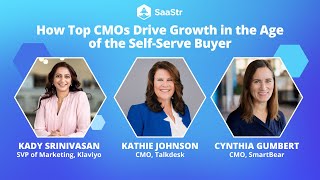
Panel discussion (Dec 1, 2022) hosted by Vinay Bhagat with CMOs from Klaviyo, Talkdesk, and SmartBear about marketing to self-serve B2B buyers. Speakers describe buyer behavior (millennials/Gen Z prefer self-service), rising importance of third‑party reviews, communities, trials/product-led growth, and using intent/first‑/second‑/third‑party data to target and personalize. They emphasize activating customers as advocates and embedding customer voice across channels.
Chapters
Well, good day everyone. Delighted to be here with you. I'm Vinay bhagat, founder and CEO of TrustRadius. The run of the session for today is that we're going to do brief intros about who we are as people, the companies that we run and the types of Personas that we sell to the nature of our sales cycle. We're going to then spend about 10 minutes talking about today's buyer. Who are they, how do they think, how are they work? And as a marketer, what should we be thinking about as we adapt to them? We're going to be speaking about where buyers do their research and how to give them what they want in their journey. And then we're going to be talking about how to use data to intelligently engage buyers. And last but not least, talk about how to really turn customers into champions and activate them too to work really hard for you. All right, well just to kind of get going, I'd love to have Katie introduce herself first.
Thank you Vinay. It's great to be back here. I was a former head of marketing at Klaviyo Klaviyo, for those of you who don't know it is a email and SMS marketing automation software company. Our company roots are in SMB so we grew up selling to SMB customers primarily in the e commerce market. And through our journey we have tried to then diversify that that audience segment into more of the micro SMBs as well as the true upmarket enterprise kind of customers. So as you can imagine our go to market motions are very different. Our sales cycles are very different. On average we see about three to five months of our buyers journey and time to close and we are always thinking about how to shorten it, what's the right set of audiences to go after, how to optimize the go to market motions.
Kathy, tell us a little bit about yourself and talkdesk.
Sure. Good morning everyone. It's great to be here. It's my first Astra. I am the chief marketing officer at Talkdesk. I joined, gosh it'll be four years ago in November when we were a series B. We are now a series D company. Talk to us if you haven't heard of us. We are a contact center solution. We actually disrupted the market. The market is about 40 years old and we came on the market with the first cloud native solution about 10 years ago. We sell to all audiences from segment perspective from mid market to enterprise today and into all different industries. We're the only provider that has purpose built industry product for contact centers.
And Cynthia, tell us a little bit more about Smart Bear and who you sell to.
All right. Hello, everybody. I'm Cynthia Gumbert. I run marketing at SmartBear Software. I've been there three and a half years. This is my third gig running marketing. I come from an engineering background and Smart Bear, we sell to software developers, we sell to engineers. We have a suite of tools that we say provide developer and tester QA visibility across all sorts of quality stages in the software development cycle, test automation, API testing, mobile device testing, bug and crash analytics once something's been deployed. So we just make sure every development cycle and every software release is a little bit better than the last one.
Awesome. Well, I'm delighted and honored to have such eminent speakers with me here today. So the first topic up is who are today's buyers? Looking around the room, many of you are probably in this generation. The majority of B2B buyers today are millennials and Gen Z. In fact, 65%, and most of them don't want to talk to sales. So if you're in sales, your life is honestly getting harder. It's harder to get people's attention. It's harder to get people to speak to you. Most of them want to self serve. What does it mean to self serve? They want to be able to access certain information online independently without having to speak to a salesperson, and oftentimes without having to fill out a form. In particular, they want to find pricing data, product related information, and use case information. Each year we do a study of 2,000 B2B buyers. And again, what we heard this year is overwhelming evidence that people want to find this type of content online completely independently. What we're also finding, and this is the tough news if you're in sales, is that reps are less influential across different cohorts. Whether you look at it by purchase price, by company size, or by generation. The dark blue bars indicate the role of sales, the influence of sales in the purchase cycle in 2021, the lighter blue in 2022, and it's a declining trend. We've been seeing this now for five years since we started doing this study. So what does this mean if you're a marketer? It means that your game has to step up to fill some of this void because buyers are trying to do the self service, but marketers need to meet them at their point of need. One of the phenomenons we'll be talking about today is, you know, which channels are growing and which channels are shrinking. Free trials are definitely growing as a medium. Some of the panelists will talk to what they're doing in the area of free premiums and product led growth later. But also third parties, whether that's communities, review forums, even analysts, surprisingly, are actually rising in influence. And what's decreasing in influence is sales, your own content and your own website. So that's the market context. Would love to hear from each of the panelists now about their perspective on the modern buyer. Kathy, I'm going to start with you. Tell us kind of some of your observations at talkdesk and as a CMO over the last few years. What are the big shifts that you've seen?
Sure. Thanks so much for asking. One of the things I want to first share and I chatted with you a little bit about this before, Vinay. We also have done some research from our talk to U.S. research organization and when you look at millennials and Gen Z's, they are less loyal than any other organization. 54% of them have left a brand because of one bad experience in the last year and a third have switched to a new brand in the last year. It's really important as marketers that we recognize that. So some of the other observations we have seen, and this is not rocket science, but you know, there is not a single buyer anymore. We need to triangulate accounts as marketers. In fact, if you read some of the latest Gartner reports, they'll say that larger Companies today have 20 people involved in a decision making process. 20 people. It's very different than how the world was when I first started in marketing so long ago. I won't tell you how long ago. The second thing I would say is it fits exactly to what Vinay was talking about. People are doing their research and ahead of time. Right? I don't know if you want to move to the do. I'm going to talk through some of this. One of the things we do as marketers is we take time every month, every quarter to see how are people coming to find us, how are they responding, how many touches do they have with us before they make a purchase. With Talk to Us now, it varies by size of organization. I have two in here. It's always between 10 and 17 touches. Sometimes it can be higher. In this particular situation, A few things I want to point out, you'll see that there are three known users and then also anonymous users. We're using some intent data that we're going to talk about later. We're looking at website, we're looking at the searches they're doing. But again, the triangulation of the account. The second thing I would say is that marketing is very intimately involved in the sales process these days. You'll see in the blue some folks from my team who had to be pulled into sales calls, the industry strategists, the product marketers, the customer marketers. And on the second slide, this feeds also to what Vinay was talking about here. You'll see a smaller organization. Very often for us they come through paid search. Right. It's a very common motion for us. But you'll also see that customer review search become very important. So companies are looking for data outside of our own organization and then they might come on our website and get more data as well. Again, multiple people, multiple touches before it even lands or goes over to the sales team.
Thank you, Kathy. Cynthia, tell us about some of the programs you've put in place.
Yep. So echo everything Kathy says. Absolutely. And you know, layering on top of that, when we're selling to developers, there is a buying committee once your sale gets big enough. But developers are holding all the power and they're your starting point and entry point into the company. So we really focus on, you know, what is that awareness tool to land motion, how do you land a developer? And they have a very sensitive BS meter. So they don't want to be marketed to. I don't know how much I can say like the BS meter for developers. And they hang out in their communities. We at SmartBear, we have four pretty large open source tools that we host and hold onto and they are tools, but they're also communities. And if you look at developers to just the psychology of being a developer, they're problem solvers. They want to figure it out on their own. They don't want to be too over educated and told what to do. So they feel like the hero when they figure it out on their own and you have to help them get there. But there's always that safety sense and you know, human sense psychology applies to developers as well. There's safety in numbers and their safety in community. If they can go out and find other people who've solved the problem they're trying to, who they respect, whether it's in stack overflow or GitHub or our own open source communities, that's where they go. They look for referrals from peers. It just needs to be a trusted solution. But then when they pick it, it's all them. It's all them that picked it. So we just need to kind of be there where they are and softly market to them with high value education, but also just make sure they can interact amongst themselves and with each other.
Awesome. Katie, one of the things that you and I talked about was, was how buyers actually sometimes need assistance along their journey. Tell us about what you stood up at Klaviyo.
Yeah, happy to. So, you know, I think about the way self service set up in many, many instances in many companies, the use case is very much geared towards the early adopter, right? The early adopter Persona who wants to try before they buy. They want to kick the tires, they want to figure it out themselves. As you start to go away from that early adopter Persona to the late adopter Persona in the, you know, the crossing the chasm kind of a paradigm, you start to encounter Personas who don't quite want to be sold to. They don't want to engage with the salesperson, they don't want to go through the whole process, but they also don't want to quite figure it all out by themselves. They get stuck in the funnel, they get stuck in their journey. They want a little bit of onboarding help. So one of the things we introduced in my previous company was this idea of a self serve sales assist motion, which is basically a light touch sales motion that's associated with the self serve. So you would have people go through the self serve motion, they'd get stuck. We would have people reach out to them and say, hey, do you need some help in getting through this question or this part of the onboarding? So, so we found that to be extremely effective in helping people get over the hump of where they were stuck. And we started to kind of build and broaden the audience that way of the people who were coming to our doors were turning away because it wasn't quite the product wasn't quite ready for them. And so that's been a pretty big success. And to your point earlier, Kathy and Cynthia, even with that self serve sales assist, almost everybody goes looking for, for reviews. They research, they look online, they look at Trust Radius, they look at G2 crowd. And it is super important for us to be able to present a very good idea of what that platform is outside of our own kind of doors.
Thank you, Katie. So one of the things also we'll talk about in a second is just what are those communities? We've talked about owned communities, we've talked about third party communities like developer communities like Stack Overflow, we've talked about review platforms. There's also social media. Cynthia, tell us a little bit More about kind of how you treat social media.
Yeah. So, you know, we can tell customers all day long, come to our support site, come to our support people. Fill in a ticket. If you are a developer, developer, you're going to post anywhere and everywhere if you're looking for an answer. So what I called it with Vinay earlier. You know, we big listening ears, we always have to be out there seeing if somebody's tagging us or tagging one of our products, asking a question. They will go to Twitter and like, hey, smart bear. Hey, swagger hub. One of our products, I'm having this issue.
Keep.
Can you help me or has anybody else done this? So we have automated feeds that go from that into Slack, that go from Slack to our support. And we're trying to respond within seconds and either bring them back to our community for community help or just reply right away with the solution. But it's just meeting people where they are, and even you can't tell them to always come to you. They are all over the world looking for answers. So you've got to kind of have a marketing person or team that's ready for that and responsive to that.
How many of you have had a bad airline experience and then you got frustrated and then you tweeted about it? Come on, raise your hand. No one. Okay, someone. And that behavior is happening in B2B now, right? Whether it's a bad experience or just because you're trying to seek information, we can't think that we're immune to these consumer behaviors. Everything that's happening in B2B is transcending or has transcended to B2C. And this is a prime example. I love how Cynthia talks about big listening ears. That's kind of a good, memorable term for us all to take away. Let's talk a little bit about what these buyers want. They want easy information access. So in our research, our B2B disconnect study, we asked the question, what are the three things that software vendors can do that would make you more likely to buy for them? Number one, be transparent about pricing. Now, they realize that maybe pricing is sometimes complex. What they're inherently looking for is ballpark pricing, or as we like to say, T shirt pricing. Is this a Armani T shirt or is this, this a Walmart T shirt? Then they want access to trials, and ideally they want to be able to do that within without having to necessarily speak to sales. They may want assistance as they proceed, but they don't want to be gated in order to access a Trial. They really want to see customer social proof reviews on the brand's website or customer stories, et cetera. Three things that will turn them off cold calls. I'm not saying cold calls are dead, but generic cold calls that add no value or generic emails that add no value are noise and will actually turn people off your brand. Kathy actually spoke to me about how BDRs are the tip of the spear for your brand in many cases. And if you have a bad experience with a bdr, it turns you off the company, a lack of pricing and unclear messaging. So let's talk about kind of what each of these leaders are doing to actually really try and serve the buyer at their point of need. Cynthia, let's talk first of all about the venues that you're focused on.
Yeah, so every one of our products has a trial version and many have just an open source which is also a lead in to paid version. But we, we also find developers sit on sitting jira, they work in Atlassian tools. So we make a point to really place products onto the Atlassian marketplace so they can just find what they need straight from where they already are. So placing your product in a partner marketplace is something to really, really look at. And you might be giving up a little bit of margin, but that's where everybody is and they want that connection from their working environment. This has been a great source of growth for us and we continue to invest in the marketplace ecosystem.
When we were prepping, one of the things I found interesting was how you actually help dialogue happen on communities, whether those are owned or or third party. That first you started with putting your own resources into place and now you've kind of trained customers. Can you tell us about that?
Yeah. So in terms of community supporting each other, we do reward customers for providing advice to other customers and that is not just ratings and reviews which are important, but solutions to specific problems. We have a community leader program that rewards people for answering at least 10 questions posed by the community and they get special recognition and swag, which is always a great gift to give out and encouragement to really continue and grow amongst each other. So we keep snowballing that group of community leaders into more and more people.
Katie, you talked earlier about your product specialist model. You started by trying to cross train salespeople to be more effective product specialists, but you evolved the model model over time. Can you tell us about where you evolved to?
Yeah, we did a lot of experimentation with that particular model. So you can think of the set of folks being able to address any kind of customer question so you can think of playbooks. So we would give them six questions versus seven questions versus eight questions and figure out what was the most optimal set of questions that would get people to either take the next step, talk to a sales rep or sign up. So we did a lot of the, we played around with what is the right kind of interface interaction with this product specialist team with customers and found out that there was an optimal kind of interaction set of things that we wanted to uncover, what was the kind of information we wanted to get from customers before we routed them to the right places kind of a thing. So it's interesting when we talk about communities too is just adding on to what you said, Cynthia. We found that a lot of our, the people who are talking to our customers, they were answering questions a little bit outside of the product itself. They were answering questions about what is the right deliverability strategy, what is the right X, Y and Z kind of a thing, which was not exactly product related or platform related. So it just ties back to the idea of having communities that can see the conversation or prime the audience, which will then let them come in to the funnel, which you can then convert down the funnel.
Awesome. Kathy, talk about kind of what you're doing to enable the buyer to do their research. What venues you think about, what content strategies you think about.
Sure. So similar to Cynthia and Katie, we are definitely in marketplaces. Right. Gen Z and Millennials and all the research want to go to the channels of their choice. And by the way, they might not even know who you are yet. Right. So there are those motions as well that you've also already heard about. The other thing is, once they do know and they come to our site, we know that, hey, we're the disruptor. We haven't been around 40 years like our competitors. We need to show validation. Right. That we are the innovative solution, that we are helping customers offer superior customer experience to their own customers. So that's why we put our reviews right on our homepage. You go onto talkdesk.com you will see an ever changing, always present, always current reviews from actually Trust Radius right there. Of course we also have customer stories pricing. All the things that you just saw on the research shared will be on our website as well. But this has been a game changer just making, you know, one of our core values is on trust and transparency. It's really making sure that the reviews are transparent to all of the visitors of our website.
Yeah, I like the fact that you don't just have five star reviews There I can see a four star review and I can. What buyers are seeking is authenticity. You know, I think in times past marketers might put a quote that was highly curated from an executive at one company, maybe a prominent brand, let's say Nike. The reality is the people hitting your website probably don't work at Nike. They work at companies in all shapes of industries around the country and they may not be a senior executive. They want to find people they can relate to. So relatability is a huge part of authenticity and building trust with your buyers. And when you're going to harness the customer voice, you need to spoon feed them voices that they can relate to. Why do they turn to communities? Because those are voices that they can relate to. When using the voice of the customer in your own channels, I believe in the smorgasbord effect. Give them a carousel where they can find as many quotes as they want that they can relate to. They can see, sift through them and say, yep, that's a person I relate to. They seem to have a similar use case to me. The other kind of lesson we've learned is if you're going to create pages that are thematic, maybe to country to use Case to Persona or Compete pages, make sure your quotes aren't generic. Make sure the quotes are tuned to the theme of the page. Rubrik has an amazing compete page actually against a product called Veeam. And all of the quotes that are syndicated to that page are hyper specific. As to why people picked Rubrik over Veeam, it's relevancy at the end of the day that's causing that value impression on the buyer.
Vinay, can I just add one on the previous slide just to add to Kathy's comment? One thing we found out was when you add reviews to your website, if it comes from you, people don't give a shit because they don't believe it. So you don't go around saying, my customer said this to me and I'm going to put it on the website. But when you put in something like a TrustRadius or G2, then there is automatic credibility to that because it's coming from a objective third party. And so it's very important to make sure if you're putting customer reviews on your site, it comes from the right source.
Yeah, it's kind of like a hotel putting curated quotes on its own site versus syndicating from TripAdvisor. It's just always going to be a lot more credible. The next kind of area I want to talk about is Data Buyer intent data obviously in vogue right now, but there are other forms of data that are incredibly important in the mix right now, whether that's thermographic, technographic or demographic data. In a world where buyers are completing so much of their journey before they want to talk to sales, and in a world where they're rather sales cynical and know that if they fill out a form they're going to get contacted, Buyers are trying to be anonymous as long as possible. And what does that mean for you as a marketer? It means it's harder for you to engage them. It means it's harder for you to personalize to them and know exactly who they are and where they are in their journey. To just dive into intent data for a second. A lot of companies use their own first party intent data. People who are visiting their own website, interacting with their own properties. But that's a small subset of the universe of buyers for two reasons. One is you're missing everyone who's researching your market but not you. And then secondly, those people may be spending time on third party properties far in advance of when they come to visit you. Third party data is an aggregation of third party properties. So there are ABM systems obviously like Six Sense and Demand, Mace that aggregate third party data. There are providers like Bombora. Second party data is data from platforms like TechTarget, TrustRadius and G2, where we're a primary first party community and the signals we capture are predicated on research behavior on our platform. I believe companies should be using a mix of these three different intents strategies. But Kathy, I know you guys have done a ton in the area of intent. You do use six Sense as your abm. Tell us kind of your approach to using data to both target who you spend your ad dollars on and where you spend your sales energy, but also to personalize.
Sure, happy to do that. First, I just want to share that obviously there are a lot of privacy regulations out there. So the first caution I wanted to say is make sure that you have someone smart in your organization or someone smart that you're working with to ensure that you abide by GDPR and all the other different unique regulations out there. Because there are fishers who will come and try to make millions off of you. But having said that, yes, we do use sixth sense. We use it both in sales and in marketing. One of the things we do is we look at not only the sales stage. Like if we look, we use Salesforce in Salesforce, what stage are they in? But also in sixth Sense what stage are they in? Are they in awareness, consideration, decision or purchase? And we market differently to people based on their various stages. So when you think about it, if they're in the awareness or con or early stages of sixth sense, there's certain data they might want, right? We're just trying to be pervasive to have them understand that we are the innovative solution in the market. As they move to decision and purchase, it's more about the validation that we are the innovation that they could use. So it's we send them to customer reviews, we send them to analyst review sites. So do very specific targeting. And then in addition between our AES and our SDRs, whether you call them BDRs, SDRs, ADRs, we also all have different language, right? We also have a different process in how we manage activity that has come in based on the sixth sense stage. If it and based on what role, what level, what account and what opportunity stage. It may go to sales, it may go to an SDR and then there are different content pieces, different sort of journeys that each individual goes on.
Would Caddy or Cynthia like to comment on the use of data to personalize or to target?
Sure. So we have a slightly different use of data and intent data. We have over 30,000 people taking out trials every month at SmartBear. And we initially in kind of the earlier days sales would come in and just pick them off, pick and choose whoever they want to call and call everybody. And we were growing conversions were okay, but we were kind of turning people off too by like mass calling these mass number of trials we put in place intent data tools starting with the tools mint ago and now six sense as well to decrease the number of people that sales needs to call. And we kind of de intent and say 30,000 trials, many that let's let them go through on their own without calling. And let's use predictive analytics to understand out of those who are higher propensity to buy at a more enterprise level and not just by companies company size, but do they look like other company do they have similar problems that our bigger customers have? And those are the ones sales is calling. And we in fact on on one of our products you saw earlier on the slide Swagger hub, we decreased the number of QL's or trial qualified leads to sales decreased by 45% last year and the number of deal opportunities went up by 20%. So less is more, less is more. Using data really helps there too.
I think a lot of marketers in this room are kind of envious of your problem of abundance when you're sifting from the diamonds from amongst the gold caddy. Tell us a little bit about how you are using data and buyer intent data if you're using it as well.
Yeah, we have a very strong PLG motion, so I'll touch on that a little bit. So we do use a lot of the. So there's first party data and second party data and third party data, but there's also zero party data and zero party data is what people do on your website. So we use a lot of that to determine what kind of actions predicate or predict what they're going to do next. So for instance, for our, we have a freemium model. So once people come in they can sign up and before they become a buyer, they have to take four specific actions. And we know that if you take one or two or three of those actions, you have a higher propensity to become a buyer. So we apply a lot of marketing at that point to try to get them to finish up those actions and then get onto the next phase. So it's. And we did some of this at Dropbox too. We identified those kind of leading indicators of behavior that would indicate that they would become a purchaser. So as we think about how to use customer data intelligently, I'd say it's about identifying those kind of leading indicators of behaviors as well as thinking about what you can do to get them to that next step that will keep them on that journey.
The last topic we wanted to talk about was was the role of the customer. So hopefully from this session today, the big theme that's come through is that we are living in the age of the self serve buyer. They act differently, they are younger, they are less likely to want to speak to sales, they want to self serve, whether they're a developer or a marketer or a contact center buyer. We're all human beings. We all act as consumers in a certain way in our personal lives and we, and we're bringing that behavior to work. But one of the most powerful ideas also that all three of these marketers have promulgated is the idea of activating customers to work for you. Whether that's in your communities or your third party communities, whether it's writing reviews. Kathy has this wonderful visual about customer activation and the customer journey. Kathy, tell us about your philosophy.
Sure. So I am lucky enough to have a really phenomenal customer marketing organization. And they're divided into three groups. Community is one, you know, retention and expansion is another. And advocacy is the Third, right. And each of those play a different role. But one of the things is, we all know this acquiring a new customer is expensive. Right? You need to have a motion to retain the customer. You need to have a motion to expand the customer. You need to have emotion to then create a partnership where the customer, where they can have great influence and advocacy. So we, this is our flywheel, right? So we have a lot of activity that comes in to help create the customer, but focused on the customer. It starts from that very, from this perspective. The very moment they become a customer, a welcome kit goes out. One of our core values is community, environmental giving. We plant a tree for every new custom customer that is represented in their welcome kit. So we start from the very actually pre sales, of course, as well. But the moment they're a customer, ensuring that we live our values with the customer and then working through, you know, you can see some of the different activities here that are leveraged along the way with the ultimate goal, of course, is to create those really fabulous advocates, those champions that go on the road with you, the championship that talk to other customers for you, the champions that sing your praises. That's the ultimate end game. But it doesn't happen overnight. And so it's a very intentional, very methodical approach that we take from that first touch at the welcome kit all the way through to advocacy.
Caddy or Cynthia, would you like to add to your philosophy about putting the customer at the center of the marketing strategy?
Yeah, I mean, 100% agree with everything Kathy said. One of the things that we found work really effectively for us was we created this thing called Klaviyo Product event. And what that is is basically every once in three months, we showcase product innovation, features, momentum, and we generally talk to our loyal customers. We tell them what's coming up, we show them, you know, what's new and exciting and all that kind of stuff.
Stuff.
And it creates an unbelievable amount of buzz in the community, not just within our customers and sorry, loyal advocates, but also within our partner community and partner ecosystem is a big, big thing for us. We have, you know, they are strong advocates for us. They, they sell on our behalf. So those events have been extremely successful in helping drive more word of mouth with our customers and our partners. And that creates a nice little flywheel.
Would you like to totally agree. I mean, customers have to be at the center of your marketing strategy. Especially, you know, these days where people are looking for that trust factor. We do think we count 320 webinars a year. Every year. Our Audience likes the webinar. Like the technical webinars, the absolute best performing of those are ones where we just bring in a customer to talk and tell their story. You know, they like hearing of new product features and all that, but when somebody tells their story to other customers, we can attribute millions gajillions of dollars of pipeline to those more than anything else we do in marketing.
Yeah, one of the things I've observed is as budgets have tightened, unfortunately one of the areas that I've seen cuts in is customer marketing. I really think that's short sighted. I think customer marketing is the fuel that can make the engine run faster. What we see is when you harness the customer voice in digital campaigns, you get higher click through rates. When you harness the customer voice on a landing page, you get higher conversion rates. When you enable your sales team with trusted customer content, you get higher win rates. Now maybe that's not as discreetly measurable as paying for a media campaign, but that acceleration of every facet of the of the buyer's journey and of the marketing and sales funnel is very meaningful. And I think there's an enormous ROI to come. Customer marketing done well, the best companies aren't just putting customer content front and center, they're also doing a great job of listening. Cisco is one of the brands that we work with and they data mine all of their reviews to understand the patterns of what people are saying about their products. To make adjustments. SolarWinds actually repositioned a number of their products based upon the feedback that they they were getting in their reviews. Marketo found that when they used customer authored content in customer communications, their own customer base, it was read eight times more frequently than when they wrote something themselves. So the customer's voice, whether that's for feedback, for product insights or for sales and marketing, is incredibly powerful. And the best and brightest marketers like this trio are making it a strategic priority for their companies. So I'm going to end with a recap slide and then we'll take one or two questions. So, themes, what should you have taken away from this session? This is the age of the self serve buyer, heavily driven by millennials and Gen Z who are now in positions of authority with inside their companies. They use a variety of sources, they heavily rely on third party sources. So it's critical to be present in the watering holes where they do their research. Whether that's communities owned or third party, whether that's review platforms or whether it's Twitter. Remember that story, the analog of the disgruntled airline passenger Trying to get service that applies to you too, Optimizing for discoverability not just in those venues, but in search. A lot of the buyers begin their journey with search, making product and pricing information easy to find. This is the era of transparency and it's not just about seeing a product spec sheet, it's about being able to try. In the case of Klaviyo, being able to upload a data set and test it. In the case of smart bear, seeing product educational content as well as being able to trial a product customer voice, immensely powerful, has impacts on SEO conversion and win rates. If you're not doing everything you possibly can to harness the voice of your customers, you are failing as a marketer. Use old school tactics like cold emails highly sparingly and instead personalize. Use data intelligently to point your ad spend and your sales spend at people who are actually in markets. Don't just cast a wide net to your entire ICP and then make sure that you're using that data to understand where they are in their journey. When you look at second party intent data from say a review platform, are they looking at the category or are they looking at a specific competitor or are they just looking at you? And depending on depending on that data, you may want to personalize differently according to what you know about them. And sales. Sales is going to be around, but sales has to be more consultative. The age of sales becoming truly trusted advisors is truly upon us where whether that's being a product assist in the case of Klaviyo or really just providing more kind of consulting strategic guidance to a buyer. Sales deals plays a meaningful role, but it has has to evolve. So we've got three minutes, so that probably gives us time for one to two questions. There are mics on each side if you'd like to ask a question. Hello, thank you so much for the time and the insight that you shared with us is very helpful. My question in regards to the changes in purchasing behavior as technology evolves, is there anything that you're anticipating that you didn't get to share today?
I think, I think it's a great question. I think Kathy touched on this earlier with talking about Millennials and Gen Z. But what I am seeing in the market is Millennials and Gen Z require way more transparency and want to feel like they can create, they can have trust with product even before they buy it. So this idea of showing pricing on the page, this idea of talking about maybe the things that we are good at versus the things we are not good at, there's a whole level of different level of transparency that I think as marketers we need to be able to provide to build that trust even in that pre sale process with customers. I think that's a big trend that I'm seeing.
One of the things I would just add to what Camera Katie shared is that we have to be cognizant of the fact of what we did yesterday may not work today. Right. The playbook for marketers is out the window. Right. Everything is new. We've gone through a pandemic, we're in an economic situation today. What you've done yesterday may not work tomorrow. So ensure that you have in your own intentional planning process that you're evaluating most of the current and thinking future.
And I think also making your own product team and developers available to your customers. We have some products with open roadmaps that are completely transparent and customers can request features and not, not all our products do that, but those product leaders are unbelievably transparent. And I think that level of like human to human interaction, buyers wanting to know that you're real people behind the products and we can complain directly to you and they respect that.
So I want to just build off what Cynthia said because I think that's really important. And one of the things that we do is make sure, and Vinay talked about this a little bit too, that we're listening to the customer. So we have advisory boards. Even with prospects, we have advisory boards because if we're only listening to our own echo chamber, if we're only listening to our own current customers and not potential future customers, we go down the wrong path. So between the community input, between the advisory board input, taking all that to help drive your strategy and your product.
So we've got 23 seconds. Let's see if we can squeeze in one question, one quick fire response. Besides AdWords, have you found another channel.
To generate leads that is very, very efficient?
Open source?
I mean talking about throwing old marketing playbooks out of the window. Direct mail is actually very effective. Strangely enough. Direct mail like sending mail to people's homes.
My comment would be in zero seconds. It depends on the audience, depends what you're selling. We have a very strong industry motion and sometimes thought leadership is critical.
Thank you everyone for joining us here today. Hope you found some value in the session.










