"If Growth Isn't Re-Accelerating, You're Not an AI Company" | 10 Hard Truths for B2B in 2026
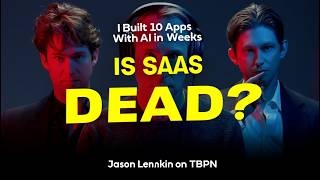
Jason M. Lemkin argues that B2B companies using AI must re-accelerate growth to qualify as true AI firms. He shares metrics from his own AI sales agents: 70% email open rates and single agents replacing eight salespeople. The conversation covers why large conferences are high-risk, the rise of no-code tools for building apps, and emerging opportunities in ultra-niche verticals like dairy farms.
Chapters
Long, long overdue. I'm so happy that we were able to commiserate over the fantastic business that Davos is. And now we have our planning session. We just talked to Tyler Cowen about how you're supposed to keep everything a secret, but here we need to do open brainstorming. We need to do some open brainstorming about how we drive to half a billion in revenue, because apparently that's what Davos is doing.
I'm sure you want to stay on point. If you want my advice, which you should ignore starting next year, take some off the table. Okay, Listen, TBBN is on fire, right? It is great. You're. You. You've reached the point where you almost have too many sponsors. You have to turn them away.
Sure.
But listen, if both you guys could take out, say, 4 million next year, just put it away. Might not be the worst idea for a media business. Right?
Yeah, yeah, yeah, yeah.
Small bit of advice.
When did you get into media? Like, what was the inciting element?
We were the opposite. I mean, there's good and bad for being in the early days or old school. Right. You don't know what you're doing. Just like the early days of, like, SaaS. But we just did meetups for our community in 2013, 2014. Like a thousand people would show up to a meetup, and now in sf, it's like, well, at least last year it wasn't a big deal for AI. But imagine in 2013, a thousand folks coming together to talk about enterprise software. It was nutty. Right. And so it. So it built a community and then accidentally did events, which you guys should not do, and then did media. But I did it backwards. Right. You guys were very intentional and it's pretty cool. I was utterly accidental and dragged into it. But it's convergent evolution.
Yeah. What are the best practices for events? I mean, people talk to us about it. We've said no. We're staying focused. There's plenty of events. We get invited to a bunch of them. I have to say no to too many already. There's a good event in most spaces, and I'm wondering what you think makes for an actual good event.
Well, you mean from a business model perspective or from a quality of attendance perspective?
They're perfectly aligned, right?
Yeah.
They're not aligned. They're poor. They're arguably poorly aligned.
Okay, let's start with the consumer. No.
And we've experienced this because we haven't done any events. And.
And we've one that was not.
Yeah, but it was basically Like a cocktail party. Exactly. And, and like it. Yeah. You, you, uh. I, I feel like too many people, like you gotta really know what you're in. You can be in the events business.
Yep.
Or you can do events. And if you're just doing events and you're doing events that you really want to be at and participate in and you're making events for yourself, it's very likely that it's not a great business. Right. Because like it's very possible you don't want to charge for tickets. Right. Or you charge for anything or all these things.
A lot of conflicts.
Right.
Well, look, I'll be. I thought we might be talking about AI agents or the SaaS market crash. We can do it.
We want to, we want to get.
To that there for sure.
But if you want me to summarize learnings for events which you guys have, there are a handful of public companies in the space which are boring but have very high operating margins.
Okay.
They tend to get bought out by PE firms and go public and go private. Here's the basic thing. There is a nut for these large events like con Lyons and money 20 and even Saster. And it's going to cost you 10 to $15 million, maybe even 20 to turn on the lights. Just to turn on the lights. So if you bring in 10 million or 15 million like a lot of corporate events do, Dreamforce, they lose money. Right. If you can build that.
Well, they're also taking on extreme risk because let's say you have some black swan or whatever, you have a bunch of 10 million.
In Covid, we lost. I lost 10 million. As the majority shareholder. I lost $10 million. It wasn't that fun.
Yeah.
But if you get over the nut, if you think about the nut and they're high. This is why it's a terrible business.
Yeah.
But if you get over it, it's almost pure profit. That extra person you charge a rip off ticket to for 2500 bucks that cost you 80 bucks. Right. But getting there is, wrecks the ships. And if TVPN has money, it's the last thing you guys want to do is to struggle to make 200 grand or 500 grand off an event. Because it's totally distracting. Right. But if you get massive and you keep your heads down, these, these things, they're, you know, the best of anything. Makes a lot of money, doesn't it?
Of course. That's always the nature of these things. That's why we like focus. That's why we like not doing events. I Am I am interested in your reaction to my. My take that. Like the dream forces, the meta connects the Google iOS like this has put pressure on the. On the cross platform tech conference. You know, Mark Zuckerberg doesn't need to go to CES to announce the meta Ray Ban displays. He hosts his own conference. You, Sony and Xbox, like they can. They don't need to go to see us. Even if they have a presence. It takes away from like the aura and importance of those events. Is that something that you. That resonates with you or is that sort of overstated?
Well, I don't know that events have worked for a product launch since like Steve Jobs. It's all. It's now performative.
It's very mimetic with Steve.
Yeah, yeah. Satya getting up on stage and talking for four hours about what's at Microsoft. It's already been leaked on TBN and everywhere else yesterday. There's no, there's no energy. But so I think that. And to the extent events are still doing that in the age of AI, they feel very dated. They feel super dated. But the meta question is, in the age of AI, when I mean, literally at Saster, we have 20 agents that replaced eight people. Okay. We're running it all the time. We're at the bleeding edge. When and why do we want to meet people in personal and business lives and meeting. I mean, you know, you, I mean, you guys know. I mean, you were meeting over zoom. It's not a tenth as valuable as if I was there in person with you. Then we're friends forever, Right. We're fake friends right now. And so what does that mean? What does that mean for building relationships? Business relationships, pretend relationships?
Well, yeah.
So getting people together is super important.
Yeah. To maybe say it differently, I could be incredibly bullish for events, businesses, because if you're just constantly online being just completely flooded with inbound and bots and bot phone calls and all this stuff, and you don't know really who's real and who's not, then in order to figure out like actually how you want to. Who you want to partner with, who you want to make, how you want to make decisions, maybe you do need to get together in person.
You do the thing that just like a lot of things in AI, the surface level misses some of the complexity. The flip side is, as humans, as culture and tech, you know, since 2020, we just don't want to get out of the house, we don't want to go anywhere, we don't want to travel, we don't want to meet like sales folks, don't want to meet customers in person anymore. Right. And so even if we, we need to do these things to go to these like we just, we all, we're either 9, 96 or we want to work from home in our pajamas. There's nothing in between these days. And so it actually creates a challenge for all the reasons we need to get together. 99% of us would rather be working from home. So we'll see. I don't know.
Yeah, yeah, yeah, sorry.
What. I'm sure they're all wildly different, but what are your conversations like across the portfolio? Today you have a bunch of new AI native companies that in conversations look one way and then you have, you know, a massive portfolio that all is navigating AI in different ways, capitalizing on it.
Maybe AI companies are becoming SaaS. The SaaS companies are doing AI. Everything's bleeding together.
Sort of, sort of, sort of My. So here's my simple rule, guys. If growth isn't accelerating, you're not an AI company. This is the flaw with the publics. All the performative stuff, all the public companies you guys talk to and follow has growth great, that you built an agent great. But is growth re accelerated and that's for service.
Now meta, I mean that's the bull case for meta. Like they did accelerate growth. They're spending a ton on capex, but there's clearly the AI that they're baking into. The ad matching platform is helping accelerate and so it's working and they are.
In AI and the retail advertisers that are generating the ads.
We talked to Eric Seaford about this yesterday.
Well, sort of. But like let's look. So, so that's for sure, that's why. But let's, let's look at why Microsoft crashed and I never know why publics react the way they do. But on the one hand the AI side of the business is still blowing up. Right. Granted, a lot of that money's coming from OpenAI but they did miss on the software side.
Yeah.
So it's not, you know, there's nervousness and you talk about advertising being up. The worst performing software stock of the last 12 months is the trade desk just, just destroyed by all of this. It's complicated. So you, the portfolio. My, my, my advice is it Last year was deeply tough love. Now it's just tough. It's like you've had a chance to re. Accelerate growth. Like yeah, everything got better since Claude 45. It got really good at 37 that's why Replit and Lovable blew up. That was a year ago, guys. Yeah, you had a year. Whether you're Agent Force or my startups, you had a year to re accelerate growth. And honestly Salesforce is doing better than some startups at least. We're actually probably the only organization of our size using AgentForce for real. Like we use it every day and it works. I can't tell you how many startups their agentic product is like it's a copilot.
Interesting. Yeah.
So did revenue grow? You had a year, you had two years. You're supposed to be agile.
Dig into the tough love to just tough transition. I feel like there's a lot of SaaS founders who got to growth stage, they got to scale. Maybe they started a decade ago and I did reinvigorate them. They got sort of back in the arena. Maybe they never stepped, stepped down or stepped back but they just, it was, it was a new reason to go into the office fire, get fired up, be tinkering with the tools, pushing the team harder. Is there any, is that just something that's innate to the tinkerer specific type of founder leans into that? Like what are you seeing across the portfolio?
I. Well, okay, maybe two things. First of all that's a great narrative. I don't think in the real world it's that common. I talk to behind the scenes, off the record. I talk to public company CEOs and B2B my own portfolio others a lot since our our agents blew up. Everybody thinks we're some sort of. At least for GTM where the agent gurus, okay, it's pretty interesting. And everybody says 80% of their team wants to work like it's 2021. It's not simple. Everyone has to create a skunk works team or something and everybody's complaining because here's one reason the AI native companies are doing so well is they don't have to deal with the 20,000 customers pre AI who still have feature gaps, who are still using clunky software, who are still have other competitors and all of a sudden you have 10,000 new AI competitors that don't have to deal with that old stuff. And I would love to say I know so many folks that have that, you know, beginning of 2025 are growing 40% and now they're growing 80 or 110. I can only think of a handful.
Of how are you, how do you advise around competition in specific markets? Earlier this week, I forget who we were talking to, but I had been Talking to a founder and he had some idea and I was just thinking to myself, like, sounds like a great idea, but I can guarantee that four different YC companies are going to end up on this problem and you're going to be going head to head and it's just going to be like 996 versus 996. And it feels like somewhat of a coin flip. Who will come out on top? Even though you're super talented, super experienced, what's your view on the current state of if a category is exciting, it'll have 10 companies kind of running at it aggressively.
It's worse. I think that was the problem six months ago, the problem today, and literally a seed investor who's very successful but relatively new said to me yesterday, I'm giving up because everyone can vibe code something. I can't even tell the difference. I can't tell it now. I'm very. I vibe coded 20 apps that have been used over a million times. I'm in the top point 1% of Replit. I know a little bit about this.
Yeah.
And we will run out of time. You're not going to vibe code Salesforce.
We're gonna, we're gonna hit the gong for. Huge numbers.
You're not gonna vibe code Salesforce for real. But you know what, you can vibe code something for demo day. That looks really good. Yeah, Real. And the stuff that like even 18 months ago you'd be like, I want to fund that. Oh my God. This is an agent for dental follow ups. That's all autumn. Like, my God, your job would drop 18 months ago. And you know we're talking about Clawbot and Open Claw and all this stuff today. You were just talking about it, right?
Yeah.
I mean, I built my own version on Replit a week ago. I thought it was pretty cool. And now it's obsolete today. For real. It's called Rank. I built it a week ago and now it's worthless.
Wow. So, I mean, demo day is coming up. Like what metrics? I mean, obviously you can have a polished product. So does this shift to being able to control narrative? Are we in the age of storytelling? Do we need to be focused just on ARR or cash flow at the earlier stage? What changes about. Because there will be companies that are created today and wind up being successful. I'm sure you're not bearish on just startups generally right now, but the landscape is different. Right, so what's different?
Look, here's the challenge. The challenge isn't even all the clones I think we've accepted there's a lot of clones. I think we've accepted there's a thousand competitors. Now the challenge that I mean you guys know from the show, but not all founders have internalized. It's just investors are expecting insane levels of growth. Insane levels of growth. Right. They want like the idea that you could go from 1 to 100 in a year is now seen as what you want to invest in. That used to be almost unprecedented. It did happen in the old, old days. Right now there's, there's companies that like I invested in early like Higs Field for, for video. People never even heard of Higgs field. And it's 100 something million. Right?
It's over 200 now.
Yeah, yeah. But that's not like Harvey which we're talking about every week. Right. Or lovable or replicate. And so, and then, and then the problem guys is you look at figma and it's terrible. But figma, figma is, is almost soul crushing for investing because you can't get much better than Figma. It's down from its IPO, it's trading less than 10 times revenue. And that's forget owning and creating a category who's invested in something much better than figma? I mean not me.
Sure, sure.
So on the one hand it's great. The best times of others. On the other hand it's like figma isn't good enough. Like let's, let's, let's, let's call it a day guys and do media companies because it's just too hard.
Yeah. I mean I've, I've had a, at least a couple times over the last year where portfolio company is like a company that is maybe a pre seed company trying to go out and raise a seed or maybe an A. And they're, they're like hey, can you look at, can you look at my deck? And I'm like the deck is beautiful. But you're projecting to grow 3x this year and that's going to be a nightmare for you because it just doesn't look like, it just doesn't look like the business is best in class anymore. Even though you're like wait, I'm like I'm in a 3x revenue this year.
Just yeah, it's. And unfortunately there's no great answers to this. Right. There's no great answers to the question that some great businesses will compound to epic rates but they're unfundable now and they would have been fundable two years ago. There's no, there's literally, I don't know what the answer is today. Right.
What about how, what do you think is going on in so staying there.
Doesn'T that just mean that maybe there's the same amount of entrepreneur, same amount of building, but just more founders opting out of the traditional venture capital track? Because if they don't actually have a solid use for capital, they should get profitable earlier, monetize earlier. I mean, integrating payments is easier with one line prompt. So just do it and actually pull your roadmap forward and get. And stay lean and be higher leverage. Like, I don't know. Is that not an unreasonable conclusion that you'll just see more bootstrap successes?
You know, there's, of course, that's, that's the dream. Right? Don't raise too much money for tvp. And I keep it, keep it lean.
Yeah.
And I think for a little while when everything was easy, but when things were growing well, but the markets were down 20 late 20, 22, 23 and 24. That was the dream. Guys, listen, if the markets have fallen out of love with us, we'll just, we'll just do the mailchimp. We'll just get to a billion in revenue on our own. Pay us all out a couple hundred million in dividends and see what the Lord brings. Right?
Yeah.
The problem today is that the pace of software development is so fast that you better, you better have one way or another, you better have four or five amazing folks on your team or you're going to get crushed by the kids at Y Combinator. Bootstrapped or not, there's no time. And I remember back in the day, Michael Cannon Brooks, who was the co founder of Atlassian, came, you know, to Saster annual way back in like 2019 or 2018. And he said, well, I was lucky. I had five extra years. Like if I had any competition in the first five years of Atlassian, we wouldn't, we wouldn't have made it. There were three companies.
That's crazy.
What do you. So, so that's hopeless today.
How are you going to compete when people pushing out Agent Crazy Agent products weekly. How are you going to compete?
So, so I want to get your take on this. So we were on a podcast that got released earlier this week. John was talking about something that has informed our strategy with TVPN from the beginning, which is that, yeah, media is now barbell. You're going to do great if you're a platform, a Spotify, a YouTube, Netflix, et cetera. And you're going to do great. If you're a personality individual, low, low opex, you're just like Joe Rogan. You're creating content. But if you're in the middle ground where you have like, you know, a 200 person team and you're trying to roll up talent competing with personalities and the platforms, you're going to be in a rough spot. A buddy of ours, John Palmer was saying yesterday he thinks that software could go in that direction where if you're one or two lean, lean, lean operation, you're competing with big companies, you could do well. If you're a huge platform with distribution and scale like a Salesforce or Google, you're going to do well. But there's kind of this messy middle that could get kind of churned through.
Well, it's just. Well, first of all, I think all of this vibe coding, I think people miss the point because they're not really doing it right. And you had the great guy, the economist on before me who. Yeah, he was great. And you asked him if you have you actually used any of the agenda products. He was like, no, he was honest. Right.
Yeah.
Kudos to him. Right. Most folks talking about it haven't. What vibe coding is already unleashing is if you want to. Your to your point. If you want to build a super niche app for real. I want to build software for web broadcasters with scale. Okay. There's 11 customers, there's TD TPPN. And that's all I want to do for my dream. If you are willing to, to to V. To do it for real. Not for an hour, not one shot. It do it for real. You can now build that software without an engineer.
Yeah.
So that is amazing. And so we're seeing whatever a thousand flowers bloom. I was the first investor in a company called Rev Revenue Cat that does powers mobile subscription for 50% for 50% of mobile apps. And Andreessen published basically the same data this week. At the end of last year, just all of a sudden the number of mobile apps like quintupled.
Wow.
At the end of last year because of vibe coding and it's just starting and so the very bottom of the market. If the three of us want to get together and build an app for real, we can do it now. It's very exciting. And Salesforce isn't going away, but that middle is going to be harder. It is, it's a. There's just what really want to build it today. You can and it's super exciting.
What's going on in PE land. I would Hate to be, you know, private equity firm with a bunch of kind of legacy SaaS and you're having to explain to your LPs that no, everything's fine, we're going to, you know, we took this company private, we'll take them back, it's fine. You know, the Thoma Bravos of the world, I'm sure that they're very savvy. How do you think they're kind of thinking right now? How intense is the fear? Where is it sort of unwarranted.
Well, there's one thing I know for sure, like for 1,000% sure. And this is slightly inconsistent with the data Carta and others put out and others on the Internet. These B2B companies, pre AI ones at 50 million, 100 million, 200 million, 800 million, no one wants to buy them. It doesn't matter that you, hooray, you got profitable. Thank you. That means you're not, you're not going bankrupt. You have not solved your existential problem in the AI. I mean literally, I'm an advisor, a friend to a company about 140 million in revenue. Pretty good growth. But not AI growth but, but pretty good. Right. And we were doing a review. Yes. The other day on M and A and I was shocked with the folks on the block that would sell folks much bigger than that. Much bigger than 150 million.
Oh, to sell to them. So to sell. Okay.
Exit any no P for they've already gone to Tomo Bravo and Vista and Insight. They ain't going to 140 million air for a weird crammed down combo exit unless everybody else in the P chain said no. Right. It's rough out there and I, you know, until even late 2023, you got to 20 million in revenue, you were still growing and you were, and you were efficient. Someone was going to buy you. And the question was, was it 5x6x or 10x? And that playbook died for PE and it died for exits. I do think the Tomo Bravo will be. They will figure out how to accelerate AI in their portfolio and go deep and it will work. I really believe if you can own the agents on your platform, that's how you re accelerate. You have to own the agents on your platform or the agents will take away all the value. But man, the P has just said goodbye to B2B and it's terrible. I don't mean to be so draconian in 2026, but I talked to so many founders that are in la la land and I think it was okay. Last year. But at least at some point, you just. Just be honest that, you know, PE is not coming to the rescue, unfortunately for 95. I mean, everyone's on the block.
Guys, is PE ever coming to the rescue? It feels like it's more of a grim reaper scenario, typically.
Yeah. Another. It's just so exciting to be building things today.
Sure.
Right. And, and. And there's either a malaise in these companies because they're building nothing, or you turn around and you can't believe what they built last week.
Yeah, right.
I mean, Ramps, your big sponsor. Right.
Even.
Just look. Even though Ramp is old, look at the pace at which they put out software now. Like, it's crazy. Right? And what are you is going to die?
Do you think it's atrophy? Do you. Do you ever go around to your portfolio and say, like, hey, guys, like, why am I using Agent Force? Like, why is this like. Like, nothing against. Nothing against Salesforce, but, like, I was surprised to hear you're trying everything, using everything, building your own agents, and yet you're sitting here saying, like, yeah, we're running everything on Agent Force and it's great.
Well, we run. We will actually. This is a risk for everyone. For the moment, you can be promiscuous with agents. So we are running four different sales agents. We're running Agent Force, we're running a hot YC company called Artisan, we're running a company called Qualified that Salesforce just bought for almost a billion to get more reach. And then we're running. And then we're running a bit of clay, which just raised at 5 billion. So we're actually running them all where it's work. We're running them for different use cases. And that's actually good for startups because in the short term they get more customers, but overall it's hard at the moment to dominate. So it's not just Agent Force. And I think that's the risk. That is the risk that I think Agent Force is going to work. I can tell you why as someone who's actually using it, not Sony baloney, but we. We're using four vendors instead of one.
Yeah. Can you give more.
There's risk as well as opportunity. Right.
Give more concrete examples of how you're using Agent Force. What it's doing for you. Is it sending emails, is drafting emails?
Yeah, that's all it's doing, is sending and drafting emails. We gave it the use case, which is. Is a good one and which is the one Mark talked about in the early Days we gave it reactivations. Okay so and this will resonate a little bit with you guys, folks that used to be sponsors or used to come to our events. This is very simple and atomic that a human being was too lazy or unwilling to follow up with and. But they were good ones. So we scored them and sent them out and we got 70% open rate.
Wow, that's great.
It's pretty powerful. This is something. When we had eight people on our sales team, now we have one in AIs. We went from eight to one in AIs. Where it just wasn't worth the humans time. It just wasn't worth John and Jordy's time. Because they're hunting the big deals at Vanta and Ramp. They don't want to hunt the little deals or, or there was turnover Brex and they don't know how to meet paid. The new Pedro's gone and they know. So the humans give up, but the agent doesn't quit.
Sure, yeah.
Agent just looks up who replaced the person at Ramp or Brax. They follow up with them. They have no shame. And we had an agent that closed 100k deal on Saturday night. I mean let's be honest. Want to close the deal? Yeah. For real, for real. How many people want to do that?
What?
Wait for the E sign document to come back? But how many are going to do the work on Saturday night? They're streaming, right?
Yeah.
What about. Do you think we'll see any, Are you excited about any turnarounds? Public market companies that have been, you know, completely beaten up. I mean we just had Jim on from Yahoo. And that's a business that people don't, you know, aren't talking about. Certainly the tech media isn't spending a ton of time talking about Yahoo, but he's sitting there being like growth is great. We've got hundreds of millions of users. We have all these opportunities to put AI in across the ecosystem. And you have to imagine there's a bunch of companies that have been beaten up in the public markets that maybe founders, people just want to start something new. They don't want to try to deal with legacy platform. But I'm sure you've been pitched random ideas like that.
Well look, there's, there's a bull and a bear case here. Right? And the, the, the, the bull case is AI so early and especially in real enterprises, not, not all the tech folks buying these products on a circular basis. Everything's circular, right. Including GPU sales and everything circular. If you go out and talk to the real world and bring folks from Archer, Daniel, Midlands and whomever on the show. They're going to tell you they're it's early, they're experimenting and I think that is going to benefit Salesforce and ServiceNow. It's not too late for them at all. Right. There's a lot of stress at those companies today, but it's not too late. The flip side though, I got to tell you, now that we're in 2026, you've had time. Where's the turn? Like hooray. That I can do all these things at Yahoo. But it's already like, it's already utterly changed. Video and audio and everything. Why show me the money, show me the lift in revenue. And I have lost patience with founders and 1 million, 10 million public companies that have not seen the lift because great, but 11 labs just crossed 350 million. Yeah, show me the money. Like enough talk and enough arm waving and you know, you, you AI doesn't count if the revenue doesn't grow. It's. The problem is here's the tough part for everyone, including a Yahoo and most startups. It's, it's hard enough just to keep up. It's hard enough just to ship an agent, it's hard enough just to achieve parity, figure out the guardrails, figure out how to make this product work. And then the other guys have pulled ahead. Like it's just you're almost bailing out a leaky bucket. And so I know we want to be optimistic that there's so much agentic opportunity, but I'm at the point you got to show me the money. I don't need to see you go from. And look what happened. Like Mongo, like dramatically re accelerated in the age of AI. I'm not looking for you to go from Mongo from like down to like the teens to the 30s or whatever they did. I'm just looking for a little bit of gain.
Yeah, yeah. Even truly, what about how are you thinking about AI? AI discoverability. Are you paying a lot of attention to this with your business?
Are you find vendors we need to.
Get business well, yeah, yeah. Just like how you're showing up in, in alarm queries, all that stuff. Do you think it's. Are you advising portfolio companies that they need to pay a lot of attention there?
Broadly?
Yeah.
I think people are underestimating this. I think geo is, is. It's almost a disservice. You don't just want to show up randomly in what's a next generation media company focused on tech and it says leaders include folks like TBPN and the others. That's not like you got. That's nice.
Yeah.
What you really want to show up for? Like I, I'll give you a very specific example. I did this as a use case yesterday I went into replit and I said what's the best CRM for me to use? And it said HubSpot. That's where the money is today.
Yeah, totally.
Us asking all the agents we work with whether they're Claude or ChatGPT or, or if we're building something in lovable or replit. We're not, you know, we're not going to go to Google. We're just going to ask the agent what should I use?
Or you won't even ask the agent. You'll. I need a website. And it will be like, well I need to pick a database and I'm picking this database. And you don't even know what database it picked.
And that's that, that's an issue. But I think like software isn't dead. I mean the public, the leading public B2B companies are doing 2 trillion totally. But when people do discovery, they're going to ask their agent. And I even built a digital JSON. It's been used 175,000 times. People just ask what should I use? That's why would you go to Google and pay. Even, even you might use the AI summaries if they answer the question. But we're not just discovering with a sales rep that doesn't know the product. Right. And endless webinars like that stuff. It just. Just ask. Figure out what is the most trusted agent for what you do and ask them what to buy. And you know, you should just buy that product.
Yep.
Where should I. I've got 500k to sponsor this year. I want to reach tech leaders. I want to do it on media. I want it to be persistent. What's the best place to do a 500k sponsorship? And if it says TVPN, I should just like let me not waste my time. I'll do one more call. But if you guys will take my money, I got to move on.
Yeah, yeah, yeah.
The other, the other dynamic is just agents selecting different vendors themselves. That's a whole. That's another level of it which I don't think enough people are kind of even caught up to yet. Which is like if I just have agents running parallel and they're. And you can assume if your agents are closing deals now on a Saturday, maybe you start to give them a little budget not too long in the near future. And they're starting to actually, you know, spend money on behalf of the company too and just make certain vendor decisions. And you trust them because, hey, you're doing great work.
Yeah, I don't know the big examples, but there are startups that have blown up in the last 12 months, like Resend instead of SendGrid for email, work OS and others where the agent just said to use them. Yeah, like I use Resend instead of SendGrid. I couldn't get SendGrid to work in replit. I just couldn't get it to work. I could tell you. And you know the reason why the founders are long gone and they decided to, to throttle the free account so much that they don't work. Like you just can't get a free account working. And so I asked Asia, well, what can I do? I'm banging my head against the desk. They said use Resend. Like, yeah, that guy seemed cool. I used, I've never gone back.
Wow, right? That's cool.
And workos was around for years trying to do oauth, like authentication for apps. A good solid CEO, good solid technology, but went through layoffs, was kind of going nowhere and then everyone just started to use it. Every agent recommends it, everyone just blows up. So I, you know, that's not yet, that part's not yet in mainstream America. That's pretty nerdy. But some version of this is how we're gonna going to pick agents. And so I think Geo is nice, but some of it's scammy and smarmy. And I'll tell you how I know. In my opinion, when an agent is scammy or smarmy is when I have to put in a credit card before I can use it. I don't like that today. So all these Geo tools are trying to get you to pay599,899 before. Just let me try the thing for a week.
Sure, sure, sure.
Yeah, if it works, I'll pay you.
Yeah, yeah, yeah, yeah. I mean, obviously you've talked a lot about how competitive these vibe coated products are. The early tech markets. Are you optimistic or getting more interested in the more niche far field businesses where maybe there aren't really software solutions? Maybe you put Harvey in this bucket and some of the medical stuff, but also hard tech. There's a whole bunch of pieces of the economy that have not really been touched by software yet. Maybe AI is the thing that makes it. Now we can go do something on the farm that's actually impactful or do something in oil and gas, or do something in fishing or some really far out piece of the economy where there isn't an established conflict.
Yeah. We had the founder on the other day that's doing it's super intelligence for dairy farms. He has a product you just walk up, if you're working on a farm, you walk up to the computer, you say, what should I do today? And it just gives you a bunch of tasks.
It's a good market. I almost had a dairy farm investment years ago that was. What do you call it, Visual AI to optimize farm yields. Right. And there's, there's a couple larger companies in it that the interest. I'll tell you, I could give you a couple answers. Here's what I'm thinking of more in terms of the One, should. Will a lot of flowers blossom here? Yes. Like we will see more and more of this niche software. It is great to make money from IT investing. Here's what I'm looking at. Is, is the agent, however the heck you built it, is the agent so powerful, so ROI positive that you can charge four to five to ten times more in this category than you could before. That's where the math compounds to something interesting. So it's one thing, if you can just track the yield for the cattle a little bit better than the prior, like that's great. But if it's the same unit economics as the deals I looked at four or five years ago, I'm out. Because even getting 100 million is tough. Right. But let me give you a contrasting example. In these AI SDRs that people will use, a lot of people used to make fun of them, right? But these companies, startups like Artisan and Qualified and Clay, they're expensive, man. They're like 100 grand to start.
Wow.
Okay. And let's go look at older when you. Back in the day, I was one of the first investors in Sales Loft, which is the last exit of the last generation. Okay. December 2021, two and a half billion to Vista and Last Chopper.
Last Chopper.
Yeah, funny story. The CEO was like, we gotta sell. And the VCs didn't want her. Like, we're worth much more than two and a half billion. But the company CEO Kyle's like, no, the world's changing, man. But getting, getting folks to pay $100,000 for those apps was hard, right? But today it's just, it's table stakes for the next generation version of these apps. So when you start to See an app that used to struggle to get 10 grand a year for get 100 grand. I'm all in on dairy or niche, you know, hydroponics or you know, pool cleaner apps that are all really cool. It's just that the numbers didn't. I, I'm, I'm an investor in a company called Mango Mint which is in a pretty crappy category. It's, it's software for spa spas and salons and doctor's offices. Why is it crappy? It's mid sized and there's like 10 really good companies.
If there's just one, yeah, it'd be fine. But hyper competitive still.
You know, after 30 million they just blew up with everything they're doing that is agentic and automation related because it's much more val, but not because it makes the product much more valuable.
Yeah. So they charge more.
Yeah. So I want show. I'm sorry, but show me the money. If you had a software that was $8,000 a year before and now you can charge 80 because honestly you got rid of 10 people in the back office. That's what's happening. You're getting rid of a lot of people.
Yeah. The other thing, when people, when people are like, oh this agent's like super expensive to run and like could I. People are like, I could just get a normal person at this point. It's like, well, the point is that you have potentially an expert that can work around the clock that you can turn on and off in real time in a way that you just can't. It's like, why is it, why is a consultant end up charging, you know, an obscene hourly rate? Because you're just tapping them in for, you know, quick Sprint here or a project or a couple months, etc. So you get a premium.
Someone says that that's dumb. Like, because honestly if you can, if you could, maybe at tbn, you're pretty hot. It's easy to hire. I've never found hiring easy. No matter how hot I've been at any startup or anything. It's always hard to find good people. If you can magically wave your wand and get 10 great for, for low wages to do the job you want. Yeah, don't hire an AI. Right. But they're going to quit. There's a tax to hiring them, there's a tax to onboarding them. They don't all perform. You got to train them, you got to manage them. I mean good, good luck. Good luck. We are. It's harder to hire anybody.
Yeah, it's also, it's also more is. I mean, from our point of view, we, we had to, we went from, you know, basically 3 to 3 to 10 ish last year. So not, not, not crazy growth, right? We're a small business.
Crazy.
But we actually like the size of the team right now. Like, I like that we're all hanging out here in the studio all day long. I don't want to add a lot of people. I don't want to be a manager. I don't like managing people. I like working with people that are great. I don't like being a manager. And so if we can limit, if we can keep headcount low and stay small, that's, that's amazing.
Well, that's why we shrunk to three. I couldn't do it anymore. You criticize me, like, take your shot at me, right? But I have been doing it a little longer than you guys. I just couldn't take one more person paying them six figures, quitting and for a worse job. I couldn't take one more person getting to work from home with high autonomy, setting their own goals, no drama, paying them hundreds of thousands of dollars and just saying, I want more. I just couldn't, couldn't take it. And so last June, Amelia and I run sas. We're like, we're going to get, we're going to go so far on agents and we're going to break every agent. We're going to push it to the limit. And so now we have, you know, two, three people doing the work of 15 and replace two agencies with apps we built ourselves. We just couldn't take it. Wow.
Real quick, real quick. IPO. IPO market, you think? Looks like OpenAI will beat Anthropic out the door. Looks like SpaceX could do some type of deal, beat OpenAI out the door. A nice spite IPO. How much do you think? How much do you think kind of the ordering of these IPOs really matters is, is it could Elon successfully suck some real oxygen out of the room and make things more difficult for his, for the other labs?
Well, look, I think in my limited experience, and I think some of this is a media creation for something to talk about. All these companies are so exciting at a retail level and at an institutional level. There is infinite demand in the private markets and there will be sufficient demand in the public markets to go public. So some of this is, is a media creation. Certainly though the IPO markets are, are wide open, but they're, they're discriminatory. I mean, Wealthfront bombed. Equipment share, crush it. Wealth front bombed. You've got, you got. Why did I mean equipment shares at what? Four and a half billion growing almost 50%. That's a pretty high bar. Okay, so it's open. Ish open. So there's something to be said when the markets are good but not perfect to being the first out, when demand has not been satiated walking around and maybe not everybody wants to do all three. Right. And maybe, and maybe, and maybe it's tough if, if, if you're worse but still great than the other ones there is, you know, probably whatever X I SpaceX. Especially if it's not SpaceX standalone. Because SpaceX standalone with Starlink is a great IPO. Right. But if you start mashing loss leading stuff in it, there's something to be said for maybe anthropic will look better. So going first. But, but we're entering an era of just utter wealth creation from IPOs like we have never seen. Like, it's just, we're underestimating. You know, I used to be a billion, you know, billion. A unicorn used to be great.
Yeah, that's a trillion.
10 billion used to be great. Now, now you go on TBN and we're all talking about a trillion dollar exits like, like it's, you know, like it's snacks and popcorn and a show and it is. But think about how many more. You know, there's 20,000 folks at Nvidia that have made 20 million or more in the Bay Area and it's just going to explode and we're going to enter this weird world where the best VCs are going to make money like we've never seen before. Right. And the best engineers. And then you know, the middle is going to have no jobs. Right.
Well, that is.
Well, Tyler Cowen disagrees with you. He thinks that the economy.
Well, no, he did. He did say you might have to move to Houston and take a job in the energy sector. Yeah.
So that's a good, it's good advice or don't quit. But I will tell you one last thing I was with this week. I was at an event with a lot of C level B2B executives. It was just a favor. But I've gone every year for a while to just. And, and this year's year, they finally made it. We can't find any jobs. They're just, people just don't need these. I won't say exactly which level they were a thing but like finally set in that like I just, they just know no one needs folks with these 2021 through 2024 tech toolkit skill sets. They just don't need them. And it's, yeah, go to Houston. Like, do it. But whatever you do, don't quit your job. Like, if you like it at TVPN or Yahoo or Cisco, my advice is stay.
Yeah. Yeah. That makes a lot of sense.
Well, so, so great to finally have you on the show. Let's do it again. Yeah, Very soon.
You guys are the best.
We'll talk to you.
Pleasure. Thanks.
Goodbye.










