Improving Employee Performance in the Enterprise: What the Data Really Shows with Ally.io
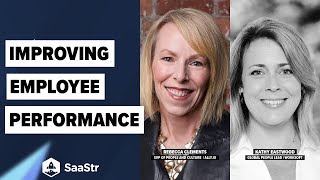
Rebecca Clements and Cathy Eastwood present survey data from 4,800 employees showing that strong mission alignment drives higher inspiration, risk-taking, and culture scores. Employees with clear mission alignment check in on goals 62% of the time versus 40%, and companies with strong culture see up to 4x higher revenue.
Chapters
Hi everyone. Hello and welcome to our session improving employee performance in the enterprise. What the Data really shows. My name is Rebecca Clements and I'm the SVP of people and cultureally, IO and just a little bit about us. Ally is a business execution and goal management software company and that helps enterprises across the globe build a culture of productivity alignment and velocity using the OKR framework. In particular, I'm really, really excited to be here because we just wrapped up a survey of over 4800 employees, both customers and people who aren't yet customers of Ally from across the US and UK about how they connect to work, how they connect with departments and colleagues, and how they manage productivity within their organization. We uncovered some really interesting insights around employee engagement, mission and purpose, and company culture. We'll be releasing a full survey in a few weeks, but I'm very excited to share some of it with you today. Joining me to talk through data and share some advice on how to interpret and navigate through these challenges within your organizations is Cathy Eastwood. Cathy, I'm so glad our paths continue to cross. Thank you so much for being here. Would you like to tell us just a little bit about you and your background?
Absolutely. Thanks Rebecca. And it's great to be here and working with you again. So I'm the CEO and founder of U Y. It's a firm focused on inspiring and enabling the next generation of leaders to really foster our high performing teams. I'm currently working with worksoft as the global people leader to help align and grow a high performing culture there.
Excellent.
Thank you.
Thank you, Kathy. Can't wait to hear more about all of your experience and your guidance. Okay, so let's walk through the agenda. So number one, we've already done that, we've introduced ourselves, so we're racing right through this. Next what we're going to do is discuss what data tells us about the way employees engage and gain better sense about when employees are more or less likely to engage. And this exploring the data will surface the conversation about the challenges that enterprise businesses face around engagement. After that, Kathy and I will share four actions that you can take with you to make an impact in your companies, including what to focus on and where to start. So this is kind of a rapid fire session, so let's go ahead and get started. Okay, so I think it's important first to acknowledge the shift that we've all experienced. Now, on the one hand, hybrid and remote work are not new concepts. They've been around for a while, but for many companies they were slowly moving in that direction. But this past year, 15 months, has thrown that timeline into hyperdrive for many companies, sending us all remote very quickly and unexpectedly. The ongoing shift of remote and soon to be remote hybrid has had a much bigger impact on enterprise companies than smaller companies. And it's been fueled by a number of things. So just to touch on those, it's been fueled by a move to global and distributed teams, technology driven work. There's an increased urgency around the pace of innovation and growth and then the need for visibility, particularly why we've all been remote and alignment for across all businesses that are global and growing more and more complex all the time. So the need for that visibility and alignment as we've been remote. Kathy, when we were talking earlier this week, I love that you referred to this as the new norm. And so I'd love to have you just share a little bit about the new norm from an employee engagement perspective.
Absolutely. Yeah. It's interesting because everyone's saying, oh, it's a new different, well, this is going to be the new norm of this hybrid environment. And if we're not careful and we don't engage our employees, it's going to be so easy for employees to just shift to the next company. And so, you know, you think about an employee sitting here on a call and they could be scrolling through job posts during the meeting, they could be easily interviewing at lunchtime through Zoom. Right. And the opportunities in front of them are no longer limited to businesses within their community, in their backyard. So now we need to make sure we're constantly thinking about how do we engage and retain our employees. Because it's so easy to shut your computer down one day and you're at the next company the next day.
Thank you, Kathy and I, for being the voice of reason and the voice of the future. I've been reading a lot about this myself. I'm sure people here on the call have as well that the time is coming when employees will have said, okay, I've hunkered down enough and I'm ready to move on. So we have to be prepared for that. Building on the new norm, a little bit of additional data. Gartner research has been tracking trends in the business and connected workspace for a long time. And, and aligning goals and tasks has become the most common topic. So it's not enough today just to manage tasks, track them, really, that's becoming less important. But it's about ensuring that the right work happens. And of course, from a business perspective, we always care about doing the right work and it turns out that employees care very much about this as well. So through our research, through our survey, there's been one very consistent theme. And from the data we've seen, from conversations that we've had, when employees aren't aligned to their company's mission, work suffers. It's really that plain and simple. And I know that's not a new concept on the one hand, but the data really bears this out. People want to believe in what they're getting up to do every day, and if they don't fully buy into it and don't find it compelling, at the very least they want to know what it is. And the data supports this fully. So we looked at employees who expressed that they believe in the company mission and employees who said they either don't know what it is or they don't believe in it. And aside from a general malaise, you can imagine that disconnect. We believe this has a very dramatic impact on the way people show up at work. So I'm excited to share some of the data that we found through our survey. Okay. First, 88% of employees who say they believe in the company mission also feel inspired by the work that they do. Almost 90% of people say if they believe in the company mission, they're inspired by their work. That's critical. Only 42% of employees who don't know what the mission is or don't believe in it can say the same. What that means, that means that if that connection is not there between mission and and the work I'm doing, nearly 60% of our workforce could be coasting. And obviously goes without saying, but I will say it, that none of us can afford that to have that happen. Okay, next set of data. 72% of employees who believe in the company mission feel empowered to take risks knowing that they could fail. Only 45% of those who don't know or don't believe in the mission say the same. So not only is it creating a culture of employees who aren't bought in, but it's impacting innovation. And innovation is key in this very competitive landscape that all of us are in. So, absolutely critical. Final set of data that I want to share with you. 62% of folks who believe in the company mission check in on progress to goals with their manager and or with their teams, at least BI weekly. Only 40% who don't believe or don't know the mission check in regularly. And if that weren't bad enough, here's the real kicker of that. 60% who don't check in regularly. 24% of them say they never check in, they never check in on progress with their team or manager. So luckily, if your team is invested and believes in the mission and that drops to single digits and it drops to 6%. Kathy, talk to us about this. How have you seen this show up in workforces that you've been part of or embedded in?
Oh, you can see it right away. And one of the first questions I love to ask the leadership team when I walk in is what is your organization, your mission, your vision, what are your values? And oftentimes they'll be quick and say, oh, here they are, they may have it printed out. And then I ask the next difficult question, how many people in your organization know it or live it or believe it? And they go, oh, I'm not so sure about that. And then when you start to drill in further, those that really haven't shared it, they don't live it. You can tell because there's a lot of silos going on, there's misalignment across the teams, there's finger pointing and so you can just tell there really isn't that common purpose of why are we here? What are we doing? You can tell the difference when you walk into an organization that is running like a well oiled machine. Everyone's excited, everyone's engaged. You know what that purpose is and everyone knows it. And that's how you connect to the hearts of the employees and that's how they are driving results.
I love that Kathy, I love that you in particular spotlighted that. It's not just enough to have it articulated and written down, but it has to be compelling, it has to mean something. So thank you, thank you for spotlighting that. We know it's an issue, we know it's an issue. We know mission is important. We know company culture impacts the bottom line. An HBR study found that companies with a shared sense of purpose and innovate faster and see stronger customer loyalty. I want to share another data point or another set of data. A long term study of over 200 enterprise businesses by Kotter International found that good company culture increases revenue by four times. I mean, four times. Culture is nice to have. And I know you expect Kathy and I to say this for people, leaders, but the data bears it out. Culture isn't a nice to have. It's not a checkbox, it's not something that you're ever done with. It's a business strategy. It's a business imperative. All of us should be asking how do we continue to evolve and improve our culture? How do we make sure that people feel connected when they're spread out globally across multiple business units, multiple teams and departments, they're working from their homes? How do we do that? How do we stay connected in this very distributed global world that we're in? What Kathy and I are going to do next, we're going to move into the actions, the actionable things that you can take back with you to your organization. What I also invite you to do as we walk through the four actions and Kathy shares some of her own experiences, we'd love to have you at add your own experiences, ideas or suggestions into the chat. So let's make this lively and interactive and please, because I think the collective insights are really where the strength is here. Okay, so first of all, we know we must set a clear company mission and vision. We know that it must be clear and it must be compelling. Employees who know and believe in their company's mission rate their company culture at 78 out of 100. Employees who don't align with their company's mission, rate their company cultures at 48 out of 100. So there's a clear link. There's a clear link between mission and culture, Kathy. So given that, given we know there's that clear link and how critical it is, what tips do you have for enterprise businesses looking to roll out a mission and vision to their organizations?
First, I always say you need to think idealistically, not realistically. This is an opportunity to really get people to dream. Because your mission, your vision, it needs to be inspirational. It needs to provide that purpose to connect to the hearts of your team. Then next you want to make sure it's a collaborative effort. You don't want to do this in a silo and not bring people along the journey with you. One team I worked with, I had each of them build their own personal purpose and they brought it to the table and shared it with everyone. Then we worked together and we found the elements of each of them personally that we could bring together and define it for the team and for the organization. So they all were vested in the mission and vision and what we were trying to accomplish. And then lastly, you have to become a broken record on this. I have a mantra that until you tell someone seven times in seven different ways, it's not going to really sink in. So with a strong mission and vision, you really need to make sure it becomes part of everything you do and say in the organization. It's not a one and done exercise, but it is something that you live and breathe and go forward with.
I love that, Kathy, the seven times, seven different ways in communication. I've often said that if you feel like you're beginning to over communicate, you're probably just starting to communicate enough.
Exactly.
Okay, so the next takeaway, next action. Empower your teams to engage. One of the things that we found in the data is that clarity creates a culture of collaboration. Now, I don't think that's a surprise to anyone, but the disparity that we saw in the data is on average, 88% of people who believe in their company's mission say they're aligned with their colleagues. For those who don't believe or don't know the mission, that drops to 55%. A huge, huge gap for people that understand the mission. And there's clarity. It really generates collaboration across teams. Kathy, how do you think about empowering teams and ensure they're connected? How can people drive a cultural shift to support that alignment across the enterprise?
I think when you think about it, and we have to be honest with ourselves, no one wants to be micromanaged, right? People want to be innovative, they want to learn, they want to help shape the organization. And to be honest, they're also the closest to the action. Right? They know what needs to get done. So as leaders, it's really important to paint the picture of that envision we talked about earlier, about being idealistic. But when you can paint that envision and identify what the objectives are and the key result, then you can empower others to figure out the best way to help you get there and let them use their innovative thinking and their experiences to help get there. As leaders, our job then is to really answer the questions and help remove the obstacles, to let them make progress. So when we're providing the visibility, we can then ask for their input and then get out of the way and help them be successful.
I love that. I love that. Paint the picture, paint the vision, and then let people go, turn them loose. I love that. Okay, so the next Action third Action measure results regularly. We mentioned earlier that company culture leads to more revenue. I believe the Cadre International study said as much as four times the revenue. But here's the thing with company culture, it can't be forced, it can't be mandated. I mean, that's the narrative, right? And I truly believe that. But there are things that we can do to encourage it, to foster it. And some of those things might not feel that intuitive. And I think one of those things is measurement. Employees who Check in on goals regularly with their manager or team. Rate their company culture significantly higher than those who don't. In fact, individual contributors rate being able to see the progress of their work as the highest factor in feeling engaged. And that's even higher than compensation or praise. So it's absolutely critical. Kathy, again, talk to us about measurement. Why is it so important when it comes to employee engagement?
You know, people want to have confidence that they're doing the right thing, right? And the best way to do that is with feedback and being able to measure. And feedback is so much more valuable when you have data to back it up, right? Because then it's not subjective. You have tangible items that you can talk about and say, hey, we said we were going to be here and we've only gotten to 50% of that. What do we need to do to get to that next 50%? What help do you need? And people just, they crave that feedback. I mean, in fact, I conducted an exit interview one time and the employee said, one of the main reasons I'm leaving is because I had not had a performance conversation with my leader, right. And that had been at the company for a year and a half. And that, that does have an impact on why people will stay with a company. You know, if you have a leader that is helping, enabling you, telling you how you're doing, that's how you're going to grow. So understanding what it is that you need to do, painting that pic, it goes back to painting the picture, right? And then measuring the result and showing the progress against it. You know, having regular one on ones, tracking the goals, having quarterly review helps enable, empower and ensure success, quite honestly. So it's a win win for everyone.
I mean, I completely agree in the scenario you described, happens at many companies where that performance feedback is lacking. And the beauty of measurement is that then it's not just qualitative feedback, which is also really valuable, but it's very clear, it's measurable, it's quantitative. So excellent, excellent guidance there. And then the final action is around celebrating success. So what we've Learned is that 93% of employees who rate their company's culture as 80 or above are inspired by the work that they're doing. So we know that, but we can't just take that as a given and move on. There's a tendency to focus on maybe people who are at risk or who are struggling and clearly those team members need support. But also our A players, the folks who are invested and bought in their contributions, their work Absolutely needs to be celebrated. In doing so, in celebrating and spotlighting that work, it absolutely has a ripple effect throughout the organization. Kathy, any advice on celebrating successes?
This one, my biggest advice is you have to be deliberate about this, right? To me, this is one of the easiest skills to have as a leader. Right. It's not hard to say thank you. It's not hard to celebrate. And it's fun, but we often forget and, you know, so it is about being deliberate in what you want to do. And so the first thing I always say is survey your teams. You know, what does success mean? How does everyone want to be celebrated? Right. So some people like public recognition, some people hate it. Some people would be very happy with, hey, let me go ahead and take my husband out to dinner tonight. Or it may be a call from the CEO. Right? So understanding how people like to be recognized, then you can meet their expectations. Next is operationalize rewards and recognitions within your organization. You know, having a program to remember anniversaries, you know, having executive rewards so people can be identified and called out. So there's a lot of different things that structure you can put in place to help others make sure they're following it and taking one of the easiest skills, you know, and it's about demonstrating the behavior. So if you want your teams to be celebrating, you need to constantly be looking for those opportunities to celebrate. A simple thank you note, a call out on a team meeting, you know, if you have the values identified, highlighting those people that are exemplifying those values. And then lastly, be creative and have some fun. You know, one of the things that we've recently done is every we had met a major milestone and we gave everyone half a day off the following week, you know, just to celebrate and thank you. Because time is so precious and it was what it was so well received because they didn't know they were doing, they were working hard, but then to get to a reward at the end, they just appreciate, appreciated it so much.
Oh, I love that. I love that. And I want to just echo what you said around asking people how important it is just to ask them, how do you like to be recognized and then to, you know, to take that forward. Well, Kathy, I can't believe we've already come to the end of our session here. Thank you so much for sharing your wisdom, your experiences. I found it useful. I hope all of you found it useful as well. Just a quick recap on the action. Actionable items to take with you. First and foremost, set a clear and compelling mission and vision. Number two, empower your teams to engage with one another. Three, absolutely measure results, share those out and do that on a regular basis. And then finally, celebrate wins, celebrate successes and have fun with it, as Kathy said. And with that, thank you all so much for joining us. I do have just one more closing comment here. If you're interested in strengthening employee engagement in your organization, please swing by the Ally IO virtual booth. You'll have a chance to learn more and to win a gift card on Alaska Airlines now that we're all thinking about traveling. So thank you again, everyone. I hope you have a great rest of the conference.










