Insider's Guide to How Zoom Does Marketing
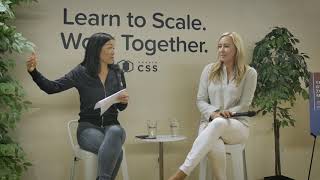
Transcript of a SaaStr event (Aug 28, 2018) where Malin Yen interviews Janine Pelosi (Zoom marketing lead) about how Zoom built marketing while scaling. Covers hiring (first marketing hires after Series C), early go-to-market priorities (brand preference, third‑party validation, freemium virality), measurement/KPIs and tooling, customer advocacy practices, culture, and audience Q&A on ABM, attribution, and scaling.
Questions this video answers
January 2015 (about a month after Zoom's Series C in 2015).
40 minutes (one-to-one meetings have no time limit).
Pardot, Salesforce, Domo, Google (Ads), and Zoom for webinars; also Google Sheets and Excel for early tracking.
About a little over 100 when she joined; about 1,300 at time of talk.
She mentioned an NPS around 72.
Chapters
So again, welcome. So I'm Malin Yen and I'm one of the co founders of sastr. And I'm thrilled that you guys are all here today. And I'm super excited to be talking to Janine today. We're going to have somewhat of an informal Q and A here, so there will be an opportunity for questions. You can answer them, you can hold up your hand while we're speaking. And depending on the flow, I may stop and take a question, but otherwise. Otherwise, we'll reserve some time at the end for questions.
Okay, great.
So, Jeanine, welcome. Thank you. We've all seen Zoom on the billboards and on the buses and in the airport and on the warriors. And we've also seen Zoom winning all kinds of industry awards from industry analyst reports, but also the best CEO recently. Congratulations. What was that? It was Glass Door. In the which category?
I want to say the U.S. yeah, but it was in large size companies, so I think it was us.
It was us. So it was the thousand person or above category, which is a really big category, and it included folks like Marc Benioff and Jeff Weiner and other folks like that. And I've had the opportunity also of knowing Eric for a very long time and well deserved. Right? And congratulations.
Yeah, he's wonderful.
So I'm delighted to have the opportunity to speak with you today. And so Janine is the mastermind behind the marketing brilliance that helped drive triple digit growth for Zoom. So please join me in welcoming Janine. So, Janine, you were the first marketing hire at Zoom, but I think it's a little known fact that you were hired not until after the series C. Is that correct?
Yeah. So technically the first marketing hire there was a gal who's still there. Her name's Priscilla. She's wonderful. I call her my gift. She was like jack of all trades of anything that was whether content, getting ready to go to a customer or anything. So I like to say she was technically the first, but she was our gift. Yeah.
And so how did you end up at Zoom?
So I was with the WebEx team before the Cisco acquisition. So I had the privilege of working with Eric in the past and our head of sales, Greg, and a few other folks there now since the leadership team has expanded quite a bit. There's definitely some blood from that era as well as others, but knowing some of the team ahead of that. And then I stayed on with Cisco after the WebEx acquisition for quite a few years and then made my way to Zoom.
Great. So let's back up so series C, what year was this?
2015.
2015. So just two years ago at series C and you get brought in and Eric says, okay, come and join this organization now. Go. Like what do you do? What guidance did he give you?
Yeah, so I mean, I came in. Yeah. So it was January 2015, probably a month after the series C. So that the intent of that round was to really scale sales and marketing. The product was in a really good place. We had some really great customers ready to put pedal to the metal. So we started with, you know, we had had some content out there. Right. I think we had a blog that we, you know, one rule, you know, if you're going to do a blog, you need to write to it frequently. We weren't following that rule before. Now we do quite a. So making sure I knew our job was twofold. So it was driving preference for the brand because it wasn't a new category. It was actually an incredibly crowded category that it was and that we still are in. And then I knew that we couldn't go out there and say the same damn thing as everyone else. Right. It's easy to use, it's reliable, the rest of it, because everyone's saying the same thing. So I knew it had to come from customers, analysts. So we really spent a lot of time focusing on those third party validation.
So tell us a little bit about how you went about doing that.
Yeah. So those first couple of hires, first phone call was Guy Peter, who's on the team now for digital marketing. I knew people. I actually, Sorry, I'm gonna bounce around here a little bit. But the word demand generation's funny to me because I think it's just marketing. Right. So you do stuff to drive awareness of your brand and then you do stuff to capture that. Right. So I think about it in kind of those two categories.
So.
So that's how we thought about the hiring. So we knew people needed, you know, we needed to get search up and running. We knew we wanted to do some top of funnel advertising to really make a splash in the market. So somebody kind of focused on advertising, webinars and demos. People have to experience the product. We have a great free product and a really strong freemium. But we wanted to be able to start driving. When I talked about, you know, scaling both sales and marketing, we wanted to make sure we were getting leads over to the sales team. So focusing on programs to do that and then social was the other.
So if you step back for a second, so you join, you're hired. You know, Eric does he have a vision when you come in of saying, here's what we're going to do with marketing now, or did he bring you in and say, can you figure out what we need to do with marketing?
He didn't have a direct vision for what he wanted to do. That said, I feel like I'm incredibly lucky that Eric gets it. Some founders and CEOs understand the benefit of advertising and awareness and some don't. That said, he definitely drives to performance, as all of us do. We're a performance driven team. And I know a lot of folks, probably even in the room are going, well, how are you spending so much in the top of the funnel and doing all these buses and billboards and then being still very performance driven? And I think that you just kind of find ways in which you can look at your own KPIs and find the before and after in anything that you're doing. So, you know, kind of what for your own business is interest or not, whether it's web traffic, new organic, new signups, people purchasing and their zip codes, et cetera, kind of putting all that together and then understanding kind of what the before and after looks like.
So when you came in and you needed to put together a strategy for what, your first year, first three years, first five years, how would you describe what that strategy was?
We definitely didn't do a 1, 3, 5 year plan. It was like. I think one of the great things about Zoom is we're very much one foot in front of the other. We understand the context and what we're trying to do, but we, we try and stay really focused on doing a couple of things really well and then kind of moving to the next. So we kind of knew where we wanted to get to, but it was, it was one foot in front of the other. I mean, it was, it was those next sales hires and making sure lead gen was keeping up. And then we started building relationships with the analyst community really early. I mean, it was probably in my first two months that we were having conversations with Gartner, which is really rare because we weren't. We had hoped to kind of get into the enterprise and we had some of that interest coming, and we probably grew faster in the enterprise than anyone expected, including us. So I'm really happy that we made those decisions early on. But it was very much one foot in front of the other.
So when you say we know where we wanted to go and one foot in front of the other, how would you describe where you wanted to go?
I think at that time we weren't so much thinking about obviously where we are now. We're doing very well, both upmarket and in the small business, kind of freemium prosumer side of things. At that time it was very much customer acquisition. We were looking at how many free users are coming in, the logos, looking at the mrr. So we look at things based on MRR versus ARR. We just wanted to kind of. It was one of those little things when I talk about staying humble for us, talk about the smaller number, even though it does equate in a SaaS business to a larger number. Yeah, that's a tough question because I think it was customer acquisition. It was making sure that we were growing the business at a steady pace, week, month, year over year.
Then I think one of the things we talked about is that in five weeks you made five hires, which helps you attack the five different areas that you focused on in order to have user acquisition. So what were the first five hires you made?
Yeah, so it was digital marketing, somebody to do webinars and events, social advertising. And events, I believe was the other live events.
And was there an area that, in retrospect, was there an area that you might have invested in more or less, with the benefit of hindsight?
We've talked about this before. I don't think so, honestly, I think we did the right things and it was because we started out small in everything that we did. And then as we saw traction, we would go and kind of double down. So there wasn't anything that we. It just isn't kind of in our DNA to go full speed without testing and trialing.
So give an example. I've heard about this double down strategy, which is Eric is a very frugal individual. I think every time that he has raised a round, the previous round, almost the entirety of it is still in the bank. Right. And so even though you come in at a series C, knowing Eric a little bit, I don't think you were like, oh, you know, empty, you know, blank checkbook. I think you had to still be very disciplined about it.
So tell us a little bit about.
This double down strategy.
Yeah, the great thing was, I mean, honestly, I. I would come to him with sound reasoning. We would have these conversations about what it meant to do, the activities that we were going to do. And I describe us as a very practical team. Like we don't over architect things and we keep things very simple. And I mean you can see it in the messaging, in just the way we execute. And, and so I think Eric was always able to understand what it is that we were trying to accomplish. And I know it sounds so simple and it is hard to do, but I think keeping things simple and being able to make sure that like the person that you need, I need Eric's support. Especially like in marketing when so much is art and science, I think keeping it to a place where we understood why we were doing everything that we were doing was how we got buy in. And it's not. We had a lot of money in the bank. We still do. We run the company. We have on our digital signage all over. About spending, you know, if you're going to spend a dollar and you spend what is it? No, you're going to spend $100 and you're going to spend a minute of your own time thinking about it. Spend two minutes thinking about this. As you know, he really thinks about it. It's investors money, it's not our money. We need to think even harder about how we spend that. And so we do. We take it very seriously. And I think that's why the business is doing as well as it is. I still, up until like a month ago when it broke, had the IKEA desk that I built when I joined there three and a half years ago. But yeah, I think keeping things really simple was part of why that worked.
So are there any tips to working with, working with the CEO founders in terms of marketing and then also from there, any tips for how do you work successfully within sales and make sure that the strategies are aligned?
I'd say it's hard to. How many of in the room are founders?
Okay, okay.
So I mean like you better understand why you're doing what you're doing. Obviously if you're a founder, I think you have a good sense of that in most cases. But if you're going to go join an early stage company, there was very few employees. A lot of those were engineers in China, like so on the go to market business side, there were very few people. And I still remember, you know, walking into my first day and calling my husband saying, okay, I guess I'm really doing this.
How many employees did they have when you joined?
It was a little over 100, I think.
How large are you now?
Probably right around 1300. So it's grown substantially. I forget what we're even. What was the question that we had?
Well, I guess we have a fair number of founders.
Yeah, yeah.
So hiring for a marketing factor. I think marketing is one of the hardest areas to hire for.
Yeah, you need trust. You need to, like, I think Eric really does know that I am super passionate about Zoom, and I always have been. Like, I think about it as I wear my business hat first and I bring in my marketing subject matter expertise. And so I think what that allows is, you know, to the point about, like, even the relationship with sales. I have a great relationship with our head of sales, with the sales managers, with all the individuals, because we're not thinking about it as marketing throwing something over the fence. Right. And then sales. It's not this constant back and forth that you're going to see much places. We probably have one of the best marketing sales relationships that I've ever experienced or heard of. And I think it's because we kind of all think about it as we're in it together. And so that, at the end of the day, is what's going to drive having that good relationship. When you're making those hires, bring in someone that you know is going to be super passionate and care just as much as you do or as much as they can care, because that's going to make all the difference in the world. There's a lot of decisions when I think about hiring, you know, I'm trying to hire for their judgment and their intuition. You know, I can't be there for every single decision, but I need to be able to trust the decisions they're going to make. And so, you know, you can teach people a lot, Right. Especially in marketing. Right. I mean, especially in this valley. I mean, there's an acronym for everything. There's conferences every day of the week on every subject that can really fill up your time in your head and get you away from staying practical.
So.
So, you know, stay practical.
So there are any. Sometimes there's a tension between sales and marketing. Right. Marketing might sometimes say, well, sales isn't doing their job. Sales might say, there's not enough good leads. Are there any tips or suggestions or things that you found that creates a more collaborative relationship between the two.
Whether it's.
Or maybe it's a healthy tension?
Yeah, no, I think whether it's sales and marketing or any other, I'm thinking about the leadership table and some of those golden rules you hear about early on. Don't go to a table of 12 people without having some conversations ahead of time. You want to bring people along with you, and I think we do a good job of that at Zoom. If we're thinking about entering new markets or bringing in new campaigns, we're all going to talk about it before we go and execute I think some of the tensions come from misaligned expectations or roles and responsibilities. Responsibilities. But I think we do a pretty good job of making sure people understand the why and then we go and execute. And that helps, I think, relieve the tension.
Yeah, I mean, it may seem obvious, right? But it seems like collaboration and understanding that people have their eye on the same goal. And how are you achieving that? I'm going to back up for a second and ask you. So you joined at series C, so even though Eric is very frugal and you didn't have an endless budget, obviously you had more budget than probably many of the people in this room. So if you step back and you were to be part of a earlier stage startup, do you have suggestions on how, you know, where would you focus?
I mean, I think about, like, even markets that we're entering into, like new countries, we're not going to go and just, you know, write endless checks. I think it's making sure, you know, start with those early customers. Some of our early customers are still like some of our greatest friends, Zoom supporters. Like, they're going to go out there and tell everyone in the world about, about Zoom. They're going to be, you know, I have customers calling me saying, hey, I need some T shirts. Because I met this guy on the plane and I have his address and it's like, we have customer doing that for us. Like, that's incredible. So I'd say, like, really cultivate the relationships with your early customers because that will go a really, really long way. Do as much content as you can. Like, I think about our blog as the hub of our strategy. And staying authentic in your voice, I think, goes a long way too. Doing events in your space, I think that's one of those kind of old school practical things like building the relationships. And there's a lot of events out there that aren't that expensive that you can.
So focusing very early on with the customer relationships, making them your expansions of your voice. And I think you guys have been very successful at, you know, Zoom is, you could describe, you know, Zoom is video conferencing. There's a lot of video conferencing, but you've made people like happy about Zoom, like feeling like it's part of the culture. One of the things we actually have here in the, in the, in the CSS is that the CSS here is we have a number of teams who are maybe headquartered in another country or another state and part of the team is here. And so they actually just leave Zoom on All day and we have a really good big pipe here, so we're good. And it really is like they just chit chat with their friends and so.
I think it's interesting that you've been.
Able to take video conferencing which could be very sterile and made it part.
Of people's work life. Yeah, yeah. I mean I also don't use the term B2B and B2C no offense for people that do, but I just think about it as like you're selling to people, right. And they're all going to have their passion points and I think all too often that gets forgotten. So for us, like yes, if you see something that says happy like you kind of can't help but smile.
Right.
And we've seen that was not intended to be what it is today. I think we knew we liked it and wanted to have fun with it, but now it's just become something that is now so a part of us.
So a lot of us here are SaaS based companies. Right. And some of them are in the marketing space. So share with us a little bit of what is your, your marketing stack look like. What are, what are some of your favorite tools and what do you wish existed out there that doesn't.
I'm going to start with what I wish existed. Maybe somebody can build it. I just, there's so many data visualization tools out there and it's not their fault because it's what you do behind it. Right. It's only visualizing that data. Like I still think people something that would could just. I guess the AI space is gonna, gonna help here. I, I really hope cross my fingers but it's just keeping things up to date. Like I just all over the place. No matter who I talk to, you know, nobody trusts their data and I know, you know, it's the conversation everyone's talking about that's my biggest frustration probably. Like I still feel like I have to double check everything I guess is the, is the actual nugget of that. And then in terms of marketing stack, we use Pardot, we use Salesforce, we let's see, spend a ton of money on Google as I'm sure most of you either do or will at some point. That's a big net, right. Let's see what else in that marketing section. Zoom. So we use Zoom for all of our webinars and I live on, I was just saying like I step away from my Zoom chat for like five minutes and it's overloaded. Those are the big ones. Yeah.
So the question is, do you use anything for project management?
Let's see.
The answer is yes. I'm trying to think what it is. I can't remember off the top of my head.
The. Oh, I. So there's certain things that you did in terms of your strategy, which is you can measure things like, okay, we want to have more social media reach, we want to have events where you have people. There's certain things that are. That lend themselves to metrics and measurement very easily. Okay, we're going to build relationships with the industry analysts so that they write good things about us and that we're highlighted. There's some things, though, that I think are a little bit harder to measure, at least at a superficial level. And that's brand awareness, something that you have put a lot of effort into. So how do you get measured on whether or not you've achieved your goals in terms of brand awareness, which then of course you don't just want brand awareness for brand awareness. Brand awareness for the purpose of ultimately converting into more paid users. So how do you measure that and how do you measure. Are there other aspects of what you do that you measure in a way that could be helpful for us to think about?
Yeah, I mean, I think we touched on this earlier. You're going to know which KPIs affect your business, right? Whether it's new users, existing users coming to your website, people signing up for your product for free, request a demo, contact sales forms, calling you, chatting. All of those are going to have something that tells you where those people are coming from. So you're going to want to aggregate that, figure out what is most important to you and then test it. Right. So we obviously started in the Bay Area. We can see what happened in the Bay Area before and after. We ran things to be, you know, make conscious decisions about when you. When you start different tactics so that you can actually measure the effect of them. I'd love to say it's like, I don't have like the perfect answer to this, but like we just took a really pragmatic approach to it and looked at the before and after of our key metrics and they worked, luckily. So, I mean, right now the business is doing well and it has been for a long time. So I also. That's kind of the elephant in the room when things are going really well, right? When it stops going well and you stop seeing that growth. But for us, we've continued to see that to the point where I. True story. Had my team look up the population for the Bay Area and the amount of adult, like people over the age of 18. Because I was looking going like, how many more free users could we possibly get in the Bay Area? Luckily we still have room, but we're getting close there, so. So I think it's also important to make sure you think about those other markets that you're going to expand into.
I'm going to pause in a moment after this next question to see if anyone else has questions. And if there aren't any, I have like 10 more. But along those lines of free users, was there something that. So the way that Zoom works, right, is that at 42 minutes, is it 42 minutes?
40.
40 minutes. So anyone can use Zoom for free, but at 40 minutes it cuts off. And why did you guys pick that? So freemium to paid is a question that how do you do conversion?
But you picked 40.
Explain why you picked 40 and then how did you get those 40 to become paid customers?
Yeah, so I mean, for us it is. Our free product is full featured. That can be controversial. Places people think that it's going to cannibalize your business. Not saying it won't for anyone, but for us, it certainly helped things. I think about it as if I'm going to meet with someone and I happen to have a free version of something and it's not that great because I chose not to pay for it. All the other person's going to think is the product wasn't that great. They're not going to think about the why behind it. So part of some of the thinking as to why we kept it full featured. Because also most people are not going to be meeting by themselves. They're going to meet with someone else. So we have that organic nature inherently built in into the product. So one to one meetings, there's no time limit. It's only when you have that third person come in that you're going to have a 40 minute time cap. And that's based on the average amount of time people spend in meetings. That's how we got.
Which is like 42 minutes, right? Or something like that. I think I'm sworn to see. Back to the data.
Yeah.
Let's see. Oh, gosh. Question.
How do you track your KPIs?
So the question is, how do you track the KPIs that you're using? How do you get that into a single view so that you have one viewpoint, one snapshot? Yeah.
So I mean, we use Domo today. When I started, I was in Excel every day, you know, going to all the data sources playing in Salesforce, yelling at reps for having open leads, all that kind of fun stuff. So I relied on doing that myself. And then we also use Google Sheets for others. Go ahead.
Yeah, So a couple questions. The first one is when Zoom really blossomed, this was not the only service that was up here and go to meeting and so forth with the whole market corner. So the first question is, what were the key things that made Zoom really thrive? The second question is sort of an outsider's question. So you told the story of what happened after you joined. When you joined you said there was no marketing team to speak of. How do you explain the success of Zoom?
Okay, so I'm going to try and repeat that question because we're recording this. So the first is it was a very crowded space. There were a lot of other videos and in fact, when I know this, when Eric was trying to raise money, no one would fund it because it's like, you know, there's all these other incumbents out there. No one needs another video solution. How do you, what do you attribute to the success of Zoom? So let's start with that question first.
The product being as easy to use and reliable, I mean, I think hands down that's what differentiated it. I spent a lot of time with WebEx as it was in its growth and that was a ton of fun. And then went through Cisco and Eric's described it, he left because he started realizing customers weren't that happy and it made him really sad. And so he started Zoom. And yeah, I mean all we hear about is the fact that it just works and it's reliable. And I think he's done a phenomenal job of scaling the product into very large enterprises now. So I think it's one thing to have it come out and kick ass in a small group, but then being able to actually scale it into those large enterprises is a tough job and he's been able to do it.
And then the second question was, you joined at a series C and so the company was on a good trajectory. I think you caused it to go like this, single handedly. But before that, what do you attribute to the success to. Prior to.
Yeah, so it's been three and a half years since I joined before that obviously can't talk revenue numbers. It was very small when I joined, but there was a good amount of users. I think once again I would lead with the product, with the virality of the product. We did have a handful of sellers who were really talented and knew how to Sell video conferencing. So they obviously were able to go into focus folks they knew. And Eric's also a very well connected founder and CEO, so that's another, I think, lesson learned. He knows a lot of it's actually, it boggles my mind how many people he knows in this valley. Like sometimes he'll be running off to lunch and he'll tell me who he's going with and I'm like, what? But I think that's really important too because he was out there selling himself. He wasn't just relying on folks to do it for him. Right there.
Go ahead.
So in your first couple months of joining, like why did you decide to hire internally?
Yeah, so in the first. Sorry. In the first couple months of joining, why did you decide to hire internally as opposed to using an outside recruiting.
Agency or you mean like in terms of using outside agencies? Right? To support. Yeah. So I, in my past have done creative in house. I've used large agencies, small agencies, consultants, etc. I feel that if you really know that you're going to build something and build something sustainable. I felt very confident in what I needed to bring in and that no matter what direction we went, we would need those competencies. So I think about it as, you know, what competencies do you need in your DNA? And those are things you should definitely have in house. And then thinking about, you know, if you're unsure of a new market or something like that's where I think bringing consultants and agencies can help you scale. But I, and frankly, if I didn't have the network, if I wasn't able to bring those people in as fast as I was thankfully able to, then maybe I would have had to take a different direction. But not my preference.
Zero.
What agencies do we use today is the question. We do everything in house. So all the media, creative, etc. We always have.
Switched from Cisco, Webex to Zoom and you get to the field of giant companies switching. I just wonder how do you manage to pull that off? Getting somebody who's entrenched in the Cisco infrastructure to switch to?
So the question is, he used to work for a big company, that very large company who recently switched from Cisco to Zoom. How do you effectively get a large company who's entrenched like that to switch over to a new provider?
It's not easy and it takes time. You know, part of it is what I mentioned about the third party validation. They don't want to be that large company, typically doesn't want to be the first to do that. So getting customers who did make that choice to talk on your behalf is very hard to do in the enterprise. I'd say that's one of the biggest challenges that we've had. And luckily we're at a point where we're overcoming it because they don't want to be the first or we need to see how the rollout goes. I mean, there's just so much legal and marketing and all kinds of, of things that can get in your way. But that's a really big help. The analyst community once again is huge. And then the network effect too. It's the relationships that you have to build within those organizations. And for us, having that really strong product and the freemium, Gartner called it out in last year or the year before of saying one of our core strengths was our freemium product because large enterprises were able to go in and kick the tires without needing to even speak with anyone. So I think that helped.
Radia, have you always targeted like all sizes of companies? Like three years ago, did you have like one focal point in terms of like SMBs or mid market enterprise?
So the question is, have you always targeted all size of companies? Have you SMB enterprise, mid market.
Targeting is a funny thing. So depending on what your pie chart looks like of where you're investing your time or your people or your, your efforts, there's certain programs that will just naturally help you target other markets, right? So if I think about a billboard on the side of 101 or radio, like that's probably going to naturally help me hit SMBs. Like, do I need to go out there and spend a bunch of money driving leads in the SMB? No, that's not the way we think about it. So like, we definitely think about our efforts up market, but we know that it has a halo effect and hits on others. Like I think about it as, you know, someone that understands that and we focus on folks with a professional need as well. But you know that if you can use it for a meeting with someone in London, that it's going to work for your fantasy football draft too, right? So I think that, you know, you have to look at your product once again and see what makes sense. But for us, you know, going back to the people and then the other piece of it too is for us it's not just about customer acquisition because we don't think about marketing for customer acquisition necessarily. Like the product we kind of focus there and then driving the preference for the brand is, is what we think about for that top of the Funnel. So I think it just all comes back.
So you're not really focused in marketing in terms of, okay, how many inbound leads is this going to generate?
I mean, I'm going through that and I'm optimizing it, believe me. I have the reps every day in each segment, you know, thinking about that. But for us, building that brand preference has helped to make it so we can focus on just the machine internally from a lead standpoint.
So when you first started along the lines of that question, when you first, in the first say couple years of the company, was the mix of enterprise versus SMB versus, you know, everything else, was it primarily enterprise?
I know they were. We had a lot of, a lot of high tech, a lot of education even at this point. I think US News and World Reports puts out their top 200 universities and I want to say we're at 96% of them right now. Like it's a staggering number. So education was definitely early for us, but I think it was that mid market, if I'm remembering correctly. It wasn't, you know, the low, low, low end. And, and we, you know, it takes time, as I said, to get those large enterprises.
I was at WebEx pre and post Cisco acquisition too and worked with like 20 of the people at your company.
What is your name? Okay, awesome.
But at the time I remember there was just crazy frustration building over the years post Cisco acquisition because the innovation stopped and basically it seemed like it became almost like a stepchild of Cisco. They didn't really care because it was like 1% of overall revenue. But did you see piece like being linked into your guys growth by getting in at the user level and getting adoption and then secondary. Did everything my Garrett learned based on the heels of Cisco enable them to create a product that had a differentiation?
So the, I was like, okay, okay, my memory. Okay. So the first part of the question is did you see freemium as a key linchpin in the ability to grow adoption of the business? So let's start with that one.
Yes, but I mean at WebEx we had freemium too. I think that's where it comes back to the product.
Right?
I mean you can, you can market all day long, but your job's a lot easier if you have a really great product. So yes, but it was enabled by having a really great easy to use product.
And we have a question over here.
Okay, hi. You said that your product is, people love it. So you're getting lots of legal mouth. What have you done to sort of juice that Word mouth in terms of programs and things like that. Like how do you take. How do you get more out of the fact that your users should be passionate about.
So the question is, Janine mentioned that they get a lot out of user referrals and customers who love their product. What have you done to help? I think amplify that or put some juice to that.
So without saying who we use, we did try, you know, there's tools out there that kind of say, you know, bring your community in and we'll add the gamification and kind of we'll do more with it. And for us it didn't really work. Not saying it wouldn't for any company, but for us it didn't. And so we just focused in on are social and having an authentic relationship with folks and like really doubling down there versus finding tools to help us. That so just going in and out, I think. But yeah, I mean we just kept that authentic voice and have taken it really seriously and kept those conversations going. But yeah, I think this was a tough one because we in terms, in the spirit of doubling down, we think, okay, well we've got this great following. People love us 72 NPS like it's like a cult following. I'm not kidding. It's crazy. We brought in the tool and tried to do that and didn't really get anything out of it. And so we said, okay, well, I guess what we're doing just already is working. So sorry, I wish I had a better answer for it. But we just kept doubling down on the actual social conversations.
What does that mean, to double down on social conversations?
It means to respond immediately. It means to randomly send T shirts out if someone says they had a really great meeting or says they have a product feature request or something like that. It means to truly listen and be on the other side of that conversation instead of just, you know, getting back to them the next day. It means that our. That Eric might respond to somebody and it's actually him. It's not, you know, us just writing a note out and putting his signature at the bottom. Like when we go and do gifts for customers or employees. Like, Eric will sit there and sign 500 letters thanking them for being our customer. Like marketing's not.
He'll also wear a backpack and serve you coffee too, right?
Well, yeah. Zoomtopia last year, 6:45 in the morning, he was serving coffee with a backpack on his back.
The coffee was in the backpack?
Yeah, it wasn't clear.
The little. There's a question over there. So the question is, you mentioned that your focus is on preference for the brand. How do you measure that? Do you use surveys or otherwise?
Yeah, I think it's free users coming in. It's customer acquisition. It's keeping a very close eye on the nps, our csat. Yeah, I think those are the big ones.
Let's see.
Let's.
Right here.
Yeah. You talked about listening to your customers. How can you do that at scale? As you get bigger, how do you do that?
So you talk about listening to your customers. How do you do that as you get bigger and bigger, how do you do it at scale?
It's funny when I hear things at scale because it just kind of. Scale just kind of happens. So I don't know, like, for those of you that have been through really small to really large, like it does, there's no point where you're like, oh, okay, we've scaled. And because I'm trying to think back, like, on what necessarily we've done different or what we've put in place. But I think it's, you know, we have pretty tight SLAs on any responses through phone, chat, email, et cetera. But I also think we haven't really touched on the culture piece. Like, we have an incredible culture at Zoom. I think obviously, talking about the glassdoor review that Eric got for this year, it means that every employee is empowered to do what they think is right for the customer. Like we've said, no one will ever get fired at Zoom for trying to do the right thing, ever. And whether it means sending out a gift card, sending just a handwritten thank you note, any of that, it's making sure all of your employees are answering the call to the customer back there. Yep.
So how do you track brand awareness versus ad spend? And once you find something, how do you. When something's working, do you.
So I think we've touched on the brand awareness piece in terms of the ad spend. Are you talking about, like, digital spend or what do you mean by. Yes, with the caveat of you've got to look at what that means. Like, I believe people don't wake up in the morning thinking about your brand, hence why we do some of the activities that we do. So you need to think about, like, why would Facebook that 30,000 and Facebook be doing what it's doing? Like, there's probably another program that's helping drive the effectiveness there. So making sure that you're looking at things, I think holistically as well, from an attribution standpoint.
About how your Team partners with particularly focusing enterprise focus include like the enterprise team on enterprise accounts, whether it's ABM or it's sending mail out to target accounts.
Okay, so how does your team partner with the enterprise accounts? Whether it's ABM mail otherwise.
Yeah, so all the above. I going back like on that practical thread, I think of ABM as kind of everything we do, like one of those acronyms I almost don't like using. It's like, okay, account based marketing. Like what does that mean? It means where are those top 10 named accounts for each of your enterprise reps? Right. And thinking about how you hit them from that point they wake up in the morning to going to bed.
Okay, great.
I think we have time for.
We can touch more on it after.
Yeah, we're going to do. How many more questions should we do? Okay, so right there, what do you.
Think has been the best bang for your buck marketing channel that you've done?
So what do you think the best bang for your buck marketing channel has been?
I'm almost hesitant to answer that because it's going to be different for everyone in this room. I'm going to say frequency. I'm not going to say a program. It's making sure that whatever you do, you do enough of it so that it's impactful. Because I think all too often one of the biggest mistakes people make is go in, test something. But maybe it needed three or four other programs to actually make that impact. So frequency is going to be my answer.
Right there.
You talked about being really strategic in what initiatives you do. And so whether you're a marketing student, one or 20, they're working on many different things. And you talked about measuring the before and after effects. But how do you attribute when you are doing many different things, are you being strategic and saying, okay, we're only going to run this ad campaign during these months and then going to try something new these next couple months. I feel like that's unrealistic for business. So how do you manage that? And how do you actually pinpoint the success of something to one marketing initiative versus another?
So when you have a lot of different initiatives going on running at different times, how do you make sure you're being strategic? And how do you pinpoint success to any one of those given, given initiatives?
Yeah. The honest answer is no matter what attribution models you come up with, what numbers you're looking at, like you're not really, really gonna know. And people have to start being okay with that on some level and look like stepping back looking at the environment. But you be strategic. Maybe you decide you're gonna run three key programs that aren't digital. Digital is a little easier. Right. Like, I think all too often when you think about these attribution models, like, let's all not forget it's the first digital front print. So anything else you're doing isn't going to fall in there. Hence why everyone spends as much on Google as they do. Right. So I think be strategic with what you do and where, because you can run programs, you can think about different markets to run it in. There's ways in which to run a lot of things, but maybe you divvy it out to a few different places so you can kind of see. See the effect of it. And sometimes I found, even waiting a week or two, you know, maybe you just delay that next out of home piece or something along those lines, and then you can kind of see, you can start to see the bumps back.
So is the question Zoom partnership program, does it fall within marketing or does it fall within another area.
Like channel partners or.
Okay, so. Yeah. Okay, so how important are partnerships at Zoom and how much do you use them?
Yeah, it could totally vary as to what. Like, we have partnerships with the sharks or with the warriors. So like strategic marketing partnerships, then we have channel partners that maybe help us in certain markets that we're not looking to go direct. So they're important to us, but it depends on kind of what we're trying to achieve, whether. Whether it's awareness or distribution reach in a market that, you know is harder to do business in direct. I'm happy to talk with you more after this about it. Yeah.
We'Re going to take one more question.
One more question. I think I'm going to take it from someone who hasn't asked one, who hasn't asked one yet. Lori. Okay, Lori.
Second, you did talk about culture. I'm interested in how your culture has or has not changed and your diversity strategy.
The question is about culture. How has your culture strategy changed or not? And diversity as well.
I am happy to report we've been able to maintain our culture. And I think that what that means is just like, we're all really stoked to go to work every day. I've told this story before. I used to tell it in all hands more often. I should do that now. But when Eric and I first had those initial conversations and talking about me coming to Zoom, he never actually used the term work. Like it was, come build this, Come be a part of this. And that's truly what the past three and a half years have been. And I think a few reasons. One, we've stayed a really humble group of people, like one foot in front of the other. Two, we're super focused. And I think that's enabled by three, which is we have a very, very flat organization which can be challenging. Right. You know, people that have been there for a long time like thinking about their growth because we don't have, you know, the 17 layers of senior directors and SVPs and EVPs and like all the rest of it. But what that means is that like people really feel connected to what they're doing. And going back to the question about scaling your customers, it's an expectation, it's an expectation that you should understand that you're empowered to do the right thing and to raise your hand if you feel like you're working on something that doesn't matter. You don't understand how it fits because none of us have, we all, you know, none of us have a ton of time.
Right.
And so we kind of hit like natural prioritization by only getting to as much as you possibly can throughout the day. So I think, I think those are some of the reasons why we've been able to scale.
One of the things is when a lot of the senior leaders who are leading the functions weren't necessarily leading functions at other organizations when they were brought in. They, right, you all, you joined and maybe you weren't, you know, you were marketing leader, but you were not necessarily the CMO or the head of a particular area. And so what's interesting to me is that to see that almost all of those people, and maybe all even who were brought in at that level who had not done the job before are still in those positions.
Right.
And obviously your company's executing extremely well.
Yeah, we're a company full of executors. Like we are doers.
What about your diversity?
Diversity? I think it's, it's healthy. I want to say it's a conversation we have all the time internally, but without this being taken the wrong way, we, we, we don't have it that often. I think it's because we have a healthy amount of diversity. I think that's also from our recruiting strategies. Like I am responsible for recruiting for my, my team and over 50% of the folks that come into Zoom are referrals. Right. So we're not, we're not, we're bringing in kind of like minded, you know, people from this diverse pot we're in, in the Bay area or London or Sydney or wherever we are. And so I think it's naturally cultivated a diverse environment.
So I have one final question before we wrap it up and Jeanine has, has kindly agreed to hang out with us and answer some additional questions one on one. But my question for you is what's one thing you're willing to share about yourself that most people don't expect?
Probably my dad's a contractor and so I grew up on job sites scraping floors. I'm also the oldest of three girls, so my chores were always like mowing the lawn. Maybe this goes to the diversity question, I don't know. But like there was just never those lines. So I was grouting my new bathroom eight months pregnant. That's a good one. Yeah, yeah. My mom came in and started yelling at my dad, but whatever, my daughter was fine. She's healthy.
That's impressive on so many levels. Anyway, thank you so much, Jeanine, for coming up and speaking with us today. And please, let's give Janine a round of applause.
Thank you for having me.
There's one announcement I'm going to make is that you'll receive. You know we love feedback at Disaster. This is a little bit of a new format that we were experimenting with today. So when you get that post event email, please provide your feedback. We have another one of these planned for September 5th. Even though we could bring you back every single time, we're going to spread it out a little bit. We have Mercy Grace, who's coming on September 5th. It'll be about the same time. And for those of you who know her, she was the brilliant first head of product at Slack after Stuart Butterfield. And she built up the growth team, she built up the product team and helped enable it to be the $5 billion company that it is. So hopefully you'll be able to join us. So thank you for coming.










