Jay Simons, President @ Atlassian - The Inside Story Through IPO
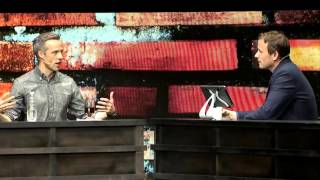
Jay Simons, Atlassian's president, discusses the company's 13-year path to IPO and why they stayed private so long. They bootstrapped, took only two secondary rounds including a $60M Excel deal in 2010, and built a sales-free product-led business that expanded from Jira into Confluence, Hipchat, and beyond.
Questions this video answers
13 years.
10 straight years of profitability.
A $60 million secondary round with Accel in 2010.
T. Rowe Price (2013); approximately $130M went to employees (secondary proceeds).
Close to 1,000 customers with ACV > $50k.
Chapters
Are you ready to have fun? Are you ready to have fun for real? Atlassian is a company that provides collaboration products to software companies.
Atlassian has generated $1.6 million in export.
Sal.
I don't want to be the one to blame you. Like fun and games. Keep playing them. I'm just saying think back then we was like one in the same on the right track, but I was on the wrong. Pretty cool.
Thanks, man.
Thanks, man.
Thank you.
Thanks for coming.
Yeah, thanks. Where am I sitting?
Right here. Sit down at the board, down at the bar. Have a seat. Well, cool. We are, we're pretty lucky to have you. Right? What about four weeks after the ipo or five weeks or.
Yes, it's all a blur about that. About that, about that. Mid December.
So good. So about a million things I want to talk about.
Spiked or not spiked. What's that? Is this coffee spiked or not spiked?
What did you order?
We've got it all. Not spiked.
Not spiked. So a lot of. I only want to talk a little bit about the ipo, but I do want to talk about time and the journey a little bit. So atlassian was what, 14 years to IPO?
13.
13 years. Right. And I think the, the co founders have been working on a prior gig together even before that. Right. So maybe 13 plus years to IPO?
No, Atlassian was the first company they started so just out of college.
So we see a lot, you know, go public early. Hurry up. Unicorn rounds are silly. It's certainly interesting the last couple days, high level question, does it matter?
It could. I mean, I think like every company is going to be unique and individual. You know, for us, you know, we've been a company that's been bootstrapped entirely from the very beginning.
Yes.
And you know, I think we took our time. We probably could have gone public. I mean certainly, you know, we had 10 straight years of profitability and 10 straight years of decent growth. So I think we had the profile of a company that could have gone public two or three or four years earlier. But we took our time. Part of it for us was getting into the rhythm of operating as a public company for a series of years. And so we practice for two years prior to going public. We practiced doing quarterly earnings calls and we practiced actually. Oh yeah.
Practice running Excel or who was on the call.
Yeah, Sometimes with the board, sometimes just internally. But I think trying to understand what it's like, what it will be like as a public company and getting into the rhythm of acting like that was part of the maturity or maturation and growing up that we felt we wanted to do. And I think there's a lot of companies that don't do that and they figured it out afterwards. And I think for some of them that's not okay. For some of them it is okay. For us, we felt like we wanted to take our time and it's kind of a measure twice, cut once strategy. Yeah.
And so Atlassian had the luck. It could have IPOed early if you wanted. Anyone can have a great IPO. Even when you hit 100 million in revenues, the big round you did was secondary. So you clearly didn't need the money. Right. So what did you just because there's so much. It's so confusing to hear the noise about Uber should ipo. What does Atlassian get out of the ipo? I mean, you get a currency for ma, but let's put that aside. It's easier to buy a company. But apart from that, what have you gotten out of that? Employees got liquidity. Right. So there was some liquidity already.
That's certainly one thing. Employees get liquidity. There's other ways for employees to get liquidity. But you know, I mean, even if you're taking kind of secondary rounds from private investors, eventually you're setting a fuse that at some point, whether you're Atlassian or Uber, you're probably going to take the public market stage. You know, you're just eventually leapfrogging private secondary after private secondary. So, you know, you're getting employees liquidity. And that was certainly important to us. We had employees that have been with the company for over a decade. In fact, we took all of the 10 year employees to New York to celebrate the IPO. And there was a big gaggle of them. And so there's a bunch of people that have worked really hard along that journey. That's one. Certainly it's a branding event for any company that takes the public stage. It was an important one for us. And so we are really proud of the customer franchise we've built, but we barely scratched the surface. And so I think there's a lot of companies around the globe that haven't yet heard of Atlassian, haven't heard of our products, and this is an amplifier for that. Yeah, I believe. And we believe that the best.
Is that true? I know it's true because you said it, but that's interesting. So even today for your target customers, you feel like brand awareness isn't in the 90s or at some level?
Well, remember, we're always evolving our target customer base. So we started at a very early age just targeting developers and software and technical teams and then expanding into it and also now expanding into every business team inside of a company. And so I think that, you know, the amplification of brand is going to help that, you know, help us kind of attack that bigger opportunity.
Yes.
So that's the second thing. I think the third thing is, you know, we believe that the best run, you know, best run companies are public companies. And so I think, you know, operating as a public company applies some pressure but also I think some discipline to how you run your business. And you know, we've always believed from very early on, early on the founders basically said we want to build, we want Atlassian to outlive us. Which is kind of a hard thing for a founder to think about from day one. We want Atlassian to be an indelible 50 year company. So we might not be selling Jira or Confluence or Hipchat 50 years from now, but we want Atlassian to be building and selling something that's sort of their goal. And so I think if you think about that journey, taking the public stage, it's hard to imagine 50 year indelible companies that, that haven't taken the public stage. And so I do think it helps kind of with operational discipline and help build better companies over the long run. So that's sort of the kind of package of reasons. And also for us it's not a lot of people confuse an IPO with sort of a terminus event, like it's the destination. If you're building a 50 year company, it's just a mile marker. It's not like people at Google today are talking about the ipo. It's not like people at Microsoft are talking about when Microsoft went public in 1986. Yeah, right. It's just Microsoft and Google and Facebook now are very big companies that focus on growth and you know, the 10 or 15 or 20 years in front of them.
Yeah. So let's, there's and I should say.
By the way, that you know, raising money is another, it's another really important kind of the fourth important reason. You know, Atlassian had been bootstrapped from the very beginning, had never raised institutional capital on its balance sheet. So we did two secondary rows, two secondary rounds, you know, one with Excel in 2010 and one with T. Rowe Price in 2013. And for us those were really intentional decisions. In part it was about secondary liquidity for employees and founders that had worked for a long time. But it was also we had no until 2010 the board was effectively just the two founders.
Yeah. So we had kind of five board meetings.
Yeah. But we had really no kind of outside, you know, advisors that were active and involved in thinking about kind of growth and hurdles.
We and let's chat about that just a little minute because it's not an uncommon scenario because we have a lot of bootstrap folks here that got to a couple million in revenue. So is that. And I've learned a lot in the companies that I've post founder, I've invested in. What do you think about having no one, no one on the board, no one to outside and challenge you? Right.
I think it's important to have outside perspective. And you know, for us it was, you know, at the. We'd just gone through 2008, 2009, so global financial crisis. Those were a challeng and we were at kind of a phase of growth where I think we've had kind of a bunch of advisors, sort of informal advisors that I think had provided input or guidance to the company over time, but not kind of really a formal somebody that was really thinking about kind of the phases of growth that we were either going to bump into or leap over. And so that was Excel and sort of the secondary end that we did in 2010 kind of gave us that Rich Wong sat on the board, super, super incredible guy and I think provided a lot of great advice and guidance. Also opened up some networking channels that might have been difficult for us to open up at the time in terms of people we wanted to hire and add to the board. Also became kind of a branding opportunity in 2010. Atlassian had been this company that had flown under the radar for a long time. And the $60 million round in 2010, even though it was secondary and didn't hit the company's balance sheet, it was the single, it was the single largest venture capital round that Excel had done.
It caught my attention at the time.
Right.
It caught my attention. Yeah.
It was like, wow, here's a company that people hadn't heard of. And why is all this capital going to even at the time, just founders, why is it going to the company in 2013? The other secondary round we did was to Reprice and that was intentional because what we wanted was again, this is part of the kind of measure, twice cut once approach. We wanted to understand how big institutional investors thought about the business. And so what we wanted with T. Rowe Price, even though that round, it was like 130 went all to employees, again didn't go to the company what we got in exchange for that was a deeply experienced institutional firm that we could spend time with and understand the questions that they asked, how they thought about our business and what that would look like. Because we were about to take the public stage and. And by several orders of magnitude add a whole bunch of other institutional investors that would think about the business the same way.
That's cool. So I want to talk about a topic that you've talked about ad nauseam, but I want to take sort of an approach that's focused on the founders, which is sales free models. And you have a fascinating background if people don't know it because you have an enterprise sales background. So for real, I think you've carried a bag or you've come close to it. Right.
I did started in enterprise software. Carrying a bag. Carrying a bag in the first seven years of my career was hard slog and enterprise sales.
Yeah. And so I want to just hone in on a couple things on it specifically. So look, everyone in the world, no matter. And I love sales and you have a passion for it. We'd all love to not have a sales team for no other reason than cost and overhead management. Right. It's alluring the idea of having this. But I want to dig in on a couple things. First of all, to be clear, it's not a human free business. Right. We have a lot of happiness offers. We do have a lot of folks at Atlassian engaging with customers. A lot of folks. Right. And it's hundreds of folks.
And we have a channel which we'll get to in a second.
And we have a channel as well. Right. In their own way, they're selling hard. The channel.
Absolutely.
Yeah. How does that. And I know you thought a lot about this. In my experience, as the deal size goes up, you're leaving money on the table, which may be okay. Right. Because it may be a trade off because Atlassian was minting cash and many peers are not. But is that clear to you? Because I forget you have I don't know how many customers in the S1 that are over 50k ACV, but it's a lot. I think it was close to a thousand.
Close to a thousand.
Right. 50k. Customers don't mind being sold to even if they're IT or product centric or dev centric. Right. They don't mind being sold to, I think.
Correct.
So for folks here, what's the trade off? What are your Zen learning? Obviously Atlassian's a huge success, but what's your advice to folks?
Well, first of all it may be possible, may be probable in our business that you're achieving the same lifetime value of a customer over a longer period of time. So people always say to me, don't you think if you spend a bunch of time in a particular account that you could pull a lot of that revenue forward? Yes, and I do believe that's true. But oftentimes when you do that, you create worse long term value for your company, better short term value because you're pulling all that revenue forward. So even in the case where we're trying to get to a million dollars in kind of annual customer spend, we do that over a period of years at far more efficient, less upfront cost. So the other thing is that when you think about the recipe for our business model, it's not as simple as don't have traditional quota carrying sales reps. It's not that simple at all. When we think about our model, first of all, we started with size of the market. So for us, the market's huge. Like we're not targeting the Fortune 500, we're targeting the Fortune 500,000. Like we want to sell our software to every single company on the planet.
Yeah.
If we were targeting the Fortune 500,000, we would have a completely different model. Right. We'd be workday.
Yeah.
Also like the nature of how we enter inside of our organization is different. Like companies that buy our software, you know, when you buy workday as an example, you're only going to buy one of them. You're not going to have kind of multiple HR management systems, you're not going to have multiple general ledgers. You buy one. Right. So that is a very explicit top down sale. I'm going to talk to executives in the company and there's a whole business case around the one thing that we're going to have. We sell team software. So first of all, we enter inside of the team and you could have lots of teams that use different technologies and that's okay too. We want to cement that one valuable landing spot and then expand over time. And so top down is really hard to do that way. So first pick a market, it's huge. And then build the product to reach that market. So for us, we, we focused a lot on building a product that teams or customers could get started in minutes. And we priced it for affordability. So we thought, okay, if it's a really big expensive cost, we're going to have to explain why it's expensive. Right. So you remove friction with price and you create still future opportunity that you can capture over time. So we want the ability to expand either with additional usage and seats, or we want the ability to expand with additional products that we could sell the customer in the future.
Yeah.
And then the fourth point, and this is all a careful chemistry, the fourth point is you have to remove as much friction as possible from the customer's path. And this is, I think, what's really hard. In a traditional sales model for us, friction meant removing. Friction meant publisher price, publish every single price. Don't have a contact us to figure out how much it is, because that is a friction point. So publish every single price. Let the customer try it, you know, kind of on their own terms without needing to engage us to figure out what they're trying to do with it. Invest as much as you can in the product to make sure that that trial experience converts without a lot of hand holding and create. As you mentioned, we've got a number of people inside of the business that are focused on, we call them product and customer advocates that are focused on helping answer questions the customer has. And so we say to every single customer, if you need extra tlc, let us know. We'll bend over backwards to help you. The difference is that in our model, we identify that as kind of a bug in the model. It's something that we need to fix in the future. We don't want every single customer, if we're targeting 500,000, to have to raise their hand and for us to engage. We want to figure out what was the problem that the customer needed human help solving and how do we solve it for the next499,999,000 customers in the future. It's been 13 years where we're consistently improving, refining, improving, refining, experimenting. And you know, we do, I've said this before, we do a lot of experimentation with sort of traditional approaches. What happens when we pick up the phone and call every customer and really try to sell hard, really try to pull all that value forward and you can do it. The challenge is, does the cost scale? And I think when you look at a lot of SaaS companies, that's where they get into some challenges where your sales and marketing expenses are way out of band with your top line growth.
Yes.
And the trade off, remember, in most businesses is something has to give for you to make money as a business. You either give on sales and marketing costs, you either make more money on top line, or you give on other functions of the business like R and D. And it always seems strange to me that for a SaaS company for a software company building product, that your sales and marketing costs would be twice what your R and D cost would be. And I think if you look at a lot of companies, they have, you know, they have, at least from our perspective, they, they have it inverted, right? We spend twice on R and D, you know, that we do in sales and marketing.
So that is amazing.
There's a long.
Let me dig into that a little bit for the founders here, right? So once we all get to a million or 2 million revenue, we figure this out. Oh my gosh. You know, sales and marketing, even if it's accretive, right? It should be accretive if it's done right. But it's expensive and it's hard. So I feel like Atlassian is the new base camp. And let me explain what I mean by that for founders. So a couple years ago, before, before you raised the 60 million or whatever, when I used BitBucket, but I didn't even know that it was an Atlassian product, right? All founders would talk about, I want to be like basecamp. I want to just be on my own and build cool software and I don't need salespeople. And now everyone wants to do the Atlassian. Now we get it now that. I mean, Atlassian's huge, right? So we all want that. But when you meet with founders, where do you advise them that, hey, we're not, we can't all do this, right? Not every, I mean, Salesforce is a success. The workday is an extreme because we're all doing eight figure and up deals. But when you meet with founders, where do you tell them, hey, slow down. Like, even if you're doing a developer centric product, don't copy our model, right? What's your advice to developers?
Well, part of it is just the ingredients that I mentioned earlier. Like, think about your market. If I'm ServiceNow and which is a great company and really only trying to sell a massive piece of software for a massive project to 2,000 companies, we have an equivalent product that we're trying to sell to 200,000 companies. And so the strategies that both of those companies employ are vastly different. Right? Like we'll, you know, in any given period, we'll probably have as many service desk customers as, you know, it was kind of a new thing.
The next generation of the web was brand new.
And so AdWords was sort of effectively a new approach to kind of reach people that were looking for something that you had. And so they really instrumented that effectively. But the first Handful of prospects we spent a lot of time with in 2002. But they were focused, I think because they were engineers, they were focused on doing what I mentioned earlier, constantly trying to improve. Say, why are we engaging? What questions are we answering? How do we answer that to begin with? And this is where I tell founders, think about that. Once you hire your first salesperson, is all of the energy, the emphasis going to be on scaling the human approach or figuring out how to take what you can from that human approach? Because it might still scale to a certain point. But if your market is 500,000 people, you know, 500,000 companies or 100,000 companies or 2,000 companies, is that the most efficient, best approach to sort of reach them?
Yeah.
And everything is needs to be calibrated, right. Market, pricing, products like it's not as simple as, you know, traditional salespeople or no traditional salespeople. It's a lot more complicated.
And.
And then the last thing I'd mention is we have a channel we chose really early on where there were opportunities that needed more human touch. How could we do that the most efficiently? And so in some ways, we ripped the Microsoft playbook of the 80s and 90s, which is like we hired. There's a firm service rocket in Australia that I think has been a partner of ours for over a decade and serviced in New Zealand. There were partners in France and Germany. And so we didn't speak French, we didn't speak German, but we had people that did. And if you think about it like our sales force, we've got 2,000 salespeople that are out in the field. They're not employed by us, but they effectively. They're the same job.
They're salespeople. Yeah. So I'd love to talk more about, but I want to talk about a related point. I remember I could never. I tried to Google this, I couldn't find it. But I remember a few years ago, someone on the senior team said one of the most important things that lasting ever did was have more than one product. Right. And I haven't looked what the revenue mix was in the IPO, but you've got at least three of the four that are material.
Right.
That are over 10% of your revenue, I think.
Correct.
So, boy, as a founder, that's intimidating. Right? How. And so like, how do you, especially for the management team, how do you focus on four products? You can't, you can't put 100% of your time. I mean, it's a myth. You have to force rank things and doesn't number four? Isn't number four gonna fail as the competitors get more aggressive? And how do you juggle four even without the sales team? Which helps a little bit because this way you don't need four sales teams. Right. But isn't it a challenge as well as an opportunity?
Totally is.
And what's the advice? Right. What's the advice to folks?
Hindsight being 20 20, it's easy to look back and say that was a great decision. The founders will say they started lasting with Jira in 2002. Confluence, which is the next biggest product they shipped in 2004.
Yep.
And they did it really to scratch their own itch. Right. So at the time, you know, they were using a bunch of open source wikis and they didn't like them and they thought, well, we could build one better. And it probably, I think there was, at the time there was a debate between, you know, the two founders around, man, shouldn't we really just be doubling down on this? This is a huge opportunity and I think in hindsight it was exactly the right decision to say let's sort of divert engineering focus a little bit, build a second product, identify, you know, like discover whether or not we have product market fit for this thing, which they did, and then kind of double down on two products. Had we not done that, Atlassian would be a vastly different company. Right. You know, Atlassian, Jira is a great product, it's a big product, but it is not, you know, I think Atlassian is a much bigger company as a result of expanding product strategy. So that's sort of the first part.
And again that is challenge me a little bit. Imagine. But Jira is a bit, and I don't want to get anything that hasn't been disclosed. Were the revenue breakdowns, are they published publicly or not? No, but Jira is a big platform, right?
Yeah.
So what if just hypothetically you'd done nothing but Jira, Jira wouldn't be even better. Wouldn't it be even more robust? And I mean it has high market share, but wouldn't it even have more market share? You don't think so hard.
It's a hard, you know, it's a hard hypothetical debate to have. I mean, I think like the other part of the question that you asked that I was going to answer is like it really, for us, it really hinged around product strategy. Like we, we think about the team. And so for us, every team, irrespective of whether they're building software or selling or marketing, needs a place to Kind of organize what they're doing together as a group. They need a place to discuss it, which is what hipchat does. They need a place to create and share content, which is confluence. And so that sort of triumvirate, I think of that as the three legs of kind of a team collaboration stool. And, and so we've really focused on kind of building out all three legs. And I think we're less of a company if we only have one or two legs.
Yeah. And I should know this, but I don't. How much organic or inorganic cross sell do you get across the suite?
A lot.
A lot. And how does that happen? How does that. Because we all like to think that cross departmental or cross product expansion happens. But in my experience, usually the HR department does not go to the VP of sales and tell them to go try this product they love. Right. And different products are same as different departments. But you might have a CTO that loves hipchat, but they didn't use JIRA at their last company and they don't want to learn jira. Right. And so how does that happen?
So for us, a couple of ways. One, there's just natural, there's natural network effects built into our software because we're team oriented. Right. And remember, even if you're in marketing, you're not part of just a marketing team. You're part of a whole bunch of different projects around your organization where you get exposed to what we do. When you do and you like it, you pivot around to the other teams you're working with and you say, man, what they're doing over there that I was a part of, I really like, let's start using that. That's how we get into hr. So we don't necessarily have to land inside of hr. We can expand because someone in HR gets exposed to jira, Confluence and hipchat and says, man, the rest of us have to be doing what they're doing. So there's kind of a natural, organic word of mouth expansion that exists. We try to aid that with some things that all of us do, like email. We try to say, hey, did you know you who are our. They are so like end user. NPS is probably the important leading indicator of future growth. If your end users aren't happy, even if I'm a workday user, and if I'm not happy long term, that's not a great thing for workday, even if the HR person loves them. So we sort of think about it that way and then we've put a Bunch of hooks in product to kind of point people to other things that they could do or use or trial. And if you think about it with, you know, we've got 50,000, 54,000 active customers now, that is the best way to canvass that opportunity and to expand it. It wouldn't necessarily be to pinpoint one after another after another. And so back to R and D. We invest a lot in trying to figure out what is the most efficient vehicle for us to expand the fastest, the biggest audience and everything we do is about that.
And then just one last question on this. I'd love to spend forever on it, but I want to hit a couple. But for the core four products and the management team, when you're thinking about products strategically, how much time do you spend on each? How do you divide up? There's only so many hours in the day. Right. And so how do you think about force ranking your time and effort? Is it just based on revenue or how do you do it? Do you have GMs? I'm sure you have GM for each product.
No, I do. And it's based on kind of a combination of market opportunity and you know, market strategy, competitive strategy. Like, you know, the priorities are going to shift around depending on kind of the given market or product or priority. I got, you know, we do, we do focus on making sure like the thing for us now. And I mean this is probably true when we were a lot smaller too. Like you think about the quantum that a product's going to contribute and you know, the size that that can grow over time. So like in our model we often talked about early on that sort of used this, the metaphor of a snowball rolling down the hill. And so if you think about it, every new product is sort of a new snowball. And what we try to do is like you either launch more snowballs so like they start rolling down or you take the overall slope, which is like the investment that we would make in kind of automation or end user engagement or kind of smart recommendation strategies in product. And that steepens the slope. Right? And so the steeper the slope, the more any individual ball, if we know that it's going to get all the way down to the bottom of the hill, it's got a big market. The more snow it accumulates. And so we're not going to drop balls at the top of the hill that we don't think are going to turn into big snowballs. And then at the bottom we can build snowmen. I don't butchered them.
Oh, It's a good one other thing on complexity, I want to make sure before we run out of time. So Atlassian is interesting because it has multiple products. It's also interesting to me that you have multiple ways that you sell that software. You have on prem, you have services, you have channel, you have hosted SaaS. Right. You have about every box at the moment that you could check on the panoply of ways to deliver software directly, indirectly. So high level, my view is, does it even matter? Right. And a lot of founders are like, I don't want to have services, I don't want to have pro serve, I don't want to do this because I've got to be in this narrow box. But Atlassian, you know, and it's evolving, right? It's going to become more and more SaaS over time, but today it's the whole kit and caboodle, right?
Well, the answer to that question again largely is answered by our kind of origin. And when we started so in 2002, we started kind of in a market where I think SaaS was a less common adoption pattern. Certainly even scary, even Scott scary. Yeah. And so we started shipping behind the firewall server software. And so because we started there, we're really good at it. We know how to do it. We, I think kind of read the tea leaves early enough where we started a SaaS business now close to 10 years ago. And so, you know, our SaaS business on its own is a really big SaaS business. But I think we figured out, which is hard to do, how to thread both of those needles and not have it be a distraction or not have it be a weight that slows the company down. And you know, it's a tricky thing to give people advice. You know, should I have started a SaaS business, should I go behind the firewall? You know, that's there could be some trade offs there that I think every single company needs to think about carefully. And you know, overall the market as most of us know in the room is like moving towards cloud. And so I think you have to look at your individual market segment, private.
Cloud and hybrid cloud. So it's getting simpler and then it's getting more complicated as it gets simpler.
You know, it's been good for us. We've been able to kind of attack a wider segment of the market because, you know, we've figured out how to, how to support both deployment choices. And again, like in removing friction, which is sort of like the mantra of the business, we simply present that to the customer as A free choice they're going to make on their own. And so if they've got an IT department and infrastructure and they're more comfortable installing and managing server there, great, let them knock themselves out. If they want us to do it and they want us to run it on our cloud platform, great. And we kind of don't care either way.
Yeah. One last question. I feel like I'm just getting going on the stuff I want to learn, but I want to. So atlassian's blown through 100. It's blown through 300 million. I have this thesis of how far you can squint and see on the horizon. I think you can squint about 10x and you can feel about 3x. Right. And so what, you're looking at a billion, which is a scary number, probably. How big was the last thing when you joined in terms of revenue?
Like 20.
Okay, so billion's a big journey from. So what's going to change at a billion? Do you have a sense, does anything have to change outside of bringing in better talent? Or what does the world look like out there at a billion in revenue?
Oh, man, if I had a crystal ball that told me all that.
Well, you know what it looks like next quarter?
Yeah. I mean, I would just say like. So, absolutely, there's going to be change. There's change. There's change for every company as it, as it sort of crosses a bunch of big milestones. And so there's going to be change around the size of the company and the number of Atlassians that are working together. There's going to be change potentially in markets that we kind of thrust into and how our products need to evolve. I can't predict all of the changes, nor tell you exactly what they will be, but yeah, there certainly will be some.
Well, let me ask you a final related question to it. In this whole journey of, of webification, of everything, of Sassification, everything, as atlassian's gone from B2D to product to it in this whole thing, what inning do you think we're in of this journey for everything to become webified and Sassified? Where are we in the second inning, the fourth inning? How does it feel having Atlassian been on this journey for a while?
Inning 1 or Inning 2?
Inning 1 or Inning two?
Yeah. Very, very early part of the game. Very early part for sure.
Yeah.
Yeah.
So a few down days in the market, no big deal, right?
No big deal.
All right, my friend, thank you very much. This is epic.
Yeah.










