Journey to the Billion Dollar Exit with ServiceMax and Emergence Capital
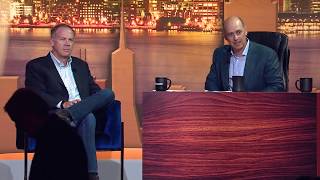
A recorded conversation (panel/interview) between Jason Green (Emergence Capital) and Dave Yarnold (CEO of ServiceMax) recounting ServiceMax’s journey from a tiny field-service SaaS startup to a billion-dollar acquisition by GE. Key themes: early-stage conditions (fall 2008–2009) when ServiceMax had ~5 employees, ~20 customers and ~$0.5M ARR; the decision to hire Dave as CEO in March 2009; culture-building through explicit values, ride-alongs, and company rituals; recruiting senior talent and aligning the organization with mission and customers; building a strategic relationship with GE (pilot → 13-division rollout → strategic investment → eventual acquisition); and managing integration to preserve growth (achieved ~85% growth in the first year post-acquisition). The talk emphasizes respect, customer immersion, mission-driven recruiting, and proactively shaping acquirer integration.
Questions this video answers
Approximately 5 employees, about 20 customers, and roughly $0.5M ARR (fall 2008).
Dave joined in March 2009; the S&P was at about 700 (a 20-year low).
Rollouts spanned 13 different GE divisions.
Approximately 85% year-over-year growth in the first year with GE.
He kept the same values slide (refined visually) in every company meeting presentation for about eight years.
Chapters
Please welcome jason green, founder and general partner at emergence capital, and dave yarnold, CEO of servicemax.
I don't know who Zad is, but not mine.
Wow. Hi.
Wow.
This is. I feel like I have my own talk show. This is awesome.
This looks like one of your Emergence portfolio events.
All these SaaS people here, this is my crowd. Hi, everybody. I'm Jason Green, founding partner of Emergence Capital. We were early into the SaaS space and got very lucky and fortunate to back some incredible founders and entrepreneurs, Dave being one of them, originally at SuccessFactors and then at ServiceMax. And we were also investors in Jason Lemkin's company, EchoSign. And I want to say how incredibly grateful I am to Jason for creating this community and being willing to share his wisdom with all of you. It's really created just a diaspora of SaaS around the world and it's really fun to be part of that. So, Jason, thank you for everything you've done for SaaS entrepreneurs around the world. I'm really honored to welcome you, Dave, to the stage. Dave is and was CEO of ServiceMax. He's a really unique individual. Not only a wonderful human being, but pretty unique pedigree. I mean, this guy has been responsible not just once but twice for building a billion dollar plus SaaS company. He first was global head of sales at SuccessFactors, which he took from, I don't know, maybe 1 or 2 million in ARR to over 100 million in public company. And then we were lucky enough to recruit him to become CEO of ServiceMax, which at the time was a very small company, less than a million ARR and grew that to now, I'm certain, well north of 100 million plus in ARR. And we were celebrating this past week with a year anniversary of the sale to GE for a billion dollars. So congratulations, Dave, on an amazing. I'm sure everybody in the crowd wants to know, what does a billion dollars feel like?
Relief? No, it's something, it's interesting, it's, I guess, the pot of gold at the end of the rainbow, but it was also indicative of what we were trying to build at ServiceMax. And I was telling you the story that even from the early, early days when I was schlepping back and forth from Santa Clara, when we were less than a million dollars, well, less than a million dollars in ARR, my brother and I used to text back and forth while I was driving. Back in the days when I did that one B, it was basically one B. That's all we would text back and forth and me, it was like, I'm going to do this. And for him it was, you can do this. And so, you know, just visualizing your dream, it was the, you know, the ultimate realization of building something significant that delivered a lot of goodness to, to all of our stakeholders, our employees, our investors and our customers. Something that's meaningful today and will be meaningful going forward. And that was something that we were trying to build.
Yeah, we're going to get into a little bit of the story of how you got there, but I do know Dave just got back from Hawaii and you were probably drinking margaritas on the beach and you deserved it. So that was awesome. But you know, it's always easy in retrospect to kind of look at the success and assume because when you look back retrospectively, it looks pretty linear, but it was definitely not linear. And in fact, to rewind the clock a little bit to the fall of 2008, the backdrop of the financial crisis happening. Those are when the discussions about joining ServiceMax started and the company had five employees, about 20 customers, you know, half a million in ARR. We had put a term sheet in to invest a couple million dollars at a, you know, 5 million ish, whatever, pre money valuation, so very early stage, but immediately knew that we wanted to bring on somebody like Dave. And so we, I think we started recruiting you literally before we even closed close the deal. And it's really hard to reflect on this, but back In March of 2009, when you joined the S&P was at 700. Okay, a 20 year low. And we're closed now at whatever, 2700 in the S and P. Right. So it was not a pretty big.
Falling apart at that time.
The world was falling apart.
Folding. It was crazy.
And here you are, you're coming off the success of success factors. You made some money, you built a great company there. What on earth gave you the confidence to join this tiny little startup?
As you mentioned, I had been a part of some great companies and I had had some great mentors. I learned a lot going all the way back to the early days of Oracle where I was part of the initial applications team there. So I had acquired a bunch of viewpoints and skills that I wanted to apply and build something great. I wanted to recruit some of the folks that I had worked with who had helped make me successful and with them just build something that we could all be proud of. So I was hell bent to do that at that point in my career. And you know, I came to you actually. We had Worked together in your role as an early investor at SuccessFactors. And I told you I wanted to do this. And it was great to sit down with Jason and his team at Emergence. They had a tremendous portfolio of SaaS companies in various stages of maturation, and really kind of look at where might I be able to add value and focus on this dream that I had.
Yeah. So when we invested in the company, they had. They had several founders, wonderful guys, two of whom basically made this transition with you and ultimately were there, really through the end, all the way through the acquisition. It's one of the things I'm really proud of, having seen you make that transition successfully with the founders. Can you talk a little bit about what did you do to set the table there for that relationship to blossom like it did?
Well, first off, I was very fortunate. The founders of Servicemax, Hari Athani, amazing, intelligent, driven. They knew the domain so well that I needed them. But I think when I think about our journey, a lot had to do with our core values. And my number one value in life is just respect. And so applying that to my relationship with Hari and Athoni in particular, respecting what they had done, the risks that they had taken, putting their houses up, you know, mortgaging their houses, taking all the money that they had in prior businesses, and believing in building, Building a product. So I respected that. I made sure that throughout the history of the company, they were the founders. I'm not a founder. I worked with them from the early days, but I respected what they had done and the risks that they had taken, and then their knowledge and domain and their ability to connect the business issues to the solution and make that work for our customers. I had a lot of respect for that. I also engaged with them throughout the nine years that we were together. Every significant decision that we made, whether it was a strategic decision, a product decision, we worked on that together. So we had this little informal strategic council that I never made a significant decision without soliciting their input and taking that input seriously. So I think it was just respecting and collaborating with, fortunately, some amazing people who were like brothers to this day.
They're wonderful guys. And they're off now, probably starting their own companies. And so you should feel very proud.
Foundations and doing really cool stuff.
Great leaders develop people into great leaders, but they also attract other great leaders to the company. And I've actually rarely seen somebody attract the quality of the team you did as early in the. The history of the company. Talk to us a little bit about how you did that, how did you attract these folks to come join you and was it the right decision to bring on that high powered group so early in the life of the company?
Well, I will say that wherever you are in your career, apply the golden rule. Respect the people around you. Don't burn bridges. If you're a good collaborator and a good person, that down the road, when you start to look for great people who can help you be successful, that's going to play well for you. I was fortunate that I had done that. And as I was kind of pulling this dream together, there was a dream team that I had envisioned bringing together to do this. You can't do it on your own. You've got to have a great product, great founders and then some great teammates who can do great things. So I had this vision of creating a great company, a great place to work, a great company culture, and then you have to have a mission, you have to have a market that you believe in and that you can get your collaborators to believe in as well.
Let's talk about that a little bit because no disrespect, but field service applications, maybe not the thing everybody wakes up in the morning going, I want to dedicate my career to field service.
Right?
How did you make that sexy and exciting?
Every discussion started with, okay, Dave, really respect you, but what the hell is field service? And why should I be fired up about that? So, you know, I think a big part of a leader of any enterprise SaaS company, you need to understand who you serve and what that market is. So fortunately, when I dug into it, the enterprise field service market is massive. There's probably more than 20 million potential end users around the world, more field.
Service users than salespeople.
From what I understand, in many countries, yes, service is a big priority, becoming the majority, it's going to be the majority of revenue generated by most manufacturers over time. Ge, which bought us more than two thirds of their profits and come out of service, you need to know that stuff and be able to sell it initially to bring a team on board. So you have to know the market opportunity, but you have to be able to talk about the type of company that you want to build, the type of values that you're going to build the company around, and ultimately those couple of things combine into a mission that you commit to and get everybody committed to.
How did you make that real? The mission? Tell us about some of the techniques you used.
So it's interesting, for many SaaS businesses, we're able to apply something that we all call eating your own dog food. Right. So you use your own software and you have a good sense of what could go wrong and where you need to fix the product. Well, our customers, they go out and fix things like oil rigs and power generation plants, things like that. There's no way we as software folks are going to be able to eat our own dog food. So. But we really needed to embrace the domain, one of the core aspects of this company. I think that one of the core things that any SaaS business should aspire to do is capture the hearts and minds of your core market. So how are we going to do that if we don't really know what those folks do on a day to day basis? So we did a number of things. First off, I hired some folks out of the industry who had walked in the shoes of the folks that we serve and they were passionate about that industry. They brought a level of knowledge, domain expertise to the company. The second thing, I kind of.
From one of your customers too, right? I mean, one of your hires.
Yeah. One of the people I hired who was a key hire was running the European service business for Pitney Bowes. He ran a thousand technician workforce and he and I hit it off. We had a lot of things that we believed in in the service business. And I said, you need a change in your life, you need to come work for us and be an evangelist for how we can improve organizations like yours, which we had been doing for them. One of the other things that was really interesting is I really wanted to get a sense of, of who's using our software, what do they go through on a day to day basis. So I started when I would have meetings with my customers, I'd say, hey, can I go out with your guys? Can I go out and see what they do, what they're fixing, what they deal with on a day to day basis. And of course customers are like, yeah, that'd be great, thanks for having an interest. So I started going on what we called ride alongs and it was amazing to see the business from the end user's perspective, see what they were dealing with when they were using our software, which wasn't always perfect, right? You don't, you just don't know until you actually live the life with your customers. So I love this so much. I came back after a couple of ride alongs and I said, everybody in the company is going on a ride along. So I had everybody going out.
Jeff Bezos, who makes everybody answer a customer support calls, right. I mean it's getting, getting real with your customer.
It was an unbelievable experience for the entire company. For all of our employees, they'd go. We actually ended up with a form where they had to come. They had to learn things about the customer and share that with the entire company. We had a whole group set up internally to share and lots of great stories. The last thing I'll say, so I tried a bunch of wacky stuff. I don't even know if I've shared this with you, but one year I came back. I'd always go to Hawaii for the holidays, and the team would be like, he's taking time off. This is going to be bad. Because I'd always come back with crazy ideas. So one day, I get back from Hawaii, it's like, January 2nd, and I said, okay, so we're going to turn the entire company into a fantasy football league, basically.
You haven't told me this one.
Have I told you?
No, you have not.
So basically. So the biggest challenge as you get bigger and bigger is to get people aligned around the things that matter. Get everyone to focus on your customers, on your salespeople. And doing that cross functionally is hard. As you get bigger, everybody gets into their silos. So what we did was we had team captains, eight of them, from around the company across different functions. And then at our kickoff, we had an evening event where we actually had a draft. It was like the NFL draft. We had hats for all the teams. So we basically had. We drafted salespeople, right? And so the salespeople were all on different teams. They all got hats. We had. The whole company then was allocated amongst these eight teams. And every month, there were prizes. There were points mostly for closing sales.
Right?
So we got everybody on that team focused on, how are my sales folks doing? What can I do to help them close more business? But then it also gave us a lever to say, hey, this month, we're gonna do penalty kicks, and we're gonna get points for getting signups for our customer conference or we need NPS feedback. So it gave us a way of getting everybody aligned around the things that mattered. And it was a fun experiment. At the end of the year, the prize was big prize. Somebody actually got a car. So there was actually something in it for the team that.
Not a van. Not a van.
Not a van, Not a smart van. But. But, yeah, no, that's. So it was pretty interesting.
I mean, you can see Dave's customer passion, like, just flows through him, and he's excited and as passionate about building the company as he is about building a Product. And I think that that's important. And culture, you know, it gets thrown around a lot as a term. How important is it, do you think, really? And what did you do to actually make sure that your values were being inculcated into the. Into the company?
I think it's huge, especially when you go through the dips. It's the fabric of the company that binds everybody together. And so I'll talk a little bit about culture. Everybody has their own. Own perspective on what that culture should look like. And I don't think there's any right or wrong one, but I think that adopting one and then being consistent about it over a period of time yields a lot of dividends. So I'll tell you, the story of how ours got started is, you know, I had a lot of ideas, but it wasn't necessarily going to put it on paper. But our first, I don't know, first month or so in the office, one of our, I don't know, eight employees there said, hey, you need to start communicating like a CEO. When are we going to have our first company meeting? We were in an office about the size of the stage. I remember it. Yeah. Except it wasn't as cool, but. And so, all right, company meeting. I'll do that. I'll put together a PowerPoint, talk about my kids and where I came from and what my aspirations were for the business. But then I also put together a story slide that said, all right, how are we going to behave as a company? How are we going to interact with each other, with our customers, with our partners? And I just threw a few things down that were important to me in life. I talked about respect. I also am a big competitor. I want to win. I want to. And I wanted to explain what winning on a big scale, what that was going to mean, not only to the company, but to each of them individually being a part of that.
So.
So I had a list of seven or eight how I want us to behave. And I put that on a slide. I talked about it. Hey, this is a little bit of me. This is how I want to operate. And about a month later, it was time to have another company meeting and had a whole bunch of other topics. And I said, maybe I'll throw that slide in again and just kind of make a couple of. Emphasize a few of those points. I had that same slide, different fonts, little prettier over time. I had that same slide in every presentation I gave at every company meeting for, like, eight years. And there were times when I said to my Team, hey, this is feeling a little hokey to me because I've, you know, I try to keep it fresh and emphasize a few different points, but should I stop doing this? And my team was, no, no, no, no, you need to do more of this. This is what people believe in. And look, we stood behind those values very early in our history. We had an engineer who was verbally abusive to other people, not being respectful. One of our best people out.
I remember a sales executive.
Sales executive who generated half our sales in one of the early years. Again, disrespectful. Out. If you walk the talk on your culture, stand behind it. Everybody knows what they should do and why they should do it. And it empowers the entire organization. And everybody feels good that, hey, you know, we're going to act consistently, we know what we believe and we know how to behave. Everybody feels really, really good about that. Well, and it doesn't have to be my version of the slide. It has to be something that you stick to, that you're consistent, that you stand behind that. Everybody understands it and buys into it. And then it's the core of a good culture.
So it's always this kind of tension between performance and culture and you made some decisions obviously where the cultural fit wasn't there to sacrifice some short term performance for long term success. There were a couple situations where things were individuals were topping out on the executive team. Tell us a little bit about how did you know when you needed to make a change and then how did you do that in a way that didn't ripple out into the rest of the organization in a negative way?
The honest answer is sometimes you can see it, but a lot of times you don't see it. And I think this is one of the biggest blind spots that you can have as a CEO is you've got this team.
What's the tell though? What's the tell?
Yeah. So look, the tell is when you're struggling as an organization, you start to see where certain parts of the organization are falling behind. But you still can justify keeping your team in place. You can still kind of get yourself there. That's why I think it's really important to leverage some of the folks around you. So I had a couple of, you know, first off the board, the board's input. It's painful at times to hear from your board like, hey, Dave, maybe you need to think about a change here. We're seeing it. We see, we sit on a lot of boards, we've seen a lot of companies. So having that feedback is important.
You had the mentoring, that mentoring group, 10x. Right?
And then. Yeah. The second thing that I would mention is that I was part of. Jason actually introduced me to a gentleman named Mark Hilo who runs a methodology called 10x CEO. And his premise is that CEOs should focus on a few things at any point in time and actually focus on a certain set of skills based on the size of the company, and that focusing on those things will result in inordinately positive results. And part of this was I was part of a group of eight CEOs that every quarter I would kind of walk through my business. This is not a social thing. This is very rigorous. And I bring my business and I talk about my team. And it's amazing when you sit with a group of folks, you can tell when it. When somebody's team is weak and it needs to be changed. So I got a lot of feedback from what was like a second board for me. I'd have a second meeting where I'd have to go through my business with a bunch of CEOs that I really respected who had come to know my business. That was a really valuable.
Yeah, I love the forum group, both methodology and structure of peers who have mutual trust and are willing to give you that feedback. It's very, very powerful. I wanted to shift a little bit to the GE relationship because every entrepreneur is out there building their business. You're growing the business, you're raising money, you're doing the right things. Ultimately, if you get investors involved, you need to generate returns. You know, we aim to try and take these companies public, ideally, and build really independent companies. But this is clearly was a great outcome. Tell us about some of those key evolution steps of building the trust required for somebody to pay a billion dollars for your company.
So it started. I don't know if you remember. You probably remember this really early on. When we were still in Santa Clara, we got our first deal with GE. It was for like 150. No, it was like $25,000. It was a little pilot. It took us a year to close. We're really proud of that. I mean, GE is. It's an icon of. Of global business, despite what it's going through today. It's just one of those great companies very focused on service and really felt like we could do something to help them with their business. That was a point of pride for me and for the company. I stayed really involved with that early implementation, got to know the local cio, built a lot of relationships across the company. And I think the relationship that we established with them was that one, we were trying to do great things for their business and two, we were just really transparent and flawed and human in our interaction with them. They believed they could trust us and it was really interesting. Over time our competitors tried to undermine us with some, I'd say, less than honest tactics.
Never happens, I'm sure.
Right, right. Little fud here and there. And the fact that we were so honest and again, not perfect, but committed to doing the right things for them. We just built a great relationship. Now, I never thought it would end up at a dinner where the CFO said, hey, how about if we help you grow this business? We do this together because we really understand service and we believe in the potential of this business. But that wasn't why I was so committed to it. It was a great company that was, it was the epitome of what we were building the product for, which was large scale enterprise field service with 40 to 50,000 field techs supporting things like oil rigs and MRI machines and wind turbines globally.
So they started out as a pilot customer, then they were significant customer in a division and then you rolled out to multiple divisions.
13 different divisions.
13 different divisions of GE, then they became an investor in the company.
Yes.
Right. We raised a strategic round with them and ptc, I think, and others. Right?
Yes.
And then ultimately, and I do think like companies generally aren't sold for a billion dollars, they're bought for a billion dollars. And the reason they're bought is because they believe you're going to fill a strategic need for their organization going forward. I think you had those trusted relationships and you built that vision and they.
Were building a software business and the, the fact that we had software that was geared around what they do to make a living, which is do large scale service customers contracts and deploy tens of thousands of field service techs. If they're going to build a software business around their core competency, this is it. So there was tremendous overlap in terms of how we saw the business and how they saw the world.
I know we're running short on time. There's so much to cover. Tell us a little bit about looking back now, the process of actually selling the business now having been integrated for the last year. Any thoughts or words of wisdom from folks about Reflections now seeing one of the largest companies in the world and how they operate and the challenges you faced as a startup entrepreneur in terms.
Of the integration process or the acquisition process?
Yeah, I would say you set it up well for the acquisition, I think you put a lot of effort into making it successful post the acquisition as well, and I think that was a really intentional thing.
So I'd say it's easy to assume that your acquirer knows exactly what they're going to do with you after the acquisition. And some of the acquirers, we've all heard Oracle as a process and Cisco as a well defined process, but a lot of companies don't have an incredibly well defined process. And I think it's easy to just be lambs to the slaughter and just let whatever happens happen. But the team, we had pride in what we had built, and we wanted to have influence over GE's business. So we did in two stages. Going into the acquisition, we said, this is going to be our strategy around product, around culture, how we were going to maintain the goodness of what we had built, but also be respectful of what we were being acquired into. And then also we had a really clear strategy on how we wanted to influence GE's roadmap. So that was stage one was actually saying, hey, we're going into this thing. We can either go in passively or we can go in with a point of view. And we went in with a point of view, and it was well defined and we shared it with the company. I think once we got into the process, then what happens is you have these integration teams that come and they have their clipboards and their checklists and all this stuff, and you find yourself just allowing that to happen. And after about a month or so, I said, this is going down the wrong path. I went back to the CFO of GE and said, let me just reaffirm what is the number one objective here? And it was growth. And they wanted us to grow 45% year over year. I said, if that's the objective, then you need to let me do this, and we will do that for you if that's the number one objective. So we need to strip out a lot of this integration activity so that we can hit that number one objective. So the bottom line is we got that accomplished. We had a great plan. We ended up growing 85% in our first year with GE, which I feel really good about, and they do as.
Well, despite a lot of the things going on. Ge, this is what one of the high points for sure.
Absolutely.
And I think, again, the way you've treated your acquisition partner here is the same way you've treated everybody that I've seen, which is you treat them as you would want to be treated. And I think that that reputation will build great businesses in the future. As you look back and reflect on the success factors, experience, I mean, I know you worked incredibly hard. It was take that company public and then ServiceMax was an eight year plus journey. When you look back like inspirationally, was it worth it? Was it worth all that sacrifice? I mean you carried a lot of burden and weight and what is it you look back on that made it worthwhile to do what you had to do to be successful.
So much. I mean there's just so much pride in building something that everybody is proud of. I used to talk about the mall test with my employees. I used to say, look, if we run into each other in the mall, you know, is your family going to like turn away and not want to see me or are they going to embrace me? Because this is one of the greatest experiences of their family members career and they feel really good about that. So creating that and some of the feedback that I've gotten over the last year and what this has meant to my employees, families and lives and careers, I mean it makes it so it's a rush, it's unbelievable. And again, it's just being focused on building something that's good, going to be great for your investors, your employees and your customers. If you stick to that, it's going to lead you down the right path.
I know you've always talked about how proud you are of your team and how much it was as much for them as it was for you. And again, I can speak. I've been in the business for 20 plus years in the venture business and we've had a lot of fortune at emergence. But I will tell you this is one of the most special rides I've ever been on. I'm sorry it's over and I hope to find opportunities to work together going forward. But thank you for being here to share your wisdom and inspiration, pleasure and the next service max out there, let me know at the end of this session.
So thanks, we'll do right by you. Yeah. Be a good conversation to have. Thank you.










