Keith Kitani & Shep Maher (Guidespark): Hyperscaling Outbound Sales
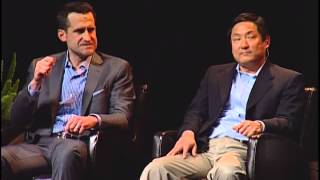
Panel discussion (SaaStr) where Jason Lemkin interviews GuideSpark CEO Keith Kitani and VP of Sales Shep Maher (with Aaron Ross) about scaling outbound sales. They cover the company's slow early growth (first $1M+ took ~4 years), the hire of a VP of Sales, building an outbound engine (growing from ~$2M to ~$20M in ~24–25 months), hiring philosophy, playbook metrics (dials, demos, quotas), market expansion beyond tech/California, and planning for faster, data-driven scale.
Questions this video answers
It took over four years.
They went from about $2M to $20M in bookings in roughly 24–25 months.
About 20 employees two years earlier; a little over 200 at the time of the panel.
He said his quota was 52 customer/prospect meetings (later referenced as 68 for a subsequent year).
Expectations: 40 demos per month per rep; SDRs to make about 80 cold dials/calls per day.
Chapters
The goal the next two sessions is we're going to take two of the most popular case studies that we did on Saster. We did this one with GuideSpark about scaling to 20 million on Outbound sales, which for a lot of us is a new thing. And it really resonated with a lot of people. And then after that, we'll do sort of the live version of a session I did with the Zenefits team on Salesforce tv and kind of do these. Do these sastr case studies live so we can talk through the learnings. So first, let me bring out Keith Katani and Chetmaier, CEO and VP of Sales at GuideSpark, and Aaron Ross, my co author. Predictable Revenue is going to help me here. All right, your middle, your side.
What's the order, Jason?
Yeah. Thank you. All right, well, we're learning the order as we go in real time. There's a lot I'd love to talk about on this session. Keith and I first met back in 06 when I was starting Echo Sign and didn't know what I was doing. And he had sold his last company to Adobe and was an EIR or some sort of smart guy without portfolio, I think. And I remember I went into this meeting with like 78 people, as you do in a big company, and Keith was the most insightful guy in the room. And I said, that's pretty interesting. And we kept in touch a little bit, and then we reconnected more in depth when he was probably just before Shep joined, is my guess, right, as VP of sales. And he'd been working really hard at GuideSpark, which had had its journey and iteration and maybe was getting up to about a million or something in revenue. And it took a little more than 12 months. Right. How long did it take to get to the first million or million and a half in revenue?
It took over four years.
Four years.
So.
And I'll skip. But then Keith realized it was time to go faster, even if the numbers weren't all there. Right. Convinced Shep to join him, which we want to chat about. Right. And over the last 25 months, they've sort of gone from 2 to 20 million in bookings and become a real breakout leader in what I could have called SaaS 3.0, the next generation of services. So a lot of interesting things here, folks, that I just love. And I think just the case study is fascinating of going from four years to that initial traction, making the right hire and also making the right investments. Right. To be able to scale with that level of Velocity. I think it's better than I could do. Right. So a lot of things I want to chat about, but let's go back in time because a lot of folks and I almost chep. I want to take advantage of you and kind of put you in a lab here because a lot of folks are honestly, they don't actually know what a great VP of sales is or what they can do. So seeing the team together, I think it's a gift for a lot of us. So let's go back in time. So first of all, how did Keith recruit you at a time when the business had customers and even a couple of logos, but not yet Velocity. Right. So how does he get you to join?
Yeah, I guess what I would say, Jason, is it almost didn't happen.
Okay, very good.
So we were introduced by two mutual friends. A guy named Rith Martin and a gentleman named Andrew Riesenfeld.
Who's here?
Yeah, who's here? Somewhere out in the audience. And our first conversation was funny. Keith's a busy guy. He likes to multitask. And you know, I could hear him sort of pulling up my LinkedIn profile as I was talking to him on the phone. And he goes, I don't really know why I'm talking to you. He goes, I was very specific with Riff. I wanted to talk to an entrepreneurial guy with SaaS experience, small company guy. And you look like a big company market data guy, which I was. I was working for Thomson Reuters at the time. And I sort of had a reaction where I said, well, Keith, you know, it looks like you sell videos to hr, so that seems like you're selling a nice to have to a cost center. And that's a pretty crappy business model. So there was sort of this mutual disconnect, I think, initially. But the more I looked under the hood, you know, at the time it was nine employees and, you know, a tiny one room office on the wrong side of Palo Alto. But when I looked under the light, I saw some pretty special things. I saw a very small cadre of incredibly enthusiastic clients that were begging to do more with GuideSpark, which speaks to negative churn and that sort of virtuous cycle. I saw a business that, because it was bootstrapped, had gotten to cash flow break even very fast. And that to me, I've been through a couple of recessions. I'm old enough to have lived through the 2001 recession. And that sort of recession resistant business is really, really compelling. So when I looked under the hood, I realized there was something that was really on the cusp of getting ready to take off.
Yeah. And so since you've joined, you and Keith have driven deal sizes up, which we can chat about in a minute. There's big mid six figure and up deals now, but even when you joined, I think the company had one or 200k or deals or one. You're getting there. Right. So you come in and you've got a. There's no outbound sales team in place at all. Right. When you joined, maybe one. There was Keith.
We had two. We had two and a half. Two and a half. We had.
Okay, so imagine and Keith, jump in here on the story. But. So if I'm a CEO and I'm hiring a VP of sales to kickstart this whole outbound sales team, what's the discussion? How do you figure out the budget, how to do it? How are you not intimidated by it? And plus, you've got a sales cycle that isn't measured in minutes. Right. And no leads. So it's going to take a while to prove this out. You're not going to know in 30 days whether the investments are going to work out. Right.
Yeah. I got to tell you a story about the first time Shep and I talked about compensation.
Yeah.
And he told me how much.
You said, shep, do you know about 10, 99 reps. Yeah, exactly.
He told me how much he made monthly at Thomson Reuters. And I looked at my expenses and I go, that's more than 50% of what I spend every month across my whole company. Right. So it was a serious investment that we had to make. But as you mentioned, we felt it was the right time. And the way I thought about budgeting at that stage is certainly Shep. But then to allocate a set of money for additional people, and we didn't have an exact number because that's why I was hiring Shep to really figure out who should we hire, when should we hire? I did know we weren't going to invest in marketing at that time. We were going to go for the outbound focus model.
Yeah. Yeah. All right. And so. And so maybe. And so Shep comes in. How many reps is he only allowed to hire a certain number of reps? What's the budget to sort of get this engine going. Right. That eventually has gone from 2 to 20 million in bookings in 24 months. But what did you give them to start?
Well, I think.
Because I think most of us don't give enough.
Yeah. I think we don't give Enough mentally in our discussion was only a couple, but Shep being a very compelling guy, slowly a couple turned to, I think about five or six that first four or five months.
All right.
I'm actually curious because at some point, weren't you guys a nice to have versus a need to have? And outbound doesn't work if you're a nice to have at least very well. So how did you go from being a nice to have to a must buy?
Yeah, I'll take a stab.
Sorry. Because a lot of apps, people build this cool app. It's very interesting, but people don't need it. Consumers buy what they want, not what they need. But businesses buy what they need, not they want.
Yep.
Yeah, I think that's a really compelling question. I do want to touch briefly on your question, Jason, and one of the keys, I think, to our initial success when we were first building out the sales team, that is a mistake I think people make sometimes is they think about starting at the top and they go, man, I need an enterprise guy. I need a seasoned guy or gal with X amount of experience who I can really count on. My first two hires, one was a kid straight out of college, and the other was a CPA without a day of sales experience.
All right.
And I just wanted people who could hammer the phones and had a passion and enthusiasm for the business and a work ethic the same or greater than mine.
And did Keith agree those were good hires to make these zero experience reps or.
You know, retrospect is funny. I think Keith would, in retrospect, say those were good hires.
But at the time, did you have to educate him on that? Right.
Or, you know, I think I'll let Keith answer that one.
Yeah. Yeah. So to be honest, yes. You know, when you hire sales teams, you want people who have quota who are going to close deals. And these people weren't gonna close deals. Right. But I made a big bet, and you gotta trust. Right. You're taking a big risk. And if you don't have trust, you know, you gotta take that leap.
So to come back to your question, Aaron, the interesting thing, if my understanding of the business had stopped at nice to have, I wouldn't have come. I would not have joined. Plain and simple, what I did. I think due diligence is something that everybody can benefit from when they're making care decisions. And I did a really tremendous amount of due diligence on the opportunity. Most of my network was general counsels and CFOs, so I spent a lot of time talking to General Counsels and CFOs about this business model. And what really amazed me was that general counsels and CFOs were jumping out of their chair to get something like this. They have some real challenges. General counsels need content that is current, that's up to date, that's consistent across the organization. I talked to one general counsel who literally the week before had cut checks to eight to every woman who had been out on maternity leave for the past eight years because they'd been explaining aspects of maternity leave incorrectly, right? Yep. And he saw this as a solution to help address that.
Compliance is a great motivator.
Compliance is a great motivator. There's also a fundamental misunderstanding of how insurance works. Right. And most people like me, think that corporations operate on a fully insured model. The punchline is that for most Companies with over 500 to 1,000 employees in North America, they actually self insure. It's less expensive for them to self insure than be fully insured. And that means that if employees are making bad decisions about health care and spending too much money, not taking advantage of benefits in the right way, then it's actually hitting the CFO's bottom line. And you can get the attention of literally every single CFO and CEO in America with that conversation thread. So it very quickly shifted from a nice to have to a need to have for me.
So from your perspective, Shep, coming in, you firmly believed on day one you can make it a must have, right? It wasn't an evolution in your thinking, right? Maybe Keith learned over time, right? But for you, day one, I know how to sell this as a must have, right?
We have some funny conversations. When I joined, I think we had probably about 18 clients and I think virtually all of them were in California and either in tech or healthcare.
Yeah, that may be familiar to a few folks.
Keith likes to joke that if when I joined the company, I told him that metals and mining, trucking and logistics and agriculture would be big verticals for us, he wouldn't have hired me. But it turns out, you know, I was very confident coming in that we could sell this to literally every company in North America.
Yeah, I want to come back to the early days, but one thing that is interesting about GuideSpark is that rapid evolution, relatively speaking, from tech to non tech, middle, you know, I don't mean this pejoratively. Middle America, non Iowa, non right and left hand coast. Did you see that? Did you guys? Was it from the data or was it strategic?
You want me to take a Step.
Well, I can go for it. Go ahead.
Yeah. It certainly wasn't from the data. We didn't have any data.
Okay. It wasn't like you got Archer, Daniel Midlands, and you thought, well, there must be another one of them. Right.
No. It brings up an interesting point, Jason, because I think that one of the things that we don't do perfectly is there's a question of how do you find a sales rep who is going to succeed in an environment like this. And I think there are some elements that aren't necessary in every sales role that are extremely necessary in an early stage startup. You know, when you're talking about, you know, single digit millions of revenue, and those are traits like intellectual curiosity, creativity, and just plain courage. We hired a guy in Q1 of 2013. We gave him Texas as a territory. At the time, we had a grand total of zero accounts in Texas. And in 10 months he wrote a million dollars in new business in Texas.
That's an argument for territorializing earlier than you might otherwise because it forces you out of your comfort zone of sort of tech and media, doesn't it? If you're stuck with the panhandle, you've got to go where the customers are.
We did territories immediately. We found that we could sell deals over the phone. In this day and age, especially a SaaS based solution, you can sell large deals, six figure deals over the phone without traveling. So that enabled us to not give a guy, hey, the panhandle and the Rust Belt and say, good luck. We got to mix and match a little bit and somebody would have a slice of New York, Southern California and maybe the Midwest. But we territorialized immediately. It drives greater accountability. It prevents people from being able to just go where low hanging fruit is. We did that very early.
One of the lessons that Shep taught me, I think, is not to overanalyze and it doesn't necessarily work for every business, but to overanalyze who your customer is. And I think I tend to be more of an engineering background and trying to be very analytical about who to go after. And Shep was like, let's go find out. And so he had his people calling all across the country. And that was really the start of the awakening that our opportunity is every company.
Yep.
Sasha, with those first four or five or six outbound reps, what did it take to get a repeatable approach in place? And like, what mistakes did you make? What would you.
Yeah.
Tell the group here to do differently?
Yeah, I think that's a great question. What mistakes did I Make. I probably made them all. If there's a lot of. In my career, I probably made them all. But here are some things that we did that I think could be beneficial for some folks in the room. One is we put everybody, all of my salespeople in one room. We had everybody around a table, the most senior person down to the most junior person. And you create this environment that has a tremendous amount of energy and a tremendous amount of learning going on. On. We took a decision to locate in our headquarters in Menlo Park. There's often a draw, I think, especially for sales and marketing. There's a great pool of talent up in the city, and there's a draw to go build a sales and marketing office up there too soon. And the learning curve that you get by putting everybody in the same room and hearing those awful cold calls that go poorly and hearing the demos that go south and off the tracks, you learn so much from that. The other thing that I do is I don't have an office. I sit right in the middle of the pit. And that allows me to set a tone for in the moment coaching, where, you know, it's okay. Mistakes are good. You learn from them. Right. And I can participate in a set of cold calls with my newest rep. So I think that learning environment, creating that is critical.
Aaron, I want to keep going down that thread, but I just want to. There's one I want to finish before we lose it from the early days. Right. You and I spoke at Dreamforce, and I think you said once you hired Shep, raised a little bit of money, step down. I think it took about nine months to get the. Because of. And it's a combination, I think, of the math of outbound. It takes a while to get the deal going. And then with the bigger deal is you may have a 3, 4, 5, 6 month sales cycle.
Right.
So how did you know it was working? Right. Because even in the best case, you need the better part of a full sales cycle to know if Shep's doing a good job. Right. How do you know? Right.
Yeah, I mean, I think for me, it started with kind of looking at the broad market. And you have the first thing you did is hire some outbound reps to get leads. And what you start to see is the receptivity of the prospect to our story. Right. And it took a few months to get those outbound reps to get comfortable with the story. But then as you start to see that, you know, again, it's at the top of the funnel, but you start to see the progression, that the prospects have more interest, more, you know, more moving down the funnel. And so for me, that seeing that traction was what really drove it. You know, we certainly had big customers that we were signing along that time, but it certainly wasn't repeatable. Right. So you couldn't go and say, okay, great, I got those three customers. And like, it took, like you said, six to nine months for us to really get that comfort. But what you started to see really is at the top of the funnel that our proposition continued to get better and better and people would start to move through it.
Yep. So you generate. So Shep's generating pipeline, but everyone generates pipeline and sometimes it doesn't close. Right. So I'd ask you and Shep and Aaron chime in too. If I'm a CEO, I go to hire my first VP of sales, and it's an outbound driven business, and I have a decently long sales cycle. How do I know 60 days in, 90 days in whether it's working?
Right.
Because it's not like an all in. You bring in a great VP of sales and an inbound model, you're gonna know in 30 days. Right. 60 days worse. Like you may not. It's not like you may see a rock, but you're gonna see. We'll hear from Zenefits next time. That model, you just. Because you just close more. Because the leads are. Leads were there. Right. So how do you know? How do you know you're on the. And where should you. How do you know when to cut bait? Right.
Yeah. So actually I don't know how to cut bait because I have to figure that out.
I'll let you know.
Thanks, Jason. That was great.
I talked about, you know, seeing the traction at the front end of the funnel, but again, we had already achieved one to one and a half million of ARR. So we still had a pipeline. Right. So we would start to continue to close business. And so you could watch Chef and his ability to close.
So he would close the existing pipeline such it was better.
Right.
So you knew something was working, at least at some scale.
Exactly. That we could close business and that we're building the funnel. Right. You don't see it end to end for six or nine months. You could start to see parts of both ends. And that's what gave us the confidence to continue to be aggressive.
Yeah, I mean, what I've seen is that, I mean, outbound works in the spectrum. For some companies, it works fantastic. Like Zenovitz is basically going from 1 to 100 million on outbound. Even their inbound leads are actually outbound, which is. But. And for other companies, it's not that great a fit, like services companies. But you should always, you can always tell every step if it's working, if you're making progress, are you calling or emailing, getting responses, yes or no? Are you getting demos that go well or not? Yes or no. It's like an incremental. There's always something to be a feeling of yes, we're making progress or no, it's not working at all. Even within the first few days or weeks. You won't have a predictable funnel till several months later. But you always know that it will work, even if you're not sure exactly how well it's going to work.
Yep.
Jason, you want a couple more thoughts on that, please.
Yeah. How do I know?
So. And thanks for trying to get me fired. So the, you know, what I would add to that is I'd love to say that it's all about sales and sort of genius sales leadership.
Yeah.
It's not. It's about a really great product market fit and it's about finding somebody who can capitalize and optimize on that, you know, and make that better, but that you can't fake product market fit. And you can feel it immediately. Right? Yeah.
It's like, let's say pushing a wet noodle with outbound or inbound, I call it a slog. If you don't have like a real something that people need, you can't find them. It's.
Yeah. And our big challenge, and this is, you know, candidates will say, what's your big challenge? Our biggest challenge is that everybody likes what we're doing. We get it on demo and people go, holy crap, I wish I had this two years ago. This is great. Wow. I didn't know this existed. I wish you had called me eight months ago when we were in our budget cycle and we said, well, we actually did. You just didn't pick up the damn phone. Right. But you can feel that product market fit. And what we would see is we'd have a demo one minute with a family owned grocery store chain in Hawaii, and then the next minute with an EVP from Macy's. And then we'd close a deal with Riverbed and you could feel this energy. We're riding some major waves. There are some major trends out there that our business is riding, including the shift to mobile and video. Right. People are used to it in their personal lives. They don't get it in their business lives. They're wondering why three quarters of MasterCard's new hires are millennials. They're coming into the workspace expecting to be communicated with in the same way that they communicate with their friends. And then they get into the office and they're like, here's a big stack of papers. Go read it. Right. So we're riding those major waves. And regardless of what the. You know, not regardless, what I would say is you should be looking for a sales leader who makes, takes that product market fit and capitalizes on it. And the big shift for me was we went from a sales team, when I came in, from doing about two demos a week across the sales team of two and a half people to doing 20 or more. Okay, just driving that.
And walk us through. That's fun. Walk us through what sort of the funnel Is or the OKRs, the goals for that. So how many appointments do people have to set up? Right. You've got SDRs and AES now. Right. And you've got VPs under you. Right. So what do they have to deliver?
Yeah. What I would say is we like to set the bar really high.
Yeah.
You know, that's sort of a corporate philosophy of ours is we like to set the bar really high. So when I came in, the existing sales team felt that a couple of demos a week was a pretty good pace.
Yep.
And we set a bar that the expectation was you would do 40 demos a month.
40 demos a month?
Yeah. So shifting from, you know, maybe two a week to eight to ten a week. Got it as the expectation. The rdrs that we hired, we set an expectation that they would make 80 cold calls a day. Dials, right?
Yep.
When you're early, there's a lot of philosophy around measuring outputs, and I think that's very important when you're in that early stage where you're literally kicking down doors for the first time, that's all you got. All you have is inputs, and it's important to measure those inputs and hold people really accountable to an extremely high level of input. If you have a great product market fit, then even though you don't know exactly what you're saying and you're sort of fumbling and that sort of thing, if you're doing a high level of activity, the momentum will get going.
Yep. And, Keith, what's your. How has this changed over the last 24? What's your role in sales now?
What is my role in sales?
Yes.
My role in sales is the chef's.
Got an engine working now. Right. It's never perfect, but there is an engine. Right.
So my role in sales is to go on the road. You know, I think you're a big proponent of the CEO going on the road.
Yeah.
And we said he set my quota last year at 52 meetings.
52. 52 means out of the office with customers. Got it.
Right. So prospects or customers and customers. Those are customers and Prospects are about 50%, about double that.
Because upsell is a big part of the business. I mean, from Shep's perspective.
Yeah. Because he wants me to support both. So if I go to a region, I go to Dallas.
He wants you to 100 meetings a year.
Yeah.
Well, 50 and 50. Right.
And this year, the quote is 68 times 2.
68.
So, you know, my role is really to support the sales team because one of the trends we're doing is going more enterprise. I think some of the discussions earlier today were, how do you go enterprise? Right. You got to tell a much bigger story, and you need to have them have confidence that our business is going to stand behind a solution, that an enterprise group is going to put their reputation.
I think it's funny. You're both raising each other's quotas every year.
It's tit for tat.
Exactly.
Is this going up my quotas?
Going to be what? Well, I'm going to show you.
Say goodbye to your family.
You know, I think it's an important piece of philosophy that we have. Right. And that is that it's not so much about really driving sales. Right. Keith isn't in there like putting somebody in a headlock and handing them a contract. It does a few things. One is it's a wonderful opportunity to convey our vision for the marketplace. Right. And that big picture, two is it keeps Keith really close to the voice of the customer. And there's nothing more frustrating than being a salesperson coming back from the road and trying to relay to your marketing team, your executive staff, your product team, what's going on in the market and what the market is asking for and not getting it. Right.
Yep.
And so we have a philosophy where it's not just Keith, where we say, our door is open during any sales demo. Anybody from any group in the company can walk into any sales demo and just sit in and listen. And by the way, we expect them to. And we expect our marketing team to do the same, to do the same thing that Keith is doing so that they can stay close to that voice of the customer. It's critical. If you lose that, you lose the product. Market fit very quickly.
Yeah. And those. It's. What's the metric for this year? 64 and 64. You said 68. 68 and 68. And so, Shep, do you. Do you fill up Keith's dance card? You pick who the 68 are, right?
We do. We're headed. I don't personally, but my team does. They set it up, they force rank it. Bring in your CEO into a meeting. Gives you an incredible, incredible excuse to. We just had a meeting with the UC system and we were at a certain level, and it was an incredible excuse to get the chief human resources officer of the entire system into the meeting.
Got it.
Changes the game.
And as you. How is over that with those customer visits in general as GuideSpark's kind of built a brand, right. Or, you know, almost a brand, a very big mini brand in its segment. How has that changed. Change the dialogues and change the discussions. Does it help? Is it reinforcements or.
Yeah, I think, you know, Ashette mentioned one of the things that we're getting is we're getting the higher level meeting.
Yeah.
And so when you're talking with the Chro, it's a lot more strategic about how communications is important to the business, whereas in the early days, it's a lot more tactically focused. Yeah, right. And I think it's not just our brand, but just the customer base that we have. People now look to us as. As being very knowledgeable about the market and want to learn from us as opposed to before. It's like, here, let me tell you about my solution. But now they're saying, hey, can you help me understand what's going on in the marketplace? Because I'm meeting with lots of these Chros. And so that really starts to build on itself.
And at this point, now that you're. I mean, you're not. It'll be a few more months till you're at box of scale, but you're at scale. Do most of the prospects, or what percent of the prospects have heard of GuideSpark?
That's a great question. One of my sales team members printed out a sign and tacked it over my desk and it says hustle until you no longer have to introduce yourself. We have a massive, total addressable market.
And then hustle twice as hard.
Isn't that right? That's right. We still have to introduce ourselves. Our total addressable market is probably close to 30,000 organizations in North America alone. We did as a team about 7,000 demos last year. About 2,000 of those ended up in our pipeline about 350 of those bought. We are really just scratching the surface and it's something you have to work on. Right. Creating that brand is important. And one of the things that we did early on is we put a pickle jar, right. An empty pickle jar right in the middle of the sales pit. And we would find anybody a dollar if they said, I'm calling from a company called guidespark. I'm calling from guidespark, have you heard of us? Or I'm calling from guidespark, we're a startup located in Silicon Valley. Right. All three of those things. If you think about it, if you were calling from Salesforce or IBM, you wouldn't say those things. It simply wouldn't make sense. So you need to act as if before you get your Salesforce. Yeah. And we did just for fine. One of my new reps, a dollar, a dollar went in the pickle jar the other day.
That's good. One question I want to, since I have both of you and I can put you on the spot together. So you had a good 2014. It was a good year. Right. How did you plan for 2015? How'd you set the goal? You don't have to share. If you'd like, you're welcome to share the target calendar year on target. But how did you set it? How aggressive do you make it? Right. Do you have two plans? Right. One plan. Do you guys have an even higher plan in the company or how do you think through this next phase? Right.
Yeah, we actually made a transition in the past. We had one plan and it was a very aggressive plan. But for this year, looking forward, we actually created two plans. So we created our core budget plan and then a sales stretch plan. And one of the key things I think in terms of thinking about our planning now is that we now are looking three years ahead. So, you know, in the past few years we might have had a three year plan, but that was really just a couple of guesses we give the VCs.
Yep.
Right now we actually are looking at that target, you know, 100 million out there and trying to figure out how are we going to invest not just this year, but in the future years to get there. And that's been a traumatic change for us in how we think about the business because now we actually have some data. So before, like performance to quota, like we were guessing at numbers. Right. But now we have some data from last year and understand with our reps what performance to quota we think we can get. And so we now have an idea of how many Salespeople to hire.
So, broadly speaking, the 15 plan is pretty data driven. Right. You're taking trailing velocity and the goals for the year and working off that past funnels.
Yes, yes. But the other piece I think that we had to look at was how fast we want to grow, because one of the key things for our growth rate is around people. And you can go and you can hire lots and lots of people, but how many folks?
Just for the audience you have now.
At the company, we have a little over 200.
200?
Yeah. And two years ago we were 20. So we've gone from 20 to 200. And one of the things that we talk about with Shep and his team is at what rate are you compromising quality and culture? And so what we're trying to balance, there is a plan that we think. And 20 to 200, I think is pushing right at that edge. You start to have to really think about compromising, and that's important to us. And so we're trying to keep that balance where we want to have aggressive targets, but we want to build the company and the people and the culture that will continue to grow.
Yeah, actually.
So the 20 million now almost all outbound. Are all outbound. Going to 100 or doubling. How do you start to think about that mix of whether it's inbound versus outbound or just deal sizes so on. Are you tripling down on outbound? Are you starting to lay some other bets?
Yeah, so we're definitely starting to make some bets. So. And it ties into the forecasting. Right, Because. Because I think you, especially at a stage like ours, you need to let the data inform you, but not be a slave to the data. Right. Because if you just look at what has been done, then we'd still be selling to tech and health care companies in California exclusively. Yeah, right.
And less than half the size, probably.
Right, right.
Yeah.
So. So you really got to open your mind, I think. You know, Keith would joke that he felt confident we'd get clients like Chevron and ExxonMobil, but maybe not for a few years. And we were able to do that a lot sooner than he thought. We're making a huge investment in marketing, so we have 5x star investment in marketing. A stat that I'm fond of quoting is in 2013, we had a grand total of seven inbound leads.
Leads 77.
7.
7.
Not seven qualified, not seven a day. Seven inbound leads all year. Right.
How'd you divide them up among the rest? You get half and you get a. You get a third.
We threw them into the cage.
I need the zinger. Right there. There you go.
Yeah. So there you go.
All right.
It was nice.
I know it didn't sound funny to the band, but to us, it was a little. Little funny. Yeah.
So. So now. And now we're up to a flow of about 100 a week.
So two app servers walk into a bar.
All right, guys, I would love to.
We could.
We just getting. This is just getting good. But we're. But with a great conversation. We're out of time here, but let's thank Shep and Keith for doing this. This was an amazing session.
Yeah. Hey, thanks a lot. Thanks, Jason. Thanks a lot. Appreciate.










