Learning to Love the Art of Sales (As a Technical Founder) with MuleSoft
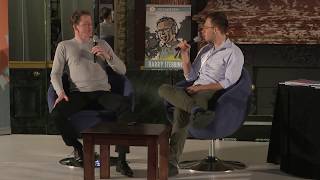
Interview (recorded July 30, 2018) with Ross Mason (MuleSoft founder) discussing MuleSoft's origins, the company’s mission to solve enterprise integration via an application network and reusable APIs, and the evolution of the market (cloud, APIs, AI). Covers go‑to‑market choices (prioritizing quality logos, long sales cycles), sales methodology (challenge customers, measure KPIs across funnel), product‑centric culture, marketing alignment, hiring practices, the decision to relocate from Malta to San Francisco, the acquisition by Salesforce (~$6.5B), and the roadmap to be the foundation of Salesforce's integration cloud and promote self‑service IT via discoverable APIs.
Chapters
All right, Ross, give us some context. Tell me about the founding story of mulesoft. Set the scene and what was that aha moment for the creation in the first few months and days of the company?
Yeah. So for those who don't know mulesoft, we work across many enterprises connecting applications, data and devices. Right. So it was pretty interesting. I was just hearing UiPath right before here talking about how, you know, run everything through their platform layer on some AI and voila, you've got more automated and better processes. The challenge that every organization has though is they can't actually connect to the data and to the assets that actually drive a lot of those processes. So what mulesoft do that we create something called an application network to connect all these things together. And it came from pretty humble beginnings. Right. We started just making it easier for developers to connect things together. And you know, over the last sort of 10 years and five years, with the advent of SaaS, mobile cloud platforms, it's become really, really hard to connect so many things together and do it in a way that's efficient and doesn't just drain a bunch of time.
Can I ask, you've seen the evolution of this industry firsthand through the growth of mulesoft. What have been the biggest kind of transformations for you from the meta perspective, watching the evolution of the industry as a whole?
Yeah, I think probably the biggest evolution actually is this understanding that software in a silo isn't working for businesses. Right. So we have a lot of technology trends. So cloud was pivotal, sort of APIs has become pretty pivotal. AI is sort of driving the next wave of requirements. But when I talk to banks, insurance companies, health care, the biggest challenge is it for the longest time has just been plugging this stuff in as best they can in silos. And what they're trying to do is create better consumer experiences. So they're trying to cross sell products, they're trying to upsell products, they're trying to understand more about their customer. And what they're finding is it's prohibitively difficult to use these newer technologies like UiPath without being able to connect all these different systems together in a way that the software on top can actually bring together a different picture of what's going on. And so that transformation, when we talk about it transformation, I look at transformation really at the core of the business. And taking all that legacy and putting infrastructure in place to make it much easier to move that information around between those systems.
Can I ask, Mulesoft now serves some of the largest enterprises in the World. I think a big question that I often get from founders is should, should they think about quantity of logos, quality of logos and getting those brand names for you with mulesoft, how did you think about that in the early days? What would your advice be on onboarding those mega corporates that everyone wants on the client page?
Yeah, I mean, yeah, it's a good question. Logo, quantity or quality? So for us, we went with quality. So we have customers like HSBC running their whole transformational program on us globally. Same with McDonald's. McDonald's I love, because you look at their share price the last 18 months, right in the top sort of headline is that digital transformation, literally just moving away from human interactions to kiosks to apps, to those sorts of things, has driven a very different outcome for McDonald's. And that's all written on our platform. We realized fairly early on that the problem we solve is pretty complicated and the sales cycle will be nine months, whether you're spending 50k or 5 million with us. So we just realized if that's the way it's going to be for the time being, what we should do is pretty optimize for doing massive transformations first and then back into smaller ones as we got scale.
I had Andy Byrne on the SAS to podcast and he said, when selling to large organizations, you really have to present not just the company today, but the company in five years time. The vision, the mission, how do you think about that versus maybe the immediate benefits that one could offer and kind of honing in on that instead of what were the tips and tricks from nailing it so well?
Yeah, I think for enterprise software, that's really true. Right. If you haven't got a vision and a mission that people can get behind, you look like everyone else. So think about, you know, if you probably don't know, the integration space, but the integration space. No, the integration space. So the integration space is full of vendors. There's like 20, 30 vendors all purporting to connecting applications and data. So what makes Mulesoft different? Why did we get acquired by Salesforce for six and a half billion, whereas other guys scratching around for 100 million in revenue? And it's actually about painting a vision about what could be possible and then leading customers down that path. So we got very good at not just having a strong vision, but also showing the steps it would take to drive that transformation in organizations. And then as it starts to come to fruition, like in the last few years, we've had more and more customers come up on stage and just tell, you know, tell our audiences how that change is actually happening inside their organization, and that just creates a flywheel effect.
We spoke about kind of lower quality and quantity there. I'd love to hear maybe how the sales organization has changed with the scaling of the business and how you've seen that really kind of fundamentally differ, maybe from jack of all trades at the beginning to specialists now. How have you seen it develop for me or for the company, but you sitting on top of it, looking at the change?
Well, in the beginning, it was all me, right? So, you know, you're the first sales guy in any company. All founders know that. I actually ended up staying very close to sales, even though I'm a technology founder. And again, it was because we weren't just selling software. We were selling thought leadership about how you use the software to get a different type of outcome. Right? So, you know, put simply, integration, you can do it two ways. You can just connect two things together and leave it alone and hope it works forever. Or what we do is we tell people to create reusable building blocks, APIs out of the assets that they're connecting to. So you get a view of a customer, a view of product, a view of reference data, of transaction history, and we package that up in APIs so that the next time you need that information, it's there. So essentially, what you're doing, you're making project delivery over time much more efficient to sell that way. Most enterprise software companies were just selling boxes of software, right? If you need a bpm, you go and plug it in. If you need an esb, you go and plug that in. They weren't really selling a different way of thinking. So my role in the sales organization was really helping to layer on good selling methodology with how do you sell with thought leadership and a purpose in mind.
Can I ask, what is good selling methodology to you? That sounds like a wonderful podcast title.
Yeah. All right. So I mean, there's loads, right? So people use medic and Challenger sell and all those sorts of things. We take elements of those. But ultimately, for me, good selling is about two things. Making the interaction with the customer beyond expectation every single time, right? So just being really respectful for people's time and making sure that you come with preparation and something of interest to them and you should challenge them, right? So a lot of salespeople that we hire in the beginning, they're like, I don't want to tell a CIO what he's doing wrong because he knows his or she knows his business better. Than I do. And I don't want to tell them that they're doing something wrong. Whereas in reality they want feedback, they want to know what other customers are doing and why what they're doing is not working the best way for them. So a lot of what we teach our salespeople is really around challenging the right way and coming with a provocative point of view.
Can I ask you said about teaching salespeople there? I often speak to founders selling to enterprise companies and they say it's been three quarters and they haven't closed any large accounts. They're sweating, they're getting very nervous, it's costing them. How would you advise them? How would you measure performance in the early days and kind of think about that evaluation in the very long feedback cycles I.e. enterprise sales?
Yeah, measurement is critical. So if there's any KPI sessions today, watch those because we follow about 30 KPIs through the sales cycle and the business and what it comes down to is just understanding how long things take. So if you've got a pipeline to get someone from 0 to 10%, 10 to 20, you need to look at each one of those phases and measure before you can understand what's working, what's not. It's really critical to do that early on. When you've got four salespeople, even though it seems a bit trite because you've got four salespeople, very quickly that ramps up to 100. And if you haven't got those measurements in place, it becomes very hard to retrofit and create a culture where people don't mind being measured or don't try and gain the system to be measured. So you know, for me a lot of that is really for us we know that getting from 10% to 50% is the hardest. That's where you really they're going through their decision cycle and whether they're going to, you know, place a big bet on someone like Emilsoft. And so we've over optimized there to provide a lot of resources and ways to move people through that pipeline in a way that makes sense for them and for us.
We spoke about your kind of technical and product chops earlier and then also your role in sales from day one. I'm intrigued. For a product facing founder, what do you think of the kind of core benefits and value of being that product orientated mindset now applied to sales in the early days?
Well, yeah, I mean, you know, a lot of organizations are separated between engineering and sales and salespeople don't get engineering. Engineering don't get sales. They kind of hate each other. There's lots of mean jokes out on the web if you want to go figure that out. Being someone that straddles both, you get to be able to understand both sides of the fence and actually create better relationships. I think Mulesoft, we describe ourselves as a product company first. And the reason, you know, some people are sales focused, some people are marketing focused. For me, being a product company makes. And by product, I mean everything hinges off a quality product, because a quality product is a lot more fun to build to start with. So engineers like it. It's much more fun for salespeople to sell, you know, because you actually have a product that people care about. It's much easier to have all the support functions around it if it's a quality product. So putting product front and center has sort of helped bridge that gap by not being about sales or engineering, but actually having this other thing in between, which is really what drives the outcome for the customer.
You spoke about kind of sales and engineering there. The other one that I consistently hear is kind of the integration or lack of integration of sales and marketing. How do you think about that? And have there been any kind of key learnings in removing the silo of sales versus marketing?
Yeah, I spent a lot of time in marketing removing that silo. I think that's actually one of the hard ones is bridging reality, which is sort of, or maybe like a version of reality, which is engineering sales, which is what they want to go and sell. And then marketing, who every six months want to recycle any concept that you've had because they feel like it's gotten old quite often. What I have to tell marketing is just because you said it four months ago doesn't mean everyone was listening. You got to go and say it again another 10 times, and they hate it. And it's like, no, because you're only capturing a very small portion of the audience. So stop forgetting about our core values because find more interesting ways of bringing that to bear in the marketing message. And actually, it's worked pretty well. Like, we. We used to cycle through concepts, like every six months. And a, no one can keep up, and B, it means you just, you know, you're trying to differentiate yourself on message. And I think you should differentiate yourself on. On having a key theme, but innovative ways of bringing that theme to market. And it's a slightly different way of thinking about it, but it's actually worked quite well for us.
Speaking of innovating, on those themes, how do you know when is the right time to refresh? You said there about every six months we had a new one. It was tough to keep up. Is that like inflection points in utility?
There's two ways you feel it, right? Because we do a lot of events. I'll be on stage and I'll be saying something and I start to think I'm not believing this as much as I used to. And that's usually a good sign. The other one is we run about 20, 30 events a year and we do a lot of feedback and we really do listen to every bit of feedback we get in every event. And it's interesting. You come out with a new message, it works well for about a year, two years. And then you start hearing people say, I feel like I've heard this before, I need something else. It was good. But I think the time horizon for messaging is. Tends to be one to two years and depends on, you know, if you're doing a big yearly event and you have a lot of repeat customers, then you gotta refresh that every year. If you're doing regional events where you just capture people in, you know, different locations, then refreshing every two years, but putting, you know, every year putting a different spit on it makes sense. So it's definitely one year is the minimum. Max is probably two.
Speaking of refreshes, I'm not sure that many people know, but started out of Malta and then moved to the US Talk to me about that, your mindset towards the move. I'd love to hear about the VC angle potentially in Europe versus the US let's start with the move more broadly, why you thought it was necessary and how it impacted mulesoft.
Well, yeah, I mean, so weirdly, not many people do this, but I started an enterprise software company in Malta, which is just off the coast of Sicily, down the bottom of Italy.
It's growing tech hub.
Yeah, exactly. It's like the center of the Mediterranean, so it must be the center of the world. Right?
Mulesauce revenue must be Malta's gdp pretty much.
It was, yeah. I think it was actually. So yeah, I was foolish in the early days, I thought because you could build software distributed. I had a team all over the world building MULE before I had a company around it. And when I got funding, I wished that my VCs has said, you've got to come and move to where the company headquarters is going to be, which is San Francisco. Instead they said, no, what you're doing is working. So you do whatever you want and we'll figure it out. And then we spent two years trying to build a weird company culture where I wasn't there half the time. It just didn't make any sense. And I realized that was just holding us back. And so that's why I moved to San Francisco. But I should have done that the day I got the funding.
Can I just jump on one element you said there about the distributed team? It's obviously something that's incredibly popular and successful now, but you did it seven or eight years ago when it wasn't at all.
The key theme I'm going to show my age was actually 12 years ago.
12 years ago. What was key to it being so successful? In the early days, the VCs saying, I'll let you run with it. How did you think about that in creating that cohesive unit?
Well, I think we understood how to run open source. We looked at, at open source, as I say, we. It was probably me actually, for the first year and a half, looked at it as really as a distribution channel. Right. So a lot of people, you know, developers. I'm not really a developer. Like, this is the weird thing. I wrote software, but I don't think of myself as a developer. I just used code as a way to express a bunch of ideas. And I looked at open source as purely a distribution channel that all I was trying to do is build, you know, a broad base of users so that I could go and build a company on top of it. And I think with that mindset, I was very efficient on what I spent time on and what I didn't spend time on. And when I brought people into the project, they adopted the same behaviors because, you know, it's just the easiest thing to do. So, you know, think of like, I didn't spend all my time running the software. I spent more of my time actually building the community. So talking speaking events, answering emails on forums, which sounds really trite now, but it's like I would spend. I started shaving off hours off my sleep so I could get up early, like at 5am and then like answer emails for two hours and then go to work. And I just did stuff like that just to sort of, you know, drive the engagement of the community and what that does. Actually, there's a tipping point where at some point you're getting more emails, but more people are jumping in because they see you jumping in and they just replicate what you're doing.
Yeah, absolutely. I do have to ask. You're an enterprise founder sitting in the audience today. Debating whether the move is necessary to sf, either you or an outposter or sales team there. What advice would you give?
Yeah, I mean, so when I moved to sf there wasn't many options. Right. So I tried. I actually tried to raise money in London back in 2005.
How was that experience?
Oh, it was brutal. It was. I met with. I won't call out any names. There wasn't many VC companies around them, but they were so risk averse. It was very clear. I was talking to people who came from financial services who are used to low risk, low return and not high risk, high return. And so their requirements for putting any money into anything was I had to be some sort of evil genius that could pull together all the other software companies that were doing interesting things and bring it under one umbrella. It was crazy. I mean, it was really. I mean, if you were fly on the wall, these talks were ridiculous. And I realized I wasn't going to raise money here in the UK or in the uk. So that's why I went to San Francisco. I think now it's much easier. There's investment arms all over the UK. There's about 110 incubators or accelerators in the UK, which is kind of crazy. So it's a very different landscape. And I don't think you need to be in Silicon Valley or you don't need to be in San Francisco. In fact, you're competing for resources there. So it's super hard to find great talent. And I probably rec next company I do won't be there. It'll be, you know, probably this side.
Absolutely. I do want to dive into a quick fire round with you though, Ross.
Yeah, sure.
So quick fire round. I say a short statement and then Ross, you give me your immediate thoughts. And we've got 60 seconds per one. Okay. What was the biggest challenge in building Mulesoft?
Oh, God. Making integration sexy. Just. Isn't it sexy? Isn't it sexy? No one cared about it. And it's become interesting in the last two or three years.
What do you know now that you wish you'd known at the beginning of your journey with Mulesoft?
I'll phrase it differently.
What?
I'm glad I didn't know how hard it was going to be because I probably wouldn't have done it. And now I been through, I feel I could do it again quicker.
Okay. No, I love that one. When I say success in SaaS, who's the first person that comes to mind and why?
My new overlord salesforce. I think what they've done is pretty amazing. It's an amazing company actually. From the outside it's great. But also from the inside is pretty impressive as well.
What's the key to scaling culture to the extent that you have done? Stay with mulesoft.
Maniacal. Focus on culture. There's not one thing. There's only one thing you have to do which is focus on every day. And in actual fact, I can't take credit for that. It was actually our CEO who all he did. He spent pretty much all his time thinking about how we hire and how we retain talent. And that was his thing for probably the last six years. And he didn't really focus on almost. He focused on other things. But his big passion was making sure we hired the right people and we were doing the right things culturally.
How have you seen yourself change as a leader and a CEO with the scaling of MuleSoft across time?
Well, I mean, I started off writing code and now no one will let me write code. So I've definitely crossed over to the dark side. You do. I mean, for me it's an exciting journey and what I've done is rather than try and hold onto a position in the company, I try and let go. So my whole mission for about the last six, seven years is to do myself out of a job, right? Because as a founder you end up being this linchpin and that gives you power and control, but it also slows you down. So I realized when we started scaling, I'd have to take myself out of the equation more and more. So what I've done is I've let go of roles as I found people that could do the role better than I could do it.
You mentor a lot of young companies today. What's the most common mistake you see young SaaS, founders, SaaS, companies making?
There's a lot. I mean, the common mistakes really are around understanding what they're building and why they're building it. You know, there's some vision, alignment, things that I often help founders through. There's some key ones around, you know, setting your goal up front. Like a lot of founders just say, I want to build this thing. So I think it'd be really cool. But they don't really know why they want to build it. And if you can't articulate someone, then it's super hard for people to buy into that vision and get excited. Another one is I see first time CEOs taking on way too much on their shoulders and not thinking about how to leverage their teams around Them to offload some of the pressure and holding people accountable. Those are probably the two big areas.
You've managed boards for many years. What makes a great board member.
Good board member, that they turn up on time and they leave the phones off. You know, good board members. There's so many different varieties like you get operational ones that have great insight into to running a business. So quite often if somebody has an exit, getting someone right after an exit is really good because they have a lot of operational experience. That operation experience has a shelf life of about three or five years. After that, if they're not back in the workforce doing that role, they're starting to lose touch because frankly the world is moving so quickly. But then you also have the connector board member who just knows everyone. Ann Winblad is our connector on our board. And then you've just got the super smart VC who just analyzes the market, sees way ahead than most other people and just helps you think about what you're facing in different ways.
So we've had a billion dollar ipo, we've had a multi billion dollar acquisition. Tell me, what's the highlight of the Mulesoft journey?
Well, those two things are pretty good.
Those two things are pretty.
What's the highlight? I mean, you know, one thing about the acquisition I will say is it's been really. Mulesoft has always has been about the people and the culture because we, it's not an easy business. Nobody really understands it. It's sort of, it sits in the middle of everything but no one knows where the edges are. So we've had to hire really smart, driven, intellectually curious people and it's been a lot of fun getting to know those people and working alongside them. But having the acquisition outcome meant that everyone got a bit of a payout and it was a lot of hard work. Right. So just having people come up to me saying hey, you know, my wife's gone back to university or we just bought that second house we wanted, you know, and it was because of this, this outcome that feels pretty good like that. That's a, it's an ongoing but feel good factor of this.
I spoke to many of your investors actually before this interview and they said that you have recruited some of the best people in some of the most competitive markets. How do you think about recruiting the best people in, in such competitive and well funded times today? What's the secret sauce?
Secret sauce is very clear mission that they can understand. Right. You know, in, you know, in a 15 minute phone interview because people want to know why they should even care in the first place. Secondly is a great candidate experience. So just running, making sure that you're really running a strong process. And two, we actually, we actually push candidates so we don't make it easy at all. Like we don't get rock stars in who then coast through. We really challenge them both on the interview and the testing side and for what we needed, which is that sort of smart, driven, intellectually curious person, they respond really well to being challenged once they're bought in. So once they buy into the vision, being challenged by the company almost made it a certainty that they'd come into the company.
And then I want to finish with some parting advice. What parting advice would you give to a European founder today? Scaling, contemplating and looking to progress in a similar vein that Mulesoft has done with two huge X's?
Well, actually I'm spending the summer speaking to founders around some of these ideas because I'm trying to connect myself back into the European startup market. But I think probably one of the things every founder in Europe has is do I go to the US and if so, when? I think it sort of depends on the business and the type of market you're going after. But I think there's a lot more opportunity in Europe now to build scaling companies. The biggest challenge, frankly, is just that it's not such an open market. The great thing about the US is you're selling to 100, 200,000 companies and they all speak the same language, they're on the same legal system, they have the same laws, the tax is complicated, but it's all taken care of with software. It just makes it easier to sell. Whereas if you're selling in Europe and scaling, you'd have to look for businesses that can do really well in one Geo first and get a real stronghold and then expand. So there's a slightly different expand model in Europe than you have in the us US you can actually be a bit lazy here. You got to lazy because you can just go to market with something and scoop up demand just through marketing. Whereas here you have to be much more prescriptive about how you're going to go after that particular market segment and what you think is going to help you sort of dominate that market before you move to the next one. So it's a different set of business model triggers I think here and just be more aware of that. That's kind of what I want to learn this summer is what are those triggers and what's working for people.
Final question next five years for you and for mulesoft. What's in the roadmap?
So roadmap for us is, you know, we're part of Salesforce. We're going to be the foundation of their integration cloud. We continue to be neutral in terms of we're not just connecting Salesforce, we're connecting to everything because the information that we connect to is all over the place in mainframe systems, in other, you know, other SaaS platforms. We have this concept of application network that's starting to come into fruition, which is basically a way of organizing reusable APIs inside an organization so anyone can discover and use data or capabilities. And what that's doing for companies is driving a different type of innovation where instead of having to, you know, come up with an idea, file a project, wait 20 weeks, have something delivered by it, we're starting to enable companies to get more self service capabilities. As it is already stretched anyway, helping IT provide self service without compromising the back end systems is really powerful. I think in the next five years that concept is going to take hold and become pretty mainstream and you'll hear a lot more about, you know, real self service IT versus just people going, buying stuff and trying to make it work.
Ross, as always, I so love chatting to you. So thank you so much for joining me today.
Thank you. Cheers.










