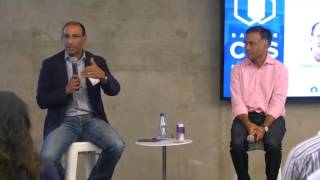
An interview excerpt where Sameer Dholakia discusses cultural lessons from his time at Trilogy and how he applied them at SendGrid. Key takeaways: intentionally distinct, even ‘cult-like’ company culture with ‘edge’ that’s not for everyone, and an obsessive focus on hiring—treating every hire as mission-critical and maintaining an extremely high talent bar.
Chapters
What are the lessons learned that you took out of that experience? Again, at 21 joining this company? I think the average age, probably even when we got to 2000 people was 25 maybe, or 26. What are some of the things you took from that culture? You don't have to mention things you didn't take from the Trilogy culture, which I'm sure there's a long list as well. But what are things you took from that culture?
No, I think Trilogy was world class on a number of fronts. The that have been immensely important to me throughout the rest of my career and I've tried to help bring at Sendgrid as well. And by the way, one of the things that was already in place at Sendgrid, the first really was around the culture and how important it was to the founder, CEO and the leadership team that we were going to have a very distinct culture. And one could argue with whether or not they were, whether you loved all aspects of the culture. But that actually was the lesson for me. And I would offer up to any of you that are building your businesses, building a culture that has edge, that is unique and is explicitly not for everyone. If your culture, if you define your culture and you're like, oh, everybody would want to work in a place like that, go back to the drawing board. There has to be some edge to it in a place where, like, I'll tell you, at Sendgrid, I know some absurdly talented software professionals who would absolutely hate working at Sendgrid. It would be their seventh hell. Like, we are so over the top. Collaborative humility is built into the DNA of the company. There are just aspects of the way we run and operate that is, that would be antithetical to so many great people that I personally love. So it doesn't mean that you're trying to weed out people that you don't like, wouldn't want to have. It's just there's a large and massive talent pool out there in the world. Be very deliberate and conscious in your choices about how you define your culture and make it have some edge to it. And Trilogy certainly had that had a lot of edge in its culture and it was not for everybody. And everybody would joke about it being cult like. Like, literally the joke was it was cult like. It was cult like. And by the way, I hope what people. I aspire for people to be like that. Send grid culture is sort of cult like. And we start to. We're starting to get there. We're starting to get there. And I love that. I love that where the people are so maniacal about the culture. They talk about the culture all the time. It's manifested in umpteen different ways. It's not just a set of things written up on a poster on a wall somewhere. I think Trilogy did an immense job with it and Sendgrid has as well been very grateful for that. The other thing that Trilogy was distinctive at and world class at was recruiting and hiring and the talent bar was so extraordinarily high. And it was just this mindset of every single. And again, for all of you building companies, please take this one to heart. Every single seat, every single hire you make is critical. Is mission critical. And you can't get those wrong. And if you get somebody in there that's okay, you should be replacing that person with somebody who is distinctive because the differential between distinctive and okay and is not linear. It's like 5x10x to average. Trilogy was maniacal about that and I think that worldview has always shaped the way I think about it.