"Lessons (Un)Learned: Successes and Setbacks on the Road to $1B with Docebo
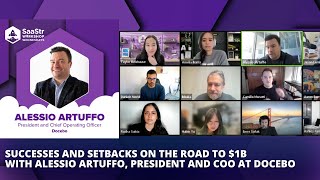
Alessio from Docebo shares how the company scaled from a 2005 European startup to $180M ARR as a public LMS provider. He covers maintaining alignment across sales and product during growth, pursuing government contracts through FedRAMP, and acquiring Edugo for AI. The company reports 109% net dollar retention and emphasizes disciplined hiring and customer success.
Questions this video answers
March 17, 2012.
About $180 million ARR (mentioned several times).
TSX in 2019; follow-on on NASDAQ in 2020.
109%.
The interim CEO role will kick in on March 1 (year implied by context).
Chapters
Sales motion and product to GTM in general. More strategic engagements and strategic partnerships, the ones that are a little bit, you know, bigger and more meaningful. Opening doors for our commercial teams, working with other executives, you know, kind of typical motion, top down and then, you know, planning and connecting the dots and making sure that functions that need to be very tied together, maintain that strong alignment. Think about the usual sales and marketing alignment. But, but beyond that, I would say sales and product, product and services, services and success, success back in sales. So I think our job as a scale up, it's really about maintaining cohesion of operational model. And so that's a lot of what I do and I love doing that. That's one of my favorite parts of the business. Then on the external side, I'd say I try to spend as much time as I can with customers and in person as well as with investors. The chapel being a public company requires a good effort on maintaining investor relations. And while we have an IR department that does a great job at it and an awesome CFO that takes care of the majority of it, there's frequent, you know, calls with investors to catch up on the business and all that. So that's been a big learning process for me as well because it's the first time that I've ever run in an executive capacity in a public company. So it's been awesome.
Awesome. All right, thanks. And we're excited to hear more about some of those internal functions and some of your expertise on that, which I know you're going to get into in your deck. Yeah. But next up would love to hear in the past year, what's been the hardest thing that you worked on?
Yeah, I think, listen, that I'm probably going to sound boring, but the past year has been, you know, there's been market compression. Things that in the gold era of 2019-21, where easy or easier have gotten a lot harder. We've all had to unlearn some bad habits and focus on the right habits. We've had to change our views or priorities over certain markets, markets that we were spending on. And you know, there's been, it's. It's like, it's like adjusting the course of GTM in particular in a company that's already sizable because the chevy is about $180 million. ARR. It's a lot less easy that when you're a lot smaller, the pivoting takes a little bit more time. And so I would say the hardest part perhaps has been recognizing the certain markets responded way worse than what they used to and adjusting the trajectory of the plane as we were flying it.
Got it. Yeah. I think a lot of people in the room would definitely agree with that and hear you on that too. What about in the next 12 months? What are you most excited to be working on?
Oh, so many things. A few days ago, about a week ago, it was publicly announced that I would step in in the role of CEO interim after our founder and CEO will step aside on this will kick in on March 1st. So since then I've gained a lot of, you know, perspective as to what my vision, building upon my vision as a CEO and, and doing a lot of work that the CEO does that today effectively don't do yet. So I'm really excited about that. Of course I've been preparing for that moment for quite a long time. But what I was really working on and I was spending a lot of time on that's really exciting to me is number one, the chaebo is always marketed in the business to business space. So corporations, ICPs and mid market to large enterprise company. A thousand employees plus I'd say. And so the part that's going to be new for us is going after a new market which is the government space. We started our investments and efforts to really understand it about a year ago or so and are undergoing a big process of certification called Fedramp. And so I've learned a lot out of it, you know, new partnerships to get that done. It's a whole new ball game. It's very different. Go to Market Motion and I enjoy it because I like learning new things and not being stuck on doing the same things over and over. So that's been a big learning process. And the second thing that I'm really excited about is I'm spending quite a bit of time on the innovation side with our, with our team. We bought a company, you know, GPT based technology and company called Edugo. They're going to be the foundation of our AI smart LMS of the future. And so there's a lot of behind the scenes planning that we're doing and building of things that are really cool. We've started investing in AI at the Chevy in 2017 with a team of about 15 people. And now that team has grown significantly and we're producing a lot of capabilities. So I love that.
Yeah. Awesome. And then what's the favorite tool SaaS tool that you have that's been helping you get through all this?
Oh gosh. I would say with the, with the hat of the COO CFO. The amount of SaaS tools that we have is very significant. And just like every company, I looked hard at all our technologies and spend to try and understand if we have over complicated our life versus, you know, making it easy for ourselves because it's not uncommon to see, you know, some duplications in the same category, so to speak. So first and foremost I believe in SaaS tools that solve real problems and that the company effectively can gain value out of. And I would say there's two that. Three. Yeah, three right now that come to mind. I haven't thought too long about this, but I would say, you know, our friends at Gong do a great job. Kudos to them. They remain a leader in the space. Our friends at Outreach as well. I would say, you know them in sales loft, they've really defined the sales engagement space and I'm looking forward to see what they bring to the market that's more innovative. And there's a category in the HR space. I appreciate what they do. It's called Culture Amp. Great company, great product. Really helps us capture the sentiment of employees which is so important.
Awesome, thanks so much, Alessio. Super, super helpful and yeah, I'll with that I'll pass it over to you to take over and dive in to your lessons. So. All right, thanks so much.
That sounds good. So folks, for, for expectation I'm gonna walk through the content in about 20 minutes. I think today what we want the most to spend time kind of talking about going question and answers. So on some slides I'll spend maybe a minute more than others, others. I'm gonna fly real quick. My goal is in the beginning to give you a little bit of context about where I come from. My name is Alessio. Again, we've already introduced sort of what I do at the Chebo, but I will tell you, I've been in this company. I've been at the Chevo for 12 years. I joined 17th of March 2012. So it's been a ride. And I've been in this industry learning technologies for another six years. So that makes it 18 years total in the space. So definitely have been in the learning technology space for a long time. I am Italian. That's the accent you're hearing. I'm certainly not a native of Georgia. And yeah, over the course of the past 12 years of the Chevo, I've been wearing a few hats. I joined as a director of sales International, stepped in a. I did a startup, our effective startup of our North American business in 2013 and opened an office of all places in Athens, Georgia that has got a story in itself that I'm happy to share at the right time. Then in kind of 2016, I became CRO in the company. Then more recently about two years ago, President and CEO. And now my journey is again, I'm going to be taking the CEO interim role March 1. So it's been a wild ride, but let's get to it. I will not read this. Is that okay? All right. The Chevo. So for context, I'm not going to talk about the company. This is not a promotional session. I want to talk about business problems. But to give you context, at the Chevo, we are publicly listed in NASDAQ and TSX. We did this in 2019. We did TSX or Toronto Stock Exchange. We did the follow on in NASDAQ in 2020. The business as customers customers for us means corporations. On average, I would say 80, 70% of our business is in the mid market enterprise space and 30% is in the SMB space. We've been growing really fast, especially of course during the big hype in the SaaS market. The company continues to grow at a very healthy rate, very nicely profitable which is, as we all know these days, matters a lot. And I would say a big character of internationalization stems from our European heritage. We have offices in a bunch of places. You can see them here. And yeah, there's more questions than you guys can ask me. Sorry. And for those that don't know what the Chevo is because not everybody may know. Learning management system Learning Management platform. We address the needs of corporations that have to train a given audience, whether the audience is employees of the company or the audience is customers of the company. You know, we go anywhere from a training providing the technology for all Amazon AWS skills builder platform which is millions of users down to, you know, zoom using it for customers and employees. So it's a wide variety of use cases. I'm going to talk a little bit about buyer Personas in the next few slides. Big pet peeve of our management team. Really the result of our mindset. I don't know if there's some, you know, perhaps European conservative angle here, but we got to $180 million in ARR extremely efficiently. We, we burned very little in growth. Jason's team was actually very kind to write a nice extract and focusing on that point, we take a lot of pride in it because we believe that you can build a great business without burning a lot of cash. And certainly that's what we've proven in terms of the key takeaways that I'd like you to know about this slide is that the company was started in while it was funded in 2005, we really became a SaaS player in 2012. And as we track between 2016 and 2023 you can see our average contract value going up and up. And that is really the result of an operational motion of building a company that in the beginning was meaning to address SMBs. That was our mission by design. And then over time we realized that our product value was best spent with made the two high complexity organizations. And so as a result of that our ticket got bigger because we started working with bigger companies. That's as simple as that. And then I can even go, you know, to the extent of saying land and expand growing our average ticket within the base. We've done a lot of that, we focus a lot on it. But it's really a story of starting vsb, SMB and ending serving the Amazons of the world. It's a big market. The one we're in the way, the way we think about it is a little bit in two folds. Folks tend to think about learning management system and HR application automatically addressing internal audiences or employees of a company. We actually don't. We were kind of new. Well, we were among the first in our category to think about our market more on the external side than on the internal side. The external US corporate market is actually double the size of the internal one. And what that means is the opportunity that yields in training audiences that are the customers or partners or somehow outside of the perimeter of the company is way bigger than it is in serving employees of corporations. So we've built a system Docebo that addresses those use cases really well. And more than 50% of our customers actually with one platform address both audiences. One of the hardest things that we've had to figure out over time and to this day still struggle and you know, I would say it's a, I have a love and hate relationship with this slide is that it's extremely hard to be efficient and really good at marketing an enterprise platform against multiple use cases and multiple buyer Personas because you can dilute your message a lot. And so it's really like focusing and finding your right ICP that responds better to your messaging and not becoming confused. Zingy messaging. We've, we've worked a lot on that. Sometimes we've done it right, some other, other times less right. But these are the Personas that we address. And yeah, actually there's a. There's a number there that's even more accurate. This comes from our IR website and 65 of our customers in dollar use the Chevo for both external use cases and internal. Yeah, fun fact. The company started in 2005. It was a very first CEO and founder was a very, very first called Spaghetti Learning. I'm not joking. It's real. And then eventually it was rebranded to the Chebo, which in Latin means I will teach. We rewrote our technology. That's actually 2012 is the year that I joined the company. I was ready in the space at that point and we started, we focused at that point with the freemium model. You could go online, get your credit card. The thesis was we want to become kind of a VSB player that allows people to spin up their learning platform with a credit card. 100 bucks a month done. We, I would say this was an early days plg. I don't know that we. You. That terminology was. Was very in play at that point. We were doing a lot of optimization of trial buying app, very limited funds. But one of the initiatives that I undertook back then in order to start expanding our horizon internationally was activating a big channel initiative. And you know, within about year and a half we landed about 50 resellers and bars internationally. Really everywhere from Thailand, Vietnam, Malaysia, all the way down Australia bunch in Europe and North America was a lot of acquisition and enablement effort. And I would say in retrospective, that effort paid off. Because if I think about those 50, maybe 10 are still partners that are still thriving in selling to this day. And that's, you know, that's 11 years ago. So. Kind of sort of randomly, but not, not that randomly. We opened our first North American office in Athens, Georgia of all places in the world. What I would highlight here for entrepreneurs is that particularly European entrepreneurs, I speak to a lot of them and they say, hey, getting in North America is really scary for us because it's a cash burning machine. Costs a lot. Real estate costs a lot. Well, you know, this was pre Covid employees cost more than in Europe. You know, how would you go about it? We had the same issues and, and a small town near a university and near a big airport provided to us kind of a playground to hire incredibly early stage kind of young folks out of university and getting them in the early stages with us in a town that's really che.
Right.
Like I can tell you that the cost of a beer here is a lot less than how it would be in San Francisco.
So.
Let'S carry On I'm going to go kind of quick through these because there's a lot of storytelling but I don't want to miss out on the Q and A. And we're already at 125. So I would say the beginning for us differently from many other companies. At the stage we were all about the inbound. We did very little outbound. In fact, if I recall correctly, outbound kicked in a couple of years later and our inbound machine was producing a ton of end raisers and we were optimizing for it and reached $2 million. But at this point our ticket was small, about 10k customer, new logo we we raised in Canada of all places. As a result of that, about a year later we, I actually moved my life and my family in Toronto, Canada. Did that for about four years. Loved it. Great city, great tech hub. Also cost efficient frankly, as opposed to kind of maybe west coast United States. If you guys need any intros in the Canadian market, let me know. Thank you. It's a relatively small market and I feel like I have great connections that I'm happy to make available to any saster person. And in 2016 I like to call this a big win because we were about $8 million I think at this point in ARR maybe, maybe less. And we won the business of a really big company. And I remember that the TCV of that contract which I was e on was way higher than the ARR of the company. So I really like that. Plus we kicked the butt of our number one competitor. So I enjoyed it. Got became CRO for the first time in 2016 and then we started building our outbound and OEM gene. We have a lot of business in the channel area where certain big companies, tech companies take our tech, plug it into their offering, name it something else and they sell it on their paper. It's also CAC if you have a technology that is embeddable, I really recommend exploring that channel because it's beautifully scalable. Once you set it up, it's maybe more engineering effort at the beginning, but then it's collecting bugs and check. Crazy enough we decided not to do your usual raises, you know, around the ABC we were $40 million or so in in revenue and we went public in Canada. This was a game changing move for us with the TSX in 19, NASDAQ in 2020 and the game changed because when you run a public company you got to operate a little bit on a different level in terms of certain operational models in the way you forecast a lot of Things change and I'm happy to talk about that in the lessons learned area. And then, you know, next thing you know, 2021 we got to $100 million in ARR and we started making some acquisitions, primarily tech acquisition, even though this one was a var into break through the APAC market, which is starting to pay off right now. And then we bought technologies, one to do customer community and one focused on gen AI. I already spoke about some of these things here. I'll be, I'm so, so excited to continue my journey in the company's future CEO interim. For now, you know, I'm going to work hard to make that interim go permanent. Very quick and let's see, I have two slides now and then I'm gonna stop talking and hopefully we have a ton of questions. Things that I learned among the many. I feel like the blessing has been incredible. Like I've learned so much. Basically very few of these things that I'm about to tell you I'd ever done before. So first of all, go international for me, small 15 people or so, European focused business in North America. It's very hard and I believe there's a playbook for it. I believe there's things to do and things not to do. I was very lucky. I feel like I got it sort of right efficiency wise. But you know, I've also heard a lot of horror stories and I'm happy to share how I went about it to folks that want to know and want to connect about it. I, I hear, I think in the industry there's a lot of stigma towards a, you know, you're this person is a 0 to 10, 10 to 50, 50 to 100, under to 200. I say this all the time. For me, that wasn't. I. I just feel like, you know, one, it's got to push through and, and prove itself. It's true that there are different stages that require different capabilities and it may not be for everyone, but I believe that it can absolutely be done. I just don't like there's a frequent categorization of, you know, very early stage people versus not. I'd love to actually have Jason's take on that because he's a big expert in this topic. But for me, you know, I never would have thought of getting to the $200 million ARR in my life when I was at 1 and. But here we are.
Yeah, I think what we. Maybe what we've learned is one, if, you know, if you're a founder or almost a founder, if you can Hire people better than you, under you, you can scale infinitely. That's the secret. Otherwise 90% of SaaS companies wouldn't be run by founders. So that's the secret for founders. And I think the other thing we learned that maybe we didn't know until recently is that. And the more SMB you are, the faster the sales cycle, the more quickly the team learns. So we're seeing a lot of folks, I know a lot of folks in SaaS at 200 million or more in ARR that at least started SMB where for example, the first sales rep is the CRO. Like Jameson. That's the CRO of a gong. He used to work with me and Sam back in the day and if he was closing all million dollar deals when he started, he probably wouldn't have had enough at bats. But because gong started small and now he's been there eight years, he can be one of the, he can be SVP of sales. And we're seeing that again. I see so many. The irony is you see a lot of turnover in revenue teams and mentions, but I'm seeing more sales leaders that literally can go the whole way if it's SMB ish, if the deal size is small enough. Because then you get a thousand at bats in the beginning if you want to grow.
I love it. Totally agree. I would say also, and I think you just said it, Jason, in the beginning. You know, at Chevo, when I joined in 2012, Cloudy, our founder was extremely product focused. Our CTO, CPO was engineering product focused and I brought in the customer success, commercial background. We were extremely interchangeable. We were extremely complementary. So we had complementary skills and that made us unstoppable in the way we grew the organization reflected that experience. So I think that that's really helpful. This one's funny. I would say, you know, we did something that I would never recommend anybody does again. We built a ton of in house systems back then because we're builders at heart in the company. So we built our own erp, we built our own CRM, we had a version of our marketing automation tool. And you know, at first when you're small and you don't have a ton of cash to spend in licensing, this worked pretty nicely because we could customize around every process. But later on when things got bigger, untangling was, was a real beast. We spent a ton of time doing that and I wish, you know, I would do that very differently. And it's funny, right, because I preach every time to customers and prospects not to go the customer built route, but we did. We did exactly that. So personal development, this is, you know, pretty big into this one. I feel like everyone that cares about what they do, they need to surround themselves with a circle of trust and, and focus on developing themselves. So that is how you continue scaling yourself, by better, bettering yourself, also accepting who you are, accepting some weaknesses and working on others. And so I was very fortunate in the career to meeting some incredible people that are being really successful. That gave me, you know, bits and pieces and tips and tricks along the way. And thanks to those, I was probably able to avoid a lot of mistakes. And so that to say, if I can be that resource for you and I can be of any help, please, I'd be honored to do that. And I would say execution is king. A couple of friends of mine, one is a CEO of a $15 billion company in the HCM space. One of the most regarded entrepreneurs that I know well personally. And he always tells me, there's strategy, the strategy is great, but really where the difference is in the execution, once you think the sauce is right, ruthless execution is king. And I believe a lot of teams kind of underestimate the power of that. There's a lot to say about running a private versus a public business. Now I'm in my fourth year of running a public business, and I continue to learn every day things change. It gets very interesting when the markets are really, really good, and it's easier. When the markets are tough, it's harder. But I would say the biggest takeaway for me is it forced it on us to develop a deep sense of discipline on so many fronts. And I am so glad that we did it. Of course, it comes with a bunch of headaches, but, you know, nothing. Nothing's easy. And if I do, I had to do it all again. In the beginning, I thought that, you know, I didn't think that profitability for some reason was a priority. I would say that I would think about building a business that produces cash as soon as possible is because that's a fundamental goal. From a P and L standpoint, Pricing is oftentimes underlooked, or at least I know that I did in the first few years. Only not too long ago, we got deep into it. We got external expertise, we got to ask ourselves really hard questions, and we really thought strategically about it. I think even by talking to friends of mine that are CEOs, CROs and CEOs, this is almost like we've always done it in this way. Our category does it in this way, therefore it's done in this way. I challenge that thinking. I believe there's ways to have incremental improvement if you just think deeply about how you're doing it. So at least that's what we found out. That's what we learned. A big, big focus on customer success. There's a lot of noise right now on customer success. Some companies are going the no customer success route. Some others are like only paid. I would say no matter how you call it, if it's customer success or account management, you have to be really good at caring about the customer. What I mean by customer success is a company culture rather than just a function. Funct functions fine, but like having everyone care about the customer. Developing metrics across the company that speak to the retention of the customer from product to marketing to sales. Everyone aligned on the importance of retaining. To me that's really critical and it's got to start early, spending more time with customers because it's, you know, as an exec I feel like sometimes the bigger you scale you got all this filtered opinion. Then you go and read the NPS feedback, you freak out. It's like, oh, why? There's such a, you know, drastic difference between what I'm hearing here and there. So I think the answer is never lose sight of the customers and keep on being with them in person if possible. And if not, doing continuous catch ups because you've got to be out there and listen to their voice. In the early days I feel like we undercharged a lot. This is a common story I think, I think in the early days when I think about product market fit, when you start seeing value for us was 2012, 2014, I look back at some contracts that we did ARR ridiculous. Giving away a ton of value to companies. I, I think, you know, I would do that differently. There's, this is, this is very true. Especially with sales leaders. I feel like sales leaders most times get in a company say oh my God, our data is so shit. Our data is so screwed up. Our data is so difficult to comprehend. The attribution model, you know, I can't understand where the leads are coming from. The reality is that the data is never going to be perfect now. I've invested a ton in it. I've got a big data team and a big bi team to doing it right over time. But I think one of the biggest takeaways for me is even with the best data in the world and I believe at the Chevy we have amazing data right now as opposed to how we had it five, seven years ago. You don't do much with data if you don't spend time really interpreting it and making sense of it. And I feel like folks just want the data, but some sometimes then don't, don't really put their head in it and be like, okay, what am I going to do with it? Is this a leading indicator or a lag indicator? And as a result of that, how do I unify the actions? How do I create a data culture in the company? I think that's an important thing to keep in mind. The data alone is not going to solve anything if you don't actually have a framework on how to use it. Leadership injection in companies, especially as you scale, is super tricky. We hired some incredible people. We also hired some people that were incredible but were not incredible for us. I think you need to understand exactly how your company thinks and operates, expectations that you have as a management team and you know, you want to hire amazing people, but they also get a fit with the mojo of the company. Companies are started by pirates in the beginning and these pirates then scale. I'm using Jason's words. I love when he says, you know, dreamers and pirates. Yeah, that's what you are in the beginning. It's crazy. You do nine jobs and then you develop a culture and that culture's gotta permeate and evolve and improve. But if you're hiring, you know, the big Microsoft or SAP person at a stage that is wrong, chances are it's not gonna work. Even if this person is incredible in itself and they're the most amazing person and professional, it's hard for them to fit in. And so you gotta think about that really well. Get out of good, great people when you can. You know, once you've validated that somebody has got what it takes, don't be, don't be micromanaging because A, they're gonna leave if you do and B, you're not gonna get the value that you're harden from. And same point here are for greatness. So don't look for yes people. I'm getting pleased by somebody that always says yes. It's not a good sign at all. And I think this is really my last point. I think folks say, hey, but after you've done it for a while, it gets easier because you know the game. I don't think that's getting easier. I think every year gets always hard because you got to learn something new. You can undo things a lot and you got to redo them in a different way. It's always rewind, rehearse, repeat, but with a different sauce. And so, but it must remain fun because if you don't have fun doing all of this iterative process, then it becomes miserable. So if you don't have fun in this, then just could do something else. All right, so what I got this is an. As a NASDAQ. Taylor and team, should I stop the sharing and open. Yeah.
Alessia, thank you so much. Yeah, let's stop your screen share so you can see everyone's faces and who you're actually talking to. We have a ton of questions, so thank you so much for the great information. It's gotten a lot of conversation going. We're going to get kicked off first. Dina has a question for you regarding pricing from the start. Dina, are you still on to ask your question? I am on my question. I have dogs barking in the background. So my question quickly is when you first developed your OEM pricing strategy, how.
Did you do that?
What was it based on and did it evolve or feel the same?
You got, you got interrupted there, Dina. But I, I think what I heard you say is when we first focused on our pricing strategy, how did we go about.
Yep. How did you structure your OEM pricing at the start and did it evolve and change?
Oh, our OEM pricing. In the beginning, our very first OEM deal, the way we went about it was we had to understand and learn the acceptance range of a technology like ours and LMS in the context of that partner. So say if that partner, say was an HCM provider and their unit economic on the pricing side was the per employee per month. And imagine that the per employee per month, I'm going to use random numbers here, not real ones. Was 15 bucks for their core module. Then they added sense of the tolerance that the market would bear for a add on module like learning based on the value. And so maybe the partner would say, hey, I think I can sell this at four or five bucks. Pepin. And then we would look at that. We would look at if we were to sell this in the direct side, what would we yield? And so we basically compared the indirect highly CAC efficient versus direct and came to a conclusion that was fair for everyone and there was no magic science other than that behind it. There was like a really empiric thought process. And so we landed on a number and to this day that numbers proven to be effective for that one partner. And then over time I would say we have productized that pricing, but as we OEM in different industries, that price compression or price tolerance changes and so we're very sensitive to that.
Great, thank you. Alessio, we have another question regarding pricing from Radha. Radha, you still there? Yeah, I'm here. Thanks Taylor. I. So pricing is a big topic in our company right now. I work at an early stage SaaS startup and so I'm really curious. One of the things you said was the pricing strategy that you had, you wish you had worked on it more earlier. So I'm curious what is your pricing strategy now for internal versus external and also what were some lessons learned through that process?
Oh, that's going to the hard questions. Thank you.
Sorry.
I love it. I love it. So first and foremost we began a deep review several months ago. We brought on board them kind of private equity type framework consulting company that helped us think about pricing. I mean the first time I saw the review process was like more than 100 pages long. My head was exploding. I was like guys, this is pricing should be simple. But then as you get deep into it and you understand all the angles, it's not simple. I think there's a few vectors or kind of things to consider. You need to understand your competitive landscape. You need to understand value, which is the biggest piece. To me it's like a lot of folks price without consideration to the value they're delivering and then you need to consider the reception of that pricing across your customer base. So testing it because you can have all the greatest pricing ideas in the world but if the customers that don't buy into that, you know, doesn't really help help. So our pricing right now, it's very simple. It's a on a basis of an active users or an a single individual that accesses a learning platform in a given month and makes a login successfully and opens successfully a piece of content. So once you take all those actions and it's yes, yes, yes, then you're considered active for that given month. And we sell plans on a yearly basis commitment. Although the large majority of our customers sign for multi year deals, I'd say that pricing is still, it's not going to evolve drastically. The logic behind the licensing will remain kind of similar but where we think there's a lot of improvement to be had is on the module slash add on management and bundling and value realization. So what we didn't know was when we were selling a use case to a software company that was empowering, you know, 50,000 B2B customers to do online learning and some of them to do revenue based learning, meaning generate revenue with it we were never thinking about how much money are we making them in a. It's as crazy as it sounds. We always thought well we're delivering learning, right. So why bothering quantifying that. But the reality is you can't think about it in that way because at the end of the day if somebody's running a billion dollar business with a platform that are paying $20,000 a year, something's out of whack and so you got to be thinking about that. So there's also a bunch of stuff that due to public company I can't share in detail because we they may be public material information. So I hope Radha that that helped. I cannot take credit for a lot of this because we had an entire team standing up on this initiative. But recently we decided to hire a pricing expert in ours and so we have somebody that all they do is pricing optimization day in, day out.
No, that was really helpful. Of course I have lots more questions, but I see many in the chat that I also want to hear the answers of. So.
All right. Happy to.
Anything that we don't get to as well we're going to share with you afterward because people would love to hear your insights if you want to do like a future post. But next up we have a question from Palik about revenue. Great insights. Thanks for them. So I had a question on expansion. So wanted to know what your expansion percentage looks like. So how much of it is, you know, as part of your current revenue. And second, what does your expansion engine look like? Like what all initiatives you do to drive more business from existing customers.
Yeah. So we don't disclose the metric that was in your question number one. And the best way I can see this is the beauty of the public company. Company. Right. There's a lot of stuff that I would have told you like straight up the numbers, but I can't because if they're not part of the public disclosures, I can't. But what I can do is talk to things that will give you similar value. So number one, we think about the expansion effectiveness in terms of NDRs or not net dollar retention rate, which is a metric that is very critical. Everybody probably in this room knows about it. NDR has been good. Good. Okay, good. We're we closed last year at 109% and we disclose that number yearly at the end of the year. We haven't disclosed our 2023 one yet. The way I think about expansion is very tied to your also your product strategy and depending on how much balanced you are on the, you know, the customer journey, in the buyer journey, if you plan to sell a lot on the onfront or if you will continue to sell and have stuff to sell to somebody as they become a more sticky and as they stick stay longer with you. We think about expansion in two ways. One is your regular upsell growth in users which is really your indication of adoption and health of a customer. Then we think about expansion in the in the logic of buying up add ons and adding capabilities and then a big one for us is cross selling because we work with these mega companies. The 360 angle of a company for us is really important. So we're pretty strict about account planning even though this is a gene that we started implementing only in the past two to three years. But an account manager is expected to build these so called account plans and really understand deeply every single company in the 360 of the company and go after it with a certain strategy and with teams that we stand up just to do that. I will tell you it's I don't believe that we've expressed our fullest potential in this. It's a big area of improvement for us and we're working hard on it.
Got it. Thanks. Thanks for this even it's a work in progress for me new initiative that I'm looking at in my company. Also you mentioned 360 degree plan, right? So any good resource in. If you're aware of where this can be, maybe a template around this can be found.
When I was mentioning 360 degree of account plans. Well we use it for that. We use a salesforce technology called quit and so yeah, we have a playbook and expectations on AMs and we train them and enable them on how you're supposed to record an account plan. So that's the way we do it. I'm sure there's a million other ways.
Got it. Thanks a lot.
Yeah, thank you for the question.
Alessio, I have a question from Brandon I'm going to ask on behalf of him. He has a few but I'll start with these two. Can you share more insight or examples on your inbound strategies? Any that you think worked well for the business when others seem to focus so much on outbound and what do you think that you did differently that worked better than the competitors?
Oh gosh, I can't take credit for the details of that. And Brandon, I'm not by trade a demand guy even though I've worked with a lot of really talented people and they taught me a lot I understand enough to have intelligent conversations, but I don't know that I can go to the detail that maybe experts can. I can tell you at a high level a couple things. By the way number in this call I seen her face. Sylvia Valencia. That is our VP of Revenue Marketing. She's insanely incredible and if you guys want somebody that is a real expert, connect with her on LinkedIn and ask her all the questions. You're welcome, Sylvia. And as far as what I can tell you is I made reference to the building the inbound engine in the beginning. That was back in 2012, 13 and 14 I believe at that time we were able to leverage paid and organic both, but we were doing a lot of paid at a relatively low cost. I think that markets become really crazy. We also had put a lot of effort into establishing relationship with listings in our categories. So we had, you know, identified the three, four portals that were driving a ton of traffic because they were doing a bunch of SEO on their site. And so instead of putting a lot of money on the long game SEO at that point they were pretty small. We relied on these listing websites and making sure that our displaying strategy there was very strong. The other thing that I can think of is in the early days we spent quite a bit of time and effort in trying to position ourselves and built a ton of more strategic content. So kind of guides and playbooks and e learning, broadly speaking documentation that would give perhaps the impression that we were at that time a lot bigger than we were frankly. We were able to generate a lot of leads from bigger companies because of it. Today it's a big different game, right? We have a large BDR and demand organization, highly complex strategies. But if I have to boil it down, it's all about relevance. It's about brand voice, it's about aligning demand strategies and demand tactics with revenue return. So Silvia Valencia that used to work at an agency called Refine Lab. Sylvia, I don't even know if you can step out and, and unmute if you want. You know, you're really big in analyzing the return over investment of the marketing efforts that we put in play. And, and I really love that because I feel like oftentimes marketers tend to spend and invest without a clear understanding of what the yield is. And if there's something that I've learned is let's not over index on a channel that at the end of the day doesn't produce because it seems cool, right? That that's not a good way of going about it. And by the way I've done that a lot. So, you know, that's why I say it's a lifelong learning.
Thank you so much. We have time, I think, for one more question and it's going to come from Aaron. Everyone else, if we did not get your questions, we're going to pass everything off to Alessio so he can hopefully make sure you're following him and he can share some more information too. It could be good content for you later. But Aaron, I'll let you jump in with your question.
Thank you so much. And thank you so much, Alessia, for your time. Just awesome presentation. I think we all appreciate it. My question, early on you said something about how you all started serving SMB customers at the beginning with smaller ACVs and then were actually able to transition and serve the Amazons of the world. It's a huge shift and I imagine in making that shift there were some really intentional decisions that were made. I would love if you could talk about the process that led to that transition, especially when you talk about ruthless execution being something that you really hammered in on. I think that'd be really valuable. Sure. So, gosh, I wish I could tell you Aaron, that all of it was super intentional at all times. That we had this like strategy and playbook laid out that we knew exactly when we were going to go from VSB to SMB, SMB to mid market, mid market enterprise. I would lie to you if I told you that. I think it was, it was. We, we had a product, right? Our product market fit in the beginning in Europe that we started selling in SaaS model with a trial online. We were having a bunch of end raisers. We started pitching and selling in inbound mode and we were getting a little bit of everything from the very small shop to the mid sized company. I would say it wasn't so much our product that wasn't catering to the bigger companies. We were just not ready organizationally to solve and address the complexity of a mid sized buyer. So I think first and foremost the first few years, the bigger companies, they can suck the life off of you. And so if you don't have the infrastructure to support that, it can be a big distraction. Which is why we like the transactional model. Right. Like Jason said, you get a lot of advance, you get better and better. You, you have a lot of leads. Some are really crappy, but many are really good. And so you develop a gene and once we've developed that gene, it took a couple of years, then we felt more prepared in the Meantime, the technology grows, you start developing the fundamentals, technology wise to be sustainable in the enterprise space. Think about certain certifications, you know, the soc twos of the world and others that if you don't have them, frankly 80% of the enterprises will dismiss you. So you gotta think about the R D angle as well. But, but, but, yeah, but most importantly, I think from a GTM standpoint, you develop as a growing company that sophistication that unless you have somebody in your ranks that has done it multiple times, you know, you just need to, to have. So I think the customer that I mentioned, Thomas Reuters, was public. That gave us the trust to grant us a big contract back then was a pivotal shift for us because it enabled us to then replicate that story of millions of users being served through a platform. And then I think there's something to be said about the repeatability of the story. Once you win one, if you believe that you can do it all again, you can sell it, sell and sell and sell it and it becomes like a dominant effect. Right, so those are some thoughts, Aaron. I don't know that I answered your question very scientifically, but that's kind of the way it went for us. No, And I think it resonates for a lot of businesses our size that are trying to find that sweet spot. So I think just hearing how it went for you all was really valuable. Thanks so much. Yeah, yeah, I will, I will say one thing that's interesting and to this day sometimes we struggle with, is that the way you market your brand voice is distinct as to whether you address an enterprise audience versus an SMB audience. So you know, a lot of times I would go on our website, you know, this is years ago, I go on it and I'm like, whoa guys, like come on. Like this is. This sounds like super VSB SMB. What is going on here? You know, that's a given page and there's always that kind of tension and debate on how to talk and be present for your customers and the type of voice you want to have versus your audience. And that's a tough one to align.
Alessio, thanks so much and thank you all so much for joining and for your amazing question and we're going to follow up with you Alessio and team with all the questions because we'd love to continue to hear your insights and again, great opportunities for you to continue to knowledge share. So thank you so much for joining for the great presentation reminders for everyone. Recording is going to be available on YouTube right after the session. And we'll be adding the slides to SlideShare as well, so make sure that you're subscribed to both of those channels. And then next week we have another great operator session. And Alessia, you didn't even know it, but you had a great segue into marketing messaging. We have Sheridan Ganger from VP of Revenue Marketing at Product Board. She's going to be sharing her six steps to building the ultimate integrated marketing framework work. So, great marketing and growth operator session next week. So we'll hope to see you all then. Alessio, thanks so much.
Thanks for having me. And I'll be happy to follow up to everyone that asked the question. Thank you for being here today. Thank you, SAS for team.
You're awesome. Thank you, everyone. Bye.










