Lew Cirne of New Relic: Scaling Even Faster the Second Time
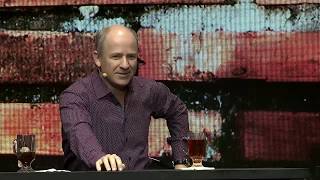
Interview with New Relic founder & CEO Lew Cirne (moderated by Jason M. Lemkin) explaining how New Relic scaled the second time: focus on an exceptional "first-minute" user experience, starting in a narrow Rails developer segment and leveraging community thought-leaders/hosting partnerships for launch, iterating pricing (introduced a Light/free tier in Sept 2008), adding inside sales around 2009 to convert users, and growing into a multi-SKU "software analytics" platform that expanded into enterprise accounts. Cirne emphasizes conservative early fundraising, balancing product-led growth with sales to scale, horizon-based R&D for future products (Horizon 1/2/3), and hands-on customer engagement (including a reported 129% net expansion rate).
Questions this video answers
June 2008
September 2008
Approximately $80–$100 per host initially; later a $200/month per server tier was offered.
About 400 customers (via a Rails hosting partner on day one).
Series A roughly $3–3.5 million; Series B roughly $6 million.
Chapters
Mama. Life had just begun. But now I've gone and thrown it all away. The most precious thing we have on this planet is time. Life's too short for software. We are the future. We are all data nerds.
With product. Because I want to ask a couple sort of revenue related questions on products. So my first exposure to New Relic back in the day at EchoSign is my CTO came to me and said, we're using New Relic now. Where the hell was this product? Right. We built our own hack system before for apm, or what we call it today. And he was in love. And I think, I'm sure you can tell me, the NPS of New Relic's very high. And people, we know this stuff, right? But everyone loves their product, right? And there's a million great products out there and you can build great software and never be a huge success. So what is the secret, the real secret sauce for New Relic? Why did it become a success fairly quickly? Right. I know there were a few bumps. We talked about Lehman Brothers in 08 and 09, but it was a fairly fast path to success. If we ignore the peaks and valleys, we'll talk about what was really the secret sauce.
Well, life is, I think the best blessing was I had a chance at a do over. Right?
Do over.
You know, my first company was kind of like the learning experience of creating a new category, trying, you know, inventing something that we thought solved the problem, but learning along the way what the problem really was and who the user was and what they needed. And along the way we built a nice company. But there were flaws in the business model which are the flaws we know about, about traditional big ticket on premise enterprise software and the heavy go to market model. So I've loved building software since 1982. And it was only after I sold my first company that I realized as a builder of software, it was really my fault on the product side for building a product that said yes to everyone for every request.
Yeah. And just a quick. For the yes, your first, your company for that was Wiley and it was sold for 400 million or 300 some odd million, right?
Yeah.
Wiley Technology by any absolute sense, a huge success. Right. If we ignore all the trials and tribulations getting there. Right.
No regrets, but it was a wonderful prototype. Prototype.
You said yes to everything, Right.
So we had this product that we could solve lots of problems. But Jay, just masterful talking about how whatever you can build in software to reduce the human effort in getting the customer to a delightful state, immeasurable value to your business model, but also it's a better customer experience. So let me paint the picture of the founding months of New Relic or the period of time when I really the idea of New Relic came to mind. It was the summer of 07 and the iPhone first came out.
Yeah.
First iPhone. And I got it like everyone, many people in this room probably did pretty shortly after the launch. And what stunned me was Apple put so much R and D into the first minute of experience with the product.
Yeah.
You know, so I've used my iPhone for years. But the minute the unboxing and the self activation of the phone, the fact that somebody at the Sprinter at and T store in the past activated your phone, put all the stuff in so that you could use the product. Right. And Apple said, no, we're going to put a lot of software design and engineering effort into that first minute because it's the most important minute.
Yeah.
And I thought that's missing in enterprise software. People think about how's the software going to behave after the months of consulting services to get it working. What that does is it disempowers your customer and it dramatically increases your cost of customer acquisition. Yeah. So I put a lot of time thinking about that, like what's that unboxing like experience of discovering New Relic. And because that's when a prospect is not so sure about you as a vendor, they're like, oh, new relic, funny sounding name. Oxymoronic. What do they do? I don't know. You've got 60 seconds, maybe 180 seconds to impress me. The timer starts as soon as you sign up. How do we wow the customer then? So that was super important and I feel like it's part of the success.
Yeah. And how are you since we went back to the early days? So you see the iPhone, you have the Wiley experience, you want to have an amazing user experience from day one. You want to bring the iPhone to the enterprise which is I think today we all get. But back then was a little bit more innovative. Right.
Thanks to your publications, we now all understand we all get it.
How did you get it? I mean you were a second time founder but how did you get New Relic really going? How did you get the first hundred customers or two hundred? What was the hack that got it off the ground?
I mean, well, it was not having the benefit of the collective wisdom that's in this room today. I mean this was mostly landed on, you know, learning from my first one, as I said. And so how we got the thing going Was you know how lots of companies get started. I started this with a prototype actually was new Relics started as my teach myself Ruby on Rails project. I still love to.
I remember reading that. Yeah, all right.
And so I learned this language Ruby. And one of the things about Ruby that's kind of interesting is how easily hackable the code is. And so there's part of me that says, wow, I could build the equivalent of the Wiley agent a far better one, far faster.
That's a classic Ruby story right there.
And so that was my little teach myself Ruby project. So I was looking for things to do on my sabbatical and then I showed up people like wow, we could really use this. And I was like, well maybe I'll do the base camp thing and self fund a little lifestyle business. Not to in any way disparage that, I mean like a great lifestyle business, but the idea was just how far can I go with this little idea? And it turns out that it had the potential to be much larger and it made sense to attract venture funding. But one of the. So I showed it to the I found a way to connect with thought leaders in the Rails community and one of the things that I think is super important is early on picking the right size of market segment to focus on so you can own it. Ruby on Rails performance marketing it certainly wasn't market size that attracted benchmark to that deal because it's a great market but it's not a large market but we could own it. And the way we owned it was we reached out to the thought leaders in that community and we got them to try it. So on the day we launched we had references from the likes of Basecamp, 37signals at the time and a few other Rails core committers. And we had a partnership with a big Rails hosting company at the time that brought our product to 400 customers. Day one, got it. And so yeah, you gotta be thoughtful about how you launch it can't just be product.
So hyper focus on Ruby and Rails and direct outreach to enough folks to get those first 10, 100, get those thought leaders.
And Twitter was in its infancy but all those people are on Twitter. So like you got this wonderful. The best marketing of course is when thought leaders are talking about your product on your behalf.
And so was that did you know to go for it and do a non lifestyle business at that point or when was it after that? Or when was that moment when so.
Peter Fenton Loud benchmark, he's a dear friend. That was his first venture deal in 2001. So we go way back.
Got it.
And he has remarkable wine collection, it turns out. Well, he has a remarkable wine collection. And I remember having a spectacular glass of wine in 2008 where we thought about whether we should work together again. He said, if we're going to do this, let's build a great company together with no regrets. And let's see how not just obviously that implies being big and having an impact and growth and revenues and all that, but like somewhere we love the journey and there's nothing we'd rather do than be engaged in this business. And he's remarkably persuasive and he was true. So that was what we decided to try to do. And it's kind of fueled how I thought about new Relic along the way is like let's never regret a Monday doing this thing. And that drives why we like to deliver our product to more customers, to more end users and deliver more amazing products that do the bulk of the selling. And I know this is probably part of what you want to talk about, but what's the role of product versus sales professional in the process is super important to think about when you build your business.
Yeah. So let's dig in there for a minute since you brought it up. So new rock launches. It's a freemium product. Right. It's going to be huge. But it's freemium. And we'd all love.
Jury was out on how huge it was going to be.
What's that?
Jury was definitely out early days.
I mean, well, we all hoped that freemium would scale back in the day. Right. 0706 we just. It seemed like freemium was this magic. And sometimes it is.
Yep.
And then what were the learnings? Where did you see. Did you. Was it just going up market or did you see a ceiling to that early or what?
We learned a lot. And you know, you learn a lot by just engaging in the market. So the first time we launched in June of 08, no free tier and we had those first three or four hundred customers through a partnership and then they were trickling in one or two at a time thereafter because we just thought the product would just attract customers. And that's surprising for a second time founder. But I was like, how far can we push this with the leanest and.
What a new relic cost then if.
You bought it off the website, surprisingly similar to today. I think that point we had like $80 to $100. A server or a host, I think was the price point back then. But it was a much lesser functionality. We hadn't developed some killer features that we knew the market would value. We were moving really fast. So we had another major launch three months later where we had all these new features that could differentiate the tiers go out at $200 a month per server. And I remember my chief products officer and me just saying what should we do about free? And we decided to go for it and try it. And that had immense impact on our top line. So when we launched the higher end product we also offered launched Light in September of 08. And then the chart had one of its first. These are all bursties. But it had a nice period of time where sales really started to come in. Driven off the awareness that Light brought to the market.
And then when did you come to the conclusion that having adding sales people would accelerate that versus take away from it?
Yeah.
And it's something we all struggle with. And the more sort of developer product focused you are, the more sometimes folks wrestle with this question.
Sure it is. It's a great question. And I feel like the history of a company has been how far can you take it? Take it to the extreme to see how far you can go with a certain thing, learn from it, and then sort of feather in things that can help accelerate your business that come with a structural operating cost, like sales. I'll talk about support as another example. So we went throughout all of 2008 without a sales rep and we got pretty far. And then again, Peter Fenton, I think he was the only board member in most of 2008. He said, well, who actually talks to your customers? I'm like, geez, that's a pretty good question that I should have the answer to. Because we didn't have someone full time.
Talking to customers, even just on success, what we call customer success.
Yeah. Of course we had people answer the phone, but nobody really fully tasked with that very small Lean series A company. But we decided to experiment with what would happen if we had someone calling out to prospects, calling out to free trials and things like that and trying to convert them. And lo and behold, they converted better. Because it turns out that even with an amazing product that people love, our customers are super busy. And there's always a reason for them to defer that purchase their subscription decision to next week.
Yes.
And so we have to offer our customers a reason to prioritize the decision now in order to. And it had an immense impact on sales. So we started to build out that inside sales force starting in 2009.
Yeah. And just for fun, because we had Jay before to put words in his mouth, which might be the wrong words. You might say, well that's great, Lou. You put the salespeople, you pulled the revenue forward, but so what you'd get the customer anyway. And I'm going to get them for 10 years. So it doesn't matter is your experience. I think what you learned is if you pull it forward, you close more of the customers. Right.
That's been our experience and it really varies by product and market. And I think Atlassian is a remarkable story of how they've been able to do it without the sales function. But in our case, we wanted a model that was a flow affordable for smaller companies, but scaled very nicely with large companies. And so, you know, and we do have a very nice like tiered customer base where we've got well over 25% of the Fortune 100 and many, you know, multi million dollar a year. Million dollar a year subscribers.
Yeah.
But we also have an awful lot of $200, $100 a month customers. And so the sales function was essential to kind of driving people into those higher tiers. But what I liked about the new Relic model that was departure from the previous one is you could get started at a reasonable price point because the product was so self explanatory and easy to use compared to the others in our space. And believe me, systems management is not known for easy to use delightful software. So we kind of had an opportunity to really differentiate there and we did. And so the sales team was really about getting people who already tried and liked our product to make a commitment to be a customer and then grow them as customers.
Yeah. And how. And New Relic has, I would describe it as relatively sales efficient. Right. Certainly compared to a lot of companies out there. How did you think about that? Did you manage, did you manage to any of these goals in terms of CAC and magic numbers and ratio? Did you say we'll spend this much on sales but we don't want to impact the bottom line too? Or is there a way you hacked or backed into that? Because I'd say new relics, kind of this middle path between blowing it all on the team. Right. And spending none.
We've never thought of ourselves as a growth at all cost company.
Sorry, say that again.
Growth at all cost.
Growth at all cost company.
And I feel like there were several of those in prominent places two years ago and, and that's obviously the tide is turning a bit on sentiment around that. My CFO Mark and I have worked together since 99, two companies now and we always wanted to have good control over the business. We raised money after 9, 11. We raised money on the crash of 2008. We've seen it all. This is walking.
You're blood brothers or something like that.
Just so easy compared to what we've seen going on right now. And so we always wanted complete control of business. That's why we landed on the SaaS model. We wanted very predictable revenues. We didn't want to beholden to one or two customers. So you relic no customers. More than 2% of our subscription base. And there's a variety of ways we did at cac, LTV and things like that. But one of our gut checks was always periodically I'd check in with Mark and say, if we froze hiring today, how many days until cash flow? Even in series A, series B timeframe.
Yeah.
So what if the market fell apart today and there was just no sources of funding? Would we have to have layoffs?
Only those of us that live through those moments in time do that exercise.
Right. And it was always 90 days or less. So we could freeze hiring, keep the investment where it's at, and then within.
90 days there's enough growth, you'd catch up to it.
Yeah, yeah. And so there are various ways we do it. Today it's a little different. We're at a different level of scale. But now we just generated our first cash flow positive quarter we announced last week. It's always been a business we've had under control and a big knob in that is sales and marketing investment, obviously.
Yeah.
So yeah, it's by design.
And tell me a little bit because I want to learn more about, talk about the journey as you go from something that's still very much an engineering and developer focused product, but consumed by more and more people in the company, the enterprise. What are the. Because a lot of that's not obvious. Right. And some people overstate. That happens. Right. I mean, how many of your customers are CMOS directly, but you have a much larger footprint in companies. So what are the learnings and what happens here over time?
This has certainly been a journey that I started back in Wiley, where I remember in 2002, three, we're like, all right, we have this agent observing everything in software.
Yeah.
And just take what goes on in software. Every time you deposit a check, that's flowing through software. Every time you purchase something online, that's flowing through software. That data has to be valuable to more than just the people that debug the software. So this has been a problem. I've noodled on for well over a decade. And yet of course we want to stay true to this. Incredibly, the developer community, they create massive market technology standards. The developer community created the standardizations that are AWS and MySQL and Linux. It wasn't a top down CIO dictum that says we're standardizing on Linux in 99.
Yes, that's for sure.
Army of grassroots developers that find something that's better and then inevitably work their way to the enterprise. So we want them as a key constituent. They're a hard crowd to please and if you please them, your competitors are going to struggle to try to migrate over there. Then there's the IT Ops team and they're a super important constituent to us as well. Because if you're going to standardize across a large enterprise, central IT has to be involved, super involved. And they're often driving that decision. So we, whereas New Relic a couple years ago was doing great on digital and departmental deals and showing success in the modern customer facing projects that are driving the top line. Now we're standardizing like we just announced last week. We're global standardized General Electric now and that involves engaging with it.
But they're looking for something different out of New Relic, right?
Well, they have their own requirements, they.
Care about user interface or whether you can deploy in 15 minutes.
Look, they spend a lot of time in front of crappy software so we're going to liberate them from that tyranny. But they do have their own requirements, they have manageability, they care about making sure the right people have access to the right data. And you know, there's a long list of things that they care about and we have made those a priority. And then the third constituent to your question is the business folks, the digital business leaders that want to see how many widgets am I selling on my E commerce site or they're stakeholders clearly.
In New Relic today they're stakeholders.
Yeah. So our vision is we're the first best place to look to understand your digital business, whether you're developer, operations or digital business leader. All coming from the New Relic platform.
Yeah. And how do you.
I think that's a big opportunity.
It's huge. And how do you market that? How do you communicate that message versus the message from three to four years ago?
Well, it's this conference. I mean that's all I need to do. It's done. So you know, really we think about again, how does New Relic get discovered at an organic level?
Yeah.
So that rather than how do people Search for new relic more rather than us us blasting new relic through the traditional marketing channels. And it starts with an amazing product that people tell their friends about and it starts about communities of people that self reference and then that gets us into an account typically. And then what's the marketing and messaging plan once you're in the account? So typically account acquisition happens through the developer or the innovation engine in an enterprise that wants great stuff that works well, that's SaaS and that's easy to use and modern. And then how do we message that to grow within that account is the nuance of how we go to market. Right. Because you do need a slightly different message for different constituents and they all are important.
CIO's office of GE's looking for different things.
They are, they are. Well, what's exciting to me is GE has publicly declared themselves a software company. So those really cool commercials about how like you know, GE's a software company. Right. So if you're transforming and this is happening across the world, companies are becoming software companies and they realize the old vendors, especially in systems management space don't understand that motion. They don't understand agile, they don't understand fast iteration, customer satisfaction.
They don't understand it or they just don't want it or they can't or don't want to change.
Well, I don't think they have a culture of delivering on that. They have a culture.
I don't think people. I think we. I don't think anyone's stupid out there usually that has a real business.
No, no, no. Yeah, that's fair to say. Maybe they understand the concepts, but they have decades of operating a different way by and it's baked in their financial model, their compensation model, their product engineering discipline across the company. So that's why we think we've got an opportunity.
Yeah. So on a related note, how have your views and what are your zen learnings on competition through the different phases of new Relic or even before? Because it's. You're in a competitive space, but I think in a segment of a very competitive space, you have a fairly strong market presence, but not in every segment. And how does that change over time? As you even just get bigger, you have large numbers to start thinking about, right?
Sure, sure. It has changed over time. Early on we had very little or no competition in APM and SMB and that created. I'm from Canada and I felt like our company kind of became just this nice Canadian company that everyone liked to work with. Got it. And then all of a Sudden, as we grew, more and more folks coming up Sand Hill Road saying, we're going to go straight at New Relic. We're going to out New Relic. New Relic. And then, of course, as we move into these large IT budgets, there's a bunch of people saying, that's my turf. You know, they're going to get defensive about it and get really aggressive on us. And so we've had to learn to be a little less Canadian culturally. If someone punches you three times in the face in the schoolyard, you know, you got to at least defend yourself and maybe punch back.
I feel like Kumbaya ends around 10 million in revenue.
Yeah. Yeah. And so we have gone through that change over the last three to six months. To be candid with you, you culturally. And it's great. It helps us mature as a company. I mean, we can't lose sight of the fact that our mission is to deliver on that vision I just described and to do it for, well, we do it for hundreds of thousands of users today. But there are obstacles to achieving that mission. And those obstacles involve, we think, competitors with products that have a poor user experience, harder to manage, harder to use, and really do our customers a disservice. So it's in their interest for them to see the light that is New Relic.
Yeah. So on a rail note, because I know you've so in terms of raising tons of capital and competition, you know, the more we sometimes wonder what's going on in the market, sometimes Relic, I think is a medium. I think you raised like two small by 2015 standards, relatively small rounds. Right. Maybe a third and then IPO'd. Something like that. Right?
Yeah.
And when your competitor raises 100 million or 80 million or 190 million.
What'S.
Your advice to grok that and think about it. Because it is real money. Right. And it enables folks to do things that aren't particularly profitable. Right. And you're in Kumbaya land. I just love my Canada. Right. And why can't we all be friends? And then you wake up and you read TechCrunch and they raised 100 million. Right. What's your advice or Zen learnings there?
So, first of all, let me take a little history on the funding of the company. Our Series A was 3, $3.5 million. Our Series B was $6 million. We raised small rounds by design because small rounds early on are forcing function to help you really think hard about your model and the scalability of your company and to be wise with your investment dollars and focus is so important early on.
And you clearly could have raised much more after Wiley. You could have got raised as much as you wanted.
Yeah, we had offers to raise a lot more money and, and we felt like, look, capital is, there are times when you need capital solved problems. There are times when you need really smart thinking to solve problems on a smaller scale. And especially early on I feel like companies over capitalize. So we didn't want to do that. I think a lot of our competitors did because you can kind of, you can manufacture growth with spending and certainly we invest for growth but as I say, we're not growth at all costs. So early on when we felt like we had a really solid model, like for example last quarter we announced a net expansion rate of 129%. That means that if we don't add another customer to the company today, net of churn, our business will grow 29% over the next year.
Helps with the nuclear winter strategy too.
It certainly does. Right. And so you know, that's part of the model we've built. And so if you kind of think about how you structure that capital. I love exactly where we are in this competitive market and this challenging public market situation because I feel like over capitalized competitors have a lot of hard work to do to figure out how they're going to rationalize their businesses in this kind of market. And I don't think we have that problem.
Yeah, I think that, I agree. I think what there are two, but there are two in competitive landscape there's two ways to take advantage of being over capitalized. One is just throw money at growth which assuming you have an engine sort of works. Right. You can have a bad cac, but you can force yourself in. But the other thing you can do with a lot of money is you can play dominant dominant strategy and you can say, you know what, I can't really compete in new relic space profitably. Right. I'm gonna, I can't, I'm gonna lose, but I'm gonna do it anyway. I'm gonna put 10 million. And you know what? I'll never make money competing with new and I don't care because I can play dominant dominant. And that is confusing for founders.
That's why I say this is a wonderful time because that, this is a wonderful time because that might have worked two years ago when multiples were through the roof.
Yeah, that's an advantage is play dominant dominant.
You're not going to be able to fund a money losing company with that strategy in today's investor environment. Nor should you. And so again, if you've got the time frame, we have the time horizon. We have in our decision making, focus on building awesome stuff that our customers love. Those will be temporary distractions for sure.
So let's talk a little bit about as you get bigger, how the product grows. Right. With Jay Delassing, we talked about four products, which to me still boggles my mind. It's a lot to manage. I think you've still got one ish product, but really a family underneath one ish product. Right. And you've re. You're working. I don't even know what the acronym today. New Relic is an APM anymore. Right.
Software Analytics.
What is this?
Sorry, Software Analytics.
Software Analytics. Okay, well that works too.
Sure.
Just do your Series A again just on that. So what are your learnings? How long do you stay focused? Do you let the market pull you? You didn't like that experience at Wiley. Right.
Right. No. So.
But not every.
Yeah. Let me. This is a wonderful opportunity to clarify something. We have five SKUs, all organically built.
Yeah.
And they all work flawlessly together. So you may think of it as looking like one product because it's such a seamless, integrated experience, which again is just unheard of in the systems management space where historically these companies have built their product portfolios through acquisition and they've never worked well together. So we've done the opposite. We half our business come from multi product customers. What have we said publicly? We've said things like, I think, geez, I'm gonna get myself in trouble on what we said publicly.
But it's just too rough and tough.
You know, north of 20% of, well, north of 20% of bookings we've seen seen in a given quarter have been non apm. And so our other products, and this is part of our strategy is this platform where APM monitors to help the application running on the server. You want to see what's going on in the mobile device, that's a separate problem. You want to go see what's going on in the browser. You want to do synthetics, if you remember, like the Mercury business back in the day. So we have new Relic Synthetics, which allows people to actively monitor their application. Then of course, New Relic Insights, which opens up this whole analytics opportunity to start servicing the various needs of the business user. And so we now do five product deals routinely and customers are buying us in on the solution. And that's a big part of our competitive strategy, is that it's not a kitchen sink strategy. It's that these things belong together and the whole problem needs to be solved, but that it can't be done through rolling up disparate products that don't really work together. And so that's why I think having an R and D centric culture and I described newer like as a product first company that works to our advantage over the long term.
And how do you. And as the product does, as you have the five SKUs, do you let the market pull you there? Because it still is distracting. Each SKU is distracting and we'd all love in a perfect world to do one product, have no competition. Right. And just. It's just like a social network. You wouldn't like that, right?
I love building products is what.
No, no, I guess that's. We would love to keep building products but. But building 50 is a lot harder than building five.
No, I don't want 50. I want. Yeah, some products, maybe.
How far?
Well, there's a bit of the market pulling and then of course there's the whole. I mean what's beautiful about the technology industry is sometimes there is this harebrained crazy idea where you try to define where the market will go.
For sure.
Wiley was that and then New Relic was that for democratizing that category of software. And now APM being something that's a little long in the tooth now as a 17 year old category, software analytics was about servicing the needs of the business user. So there is a bit of that innovation that you can't find in a customer meeting or in a Gartner report or an IDC report. But then that has to be also a healthy balance of just listening to your customers, asking them what their problems are and solving them for them. A key part of why I think of a product strategy is it obviously has to be something that we believe makes business sense. We can sell it and we can offer it to probably the same buyer or similar buyer, but also has to have this unnatural advantage of leveraging what we already offer the customer. We can't just build it in isolation of what the market wants. We also think of what are our unique skills and strengths that make what we can offer so. So differentiated that again, it comes back to that whole the way you described at the beginning. I think we generally have a really good brand with our customers for building stuff that kind of pops that people like to use and that has to be part of why we decide to build something.
Yeah. One of my things I like to do to a fault is oversimplify things to make it simple. So I Tried to have a rule that 25% of development time was focused on stuff that I know we need to build that I don't have customer demand today for. Right. How do you think go into that category of the future that you can see. Right. But you don't have demand today. Did you budget it? Is it at this scale? How do you think about that?
Yeah, I think it was a McKinsey report that kind of defined it in horizon one, horizon two, horizon three. I'm not sure I got to read that one. But basically the notion is your Horizon one product is your established product that has been paying the bills and is kind of the flagship of the business today. Horizon 2 is the newer stuff that's in the market that's growing faster. And Horizon three is almost speculative.
Horizon three. So how much time do we should spend there?
In a way, it's kind of reminiscent of my comment on capital. You don't need a lot of capital on Horizon three, but you need to put really smart or really capable builders and innovators is a different skill set. Comfort with uncertainty and ability to face the fear that what you're building may suck or may have no value. Things like that. I face that fear continually when I create things.
Yeah. They can't lose their job.
Right? Right. So I'm certainly not, you know, the whole coding CEO thing is a bit of my, you know, my Persona. But I wouldn't want it to be interpreted that that's like, you know, the innovation engine of the company in and of itself. I do it as a therapeutic thing for me. It helps me think and energizes me for coming back to the company and connects me with what we're building today and what the needs of our customers are. And sometimes it comes out, I come out with ideas that actually help on Horizon 3. Yeah. But we have a Horizon 3 team. It's a small team. And then the trick, though, is, I think Jay spoke this a bit. You got to think about when you're building products also, who are the people that you have and can they build amazing things. So you don't want that Horizon 3 team to just hand it over the Wall to Horizon 2. When it's done, they kind of need to migrate over because that ownership of the success, the product from the builder, that product needs to continue.
So you need to let the Horizon 3 folks own it in Horizon as it becomes Horizon 2 is the learning.
Yeah. At least one or two engineering leaders that are kind of, in a way, they're the founder of that idea. And great products come when there feels like there's this ownership, that this is your baby and that you want it to succeed. And so in the case of New Relic Insights, that was for me, the idea hit me for the insights database technology. December 29, 2012 I was in Tahoe with my family and my wife knows that when I get that idea I get a little crazy. But like, sometimes great things happen for the company. So she packed up my daughter and they went back home. And then I coded for 10 days in Tahoe and I came out with a database, or at least the beginnings of a database. And then I stayed through with it through the first six months of the year. So I was, you know, I had a very strong president, kind of someone who's, you know, you know, in some ways reminds me of Jay who I said, look, I'm gonna be less present for a lot of the Horizon 2 Horizon 1. Running the business, sales, that's all important stuff. And I'm not gonna disengage entirely. But for the next six months, I wanna make sure this thing becomes a product.
Yeah.
And so I'm gonna build the team around it. I'm gonna cordon them off from the whole keeping the company running so that it has enough focus and momentum to make it through to the market. And that's how it came out.
So just on a relate, especially for founders here that don't have an engineering background will all end up getting at least even early one or two just insane great engineers that are hackers that can go out and build you something in a week or a day that would take anyone else 90 days and a whole PRD to build. And they build amazing stuff for you. But is your advice to try and get them then to own the product as you truly put it into true production? Do you think that person can own it to the CIO of ge because you have more experience than me, but I found that a struggle to have her continue to own it. As the product gets handed off to sort of GE level.
I think it needs to get to a certain level where it's probably past the first ga. But I think one of the great art, the great art and difficult part about managing builders of software engineers in particular is somehow trying to align where the company wants to go with what they desperately want to build. And they're rarely in perfect alignment. So it's a bit of a. Like the last thing you want to do is tell them, don't do this thing you're very passionate about. Never do that. Do what I want you to build. Right. They'll leave the company or they'll grudgingly build something that doesn't wow the customer. But you somehow need to attract them over to where you think the company needs their creative juices and kind of challenge them with, I wonder if it's even possible to solve this hard problem. I don't think. Do you think you could do that?
Really?
Why don't you give it a try and then all of a sudden they come away with something. Magic. Yeah.
I really think for, I mean, this is one of the most important skills to learn as a CEO if you haven't done it, is how to make your best people do that.
Yeah.
It's not easy, but it's fun. You're better at it than me, but it is fun. Especially when the big customer asks for something that was already on your roadmap, but not for this week. And we have to build it tomorrow and it's boring and it's a lot of work.
And what if it's better than what the customer even imagined? That's when magic really happens.
That's the magic. Right. So I want to go before we run out of time. I want to go back to the comment you made earlier about Peter Fenton telling you to talk to customers.
Yeah.
So let's fast forward today and let's tie that into that 129% net negative churn number, which is magic. It's the magic to all of this. How much do you spend with customers now and how has that changed over time?
Have a customer call this afternoon. Yes, I budget about three to six full days per quarter for that now.
Three to six days a quarter?
Yeah. You know, around that. I have a budget for investors. So many days per quarter.
Who gives you the quota? Is it a self quota or is.
Your every officer do it every December? My ritual, my New Year's resolution ritual is how am I going to divide my time for the rest of the year and align it with needs of the company?
Three to six days with customers.
That's where I'm at today. That'll change depending upon the needs of the company.
Yeah. And do you get pulled into more deals now that you have bigger deals? I mean, you do probably have to talk.
Erica's going to be here, our head of enterprise.
We'll have her talk about it this afternoon.
Probably thinks not enough.
Not enough.
But we want to be strategic with it.
Do you spend more time with customers than you did three or four years.
Ago as you've gone it's gone through. It's gone through ups and downs. I'd say a little bit more.
A little bit more.
I love spending time with customers. It's wonderful. It's a source of ideas and inspiration. It can be a big time investment, especially if there's travel involved. And I feel like for those of you who are builders of software in the audience, the 15 minute interruption for that one quick call can blow whatever creative zone you are in.
It's half a day, you lose half a day.
Yeah, yeah. So that's why I like to block times where they're just sacrosanct. So that may be good creative things come out of it.
Let me ask a related question and maybe Erica owns both, so we can have.
Have.
We can find out this afternoon. But of those, does that three to six hours include existing customers and prospects or is it just existing customers? And how do you balance your business?
Usually both. I mean, like a large portion of our business comes from upselling existing customers, you know.
So what's a better use of today? With 129%, what's a better use of your time spending time with existing customers and making sure you kill it or landing the next ge? What's a better use of your time today?
Look, it's not a good use of my time to bring me in to close a deal. It is a good use of my time to align with leaders within customers and prospects to get them excited about the new Relic vision and to make sure that they feel like they're partnering with the right company. We're building a, you know, we're trying to build a very high quality that goes for a long period of time. When you're a ge, you're not looking for, you know, the feature that today you're looking for a partner.
Yeah.
Hopefully that goes for a very long period of time. And I'm delighted to have those kinds of conversations.
Yeah, but you need to meet with GE today as much as ever, don't you challenge me if I'm wrong, help educate me. But I think New Relic is a big company compared to a lot of peers here. But compared to ge, it's a little tiny company.
But, you know, part of scaling as a leader is it can't fall all on your shoulders. I mean, our president, Hilary Cobwell McAdams, is incredibly gifted and talented and she was president of the sales of Salesforce. Her Rolodex is better than mine.
You get scale. There is the key.
We got scale. So, like I get brought in when it's about product and vision and technology, strategy and values of the company.
Yeah.
And then Hillary can do just fine speaking to any cio.
Yeah, but that's magic and scaling that. She can do that for you. Right. Not everyone has that asset.
That's the essence of building a great company, is finding amazing people to help you with the journey.
That's for sure. All right, Lou, this was amazing.
Thank you.
Thank you very much. This was great.
All right. Thank you.
Yeah. Thank you very much.
Thank you all.
It.










