Live from SaaStr Europa 2022: Cantina Stage
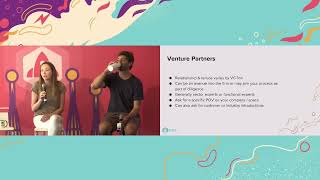
Panel discussion (SaaStr Europa Cantina Stage) between Zach Kohlius and Tiffany (GGV Capital) about navigating the VC ecosystem for early-stage B2B software founders. They cover how to work with VC associates (their role, how to present a concise "highlight reel", and what metrics they benchmark), scouts (how scout investments work and the signaling risks), venture partners (value when they bring deep industry expertise), and syndicates/angels (practical experience raising via AngelList). The speakers emphasize key fundraising metrics—ARR, retention (gross and net dollar), gross margins, sales efficiency, team hires, cash/burn—and warn that the fundraising market tightened recently (example of a late-stage deal that fell through and repriced).
Questions this video answers
June 9, 2022 (SaaStr Europa – Cantina Stage, YouTube video)
A little over $9 billion
Checks ranging from $500,000 to $5,000,000
Approximately 4,000 people
27 million ARR, ~90% gross margin, expected ~60 million ARR by year-end (used as an anecdote about repricing risk)
Chapters
Early stage B2B software companies. So two people in an idea all the way up through, you know, they can get pretty big, but. And I write checks anywhere from 500,000 to 5 million. Tiffany is much more fancy than I am, so I'll let her introduce myself herself. But yeah, we're excited to have you all here.
Yes, thank you guys all for coming and really no introduction needed after that. So thank you. I'm Tiffany. I'm with GGV Capital. We are a global VC firm. Have been around since 2000, manage a little over 9 billion. Invest all around the world at all stages across technology. And super excited to be here today. Thank you guys all for coming. And as Zach said, yeah, we'll chat through some of the different players in the ecosystem and talk a little bit about raising capital.
I love that she can say with a straight face that they manage $9 billion of capital. I mean, literally, like if you stack that money up, it would probably go to the moon. It's just a huge congratulations.
Thank you.
Yeah, yeah. They also have a really good podcast, by the way. What's the podcast called again?
There's several podcasts.
Okay.
Yes.
What's the one Hans does?
There's. There are next billion.
Okay, That's a good one.
Is very good.
Yeah.
We also have founder real talk to talk about with a lot of founders talk about the actual grit of building a company. I also host a podcast called the Future of where I talk about all things the future holds. Especially talk a lot about executive coaching, which I'm a big fan of.
Yeah, I highly recommend it. That $9 billion pays for a lot of high quality production. So it's actually like a really good set of podcasts. So I highly recommend them. I don't have a podcast. Not that cool. So anyway, today we're going to talk about four things and then we'll throw in some other stuff just for fun. First, we're going to discuss working with VC associates and we'll kind of explain who they are and what they are and what they do and really a lot of ideas around working with them. They've got both pluses and minuses. It's working with associates can be challenging if you know what you're doing, it can be easy. So it's all about going into it, the right strategies when you work with associates. Then we're going to talk about scouts relatively quickly. Scouts are a relatively new thing, but there's lots and lots of them out there now and they run around throwing around the name of the VC firm that there's a scout for, and you really need to understand where they fit in the ecosystem. Then we'll quickly talk about Venture Partners, which is a whole nother brand of VC that's not really a vc and you can kind of understand how they work. And then the last thing we're going to discuss is syndicates, angels and other folks who sort of orbit around the VC firms. I started my career running an Angellist syndicate. I still do. I have 4,000 people who invest with me on Angellist. And so I've spent the last eight years doing that. And so it's, it's something that's near and dear to my heart. And yeah, if you guys have questions, we look forward to hearing them. And yeah, hopefully this doesn't suck too much.
Okay, perfect. I think we can. This is. Doesn't need to be said, but, you know, there are many players in the VC ecosystem, and so your entry point to fundraising might be with any one of these players. And so I think, you know, we're right now just trying to give some advice around how to think about maybe your first meeting or first couple of touch points when you're raising capital. So VC associates, and I think this actually really goes to any first touch point at a VC firm because oftentimes investment teams can be quite large and, you know, you're talking with one person first who's then going back and relaying that information, you know, back to their team. And so what you really want to do is think, how can I package my story up? How can I give good highlight reels? How can I share why I'm excited with this one person or one or two people I'm chatting with who are then going to go back to their firm, back to their broader team, who may or may not be experts in your sector and actually convey that same level of excitement. So, VC Associates, one thing important to say, deeply trusted internally and can be really, really good at, really good, helpful people for you, really good allies, really good resources. You know, if they're excited about your company, like they can, they can help you across. Get across the finish line.
Yeah. One thing that I always like to tell my companies that I work with is that the associate can't necessarily get the deal done themselves. They're your advocate, but they can absolutely kill it. So if you don't make friends with your associate or whatever associate is working on the deal, and there's always going to be one involved doing research, if you don't make friends with them and you don't make them your ally. They can absolutely make sure that deal does not get done. And so it's super important that even though they're not the final check writer and they don't have the final say, you really, really need to make friends if you can.
Yes. Okay. A few other things. Broadly, how do you think about associates? And maybe I think it's helpful sometimes to say how do associates spend time? A lot of times they're actually doing very deep research in your sector. They're spending time with a lot of companies in your sector, you know, probably a few sectors, but they're, they're doing deep research, they're finding companies, they're sourcing, they're doing diligence, they're benchmarking. And so they actually have a really good set of knowledge around you. Your company oftentimes have a lot of perspective and again, have met others in the space as well. Most likely they do tend to take first meetings, may or may not be joined by others on the team. They then analyze your metrics. Again, back to the benchmarking. So they're kind of looking for specific things. How are you relating to top decile of companies in your space? And so we'll talk through like how to think about presenting your metrics and making sure that you're actually talking about the metrics that matter, you know, broadly. Like they're kind of quickly assessing the opportunity. Is this interesting? Is this something my firm's interested in? And you know, do I take it back to the team and try to move this forward? And so to that point they package and present. And I always say, like, I think this is good with anyone, not just associates, but anyone you're chatting with. What is the highlight reel you're going to leave them with so that they know like, oh, this is the company, right? This is that company I really loved and here's why. So give them that ammo and let them take that back to their team and just relay that message. So I think a few kind of excitement points I like to call them.
I think one of the other good things to think about when you work with associates is they can inform you about what they're seeing in the market in really powerful ways. So they spend a lot of time focused on your sector, your competitors, your ecosystem generally. And they often get to meet with many of your competitors. They know a lot about what's happening that you may or may not have access to as a result of your day to day job. And so one of the things that you can do in that meeting is after you kind of share what you do, you can start asking a lot of questions. You can be like, hey, what are you seeing? What's working, what's not working, who's winning, who's losing? And, and they can be this source of really, really deep intelligence that is incredibly powerful. And so I think it's another reason why being friendly and building that relationship is really to your best interest is because they can bring a lot of value back even beyond just helping get the deal done. So I think we covered a lot of this, so we don't really have to go too deep into this. But the one thing that you really want to remember in this process is, is they often come in with kind of like a checklist and they're going to be thinking about you relative to that ecosystem and relative to the metrics as Tiffany was talking about. She's going to walk you through some of those in a second. But like asking them what that checklist is and asking them what sort of like those benchmarks look like is going to really help you. When you think about how fast you need to grow, how profitable do you need to be? What sort of retention numbers are really critical for getting that deal done?
Yeah, and I think actually one theme you'll see throughout this is always asking. I think that's a good, a great point. Like it is a two way street. And so, you know, asking, what are you guys seeing for metrics? How do you think about this space? What's interesting to you? What do you focus on, you know, when you make investments in this space, which will just give you again, give you more ammo for next meetings as well. Okay, my favorite slide, the metrics that matter slide. And by, you know, clearly this is not a comprehensive list of metrics that matter because to some extent a lot of metrics matter. You know, I'd say broadly, we kind of bucketed them. Of course, you know, people want to know what's, what's the high level, what's your top line, what's your error at? How has that been growing and then roughly how efficiently is it growing? And I think, you know, this is, this has really always been the case, but especially in today's environment, you know, people are spending a lot more time focused on efficiency and growth and how you're thinking about that growth, you know, will it be sustainable over time? So one of my favorite metrics, I'm sure one of your favorite metrics as well is just retention generally. And not only, you know, a lot of People focus on net dollar retention. I think that's super important. You know, you want to prove that land and expand is working, you know, that your existing customers will grow with you. But I think gross retention is also equally important. You know, and making sure that you've really got a product that people love and, you know, you're selling into that right customer. And so it's a balance between those two, but making sure that, making sure that you're touching on those, you know, margins in general, gross margin, how. And, you know, possibly it's something that's expanding over time and if so, like telling the story around that. Right. Where are margins today? Where do you expect margins to be? What are the levers that are going to drive that expansion? Sales efficiency. It's a big one. Kind of also goes to, you know, how you're thinking about go to market. How do you have go to market set up? How are you reporting on it? And I think even more than, you know, just the actual numbers, really the logic around right now, where are you in the go to market journey and how do you assess where you are? So what are the metrics that you measure? How is your sales team set up or go to market team more broadly? And again, how do you expect that to change over time? Team size? Now, more than just the quantitative part of this, you know, there's certainly how large is the team? But another, another thing you'll get a lot is just what are the key hires you have to make still, you know, where are you expanding? And then to the last point, you know, what's, what's cash balance? What's your fundraising history been? And I think again, a lot of people right now are also focused on burn and burn ratio. And I like to always say, you know, it's not just about burn ratio today, but again, how do you expect that to change over time? And so your burn ratio, you know, you might be at 2 to 1 today, but you think that ends up going down to one and a half next year. And so I think it's constantly about where you are, but, you know, painting where you're heading. What will you add, Zach, on metrics?
Yeah. So one thing I would like to add to this slide that's not actually here is we are an incredibly different capital ecosystem than we were even six months ago. And the information is starting to get out. But I can share a story with you if you guys are interested in that. So one of my companies, SaaS Company, just like everyone else here, 27 million ARR, 90% gross margin, they'll probably end the year at about 6, 60 million. So growing incredibly rapidly. 1.6 million developers. So big good company a year ago that would easily have been a unicorn. A few months ago, we went through a fundraising process. We went out to all the VC firms, hedge funds, the usual late stage check writers, and a hedge fund came in, they're going to put in $50 million at a $400 million post. So that a year ago was. Would have been an incredibly cheap price. But nine months ago or nine weeks ago, that was the market. And a couple weeks ago we're supposed to close. So we sign the term sheet, we go all the way through the fundraising process, we got all the docs finished. It's supposed to close on a Friday. On Thursday, the hedge fund's like, nah, fuck it, we're not going to do it. We want to do 50 on a 250 pre. Companies actually beat their plan during those eight weeks in between signing the term sheet and closing the deal. But because the public markets have come down so much, so rapidly, the multiples that were the comps for this company had just collapsed. And so the hedge fund is like, we're not going to do it, we're not going to do that deal. And so now the term sheet is from another fund. It's going to be coming in for $25 million instead of $50 million at a significantly lower price than where we were eight weeks ago. And so I want to tell you that story because as the venture market is changing rapidly as a result of these multiple contractions in the public market, what we're going to see is these metrics are really going to matter. So like, when you go in and you're like, this is my business, they're just going to look at you relative to the public market metrics that they build their models off of. And they're going to just be like, one to one, what is it? What's like, what's ARR. Where are you in retention? Bing, bing, bing, bing, bing. And then like, and that model is going to really inform where your fundraise happens. And 12 months ago, you could have gotten a term sheet a week after you walked in that door. Now it's going to be a much longer, much harder, much more arduous fundraising process, more similar to what we saw two or three years ago, certainly what we saw in 2008, 2009, and after the last financial crisis, the fundraising market is getting harder. And so like, being more buttoned up with your metrics and knowing them and owning them is going to be really helpful in that process.
Yeah. Yes. And the one thing I will say is no doubt we are in a different market environment today than we were, you know, six months ago. Not everyone is behaving that way. So, you know, I would not, not expect that, you know, you're still having investors, are still investing, and obviously it matters, you know, your company and the metrics and all of that good stuff. But I would. That is not, you know, not everyone is acting in that way.
So GGB doesn't do that sort of shit.
Word to the wise. Yes, it's true.
You just mark up all my companies, like, I'll just hand them to you and you mark them up and we'll just keep doing it and this will be really easy.
Show us some more companies, Zach. The other thing I would say, I guess, you know, not to go on a complete tangent on the fundraising environment, but I would say yes, we've been talking about metrics and, and you know, it's certainly true that people are comparing metrics right now and thinking more about public market multiples. I would also say there's a lot of, like, strategic conversations going on just in terms of how you're thinking about managing the business through these times. You know, how are you thinking about playing offense versus defense? When do you, when do you think about accelerating again? Right? Like, when will you know, what are the trigger points for you to put your foot back on the gas? And so I think, like, having good answers to those questions or even just thinking through, like yourself, you know, how am I going to manage and, you know, when am I going to maybe be a little more aggressive, you know, versus, you know, versus be a little more cautious? So I think those conversations are happening as well. All right.
Scouts. So some people don't know about scouts. Some people do. So, but just to give you a brief sort of synopsis, a scout is an individual who has some sort of contractual relationship with a venture fund, where the venture fund will provide them with capital. I've seen them as small as 2 or $300,000. I've seen them as large as a few million dollars. And effectively the venture fund's like, here, here's a bunch of money. Go invest it. And hopefully it works. So they'll go to Small Angels, former CEOs from their portfolio, friends of the firm generally. And what they're hoping is that that scout is out in the ecosystem, finding early stage companies, putting in a check to sort of get access to information, get on the cap table. And then they're hoping that those scouts feed those deals back into the VC when the VC firm leads, or potentially would lead the next round. The problem that you're going to run into is that there is a pretty significant signaling risk when you have a scout involved in your company. So I'll give you an example. Let's say the person is a scout for Sequoia and they invest in your company. Now, every other venture firm that looks at this deal is going to say, oh, Sequoia is already in this deal. Sequoia's already been looking at this deal for the last six months, eight months. However long it's been, Sequoia knows more than we do. We need to basically be really, really sure of where we are if we're going to basically put in a competitive term sheet into this round. Or the worst question is, why is Sequoia not offering to invest in this company? And so you can often run into trouble when you have a scout on your cap table that's known to be a scout for the firm. And so this is where it's really important to talk to the scout very early on and ask them about, what is the relationship with the firm? How does that work? And how do you basically help us in that relationship process? Because if I had to choose between taking scout money versus taking unaffiliated money, I would always take the unaffiliated money rather than taking the unnecessary signaling risk when you work with one of these firms, but without having them deeply involved. But the plus side of it is that those scouts can get you in and really deeply introduce you into the right people at the right time and work you through that fundraise process. And as we move into a more challenging fundraising environment, or I think we are, we certainly are right now, that can be really powerful because those relationships really can help you get a deal done that wouldn't be done otherwise. So there are pluses and minuses, discounts. But just beware. It's not perfect, but it's also can be, you know, can be great.
Yeah. And I would say this is one too, where it really does vary, you know, so scouts work very differently across funds. And, you know, I think it's just good to develop a relationship with the firm, you know, for. For capital in the future. All right, what's next? Venture partners. Same idea, you know, varies a lot by firm. And, you know, I think the biggest thing here, again, is just like, ask how this person is working with their firm. You know, I'd say Like relationship and how long they've been or how long they will be there varies. The great thing about venture partners is they often come with very deep industry experience. And so our, you know, whether they're possibly functional experts have built out, have been very successful operators or very deep in a particular industry. And so this is one where you know, to Zach's point earlier around, like ask, I think like ask, ask, ask their pov, what are they seeing in the space? I mean they may even be able to introduce you to customers, some people in their network. And so this is one where you can really, again, if you, if you develop the right relationship, like this person can be a huge both ally for you in terms of fundraising, but ally for you in terms of company building. And I'd say, at least from what I've seen, like venture partners tend to get quite involved. And so it can really help you not only at the time of check writing, but even throughout as you, as you continue building the company. The other thing is, yes, sometimes they can be an actual, like they might be the first person you chat with, you get an introduce to the venture partner and they actually kind of kick off your fundraising process or you may not meet that person until you're already kind of, you know, through into the due diligence process. But regardless, I'd say like venture partners are hugely helpful and you should think of them that way for you in company building.
Yeah. The best example I've seen of a venture partner really doing a great job is one of my companies, I guess I can name it, it's a company called Ziotap, it's based in Berlin and it's a data company. And so when they went through their last fundraise process, they were talking to a number of VC firms and the conversation that ended up leading to the term sheet that they took resulted from a venture partner who had a very, very, very long history in the space. He knew everyone, he understood over a decade long experience about how to run a data business. And so when the time came to choose between the competitive term sheets that were on the table, and his was by far the most compelling because not only did they get a board member who was smart and well adapted and knew what they were doing, but they got a board member who had deep relationships that lasted over that decade and that became really, really compelling and valuable for them when they went through that fundraise, when they chose to basically accept that term sheet. And so whenever I think about a venture partner, it's all about the expertise. If they have a deep expertise, super powerful, awesome. But if they don't, I wouldn't waste your time. It's going to be very challenging for them to get a deal through a deal partnership unless they can claim that they are truly an expert.
Yeah, the one thing on the expert too. That's a great story. And I think especially if you're in the earliest stages, sometimes you want to chat with someone before it's a customer. And so for example, the ex COO of a potential customer may be a venture partner and they could give you a really good perspective of one, how to sell into that customer, what that customer cares about, you know, roadblocks in the market. And so actually kind of having those conversations, you know, before you actually go to that customer and use that bullet there I think is really helpful.
The last one is by far my favorite because it's how I got my start. It's syndicates, angels and all the other folks who basically reside around a venture firm. So first I'll just talk a little bit about what my experience has been. So when I got started 2015, I was a nobody in the business. I was just one more random ex CEO. I like to joke that I'm a washed up entrepreneur, but I washed up on the beach, that is venture. And I'm not leaving because this life is much easier than what you guys do for a living. I spent 20 years as a CEO and like, shit's hard being a CEO, much easier doing this shit. But anyway, so I didn't know what I was doing. I was very much a new player in the space. And I would meet these companies that were really cool and really interesting and all of my capital at that point came from running my AngelList syndicate. And the thing about AngelList is that the investors there, they didn't know me either. And so they weren't necessarily investing in me. They didn't really care that it was Zach Kohlius doing the deal. What they cared about was who was the VC fund that was doing the deal. And so what I would do is I would find these relatively cool companies. I'd be like, oh my God, this is amazing. And then I'd call all my much cooler VC friends. I'd be like, hey, you should invest in this company. And I would help them with the deck, I'd help them with the pitch, I'd help them, I'd walk them into the room, I'd introduce them to a large number of my good friends in the venture community. And then if a term sheet came out then hopefully I would be in the position to then invest alongside on the same terms. So I would say, okay, Sequoia is leading this round. Yay. I get to be in the deal because I brought the deal into Sequoia and I helped the company get access to.










