Live from SaaStr Europa 2022: Cantina Stage
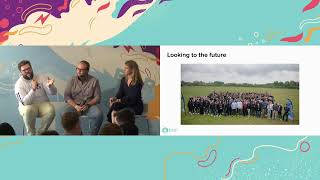
Panel (SaaStr Europa 2022 Cantina Stage) featuring Lamorna Short (host) with Christian Owens (Paddle CEO) and Patrick Campbell (ProfitWell CEO) discussing Paddle's acquisition of ProfitWell. They cover how the founders met (conference friends), why the businesses fit (outcome-focused products: payments/billing + retention/metrics), why ProfitWell chose to sell after being bootstrapped, the $200M acquisition financing and fundraising process during a difficult market, deal execution (many meetings, dozens of lawyers), and early integration priorities (people-first approach, alignment, ~7-month integration target).
Questions this video answers
$200 million
SaaStr Europa 2022 (Cantina Stage), recorded June 7, 2022
About 85–90 people (ProfitWell)
About 250 people (Paddle)
About 42 funds
Chapters
Please welcome Paddle founder and CEO Christian Owens, ProfitWell founder and CEO Patrick Campbell, and PADDLE Chief of Staff Lamorna Short.
Everybody. What's going on?
Hello.
We walked very far. It was good.
Yeah.
Yeah.
Cool. Well, so great to see so many of you here today. Thank you for joining us. I'm Lamorna and I'm going to be your host for today's conversation. And we are joined by Christian Paddles founder and CEO and Patrick Profitwell's founder and CEO. Hi, guys.
What's going on? How are we doing? We fired up after lunch. I know that can be difficult. So good to see everybody.
So for those of you that maybe don't know, ProfitWell was recently acquired by Paddle for $200 million, which is pretty huge news. Yeah.
Thanks, everybody.
So today we're going to give you a little bit of an inside scoop into what that journey has looked like. So we'll be all the secrets. A little bit about how these two met, a little bit about the deal process, and then what does the future look like for the combined business? So I am chief of staff at paddle and I've had the pleasure of working along these two for the last six months as this deal has come to fruition. So, yeah, really excited to be here today to tell you a bit more about the story. So we've got half an hour, so we will get started. And where I wanted to start was where these two met, which was they like to say they were conference friends and they met about six years ago. So, Christian, talk to us a little bit about the first time you caught Patrick's eye.
Yeah, I think the first time that we actually met was you came to our office and you recorded a podcast with me that was so bad you didn't release it.
Yeah, we haven't released it yet. I think we will release it now, but only as a gaff. That's what we'll probably do.
But no, we've. We've known each other now for kind of five or six years. Kind of, yes, very much. Conference friends. We meet at places like this, and I think probably that's how our relationship initially developed was. Was meeting at Sasters and sort of other conferences over the years and I think kind of really aligning on sort of just the SaaS ecosystem in general and the way that we think that kind of businesses should be built.
Yeah, I think one of the things. So it's kind of a funny anecdote. Funny also because it's true, is after that interview that we did, I actually called our Chief product Officer Facundo and actually said like, I just met this guy Christian paddle. I didn't really know what paddle was before then. Christian thinks very much the way that we think at ProfitWell. And what I meant by that was very much like this whole concept of like, do it for you in terms of products and things like that was very much like, oh, the product. Like, instead of giving a user the ability to do it, we can totally do that. But also we should just layer on top some tooling or something that actually can be done. And that's kind of similar to how retain works. If you're not familiar with proper or retain it. Like lowers churn automatically paddle with sales tax and these types of things. And it kind of just like that's. That's a good important lesson I would argue is like when you're going through M and A, when you're going through these types of things, like not only, like value fit is super important if the combined entities, everyone's kind of coming on board. But I think like joint future vision is super, super important. And that kind of germinated, you know, six years ago. And then we had started having conversations not to get too far ahead here, you know, the past, like year that kind of led to obviously what happened that last month, basically.
Yeah. And I know, Christian, you've said before that you had the vision that you and Patrick could come together sort of three or four years ago. And we're excited about how the two businesses, what you could do together. And I know Patrick, you've as a bootstrap company, you've for a long time not wanted to raise money, not wanted to sell. What was different this time and why did you actually want to sell now?
Yeah, so we definitely did not want to sell even now. And so it was an interesting. So for those of you don't know, Profitwell, up until the sale, we were 100% bootstrapped, all customer funded. I always joke, like, we didn't raise money, but I gained 100 pounds. So that was like the payment for the company. It's okay to laugh at that. It's okay to laugh at me being unhealthy. But long story short, we knew we had gotten past eight figures in revenue, about 90 people. And we kind of knew that now we were being irresponsible by not raising cash or getting more funding to kind of fuel the business. Mainly because we wanted to be a large company. We wanted to kind of push things forward. We weren't looking to do like, you know, pure, like Profit sharing or anything like that, like other bootstrappers. And so what ended up happening is we were about to go raise our first round, basically. And so we kind of were loosely getting set up, and I started talking to a couple of folks for advice. And then some of that advice turned into, well, what if we just, like, combined forces, right? Like, what if we bought you? And I don't know how many founders in the room, but you kind of go through this, like, ego check of, well, no one. No one can have my baby. Like, no one can raise my baby. Like, I can. Like, that doesn't make any sense, right? But then my co founders, Facuna and Peter, we started talking through things, and we're like, well, if all these things are true, if the values are close enough to combine, if the vision is close enough combined, if the number is right, if all of these other things, well, then logically, of course, this is an option to get more resources and to kind of push forward with the plan that we were already kind of going on. And so that was kind of the thing that broke through that ego veneer. And that took like, a week or two. And then all of a sudden, we started talking more. Christian came to Boston to spend a couple days with us. And then all of a sudden, like, we looked up a week after that, and we're like, oh, shit, we're in a process. We're in a process. And we had to kind of, you know, put together, you know, basically a process. And we went from never having raised money ever. Like, someone had. I don't want to say this is kind of embarrassing, but, like, someone who had to explain a safe to me, like, two weeks ago, I was like, I don't even understand what these things are because we just never had to focus on it, basically, to doing a raise and an M and a process all at the same time. So we kind of went from nothing to doing hard mode, as we kind of say. And you were there in the end, which was great. There you go.
So I guess you touched a bit on Patrick about the combined vision and the two products kind of came together incredibly well. So maybe, Christian, do you want to talk a little bit about how that proposition and the product proposition, why it made so much sense to you and. Yeah, yeah.
I think the thing that we really aligned on, and I think this was probably the critical thing in the whole deal. Patrick kind of touched on it briefly a minute ago, was kind of. Both businesses were very much kind of outcome focused as opposed to sort of input focused. So we were always both businesses independent of each other. We're focused on kind of making an outcome true, sort of for us, it's sort of making a kind of a subscription work. And for ProfitWell, it was often things like kind of retaining a subscriber and things like that. So for us, this idea that we could kind of control an outcome together and kind of drive more of that was really the kind of strategic rationale behind the deal. But for us, sort of as we started to think about what we were building together, it became obvious that there was sort of this timeline, which I think you can see of things where Paddle had very much historically focused on how do you operate the business, how do you deal with payments and taxes and fraud and like all of this kind of boring, operational, behind the scenes stuff, but still very much focused on an outcome. Whereas ProfitWallet very much focused on, okay, what's all the stuff that happens after that, how do you kind of run the business once you have a customer and things like that. So sort of for us, and I think for you as well, and it was sort of, you told me this a couple of weeks ago, and it was kind of after that conversation that you had with Facundo, it was, if we ever want to get into billing, we kind of need to do it now.
This was six years ago when Christian and I first met.
But it was the same actually for us. When we were thinking about all of the things that we want to do in the future, we were thinking about, okay, how do we help these businesses understand their customers better? And that's where metrics comes in. How do we do more for them and do things for them was where products like retain come in.
Yeah. And I think what was really compelling for us at ProfitWell was we basically are on this outcome where you as a business, you want some sort of outcome, right? And then because a lot of the tooling doesn't do the outcome for you, you then settle for insights. Sometimes you don't get the insight, so you settle for analytics. And then sometimes you don't even have that, so you have to go get the data. Right. And the way we kind of thought about our end of the spectrum was very much in terms of like, okay, the start is data. But I think what we kind of learned through going back and forth was there's a lot of limitations that ProfitWell has to have because we don't have a pure connection to the rail that comes with billing and checkout and those types of things. So, for example, we have to Charge for retain. Because we need to make money as a business, when in reality it might make a lot of sense to give retain away for free, but then make the money up in basically the billing transaction flow. And theoretically that's more beneficial to you because all of a sudden it's like, well, this system is making me more money. They're making money on the back end, which is totally fine, but I'm not paying unless they're making me more money. And so all of a sudden, when we started thinking of those implications, we were like, oh, this could actually be really, really cool. Where if we get the connection to deep billing and with all of our partners, you know, we have as deep of a connection as we can get without, like being deep into the actual stack. And so this was really, really compelling for essentially our mission. Your mission was helping a SaaS business run, you know, automatically. Ours was helping them grow automatically. And then all of a sudden it's like, well, we can run and grow and you plug in paddle and a dollar should be worth more, you know, in a month than it was at the beginning of the month.
Yeah, yeah. So I think the strategic rationale for the deal was incredibly compelling for both of you. But then in order to actually execute this, you had to go out and raise $200 million. So you had to go and convince a bunch of investors that this was also a really compelling story. And when you went out to raise Christian, it was a time when the market was sort of imploding, valuations were dropping, the war was starting in Europe. Talk to us, I guess, a bit about that process.
It was a really easy time to raise money. Past few months. Totally easy.
Well, I think sort of it's really easy to kind of reflect on it now. Of like some of those nos that we got kind of through that process are sort of really obvious with kind of what's transpired since. I think the thing that became really obvious to me fairly early in the process was there were. There were two types of funds that we were speaking to. There were the funds who had existed for 10, 20 plus years and they've seen a few cycles and really they kind of just weather whatever storm is in front of them and maybe valuations change and multiples change and things like that, but fundamentally they kind of just keep on going. And then there was this really interesting group of, I think, investors who have been really doing this for the last four, five, six years. And they've grown up in a market where sort of of they've only ever known Prices go up, they've only ever known valuations kind of continue to multiply. And sort of they just kind of rode with kind of a minor Covid bump, which sort of seemed to last sort of like two or three months of kind of people being uncertain have really kind of just ridden a wave. And I think that was the thing that probably in that process took me sort of probably two or three weeks too long to learn that we were actually speaking to a bunch of people who even if they would love to do the deal, they're just never going to at this point in time, because we're asking them to kind of bet on something kind of M and A is inherently risky. We're asking them to bet on something inherently risky in a risky asset class anyway, in a time where the entire market is telling them not to do these things. So that was a kind of really interesting learning for me, but sort of the takeaway from it was really aligning ourselves with investors who understand this type of deal, who are willing to weather whatever storm kind of that we're going to go through and have invested through multiple cycles.
One thing to kind of keep in mind, we don't just have this random picture of Christian in a cab. We filmed everything. So we filmed the entire process. We filmed good conversations and bad. I'm sure there was a couple conversations we didn't film. But yeah, we have a documentary that kind of documents the entire acquisition coming out on Netflix. No, it's not coming out on Netflix, but we do have a screening tomorrow night, actually. But I'm just explaining why we have this awkward picture of Christian just like at the ready for they film.
All of my phone calls now, I.
Guess, to the screen. How many meetings did you you have before you got a yes?
I think we spoke to somewhere between 42. The number that sticks out of my head is 42 funds that we went to. We got a few yeses kind of along the way, but there was sort of, in our mind, really kind of a handful of people that we really wanted to work with. But I think sort of it was a really grueling process. It's the first time in my kind of fundraising journey. And I think Patrick kind of alluded to some of this in terms of an M and A journey as well, is every other fundraising process that I've ever been to. I found myself in a process. You end up talking. You'll be at an event like this, you'll talk to a couple of investors, kind of you'll maybe set up a second meeting, and then suddenly, three weeks down the line, you find yourself in a process and having to catch everyone else up. And I think this was the first time in my history of fundraising where I'd gone out and I set a start date and I set an end date, and I scheduled all of the first meetings within the first week and kind of had the worst week of my life, doing kind of 19 hours a day worth of calls. But it was an incredibly, sort of like, the difference between that and then finding yourself in one of these processes, I think, was huge. And I think probably one of the reasons why we were able to kind of bring it to a close and.
Get it done, and the forcing factor to go down that type of process was because of the M and A and the transaction, or just wanting to do that process differently this time.
I think a bit of both. It's consistently been the piece of it since we raised probably our Series A, it's been consistently. I think the piece of advice that I've given every founder that I've met is when you go out to raise money, actually have a start point to the process, have a point at which you start raising money, and have a point at which you want to stop, and have all of those first meetings sort of within sort of some vicinity of each other so you don't end up with people at different stages of a process than others. And it's the first time that I've ever followed my own advice and it went okay.
Well, yeah. And I remember when you first told the board and your existing investors that this was something you were going to do, and they said, there's a 50, 50 chance that this is going to come off. And actually, you executed this against a really aggressive timeline. And it was an incredibly complex transaction and deal. So, I guess, Patrick, what do you think? Or do you think? How do you think your relationship together helped, you know, hinder or improve that process and help get it over the line so quickly?
Tinder. The processor.
Yeah, so we met on Tinder as well. No, I. I think, you know, it's really kind of interesting. I think that we kind of set some ground rules in the beginning where. Because here's the issue, you're, like, going forward, and then all of a sudden, 86 lawyers get involved. That was the actual number of lawyers on this transaction. And the 86 lawyers can kind of like, guide you into directions and rabbit.
Holes that maybe you should go, but.
Probably deeper than you should. And so. And then everything. It's kind of like hosting an event where, yeah, you, like, kind of know the steps that are going to happen, but then the weeks before the actual deadline, all of a sudden, like, all this stuff gets squeezed in. And so we. The one smart thing I think we did in the beginning of this, there.
Was only one small thing.
There was only one. We had a conversation about, like having like a red phone, basically, where it was like, all right, if lawyers get too much, like, let's just hop on a call and figure it out. And what we kind of found in the end was something that we should have done the entire time, which was like, let the lawyers do their thing. But as soon as there's like two cycles on a decision, because there's hundreds of decisions, most of them very small, being made, we should just get on the phone with the lawyers, which they hate, but we should still do it because we were both in a situation where we both wanted to get this done. It wasn't like a PE type thing. Not to say PE things are always bad, but like, it wasn't like, oh my gosh, are they gonna do it? Are they not? Like, we were both trying to work towards an end here. And so all of a sudden we would be on the phone, the lawyers would probably talk to a point where it would be more expensive, like, to just have made one end of a decision than to actually pay the lawyers on it. Because we would Talk for like 20 minutes about something that was only like $10,000. And then we would be texting each other and be like, okay, do you want to just split the baby? Like half and half? And then we'd be like, christian and I have been texting lawyers. Excuse me, lawyers. We're just going to split this in half. And the lawyers would go, okay, fine. So that was one good thing, I think. The other thing, and I think this is what this screen grab is alluding to. Before we signed the loi, we had other dates. We did have other proposals. I'll just say that.
But we didn't. We were very committed.
I know, I know. It's okay. I was the one dating around, I guess so. But we. We were. I was very transparent with Christian. I think it's just how like, we ran things or run things at ProfitWell. And it was very much like in this, this voice memo, I was basically saying, like, listen, we have larger offers and this is the number that like gets it done. You know, if you get it done, we will stop dating. Which is now just to. Terrible metaphor. I feel like given. Given what I'm saying. And like, let's get this done. And this was like right between basically Christmas and New Year's. I think like this was like the Monday after Christmas.
I mean there was a date on.
Oh yeah, there we go. Maybe it's a little bit before Christmas. Yeah, yeah. And so I think that helped a lot. Was just really open communication. And I think if it was more of a, like we're selling to someone, we're not going to continue going. We're going to like, you know, hand over the keys and leave. I think we probably would have handled it maybe a little bit differently. But I think in this case this was the best thing is to have the red phone and have a good relationship to go back and forth.
Yeah. And I think interesting thing about this is it's sort of contrary to every piece of advice that I got kind of through this process. Every piece of advice was like, hire an advisor, don't talk to each other. Kind of like extract, extract, extract. So sort of as much value as you possibly can. And I think that sort of we did decide to go our own way and sort of just talk with each other about this. And I think that too many times from all of the people that I've spoke to have gone through what should have been a friendly M and A process. It's been a these two things kind of coming together. Create something that's greater than the sum of its parts. But you get so much advice by people who only do these sort of like PE style transactions where they're very financially motivated as opposed to strategically motivated. And for us it's very strategically motivated. So sort of us arguing over a $3,000 decision, like probably didn't necessarily make sense in the grand scheme of the thing that we were trying to do.
And I think the other piece of advice I would give if you're going through more of a strategic is like have check in calls. I think from the business perspective more often we did all of those kind of ad hoc, but like actually schedule them because what starts happening is there's always going to be conflict in some way like, oh, this is bad here in the dd, we have to adjust this. Oh, we're going to have to pay for this legal thing. All that kind of stuff happens. And I think that what ends up happening is you start getting these weird emotional like game theory like conversations that happen in your head of like, well, are they just doing this because they want to like screw us over? Blah, blah, blah, blah. And thankfully like it wasn't the case. But it's One of those things where, like, I think if we would have had maybe those weekly conversations, it would have. It would have, like, probably saved us some emotional calories on both sides. There was no, like, blowouts. It was just more of like, that would have saved a little bit of the, like, oh, we need to have a check in meeting. Like, we can't necessarily be direct here. And it would just saved a lot of time, I think.
So obviously a pretty intense and emotional couple of weeks. But how did you both actually feel when you signed the deal? The deal closed. What did that feel like?
I don't know whether to give the honest answer to this or the always the honest answer. I think I'd been thinking about. There was obviously a little bit of relief, but I think kind of honestly, we've been thinking about it for so long that it was sort of just kind of indifference, because the only thing that I could think about was what the next sort of three to five years of what we want to build together are. So for me, it was extremely anticlimactic of an event.
Yeah. There are so many docusigns. You sign that, it's kind of like, okay, are we done? No more signatures. Okay, we're not done. Okay. So there was. I think it was very anticlimactic. I don't know if it's hit me fully yet, but, like, it literally was like, all right, next week we have the team retreat. We got a plan. Like, branding. We have to plan, like, the. The narrative, all this other stuff, right? And then it's like, oh, great, now we have to replan, Replan, budget, replan, forecast, like, all this kind of stuff. And I don't know, I think that the thing I would say is, like, everyone, it hits a little bit differently, I think, more often than not. And, like, kind of making this decision, I Talked to, like, 30 founder friends who had had, like, different exits more often than not. Like, who you are before this transaction, who you are after the transaction is going to be the same. And that is both awesome because you're like, oh, I'm me. But it's also terrifying because you're like, oh, I'm me. Like, maybe that's not good. Right? And so for me, I'm like, a workaholic that loves what he does. And so I was like, cool. And like, our investors are like, patrick's moving to Puerto Rico. Is there a problem? Like, oh, like, oh, Patrick tweeted something. Is there a problem? It's like, no, like, I'm going, I'm going. I'm going. So I think that's, that's how I feel. It's just we got shit to do. We got, you know, we got to get this thing public.
Yeah. So I guess thinking a bit about the future then, now that your two companies are together and we're looking forward and I guess the times that we're heading into, with quite a lot of uncertainty in the market, how are you thinking about the combined company thesis and what's important for the next 12 to 18 months?
I can start. I think that now more than ever we sort of enter a period where hopefully I think there's two things that I think we want to be true for the future of the business. Like, one, we want to be the most helpful business that we possibly can. We want to become the most helpful company in the SaaS ecosystem. And I think that's always been at the core of both businesses is this idea of even if it doesn't make kind of ROI sense for us to do something, but it's net positive to our customers or to the ecosystem, how do we do that? And I think that's more important than ever in a time where people are struggling to kind of raise money or sell to customers or any of these things. So that's thing one and I think two has been a theme throughout this. The one core principle, I think of the two businesses individually and then together is this idea of doing it for you. And I think for us sort of like the definition of what that means is going to evolve and it's going to become bigger than it was before. Like, Paddle's idea of do it for you was we never, ever want you to do something as boring as pay your taxes again. We still need to pay your taxes, but we'll do it for you. We never want you to kind of be in hot water about those things. We never want you to have to become an expert in these things that you shouldn't necessarily have to become an expert in.
And I think this is kind of like the reason these are important are not only because this is how we see the world. Like being the most helpful brand in SaaS or doing it for you, but to kind of help all of you. This is where SaaS and I would argue most technology is going to. And you can be kind of cynical and like look at it as like, oh, you mean AI and it's like, it's not an AI thing. I think it's. If you look at like the first wave or the first epic of like SaaS, it was very much like, let's build tools to show my boss I'm doing work. Like, that wasn't what people said. But it's like, you think of Salesforce, and most of us use Salesforce, right? But like, it was very much built for the VP of sales. It was very much built for the director of sales, like, reporting, making sure the reps are doing their work. I think now it's like one of those things when you look at a lot of software because it's getting harder and harder to grow. You have to focus on your product and your customer more than ever. And when you're starting to pick tools, it's more of tools of like, hey, why do I have to be an expert in tax? Why do I have to be an expert in this? I have to focus on other things. And unless I'm huge, where I need, like, complete control, I want to find tools that, like, again, just do it for me. Because now we're getting the technology to be able to build that, and we don't have to focus so much on infrastructure in our own individual companies. And then I think, like, from the helpful side, it's like, very much how do you differentiate a brand? Like, how many here have seen profitable content before? Anyone seen profitable content before? A lot less than I thought. That's embarrassing. Thanks. Big fan. I love it. But like, we invested so much in content because it's like, it comes back, like, tenfold. You can't always measure it perfectly, but you can measure the end of it. I think that's a big thing. Heading into a downturn or whatever we want to call it, I think those fundamentals are going to get more accelerated and become true pretty consistently so.
And that's sort of at the strategic level. And I guess looking forward bringing your two teams together and all of these people together who are going to help execute against that how? And often at a lot of M and A, it fails on the integration. So how are you thinking about making sure that that can be successful?
Well, the first thing is we put lam in charge of the integration. So that was the first thing we did.
Great, Thanks.
I think the number one thing for me was to focus on the people. I think if we get the people stuff right, sort of everything else sort of follows. And I think encouraging everybody to be kind of patient with us throughout this process because there is going to be a bunch of stuff that goes wrong that is filled with friction, that kind of causes arguments or heated discussions or whatever. So for us or for me, the core focus That I have was sort of one, how do we do right by all of the people? I was very conscious that sort of the day before we signed this transaction, there was 250 people who worked at Paddle, and the day after there were another 85, 90 people who worked at Paddle who never applied to work at paddle. So kind of, how do you make that right? How do you square those decisions with people? How do you make sure people still have the future that they think they're going to? That was my kind of core focus throughout the whole thing.
Yeah. And I think one of the things we're realizing in the first, like, four weeks is focusing on the people that has to be the foundation and then the one step up is like, aligning everybody. Because there's a lot of, like, not necessarily, like, duplicative teams and things like that, although that does exist. But there's a lot of like, okay, we're going through this replan. We're going through a transformational time, I would argue, in both business independently and now it just kind of compounds together. And so it's like, how do we make sure we have some sort of alignment of what's important, what isn't important, what do we need to focus on? What does performance look like? That's something that I didn't realize was going to be. So I don't want to say complicated, but just something that we're going to need to repeat over and over again. The point I'm trying to make is integration. If you ever go through this and it's not like, here are the keys. See ya. It's not like, great, we did the paperwork, therefore this just works. It's very much something like, we're giving ourselves seven months basically towards the end of the year to kind of like, get it into a good place and kind of get into 2023, hopefully we beat that deadline. But, like, that's, you know, that's the graceful deadline, if that makes sense. Yeah.
I think the easiest way to think about it and the thing that I didn't necessarily fully appreciate is sort of yesterday we had one. Each company had one way of doing things, and today every. The combined company has two ways of doing everything. And actually. And neither one of them are correct. And it's somewhere in the middle of those two things where some are more correct than others.
No, I'm just kidding.
But some happy medium between these two things. And we have 450 of those things now to go and figure out over the next six months. And I think we were always saying it the whole way. We were like, this is a sprint to the starting line. But it actually really, very much was a sprint to the starting line. Yeah.
Yeah. Well, we're just about out of time, but if you've enjoyed this conversation and you want to learn more about this process and the acquisition, we've got an exclusive screening of our new documentary tomorrow evening. So if you head over to the paddle Booth, which is 113, then you can sign up, and we would love to see you there.
There will also be drinks, so if you're not really interested in the documentary, there'll be drinks. Oh, food as well.
Drinks, food. Exclusive premieres.
Christian and I, you know, that's the big draw. So.
Yeah. Thank you, everyone, for coming along.










