LIVE from Workshop Wednesday with Recursive Ventures Founder & Managing Director Itamar Novick
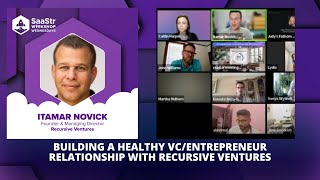
Itamar Novick of Recursive Ventures on choosing the right VC partner and structuring the relationship. Not every company needs VC money since investors expect 20x returns. Pick investors for the individual GP, not just the firm, and have hard conversations early about follow-on support and board leverage.
Chapters
Back to Workshop Wednesday. We'll just give it a minute for people to join. Welcome back, everyone. All right, as you are joining, please put in the chat where you are joining from. I'm so excited to see you all. I know we took two weeks off. So excited to get back in the swing of things. Welcome, everyone. We have Chicago, I'm from San Francisco. And Amar. Where are you logging in from?
Berkeley, actually.
Berkeley, okay. We have New York, Tampa. Yeah, we should be doing this in person. Who does that anymore? No, just kidding. All right, welcome everyone. Okay, welcome back to Workshop Wednesday. We are thrilled to have you week after week, every Wednesday, rain or shine. I know we took the past two Wednesdays off because we were in London at Saster Europa. If you were there, hopefully I got to see you on site. All right, as you, most of you know, unless you are new to Workshop Wednesday, which if you are new, welcome. These sessions are super interactive. We try to make these the best use of your time as possible. If you have questions, drop them in the chat throughout. I'll be going through and I'll be messaging you to see if you want to ask your questions out loud. If not, I'm happy to moderate them for you. Today we will hear from yet another SBA expert in Amar, founder and founder of Recursive Ventures. And he will be discussing building a healthy VC and entrepreneur relationship. Welcome in our.
Yeah, thanks for having me excited about. Wow, so many people showed up. That's great. Is that because of the break? The two week break?
No, it's because of you now.
Yay. Love it.
Of course. All right, so let's get to know you a little bit better. And before we dive in, we have a few questions we ask everybody as they join. So question number one. What is one of your favorite investments you or the firm made in the past year?
Yeah, so I follow up on some of my investments in Deal. And for folks that don't know Deal, it basically enables anybody to work from anywhere. Whether you're a contractor or an employee. You can basically get paid, get your benefits no matter where you are on the planet. Amazing. Of course, for digital nomads.
Great. Okay. And hence why we are taking this virtually even why we're so close. Digital nomads for sure. Okay, next question. What has most surprised you about venture capital this year?
Yeah, so one thing that really surprises me is how much LPs limited partners who invest in venture funds have actually pulled back. I think this is one of the best times to start companies we've seen before that In a recession. The company's being formed during a recession and after some of the most successful companies are formed in these times. So I think now is actually the time to become entrepreneur, start new companies and invest in them. And I'm kind of wondering why, you know, the investors in VCs are pulling back when it's some of the best times to actually investing in the asset class us.
Great. I think a lot of people on the line are going to be really happy with that answer. Lastly, who is one of your favorite co investors?
Oh, so I love co investing with afore. They run this amazing program that supports companies at the pre seed stage and a lot of VCs say they invest in the pre seed stage which is really early. Typically all you have is a bunch of folks and an idea, but they're actually one of the ones that do invest at that stage and I love working with them.
All right, well with that I will let you take it away and start your presentation.
Yeah, very cool. Okay, so first, just a quick bit about myself, Edamar Novik. Hi everybody. Thank you so much for joining. I've been on all sides of the startup table. I've spent my entire career in startups, which is now over 20 years. I've been a founder and executive, basically a serial entrepreneur and I took my last company life 360 public in 2019. I've also spent over a decade in venture capital. Started off as an institutional VC working on Sandhill. Later helped put together an incubator called Apus Labs which connects between Israel and Palo Alto and kind of help company help accelerate companies here in the US and for the last 11 years or so I've been investing out of Recursive Ventures, which is a solo capitalist fund. It's kind of very unique because basically all you get is is me. And I've been selected by Business Insider and Tribe Capital as a global 100 seed investor for the last three years in a row. And you know, my passion is supporting entrepreneurs early in their journey and helping them get momentum so they can take their company off the ground. So for today, what we want to talk about is building a healthy VC entrepreneur relationship. This is a super important topic that's dear to my heart because again, I've been on both sides of the table and I've seen some people do this really well and I've seen others kind of, you know, miss the mark on this. And of course, if you don't build that healthy relationship with your investors, with your board members, that could have a pretty negative effect on your company and how you're perceived as a founder and your ability to raise subsequent funding. And you know, even when, and this happens often in startups when you need to quote, unquote, bridge your company because you've hit some, you know, headwinds, then you really want to have that healthy relationship with your VCs so they can help you, you know, bridge those gaps. So let's start with some of the basics. And I think this is where some entrepreneurs make mistakes some of the time and that mistake is potentially thinking that every company should be VC backed. The reality is most shouldn't be VC backed. And if you take money from VCs and you shouldn't be VC backed, it could lead to a significant conflict because guess what, like your investors want one thing and you as a founder kind of want some other things. So and because I'm a very early stage investor, I'm pretty, I'm pretty much the first check in a lot of these companies. I often ask founders a few questions just to make sure that you know, they're going to be aligned with the investors over time. And here's some of the questions that I typically ask. It's very straightforward, like, do you believe you can return 20x or more to investors within 10 years? Right. So the characteristics of a venture backed business are that, you know, it's kind of, it's kind of a long shot actually winning in startups statistically like the statistics are against you, right? Like most startups fail but if the startup does succeed, you know, it becomes a unicorn, a decacorn, all those lovely words that we know. And that's really when investors make 20, 50, hundred X over their money in and that's what VCs are looking for. And if you as an entrepreneur are not necessarily looking for that, like you know, you'd exit, you'd sell the business at $100 million or it's going to grow incrementally but it's not going to shoot to the moon like, like, like startups potentially should. Then yeah, maybe you shouldn't take money from VCs also your market needs to be big. A lot of people know this. But TAM has to be massive for you to be a big and you got to have some business dynamics in there like you know, like a winner take it all or the significant moat around your tech or IP that really helps cement the position of the business as a leader in the space to kind of create all that value. Right. Another question that I keep asking folks and, you know, typically they all say yes. And kind of my challenge is investors figure out if they're serious about it, is, are you there for the long haul? Right. Because building companies, building startups is quite a journey. It can take 10 years, 15 years. Heck, I've seen people, you know, spend 20 years, just focus on this one thing, and sometimes, you know, it becomes massive at the tail end of that journey. But you've got to have the patience to actually do it and you've got to have the support from your co founders to be effective in doing that. Last question is, you know, how about the team, like the core team, the founders, do they really have what it takes to kind of see it through all the way from the earliest stages to the IPO and beyond? And sometimes the answer is maybe. And of course, people evolve over time and they get better at what they do. And that's great. But it's really, it's more of a question for the founding team is like, do we have all the DNA, like everybody that we need that can help us get from where we are today to the kind of endpoint of the journey? So I'd really ask myself those questions and kind of have even a conversation internally. And if the answer is yes, yes, yes, like, we can do this, then, yeah, you should, you should be VC backed, right? The next piece that I get a lot of questions on, and, you know, rightfully so, is, you know, how do I find the right investors? How do I choose the right investors? Right? You're talking with a lot of investors. Are they good, are they bad, that they relevant? So typically I like to recommend advice founders to go through a few, you know, to think through a few different areas. So first of all, a lot of founders are kind of focused on the firm and they shouldn't be like, I don't care that it's Sequoia. I care about the specific general partner, the investor that's going to sit on your board and, and be there every day, potentially to support your company. The firm's reputation is important as well, but it's really the individual that's going to champion you and your company through the partnership, that's going to be there on your board and through the hard conversations and the good conversations. So you really want to pick the person, not the firm. The second piece is around fund life cycle and partnership dynamics. So this is where you kind of want to make sure that the general partner that supports you, that champions you actually has a say in the partnership. Right. Are they significant? Have they Done big investments in the past. Can they make a decision? Can they force a decision sometimes within a partnership to kind of help support you and that supported. Unfortunately, more junior people don't always have kind of the leeway to do this. So you should ask and understand where they're positioned in their partnership. Understanding fund life cycles is also pretty important because if you're taking money from a fund that's kind of at the end of its life cycle and you know, maybe they don't have much more capital to deploy and you know, maybe they're busy raising their next fund that could impact you as an entrepreneur. Because first of all, you want to make sure that they have enough capital to potentially bridge you and keep deploying. You know, as you go to like series A and series B and series C, you want to have them there doing what's called their pro rata investments or even better, like super pro rata or who knows, even leading the next round, right? So actually taking money from funds who are early in their specific vintage life cycle, like they just raised, you know, $500 million is great because they mean, it means they have, you know, a bunch of dry powder. They kind of support you as you build your company. Naturally, you got to have chemistry with the leading, you know, GP that leads the round. And I think, you know, part of it is chemistry. And of course, first impressions and having several conversations count. But don't neglect back channeling the gp, right? So I always recommend to founders, pick up the phone, make at least two calls to founders that have previously received money from this general partner and ask them hard questions like, of course, most of the time they're going to say very positive things, but ask them about the time where you hit a snag in the road. Things didn't work as well. How did the VC react? How did they work through the conflict? It's important. Most people like having a GP that's empathic, that's been in the founder's shoes. I, you know, myself, I can talk about myself. I've been a founder multiple times and I know what it means to be a founder and especially a founder CEO. It's kind of a very lonely job. So I tend to gravitate for folks that have done that and can really relate and connect to their founders in a deep way. And of course you want to, like, have real commitment from that general partner who leads you around. Are they in 15 other boards, for example? That's kind of challenging. Are they going to actually have time to like, work with you on you know, solving some of the issues in the company. Are they going to be focused? Maybe they have those other like huge influential deals that they're focused on and you're kind of smaller for them and they won't pay as much attention. I think you'd rather have somebody who's like this amazing up and comer who's like rooting for you all the time and really needs you to succeed versus a super successful VC that's busy on some public company boards and just like, okay, you're early, maybe it works, maybe it doesn't work. You want people rooting for you because they're so bought into your success and that's why you need to seek that real commitment. One other small tip that I love giving founders, especially sort of early in the journey is, is, you know, having more investors means that you have more champions, right? Yeah, it's, it's more to manage. You've got a bigger cap table with more folks on the cap table. But every single person, every single firm that invests in you is one more champion, right? It's one more person, one more group out there who's kind of singing your, singing your praises for you. They're rooting for your success and you never know who's going to help you when you need help. Maybe it's an intro to a customer that they know well, maybe it's the intro to your next investor in your subsequent, you know, in your follow up round and so on and so forth. So I'm not necessarily saying, hey, go pick, you know, checks from a thousand people and put them on your cap table. You got to find the right balance. But sometimes taking money from just one investor could be pretty negative, especially if they pull back and they don't invest the next round. And then you've got this huge negative signal hanging over your head of like, oh, wow, I took money from Sequoia and they're not funding me and nobody else was there, right? So I'm kind of showing the two extremes, of course, but pick the right balance for you. Next. This is obvious for a lot of folks and yeah, I put Softbank up there. It's a more controversial one, but, you know, all good. But I think even though a lot of folks know this, it's really worth emphasizing, right? Like founders and VCs are often on the same page. They're aligned, it's all good. But there is a difference, right? As an entrepreneur, you're all in. You're a hundred percent riding on this company, even just from a Pure financial standpoint, if this succeeds, you make a bunch of money. You make more money than the VC. But guess what? If it fails, you've lost 100% of, of the value that you have in the company. Right? You have everything riding on this single company. Vcs, of course, are different. We have a portfolio of investments. I have 115 investments. Can you imagine? And of course, some of them fail. And what VCs are, you know, they're kind of programmed almost to do, because this is how it works, is we follow the power law in VC, which basically means that one or two or three companies across a fund, they return the entire fund 10 times over, right? And the rest of the companies, many of them, don't actually succeed. So that kind of pushes the VC to potentially seek very high returns from every individual company, potentially at the risk of failure for that single company. It's kind of a go big or go home mentality. That's what the VC wants to push you for. And you gotta, you gotta recognize that, right, that, that sometimes they're not be aligned with what you want. You might not want to lose your company and you might not want to be in this state of mind. It's like it's either 5 billion or go home. Right? And this is where, you know, VCs and founders are. I wrote likely. That might be a slight exaggeration, but you could cross swords with your vc. And of course your VC is also a fiduciary and maybe you're sitting on your board and you got to represent other shareholders. So that does potentially create, you know, a few friction points that you, you, you have to figure out, right. Also, VC needs liquidity, right? So if your company ends up running for 25 years before it IPOs, that could be amazing for you as a founder. But vcs have fund life cycles and most funds are set up for 10 to 12 years. So what happens if your company is still going and hasn't reached liquidity after 12 years? Well, the VC has to sell. That's kind of negative for you because now you've got a major shareholder in the market selling secondaries, forcing you to sell the company, doing whatever. Like they need the money, right, to bring back to their limited partners to the LPs. And that, you know, the timing piece there is important. So there are misalignments and you've got to be very thoughtful about how you deal with them. So how do we manage and, you know, kind of take care of some of those potential conflicts ahead of time? Well, the first Thing is, you know, especially at later stages, is leverage your board. A lot of folks think that their board is there to kind of manage them, right, or like oversee them. And that's true. But really smart entrepreneurs make their board work for them, right? So you spend the time and I think especially as you get closer to like late stage growth pre IPO companies, I'd say a CEO would spend easily, you know, 20% of their time just working with board members and different things, right? Like every time you send an update, you've got a board meeting, have asks like, what do you want your board members to do? Find allies in your board who are going to help you communicate, you know, whatever is challenging to other shareholders, right? Find those allies, you know, leverage their wisdom on how the best position best have a tough conversation, best approach another investor, best approach a board member and kind of leverage the board so they can help you succeed as a founder. The next piece that I like to advise founders on and kind of helping keeping everybody aligned and happy is even if you're making short term tactical decisions that could be perceived as bad, don't stop iterating. The long term vision of why we're doing this. The long term vision for your company is really the glue that glues everybody together, right? Like the employees are there because wow, five years from now, this would be amazing. The investors are there because, wow, if this works, we're going to make, you know, billions of dollars. And so that glue, it's really important to keep reiterating it to folks. Even if in the short term there's bad news, there's things that people are not excited about. It's, you know, sometimes you, you have to pay the piper and kind of work for those things to achieve your greater goals. Another good advice for founders and CEOs is always, and when I say always, I kind of mean it. Under promise and over deliver. Maybe there's some situations where you want to hype things a little bit more. Maybe it's a prospective investor, I don't know, you got to be balanced about it. But especially internally with your existing investors and your board members. I would always under promise and over deliver because that a helps you build credibility because you know, you didn't say you do something and then it doesn't happen and everybody's kind of pointing at you and saying, oh, they said so but it didn't work out, blah, blah, blah, and you keep like, you know, giving all those like positive surprises to folks like, oh wow, wow, we ended up doing this and it worked. Out so well, that's great. Like, this guy's a genius. So under promising and over delivering. Another thing that I think is really important is having hard conversations as often as needed and not shying away from them. This is something that I see folks doing a lot. It's like, oh, I gotta have this tough conversation. You keep procrastinating about it, you keep postponing it. And I think really good founders, really good CEOs are great at having hard conversations. Right? They know how to frame it. They know how to maybe, you know, shine a positive light on some of the negative things that had happened. And they don't shy away from hard conversations. There is no way you're going to build a big company without running into issues and having hard conversations. They're bound to happen. And the better you are, the more effective you are at having those conversations and coming in prepared with a solution, the easier things will get. So have those hard conversations, be ready, jot down your points on a piece of paper and just get more and more effective in having those hard conversations. Last piece, which I think is a little counterintuitive, especially for culture here in California, is I think in startups, especially early, you gotta embrace conflict to a certain degree. Conflict actually pushes folks to excel at times, not all the time. I'm not saying you should be shouting and screaming and fighting everybody in your startup every day. Not a good idea. But embracing conflict to a certain degree helps have a healthy, balanced conversations under pros and cons of everything. If everybody in your company is a yay sayer, yeah, yeah, this is great. It's all working out, blah, blah, then you're actually flying blind. It's like, you know, I don't know, not getting into politics. Like the Putin sitting there and everybody's saying, yeah, we're winning in the Ukraine. Well, come on, you want to have you to some degree, you want to embrace conflict and actually expose it and say like, let's say internally to the team, like, oh, we did this and that, and of course there's a downside, but we weighed by both options and it actually made sense after we embrace this conflict to make this choice versus that choice. And I think you're going to get much more, you're going to be positioned, you're going to be more credible with everybody around the table and your investors if you don't try to hide that conflict, but actually put it out there and have a, a good conversation about why we made the decision that we made. Yeah. So I think this is pretty Much it. How are we doing on timing?
You are good. If you want to put the or take the slides down, we're going to go to Q and A. We have Never actually hit 30 minutes on any of these. We always go closer to an hour. So no worries on timing there. Our first question is going to come or actually our first two questions are going to come from Ernesto if you want to unmute yourself and ask them.
Hi Tomar, thank you so much for the presentation. Ernest Torresa here, dialing in from Mexico City. Second time founder and something that I still struggle with is at this pre seed seed stage when it's really more around team and vision. How far do you want to sell that vision? Is it five years, 10 years longer? How do you frame that overall vision?
I think so, especially the pre seed stage. I think some of the best founders I see do do something very well. They can paint this awesome future like the long term vision really, really well and get folks super excited about it. Every stakeholder in the company super excited about it. They can really tangibly explain what the first few steps or the very short term looks like. And then they're really good at like showing that they can figure out what happens in the middle. And there's a lot that happens in the middle but you don't know. So they kind of, they're good at putting a bunch of ideas out there on what could work in, in the middle of that journey. So really good at the long term, really good at the short term and great at trying to figure out what would be in the midterm. I think the vision is always your glue. I think that spark in the founder's head often I see that about how the world would be 10 years from now, 15 years from now. I think that matters and I think it's going to keep reinforcing why this startup has a reason to exist again and again and again again throughout the journey. So I wouldn't skip that that step and I wouldn't skip making sure, especially as a CEO founder, that you have a vision that gets people excited.
Gotcha. Thank you. And the second question is for solopreneurs that maybe already have, you know, technical employees, like engineers for example, but might not have a technical co founder. How do you look at that? Especially again at the pre CNC stage?
Yeah, I think it depends. So I'm not against solo entrepreneurs, although I think that having a partner or two for the journey is, is, it's helpful psychologically and in general. But I think it really depends on how Technical. The solution is. So if it's a highly technical, unique technical expertise kind of startup, I think most investors, including myself, would want to see a technical co founder who has the skill set to potentially solve the technical challenges ahead. If it's a less technical startup then not having a technical founder is okay. But sometimes you actually want to have a different type of a co founder. Maybe it's a product co founder, right. Maybe the CEO is more technical, but you actually need more of a business go to market person and the second person, like whatever, like a chief revenue officer or a CEO or whatever you want to call them, they're more of the go to market person. So it's less about for me, technical, it's more like what are, what's the DNA? What are the pillars that this company needs to nail in terms of the founding team to be successful and do we have those components in place at the precede stage? That's the question I ask myself.
Awesome, thank you very much.
Thanks.
Thanks for taking us off there, Ernesto. Our next question comes from Jason.
Hey guys. Hi, I'm Jason CTO and I invest into SaaS startups primarily based in Ukraine and New York and enjoyed the London Saster event. It was great, but great presentation, a lot of great tips. I'm always curious. A lot of startups get really excited about the investors and how strategic the investors are going to be and all the great things they're going to do and. And then sometimes it doesn't necessarily turn out that they do anything other than a check is there? But it seems probably not common that anyone would get in writing any of their commitments. So I'm just curious your thoughts, like would they actually commit to. Here's what I'm really going to do to help you and here's how many hours per week I'm going to dedicate to really help.
Yeah, I'm a little bit more cynical about that like you are. I guess I have heard this as a founder a billion times, like oh, we do customer intros and we do this and we do that. And I think the reality is most investors, they mainly write a check and then they're there to support you in various ways. But thinking that they're going to, you know, stop whatever else they're doing, which is, you know, primarily being an investor and raising more money and investing in the next company and just focus on helping you, it's probably not a realistic expectation. So just an interesting segue. I did a survey with my companies about what founders want from VCs most. And the number one thing that came back was founders want help with raising the subsequent funding round. So help me get more money into this company in the next round. And because that, I think, is the number one thing that founders want from VCs, I think that's the one thing that you want to make sure that your VC is really good at, Right? Have they helped get more money from more investors? Have they helped you raise the Series A and the Series B and the Series C? And I think if they do that, I think that's really important for you in terms of like, just like, wrapping up with one more point. I have a really hard time believing that a VC would know how to run your business, make better decisions in your business, and figure out your product market fit better than you could. If that's the case, then that's sort of a problem to begin with because that's not their job, right? They're not there to, like, jump in with blazing guns and start, like, pinning down customers. So I think VCs should really be in a supportive role. I think they're a check in a way to get more money. I think they're a good person to maybe run ideas through and like, you know, maybe make a few intros and so on and so forth. But I wouldn't have super high expectations as a founder, even if VCs say that they do all those things, because. Yeah, then you might get disappointed at the end.
Great, thanks. Great points.
Thanks, Jason. And thanks for joining Sastor Europa. All right, our next question comes from Emre.
Hi. I have a question about fundraising from multiple investors. It's my understanding that VCS typically have ownership targets like 10 or 20%.
And I was wondering if it becomes.
If you shoot yourself in the foot by taking smaller allocations from angels and eliminating the possibility for VCs to fulfill their ownership targets. Yeah, I think that's a good question. And look, these rounds coming together, it's a very dynamic thing. So sometimes we see companies getting oversubscribed and then you have to cut back on some of the allocations that you give specific people because your lead investor, for example, needs to hit, you know, a target allocation like, like you said. And yes, it could be a problem. And yes, you might have to shut some people off from the round, but I think it's also good, a good and healthy conversation to have with your lead investors saying, okay, I understand you want to reach this, you know, certain target, you know, holding of 10% or whatnot. I'm, I'm very Happy to support that. But at the same time, we've got those 10 strategic angels who want to invest in the round and they're like going to help put us in front of customers. And they're subject matter experts. And I really want to work with them because I think they can help us collectively win. Right? And hopefully good investors, good VCs are going to recognize that and say, okay, you know what, I'm willing to be a little bit more flexible or maybe, you know, you know what, maybe, maybe we, you know, I invest more money and we raise the cap. Or like there's different ways to do it, right, where you can kind of try to make more room for folks. I mean, it's not as easy, but there's different ways of doing that. Maybe they'll tell you, hey, you know, we'll get only a small check from these guys, but maybe we should add them as an advisor. There's a bunch of things that you can do. Right? So I, I do think though that. And I've seen the extreme again. I've got a portfolio company called Safegraph and there's an amazing founder there called Orin Hoffman, who's a serial entrepreneur. He was the founder of Liveramp. And when Oren started Safegraph, he took money from 200 individual investors, which is a lot. And it begs the question of why. And Oren has a great answer for that. He's like, every single person there is going to help me in their vertical, with their expertise get to the next three customers, and that's what's really going to boost my company and push it forward. So again, that's the extreme version of it. But I think having a few folks around the table is very helpful and you and your investors should make room for them.
Thank you.
Great.
Okay, our next question comes from John Williams.
Thanks so much, Nora. This is very helpful. And you may have answered some of.
My question, which I was looking for some examples, perhaps your favorites of where.
CEOs have asked you as a board member for help. And I think you covered two really large ones.
One is help us, you know, get future funding. Second one, help us get additional customers. Just kind of curious what you have.
Seen as some of your best of questions from CEOs that may help us ask better questions.
Well, I think it's.
Yeah, that's a great question. I think it ties back for me to having tough conversations and really wicked decisions done within the company. Let's go for a more extreme example. Let's say that the management team has figured out that you need to pivot. And that's, of course, you know, a major thing, because it could be a smaller pivot, it could be a huge pivot. And I think that's where you want to align with your investors and board members the most. And you got to kind of walk them through the process. It's not that you'd show up one day and say, hey, dear board, we're changing the company's name. We're doing something completely different, deal with it. That that's not going to be effective. Instead, you kind of want to take them through the journey of like, hey, here's what we've done, here's what we've learned and kind of evolve over time. And now we're thinking about this. What do you think? Get feedback. What have you seen in the market? Does this positioning, potentially dispositioning make more sense? Here's like, five suggestions on how we can reposition the company. Which one do you like most, dear board member? Right. So, like, having those conversations ahead of time and kind of helping walk people through the journey, I think is going to be really instrumental for you. Because at the end, having a few champions within your board that really are like, nodding their heads and saying, yeah, this is the right choice. This is what we should do is the base that you need to go to all shareholders and say, you know, we've made this decision, we've been thoughtful about it, we've engaged board members along the way, and we came, we have this outcome that we feel is the right outcome for the company. And then everybody's going to look back at board members and ask them, did you do your fiduciary duty and actually look into this to make sure we're doing the right thing. And they're going to be there for you and say, yeah, yeah, we've looked into this. We're making the right choice. Given all the data that we have. That's great. That's one example. I'll give another example really, really quickly. And I think that's dealing with executive departures. So it's much easier at the board level and even at the executive team level to have a conversation that goes something like this. I, as a CEO, decided that this person is no longer a good fit for this role, and I'm firing him or her versus we've collectively put our heads together with the board, and we figured that person X might not be the right person for us at this time. And, you know, we have to part ways. Right? So having that support of the board and really Having people weigh in and like, is this the right person? Is she doing what she's supposed to be doing at the stage we're at? Maybe we can have somebody better. Like, doing that with your board members would help take a lot of friction of, you know, departures in the executive team. So those are just two examples, but of course there's more.
Great. Okay, moving on to our next question from Ed Mana.
Hey there. I had a question. So you've been on both sides of the fence with VC funding, getting funding, giving funding. Right. What is, in your experience, seeing and being part of pitches, the biggest mistake and the biggest good thing that a company has done when, when presenting that pitch or creating that deck or what have you? Yeah, I, I think there's a lot of mistakes, but I think there's one that is not. People don't talk about it too much, and that's overhyping things and not like showing the more vulnerable sides of the business in, in a good way, like in a good light. Right. So having the best answer for everything, that doesn't, it's not credible. Right. There's things that you do not know as, as, as, as, as a co founder, as, you know, founder in a company, there are things that you don't, don't know. There are things that you need to figure out. And what I see often as a VC and what I felt sometimes entrepreneur, like, I've done this mistake again, again, is, you know, I get a question and I don't have an answer that I'm, you know, sure about, and I give out that answer and then I get hammered. It's like, no, you're like, this is, this is wrong. So saying that you don't know, but here's how we're going to figure this out and here's how we're going to do, go about, you know, like, that builds credibility, that builds trust, and it's the on ramp to starting, start building a healthy relationship with your vc where they know the limitations and they know what the challenges are, and then they're more supportive, helping you figure out how to, you know, how to figure out those challenges. Right. That's really what you want to see. And sometimes I get into these meetings with founders that overhype everything and everything is great, and it's just, it's just, it doesn't fly. What about the biggest, like, good things someone's done or that you've seen or have done yourself? I think for investors, it's actually like helping them check all the checkboxes. And why this can be super huge. Right. So that goes back to one of my slides around. Is your company backable? So really nailing TAM in a very smart way, like, I mean, I'm not helping, I'm not asking you to help us do our jobs, like we should do our jobs and validate and check all those things anyway. But really nailing the TAM exercise is great, especially the early stage, making sure that you understand some of those one winner takes it all Dynamics, network effects, ip, whatever is there to provide this moat or defendability for your startup. If you can basically make it easier for the VCs to understand those things, I think that would get them more excited potentially about investing.
Cool.
Thank you so much. Thanks.
Great. Okay, I know we've had a lot of questions. We still have a few more to go. Thank you for answering all of them. I feel like we're doing like a quick fire round. We've done like six or seven questions in like 10 minutes. All right, our next question comes from Pat.
Yeah. Hi. Earlier you were talking about the expectation.
That, you know, the journey could take.
10, 15, 20, 50 years, whatever, whatever it happens to be.
The reality is you also have VCs.
As you said, you want to try to get in early, but you know, their funds are eventually going to, are eventually going to dry up.
So what would be your recommendation on.
What to do when you end up with, you know, a number of board members who are in that situation? Yeah, so best recommendation is to avoid it to begin with and the way to avoid it to begin with. Too late. So it's too late. It's. It's too late. So if it's too late, I think that you, as a founder, you can force folks to be around the table if they don't want to be there. So if they, they absolutely need to sell their position in the secondary, then help them do that. Right? Help them get out, help them find. I mean, at the end of the day, although your company is privately traded, it's not a public company where you can exchange stock over an exchange every day. You actually, as you know, a founder, you can actually facilitate an exchange anytime you want. You can bring in a new investor to buy the position of an old investor. Anytime you can switch board members, you can do all those things. It's in your hands. Right. So that's, that's definitely one way, one way of doing that. The other thing, specifically within board and shareholder, those are two different things. Right. So if, if they're at the end of the life cycle, and you don't. They're not effective on the board anymore. You can have that conversation and build, bring in an independent board member, bring in an expert. Right? Get them to replace them as a shareholder. If they're there and they need to sell, at the end of the day it's a conflict. But it's their problem, not yours. Right. They can find the secondary as well. They can find somebody to take it over. They can distribute it to their LPs and their LPs can figure it out. That's not for your benefit, but you know, it's, it's an option, right. So I'm not saying you should ignore it. It's also an issue for you. You can help them, you can help find new investors, but at the end of the day they need to figure it out and you can support them. No, I appreciate that. I think the challenge is they're all supportive.
They all want to remain in the journey. They're just, they just have the, the reality that, you know, the funds, the funds dry.
So.
But thank you for the bring in new investors. If they can't, if they can keep holding, then, I mean, they're great. Love it. But like folks that can stick on for a little bit longer here. Right? Thank you.
Great. Okay, we currently have about three more questions to get through. If you do have a question that you are answered before the end of the session, please put it in the chat. Do you want to make sure we get all of your questions answered? Our next question comes from Ryan.
Hi. Thanks. Was that Saster? Two weeks ago and got a lot out of it. So I really appreciate the conference and I've appreciated this session. I've actually learned more from this than some of your previous sessions. So thank you very much. We are just launched our seed round in May and at the same time we launched our seed round, our accelerator went bankrupt right as we were about to graduate and introduce us to a bunch of seed investors. They went bankrupt and we had to scramble. We were able to generate three seed pitches in less than a few weeks and did those at the beginning of June. One was a quick no just because it wasn't their space. But the other two were pretty open and honest and said pre pandemic we would have been in all in at the current valuation. But post pandemic, because we have three pretty high profile clients on a paid trial. Jaguar, Land Rover, John Deere and Rivian are the big names in the group. They want to see the enterprise contracts convert it. They said pre pandemic we would have signed off just with the paid trials. That was enough momentum for us. My team is not software experts despite the fact that we make a SaaS tool. We have a great software team, but we're mechanical design experts that came from the industry and so we bring a different look to the product. So everything was good, but they basically all said come back at the end of the summer when the enterprise contracts are converted. Rivian will convert at the end of this month. But my question is I need a programmer or two now to even add more clients. So I'm going to have to keep pitching seed investors. But am I wasting my time? Is everybody at this level in this environment going to want to see the enterprise contract sign versus a paid trial or loi? That would have been good enough pre.
Pandemic hard for me to weigh into this specific situation without understanding more. I'll give you a few general, general tips that I think could help. First of all, if you're only talking to three investors, you are not talking to enough investors. My experience with seed rounds IS typically takes 50 to 80 investors at the top of your funnel to get to a yes, it is that hard, especially in this environment where, you know, people are pulling back. There's a lot of scrutiny on valuations, there's a lot of scrutiny in general. And guess what? VCs have less money from LPs and they know it. And they're going to deploy more, you know, more slowly and it's going to be tough. So it's, this is the time to toughen up and try to get another 50 intros, 5, 0, right through network, through going network. Whatever you need to do, just go out and get them. That's what you get paid as a CEO. That's why you get paid, that's why you get the equity that you have. So that's the first thing. First thing, get more investors at the top of the fund. The second thing I would say is yeah, I mean depending on evaluation and depending on how much money you've raised before, clearly the requirements to be able to hit the seed round have gone up and up and up recently. And I think if this was a pre seed company and you're like pitching an idea and we're getting going and we're going to have some design partners and here's the design partners but they haven't converted to paid yet. I think that's a. Okay. But if you're further along and you haven't shown that you can convert those customers to actually paying customers and it's really not resonating. Then I would try to get something else done. So either, like Samuel I. That they will pay in September, or convert one, like, focus on one, convert them, leave the two other, you know, aside for a second so you can show that at least one is paying. Like, try to create, I know it's a chicken and egg, but try to create a breakthrough by being creative with what you do, contractually with what you do with one or more customer, and then, and then leverage that momentum as a closer. I call it a closer. Where you, like, you've got a bunch of VCs here on the fence and they're all waiting to see if this pans out.
And.
And you line up those closers and you kind of maybe sandbag them a little bit until you get to the state that you want to get and then go all out and see, wow, we just closed this one. Let's go. Bam. Right. So I know I haven't necessarily given you a perfect answer.
No, that helps. I mean, that helps a lot. Yeah, we'll close Rivian at the end of the month on a 500,000 ARR. So, so that'll, I mean, if that, that's all it's going to take, plus everybody in a trial, then go out.
Get another 10 investors. Don't tell them that you're going to close Rivian at the end of the month. And then pitch, pitch, pitch, and then when they're on the fence, that's a closer for me. When they're on the fence, after they get over Rivian gets over the fence, it's like we. Then you do an update with like, we close Rivian and then you'll see how the investors flock back in.
Okay, that's a nice strategy. Thank you very much. This has been great.
Awesome. Happy. It was helpful. Ryan. Our next question comes from Chris.
Hey, Chris.
Chris, are you still on the line with us? Okay. I am going to skip his question because it is pretty specific to his organization. So going to, as long as no one has any more questions, end this session where we started with Ernesto.
Thanks again. Kind of going off of Ryan's question, you know, definitely seeing that the market dynamics have drastically changed at Series A and beyond, I wanted to understand, you know, from your perspective on what you've seen out there, how has the market potentially shifted a precedent seed and what, you know, do investors maybe look at now that they weren't looking at before?
So the world has shifted a lot in the Series A, series B, series C, a lot. It's a very, very significant shift and many companies in those middle stages, we actually call it early stage in venture capital, are, you know, struggling and are being, it's, it's challenging times. That shift has somewhat been transferred also to what I call the institutional seed round. And those definitions change all the time. But at the end of the day, when we're talking about an institutional seed stage company, they, they have some product market fit, they probably have some paying customers, but it's still very early. Right. They don't necessarily have a repeatable, scalable playbook on how to, you know, go to market. That's what you see in, in seed state startups. So I think there in the last quarter or two, we've started seeing cracks where the bar gets higher and higher and higher, the valuations are being pulled down and especially we're seeing this effect of the have and have nots. Right. Naturally, if you're a generative AI company these days, then yeah, everybody's gonna flock in. You're gonna have, you know, maybe this hyped, you know, fundraising round where everybody wants a piece of it and all that. But on the other hand, let's take an area that used to be super hype but now is not as sexy as it used to be. Autonomous vehicles. If you're doing it a seed stage autonomous vehicle company, I think it's going to be more challenging. So we've got this world of have and have nots, which it's more challenging and it's even more challenging for founders because they look at the average like, you know, amount of capital being deployed, average valuations across the seed, institutional seed stage. And it seems like it's only slightly down, but the reality is there's actually more deviation. There's a lot of folks getting a lot of money because they're semi, I think, and then there's a lot of others who are struggling and that makes it harder at the pre seed stage, which is even earlier than that. Right. I'd say the impact is not as much felt yet. We're starting to see cracks, it is changing. But there are Quite a few VCs out there with dry powder who are deploying at the company initiation stage. You're more likely to get funded there quickly. More likely. And it's funny because sometimes I'm starting to see those cracks where the pre seed valuations are higher than what people are actually getting at the seed stage, even though the seed stage companies are much further along. And it's natural. We've seen this in 2008, 2009 as well, where like VCs are basically flocking to the new sexy shiny company and the ones that have been around for a couple of years, everybody's a little bit more skeptical on it's a transition period and you have to as a founder figure out how to best play your hand to, you know, work through the system when that's the case. It's challenging.
So just a quick follow up on that. Would you say if you're kind of still in the early days of a company, say better to try to go race a precede just on idea rather than trying to get some traction because then you get kind of like a different lens on you.
Yeah, yeah, I think and I have this conversation a lot with my founders at the Sieger series a stage. Sometimes like you hit a wall with even a great idea that you might have and you need to refresh your company like who you are, what you do. Sometimes you need to do a small pivot so you've got like a fresh new story coming up to be able to sell investors and even employees. Right. And naturally a lot of people are doing it now with AI it's like, oh, we've had a vertical SaaS company that does A, B and C and now we've got a vertical SaaS company that does it with AI. And it's cheesy to some extent. But guess what? If you can come up with a real story on why this should be an AI company to begin with, right? And you do it well and you do it now, you might move from the have not bucket to the have bucket, right? And it's really all about the founding team, you know, being able to do that switch to make sure that you know, you have enough money that gives you enough shots at the goal.
Awesome, thank you very much. It's been really helpful.
Thanks.
Yeah, thank you for all your questions and thank you everyone else for your questions as well. It's always great to see so many questions in the chat. We really appreciate it. With that we are going to close out today's session so thank you so much Itamar for joining. We had so many questions and so many comments about how this has been such a great session. So really appreciate your time. Next week we will be back with founders checklist 10 rules of the boardroom with threshold VC. This was one of our sessions from Saster Europa this year. So if you did not get to come, please come. If you did get to see it, you can have some follow up questions, etc. From the session. So, so excited to see you there. And thank you again for joining us today. And one more big thank you to Itamar.
Thanks, everybody.
All right, bye, everyone.










