LIVE: SaaS in 2025 with Dave Kellogg & Jason Lemkin
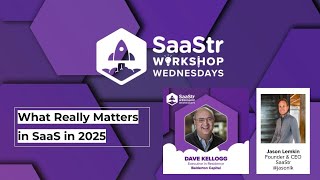
Transcript of a live YouTube session (Oct 31, 2024) where Jason M. Lemkin interviews Dave Kellogg about SaaS/Cloud trends for 2025. Major themes include private equity vs IPO paths for large SaaS companies, PE acquisition thresholds and valuation mechanics, AI’s impact on enterprise budgets and productization, the role and org placement of customer success (NRR/expansion), pricing strategy in an AI era, and founder/operator choices when growth slows. The session ends with audience Q&A on partnership investments and SaaS metrics (cohort vs “lazy” NRR).
Chapters
You can join live, join us like a couple hundred folks will and ask folks like David me questions in real time. But I thought it would be good before we get into 2025 and it's coming up this year is what's the one, Dave? Do you watch this one on Twitter where it tells you how many days are left? You know that time one. You follow that account?
No. I don't know.
It's super. I think for like since Twitter started, he has a progress bar that just shows that I always. It just stresses me out. I'm like, what have I got done done? But before we get the year out, I thought I would just go over some of the things that I've been thinking about this year in SAS and Cloud and get Dave's thoughts. And for folks that I know a lot of you now follow Dave Kellogg. He's been part of Saster community, contributed sessions and content at least since that crazy one at the Hilton 2018 where it was utter chaos. At least he was there and did two sessions in a row. The blog is Kel Blog, Kel Blog. He's got his own podcast and I know many of you in particular love his views on metrics. But. But you know, Dave has not only been a successful SaaS and Cloud CEO, he's on the board of some great ones. He's on the board of Elation. Right. Which is sort of a pre IPO one hundreds of millions. He's just joined another AI, one that's very late stage in the financial compliance space and a bunch of others. Dave will tell us the boards he's on, but I know he's thinking through a lot of these things too. So anyhow, I put together 10, 10 of the things that maybe not really matters but are going on in my mind. And SAS and I wanted to get Dave's thoughts and maybe provide you two perspective and a little fun. And 10's a lot, but we'll try to keep 15 or 20 minutes for questions at the end. So, Dave, thanks for. Thanks for coming back and joining.
Yeah, thanks for having me. It's great to be here.
Yes. And so just for fun. So the boards, what tell us about you work with Balderden Capital, but what are the boards that you're on or advisors? Just. It'd be good for me to know too. What's. What's the group that you're helping right now?
So. So from most of my boards, we can have a long conversation about VC versus PE boards, but most of my boards are PE backed, so I work with a firm in London called Kennett Partners for boards and I work with a firm in Chicago called Parker Gale and most of my board work comes from there. I do find people outside of those channels. For example, I just joined the board of Vic AI, which is a finance AI company. And in addition, I'm about to join another board. I don't want to talk about it yet, but another very hot board coming soon that I found, I think off the blog actually, which I've found them as well. So ironically for Balderton, because I'm an in house advisor for the firm, I kind of end up not on boards because I think I'd be seen as a double agent. So my boards I tend to get independently and I have relationships with two PE firms. And I also get, you know, one of my bigger hits was Nuxio and that came in off. Came in straight off the blog. I met the guy at the Hilton in New York and you know, we had a great time and ended up joining his board.
Yeah. So content marketing works.
Yeah, it does.
You do a good job.
It does, yeah. I'm a practice what I preach.
Hey, one question before we get into this. You know, it's interesting that I hadn't realized the p. What's your. I wrote, I wrote a blog post yesterday on Saster and we're going to do another session on this. On, on that 2025 may be the year of PE IPOs because folks are giving up, you know, Genesis, which is as old as it gets in the, in the call center software. Right. I mean this is a hardware company turned SaaS. They just filed to go IPO this week. The last, I, I think they said they're at 1.5 billion in ARR and the last round was at 20 something billion by Salesforce at the peak of 2021. I don't think they'll be worth 21 billion with those metrics, but I think people are kind of giving up and saying let's frack it, let's just, we got to get liquidity, let's ipo. Is that what do you see that too? Do you think there'll be a bunch of IPOs in 2025 just to finally get it done.
So I think when PE buys relatively large software companies.
Yeah.
Like when you're buying smaller ones, it's easier just to flip it to another PE firm. Right. There's a whole ecosystem and buy it at 20 million, grow it to 50 million, flip it. They grow it to 100, flip it again. Right. But when you're those big numbers like billions in ARR, I think the flip market is a lot smaller. So I do think it's going to end up pushing people towards IPOs. And as you know, the IPO bar is just spectacularly high right now. I think it's around 500 million in ARR by my math. The first company I worked at went public at 30 million back when I started at Host Analytics. I remember Zendex came out roughly at that time and they were at like 70 million or 80 million. And I was like, oh, if I can get to that size I can go public. And then for a while I thought it was 200 million and now it's like 500 million.
Yeah, it's crazy. Yeah. Box and HubSpot IPO at 100 million, box at 100 million. Although they'd. I Shopify IPO at 100 million I think. But they all would IPO at an $800 million valuation. Right. So they weren't even unicorns at the time. Right? Yeah. And what so one other P question and that's going to. Just because you what? So, so we're going to do a whole nother workshop Wednesday on this topic. But there is selling to PE when you're early, 20 million, 30 million, it's not super early. Right. It's a whole nother track besides the IPO track and to some extent the corporate M and a track where what are you seeing as the bar where P will get interested, will make an offer to a SaaS company in today's world. Like what sort of metrics is P looking for today?
Yeah. So I think there's two things. One of the nice things about PE is this is kind of large undiscovered world. Like there are PE companies that specialize and I'll call it the bottom tier niche of buying even $10 million founder owned businesses completely bootstrapped and they're going to buy it, they're going to, in my words, professionalize it and then they're going to flip it to a bigger PE shop who will in turn use it as a tuck in or flip it again. So this ecosystem is really broad. Right. You have the giant Czech privates that make the news, but you also, all the way down you find people buying 10 million dol. I would argue in the range you talked about, 30 to 50. The biggest thing I've learned about working with PE is I thought they were fixer, upper people and they'd buy it kind of, oh, it's 30 million and losing 20% EBITDA. But we'll buy it anyway because we know how to fix it. And I don't actually think many of them like to do that. They want it fixed first. That was probably the biggest insight. So if I was trying to sell a $30 million ARR company I would not assume that oh, I'll keep negative 30% free cash flow margins because the PE guys will assume they can come in, buy it and fix it. That's not the case. You'll get punished on the valuation. You should fix it yourself. Prove that you can drive reasonable cash flow and then it's going to be interesting for them. But they're not big buyers of the. This is why it's so hard because if you start out VC backed and you're on this rocket ship trajectory with super high burn rate and the growth goes away and you still have the burn rate you need to readjust if you want to sell it to pe.
Yeah. My rough bar for and for folks that haven't. I don't know how many p firms buy SAS and recurring revenue companies but it's probably well over 100. Right. The big names are the Vistas and the tomo bravos for the big deals but there's tons of them we haven't heard of and there's got to be a hundred. Right. And they're.
When I sold my last company there were 70 on the, on the, the bankers long list. 70. That was that. That was like the number of sims we mailed out and that was after altering it's vast. The number of these firms is just mind blowing.
And they, that was for host analytics.
Yeah.
And they, and they of 70. But did you, did you, you drove that process with a banker. How the hell did you talk to 70?
So we did have a banker and that was the long list. Right. We sit down with the banker and say who do you want to mail a teaser to? And they, they started with their long list, filtered it to the long list they showed me and that was like 60 or 70. I think those, those got teasers, you know, very short brief. And then the one came back then got the confident and were willing to sign an NDA. They got the sim, the confidential information memorandum that had considerable detail on the company and then the next level of that filter is loi. Okay. Who's really interested? Give us a letter of interest. And then the next lever is, you know, going into exclusivity and selling.
Yeah. So for folks out there just. And I'm going to. I've I've teased this over the years at Saster, but I'm going to do more of it because the IPO bar is so high today. Right. Whether it's really 500 million growing 50% like the only three we've had since 2021. Cl you a rubric in one stream. Whether it's lower, we'll learn next year. Yeah, but this is a great example. I mean host analytics had seven. There's got to be over 100 because you got 70. Right. And so. And to kind of. Here's my. And this is why I want to get a vibe check from Dave. My rough rule of thumb today is 2030 0. So what I mean is to get a PE firm interested in you, you've got to hit 20 million ARR. I think it used to be 10 when I started, but it's gone up because P firms want to see truly recurring revenue. So this is. And challenge this. But I see it as 20 million ARR. You start to get the inbounds. Okay. Or just before third now, not 100% growth, 30% or higher. I think below 30% they're concerned it's not enough. Right. And then 0% has to be your losses. Like they want you not to be losing. Let's forget about Gap or Schmap or. But cash flow neutral would be ideal because then it's an annuity. Yeah. Right. The 2030 zero is an annuity. If you've so. And what will they pay? It could be 3 to 4x AR at the low range. I've seen some deals at 10x even with mediocre growth. When it's strategic. Right. That's the hack. They're not. You know, these, these SAS P firms are not trying to buy you at 1x EBITDA like old school folks are. It's not great. It's not like stripe buying, you know, some crypto firm for 200xar. But the deals often are decent. Right. Objectively speaking. But the burn has to be almost nothing. Right. And the growth has to be good enough. Correct. And so when I see founders that are crossing the double digits, right. Crossing 10 million, but they're not on the venture track, to be honest. Right. I tell them you got to aim for 2030 0.
Yeah, I support that advice. I think the hardest part is people who are not on the venture track, who think they are, and then they're going to make their own decisions. So you got to kind of realize what track you're on. And we can talk about that if you want to But I think your rule of thumb is good. Look, the ultimate thing, the crazy thing about the kind of minimum size is these people have to deploy large amounts of capital. So they kind of have a minimum check size.
Right.
If they're going to pay 5x for a company and you're 20 million they're going to pay 100 million. But if they have 1.5 billion to deploy that's 15 deals. So they tend to you know some of them have minimum check sizes of 50 million or 100 million for what they'll write. So that's. That's the other argument for why you have to be a certain size. It's because some funds won't even talk to you because they need to deploy more capital. Yeah.
Yeah. Sometimes there have a lot of these deals are ended up being tuck in deals. They'll combine it with another portfolio company that's at 100 million or more. But it's a good.
And that's where they pay a strategic multiple. Since you touched on that because there's basically a financial multiple. You know call it today 4 to 6x. That's what I would call it just thumb in the air. But. But you get strategic multiples like 10x today when the PE is acting like a strategic. Right. Because they get the synergies of strategic. Because they're tucking you into a company that has a salesforce and getting leverage. That's the way you get a strategic multiple from PE firm. And it definitely can be done.
Yeah. And then the last one and then we can spend our whole time on this one. But it's a good topic. I do think when you do the math if this is just something for founders to think about that you. If, if. If you're stressed. Right. If you're like goodness, I can't be one streamer klaviyo.
Okay.
Let me be honest. I can't be like yeah worry about that. But if you can get to this 2030. 020 million ARR 30 growth or higher not burning you are these offers will come in like they may not happen but they come in like clockwork because they're paying kids to hunt these and you gotta have the fourth one's 100. You gotta have 100 NRR close or they're not interested. Is is a learning but. But if you raise it much more than 100 million valuation it may be hard. Right. That's the last. It's just that's where you lose optionality I think is an over discussed topic in some ways I say Burn, burn the boat sometimes and build, like do what it takes to build a great company. Right. But there's a point where this at PE goes away. Right. If like the unicorns are going to struggle to do PE deals, they're just going to struggle. It's just going to be structurally impossible, right?
Yes. Yeah. It's going to be very hard for the board to say yes, even if it's a good financial deal. I have this thing called for those kind of deals to happen. The dream has to die. I know it's a horrible expression, but you have to actually extinguish the hope of the board to sell it for a financial multiple and that requires a sustained period of bad performance. So you actually have two issues. One, is it objectively a good deal and two, is your board ready to take it? And as long as they think we can get back on IPO track to a billion, all that stuff, then that's hard. So there's kind of a psychological process as well.
Yeah, it's a good topic. All right, well, we're going to do one. Andy from Logical. I think you've met Andy before, talked to him back in the day, Right, Absolutely.
I know Andy. Yeah.
I was the first investor. It was a rocket ship. Then it had like a year and a half of zero growth. Right. And then he turned it around and they were at. They sold for almost 300 million at 20 something million ARRP. So they, they, he hacked it in a good way. He'll talk about the pain, but he did this thing, he got it back to 2030 0, 100% NRR. And it's another. And it's a great, great exit. The last round was at 100. Right. So, you know, it didn't, it didn't make, it was no open AI, but it was a great return for all the investors. And it's just something founders should understand. Right. And even guide to in some cases.
Absolutely. I think 20300 rule is good. I think if you're certainly selling to PE, I might try and get some more EBITDA out of it. I might go 20, 30, 10 if I want to juice the valuation, if it's possible. And on Andy's story at Logical, the thing, I think you know the story far better than I do. But the thing I liked about the company, when he was in that 20, that mode, right, of get growth and profit, or at least negative even cash flow, he was still innovating. And that's what a lot of people sacrifice. And when I would talk to him he would show me some of the cool stuff they were doing while they were doing that. And that was magic.
Yeah, it is. That's true. Yeah. The last point I'll say on this thing is no one's stupid. They have different goals. No buyer, no VC. You think VCs are stupid or. Pete, they're not. They may have different goals than you and I do. They may be product nerds, they may not. They be maybe marketing nerds. They may be NRR nerds, but no one's stupid. And people can smell when innovation dies. Right. There is a market for that, but it's a very niche market to buy. And you're going to get.
That's where you get your Forex. Right. I mean, that. That's.
Or maybe there was one today. The old Infusionsoft, the ConvertKit CEO wrote this up. I think they got acquired for 0.05x error. I think they had acquired for like 50 million or 60 million. At 70 million an arrow.
That's the record, but the wrong kind. Yeah.
So.
Yeah. All right, so let's talk about 2025 for a minute and we will do more on this P thing. I think. I think in today's world it should be discussed more, but. Okay, so let's switch gears for a minute. This is something that you've talked about and written about recently. I have. Tomas Tungas did a great presentation at Saster about this that we just wrote up. But this is a meta topic for me and whether we're in a bubble for AI. So, Dave, can AI really enable B2B companies to access more budget or is it all being shifted around by CEOs?
Yeah. So I hate to say this, but I think the answer is yes, I. E. Both. So what do I mean by that? First, a couple of things. One, I saw a recent study from Battery called the Battery State of Enterprise Tech spending and they're showing what my gut was feeling in the data, which is they have a enterprise tech spend sentiment index and it hit its low in the first quarter of 2023 at 50.2 and it's been coming up every quarter since. Its Latest reading is 65.1. So I do feel like we're coming out of the tunnel, if you will, of this downturn, that people are kind of opening up their budgets again, 74%. Other people say they expect their budget to rise in the coming year. I think one of the mistakes we as humans make is we always extrapolate the future from the recent past. And that doesn't work at inflection points and I do think we're coming out of a tunnel so we need not to be fully bunkered in on our growth plans. I'm encouraging companies to be optimistic for the first time in maybe eight quarters. Look, I think if you look at the people who are growing budget, 59% expect it say the driver is experimental budget which makes an enormous amount of sense given AI, right? So people like, I think the data space is getting rated for budget right now. Just basic data transformation data warehousing all sorts of basic data tools because people want the AI tools that deliver the business value, not the infrastructure. So that category is getting rated. Those guys need to position hard around why you need me for AI. And then the AI use case people I think are doing quite well and I think they are actually able to free up budget and I think the budget comes from headcount. I mean just to use. If I want to pay for an AI sdr, I know where to get the money. I mean I could try and get it through vendor consolidation on the SaaS budget I can try and get it from freed up per seat pricing. My joke right now is it's a rotten time to be a per seat point solution because point solutions are under pressure and people are reducing seats. So the worst case scenario is kind of seat based priced point solution. So there's money being freed up by those two things. The question is where it's going. First answer is to AI. But as a line of business owner if I want to do something I can find the money from headcount. So I think this is good for tech. I think it frees up budget. I think we're still under pressure in the ways I described. But yes, there's remixing but yes, if you've got real business value, I mean AISTR is the best example I can think of, right because, because I know exactly where to get the money.
I think I don't have the answers here for, for the, the AISCR one is interesting and there's you know, there's a couple, there's several vendors that have rocketed in their growth because of it and it's that especially for startups and small and a group of a tech company it's very easy to grab $20k there or 30k there, right? Which you know, see depending on where you come and SaaS that could seem like a lot of money. Like holy cow, like I've struggled to for 6k and these guys over there got 30k from the SDR budget. The only thing I would say is so all these brilliant people on X and Twitter that aren't in the daily B2B pontificate that this is so many VCs too. It's going to be magical. We're just going to take all this people budget and shove it into software. And I think there's some evidence of it. My. My canary in the coal mine. So you talked about STRS mine is in the contact center, which you know a bit about too. Right. And I somewhat accidentally have invested so much in the contact center from talk desk to front to gorgeous, which you know to Maestro QA and a bunch of others. And instantly a lot of that budget went from. From support humans to AI. Okay. Talk about what we call what is experimentation or not, I'm not even sure. But immediately people would attempt to fire 20, 30, 40% of their contact center and pay. Pay this dollar per resolution. Salesforce is doing intercom. I've already seen some pushback. Some, some. And it's more just that the ethic, you know, it's just like the, the old days of IVR and others. Like it works there and it's great. Right. And the question is whether the pendulum's going to bounce back and forth, which I think it will. The question I just don't know and maybe we don't have the answer is. So that's why I'm not sure it's enduring that this budget raid. Like I think, I think you will get more money. And you know, Dial Pad went from 200 million last year to already 300 million AR this year on an AI boost and they announced it. That's pretty epic. Right? Re acceleration. But I just don't know if there are really a million jobs. We're all going to fire people and give it to sas. I just think. I don't know it's going to bail us out per se.
So my take on that issue is, and I want to speak not from the perspective of the pure play AI vendor, but just from the, for lack of a better term, regular SaaS vendor. I do believe there's experimental budget. I don't think firing 40% of your cost center is an experiment. Personally, I think that's reckless. I guess I'm conservative, but I do think people are. I think a lot of line of business heads are under pressure to say go figure out how AI can make us more productive. And I would go for that money all day long.
Yeah, the budget's there. It's exciting. Right. I just, I'm Not. I just don't know. I don't complain to be superstar. I don't know if this is a decade long trend or if it will end or if. I guess the meta question we could chat forever is. Look, I, you know, if you, if you. Gartner's Data is there's 300 billion of SaaS software spend out there. It's a lot of money, right?
Yeah. Yeah.
I'm not sure AI is going to turn that into 400 million or 600 million or 3 billion. 3 trillion on its own. That's my meta concern is that you can see these examples. But I wonder and I just don't know. I just don't know that AI. I believe AI is as much table stakes, more table stakes at a tactical level than it is budget enabler at a meta level. At a high level, I think you have to do it and it's hard, but it may not actually increase your revenue.
Yeah. I think my take is slightly different but not conflictary. I think it's a productivity booster. I mean we'll see other use cases that are. But to me it's juice. I can kind of juice your app. Right. I could juice your SDRs. And that I think is real value. Right. To me, the most interesting AI use cases. I'm a boring person. Is the boring stuff it does. Let's summarize the notes from the sales call. Let's extract data from the sales conversation and populate the CRM. Right. All that's. Let's go generate a first draft email to a customer. First outline for a sales presentation. Let's do that. Based upon all the information we know. That's all really cool stuff. It makes me more productive that. One of the issues you're going to face with your argument, Jason, is when everybody has it, are you actually more productive? Right. So there's this kind of arms race when you're the first person in town. You are.
I can't even tell which note taker or meeting summary app is even being used. They all have them.
Yeah, true.
Including today. One is it, the other one is the sales. I don't even know.
Yep.
All right, so we next one. Okay. I know we're context switching a lot, but this is a personal passion topic. I just thought it'd be fun to get your thoughts. Yeah, I can't think of something that I'm more passionate about because of just the horrendous experiences we have at Saster with our own handful of vendors. I've never had worse experiences. And Amelia is going to nod her head because she's on the front lines. The handful of vendors we use. I have not had worse customer success experiences in my career. When I started Saster 20 right in the stuff in 2012, so much of the original content was the power of customer success to drive nrr. I think it's almost dead now that it reports to the CRO. Yeah. What do you think?
So I'm going to take the opposite one on this one. So I will confess to being a true believer for a couple reasons. One, little known fact, the founder of Host Analytics, Jim Eberlin, was also the founder of Gainsight. So I've known Gainsight since it was born.
What was it named before? Ibarra or something like that.
Oh, very good. Oh, wow. I could j.
Amelia's last name, Zbara. So I was having a little bit more. Oh, wow.
Wow. Okay. So. So for our software trivia quiz, you beat me. But, but, but in any case, I. I've had a long exposure to the space. I was kind of a true believer. And ironically, I want to twist this one back on you because your book. Right. Predictable revenue says go specialized roles in sales. And that's all CS is supposed to be. I think CS lost the plot. I think it was a good idea. I think it was specialization, just like SDRs or specialization just like outbound with specialization. I think customer success slash account management, and we could talk about the distinction between the two is all kind of valid. Specialization of sales that you argued for. And I don't know if you made this metaphor or not, but I love it, so I have to share it, which is salespeople are like airplanes. They only make money when they're in the air. Right. So anything we can do that might.
Have been Aaron Ross, not me, but yes.
Yeah, I don't know who came up with it, but I love it. And we want to keep our salespeople in the air. And customer success helps you do that. Now, I will say that here's the part I agree with you with Jason on the customer success manager as best friend. That's dead, right? I mean, I think they lost the plot and it became your best friend, not somebody saying, I own your nrr. My name is Dave, and my job is to make you go from 100 to 120 at your renewal. And you're not going to do that unless you're happy and achieving business outcomes. So how can I help you do that?
But how can you help me do it when I show up to the QBR and some 8 some account manager comes that we've never heard of before and asks us to buy more crappy product we don't want. That's the playbook in 2020. Amelia's and I with. We literally. We literally, literally. We did a QBR the other day and I. I don't do all of them, but sometimes I join them to learn. We just ended it after 10 minutes because it was an account manager who didn't know what Saster was, what our data was. It just said everything's great. Can I sell you this other crappy product for your community that you've never seen? Can I demo it to, you know, what is this? The quarterly. Let me know if it's a qsr, a quarterly sales review, and I'll decide whether I want to talk with someone I've never heard of before that doesn't know how to spell saster and thinks there's an E or U in it and hasn't even spent nine seconds reviewing what we do. Right. This is 100% of our QBRs are this Dave. Some new AM. Now that customer success is reported to the CRO, an AM shows up to sell me something that knows nothing.
Yeah, I mean, you'll notice nothing painfully absent of my definition of CSM is do QBRS. And I know a lot of CSMs make that, like, their job description. And I just. I think this is part of customer success. Losing the plot in my mind that we got to get back to what our job is, because I'm a believer in customer success. And our job here is to make accounts worth more money. And yeah, I don't do that by showing up with some guy who knows nothing about the account saying, please buy one.
Why do we care? Dave, let me just ask you and then I'll give you an anecdote of that. Why. Why do we. Why does. Why do we care if customer success gets more money for the account? Like, if the customer is insanely happy? Like, insanely happy. I actually think. And I literally just had this discussion with the CEO of Samsara yesterday. It was a great one. Epic. Epic. Samsara went from like 1 to 7 to 70. Okay. And you. How do you do that? You need your customers so happy that they want to buy more products. And I talked to him. How did you go? Multi product at Samsara. How did you go? Did you do it? Because growth plateaued and telematics is like, no, actually, our telematic, Our initial product1 is growing as fast as the overall company. It's not plateauing. It's that our customers begged us to build this functionality, to track drivers and trucks when we're already tracking the fleet. They begged us, so we built it. That's how you drive NRR up when they love your product so much that they say, dave, please build more for this. Not when an A shows up and tries to trick you into buying something you don't want. I feel like we've lost the picture that if you are beloved, everyone, even little Saster, if you're beloved, I want to buy more from you. What else do you like? My favorite app right now is Opus Clip. I even invested. What else you guys got? Like, they just. I'll buy everything they got because. Because it's beloved, right?
Yeah. I think the question. Look, the question to me is two things triggered by that. One is it's a matter of degree, like how many CSMs per ARR? I mean, I have three things for it. One, it's a matter of degree. Should we have zero CSMs or should we just change the ratio of ARR they're managing? The other is the distinction between CSM and AM account manager. And in that model, I'm not a big fan personally of the three tier model where you have an am, an AE and a csm. I'm kind of like, pick two. And the thing I like, I'm gonna go all the way, I guess. One last thing. It depends on how big the customers are, right? Like my first when I worked at Salesforce, the first sales call I went on was the Qualcomm. That ae, that was his one account. That was it. That was his whole territory and would like, okay, when we're doing enterprise sales and there's a million dollar account and we have one AE on it, then we don't need to see a stem. Right? Firstly, the relationship is managed by the AE. But now flip it around. Say it's 20k a year package that we're kind of grinding out, or a 5k a year package. The more you're in that kind of grinder mode, the more I want sales selling airplanes in the air and I want somebody else to be going, hey, how's it going? You're successful, you're going to renew. Because I think it's a different skill set. To me, it's for the same reason you don't want salespeople doing cold calling. That's why you want SDRs. So I think the tension here is. And your point's a good one, by the way. If there's Nothing for them to sell. It doesn't matter if your product strategy isn't part of the program. And all I can do is move you from silver to bronze or sell you 10 more receipts. Then there's not that much value.
Yep. Well, look, I'll. The last one on this. I'll just tell you and get your thoughts. I'll tell you something that not only have our experiences internally been terrible with customer success the last 18 to 24 months, as it's moved into sales. I'll tell you, I get. There's probably three companies I invested in at the seed stage, three that are north of 200 million, that have seen growth slow. Okay. That have seen growth slow. And I've gotten the same thing in the investor update. We moved customer success to sales. We should have done it years ago. Okay. Now, I think most investors would say, great, that was. What a brilliant idea to. To move to as. But I actually see this as toxic, Dave. I see that when growth slows, you screw the base. We. And I see it everywhere. I see it to us. I see it in the portfolio. Jesus, we missed. You know, because at scale, my. My metric is if it's scale, if you can't grow your new logos 20% a year, you're in decay. Okay, 20 a year plus 120 NRR. I know it doesn't totally sum, but that's your 40% growth at scale, right? And so as that new logo growth dips, and many folks in B2B2B are not growing their new logos 20% a year. Right? What do you do as the CRO when your arse is on the line?
You.
You. You screw the base. Right? And I've seen this so many times. I've seen. I've. One of the things you see with the new sales leaders, they go in and they're like, oh, they look it up. Oh, Post analytics got a sweetheart deal. I'm gonna. They're screwing us. I'm gonna go make them pay 10x because in 2016, they signed up like, yeah, it helps you make the weaker the quarter, but it doesn't help the company, does it? And so I'm seeing. What I'm seeing is I'm not seeing the folks that are growing like a weed moving CS to Sierra. I'm seeing it a stress reaction that I personally think dramatically sacrifices the future of the company in the hopes of making the quarter correct.
And you'll see that, by the way, during. So I'm also a SaaS metrics guy. One of my favorite metrics is expansion ARR or basically expansion including upsell and cross sell. Expansion ARR is a percent of new ARR and I actually like that to be 30% which is some would argue that's kind of low, but you saw it during the downturn hitting 50, 60%. And how do you get those numbers? A, you have a decaying new. You stop being able to sell to new people and you go squeeze the heck out of your existing people. And that's not going to get a great reaction to your point. So by the way, for whatever it's worth, I don't actually think customer success should report to sales. I think that's a stress reaction to save money. I think the company hits a downturn, there's too much sales expense, which customer success is usually classified as sales expense. The CRO goes I'll take it over, I'll slash it. And it's kind of over rotated the other way. Personally, I like it as an independent function to get that healthy tension. Because look, what I saw in the companies that I ran is shock sales can oversell and I like having CS as a kind of check and balance on that. I love designing orgs for healthy tension and that's attention I like.
All right, well so maybe notwithstanding that you like this AM function more than I do, you are agreeing with me that reporting to the CRO can be a bad move.
That I agree with. Yeah.
Neither of us support. Right.
Yeah.
At least as founders, I would resist this in less. I would. Especially as if it's a reaction to slowing growth. Right. You got.
Especially if you're in a grinder model. Right. If you're grinding lots of small deals. To me it's a function of a. I agree with your point. If it's a reaction to slowing growth. Yes. But also what's your business model? If you're doing million dollar deals, you probably don't need one. If you're grinding 5K deals and you want salespeople banging all day long, then somebody else has to take care of the customers.
Yep. Okay. Third one. We kind of actually maybe we hit this in our unplanned conversation on private equity deals, but I think this is the discussion. I'll tell you, Dave, I don't see this that much on social media. When we were in Sassa Europa this year, I know you, you couldn't make it this year, but thanks for coming to even to Barcelona. But I was backstage with one of the top VCs at a top fund. Okay. Many, many great names that you know And I walked into the green room is his head was in his hands. You know what it was? I have headman's hand. That's this thing right where your head's in your hands. And I'm like asked him what's going on? We're not close, but I've known him since I was a founder, right. He's like, I've got like 10 portfolio companies at nine figures in revenue, growing in the teens or less. What are they? What's going to happen? He didn't have an answer. Right. So I, maybe I don't like this. I just, when I was writing these slides, I call them the slugs of sas just because I like assonance or alliteration. I don't know whether this one's assonance or alliteration, the slugs of sass. But when growth, especially if you're a unicorn or venture, just call it venture backed and growth is below 25%, what do you do? What do you do? If it's that you. What do you do?
Yeah, so, so let me start at the top on this one, which is the real look in my mind, if you're a founder, the real opportunity cost you face this, right? We have only so many years in this earth, so many years to do things. And you don't want to find yourself running a zombie and just kind of grinding along at 15% growth and 0 free cash flow. You can live a long time like that, but what kind of life is that? And you're not going to have room to innovate. Your company's not going to trade for very much when you sell it in the end. So to me, there are fates worse than death. Worse than death to use the zombie equivalent. So I think you want to avoid becoming a zombie. So my answer is do something is the first thing. Don't let yourself acquiesce to, oh, we're going to grow at 15% and trundle along at zero cash flow because it's going to be hard to keep your employees. You're not going to be able to innovate. You're never going to be worth any money. The answer to me is some sense go one way or the other. Either make a growth re acceleration plan if you have the cash. By the way, at Balderton, I can't tell you what we filled it in with, but we had a really cool quadrant which was growth rate versus quarters of cash in the bank. And it's a great way for an investor to look at something and the people who are in real trouble have the low growth and only a few quarters of cash. That's the danger quadrant. But in any case, I love that quadrant. I think the answer is no surprise here. You got to go one way or the other, which is if you have a credible growth re acceleration plan, try and execute it. And if you don't, then in my mind, you got to drive up free cash flow. I mean, Rule of 40 works. Rule of 40 is very much in fashion right now. Companies that are rule of 40 compliant get higher valuations than those who are not. So if I was growing at 20% and I couldn't figure out how to grow faster, my next question would be, well, how do we get ebitda to the 20%?
Yeah, that's a good, that's, that's a good, I think, board level VC way to think about it, right? If you can't get the growth, you got to get the cash flow. I'll tell you what. I, I have a slightly different perspective if it's helpful to folks that are watching or listening later, which is that I hate this idea. And this isn't a criticism of you or people that say it, but I, I hate this idea that there's, that, that, that there's opportunity costs. As founders, I'm not saying as VPs or executives, I actually absolutely believe that. Okay. I believe if you're a great SVP of sales and you're at a dog. I know it's brutal, but you should go, you should go join a high flyer, right? For your equity and your time as founders. I don't think we get as many chances as we think. I don't think most of us have a hundred great ideas. And if you can get, get to forget about 200 million, 20 million, if you can even get to $2 million in growing something, I actually think most of us can't do it again. Okay. As we're not all the Jody Bonsels or, or the Brett Taylors of the world. And so my challenge to folks is, is so I try to break it down a different way. The, the, the time you put in is sunk cost. It's gone one year, 10 years, 50 years. It doesn't matter. It's in the past, right? If you have a sustaining business, I asked the founders two questions. One, is your NRR 100 or higher? Okay. And if you have 100 or higher NRR and millions or tens of millions in revenue and your growth sucks, it's up to you. Do you want to refound the company? Do you want to reboot it? Do you want to do it? Because on the one hand it's. You could say it's hopeless. We're growing 18. At 50 million, it's hope. Or 10 million. Right. Forget about 50, which. But on the other hand, you have 10 million of happy customers if they're happy to build on, if you want it badly enough. So I try to kick people in the ass and say, do you want it badly enough? Are you willing? Because every five to 10 years you have to refound a company. It's so hard just to keep up with bugs. It's so hard just to keep up with feature requests. It's so hard to build the product you built 10 years ago. Right. Are you willing to refound it? And I think it's hard. But I think the best founders can find a way out of this and refound it. Because I really think growth slows because you fall out of product market fit.
Interesting.
Too many people blame the markets or the VCs, or the downturn, but there's no downturn in the US economy.
So that's super interesting perspective. I'm glad we agree on the opportunity cost for the operators. It's interesting as heck what you say about the founders. I've been privileged to work with some who do. Look, I think the hardest question that springs, and we're not going to have time for it, is do you pivot or do you stop and start a new one? Because now, if you pivot, your cap table is now an anchor on the company, potentially, unless you do a recap. Right. So I'll tell you the kick in the ass I give people, which is different than yours. I heard yours. I'll tell you mine. And mine is consistent with my advice, which is figure out a way to get it to 20% EBITDA. And if you can't, I guarantee you they're going to find somebody else who can. Right? We know. We know it. Because a lot of times founders think it's not possible. And give that company to a PE person and I guarantee you they're going to have 20% even to maybe 30%, even to a couple of years. It can be done. You may not be able to envision how to do it, you may not want to do it, but don't delude yourself into thinking it can't be done. Most SaaS businesses, you could do that.
Yeah, I think that's right. I don't know that most, most founders, I mean, it is. I think you, I think if you want it Badly enough you can get to the 2030 zero. Right. I think getting this 20% EBITDA, it's hard for innovative businesses that require engineering and more. I just don't think most of us are wired that way. I mean it's somebody else complicated. Yeah. Yeah.
Look, you may have to say I don't want to do that, but my only pet peeve is you say it's not possible and like it. It darn well is possible. You may not want to do it but. But it is possible. There's. There's an entire industry seg makes a living doing that.
Yeah, I'm just. Anyhow, let's go to the next one. I just, I worry. I worry there's too much TikTok, Dave. I worry that too many. There's too much, too much on TikTok telling people to quit, quit, quit. I feel like a lot of sales executives have taken it very literally. I'm worried that founders need more of a kick in the ass. I. I think you should be very careful walking away. Here's my last bit of meta advice on this. I think slugs of sass is tough as frack to be, but I think if you walk away from a hundred, five hundred, a thousand happy customers, you may regret it your whole life if they're happy.
Bear in mind, just to be clear, I wasn't saying throwing the towel. My first answer to your question was do something. Don't. Don't just be happy to trundle along at 15 and 0 EBITDA. Do something.
Yeah, there was related to it. I want to go next. One Emergence published this great benchmarking data a couple months ago. I put it up on Saster. You might have put it up too. And it talked about the quartiles for. And they were all for only venture backed from top, top funds. Right. And they talked about venture backed at the growth stage. And the bottom quartiles were pretty awful. Right. We could pull it up. I think the bottom quartile was like 8% growth and the second quartile was like 15. And a founder said to me at, at 40 million AR the other day, like oh, we're, we're great. Looking at this emergence state. I'm like, no, no, no, no, no, no. It's not, it's not great. It's a version of this tiktokism. But anyhow, okay, let's hit the next one.
Yep.
Because we've gone deep. But this is one that you've talked about a lot and I'm not A debater, but I actually have, I think I have different views than you, but I thought it would be very helpful to hear yours. I know you've done whole presentations on this, but like has AI and everything? Like, is, is pricing really changed? Do people, are people like super excited to pay $8 for, for, for an agent or a chat? Do they, do they really not want the predictability of fixed deals and per seat pricing? Because I worry we might be dragging founders down a rat hole. Because I, I personally don't believe founders should innovate on pricing later. I think you should, But I think nine out of 10 of us should copy on price.
Yeah.
So leaders, right?
So my agreement may not be obvious from the presentations I've given, but, but I actually, I, I do you agree 100% with that? Which is unless your business plan is predicated on price model disruption, do what everybody else does. Period. I sold a database at MarkLogic. How do we price it? How does Oracle price? Price on the same model will charge a little more because it does different stuff, right? You can, you can tune the are you a little more or a little less? But in my mind, pick the standard model. Because in general, my advice on startups is if it's not a key part of your unique selling proposition, do it the standard way. Because we don't want to have. I just. When somebody says why did you price by whatever we price by? I just say, because that's how databases are priced. Next question, right? I want to tell you why to use my database. I'm now back at Mark Project prior to host analytics, but why use mine? So we could talk about my presentations, but my conclusion is actually the same. Unless you're a price model disruptor comma price the way everybody else does. The problem with AI right now is those standards are not yet set. So we're in that swirling sea of confusion where everyone's doing it kind of differently, but once it's set. So in my mind, if I'm a founder trying to figure this out, I'm trying to place a bet on what I think will become the standard. I'm not trying to win a clever competition. I'm trying to say two years from now, how do I think my category is going to converge on a pricing model? And then I want to price basically using the same model as everybody else because I want reason people to buy me is not because I price in some orthogonal way to everybody else and it's just super confusing. I want them to buy me because I have a better product and I deliver the solution better and, and hopefully I can get a price premium for that when it comes to the dollars. But I want the model to be the same. So. So I think we're actually in more agreement than we think.
That's a good insight that it's not because I think again the VC isms and others on Twitter are very confusing here. I think that the guidance is don't it's not so much innovate on pricing but if the mo. If the. But at least if the model is in flux in some categories you got to skate to where you think it's going to be. If there is somebody to copy, I think there quickly becomes something to copy. Even in this, this sort of odd per resolution model in, in post sales support I think everyone Zendesk Intercom customer gorgeous dial, even dial pad even in other areas I think they all have, they're kind of converging on the same model. So I don't even know if it's innovative but I just worry that so many VCs out there are so excited that all of a sudden, hey, we can charge another $8 for this and $9 for that. And if it's not standard, I worry founders and sales and folks are getting led down a rat hole like that's not going to work. It's going to add friction.
So even though I work a day a week at a VC firm, I'll take this opportunity to throw VCs under a bus for a brief moment. And I think what happens in times like this is the VCs get super excited about charging for value and they're like we're delivering all this value. Let's go try and capture more of it for us. So if I'm saving you, I can reduce three people at 100k each. I can save you 300k. Let's go try and get 200 or 250. Let's go get a bunch. And what I always like to remind people is that value is the upper bound on pricing. I'm never going to pay more for something that is value. But the lower bound is alternatives. And I'll go back to host analytics. I would routinely we add a ton of value in that category epm. So we just say hundreds of thousands of dollars in value. But my average deal size was maybe 50k and adaptive plannings was 25. And the issue is I'd go in at my 50k price point and adaptive would come in at 25. What's driving it is not the value from the customer's perspective, there are two solutions, either one of which can deliver me $500,000 in value, but one cost 50k and one cost 25. And this is why I say marketers are in the business of differentiation because that's when I need my marketing department to have made it very clear to somebody why I'm worth more than 25. And I could. But basically those deals, typically we want them, but we didn't win them at 50, we want them at 35. And that's why I always told my board, my board would complain about the cac. It was like our cat gets destroyed on the last day. And I, and don't tell me it's because I can't get a price premium because I'm getting one. But, but my price still got hammered. And that's brutal.
Sometimes in these like very oligopical markets when there's just a couple competitors, you can still partially win a deal by losing it. If you destroy their, their deal size.
Oh yeah.
Oh yeah. I mean hand grenading the deal as I call it.
Yeah, brutal. It's brutal. But a company I'm on the board of thought they were going to get their first million dollar deal. Okay, Big, big, big deal for anybody, right? And it was brutal. And they lost at the end and they were pretty dejected as, as they should be. It was a stretch, right? It was a stretch, but the vendor was going to switch from someone they were paying pain much more from. Actually I got the story a little bit backwards. They thought they're going to get their first 4 or 500k deal from someone they were existing paying like over a million for, right? And they lost it. But their, their big competitor had to cut the pricing on renewal by 60%. That's a tough situation for sales today. But it is weird. I hate this stuff, but it is true. Sometimes you can in a very competitive environment you can even win when you lose if you met mess with especially if you're a lower priced vendor.
Enterprise software sales is a full contact sport.
But that's why, that's when a great VP of sales makes a difference because they know how to make the judgment calls. Right? You can't, you can't make, you can't run every play yourself, right? Or you'll absolutely, you'll kill yourself. All right, one last one and then we'll try to take just a couple questions before we break. Fortunately I forgot five. So we're gonna get through six, not just half. We could do a sequel if you Want but one last one. This is just a passion point for me. You know I notice Atlassian and Atlassian's one of the great all time greats, right? And in their last investor day they said worry not, we're going to raise prices again next year too. Worry not, don't worry. Our revenue is enduring because we're going to raise prices next year too. Is this forever? I asked the question general because I hate going to your, Your, your, your US at 50K versus adaptive at 25K. I hate price increases without value being more than the price increase. Are we reaching limits? I note that Starbucks and McDonald's this quarter said we they had to discount prices have deflated at Starbucks and McDonald's because folks won't take it anymore. What's your thought? Can we, can we. Has this become productized and will it last where we're just going to raise prices every year without value?
Yeah. So I'll go back to my prior answer which is always think of the two endpoints, the value delivered and the price of alternatives. And the other thing I'd add to that equation is switching costs, which is it doesn't cost me much to go to Burger King versus McDonald's or to go to Pete's versus Starbucks. The switching cost is zero. The enterprise software there are always switching costs and what enables vendors to do that is say I'm going to raise your price to 50%. I know that's going to piss you off, but go ahead, switch to the other guy and you're going to say oh my God, that's a full project, that's months of work, that's going to cost me 50k. So that's the dynamic. It's a little bit abusive towards the customer, but you do have a position of power where you can do that. To your point, you can't do it forever. Right. Like I remember when Wall street was all excited about the 180% NRR at Snowflake and I'm like, I hope their value is going up faster than that because if somebody was charging me a 1.8x every year what I paid last year, I'm not going to like that for you know, I'm going to be thinking about how do I stop that relationship. So I think NRR in some ways could be too high, especially if there's no commensurate value. If you're just cranking prices then, then it doesn't work. If you're adding new products and you're bringing new value, then I think you can Keep the prices going and the NRR going. But I do think what happened in the downturn is vendors started to abuse their power a little bit because they're having trouble finding new deals. Maybe they didn't have new things to sell. They brought in new hard headed sales management. To your point. Right. They maybe slashed the customer success team and said let's go push these customers around because we can because it's going to be hard for them. And to me, you know Newton's second law action reaction, they may renew that year but they may start a project mid next year to do your replacement. Right. It may come back to bite you in the rear.
Yeah. It takes three years to really churn from a business process from one vendor to another. It takes a year to get upset, another year to qualify and that third year to do change management. Right. And so we think, we think they're not churning but it Sometimes it's a 36 month process to lose a customer.
Correct. Absolutely agree.
So anyhow, let's take some questions. Amelia, with time left, I just worry, Dave, that when we, when I was coming up in SAS we were allergic to price increases. Right. It was part of like Slack's DNA. We're never going to do it. We'll never. Because it's just bad. Like let's go earn new business. It's not worth the drama. And the MPS hit now I feel like this has become institutionalized like since since for a variety of reasons. And now I feel like everyone wants to raise prices every year. And I guess my only challenge to founders especially is at least don't let the team off the hook. At least don't make this everyone that's missing the plan wants to raise prices more. It's the simplest way to make the plan, isn't it? Is to raise prices more.
I grew up differently than you do than this. I grew up in enterprise, big kind of big enterprise. And I'll tell you my. So we did prices every year, always in my career. And we try to use it as a compelling event at the end of the year. Hey, prices are going up next year. Get your deal done now. Right. And my joke on enterprise software pricing is the goal of the pricing model is to make it require at least 30 minutes for two customers who meet at the user conference to figure out who got a better deal.
I hate that. I'll tell you what I hate, Dave. I have this rule. Everyone I tell us in the sales hates me for saying it. This is my rule that when, when one of your customers Talks to another. Everyone should. No one should feel ripped off. This is what I want.
Correct.
Discounting is okay. You can't avoid. A lot of us that are, like, Especially that are product engineer, we hate discounting. We think it's a dumb process. You can't. You can't avoid it. But I. I think it's disgusting when your customer goes to your conference and finds out someone else is paying three times or a third of what they're paying.
Correct. And I think my point was. So we agree on that. I think I have a slightly different take on it. There's two ways to solve that problem. One is to have super consistent pric. My experience, enterprise is very difficult. The other is to have very complicated pricing. So it's very hard for them to figure out who got the better deal. But we're both trying to avoid the same scenario. You don't want somebody to go to your user conference, come home mad feeling they got ripped off. That cannot happen.
Yeah. All right. Emil, I know we're almost over. Can we slip in a couple questions, though? Yeah, yeah.
There's a few. So, rj, if you're still on, I want to. I think you're still on, but if you want to come off mute. Now question, Junior.
My question was answered. Thank you.
Okay, cool.
Perfect.
Perfect. Okay, Ryan, I know you had one as well. Oh, he might have left. Okay. I'll ask this question for him because I know we're at the end here. He's a question of. I'm curious if either one of you have had experience with a technical partner investment. We've got a few customers that need our products across multiple p and I's. So we are chasing them for a combo deal of equity product development.
I don't have a ton on that one. I mean, I've had the usual corporate investors work with some of my companies, right. Where Salesforce Ventures invest or something. But I've never done a. Maybe not never, but I don't recall ever doing a combo deal where we sell you software and equity at the same time. I know it happens, but I've not done one.
I've seen it a few times. I think in my limited experience. It's especially common in vertical SaaS when a vendor is kind of just scaling and breaking out. Listen. And the simple answer for all these things is keep it simple. Stupid. Right? It's. Sometimes it works, but what I find is maybe 66% of the time, the details get so complicated, it's not worth it. Like, oh, great. You know, we'll do this. But then what? The expectations, the pricing, the valuation, they're just often in a different world than where you want to be. So I would not over commit, I would go in skeptical and see if you can put it on a napkin or see if you can quickly put it on three bullets. But the details often kill these deals is the learning.
It's a good point. In vertical SaaS, I have seen it there. Now that you bring it up. The other place I've seen it outside vertical SaaS is more strategic alliances. I wouldn't call it a customer deal, but some big integrator decides to resell my software or build a practice around me and they want to take a strategic investment as part of that. I've seen that. And to me, I don't know if this is realistic or not, but compartmentalization is the right answer to me. Right? You should invest because you think it's a good investment. You should distribute because you think it's a good product to distribute. And I don't want you doing one because of the other because it'll probably doom. It'll doom the one you weren't interested in.
I will and I'll add on the investment. If it's truly on the investment side, I'll add like two different pieces of color. When it's that line of business investment like you're especially. And again, vertical SaaS is common because there can be a handful of vendors that are very strategic to an industry and someone in H vac or plumbing or environmental will like want to invest because it's very aligned. If you do it, it can work. But keep the percentage ownership really low. Not only for good governance. Right. But I'll tell you that SVP probably won't be there in two years. Okay. They just won't be there. Now I will contrast that where if it's at the like if it's a big platform like for example, what I've learned in the Shopify ecosystem is when they invest great partners forever. Toby agrees to everything. Toby and Harley. It made Klaviyo a billion dollar AR company. Okay. It makes many others. So when, when the, when the founder CEO wants to do it actually what happens is the other way you can get perks that make no sense because that little, those couple million bucks make no Sense for a $10 billion company. So there can be outsized benefits, but when it's at the VP level, they're just gone. Like they're just gone. So just take it with the grain. As important as it May seem that hour just. I know it's brutal, but if it's at the. Just assume they're not there in 24 months.
What you should assume about your CMO. Speaking as a former CMO, they won't be there.
Yeah, it's even hard to assume. I mean, we probably work with 200 at Saster. Dave, It's. It's terror. I hate it. There's no continuity. There's no. It's. It's. I think that the.
The.
The. The length of the CMO tenure is the shortest it's been in my lifetime. It's so short. Right.
It's a very tough time to be a cmo. I agree.
Oh, man. Done. All right. Mila, can we slip one more in even though we're over? Yeah. Yeah.
Billy, I think you're still here if you want to come ask your question.
Sure.
Yeah. Thanks, Dave, for being here. Big fan. You wrote about two years ago the difference between lazy NRR and cohort based ARR. Is that still relevant in 2024? Especially when people are trying to juice up their NRR numbers. Lazy gives you a better snapshot of your current business in time versus, hey, we've seen a lot of volatility. Right. In the last couple of years. Would you still argue cohort based nrr?
Give me one second just to. I remember the post. I remember the argument with a guy I had at Ballerton that caused me to write that post. So I remember that day clearly. I just want to make sure I remember what I was arguing there.
You're arguing for cohort based. Sorry, you're arguing for cohort based instead of.
Is the argument that if you.
Got it. Thank you. Yeah. I mean, to me, it's just a definitional thing, that's all. And I think of NRR as a cohort based measure. I know the actual problem here is that there was kind of. There was expansion of customers who were outside the cohort, and that would distort the number. So for me, for whatever it's worth, my point of view has not changed. NRR is a cohort based measure. We should start with people a year ago. We should look at what they are today, because that's what I think you're trying to measure. And if you're letting people who kind of joined after the cohort expand and count their expansion in a cohort that they're not a part of, I think it's flawed. And that's what quote unquote, lazy NRR did. It's a faster calculation. It's what the whiz kid MBA at Balderton did. But it's actually. And we still argue about that. He's no longer at Balderton, but we still argue. And it's kind of the difference between a finance guy and a SaaS metrics guy.
Guy.
I'm trying to measure what happened to this cohort. That's what NRR is. You're trying to have kind of a slick way to get the calculation done.
Yeah. Not all of us even have someone on our team that can truly do a cohort analysis. I think doing it well is harder than. Harder than it sounds.
That may be the problem. Yeah.
Lazy may not be perfect, but it's a lot better. But you know what? You know, what I do like is consistent rather than inconsistent. That's the worst is when you're not measuring it consistently. Right.
Look, it's only a few cases that distort this. So if they're not happening in your base, if people don't join in Q1 and expand in Q3 and then renew in Q1 the next year, that's where it gets distorted. They may have said it wrong, but people joining after the cohort and then expanding, they get counted and lazy.
Nrr.
If that doesn't happen to you, people only expand at the renewal, then there's no difference.
Thank you.
All right, everybody. Thank you. I know we're over. Dave, thanks for spending a couple minutes. If you want, maybe the start of the year, we can do the five slides we didn't get to. And I'm sorry I missed number five, but this was great. Thank you to everybody. And Dave, thanks. Thanks for having you back as one of our founder favorites. Really appreciate it.
Yeah, thank you. Happy to do it. Happy to do it again. And we'll revisit the long lost number five.
We'll find it somewhere. Thanks, everybody.
We'll find it. All right, well, I'm going to sign off. It was great talking to you, Jason.
All right, Dave, talk to you soon. Thanks, man. Bye. Thanks, Amelia. It. Sa.










