LIVE Workshop Wednesday with Celonis: Secrets to Scale a Company in Hypergrowth Mode
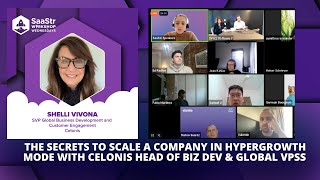
Chris and Shelley from Celonis share how they scaled the company during hypergrowth after entering North America. They cover five GTM priorities: knowing your market, industry-driven structure, hiring and enablement, customer success, and partner ecosystems. They also discuss specific metrics and why they focused on the Maverick Spend use-case.
Questions this video answers
About 1,400 customers globally.
About 240 customers in the U.S., mainly enterprise (G2000/Fortune 500).
Over 5,500 deployments.
About 1,100 hires overall, with roughly 50% in go-to-market roles.
Founded in Munich, Germany; company grew up about 12 years ago (per the talk).
Chapters
Bit better.
All right. All right. Fire away.
All right. Yeah, some quick fire questions. All right. How would you define what you do in your day to day role?
Well, I'm still trying to figure it out but I'm responsible for global sales and field engineering. So it's, it's really about our go to market org and how we're engaging our customers out in the field.
I run business development and the partner ecosystem and our primary charter is high quality pipeline that moves through the pipe quickly at speed to close business.
Great. At least Shelly knows what she's doing. No, I'm just kidding. All right, our next question. What project are you working on today you're most excited about?
From my perspective, it's a lot about driving our overall customer engagement and how we are supporting our customers and making sure they get the value out of the technology and the platform that we're positioning. A lot of the work that we've been doing, especially in the last year that I've been here, has been very, very focused on driving that with our customers.
I'm excited about amping up our ecosystem. I just assume responsibility for that function. Our territory, partner organization, so we've got a ton of work to do and also to engage, to engage them in a meaningful way so that they can help support our selling efforts to build pipeline at scale.
We'll get into it a little bit, but our partners play, the ecosystem plays a pretty significant role in the work we're doing here at Stellanus. Great.
Well, congratulations on that extension of your role and excited to dive into that. Our last question before I hand it over to you two, to go through your presentation. In the last 12 months, what's been the hardest thing you've worked on?
I think in coming here just for a little bit of context, we've actually both been here about almost a year and a half and you know, I think when you, when you join a company that's in hyper growth mode, you need to make sure as you're making those appropriate changes, you're doing the right hiring. And that's, that's always a key thing that you're doing it with that in mind that speed is a big part of it. Getting to a decision and making sure that we don't lose and take a step back and the overall growth of the business. So I think it's been a lot about making sure that we can drive some of the changes at the pace that we need to, to keep up with the hyper growth of the company.
And by that, by that I would Also say the tempo here is probably the hardest thing for me personally. I was 25 years at Oracle prior to coming to Salonis, and the tempo at Celonis is very, very fast. And it's simply because we're in hypergrowth. The company is in hypergrowth. So decisions are quick, action, activating decisions is quick. And it's been really very exciting, to be honest with you.
All right, well, you guys had the same answer to the last one. It also is the title of this session. So I think that's the perfect way to dive into some content here and discuss some hyper growth. All right, I'm going to hand it over to you.
All right, thank you. Thank you. All right, so I'm going to go through some quick introductions. I don't know, Maybe there's probably 10 or so slides here and we'll work to get through Those maybe over 20 minutes. And then we'll have plenty of time for Q and A. If you folks have some questions, either for myself or for Shelley, I'll take the lead in some of this discussion. And Shelley will be adding a bunch of color here on some of the different activities and things we're doing here at Solanus. Just real quick, by way of background, I spent also about 25 years at Oracle. I ran our tech business, a good part of it in North America, and then I ran the applications and consulting business in North America, working for both CEOs of the company and grew up selling at IBM a while ago, we won't get into that, but again spent most of my tenure at Oracle.
And as I mentioned, I also spent 25 years at Oracle, the last 11 or 12 working directly for Chris and the last five as essentially the CEO of North America Applications, supporting governance operations, business development, sales programs, the ecosystem, alliances and channels, data sets. It was a terrific career, Terrific, terrific career at a terrific company. Here I'm running business development and the ecosystem, also working directly for Chris, managing programs at scale and getting aligned so that we can actually ignite the North America market, which is our charter.
All right, let's go to the next slide. So just a little bit of context for the company. Just to lay a foundation for everybody listening today. Company grew up in Europe, specifically in Germany and Munich about 12 years ago was developed or by the founders, came out of academia in Munich today as a process mining company. Today we have about 14. We're a little bit. It says 1350. We're closer to 1400 customers now globally. So we are a global company. This is a new technology sector. Yes, Process mining. But we, we, we now evolve into what we call execution management and we're really the only company right now in the market that can do, drive a full platform solution end to end. Again, the company started as a process mining organization helping companies identify and provide a sort of a digital X ray of a process that you may be running at a company, at your company, showing you all the inefficiencies and bottlenecks it may have. And now we've grown into what we call execution management. The ability to remediate and automate some of the changes and fixes that you need to do from, from what you saw around some of the inefficiencies. Gartner just came out with their first magic quadrant on process mining and Solanas is up in the upper right as the leader. All right, next slide. So you know, you know, one of the main reasons, you know, as we said, we spent a number of years and I spent a number of years at Oracle and most of my experience, if not all my experience was in North America running some of the different businesses. And, and when you look at Salonis, you know, Salonis is very well known in Europe, very well known in Germany, fairly well known from a brand perspective in Europe. But the big opportunity, the big carrot for the company is, is driving into, for any, quite frankly any technology company driving into the North American market. And as you can see here, you know, from, from a spend perspective, investment perspective with software, software sales, two thirds of the market is here and quite frankly it's one of the main reasons why we're both here along with a number of other folks that I brought over as part of our management team and engineering team. It's to really take the work that we're doing here, the level of penetration to a completely different level to support and continue to support the hyper growth that the company is going through. So it's a tremendous opportunity. You don't find a lot of times you find technology companies that are well positioned in North America and trying to go out the other way into Europe and into apac and we do have some business that we're running about 50 folks in Japan, but here at Solanis it's gone the other way again. We grew up in Europe and we're driving hard here into North America. Next slide. And then just to put some further context to it, big market obviously from a tech perspective, as you can see here in the bottom left, huge, huge spend from a budget and CIO perspective that organizations are looking to make. But really the Opportunity for us is that 43 trillion. How leveraging Celonis, the technology here at Celonis, our capability, how do we help organizations truly optimize the spend that they're making from a business perspective? How do we take the processes that they're running, optimize those processes at a completely different level, help them streamline their business, help them pull cost out and help them vest those dollars in other areas that may be even more beneficial to the company and get their cost structures in line. So a lot of the work we're doing, engagement and the opportunity for us here at Celonis is driving into this area of spend and helping our customers truly optimize that for the work and that they're doing in the market. All right, all right. So we're going to take you through here and we'll share the conversation, some back and forth if we go to the next slide on how you really scale out a go to market Org. Now I will tell you that there's a number of really good stakes in the ground that already existed here at Solana. So as they say, the, the overall bones of the business were very good. The company was making some and continues to make some very good progress in Europe. But how do we take that progress and take it to a different level, both from an engineering perspective as well from a go to market perspective? So we'll talk to you a little about the five areas that we, that we focused on. I think you all resonate with most of the five. I think it's a lot about the execution and how do you get aligned internally and making sure that you have the right folks as part of your team to help you drive some of the change and execution that is required in the business. So we'll take you through the first one if you go to the next slide. So again, looking at the overall five, you know, I think all of you will, many of you will understand and I think resonate more than anything with these five. And so but we'll take you through each one and just how we thought about it at Solanus. So if we go to the first one next slide. So know your market. So again I, you know, a very straightforward approach to any go to market organization. I think the thing for us as we as we especially looked at this market is really trying to understand from a data perspective how our customers were buying, why they were buying, what business problems were we solving for those organizations and what part of the market. And so we've spent quite a bit of time up front especially early on in the tenure of looking at the data sets that are around some of these variables and then therefore kind of working it backwards into how that market should be defined and then of course who the competitors were, how do we differentiate ourselves and how do we improve our ability to market to those customers in a way that's going to make sense. Targeting the right Persona, so on and so forth and the right in the right areas of the market. If we go to the next slide, you can see some of the things that I think have resonated and that have been observed and that we've been working with over the last year or so. So you know, as I mentioned earlier, you know, some of the results that you see is that we have now we're up to globally 1400 customers. We have about, we've grown to about 240 customers here in the U.S. most of those are in the enterprise space. So what we call G2K. So the Global 2000, certainly Fortune 500 and our top privates. I think one of the challenges, and you can comment on this too Shelley, one of the challenges here at Solonis is that we are new technology sector and, and, and therefore, you know, the traditional markets of technology markets of other companies don't necessarily always apply at least in when you look at the end to end capability that we may have here at Solana. So we've really had to draw on our experience overseas. But again, what I said earlier about how customers are buying and really try to understand more than any how we prioritize some of how we prioritize our approach to going after the market. I don't know. Any comments?
Yeah, I think so. So the prioritization that Chris is referring to has a lot to do with data sets that we evaluated and spent a pretty good amount of time really digging into to best optimize the go to market structure, to align to the way in which we want to emerge in North America and the way in which we want to build the go to market to, to best optimize our chances. And it took into consideration things like our use cases, the Personas that we're selling to. You saw on the previous slide, you know, we're going to the CEO, the CEO, the cfo, the industries where we have an opportunity to present and of course the market segmentation. Those are the primary categories that we looked at. And it allowed us to then make some really significant decisions about our marketing strategy, our go to market setup, the way in which product and engineering is designing and defining their roadmap to best optimize our strengths in our engagements with our, with our future customers.
I think the thing that you'll find, and this is one example for everybody listening today, you know, it's a large market here in North America. So when you talk about contacts or Personas, the number can get pretty unwilling. But really, you know, one of the things we've done here is really boil it down to those top 2,000 Personas across the market that we want to go after and how do we go after those, those folks from a marketing, from a program perspective and really narrowing our focus to drive up the quality and our overall engagement. Go to the next slide. So you know, understanding some of the things that I just mentioned, it kind of plays into how we've defined and developed the overall go to market structure. So a couple things that come out of some of the analysis, some of the things that Shelley mentioned. One being a company that focuses on processes, it was very clear that we need to be more industry driven. So when I came here we had one industry. Today we have 14. And we also started a public sector business which did not exist. So we've entered the both the state, local as well as the federal side. Number two is understanding where in the market we were having most of our success and therefore making sure that we segmented correctly and create the right level of density in that market. I will tell you right off the bat that we made some mistakes early on, probably went down market a little bit more than we should have. So we've made some adjustments where we've created density in that sort of that G2K space where we needed to be. And then of course looking at the overall analysis, as I was saying earlier, making sure that we're bringing in the right folks subject matter experts to help support some of those go to market industry type of approaches that we've taken in the structure. So if we go to the next slide and then you can see, I mean again just making the point that when you look at our go to market structure, very industry driven, a regional structure that has simplified. When I came here we had about roughly nine regions and we've narrowed that down to five. So we've simplified overall regions. And then you can see here some of the points that I mentioned about density. The other point here is that the company has performed very well from an NRR perspective. All right. A net retention, revenue retention perspective. And so the term, and we hear this a lot in the industry land and expand, very much plays here at Solana. So getting a stake in the ground having programs and a focus to do that around the engagement in these market areas that I mentioned it really critical because once we do that in a period of months, you know, we have the ability to expand, you know. And I think, you know, some of the work that you've done, you mentioned it really around those, those key variables. I mean with, around industry, around process or use case, market segment is really played, I think a key role here.
I mean another benefit, you know, another benefit of the structure is really related to the amount of information that the sellers need to think through. So if you're thinking about an industry structure, they really only need to focus on the industry. That, that, that of the accounts that are in their patch, the references that are in their patch, the industry messaging that that resonates the context and the lexicon so much more streamlined and they have resonance when they, when they start meeting with their clients. It all, you know, it's like an infinity loop. It all goes together. If you have the right go to market structure, your marketing is right, your enablement is right, your, your outcomes are exponentially increased in terms of your selling.
So yeah, I mean the takeaway here for everybody listening is a lot of time was spent with both the field engineers, how we're engaging our customers and our product engineers to understand the data so that we get very, very prescriptive about how we're attacking the market. Because you only have so many AES, there's only so much money in the marketing budget. So we want to be very, very targeted on how we're going after the market, the Personas that we are, that we, that we should be going after around the use cases that work most often, grabbing that low hanging fruit. All right, go to the next slide please. And then it goes without saying this, I don't think anybody's going to argue listening in on the call today about hiring the right talent. I think the thing here is that we've learned very quickly it's very much a solution sell, which is also a common comment in this industry. But because you're talking about processes and you need to have some understanding of the business, finding that skill set was very important and, and the adjustments that we were making with our overall talent, both from a management perspective and go to market as well as the AE perspective area of our go to market organization and the surrounding teams, the field teams that were supporting our engineers, our marketing folks, so on and so forth, even our ops folks. So it was somewhat a change to make sure that we get the right folks. In that really have that industry knowledge. As we went to this industry paradigm shift to make sure that we have those folks that have that background understand most importantly the business challenges that exist in those areas so that we can then again drive off of that and have the right level of engagement. So finding that talent was critical. We've hired. If you go to the next slide please, you'll see that we hired up quite a bit. 1100 folks overall, about 50% of them, as you can see here on the screen. In go to market we've really made a push because of the hyper growth to make sure that we, we get those folks on board and engaged in the way that we've described here from a go to market standpoint, you start looking at the statistics here at Celonis right around month seven or eight, you see a really a big jump in the productivity of those folks. So very important early on that we hire and that we are enabling those folks. We've made some adjustments this year and how we're enabling or maybe you can comment on that a little bit on some of the enablement that we've been doing.
So again because of the nature of the company and because of the hyper growth that we're seeing, it's really important that we have a continuous enablement construct. We have weekly calls where we're bringing out new messages, new product innovation, an opportunity for the sales organization to ask questions of the subject matter and domain experts that exist as part of the internal business partner relationships that we have. We, we invested in some in person training which was the first time, I think in gosh since the pandemic that people were able to come together and really spend three days off site going deep and certifying which is a really, which is a really great way to ensure that your go to market organization understands certifying the entire go to market organization from the AE all the way up to the management managers that they can deliver the message the way that we want it to be delivered. So it's amplified in the market and it's consistently amplified in the market. So enablement is a really, is a really important tenant.
If I had to sum it up, I mean the big thing on enable is focusing in, on business problems. All right? Focusing on enablement around business problems and understanding business problems. And then of course how we're engaging our customers less, less, you know, how do you, how do you take that feature and attach it to a business requirement for the benefit less about some of the other things that surround our, our, our community of AES and the overall go to market. Org. Go to the next slide, please. Again, Fourth one, understand our customer, probably one of the, if not the most important, right? Why are customers buying? What are the problems we're solving? What makes them successful? And here the focus for us has been a lot about tools, technology, additional IP that we can develop organically to help our customers implement faster. One of the pieces of the value prop here at Slonis is your ability to drive value very, very quickly. So you can in a lot of cases see a customer do two or three deals in one year, is because they start small, they implement, they see value, four months later, they invest again. Well, it's really critical that we make sure we have the tool set really honed in on helping them automate that ability to implement quickly. And then the second thing is automating the whole value process of how they extract value from the system. And again, making sure that we have the right skill set, IP tool sets to help our customers drive value and the support of the ecosystem. And that's been a huge focus and making sure our customers are successful in what they're doing. All right, and go to the next slide with some of the more specifics, you know, for us. And I think, for, I think this again will resonate with many of you. You know, working on finding that champion, right? Understanding the finding, finding that the business problem that is really impacting that company, really understanding that with the right level of sponsorship from a champion and then driving off of that to again secure the right level of engagement and then hopefully a sale and then most importantly, making sure our customers are seeing the value. And today we have about 5,500, over 5,500 deployments and we've generated billions of dollars of value with our customer base. Again, most of the customers, especially in North America, you'll find that they exist in the enterprise space. We really have, have been engaging in that part of the market very, very heavily. All right, and go to the next slide. And then lastly, the ecosystem, which cannot be ignored at any level. You know, when I arrived here, there was already work on their way to develop our ecosystem, both from a GSI perspective, from an RSI perspective and even from a overall management or management consulting perspective. So with the McKinsey's and the BCGs and so on and so forth. So, so we really spent a lot of time and investment to activate that part of the market. And as each month goes by, they are becoming more and more of a force multiplier. Taking our technology and leveraging Our technology as part of their consulting and transformation engagements, putting a stake in the ground for us to help us leverage that to, to then obviously go engage in some cases directly or through the partner to have a chance to expand and drive into new areas of that organization. So you know, we are working with all the major GSI's and some of the top management companies as well as many of the RSIs in the market here in North America and globally. So it's a huge push. And if we go to the next slide, I think is, yeah, some idea of some of the what that that's look like. So 250 service customers, you know, you can see, you know, how that breaks down with some of the technology companies and significant amount of growth, pipeline growth and it's, it's played a big role in our overall penetration. Many of these firms, as you all know, are engaged with many if not all the companies here in, in North America. And so if we can leverage that in the right way. We're still not there yet, but leverage that in the right way, I think it can become even more of a force multiplier. It's also been key for us in driving into those regulated industries where we have ip, but not maybe at the same level in some of the other commercial areas because of their expertise and their knowledge and the intellectual capital that they have. It's been a real, a real bonus for us in some of the regulated industries. I don't know if you have anything else.
I would say one very quick comment. It's mutually beneficial. So the nature of the Celonis product lends well to the implementation process. So the partners, the gsi, the management consultants as well as the RSI want to work with Celonis because of the value that they see in terms of the work that they will do that they will receive too. So we have a really simpatico kind of function with our ecosystem, which is great.
Yeah, I would agree. All right, go to the next slide. And I think that's we're pretty much in summary, go to the next slide. So again, I mean these, we've spent a lot of time honing in our go to market model. I think what you draw from here, what you draw from the work that we've done is we spent a lot of time looking at the data sets of how folks are buying, how our products are positioned so that we can be much more prescriptive and really prioritize the approach we're taking in the market to make sure we get the right level of yield. All right. With, you know, we're a growing company and we have a number of resources, but still not as many as we would like and certainly not as many as we had at Oracle. So we're very targeted in how we're spending and investing that money. And that's been a big push, big push on value based how we are working with our customers, making sure, Making sure that we are, we focused on the customer. And then again, as Shelley was just saying, you know, very strong ecosystem which is really required to help scaling out any business. I mean, it was big. Even at Oracle made a very, very robust ecosystem that played a big role here. All right, all right, so let me stop there. You want to stop sharing? Yeah. There you go. Thank you, thank you, thank you. We get faces now. Great.
Yeah, exciting. You get to see who you've been talking to this whole time. Thank you so much for that great presentation. We are going to open it up to Q and A. If you do have a question, please put it in the chat. I will be messaging to see if you want to unmute yourself and ask it out loud. Our first question is based on hiring. What is the hardest hire you've had to make since joining Solanas?
I think, well, you know, I've been fortunate. I'll give you a two part answer. I've been fortunate. I had a great team at Oracle and because I've been in this market a long time, I really do have had the opportunity to connect with a lot of people. So. But building up the leadership team was really critical and as I said earlier, making sure we do that at pace because of the pace of the company. It's a different environment here, so it requires some different skill sets. So that was one challenge. But the other one was the engineering role field. Engineering role here is different. It's a role where you are an engineer, but you also have to have a business hat on as well because you're driving value, helping that customer align to driving value. So there's a technology part of it. But then how do you apply the technology to drive value? That skill set, that hybrid skill set, takes some work to find those folks. And so you could argue that's probably been the biggest challenge.
Great. Shelley, do you have anything else to add?
No, I think, I think Chris summed it up. I would agree with the value engineering hire is hard. That's a hard one here.
Oracle was pure engineering. So we were hiring very good, really solid. You want to obviously make sure they can get up in front of customers. But here, not the biggest hybrid role.
Okay, our next question. Can we get a recent use case? How did the process mining track metric for success in this use case? I believe this question was related to. If you are still online, please let me know. I think it was asked to either go to market structure.
We can give you some context and if it's off, they can let us know if we're off. Maybe I'll let Shelley, since we've been running a couple different programs here on some key use case areas, maybe you can comment on Maverick Spend.
We have, we have a great program in market right now around Maverick Spend, which is in, is a procurement use case. So when customers, when, when enterprises are buying off contract, that's called maverick spend. You're not optimized. Your supplier network is, is deprecated. So we're running, we're running, we're running a couple of plays, particularly, particularly in the state and local market where Maverick Spend is, is a very real situation. And I can tell you that the program's been in market not too long about, for about four weeks. And we're calling the chief procurement officers of the states and we've set up more than a dozen meetings because they recognize that this use case is material and that we can help them identify where that is occurring, further optimize their supplier network and bring things back in house so that we're saving real hard dollars as well as optimizing free cash flow. So that's a really very simple example, but a great example, and it's a great use case for Salonis to come in. As Chris said, define the use case, demonstrate value very quickly, and then you can move on to and expand into the next category, which most likely in these cases will be accounts payable.
Yeah. So the thing I would. And again, I think this resonates probably with a lot of you running different businesses depending on what technology organization you're with. But it's really, again, as I've said a couple times during the presentation, really trying to understand the business problems that customers were solving. All right. And then quickly trying to align that to, you know, where our sweet spots were and looking for, you know, those, those connection points, those inflection points, and then driving a program off of that very quickly and wrapping a program up in a way that makes it very easy for a customer to invest. But, you know, and we've done a lot of that work of Maverick Spend is certainly one of those areas.
Great. Okay. If there's any more to add to that question, please let Me know in the chat.
Can I ask a question? I wasn't able to get in online, so sorry to interrupt. But the. How do you handle if you've made a mis hire or somebody's wrong because obviously you don't hit on 100%. What do you do? Well, I use the, you know, I'm trying to think what's his name at Snowflake gets credit for this, but it's really a Scott McNeely going in time, you know, fail fast. So I will tell you, I mean you, we, we've made mistakes as you would, as you would probably guess. And I think in some cases those individuals had skill sets where it really did. They could be positioned elsewhere in the organization. But we, you know, transparently we've moved very quickly on bad decisions and even decisions that have been made in the past that need to be, that need to be changed when I came in here. So we don't wait too long. We are very much. It's been a crazy time for all of us with what's going on globally, which has only put more stress in the system. But I can tell you even before that we move very quickly if we make a bad decision on addressing it. So it's very much a fail fast here. Okay, great.
Okay, moving on to our next question. Do they have a different value prop for different niches is the question.
Different value prop for what? Different what niches?
I think of different people you're selling to.
Yeah, I mean, you know, the value prop for Salonis for finance versus for Salonis for supply chain. Supply chain is different in terms of the benefit that you're driving and obviously some of the business problems. I would tell you at the highest level though, it's still, you know, where you're still focused on the same things. How do we drive operational excellence at a company? How do we provide a digital twin of a process and soon to be of an end to end organization? Because there's a lot of inflection points across different processes. So you need to understand that whole picture. And. But how do we provide that to a customer and show the inefficiencies, the bottlenecks that exist and then provide the right recommendations through our ML and AI capabilities so they can then take action, remediate and automate the benefits themselves. Yeah, they are different. I mean it's different, you know, a back office settlement, we're doing a big settlement project for derivatives at one of the major banks. That's very different than working on maverick spending. But the actual approach and the output or capability is still the same.
Great. Yeah. If there's any follow up to that question, please let me know in the chat. Our next question I'm going to ask unless, Paulo, you do want to unmute and ask yourself, let me know. All right. What's the split between direct sales versus GSI versus Consulting.
The revenue. So what's the split? Is it headcount or is it bookings? Is there any.
Is it a revenue split? What do you really mean?
Paulo, do you want to unmute yourself? I'm going to assume revenue, but it's probably 6%. It does not look like he's still in the meeting.
So the majority of the work that we do, it's. It's probably, I don't know, 70, 30 direct first ecosystem, maybe a little bit more than. Maybe It's a little bit 65, 35. It's growing, though. I mean, it was when we came here, it might have been 15%, 20%. So it's upticking. You know, sometimes it's a little bit hard to account because it's influence versus say a resale or something. But I think we're getting better at that because we're kind of defining what that means if it's influence or a co sell situation. But it's still very robust. I mean, you look at our overall activity here in North America, the ecosystem plays a huge role.
Great. Okay. Ash is going to ask the next question, so we will definitely know what he means by it. If you want to unmute yourself and ask.
Yeah, sure. Hi. My question is this is more linked to customer success. Like when you say learn and expand. So my first question is, where do you see the primary responsibility of expand lies? Is it with customer success teams or with your account exec teams? So I would say the former. And now the way we line up internally on customer success is a little bit different than even the place that I left. We have a value engineer and that value engineer is customer success. That value engineer is an engineer. All right, so they have engine, you know, traditional field engineering. And that value engineer is on point on renewals. So we have an individual or individuals, depending on the size of the account for us contract and who it is that are on point. But it's sort of a combined role. At Oracle, we had field engineers, we had CSMs, and we had the field folks. Not the case here. We kind of brought those two things together in one role. I think the field's responsibility, obviously the field, especially since we've gone over time, probably should have mentioned this earlier. More of a hunter farmer where we can, you know, we're not. We're not quite there yet. But on the farmer side, the field obviously plays a big role in making sure our customers are successful. Their role though, I think is very directed at sponsorship and making sure we have the right level of sponsorship and access so that our VE's, our value engineers can be successful as well as the rest of our team. Sure. Thank you. I have a related question to that at Celonis especially. Are the customer success teams are part of GTM organization or they are. They are part of the go to market. Org. Yes. Right. Because we spoke about earlier, you guys spoke about the infinity loop that you have from sales to marketing to enablement. I. I didn't see the success team mentioned in that. So I thought that's also becomes a part of the same infinity loop for making sure that we have the right GTM structures go to market. And they need to be. I mean, it's.
They're essential.
Yeah, they are. Sure. Thank you.
Great. Thank you for your question, Ash. I think that is all of the questions we have. Unmute yourself if not.
All right. Great.
All right, well, thank you so much for joining us. We're getting messages in the chat that this was a great discussion. So thank you so much again for joining us today. It was really great to hear from you, Chris and Shelley and thank you all for joining Wednesday after Wednesday. You all know this is my favorite day of the week. Next week we have a great session. We are going to have my top 10 mistakes in 10 years with gainsight. And this will be with Nick Mehta, CEO of Gainsight. Excited to see you back again next week. Thank you.
All right, thank you very much. Take care.
Bye everyone.
Be good.










