Managing Change in Hyper Growth Mode
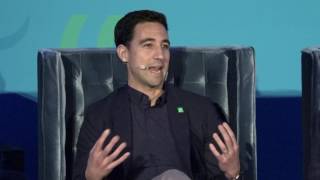
Three former Salesforce executives discuss how they scaled the company from $22M to billions. They cover bottoms-up selling, shifting to enterprise deals, building customer success teams, and experiments like a Super Bowl ad that didn't work out.
Chapters
Please welcome from Salesforce Ventures VP Matt Garrett.
I'm really excited about this panel. We have three really amazing guests. Where are the slides showing up over here? So three former Salesforce execs who were there from $22 million in revenue up past IPO to $5 billion in revenue, which is amazing, have gone on to join amazing companies such as Zendesk and Yammer and Appdynamics and have just really been transformative in the marketplace and really critical in how you grow and scale sales and marketing organizations. So we're going to have a nice discussion about how do you manage change in hyper growth mode. So without further ado, I would like to bring up Dave Oberand and Bill Masaitis and Kendall Collins. All right, thanks, guys. So I'll go down and introduce you. So we're sitting in chronological order in which they join Salesforce. So we'll spend a bit of time talking about their experience at Salesforce. These are plush chairs, aren't they?
Yeah, lovely.
So we'll spend a bit of time talking about their experience at Salesforce and then also how they grew and the change that they went through there, personally, organizationally, and then some of the companies that they've been to subsequent. So David Oberond, you joined in what year?
March of 2002.
So the company was at $22 million in revenue at the time.
Yeah.
So talk about what your first role was when you joined in the sales organization. What was the sales organization like at the time and like what. What was so exciting and prompted you to join the company?
Yeah, so we had at the time I came in the first wave of field reps they had hired. Everyone would primarily been corporate before, worked out of San Francisco, 50 bucks a month, month to month contracts and actually was first day, came on to get my territory and they said, yeah, it was going to be the Bay area, but now it's going to be Illinois, but not Chicago, but Tennessee and. And here's your big like 60 pound desktop and like go to it. And so it was, you know, it was. It was a really interesting company. You see companies that grow up using the tool they build and it really reflects in the culture. So obviously being a pipeline forecasting SFA tool at the time, we lived and breathed the product. So it was a very high performing culture. I think, you know, one of the things we were talking about before it was it was an incredibly progressive culture at the time and company. You know, Mark really emphasized not only how he thought about the culture of the company and looked at Every hire. But was really the first company that I can think of that didn't think about creating the identity around a department. Is it an engineering driven company? Is it a sales driven company? It really was a customer driven company from the beginning and I think that is what drove some of the great sort of cross functional collaboration we had and you know, the sales and marketing. But it was definitely a 12 sprints a year, high performing, high expectation culture.
And was that, I mean, was that different than other companies you'd been at before?
It was simply because the cadence was very different. You know, being one of the first real SaaS companies, you know, we developed much faster. The sales cycles were much shorter. We were at the time selling to users and small teams rather than, you know, selling to a CIO for example. I mean the first couple years and I think it was gone by the time you were there. But the homepage of the website had in huge red letters, no it required. So every time you'd go on a sales call, the CIO would come in and basically just yell at you for like 15 minutes and then leave. But the product was so good you would end up selling to the users. And it was, it was a great sort of bottoms up movement.
Got it.
So I want to introduce Kendall in a second. So before I do. So Kendall came in and what year did you come in?
Beginning of 04.
So company was about $95 million in revenue.
Yeah.
So talk about as from the sales perspective, like what were the biggest trend changes from an organization or technology or that, you know, to get to $95 million in revenue, like what were the biggest hurdles you had to get through?
Yeah. So between 22 and 95 and you came on. We had Enterprise Edition. Right.
So we were, we just launched enterprises.
125 bucks a month. So you know, in those two years we went from. I remember one of the first deals I did was 38k and Mark actually came running out of his office and he was so excited. And then one of the last deals we did was like 70 million. And I got a one line email that said should have been 100. And it was like how 10 years sort of changes perspective. But we really had to grow up a lot. The infrastructure, security. At that point, the product had evolved enough that we were now selling both to sales and marketing. We had to sell to CIOs at the time. So our messaging became much more nuanced. It was a much more sophisticated message and the competencies that we looked for and the reps were very different in 04 than they were in 02.
And what were you looking for that was different?
So it was a combination of really strong intellectual horsepower. That was something that was always really important to Mark. And up until 04, and I think probably after you were there as well, Mark did almost every interview. I mean, at some point he spent time with every single candidate.
Up till when he did every interview.
Man, I think it was 04, wasn't it?
He was doing everything. He was everywhere. But he was definitely doing every interview for a while.
Yeah, I mean, I remember definitely back in late 03, at 7, 8 o' clock at night, he would be sitting with an individual contributor of product marketing person interviewing him. So technical aptitude was another big one. We really looked for genuine passion for customer success. That was something that I think Mark did such a good job of taking all the goodness when he left Oracle and thinking about how he wanted a different culture at Salesforce and really emphasizing that. We started getting big deals. We started going the Merrill lynch deal, the Cisco deal, the Sunguard deal, all those. And that required a bit different mindset, a little more delayed gratification and sort of consultative nature how you thought about it.
So, Kendall, you joined the company was $95 million in revenue. You had, you've gone on, you had, I think like seven or eight roles at Salesforce at least have gone on since at AppDynamics. But talk about the marketing organization. When you joined, what was it like and what were some of the new and innovative things you thought Salesforce was doing at the time?
It was interesting. When I joined, I actually joined in the sales side. So I was in sales operations and I had kind of previously done some product marketing, product management. But the thing that was incredible is Mark, you know, you could never hope for a better evangelist, a better spokesperson, a personality who could just make the news. And, you know, he really pioneered, I think, a model of getting earned media, you know, in incredible ways. And Bill and I will talk about paid media and earned media, I'm sure at some point in this. And Mark, we were just driving an incredible volume of people to the website organically and they were trying the product.
What Mark was doing at the time.
Through primary, I mean this is really before pay per click or anything.
Was that unique, you think, for enterprise executive? Because when you think of the enterprise SaaS executives now, most of them, the really successful CEOs, they're larger than life personalities. Do you think Mark was sort of at the forefront of that?
Absolutely. I think he had a Big idea and a big vision. And the whole concept of no software was surprising. It was unexpected, it was provocative and it was controversial, clearly with a lot of IT people. I spent a lot of time walking into meetings with CIOs and saying, you know, them going, of course there's software. I know there's software. And I would say, well, of course there's software. It would be like FedEx driving around with trucks that on the side of it said, no trucks. You know, the point is you don't want to have to worry about the software and the complexity. And he found a different way to use know go. After that, he embraced salesforce.com like he would not drop the dot com. And this is in 2000, just to emphasize 2002. It's like we're gonna keep going harder on the dot com. And I think that's, you know, just such an antithetical position to like where the market was and where the valuations were going.
Just everyone was running away from dot.
Com at the point people were running. Dot com was a. Was a four letter word at that point. And I think Mark drove that incredibly hard. You know, people tried the product. They love the product. And I think for a long time, business people and salespeople in particular, they felt just shackled by it. They felt like, I can't go fast enough and the IT team can never keep up with me because they got to stand up servers and databases and connect all this crap. It was very hard. So he found another way to the line of business, another way to the money, which I think is really important. And then I was in sales operations and I kind of got in there. And the fascinating thing was we were just saying, how fast can we hire salespeople? Because one of the biggest challenges was, I mean, we called it whack a mole. Literally, like there were so many transactions. It was a very high velocity, high volume operation, which is what David's articulating, I think. Alison. Do you remember Alison from inside Sales? She was our top rep like two years in a row. And I think the first year I was there, she did something like 370 transactions. Sales transactions with contracts and signatures, wet signatures. I mean, it's kind of amazing when you think about that volume and how all those small deals really add up.
How were you able to maintain that growth? Because there really wasn't a model for that of that high velocity sales model continually bringing in salespeople. Like what were operationally, how did you train the reps? How did you maintain that productivity?
I think one of the things that was interesting about Salesforce is that early days, all the sales team, we all sat on one floor, and I think everybody benefited from hearing each other's sales calls, their prospecting calls, how they were handling objections around security or whatever it might be, how they were blaming WebEx if the app was slow in the demo they were giving. Oh, this WebEx. It must be the WebEx. I mean, it was kind of amazing, but I think the group sharing and collaboration was such important part of finding best practices. And then a lot of what we were doing, you know, from an operations and a product marketing perspective, is trying to find the best stories, find the best sales playbook, and just share what was working like David's doing over here. It's amazing. Whether it's customer stories or how to handle objections. I mean, objection handling was a big part of our sales training. I taught the objection handling, I think, for like, six or seven years with a guy named Dan Deldegan. We taught it literally every month in sales boot camp, because we felt that if you could understand all the objections in a deal and you could really handle them and overcome them, then there's no obstacle to a deal. So we really try to be maniacal about understanding all the objections and categorizing them and answering them and giving people the customer stories to kind of overcome that.
You guys also did a really good job, though, from a sales ops perspective of driving aptitude around the product. It was one of the first real enterprise products that the reps were expected to demo themselves, and I think that gave us a lot of credibility as a sales team. It was also sort of a common rallying cry. But that was one of, I think, the core values that you drove, too.
I mean, Mark loved to demo the product, and the sheer nature of what we were selling, it helped. I mean, we had an unfair advantage that the salespeople were using the product. But, you know, Mark's favorite thing to do, and for a lot of reps, their favorite thing to do was they could go in and change the language, which at the time was revolutionary. It's like, oh, let me show you in setup. I click over here, I click over here. I can change it to Chinese or I can change it to Japanese. Getting it back is the hard part.
I was gonna say, because the metadata.
Has now changed, and you're looking why? You're like, shit, I don't speak Japanese. How do I get this back? So you have to be very good at memorizing, like, you know, know what to click on. But the sheer fact that, like, you had a rep walking this, like, high wire, you know, of risk in a demo, doing it themselves, configuring things like. Let me show you, I'm going to add a field. Okay, well, that looked pretty simple. Sure. But what's behind it's really complex. And that's where the key is in the product marketing. The explanation, which is I just added this field and I added that in the database and it's dynamically described in the API. And you can report off that, you can search off that, you can drive a workflow off of that. So the fact that reps could show the product really showed the simplicity, I think, to business users that we were trying to get to.
What do you think that you were doing in those? Call it around 100 to 200, $300 million in either sales or marketing that maybe was, you know, would be antiquated now or things that you were doing wrong. Or do you think, like, we just sort of hit on a revolutionary model and it's the same model as it is?
I think this is a great question for this guy on my right. We started working together and he came in and was like, wow, you guys are doing all these things incredibly well. But so Bill, you were completely insane, like, doing some of this stuff this way.
So Bill Macidis, he joined the company, was about 750 million in revenue. You came from Fox Media?
Yeah.
So bigger company coming in. So I guess, you know, talk about that. And like, what was this? What did you notice? What was the biggest contrast from other companies you'd worked at from when you came in?
I think the biggest contrast was coming from a company where we had 170 million unique visitors.
Right.
And we used every single trick online trick to get them there. And I came in and I mean, it was an amazing company. I love the customer first, I love the cloud SaaS. But I was like, wow, we're doing a lot of, like, dusty old B2B tactics here. You know, let's bring in, you know, conversion rate optimization and content marketing and start doing lead actual.
At the time, that wasn't happening.
It was. It was just in its infancy. Right. And that was. I mean, that's why it was fun for me. And I think part of the reason that Kendall, Mark and the team had kind of brought me in was I think they wanted to infuse the B2C into the B2B. And that's something I always respected about Mark was that customer centricity and, you know, Enterprise software was crap back then. I mean, it still is in a lot of cases. Right. And Mark was always just inspired by Amazon. Right. Like make enterprise software is easy to use and don't have these massive. It takes one year to train you up. And so I just thought that we had disrupted so much on the product standpoint. Let's disrupt on the go to market standpoint too and bring in some of these best practices and leading engines to feed this massive sales engine. Right. And we had to really think about how we could scale that and operationalize it and diversify our sources beyond pr, which was amazing in the word of mouth, but we needed to scale and diversify.
And do you think that B2C mindset was just new to the enterprise? Was anyone else doing that or was Salesforce pretty new in doing that?
I don't think anybody was. I mean, we. So it was interesting. I was transitioning to run marketing from a guy named Clarence. So.
Yeah.
And you know, Clarence had been interviewing Bill and we were like, this guy is from like the B2C world. Like he doesn't know anything about enterprise software. He knows all these things about getting people to these websites. And we really tried to find somebody who was completely the opposite in many ways of who we were and what our skill sets were. And we were very lucky to find him. And he kind of saw the potential, which is like, how can this company be doing so well yet still not be doing a lot of these things digitally at the level that a B2C company would.
Yeah.
This is stuff we take for granted. So when you think about now Salesforce's billion dollars post IPO company. So I mean, David, what were the big innovations that happened in the sales organization in order to maintain that growth? The deals were getting, the deals were getting bigger. The sales organization had to change. I mean, what were some of the biggest structural organizational changes that were required to go from, you know, still continue to grow at north of 30% at a billion dollars in revenue.
Yeah. And a lot of it was, you know, harnessing the customer army, getting the stories in place, onboarding really quickly, both on the tool, on the messaging, on the product, but there was a lot of infrastructure in place. So 07, we had the massive investment, brought Klaus Molt on and you know, spent, I don't know, 50, 60 million on the data centers. That was a fun year. And you know, but we had at the time, back in 04, right when you started, we had sold some of the first big global deals that we had done. And you know, we 247 support was expected and all that. We didn't have anybody in any other country doing support. So we had, you know, we had, we had one guy basically on his cell phone doing support on the weekends, but his cell phone would only work in his apartment if he leaned up against the window. And so, I mean, these were the real issues we had. You know, we had to go talk to the CIO of Cisco about, you know, why we weren't answering the calls for like 48 hours because it was really cold. The guy didn't want to lean up against his window so his phone wouldn't ring. And so there's a lot of infrastructure that we had to put in place there. You know, we had to think about, follow this on support every year. Mark was really methodical about how we would evolve the customer success team. You know, that went from being an account management team in the beginning to really actually being proactive. And I think by 0405, starting to get into the sales cycle early on. So we didn't have this natural sort of drop off between selling a deal and implementing a deal, which again was very revolutionary. And so, you know, figuring out how we would build the AE army, which was in the V2 mom every year for five or six years.
It's probably still on there. I don't know.
Probably you're out there.
You can raise your hands if it is.
I know Mike Creedon would know. I can see him back there. And so it was a lot of it was just infrastructure and it was also changing the messaging. The messaging had to evolve to CIOs of highly regulated businesses.
Yeah, well, you talk about infrastructure, so that's making sure the product's reliable and then that the customers have good support. You're supporting them after the fact. But I mean, I'd like to hear from Russ panel. So there's still. You're starting to take off big accounts. You're selling in many cases directly the CIO as opposed to the line of businesses. I mean, that probably requires bringing in a different set of sales executives and sales managers. I mean, what were some of the biggest changes as you're moving from 25 30k deals to 100, 200, 500k deals and probably still relevant today.
Yeah, it was, it was a huge change, I think in the sales organization. I would say it was kind of fascinating. Like if you look back at that time, you know, Mark was really focused on two numbers at a company level, like in terms of hiring, one was the number of developers and the other was the number of quota carrying salespeople. And we looked at the ratio of people who could write code and the ratio of people to support them, ux, doc, qe, whatever it might be. And then the number of people who could carry quota and there are people who support them in marketing and SC and BDRs and all these other groups. And he was maniacally focused on building that army which you were kind of articulating. And I think it was one of the most important things Salesforce did was it kept hitting those sales hiring targets. But then I think Mark was also trying to bring in very different kinds of people. And I think this is where the company had a lot of experiments. Let's just say some that worked and some that didn't work because we were in uncharted territory.
What are some of the things that didn't work?
I don't want to name any names, but there were some people that did not work.
But I mean, say strategies, not people, but maybe strategies.
I've got a good one.
Yeah, go ahead, Bill.
All right, so good.
Save me.
We hit this point in the growth cycle and we start to get into the enterprise and social. And Mark goes out with this positioning of the social enterprise. Right. Which is great because Mark's always like five years ahead and he's pitching the press and the analysts and they love interviewing app because he can really go into it. Well, that ended up manifesting itself on the homepage. It was Salesforce, the social enterprise. And so at that point we had put in all this analytics and we're doing feedback and people coming to the homepage and we're starting to see drop offs. And we asked them what's going on. They're like, well, you just sell software for nonprofits. I don't know what you do. What is this? We had to just keep iterating off of that. But it was just something where we always had that push and pull of that far reaching vision. And just when people came and actually explained it in words that they understood, that was kind of a fun one.
Yeah, that was a fun experiment. The launch of Chatter was a fun experiment. Whether it was buying a Super bowl ad, which was the best B2B Super bowl ad that year, it was the only B2B Super bowl out of that year. But trying to explain something with even the analogy of Facebook at that time when Facebook was going through its own very difficult time in terms of privacy and it was under attack in the media and we were trying to use that metaphor, it was Not a good experiment, but some of the experiments I was talking about was different, I would say different types of field sales leaders. We went through a lot of field sales leaders. And the fascinating thing is that over time it just became clear that I think the people who'd grown up inside the model, like, had grown up in a high transaction, high volume, high velocity sales cycle, high degree of technical competence in the product. Those people like, you know, you think about like the Warren Wicks, the Eric Eichensliders, like these guys who came out of like the corporate business, they became the most senior field sales leaders. And we would keep trying to bring in a lot of these field sales leaders from the outside, but they just, they just had never seen a model like this before. And some of them adapted better than others. But I would say, I don't know what you felt, but I felt like the homegrown talent and having this very strong pyramid of qualifying reps, outbound kind of EDR reps, inside reps, outside reps, and having this really strong pyramid and career hierarchy. Probably one of the most important things Salesforce ever built. Because every time you try to bring in different people who are kind of from another planet. Yeah, they just couldn't really understand it or adapt to it. A couple did. I don't know what you think.
Yeah, I think, you know, for. There was that period of time where we started doing really big deals, but we didn't, you know, to Kendall's point, we didn't have a lot of people that had done big deals. So we would bring people in from other walks of life.
But when you say other walks of.
Life, other traditional enterprise software companies. But. But what? It was a different unit of measure. We wanted big deals, but we wanted customers to be successful more than we wanted big deals and we wanted both. And a lot of times you had to break a lot of glass in the traditional enterprise software companies to go get big deals. But once you got the big deals, it was sort of up to the customer to drive their own success. And that, that mindset did not exist in Salesforce. It was always on us to drive the customer success. And, um, you know, up until I think today still, you could email Mark, you know, @CEO salesforce.com and so, you know, respond he will. And if there was, you know, we had times even in 070809 where he'd get an email from a five person shop and he would be just as upset if we failed to deliver success than what if it was, you know, 100,000 user deal. And that's, that's a tough mindset for you know, a salesperson coming from a traditional enterprise software company. And so there was a lot of tissue rejection.
These guys, well Slack, you know, I mean I think they're probably, I don't know if they were the first, but they're definitely one of the most successful to pay people on customer sat like the salespeople. Yeah, it was huge. But it was a similar mindset even if we didn't necessarily have that built in at the time. We had it built in in the fact that you couldn't do add on deals if they weren't successful with the first five seats. I mean they weren't going to buy the next 10. They weren't going to upgrade.
Right.
So success was kind of baked in from that perspective.
Well you guys extended it even further at Slack, right With the credits for usage.
And I mean I was always just inspired by Mark and just as relentless folks on the customer. And you know one of the nice things about when you move on you sometimes coming into these organizations like Slack I was kind of like first go to market employee and Zendesk first go to market employee. So you have like an open greenfield and design it. And I just thought, you know, as we start to build out, you know, our own AA teams and Slack does have salespeople. I know sometimes we support others but we do. But maybe rethink about like well if customer success is our most important thing, why not think about alternative metrics and maybe we comp them based on the average MPS or their score or we were, I think one of the first ones. We actually do a post survey after you buy from us. So we'll go to the owner and go hey, was your salesperson, were they responsive, were they intelligent, were they knowledgeable? Did they help you out? You know because we wanted to combat. We even tried iterating on pricing so we would only. You basically only get charged if you actually use the product and you would get refunds back. So anyone stopped using Slack in 14 days you get a refund. So I just think it was really inspired me though by kind of Mark and the roots of just customer success and always hearing that. And we mentioned V2 mom earlier. I thought that was another great thing we did. It's vision, values, methods, obstacles and metrics, measures or measures. But the awesome thing about that was it kept everyone on the exact same page as we went from 100 people to 1,000 to 3,000 to 10,000. And Mark wrote at the very top was always customer success, and everyone on the entire organization had to fill one out with their priorities. And so. So it was amazing for keeping us focused.
Talk about the importance of Dreamforce and how that aligned the company and what the product goals were for the year and the messaging. How influential do you think that was in the growth of the company?
It was huge. I mean, it created a movement. I think it was the catalyst that drove that user community. I think the first one we did was at St. Francis.
Yeah, I only missed one. I missed the very first one.
Okay. And it was, you know, we had, I think, 50 people in Exec Summit and 700 total or something like that, and we were giving tickets away at the end just to, like, fill up a ballroom. But it was. You could feel it was. The technology was such a break from what everyone had dealt with before, and it really did change the division of labor for lines of business to control their own destiny and not be tethered to it, and the slow changes that you saw there with traditional software. So it was really an empowering movement. And, you know, from the very beginning, Mark brought that compassionate capitalism into it. And so, you know, we were doing philanthropic work from the very first time. So I think it created this connection that people felt to a B2B product that they didn't have before.
Kendall, talk about how it was different from other, like, users conferences that you'd seen in the past, and particularly at, like, rallying customers.
I think it's unusual when you see grown men standing in line, have their picture taken with a mascot at any point.
Astro's here, by the way, people.
Oh, awesome. I'll get a pic with him. But it definitely is. It had that energy that I think people were really passionate. And I haven't been to that many user conferences where I've ever felt. And I think by just putting the customers and their stories and their content at kind of the heart of it, I think it really. It made things personal, you know, And I think that event became as much about the personal connection as the corporate connection and the connection that people had with each other, not just their connection with Salesforce. And that was really important. But I'll say something controversial, which is that I think. I think it has gone too far. Not just because the traffic, which everyone loves, having the city shut down for a week and you have to bring in a cruise ship to house people. But there's an important element of this, which is if part of your brand is the intimacy and the personal connection and knowing the people that you work with and that are your peers and your partners and your friends, it just becomes unnavigable at some point. And, you know, I think, personally, I think that that has gone, like, off track. It's just become such a beast. Whereas the essence of what makes it amazing maybe still happens in pockets, but I think it's hard for someone new to come in and even, like, find the pocket.
Yeah. Got it.
Bill, in the last few seconds, I mean, what did you take from Dreamforce that you've taken with you as you've gone on to, you know, to Slack or wherever?
I think the developments of personality for a B2B brand, that's something that was inspired by Salesforce. Whether it was sassy, I believe, back in the day, a little mascot, but just not being afraid to have some personality. And for most B2B organizations before that, the oracles of the world, they were just completely devoid of any personality. When I went to Zendesk and Slack, that was a big part of it, was the personality. People have an affinity to that brand, and Dreamforce encapsulated that there was a personality to it. So I think that's something that definitely helped.
Well, great. Well, thank you all for coming and thank you for attending.
Thank you, guys.
Thanks.










