MongoDB at $1.5 BILLION in Revenues!! An Epic Growth Story
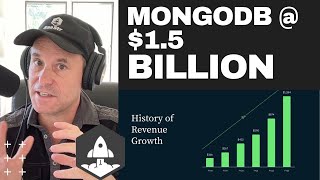
Jason M. Lemkin reviews MongoDB’s growth and what other SaaS/cloud companies can learn from it. Key explicit claims: MongoDB crossed roughly $1.5B ARR and is growing ~29% (adding ≈$450M new bookings/year) with a market valuation cited at about $29B (~20x ARR). Usage growth slowed in 2022 due to customers pulling consumption but showed a partial bounce-back recently; logo churn remains very low. Mongo’s customer-count growth (~24%) is nearly keeping pace with revenue growth (29%), its million-plus-dollar customers grew ~30%, and average customer spend increases ~2.1x after two years. Top-100 customers represent ~33% of revenue and enterprise customers ~75%; ~45% of revenue comes from outside North America. Many top customers have multi-year tenures (most 4–5+ years). Mongo and other cloud leaders also materially improved efficiency recently (operating margins moved from roughly -30/-40% to ~+5%) largely by keeping headcount flat. Overall tone: optimistic/analytical about sustained, enterprise-driven PLG and the feasibility of combining growth with improved efficiency.
Chapters
For many, it is still tougher times out there. I think things are a little bit better, a little bit easier in SaaS and Cloud than they were 12 months ago, six months ago. For most of us, we are seeing some rebound. Top SaaS and cloud stocks are up 30% so far this year. We are seeing some recovery in buyer demand, but we're probably never going back to the go go days of 2021. It's just not going to happen folks. But rather than look at the folks out there that are struggling and many of us still are, let's take a look at a few of the folks that are still crushing it, still CR in 2023 and maybe we can learn from them why. And one of them is MongoDB. Wow. MongoDB has now crossed 1.5 billion in ARR, growing 29%. Think about that. It's adding 450 million of new bookings each year and wait for it, it's worth a stunning 29 billion. And while many public SaaS companies that are a bit subscale, that aren't efficient enough, that haven't broken out, are trading at tough multiples of 3 to 4 times ARR, even the average is still about 6 times ARR. So if you're a SaaS startup, you probably raised at a much higher valuation than many of the big public comps. But Mongo wow is at almost 20x ARR. $29 billion valuation at 1.5 billion ar. So let's, let's dig in. Let's dig into five interesting learnings about Mongo and four bonus ones. So nine total. Well, even with Mongo's epic growth, 2022 saw a big slowdown in usage growth. And when you have partially utility based pricing like Mongo does, you can see the impact fast. We saw the impact fast at AWS and Google Cloud and Azure. We can see these impacts because while many cases people sign multi year contracts, to the extent folks can ratchet down their spend with consumption based or variable pricing, they do. And so Mongo saw pretty radical change starting in Q2 of last year. Folks pulled usage down as much as they could to save money. It's not that they canceled Mongo. A logo churn remains very, very low. But people tried to save money by using less. But we will see this last quarter was a bounce back. Usage was up. It wasn't quite up to the crazy days of 24 months ago, but it was back a bit. And so we are seeing signs, we are seeing signs that while things will are nowhere near as crazy as they were in 2020, 2021, we are seeing signs that we may be coming off the lows and Mongo is one of them. We may be seeing a partial bounce back, but again, a little bit more than a quarter. And not everybody said the same thing. Octa and other leaders have said they have not seen this recovery in demand, but Mongo has. Okay, number two, this is just super interesting. Mongo thrives with workloads. You put more workloads in their database in Mongo and you add more and more over time. And that ACV grows and they grow gently and we'll talk about this in a minute, they go gently over time to million plus billion deals. But as they point out, new workloads. So new use cases of Mongo are something like only 10% of new bookings. It takes time. And this is the power of both high NRR and going long. Mongo is not trying to force it. They're not trying, even if they could, to get you to pay 1 million, 2 million, 3 million upfront. Not in most cases. They're just trying to get you to use the product more. Put more workloads on our system, put more workloads on Mongo and we know, we know we can see it over the next two years. Your usage would. And I'm sure this is frankly true of any database or similar product. I'm sure it's true of Data Lakes and others as well. But it's fascinating how Mongo points out that only a tiny fraction of today's revenue is from today's new workloads. They go long and it works for them. Number three, and this is a super important ratio that not enough people talk about the ratio of new customers to new revenue growth. And Mongo is growing again, a stunning 29% at 1.4 billion in ARR. But what a lot of folks you will see at this scale is they have trouble getting new customers. They're really milking the base. And the new customer count does not remotely approach the new revenue growth rate. I like to see at least half. Like if you're growing 30%, I like to see at least 15% growth in your new customer base, 50%, at least 25% growth in your customer base. That's your future there, not just your present. Mongo's crushing it. Mongo's customer count is up 24% while its revenue is growing 29%. So deep down, Mongo's probably doing even better than it looks because customers are trying to save money and that usage is compressed a bit. Their customer count is growing almost as fast as their top line. And while that, what that probably means is that while growth is pretty good today, it could be even better in the future. Mongo is set up with new customers growing 24% at 1.5 billion in AR. Most SaaS companies at this scale keep growing, but they tend to exhaust their TAM and customer base. It can only grow with more and more products, more and more platforms. While to some extent that's true with Mongo, it's pretty impressive that from its core, customers are still growing 24% in number in customer count at 1.5 billion in ARR. The flip side is as founders and others, if growth is good, but overall in terms of the top line, but customer count is weak, you know that's a flag. That's a flag that while you may be hitting the plan for this quarter or this month, that you're sacrificing the Future. Okay, point four related to this one million plus customers are up 30%. There's just a lot to unpack here. But many folks are complaining. There's no budget in the enterprise. It's impossible to close bigger deals. Look, it's harder. It is harder. Budgets are tighter, folks are looking to shrink or consolidate the number of vendors and the leaders benefit. Like Mongo. Mongo is a leader. And pretty much all across the board the leaders are growing in many cases more quickly than than the startups. And it's usually the opposite. But CIOs and others want to concentrate their budget on vendors they trust and in many cases slim down the number of vendors that they purchase from. But if you have a strong brand, you can benefit from this trend. And Mongo is their 1 million plus customers are up 30%. That's pretty epic if your million dollar customers are growing at that rate and your new logos are growing almost 30% at this level of revenue. Mongo at the end of the day mathematically is probably going to breeze to $10 billion in ARR. It's got 2131 million plus customers and about 1500 or more 100k plus customers. But they don't all start there. Point 5 the average customer spend more than doubles after two years. And look, this is not unique to Mongo. But guys, let this sink in for a minute. You do not have to rip off the customer. You do not have to get every single dollar up front. I know as you build up a great sales team, they're going to get better and better at getting more and More revenue up front, getting their commissions, hitting their plan. And that's great up to a point, but you don't want to break it. And Mongo does not break it. Mongo, you can start for free. Mongo, you can try. Mongo, you can scale up and they know on average that the Customer spend grows 2.1x after 2 years. They know it across thousands and thousands and thousands of customers. So they can lean in and invest on that. So pretty, pretty darn impressive to see see it presented that way. Okay, just a few more Bonus points. Point six, their top 100 customers are 33% of the revenue and their enterprise customers are 75% of the revenue. So why do I highlight this? Mongo has become pretty darn enterprise and frankly that's pretty common at folks north of a billion dollars in ar. Slack started off as a cool tool. We all used the free and low cost version and as it crossed a billion it became the majority of its revenue became enterprise. It's just math. Even Mongo, even to some extent being developer focused, you've got to grow past a billion in error. You've got to start putting up some of those big hundred K and million dollar deals and that means going more enterprise. And that's the case here. Enterprise customers are 75% of their revenue and the top 100 are 33%. So actually they're pretty top heavy. The big ones keep growing and growing and growing, putting more and more workloads on Mongo. Mongo can scale, they don't migrate off Mongo so the deals get pretty big. And the reason I bring this up is not just as a case study of going up market but an interesting case study of PLG is I do. They don't always describe themselves this way. Sometimes they do, sometimes they don't. But Mongo is very plg. You can download and start and try Mongo right now. Anyone can, any developer can, anyone that wants to. And they have thousands and thousands and thousands of users using Mongo for very little or free at the long end of the tail but. But then they graduate to very very big customers. So the learning is that PLG is great but it can take many different paths. It can become ultimately a fuel to very enterprise customers like Mongo. Or it can be fuel to many, many, many tiny customers. It is not a one size fit all thing. It is not a one size fit all motion. And as we'll get to next it's not always even efficient. A lot of folks these days want to move to a so called PLG model because they think it's cheaper than enterprise sales. I hear this from so many startups. They're struggling today and they think the magic is PLG or. Well, as we'll see in a minute. While Mongo is as impressive as it gets in SaaS and cloud, it's. It hasn't been that efficient until recently. There are many folks with a great PLG self serve viral motion that still spend a ton on sales and marketing and actually Mongo is one of them. Point 7 A small point but I bring this up every time I look at a public company just to push folks. 45% of their revenue comes from outside North America. It's true of many cloud leaders, it's true of folks like HubSpot, folks like Monday, it's true of Datadog and basically if there is not a regulatory or other reason to inhibit SaaS products and cloud products from growing outside of North America, they will. They will. You know in many ways buyers in, in Europe and even in APAC and others are not that different than American. You do need to localize your product and I encourage everyone to localize early. It is not a waste. You will go global early. If you want to scale beyond early adopters and tech focused folks, you need local offices, you need field offices and I encourage folks to do that as soon as you have even a million ARR in a geography to have a real local presence there or you won't close the old school customers. But it really really works. And Mongo is another example. 45% of their revenue is outside of North America. It even peaks at almost 60% for HubSpot in the cloud leaders. So if you focus too much on the American market or the North American market, you may be giving up half your revenue. Typically speaking. Number eight, just another really interesting way to see the benefits of high NRR most of its top 100 customers and then again those top hundred customers represent a third of the revenue. It's fairly concentrated. Most of them have been customers for five plus years. So one key to Mongo sort of jaw dropping numbers at scale is they keep all their top customers forever for five years. It's pretty incredible. And another 13% have been customers for four or longer. So goodness, you know almost three quarters have been customers or four years or longer. And Mago knows if they get them in one over two years they'll grow into bigger accounts and they know they'll if they're treated well and there is some lock in, it's pretty complicated to switch out your database. But putting that aside, they know with a pretty darn high uncertainty their biggest customers will stay for five or more years, which is essentially forever. It is essentially the magic in a recurring revenue or a recurring revenue. Like not all of Mongo's revenue is recurring, but much of it is a recurring revenue like model. This is magic when you keep these customers for five years forever and they grow their spend and it's just, it's just magical over time, even if it takes a little while to get that machine going. Okay, in point nine, and this is kind of the great question on both startups scale ups and public companies minds is how efficient do I need to be? And we have seen almost all the cloud leaders literally in a year get radically more efficient. Salesforce had a lot of activist pressure to get more profitable. They got radically more profitable in a year. Monday came under pressure. They've grown at an epic growth rate at 700 million, but they kept their headcount flat for a year. So if you're growing 40, 50% and you keep your headcount flat like Monday did, you get radically more efficient? HubSpot basically did the same, still growing 30 plus percent at 2 billion AR. They kept headcount about flat. And they, they went, they became radically more profitable in one year. And Mongo did the same thing. Mongo was the classic, we're investing in the future. So if you look back a year and a half ago, Mongo's gap operating margins were pretty low. They were like minus 30, minus 40%. They were, if not burning cash, they, they had very negative margins. And that made sense. The growth was epic. Again, Mongo's at 1.5 billion ARR. And in 2019, 20, 20, 2021, no one really cared that much whether you were efficient. But boy, everything changed this year, this last year and Mongo did too. And they swung for the first time ever, at least the first time in their recent history to being operating margin positive, to being quote profitable. It doesn't include stock based expenses and other points, but they went literally in a year and a half from about minus 40% operating margins to plus 5%. Magical. And look, how did, how did, at the end of the day, how did Mongo, how did HubSpot, how did Monday, how did Salesforce, how did all these leaders in one year go from pretty inefficient, which we all thought, which we all thought SaaS and Cloud had to be, to efficient? It's basically the same story everywhere. They kept headcount kind of flat. Some folks did Layoffs. But even when they did layoffs, they often did rehires. It was really shuffling folks around because none of these cloud leaders saw headcount declines. They just kept it flat and net. Net. Everyone got about 15 to 20% more efficient. They made everybody do 15 to 20% more work per person. And we got pretty inefficient in 2020 and 21. We took more headcount to do the same amount of work. And people got used to it. They got used to not working as hard. Sales reps got paid a lot more in 2020 at 2020 and 2021 than they used to. And it was fine when no one cared if you were losing money. It was fine when there were a thousand unicorns and it was fine when the public markets didn't care, when the public markets only cared about top line growth. But they really care for the most part about efficiency. Now there's some argument that they're true outliers, the snowflakes and maybe Mongos and others. The markets today, now that they've come back a bit, are not as concerned with efficiency, but it's still top list of what the public markets care about. And the bottom line is everyone got there by keeping headcount flat. Not cutting, not cutting marketing spend, not cutting out the sales team, not, not laying off 20 or 30% of the company. Sometimes startups have to do that because they get into trouble. But public companies didn't have to do it. They just had to keep costs current, flat and continue to grow. And they all did it. HubSpot Monday Salesforce, Mongo. Even in these tough macro environments, they still had pretty darn good years with the same amount of headcount. Now the existential question is going to be, look, are they, are they mortgaging their future? Are they too lean? Sure, that could work for a year, but have they all under hired and we'll see. We'll see. You know, in the last big downturn, Mark Benioff from Salesforce said his biggest mistake was not hiring enough sales reps during the downturns because when they came out of them, they didn't have enough capacity. But I'm not convinced this is a downturn. I think it's a side turn. Cloud spend is still growing 15 to 20% a year, year over year, according to Gartner. It's just harder than in the crazy times. So we'll see, we'll see whether people revert to less efficient times if the market continues to bounce back. Again. It's been a good year in the public markets or whether efficiency will take hold. But we know one thing from Mongo, from Salesforce, from HubSpot, from Monday and other leaders, which is now we know they can do it. They can do it. And for years these leaders could say to the public markets on Wall street, hey, we don't. Don't worry about efficiency, don't worry about profitability. We're growing. We don't to be profitable, efficient. But now, now they've all proven they can be. So can you put the genie back in the bottle? We'll all see. I suspect we will never be able to be as inefficient as we were in the past. But time will tell you.










